Blog
Song für Song
Artikel über das Schreiben, Humor, queere Kultur und darüber, ein Ein-Personen-Label zu führen – dazu ein Beitrag zu jeder Single von Planeta Gayfolk, mit Cover und Musikvideo.
698 Ergebnisse

Pinned post
GAYFOLK, mein Label und meine Arbeit mit KI
Auf LinkedIn erzähle ich, wie ich bei Planeta Gayfolk Musik mache, was ich im Umgang mit KI lerne und was ich in ein Team einbringen kann. Ich bin offen für Stellenangebote und Zusammenarbeit.

Auf Spanisch
Contra reembolso, garantía y hoja de reclamaciones: comprar y devolver en mis letras
Un moreno pagado contra reembolso, una sección de taras procedente de una devolución, un corazón caducado y de segunda mano, una hoja de reclamación que nunca se puso. Repaso cómo el lenguaje de comprar, devolver y reclamar se ha colado en mis letras, y por qué funciona tan bien para hablar del amor y del desengaño.

Auf Spanisch
Cumpleaños, aniversarios y veranos: el calendario de mis letras
Unas velas que ponían 30, un cumpleaños que no es hoy, un primer aniversario en YouTube sin un solo comentario, un verano que ya quedó atrás y un invierno al que hay que darle calor. Repaso las fechas, las estaciones y los días de la semana que aparecen en mis letras, y lo que hacen en cada canción.

Auf Spanisch
Videoclips con IA: lo que se puede imaginar y lo que hay que decidir
Con inteligencia artificial se puede imaginar casi cualquier cosa: una mariposa delante de la pirámide del Louvre, un torero con alas bajo una cúpula de cristal, un cojín que va de la mano por el supermercado. Lo difícil empieza después. Seis decisiones que no toma ninguna máquina cuando monto un videoclip.

Auf Spanisch
Bloqueos, estados vistos y mensajes sin leer: el móvil como escenario en mis letras
«Veinte estados vistos en WhatsApp», «si no contesto y te bloqueo», «tu llamada ya no suena». En muchas de mis canciones el móvil no es un objeto más: es el lugar donde pasan las cosas. Un repaso a los bloqueos, los mensajes sin leer y las nubes que hay que vaciar en mis letras.

Auf Spanisch
Niña, chaval, capullo: los vocativos en mis letras
«Pero, niña», «Vamos, chaval», «capullo», «mi niño», «baby», «maricón». Cada vez que una de mis letras llama a alguien por algo que no es su nombre está decidiendo qué relación tiene con esa persona. Un repaso a los vocativos de mis canciones: dónde acarician, dónde muerden y dónde hacen las dos cosas a la vez.

Auf Spanisch
Ver «¡Eso es lefa!» sin sonido: el videoclip como relato visual
Le quito el volumen al videoclip de «¡Eso es lefa!» y lo miro como una película muda: un entierro en un césped, un platillo volante sobre una plaza, una nube blanca que sale del ataúd, fuego, toreros, un avión y un hombre tatuado entre llamas. Esto es lo que cuenta la imagen cuando la canción se calla.

Auf Spanisch
Colores, letras y gesto: la portada de «Summer Vibes y un helado de fresa que no sobrevivió» al detalle
Un cucurucho tirado, una bola de fresa derritiéndose en un charco rosa y un sol de rayos setenteros detrás. Repaso al detalle la portada de «Summer Vibes»: sus colores, sus letras y el gesto de un helado que no sobrevivió al verano.

Auf Spanisch
Lo que la portada de «Viva la alegría» dice antes que la canción
Un cartel turístico envejecido, una playa llena, palmeras, casas blancas en la colina, una chaqueta de lamé sobre el pecho tatuado y un abanico rojo abierto hacia la cámara. Antes de darle al play, me paro delante de la portada de «Viva la alegría» y cuento lo que dice sola: de dónde viene su estética, qué promete y por qué es casi un brindis.
Auf Spanisch
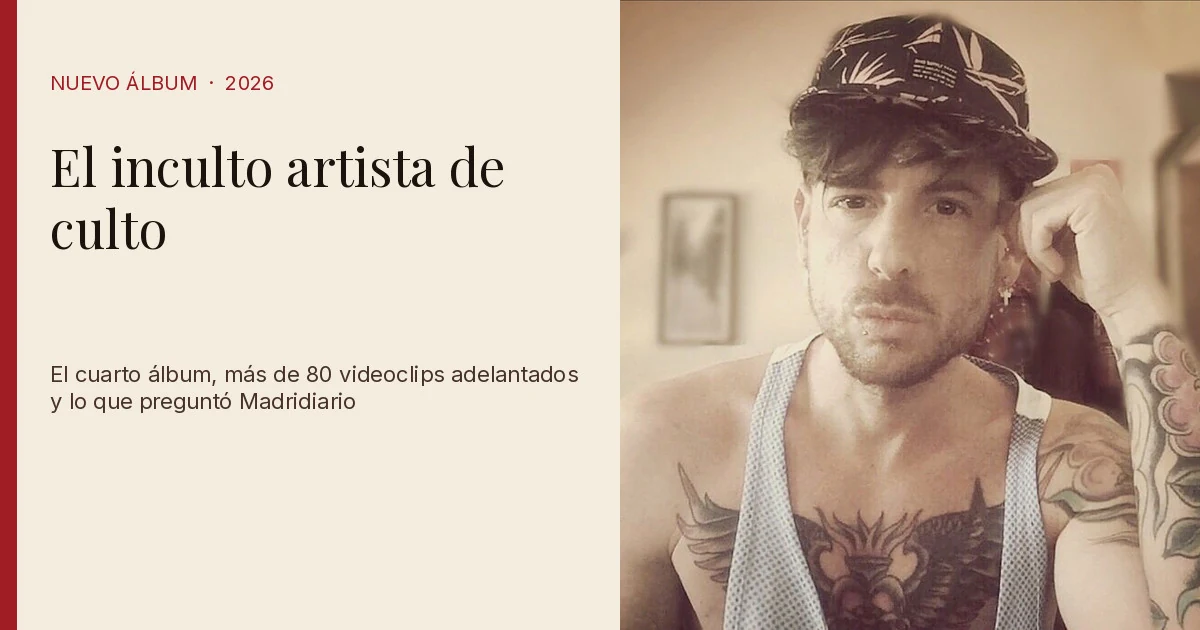
«El inculto artista de culto»: el cuarto álbum, más de 80 videoclips adelantados y lo que preguntó Madridiario
El cuarto álbum todavía no está en las plataformas, pero en YouTube ya hay más de 80 de sus 99 videoclips. El título dialoga con un artículo de Madridiario y con el trabajo que hay detrás de hacer música con IA.

Auf Spanisch
Por qué la trilogía GAYFOLK son tres discos y no uno: el límite de 99 temas de las distribuidoras
Mi idea inicial era un solo disco de más de 270 canciones, cada una con su videoclip. El máximo de 99 temas por álbum de las distribuidoras me obligó a partirlo en tres, publicados en julio de 2026. Ahora sigue un cuarto.

Auf Spanisch
Mirar la portada de «Sing Me a Sad Song» antes de escuchar
Una noche de lluvia en blanco y negro, dos hombres abrazados junto a un coche antiguo, unas farolas al fondo y un título pintado a brochazos de color morado. Antes de darle al play, me paro delante de la portada de «Sing Me a Sad Song» y cuento lo que dice sola, sin música: quién consuela a quién, qué se ve y qué se queda fuera.
Press release ·
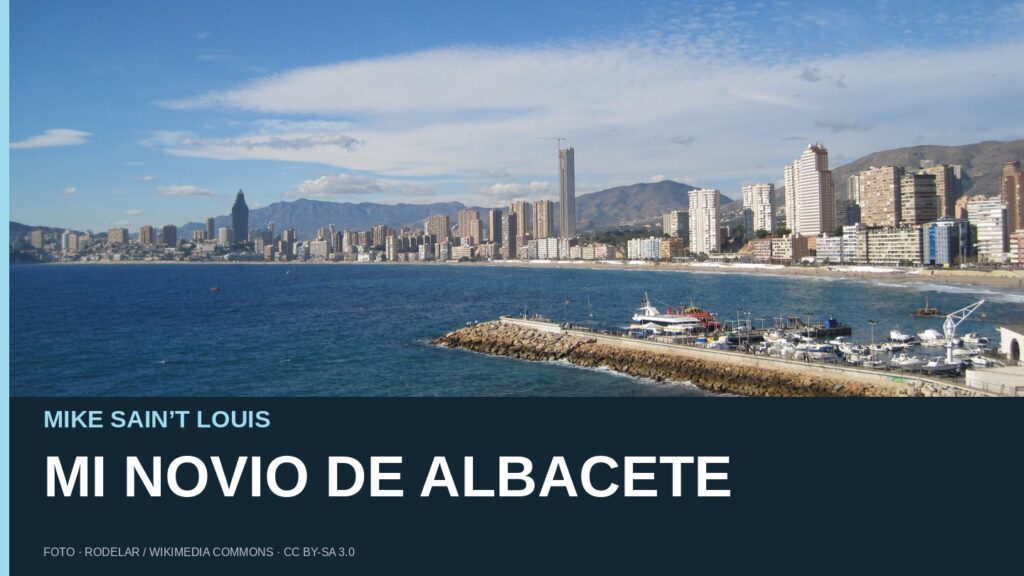
Mike Sain’t Louis connects Mi novio de Albacete with memories of Benidorm
A man travels five hours to leave a note. The note ends up in the toilet. “Mi novio de Albacete,” by Mike Sain’t Louis, spends a surprising amount of its chorus on that transaction. You can hear the letter-writer’s idea of a grand gesture in the distance he has covered….

Press release ·
Mike Sain’t Louis discusses confinement and an open ending in No me aparece una ilusión
Four walls are enough to hold most of Mike Sain’t Louis’s “No me aparece una ilusión”. The singer says that he does not feel like leaving his room. He runs through the things he cannot find, including the strength to go out and a reason to smile, and then comes…

Press release ·
Mike Sain’t Louis gives a relationship dispute the scale of a musical in El narcisista
A flamethrower should settle an argument with a frozen heart. In El narcisista, Mike Sain’t Louis gives the narrator that much firepower and the ice holds. He drops the English word “frozen” into the Spanish lyric, spells out the temperature and repeats the whole business until the effort looks…

Press release ·
Mike Sain’t Louis brings a personal breakup into workplace satire
Somebody is calling the labour inspector again. He apologises for the interruption, then tells the inspector that the head of service has just been sick on the carpet. That is the first item in “Mitad Venezuela, mitad Pakistán,” Mike Sain’t Louis’s account of a working day in which one piece…

Press release ·
Mike Sain’t Louis makes his mirror the subject of El espejo de enfrente
On a good day in “El espejo de enfrente”, Mike Sain’t Louis’s narrator can see his abdominal muscles. He is radiant and the mirror has behaved itself. Later in the same song, its behaviour is so bad that he says he can barely feel his vital signs. Those are the…
Press release ·
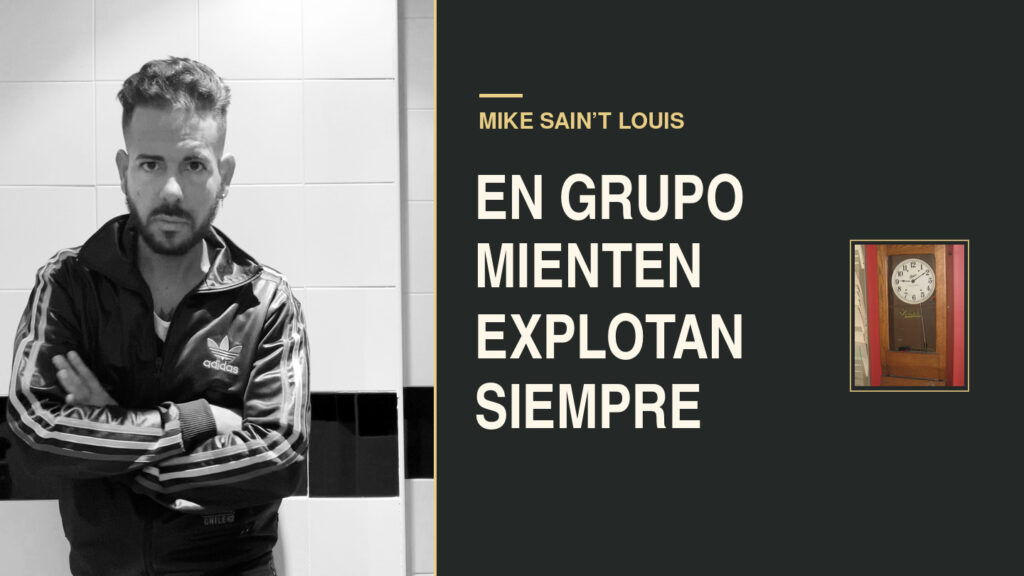
Mike Sain’t Louis brings workplace protest into En grupo mienten explotan siempre
Who gets to count the hours spent on a training course? In “En Grupo Mienten Explotan Siempre,” Mike Sain’t Louis gives that question to an employee who is expected to fit the course into his free time. In the employee’s account, the company will not pay for those hours, and…

Press release ·
Mike Sain’t Louis stages workplace defiance in Que me coma el chumino la jefa de servicio
An offer to help a dismissed colleague arrives almost as an afterthought at the beginning of Mike Sain’t Louis’s “Que me coma el chumino la jefa de servicio.” The speaker remembers something he meant to add. If she needs someone to appear as a witness, she can count on him….

Press release ·
Mike Sain’t Louis returns to his Paco León fantasy in Asqueroso coordinador
The man being addressed in “Asqueroso coordinador” can watch the farewell video over coffee, or in the bathroom, for all the narrator cares. Mike Sain’t Louis gives the opening a wonderfully petty sense of occasion. Someone has made a whole song about leaving, and he is imagining the least…

Press release ·
Mike Sain’t Louis turns a dictionary announcement into breakup satire in Bareback
“Bareback” begins with a night that seems to be slipping away without anybody getting drunk. The narrator considers the situation and decides his former partner scarcely deserves a drink in his honour anyway. Mike Sain’t Louis starts the song at this small, sour moment of decision. An evening…

Press release ·
Mike Sain’t Louis dedicates the lullaby Limón to his chihuahua
In the last seconds of the video for “Limón”, a second chihuahua turns up. By then Mike Sain’t Louis has given most of the clip to a cream-coloured dog getting comfortable on a white duvet. The new arrival is Pitufo. He lies partly across Limón and keeps his head up,…

Press release ·
Mike Sain’t Louis revisits the promise of growing old together in Envejecer
Two men with white hair stand near the water. One wears a pale shirt, the other a dark one. When they take each other’s hand, the action is so unremarkable that it could belong to any afternoon at the beach. In Mike Sain’t Louis’s video for “Envejecer,” we also see…

Press release ·
Mike Sain’t Louis gives Esta cobardía a video centred on love between women
By the time the singer of “Esta Cobardía” compares the woman he loves to a star, he has already been close enough to study her eyes. That is the awkward fact behind the grand chorus. In the opening verse he is right there with her, keeping a sigh to himself…

Press release ·
Mike Sain’t Louis combines horror and sitcom comedy in Igual que en las pelis slasher
Somebody has come downstairs in pyjamas and a dressing gown, ready to tell the neighbours everything. That is the detail Mike Sain’t Louis especially enjoys in “Igual que en las pelis slasher.” The song has already raised its voice like a market trader and asked the anxious questions of a…

Press release ·
Mike Sain’t Louis traces the collapse of admiration in De mito a vómito
Take the Spanish word mito, a myth, and put one syllable in front of it. The result means vomit. Mike Sain’t Louis gets an entire change of heart out of the closeness of those two words. In “De mito a vómito,” the person who once seemed worth admiring has become…

Press release ·
Mike Sain’t Louis combines television comedy and a breakup in Esperma
The opening of “Esperma” pretends to congratulate someone on how deeply he has cared. The sarcasm is evident before the song has explained what happened. Its speaker has been watching a former partner stay silent and reads that silence as the decision of someone who has been caught out. Mike…

Press release ·
Mike Sain’t Louis draws on South Park for El Panda del Acoso Sexual
A list of occupations opens Mike Sain’t Louis’s “El Panda del Acoso Sexual.” The narrator can be a poet, a business owner, a dietitian, a telemarketer and a web designer, with several more entries still to come. Then the list becomes cheerfully obscene. It is an extravagant introduction for a…

Auf Spanisch
Diccionario GAYFOLK: glitter
Nueva entrada del diccionario de mi planeta: glitter. La purpurina de la mañana después, las calles brillantes donde dos chicos se dan la mano a escondidas, las lágrimas de plástico de una corona falsa y las que no brillan nada. Definición, origen, acepciones, ejemplos sacados de mis letras y una nota de uso para no confundir el brillo con la fiesta.

Auf Spanisch
Prensa que habló de GAYFOLK: lo que contaron CharlyFM y Revista 360º
En octubre de 2026 GAYFOLK apareció en dos medios: un artículo de CharlyFM, la radio online canaria, y una colaboración mía en Revista 360º. Releo los dos textos con calma: qué dijeron, qué se quedó fuera, qué aprendí al ver mi proyecto contado desde fuera y qué hago ahora con esas palabras.

Auf Spanisch
«Esta cobardía»: la balada de Chiquetete que quise traer a mi planeta
«Esta cobardía» no es mía: la escribieron Francisco Martínez Moncada y Paco Cepero, la cantó Chiquetete en 1984 y la versionó medio continente. Repaso de dónde viene esa balada, por qué un amor que no se atreve a decirse suena tan cerca del armario y qué significa volver a cantarla desde Planeta Gayfolk.

Auf Spanisch
«Ay, gachó» palabra por palabra: el caló que hablamos sin saberlo
«Ay, gachó» es la canción de mi catálogo con más palabras de caló por verso: gachó, payo, currelar, chanelar, queli, biruji, paripé, chaval. Repaso la letra palabra por palabra, con lo que dicen el diccionario académico y las fuentes sobre su origen, y alguna sorpresa: no todo lo que suena a caló viene del caló.

Auf Spanisch
«En todas las familias 2.0»: reírme de mí en tercera persona
En «En todas las familias 2.0» hay una voz que se pregunta quién es ese tal Mike Sain't Louis, si es español, inglés o francés, y se ríe de que solo tenga tres oyentes. Esa voz es la mía. Por qué me gusta burlarme de mí mismo en tercera persona, qué hace ese estribillo de sobremesa familiar y cómo encaja en mi catálogo de canciones sobre narcisistas.

Auf Spanisch
Diccionario GAYFOLK: frío
Nueva entrada del diccionario de mi planeta, justo cuando empieza a refrescar: frío. El de la casa vacía, el del que se hace el interesante, el del plato de la venganza y el de la excusa que se le cuenta al médico. Definición, acepciones, ejemplos sacados de mis letras, frases hechas y una nota de uso para no confundir la calma con la escarcha.

Auf Spanisch
El videoclip de «Mi Pena» plano a plano: dos hombres, una copla y un espejo
Blanco y negro, un título en neón rosa, dos hombres que se buscan y se separan, una carretera de noche, velas, una casa encalada y un espejo al final. Recorro el videoclip de «Mi Pena» plano a plano y lo pongo al lado del «pena, penita, pena» que asoma en su estribillo.

Auf Spanisch
Las transiciones de mis videoclips
Entre un plano y el siguiente hay una decisión pequeña que casi nadie mira y que lo cambia todo: el corte seco, el fundido, el salto de lugar, el negro final. Un repaso a las transiciones en el videoclip, a lo que cada una le dice al espectador y a cómo pienso esos pasos cuando una canción tiene que pasar de un sitio a otro.

Auf Spanisch
El orden de las pistas de la trilogía y sus pequeñas trampas
Los tres discos de la trilogía GAYFOLK suman 275 pistas, y su orden esconde algunos guiños: discos que terminan con su propio título, una canción que aparece en dos álbumes, parejas de títulos que se responden y un disco que empieza, literalmente, con un «Spoiler». Un recorrido en primera persona por esas pequeñas trampas.

Auf Spanisch
Mis reglas para no copiarme a mí mismo después de 273 singles
Con 273 singles publicados, el riesgo ya no es quedarme sin ideas, sino repetir las mismas con otra ropa. Estas son las normas que intento aplicarme al escribir: cambiar la forma antes que el tema, desconfiar de la rima que llega sola, mirar quién habla en la canción y aceptar que no todo parecido es un fallo.

Auf Spanisch
El otoño en mi estudio: canciones de días cortos
Cuando cambia la hora y anochece antes de que acabe la tarde, algunas de mis canciones suenan de otra manera. No es una rutina idealizada ni un truco de productividad: es una reflexión sobre la luz, el ánimo y las letras que mejor acompañan los días cortos, con una lista para escuchar y un recordatorio de dónde pedir ayuda.

Auf Spanisch
La portada de «20 Años»: una imagen para una canción
Dos figuritas idénticas sobre una tarta partida, un título en tipografía de imprenta y mucho espacio vacío. La portada de «20 Años» pone una boda donde la letra habla de envidia, de aplausos que duelen y de cero contacto. Por qué esa imagen y no otra, y cómo se lee la distancia entre lo que se ve y lo que se canta.

Auf Spanisch
El videoclip de «Manual de escape de un narci»: lo que cuenta la imagen cuando suena la canción
Una taberna de piedra llena de humo, hombres de negro que se encaran, chispas que saltan entre las manos, una carrera por callejones empedrados y un rótulo final bajo una luna azul. Así se mira el videoclip de «Manual de escape de un narci», escena a escena, y lo que la imagen añade a una canción que ya era una receta.

Auf Spanisch
La portada de «Autopsia del insomnio»: una imagen para una canción
Un hombre en pijama rosa vuela sobre una ciudad encendida, con zapatillas peludas y una luna enorme del mismo color. La portada de «Autopsia del insomnio» intenta dibujar lo que se siente a las cuatro de la mañana cuando el sueño no llega. La miro por partes: el vuelo, el rosa, la ciudad, la casa iluminada y el título.

Auf Spanisch
Un concierto en pantalla: el directo virtual como primer paso
Un patio de butacas vacío, un videoclip que termina sobre un escenario lleno de humo y una pregunta que me hago a menudo: ¿qué sería un concierto mío? Pienso en voz alta sobre el directo virtual, lo que ya existe en el mundo y lo que la pantalla puede ofrecer antes que cualquier escenario.

Auf Spanisch
«Mood» en pantalla: cómo se mira el videoclip
Esmóquines negros, un torero de chaquetilla dorada que lanza su capote entre llamas, una bailarina que gira en una niebla azul, un abanico rojo enorme, tres tipos con trajes fosforito en una ciudad de colores imposibles y dos hombres que acaban bailando de la mano. Así se mira el videoclip de «Mood», plano a plano.

Auf Spanisch
Mirar la portada de «No Quiero Otro Novio Cojín» antes de escuchar
Un pijama de satén azul con estrellas rosas, un cojín en forma de corazón con volantes, un teléfono de disco que no suena y un título que estalla como una viñeta de cómic. Antes de darle al play, me paro delante de la portada de «No Quiero Otro Novio Cojín» y cuento lo que dice sola, sin música.
Press release ·
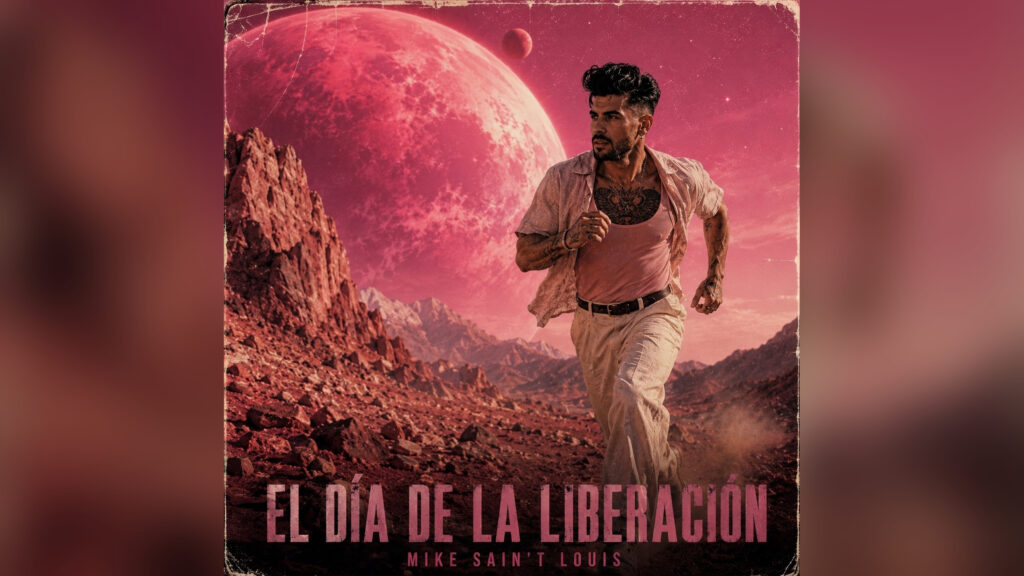
El día de la liberación closes Mike Sain’t Louis’s GAYFOLK trilogy
Four songs from the end of Mike Sain’t Louis’s third GAYFOLK album, the running order reaches The Great Depression. It then moves through Cara de asco and Hoy es el último adiós before arriving at the title song. Those neighbouring titles give the ending a particular weight. A record called…

Press release ·
‘Ojalá se pudiera viajar a GAYFOLK’, the 86-track second album by Mike Sain’t Louis
A man begins by liking pictures of Madonna. Soon there are new profile photographs, frequent stories and enough activity beneath somebody else’s pictures for a suspicious narrator to start counting. This is the opening situation of Spoiler, the first track on Mike Sain’t Louis’s second GAYFOLK…

Press release ·
Mike Sain’t Louis offers the ninety-track album ‘Descubierto un nuevo planeta llamado GAYFOLK’ for free download
The discovery announced in Mike Sain’t Louis’s first GAYFOLK album begins with a crowded social world. There is a drag persona ready for an interstellar night out, an election in need of a candidate and a sequence of relationships remembered through songs. Across ninety recordings, Descubierto…

Press release ·
Mike Sain’t Louis brings Carla Bruni’s name into a French-language farewell
A café and a singer are given parts in a farewell in Mike Sain’t Louis’s Carla Bruni. Le Procope appears as a place capable of sharing the lovers’ sorrow, while the voice associated with the song’s title becomes part of their remembered life. The French lyric places those two names…

Press release ·
Mike Sain’t Louis returns to a pink box of photographs in El impostor
The pink box remains in the bin after the other person has left. It contains three hundred photographs and once existed as a gift, with all the choosing, remembering and care that implies. In El impostor, Mike Sain’t Louis returns to that object as a narrator looks back over a…
Press release ·
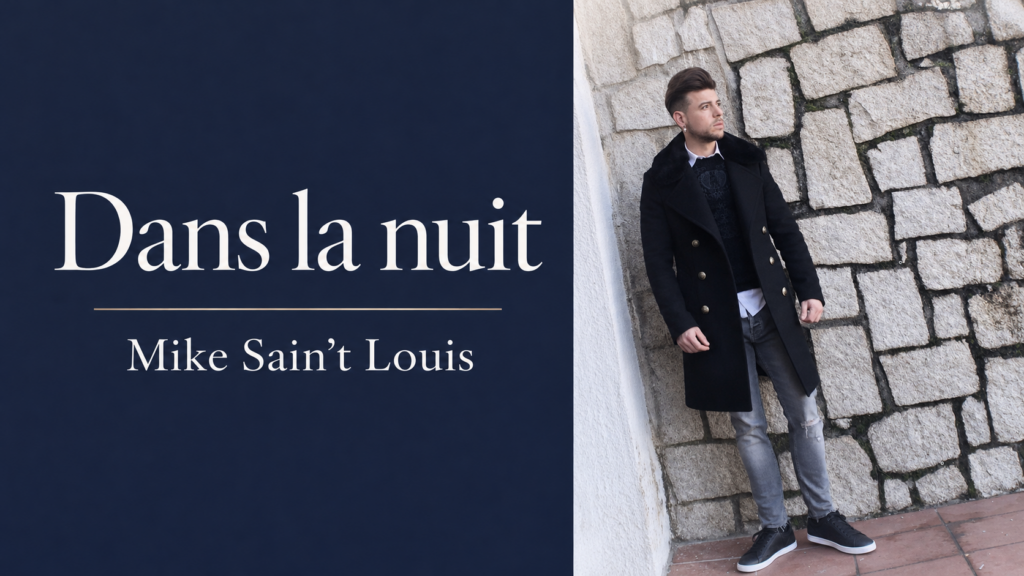
Mike Sain’t Louis explores French-language songwriting in Dans la nuit
Daybreak arrives before the night in Dans la nuit. Mike Sain’t Louis begins the French lyric with a remembered name at dawn, then follows the feeling of absence into another morning and the hours after dark. The recording keeps moving through time while returning to the same emotional situation…

Press release ·
Mike Sain’t Louis draws on The Good Son for a tragicomic song about relationships
The question in Como Macaulay Culkin en El buen hijo is an extravagant attempt to account for a familiar hurt. If meeting someone, making friends and going on dates seems so straightforward for everybody else, could the narrator have done something terrible as a child to deserve such difficulty?…
Press release ·
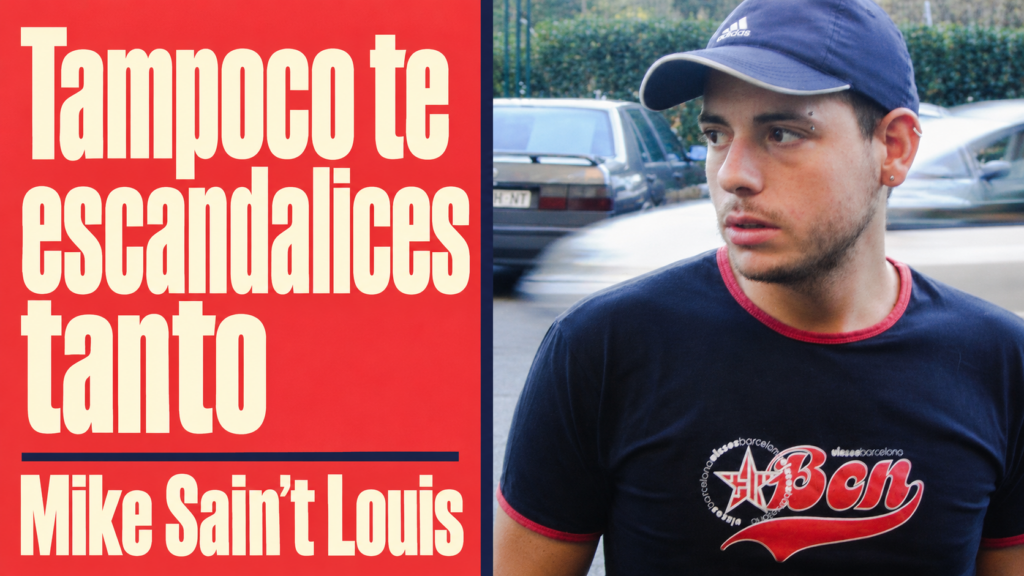
Mike Sain’t Louis turns a habitual reply to critics into Tampoco te escandalices tanto
A gasp of outrage is already part of the performance in Tampoco te escandalices tanto. Mike Sain’t Louis opens with an appeal to God, then tells the shocked listener to settle down. The title was a reply he found himself using whenever somebody reacted to his work. In the song,…
Press release ·
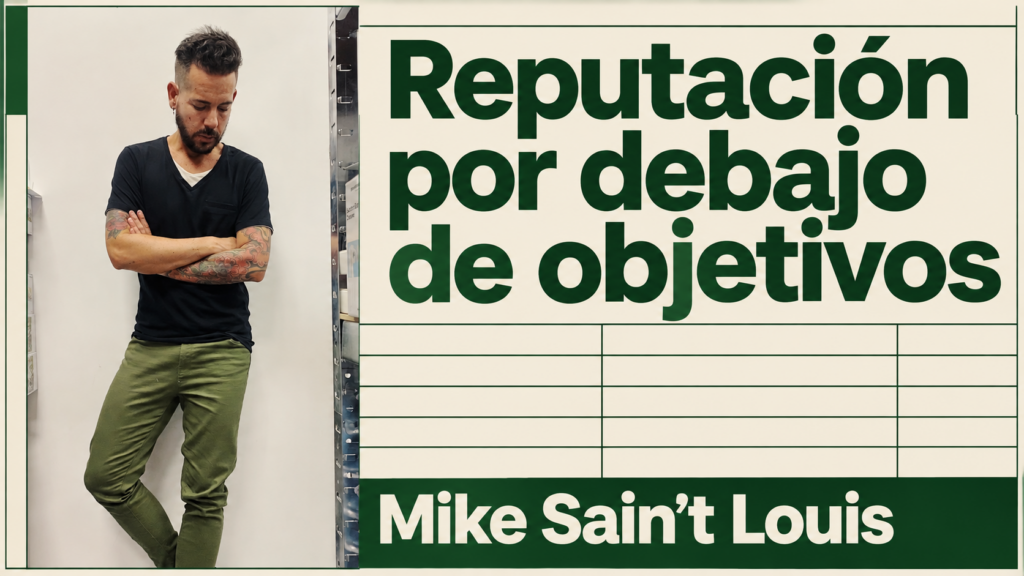
Mike Sain’t Louis turns workplace assessment into satire in Reputación por debajo de objetivos
In Reputación por debajo de objetivos, a phrase that could belong in a staff appraisal becomes a personal insult. Mike Sain’t Louis takes the language of targets and applies it to somebody whose sense of importance has exhausted the narrator’s patience. The official video premiered on 8 February…

Press release ·
Mike Sain’t Louis answers criticism of AI-assisted music in El segundo exacto
The first voices in El segundo exacto belong to people dismissing the work. They say making music with artificial intelligence amounts to pressing a button. They ask what the artist gains from it, particularly when it brings in no money. Mike Sain’t Louis gives those objections enough room to…

Press release ·
Mike Sain’t Louis revisits a sevillana from María de la Colina’s repertoire
A resolution can sound less secure each time somebody repeats it. That tension draws Mike Sain’t Louis to Voy a olvidarme de ti, his adaptation of a sevillana from María de la Colina’s repertoire. The official video, published on 8 February 2025, carries the fuller upload title De la noche…
Press release ·
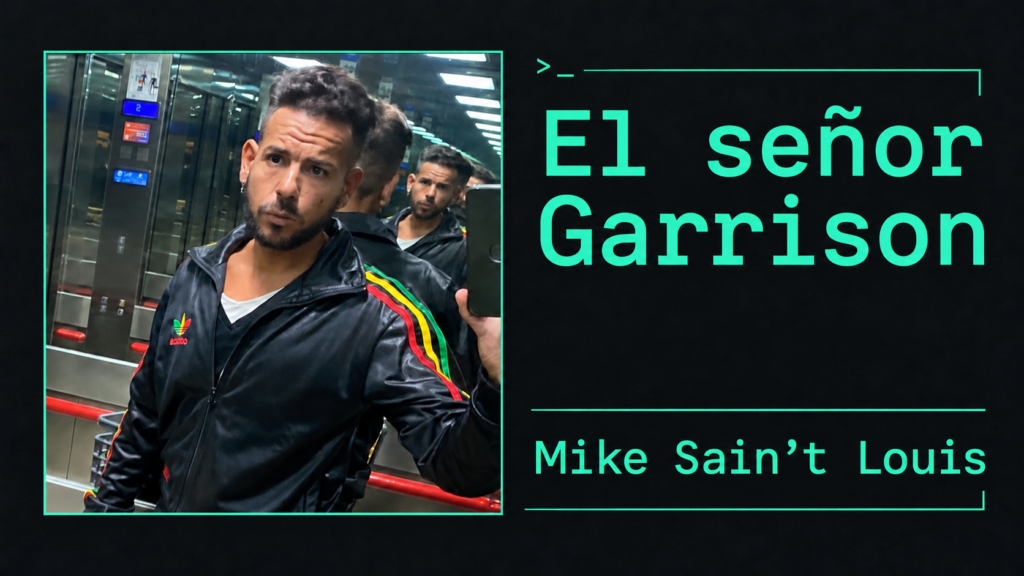
Mike Sain’t Louis brings South Park and computer culture together in El señor Garrison
The narrator of El señor Garrison could have spent his evening watching a horror film. Instead, he has opened the computer and started asking questions about his boyfriend. Mike Sain’t Louis puts programming, network routing and BlueStacks into this small domestic disaster, then gives it the…
Press release ·
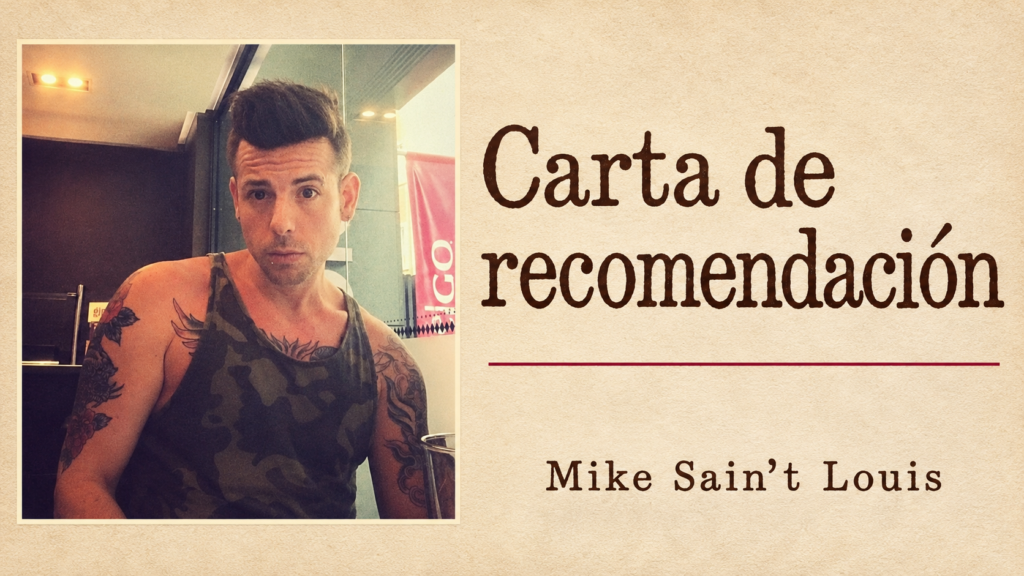
Mike Sain’t Louis reverses the reference-letter format in Carta de recomendación
The blue eyes come with a correction. So does the age, the apparent height and the impressive job description. In ‘Carta de recomendación’, Mike Sain’t Louis gives a departing husband the sort of reference that would make a prospective employer put down the telephone. The recipient, however, is…

Press release ·
Mike Sain’t Louis discusses closure and film imagery in Escupiré sobre tu tumba
Before the revenge fantasy arrives, a carefully prepared plan has already gone wrong. ‘Escupiré sobre tu tumba’ opens with the speaker addressing somebody who has invested time and effort in controlling what happens. Mike Sain’t Louis begins at the moment that confidence starts to fail. The…

Press release ·
Mike Sain’t Louis imagines Carmina Barrios as his ideal mother-in-law in a musical tribute
Lunch is in the garden, Paco León is beside the narrator, and their relationship has lasted long enough for a fourteenth anniversary. The imagined family gathering in ‘Ojalá hubiera tenido de suegra a Carmina Barrios’ is remarkably settled for a song that starts with the wreckage of a marriage…

Press release ·
An electric fan gives Mike Sain’t Louis a blunt image for a breakup song
He comes home and heads into the other room. That small act of avoidance starts ‘No puedo desenchufar este ventilador que está esparciendo mierda’, the Mike Sain’t Louis song whose title soon seems too large for the house containing it. The narrator wants a face-to-face explanation. The other…

Press release ·
Mike Sain’t Louis turns to La que se avecina in Judith Bécker
Choosing a television season by how often a favourite character appears is a very particular way to plan an evening. That is the decision at the centre of ‘Judith Bécker’. After work and a day of crying, the speaker in Mike Sain’t Louis’s song wants to watch the run of…

Press release ·
Mike Sain’t Louis reflects on heartbreak and lost inspiration in Montaña rusa
One pronoun puts distance between two former lovers in ‘Montaña rusa’. Mike Sain’t Louis lets the narrator address the other person with the formal Spanish ‘usted’, a word that can sound decidedly chilly in an intimate argument. Shortly afterwards, the speaker supplies a much less grand measure…

Press release ·
Mike Sain’t Louis identifies Un puñetazo al día as a starting point for GAYFOLK
There is a wreath in the boot of the car, but the man who brought it has come out for a drink. In “Un puñetazo al día,” Mike Sain’t Louis places a symbolic funeral in a familiar Madrid bar. What is being buried is a marriage and the seven years…

Press release ·
Mike Sain’t Louis uses saintly imagery for romantic satire in María Teresa de Calcuta
A saint appears in the first comparison, and the argument immediately gets less respectable. “María Teresa de Calcuta” gives its narrator a spectacularly generous view of himself by placing him beside someone he considers worse. Mike Sain’t Louis makes a whole breakup refrain out of that…
Press release ·
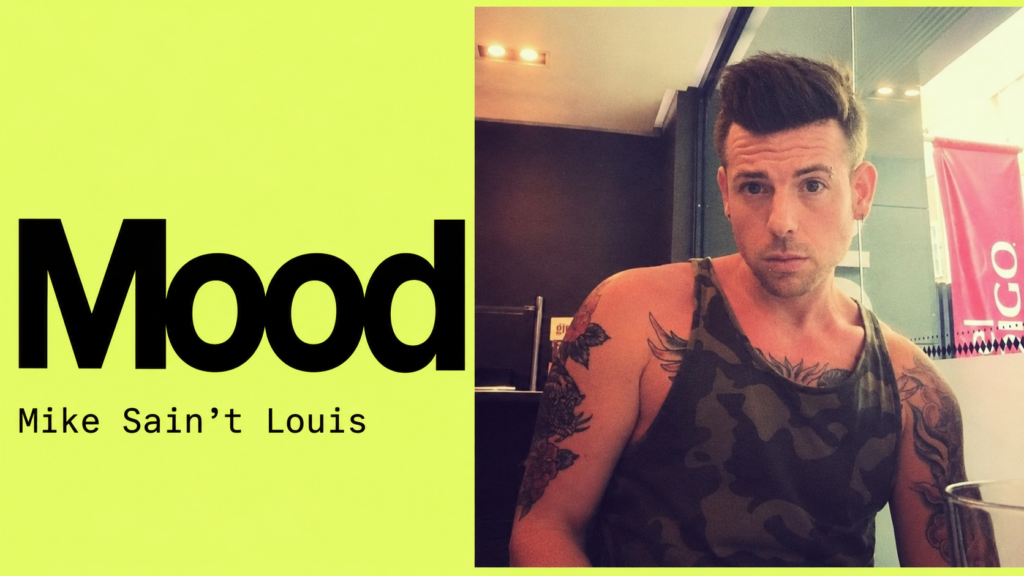
Mike Sain’t Louis builds Mood from the vocabulary of club culture
Take the verbs out of a conversation before a night out and a surprising amount of it survives. Clothes, bodies, money, a club, a beat and the promise of a good time are all present in “Mood.” Mike Sain’t Louis builds the printed lyric from small groups of English words…

Press release ·
Mike Sain’t Louis turns advice to look away into ¿Me hago un folclórica engañada?
The father’s rule sounds familiar enough at first. Children are supposed to listen, watch and keep quiet. Then “¿Me hago un folclórica engañada?” asks what happens when the person being treated as a child is already in his fifties. Mike Sain’t Louis uses that change of scale to open a…

Press release ·
Mike Sain’t Louis writes an irreverent farewell in ‘Ese Pinocho nunca me comía el chocho’
A farewell letter begins by telling its recipient that his version of events is falling apart. The opening of “Ese Pinocho nunca me comía el chocho” gives the former lover a whole imagined scene of his own. He expects to find the narrator broken, desperate and asking him to return….

Press release ·
Mike Sain’t Louis brings theatrical excess to ‘En un musical gay’
Before the former boyfriend has been properly introduced, “En un musical gay” is already explaining how its audience ought to behave. The rules involve bad manners, exaggeration and a willingness to enjoy the spectacle. Mike Sain’t Louis makes those rules part of the song itself. The listener…

Press release ·
Mike Sain’t Louis finds comedy after a breakup in ‘Si Don AussieBum hablase’
The cheaper swimwear has been left behind. The original branded pieces have disappeared. “Si Don AussieBum hablase” gives a breakup a particularly irritating inventory, and Mike Sain’t Louis makes the distinction between those two kinds of garment the first good joke. In the narrator’s account…

Press release ·
Mike Sain’t Louis recounts a breakup through sarcasm
A black-and-white selfie provides the first piece of evidence in “Un falso amore se ha llevado mis bañadores de marca.” The narrator has been told that his former partner is suffering after their separation, yet the photograph seems to show someone who has taken considerable care over how good he…

Press release ·
Mike Sain’t Louis combines artistic defiance and everyday humour in ‘El productor de Madonna no compra en Mercadona’
Madonna and Mercadona are close enough in sound to occupy the same refrain, but the route between them takes in talent, a literary competition, branded deodorant and the chore of buying groceries. “El productor de Madonna no compra en Mercadona” lets Mike Sain’t Louis put those materials into…

Press release ·
Mike Sain’t Louis defends the freedom to fantasise in ‘La dieta del cucurrucho’
The narrator of “La dieta del cucurrucho” is puzzled by the scale of the argument. An expression of admiration for Eduardo Casanova’s eyes and another about Paco León’s attractiveness have apparently disturbed two years without a jealous outburst. Mike Sain’t Louis starts with that disproportion…

Press release ·
Mike Sain’t Louis adopts a comic identity in ‘Soy la Shakira marica del todo a un euro’
An unfriendly comparison arrives through an online message, and “Soy la Shakira marica del todo a un euro” decides to keep it. Mike Sain’t Louis gives the insult a title, repeats it and allows it to become the narrator’s chosen comic identity. The opening lyric specifies the social platform and…

Press release ·
Mike Sain’t Louis brings breakup comedy to ‘Mi último ex era una IA disfrazada’
The proposed artificial boyfriend sounds reassuring at the start of “Mi último ex era una IA disfrazada.” He will tell the truth, answer sincerely and refrain from deception, at least in the narrator’s hopeful specification. Then the list of what he cannot provide arrives. Kisses, embraces and…
Press release ·
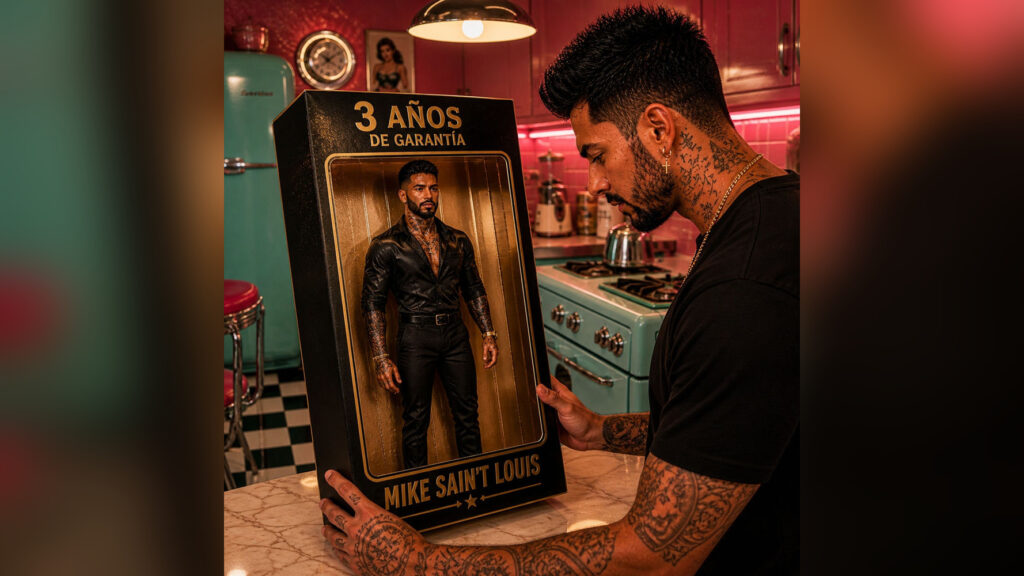
Mike Sain’t Louis applies black humour to a fictional warranty in ‘Tres años de garantía’
A handsome man appears in a television advertisement, and the narrator of “Tres años de garantía” orders the whole package. Within twenty-four working hours, the purchase has arrived in his living room. Payment is collected on delivery, the staff earn a favourable Google review and a trial month…

Press release ·
Mike Sain’t Louis revisits his adolescence in ‘Los fuegos artificiales de Móstoles’
The memories in “Los fuegos artificiales de Móstoles” arrive before anyone has time to arrange them. A meeting place leads to a classroom, a house, a chalet, a nickname and another place. Mike Sain’t Louis builds the lyric from that forward rush. Its title catches one bright scene within a…

Press release ·
Mike Sain’t Louis addresses unequal relationships in ‘No quiero otro novio cojín’
For a long opening stretch, “No quiero otro novio cojín” inhabits a world in which very little happens. Mike Sain’t Louis writes of an empty wake-up, an anonymous street, unhurried steps and work that has lost its taste. Even the coffee is bitter. The short lines keep presenting one drained…
Press release ·
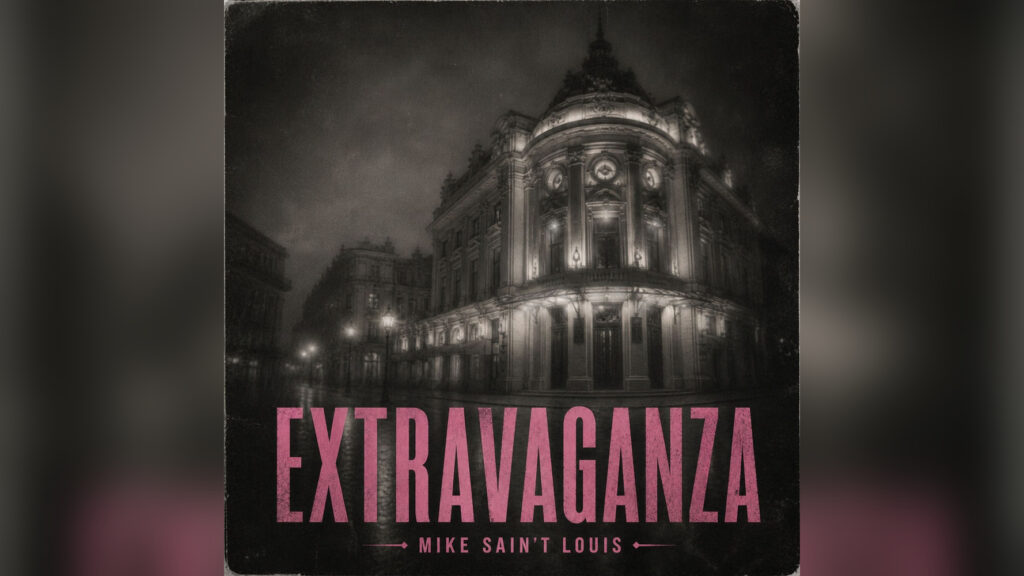
Mike Sain’t Louis dedicates ‘Extravaganza’ to Verónica Forqué
Mike Sain’t Louis’s dedication of “Extravaganza” to Verónica Forqué sits alongside a lyric with an uneasy smile at its centre. In his comment beneath the official video, he thanks the actress for her humour, tenderness and way of seeing life, and extends the dedication across his GAYFOLK…

Press release ·
Mike Sain’t Louis describes the personal origin of ‘Que te mola el cruising’
A teasing greeting opens “Que te mola el cruising,” and the person being addressed is given very little time to explain himself. He is attractive, apparently innocent and, according to the narrator, has been seen kissing. Mike Sain’t Louis builds the song from the delighted insistence of someone…

Press release ·
Mike Sain’t Louis makes a public call for empathy in ‘Yo apoyo públicamente a Ylenia Padilla’
The name in the title keeps coming back, long after a conventional pop song might have moved on to its story. In “Yo apoyo públicamente a Ylenia Padilla,” Mike Sain’t Louis makes the public act of supporting someone the song’s main event. The words move through understanding, identification and…

Press release ·
Mike Sain’t Louis connects a personal tattoo with the dance floor in ‘Tattoo de fénix’
Before “Tattoo de fénix” gets to the person taking hold of the singer’s waist, it places a phoenix on his chest. The tattoo is the first concrete thing in the lyric, and the club follows immediately. Mike Sain’t Louis takes an image associated with starting again and gives it somewhere…

Press release ·
Mike Sain’t Louis shares the personal background to ‘So Insignificant’
Another worry arrives before the previous one has been dealt with. Another disappointment follows, then another piece of bad news. The opening of “So Insignificant” builds exhaustion through those ordinary additions. Mike Sain’t Louis writes the song in English using a small vocabulary of…

Press release ·
Mike Sain’t Louis questions artistic gatekeeping in ‘La insignia de artista’
A person with important contacts announces the terms on which somebody else may enter the music business. As the list of contacts grows, it begins to include supplication and exhaustion. That is where “La insignia de artista” starts making its gatekeeper look ridiculous. Mike Sain’t Louis gives…

Auf Spanisch
Diccionario GAYFOLK: tarima
Segunda entrada del diccionario de mi planeta: tarima. La de la verbena, la del tablao, la del concurso de drags, la que convierte a cualquiera en artista durante tres minutos. Definición, acepciones, ejemplos sacados de mis letras, frases hechas y una nota de uso para no caerse al bajar.

Press release ·
Mike Sain’t Louis brings a queer perspective to Vídeo’s ‘La noche no es para mí’
The clock has passed two in the morning and the room looks different, although the singer suspects that very little has changed. That detail gives “La noche no es para mí” its uneasy footing. Mike Sain’t Louis returns to the song originally recorded by Vídeo, bringing its account of nightlife…

Press release ·
Mike Sain’t Louis reinterprets Lucía’s ‘Él’ from a gay male perspective
Two free hours are enough to set the whole triangle moving. The speaker in “Él” has an opening between eight and ten, suggests a drink and chooses the less dependable of the two men in the story. Mike Sain’t Louis revisits the song Lucía performed for Spain at Eurovision in…

Press release ·
Mike Sain’t Louis celebrates Malena Gracia in his bilingual tribute ‘Malena’
Someone steps into a club and the room begins to arrange itself around her. That is the entrance Mike Sain’t Louis gives Malena Gracia in “Malena,” his bilingual tribute to the singer and actress. English and Spanish share the lines from the start. The movement between them suits a lyric…

Press release ·
Mike Sain’t Louis explores being forgotten in ‘Nadie hablará de mí cuando haya muerto’
The guest list begins with two friends, then immediately reduces itself to perhaps one. “Nadie hablará de mí cuando haya muerto” starts counting the people at an imagined funeral before its narrator has even finished the first thought. Mike Sain’t Louis builds the song around that uncomfortable…

Press release ·
Mike Sain’t Louis revisits a breakup in ‘Una figura tuya más de Lego’
A Lego figure gives Mike Sain’t Louis a blunt image for the end of a relationship. In ‘Una figura tuya más de Lego’, the person addressing an ex-boyfriend has come to believe he was interchangeable, another small character to assemble, display and replace. The title arrives at the end of…

Press release ·
Mike Sain’t Louis shares an invitation to reconnect in ‘Flash’
Before anybody reaches the dance floor in ‘Flash’, there is a small preparation at the mirror. Mike Sain’t Louis opens the song with a flash ampoule, the quick cosmetic treatment used to make a tired face look ready for an evening out. It is an unusually specific starting point for…

Press release ·
Mike Sain’t Louis discusses copla, humour and hidden love in ‘El anillo de casado’
Five tankards at Cien Montaditos begin the romance in Mike Sain’t Louis’s ‘El anillo de casado’. Two men exchange laughter and looks while trying to remain discreet. The speaker is tipsy, happy and quite clear about wanting the other man in his bed. His next wish introduces the difficulty that…

Press release ·
Mike Sain’t Louis makes beauty-treatment gossip self-mocking in ‘Toxina coreana’
The most important information in ‘Toxina coreana’ arrives late. After a conversation about tired skin, cosmetic injections and a raised eyebrow, the person telling the story admits that the friend under discussion is herself. Mike Sain’t Louis builds the joke around that reversal. Someone who…

Press release ·
Mike Sain’t Louis combines classical references and blunt Spanish in ‘Mentes diabólicas’
A theatre appears in the first line of ‘Mentes diabólicas’, but the manners do not remain polite for long. Mike Sain’t Louis begins with the idea of a world in which everybody performs a role, then moves into a chorus that tells hypocrites exactly where they can put their criticism….

Press release ·
Mike Sain’t Louis turns a celebrity-press phrase into the refrain of ‘Dientes, dientes’
Showing your teeth becomes a method of answering hostility in Mike Sain’t Louis’s ‘Dientes, dientes’. The Spanish title repeats the word for teeth, borrowing a familiar expression from Spain’s celebrity press and making it the central instruction in the chorus. The smile is hardly innocent. It…

Press release ·
Mike Sain’t Louis presents the comic imagination behind ‘¡Vaya director!’
A nearly expired mobile line and an unexpected WhatsApp message start the account behind ‘¡Vaya director!’. Mike Sain’t Louis puts those small communications details inside a song of repeated exasperation with a hotel manager. The speaker says he has only just found out what was happening. He…

Press release ·
Mike Sain’t Louis pairs romantic nerves with comedy in ‘Ese chulito’
The butterflies in ‘Ese chulito’ have an unexpectedly practical history. Mike Sain’t Louis introduces somebody so attractive that the speaker cannot sleep and can think of little else. Then the lyric asks when he last felt this nervous. The answer is his driving test, followed two years later by a…

Press release ·
Mike Sain’t Louis mixes gay desire and neighbourhood comedy in ‘La vecina cotilla’
A window opposite provides most of the action in Mike Sain’t Louis’s ‘La vecina cotilla’. The man who lives there exercises in short shorts, appears at the window and changes into his pyjamas. Across the space between the homes, the speaker watches, loses his bearings and puts on a song…

Press release ·
Mike Sain’t Louis combines copla and a comic alibi in Un invitado VIP cortando cebolla
A man with red eyes walks through Madrid and insists he has been making a salad. It is an unconvincing explanation, and that is why it matters in Mike Sain’t Louis’s “Un invitado VIP cortando cebolla”. The title supplies an onion where an admission of grief ought to be. Around…

Press release ·
Mike Sain’t Louis explains why he wrote Ya no te quiero
How many times does a person have to say that love has ended before the words begin to sound convincing? “Ya no te quiero”, by Mike Sain’t Louis, gives that question very little verbal cover. Its lyric keeps returning to a denial of love, changing the order and emphasis of…

Press release ·
Mike Sain’t Louis draws on horror cinema in Como en la matanza de Texas
The man who opens the door seems to have arrived from a kinder story. He listens, takes the distressed narrator seriously and calls the police. Then the emotional vampire reaches him too. That reversal gives Mike Sain’t Louis’s “Como en la matanza de Texas” its particular horror-film joke…

Press release ·
Mike Sain’t Louis challenges dating-app prejudices in Buscando el polvo perfecto
A dating profile can reject somebody without ever having a conversation with him. “Buscando el polvo perfecto”, by Mike Sain’t Louis, hands that power to a narrator who enjoys using it. Age, body and the performance of masculinity become grounds for instant dismissal. The voice is deliberately…

Press release ·
Mike Sain’t Louis examines an open-relationship dilemma in Scott Bonehill
“It’s not you, it’s me” usually arrives near the end of a relationship. In “Scott Bonehill”, Mike Sain’t Louis places that familiar sentence inside an attempt to keep one going. The narrator is trying to explain why he cannot accept an arrangement his partner appears ready to embrace. He can…

Press release ·
Mike Sain’t Louis imagines an AI boyfriend in Mejor que Ben Affleck
The imagined boyfriend in “Mejor que Ben Affleck” has an impressive list of specifications. He is good-looking, intelligent, punctual, considerate and apparently free of the arguments that complicate less carefully designed relationships. Mike Sain’t Louis turns that list into a romantic fantasy…
Press release ·
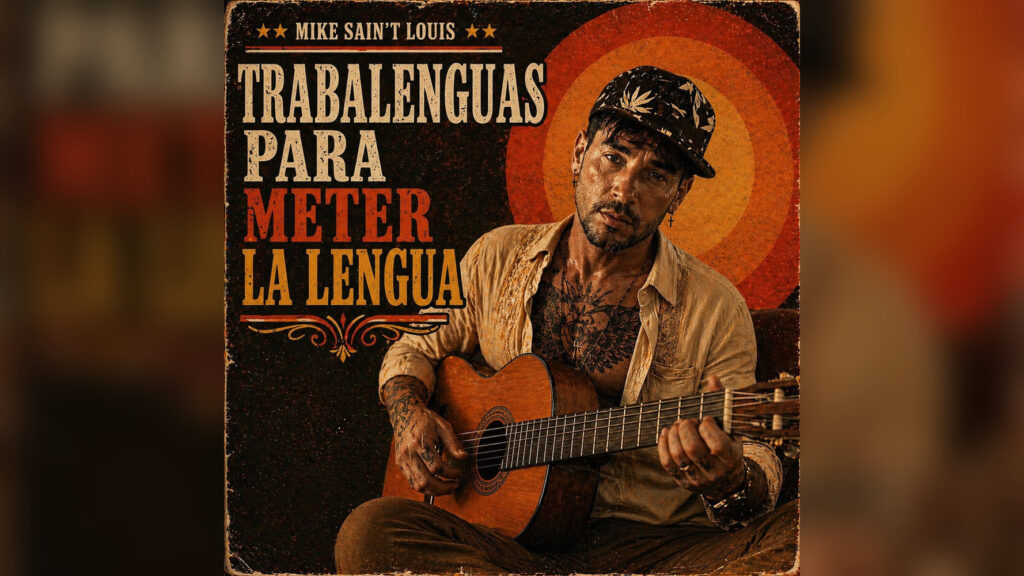
Mike Sain’t Louis playfully addresses Paco León in Trabalenguas para meter la lengua
Paco León and Miguel Ángel de León share enough sounds to start a tongue twister. In Mike Sain’t Louis’s “Trabalenguas para meter la lengua”, that coincidence is more than sufficient material for an elaborate flirtation. The artist’s given name and the actor’s name are repeated, reversed and…

Press release ·
Mike Sain’t Louis imagines a flight to GAYFOLK in Elon Musk ha anunciado
Coffee has become bitter, work has lost its taste and the streets seem full of people without faces. The opening of “Elon Musk ha anunciado”, by Mike Sain’t Louis, makes everyday life feel repetitive enough to exhaust the person describing it. Then a fictional news bulletin interrupts. A first…

Press release ·
Mike Sain’t Louis puts marijuana at the centre of ‘Tengo argumento’
María is causing trouble in a relationship, but “Tengo argumento” keeps refusing to tell the listener exactly who she is. Mike Sain’t Louis introduces her through a succession of exclusions, jokes and claims of devotion. A familiar Spanish name can suggest a person, a religious figure, a biscuit…

Press release ·
Mike Sain’t Louis looks back on La despedida, his tribute to Camela
Camela is there for the first kiss, the almost-wedding, the nervous journey to Chueca and the trip to buy hairspray. In “La despedida”, Mike Sain’t Louis makes the group’s name the beginning of line after line, as though one soundtrack could hold an untidy personal history together. Then the…

Press release ·
Mike Sain’t Louis imagines a galactic election in Vota Malena Gracia
The campaign begins in a club. Malena arrives, the room lights up and admiration quickly becomes an election slogan. Mike Sain’t Louis’s “Vota Malena Gracia” imagines a candidate whose persuasive power comes from glamour, movement and the wish to be more like her. Its rally sounds ready for a dance…

Press release ·
Mike Sain’t Louis presents El día más ideal, a song of farewell
An apology about the date is the unsettling centre of “El día más ideal”. The narrator in Mike Sain’t Louis’s song is imagining a final farewell, yet keeps worrying about whether the day is inconvenient for other people. That mismatch gives the title its force. Everyday politeness continues…

Press release ·
Muzikalia features Mike Sain’t Louis’s La primera drag in its emerging-artist selection
Ana Locking is the person the narrator wants to dress him and take him out. In Mike Sain’t Louis’s “La primera drag”, that wish immediately expands into twelve hours of laughter and the best party of a life. The imagined occasion is extravagant from the beginning. By the time the…

Press release ·
Mike Sain’t Louis shares the personal history behind his GAYFOLK trilogy
The GAYFOLK trilogy begins with discovery, moves into the wish to travel and ends with liberation. Mike Sain’t Louis’s account of why he created it gives those large titles a personal starting point. Behind the imaginary queer planet, he describes loneliness, difficult relationships, loss and…

Press release ·
Mike Sain’t Louis presents television-shopping satire in ‘Revivir a Manolete’
Getting a refund ought to be easier than bringing somebody back from the dead. “Revivir a Manolete”, by Mike Sain’t Louis, puts those two promises beside each other and lets the difference become the joke. The narrator has had enough of television shopping. An attempted return reaches an…

Press release ·
Mike Sain’t Louis releases the official video for ‘Estrafalaria’
The narrator in “Estrafalaria” is prepared to ruin his reputation, although he admits there was not much of it left to ruin. That joke gives Mike Sain’t Louis’s six-minute song an untidy, self-aware centre. The official video, released on 7 November 2026, begins with the qualifications for a gay…

Auf Spanisch
El cuaderno de títulos: frases que esperan su canción
Con 273 singles publicados, los títulos de mis canciones ya forman casi un libro por sí solos. Los he mirado juntos, como si fueran un cuaderno de frases sueltas, y he encontrado familias, manías y algunas trampas. Esto es lo que veo cuando leo mis títulos sin la música.

Auf Spanisch
¿Qué le dirías a alguien que quiere empezar a hacer canciones?
Es una pregunta que no cabe en dos líneas, así que la contesto aquí con calma: lo que le diría a alguien que tiene una libreta llena de frases, ganas de hacer canciones y miedo a empezar. Sin recetas mágicas, con lo que me ha enseñado publicar mucho.

Auf Spanisch
La soledad creativa y la soledad a secas
Hay una soledad que elijo para escribir y otra que llega sin pedir permiso. Desde fuera se parecen mucho: un hombre en una habitación, sin hablar con nadie. Desde dentro son dos cosas casi opuestas. Intento explicar la frontera entre las dos, con «Antisocial» y «Entre cuatro paredes» como los dos extremos.

Auf Spanisch
Errores de la IA que me hicieron reír
Estribillos que vuelven cuando nadie los llama, acotaciones cantadas como si fueran versos, palabras con el acento en la sílaba equivocada, coros celestiales en una canción sobre el sarro. Trabajar con IA tiene mucho de oficio y bastante de comedia involuntaria. Repaso los tipos de error que me hacen reír y lo que me enseñan sobre mis propias canciones.

Auf Spanisch
«Nadie hablará de mí cuando haya muerto» en pantalla: cómo se mira el videoclip
Un hombre con lágrimas en la cara, un cura entre la niebla, una figura encapuchada con máscara en un bosque, un tipo con un hacha bajo la luna llena, un payaso en un callejón y dos ancianos sentados entre montañas de basura. Así se ve el videoclip de «Nadie hablará de mí cuando haya muerto», y así propongo mirarlo: como un velatorio que se convierte en película de miedo.

Auf Spanisch
Mirar la portada de «Beats Drop Time Stops» antes de escuchar
Un castillo de agujas negras, una luna llena teñida de rosa, farolillos fucsia y tres figuras de encaje y terciopelo. La portada de «Beats Drop Time Stops» promete una noche gótica; la letra, en cambio, son doce versos de dos palabras que celebran. Leo la imagen detalle a detalle antes de darle al play y cuento qué encaja y qué sorprende.

Auf Spanisch
Portadas de single: reglas que sigo para 273 imágenes distintas
Con 273 singles hay 273 portadas, y ninguna se repite. Pongo ocho una al lado de otra y cuento lo que se ve: el nombre que siempre está, la tipografía que cambia según el género, el color que dice el tono antes que el título, las portadas en las que no salgo y las que comparto. Reglas que se notan mirando, más que recetas.

Auf Spanisch
El primer plano final: cómo cierro un videoclip
El último plano de un videoclip es la última frase que ve quien escucha. Repaso cómo pienso los finales a partir de cómo acaban las letras: el remate con chiste, la repetición que se apaga, el final abierto, el final colectivo y el que se ríe de sí mismo. Y por qué un buen cierre no explica la canción, sino que la deja sonando.

Auf Spanisch
Escribir sobre el abuso narcisista sin nombrar a nadie
He escrito muchas canciones sobre el abuso narcisista y en ninguna digo quién. No es timidez ni miedo: es una decisión. Cuento por qué no nombro a nadie, qué hago en su lugar —caricatura, rasgos que cambian, nombres de broma, hablarle a quien lo está pasando— y qué se gana cuando la canción deja de ser una venganza para convertirse en un espejo.

Auf Spanisch
Lo que significa ser «el primer cantautor IA»
En mi web pone «el primer cantautor IA». Es una etiqueta corta que dice mucho y que también puede confundir. Aquí la desmonto palabra por palabra: qué quiero decir con «cantautor», qué hace la IA y qué no, qué significa «primero» y qué no pretende significar, y qué compromisos me trae llevarla puesta.

Auf Spanisch
Publicar el mismo videoclip en tres plataformas: lo que cambia en cada una
Un videoclip no es el mismo en YouTube, en un vídeo vertical de un minuto y en mi propia web. Cambia el formato, cambia quién lo ve, cambia lo que hay alrededor. Repaso lo que se gana y lo que se pierde en cada sitio, con un ejemplo muy claro: un plano de «Trabalenguas para meter la lengua» que, recortado en vertical, se queda sin protagonistas.

Auf Spanisch
Mis canciones sobre narcisismo: escucharlas con cuidado
Tengo canciones sobre el abuso narcisista que se bailan y otras que duelen. Esta es una pequeña guía para escucharlas con cuidado: por dónde empezar, cuáles dejar para otro día, qué hacer si una letra te remueve más de la cuenta y por qué ninguna canción sustituye a una psicóloga. Si lo estás pasando mal, el 024 atiende gratis a cualquier hora.

Auf Spanisch
El videoclip de «Trabalenguas para meter la lengua» plano a plano
Un teatro con palcos dorados, una pasarela rosa con maniquíes, besos a la luz de las velas y en un carrusel, una villana de pelo violeta que dispara rayos, dos barbudos frente a un ojo de buey con un planeta azul, un puente de noche y un telón rojo con letras de neón. Repaso plano a plano el videoclip de «Trabalenguas para meter la lengua» y por qué un vídeo de tres minutos cambia de decorado cada pocos segundos.

Auf Spanisch
Oír con la etiqueta puesta: lo que cambia cuando sabes que una canción está hecha con IA
Casi nadie distingue por el oído una canción hecha con IA, pero en cuanto lo sabe, la escucha cambia. Repaso lo que dicen los estudios y encuestas recientes sobre el prejuicio del oyente, y por qué una letra escrita por una persona devuelve a alguien al otro lado.

Auf Spanisch
Terapia con poco dinero: puertas reales en España, México, Colombia, Argentina y Chile
Necesitar terapia y no poder pagarla es más común de lo que parece. Aquí reúno, comprobadas en fuentes oficiales, las vías públicas, universitarias, asociativas y online para encontrar atención psicológica con poco dinero, y cómo saber si el profesional es de verdad.

Auf Spanisch
Música hecha con IA y derechos de autor hoy: qué protege la ley en la UE, España, EE. UU. y Latinoamérica
¿De quién es una canción hecha con IA? Reúno lo que dicen hoy leyes, sentencias e informes oficiales en Europa, España, Estados Unidos y Latinoamérica, la diferencia entre la letra escrita por una persona y lo generado, y qué conviene saber antes de publicar. Información general, no asesoramiento legal.

Auf Spanisch
Un número para cada país: líneas de crisis gratuitas en España, Latinoamérica y Europa
El 024 solo contesta en España, y a mí me leen también en México, Colombia, Argentina o Londres. Aquí reúno, país por país, las líneas gratuitas de crisis y salud mental que he podido comprobar en fuentes oficiales, con recursos LGTBI donde existen. Si no he podido verificar un número, no lo he puesto.

Auf Spanisch
La letra entera, en casa: por qué guardo cada canción escrita en mi web
En las plataformas, una letra pasa línea a línea o ni siquiera aparece. En mi web, cada canción tiene la suya completa. Explico por qué: la letra como archivo, como memoria y como prueba de autoría de alguien que escribe sus canciones y produce la música con IA.

Auf Spanisch
La frase que vuelve: qué es la rumiación y por qué no es lo mismo que reflexionar
Una frase, una discusión o un error que la cabeza repite sin parar tiene nombre: rumiación. Explico qué dice la psicología desde Nolen-Hoeksema, en qué se diferencia de reflexionar, su relación con la depresión y la ansiedad, qué técnicas tienen respaldo y por qué escribir una letra está en el lado contrario.

Auf Spanisch
Indie de origen, alternativo por contenido: por qué me defino así
Me defino como indie alternativo, y no lo digo por el sonido. Repaso de dónde vienen esas dos palabras, en qué se han convertido hoy y por qué lo que hago, con IA, sello propio y letras sin filtro, no cabe en el molde de la industria convencional.

Auf Spanisch
Estar al lado sin arreglar nada: cómo acompañar a alguien con depresión
Una guía para quien acompaña: qué ayuda de verdad, qué frases conviene evitar aunque se digan con cariño, cómo cuidarse uno mismo y cuándo hay que pedir ayuda urgente. Con fuentes fiables y los teléfonos a mano: 024 y 112.

Auf Spanisch
Chistes con pasaporte: escribir letras para las dos orillas del español
Una misma palabra puede ser tristeza en Madrid y vergüenza en Bogotá. Hablo de los significados que cambian al cruzar el Atlántico, del humor que viaja y del que se queda en la aduana, y de cómo canciones como «Me rindo» o «El productor de Madonna no compra en Mercadona» tienden puentes entre España y América Latina.

Auf Spanisch
El silencio aprendido: hombres gays que tardan en pedir ayuda psicológica
Muchos hombres, y sobre todo muchos hombres gays, aprendimos a decir «estoy bien» cuando no lo estábamos. Repaso lo que dicen los datos sobre ese silencio, las señales que indican que no conviene esperar más y cómo dar el primer paso hacia un profesional.

Auf Spanisch
Mirar la portada de «Gatekeeping» antes de escuchar
Una celda acolchada blanca, una camisa de fuerza con una correa y una hebilla de metal, un hombre sentado que mira a cámara sin pestañear y dos líneas de letras clásicas. Antes de darle al play, me paro delante de la portada de «Gatekeeping» y cuento lo que dice sola, sin música: quién encierra a quién y por qué el último verso de la canción la contradice.

Auf Spanisch
Plan de noviembre de 2026: lo que quiero trabajar en mi música este mes
Noviembre empieza y me apetece apuntar en público lo que quiero trabajar estas cuatro semanas: volver a escuchar mi catálogo con calma, contar mis videoclips plano a plano, cuidar las letras publicadas, el 20 de noviembre y «Franco ha muerto», las descargas gratis y un ritmo que no me queme. Un plan de mes, sin promesas que no pueda cumplir.

Auf Spanisch
Del electropop a la copla en la misma sesión: cambiar de piel sin perder la voz
Un «ay, mi pena» que se pasa al inglés, una tecno-rumba de homenaje, aliteraciones de sintetizador y despechos de folclórica. Cómo conviven el electropop y la copla en mi catálogo, qué decide el género de una canción y qué es lo que no cambia aunque cambie el traje.

Auf Spanisch
Colores, letras y gesto: la portada de «Nadie hablará de mí cuando haya muerto» al detalle
Una columna negra con el título en mayúsculas rosas, un hombre de luto con los ojos cerrados y lágrimas en la cara, un clavel rosa con su tallo, dos sillas vacías al fondo y un borde gastado de foto antigua. Repaso al detalle la portada de «Nadie hablará de mí cuando haya muerto», leída como una esquela.

Auf Spanisch
Ver «La última carta» sin sonido: el videoclip como relato visual
Silencio el videoclip de «La última carta» y lo leo como un guion de cine mudo: una escalera que se inunda, una plaza en blanco y negro, un gigante que arrasa una ciudad de rascacielos junto al mar, sobres amarillos que estallan alrededor de un chico y un cielo lleno de folios. Cuatro minutos contados solo con imágenes.

Auf Spanisch
Diccionario GAYFOLK: exnovio
Una entrada de diccionario para la palabra que más se repite en mis letras después de «amor»: exnovio. Definición, acepciones, ejemplos de uso sacados de mis canciones, sinónimos, frases hechas y una nota de uso para que el ex no se coma el diccionario entero.

Auf Spanisch
Colores, letras y gesto: la portada de «El segundo exacto en que rompiste a llorar» al detalle
Un dedo en la sien, lágrimas de color magenta, una chaqueta de piel de serpiente y un planeta rosa a punto de estallar. Repaso al detalle la portada de «El segundo exacto en que rompiste a llorar»: sus colores, sus letras y el gesto que la sostiene.

Auf Spanisch
Ver «Me he enamorado de un policía que es dueño de una lavandería» sin sonido: el videoclip como relato visual
Quito el sonido al videoclip de «Me he enamorado de un policía que es dueño de una lavandería» y lo miro como una película muda: las filas de lavadoras, el uniforme que cambia de color, los abrazos junto al tambor, la cama frente al mar y el cartel final. Lo que cuenta la imagen cuando la letra se calla.

Auf Spanisch
Gracias a los medios que hablan de Planeta Gayfolk
Poco a poco hay medios que se paran a contar Planeta Gayfolk. Reúno las dieciocho publicaciones que he podido comprobar, once de 2026 y siete de la etapa de dúo de 2024, con su enlace, su título y su fecha.

Auf Spanisch
Detrás hay una persona: la insignia «AI Persona» de Spotify, mi nombre y por qué firmo lo que hago con IA
Spotify marca ya los perfiles de artistas que no existen y aclara que la insignia no va sobre cómo se hace la música, sino sobre quién da la cara. Cuento por qué firmo con mi nombre lo que creo con IA, qué hay detrás de él y qué pido a las plataformas.

Ich bin niemandes Sprecher: über das LGBT-Leben in der ersten Person schreiben, ohne für die ganze Community zu sprechen
GAYFOLK trägt das Wort «gay» im Namen, aber das macht mich nicht zum Sprecher der LGBT-Community. Ich erzähle, was ich in der ersten Person erzählen kann, wie ich über trans oder bisexuelle Leben schreibe, ohne ihnen die Stimme zu nehmen, warum das Wort marica meins ist und keine Regel, und warum Planeta Gayfolk ein Ort ist und kein Verbandssitz.

Warum ich meine Songs verschenke: kostenlose Downloads, von der überspielten Kassette bis zum Button auf meiner Website
Meine 273 Songs und die drei GAYFOLK-Alben kann man auf meiner Website kostenlos herunterladen, und außerdem laufen sie auf Spotify und Deezer. Ich erzähle, an wen ich denke, wenn ich sie verschenke, warum das Teilen von Musik ein älterer Brauch ist als das Internet, was ich davon habe und wie man sie Schritt für Schritt herunterlädt.

Was die KI in meinen Songs nicht kann: Ironie, Camp und Doppeldeutigkeit
Die KI liefert die Musik und den Gesang meiner Songs, aber sie weiß nicht, was in Madrid witzig ist oder warum ein Vers wehtut. Ich spreche anhand von drei meiner Verse über Ironie, Camp, Doppeldeutigkeit, Gehässigkeit und Zärtlichkeit, und ich teile ehrlich auf, was sie macht und was ich mache.

In zwei Sprachen schreiben: was sich ändert, wenn meine Texte auf Spanisch oder auf Englisch sind
Ich schreibe Songs auf Spanisch und auf Englisch, und ich schreibe in den beiden Sprachen nicht gleich. In diesem Text geht es ums Handwerk: kurze und lange Wörter, Reime, Humor mit Postleitzahl, die Scham, die die Sprache wechselt, das Madrider Spanisch gegenüber dem neutralen Spanisch und wie jede Sprache klingt, wenn die Musik mit KI entsteht.

Das Ohr als Lektor: Wie ich zwischen Dutzenden Versionen wähle
Mit KI ergibt ein und derselbe Text viele Versionen, und die Wahl ist Sache des Ohrs. Ich erzähle, wie ich zuhöre: die Diktatprobe, die Prosodie und falsch gesetzte Betonungen, seltsame Aussprachen, Refrains, die nicht abheben, die Atmosphäre, das müde Ohr und wie ich die endgültige Entscheidung treffe.

Dunkler November: Licht, Stimmung und kreative Arbeit an den kurzen Tagen
Nach der Zeitumstellung wird es in Madrid kurz nach sechs dunkel. Ich erzähle, was der Lichtmangel mit der Stimmung macht, worin sich das saisonale Tief von der saisonal abhängigen Depression unterscheidet, die eine Fachperson diagnostiziert, und wie ich meine Texte in Herbst und Winter organisiere: Morgenlicht, Spaziergänge und Routinen.

Ohne Schuldgefühl ausruhen: Die KI wird nicht müde, ich schon
Die KI kann pausenlos Songs erzeugen; ich nicht. Ich spreche über kreative Erschöpfung und darüber, was Burnout laut WHO ist, über die Anzeichen, die ich zu erkennen gelernt habe, über das schlechte Gewissen beim Aufhören und über die konkreten Grenzen, die mir helfen, ein Tempo zu halten, ohne daran zu zerbrechen.

Wenn deine Musik beschimpft wird, weil sie mit KI gemacht ist: die Verachtung, die Stimmung und warum ich weiter veröffentliche
Ich mache Songs mit KI und sage das offen, und das bringt verächtliche Nachrichten mit sich, manchmal mit Homophobie vermischt. Ich schreibe darüber, wie man berechtigte Kritik von persönlichem Hass unterscheidet, was dieser Hass mit der Stimmung macht, welche Werkzeuge mich schützen, ohne die Tür zu schließen, und warum ich weiter veröffentliche.

Statistiken um drei Uhr morgens: Kennzahlen, Likes und Selbstwert
Mitten in der Nacht die Statistiken zu öffnen, ohne etwas zu erwarten, ist häufiger, als man denkt. Ich erkläre, warum Kennzahlen süchtig machen, was passiert, wenn eine Zahl anfängt, über deine Stimmung zu entscheiden, die Falle des Vergleichens und die Gewohnheiten, die mir helfen, dass die Daten informieren, ohne zu bestimmen.

«Zählt das als meins?»: das Hochstapler-Syndrom bei denen, die mit KI erschaffen
Jedes Mal, wenn ein Song gefällt, fragt mich eine höfliche Stimme, ob er wirklich von mir ist. Ich spreche über das Hochstapler-Syndrom: was es ist, warum es keine klinische Diagnose ist, wen es betrifft, welchen Teil ich beisteuere und welchen das Werkzeug, und wie man mit dieser Stimme lebt, ohne dass sie einen lähmt.

Die Stunde, die man uns zurückgibt: die Zeitumstellung und das Handwerk des KI-Liedermachers
Heute Nacht um drei war es wieder zwei. Mit dieser geschenkten Stunde in der Hand denke ich über die Zeit in meinem Handwerk nach: Die KI erzeugt einen Song in Minuten, aber Schreiben, Umschreiben, Auswählen und Zuhören kosten weiterhin menschliche Stunden.

Fächer vor einem rosa Planeten, Silhouetten im Abendlicht und ein alter Fernseher zwischen Federn: die Fächer von Planeta Gayfolk
Auf Planeta Gayfolk sind Fächer nicht zum Zufächeln da: Sie sind zum Fliegen da. Sie öffnen sich im Gegenlicht vor einem rosa Planeten, drehen sich in den Händen tanzender Silhouetten im Abendlicht, verdecken die Gesichter in einem Wohnzimmer mit einem alten Fernseher und flattern wie Flügel in einer Wüste aus Kristallen. Ein poetischer Spaziergang durch die Fächer meiner Musikvideos, mit «Discutiendo con la IA» als Führer, einem Stück, das mit «ohne Fächer» beginnt und voller Fächer endet.

Zwei Männer im Rock einander gegenüber, ein roter Schwung auf dem Podest und Klatschen im Gegenlicht: die Podeste von Planeta Gayfolk
Auf Planeta Gayfolk gibt es ein Holzpodest, auf dem zwei Männer einander gegenüber tanzen, in langen Röcken, Stiefeln mit Absatz und weißen Hemden. Die roten Röcke fliegen, das Klatschen hallt im Halbdunkel, und die Silhouetten zeichnen sich gegen ein goldenes Licht ab. Ein poetischer Spaziergang über die Podeste meiner Musikvideos, mit «Carta de recomendación» als Führer, um darüber zu sprechen, was man tanzend sagt, wenn es mit Worten nichts mehr zu sagen gibt.

Ein türkisfarbenes Meer aus der Luft, ein Flugzeug im Sinkflug über den Feldern und eine Wolke am Glas: die Flugzeugfenster von Planeta Gayfolk
Auf Planeta Gayfolk gibt es einen Flug, den man ganz vom Fensterplatz aus verfolgt. Zuerst ein türkisfarbenes Meer mit einem weißen Boot, dann eine Küste aus schwarzem Sand, danach eine Wolke, die am Glas klebt, bunte Felder, die näher kommen, und eine Tragfläche, die den Sonnenuntergang durchschneidet. Ein poetischer Spaziergang durch die Flugzeugfenster meiner Musikvideos, mit «El canario que miente» als Führer, um zu lernen, aus der Ferne auf jemanden zu schauen, der uns aus der Nähe geblendet hat.

Rote Lippen über den Dächern, eine brennende Schallplatte und hohe Absätze auf zerbrochenen Platten: die Lippen von Planeta Gayfolk
Auf Planeta Gayfolk bleiben die Münder nicht im Gesicht: Sie schweben. Riesige rote Lippen lassen sich bei Einbruch der Nacht auf den Dächern nieder, Dutzende glänzender Münder bedecken bei Sonnenuntergang den Himmel einer Stadt, eine Schallplatte brennt zwischen zwei Händen, und ein roter Absatz tritt auf die Reste einer zerbrochenen Platte. Ein poetischer Spaziergang über die Lippen meiner Musikvideos, mit «La Boca» als Führer, um über das zu sprechen, was man sagt, was man verschweigt und was man endlich laut ausspricht.

Ein Bär auf einer Discokugel, ein Martiniglas und eine Regenbogenwelle: die Plüschtiere von Planeta Gayfolk
Auf Planeta Gayfolk gibt es einen Teddybären, der nicht still im Regal sitzen bleibt. Er klettert auf eine Discokugel, während Lippenstifte an ihm vorbeifliegen, steigt in ein Martiniglas, surft auf einer Regenbogenwelle und spaziert über einen Laufsteg aus Perlen zwischen Neonröhren. Ein poetischer Spaziergang durch die Plüschtiere meiner Musikvideos, mit «Veneno» als Führer, um über die Zärtlichkeit zu sprechen, die mitten im Glamour und im Schlamm überlebt.

Lichter, die auf der Haut tanzen, Augenringe bis zum Boden und eine Narbe ohne Blut: die Häute von Planeta Gayfolk
Die Haut ist das Erste, was wir zeigen, und das Letzte, was wir berühren lassen. In meinen Liedern taucht sie immer wieder auf: beleuchtet von den Lichtern aus «Gaslighting», glänzend nach außen in «Dark Corners», ohne Blut gezeichnet von einem emotionalen Vampir, versunken in Augenringen oder mit einer Lektion tätowiert. Ein Spaziergang durch die Häute von Planeta Gayfolk.

Ein fliegendes Laken, ein Schleier zwischen den Gräbern und ein Sarg zwischen roten Blütenblättern: die Gespenster von Planeta Gayfolk
Auf Planeta Gayfolk machen Gespenster keine Angst: Sie tanzen. Es sind weiße Laken mit zwei schwarzen Löchern, die um einen Laufsteg kreisen, dunkle Schleier, die sich unter dem Vollmond zwischen Steinkreuzen öffnen, aufrecht stehende Särge auf einem Teppich aus roten Blütenblättern und Schatten, die sich zwischen Lagerfeuern drehen. Ein poetischer Spaziergang durch die Gespenster meiner Musikvideos, mit «Beat My Post-Traumatic Stress» als Führer, um zu lernen, mit dem zu leben, woran sich der Körper noch erinnert.

Zwei Reiter in einem grünen Tal, ein Fluss zwischen Schluchten und ein älteres Paar am See: die Täler von Planeta Gayfolk
Ein Tal ist der Ort, an dem sich Wasser und Weg einig werden. In «Que isso» durchqueren zwei Reiter, von hinten gesehen, ein grünes Tal, ein Paar watet durch einen Fluss zwischen Schluchten, und zwei ältere Menschen sitzen vor einem See. Ein poetischer Spaziergang durch die Täler meiner Videoclips.

Ein Cello zwischen Glut, ein Flügel in Flammen und ein Turm im rosa Meer: die Ruinen von Planeta Gayfolk
Eine Ruine ist das, was übrig bleibt, wenn etwas Großes einstürzt. In «¡Vaya director!» gibt es ein Cello zwischen Glut, einen brennenden Konzertflügel, Flure mit abblätternden Wänden und einen Eisenturm, der aus einem rosa Meer ragt. Ein poetischer Spaziergang durch die Ruinen meiner Videoclips.

Ein Teppich aus Blütenblättern auf dem Rasen, goldene Engel auf der Tribüne und ein Regenbogen hinter Glas: die Stadien von Planeta Gayfolk
Ein Stadion ist der Ort, an dem Tausende Menschen gleichzeitig schreien. In «No me gusta el fútbol» ist der Rasen mit Blütenblättern bedeckt, oben auf den Bögen stehen goldene Engel, und hinter einer beschlagenen Scheibe leuchtet ein Neonregenbogen. Ein poetischer Spaziergang durch die Stadien meiner Videoclips.