By Mike Sain't Louis ·
Does it bother you that your kids see a kiss? LGBTI diversity at school and the «parental pin»
«Que te molesta que tus hijos vean un beso / Y les tapas los ojos como un buen dictador»
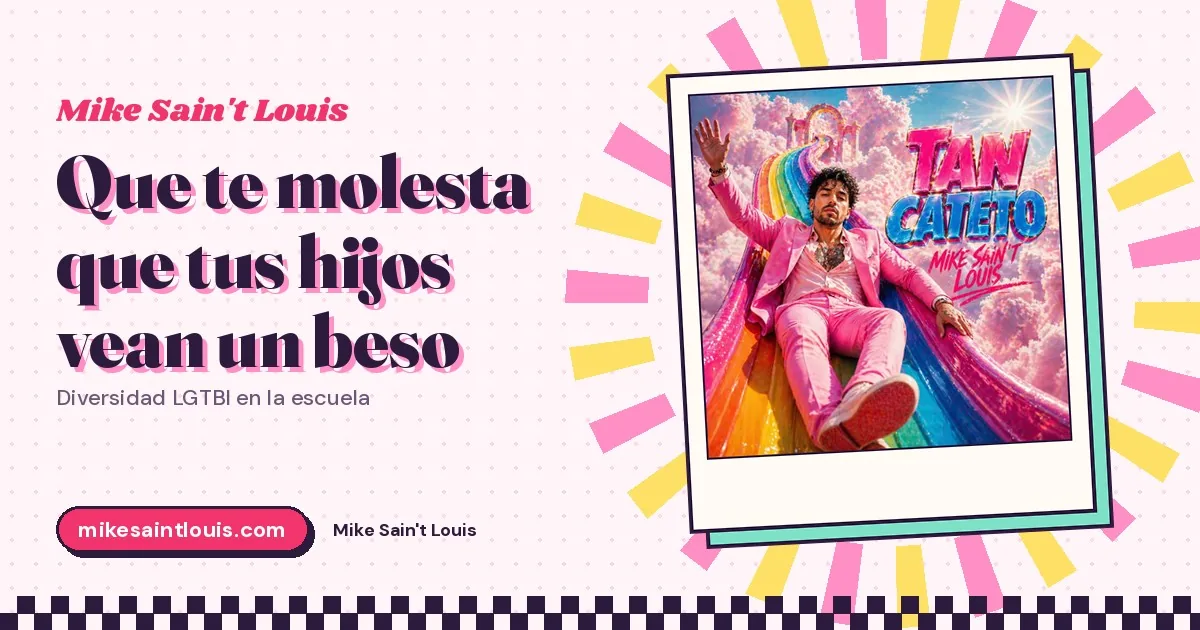
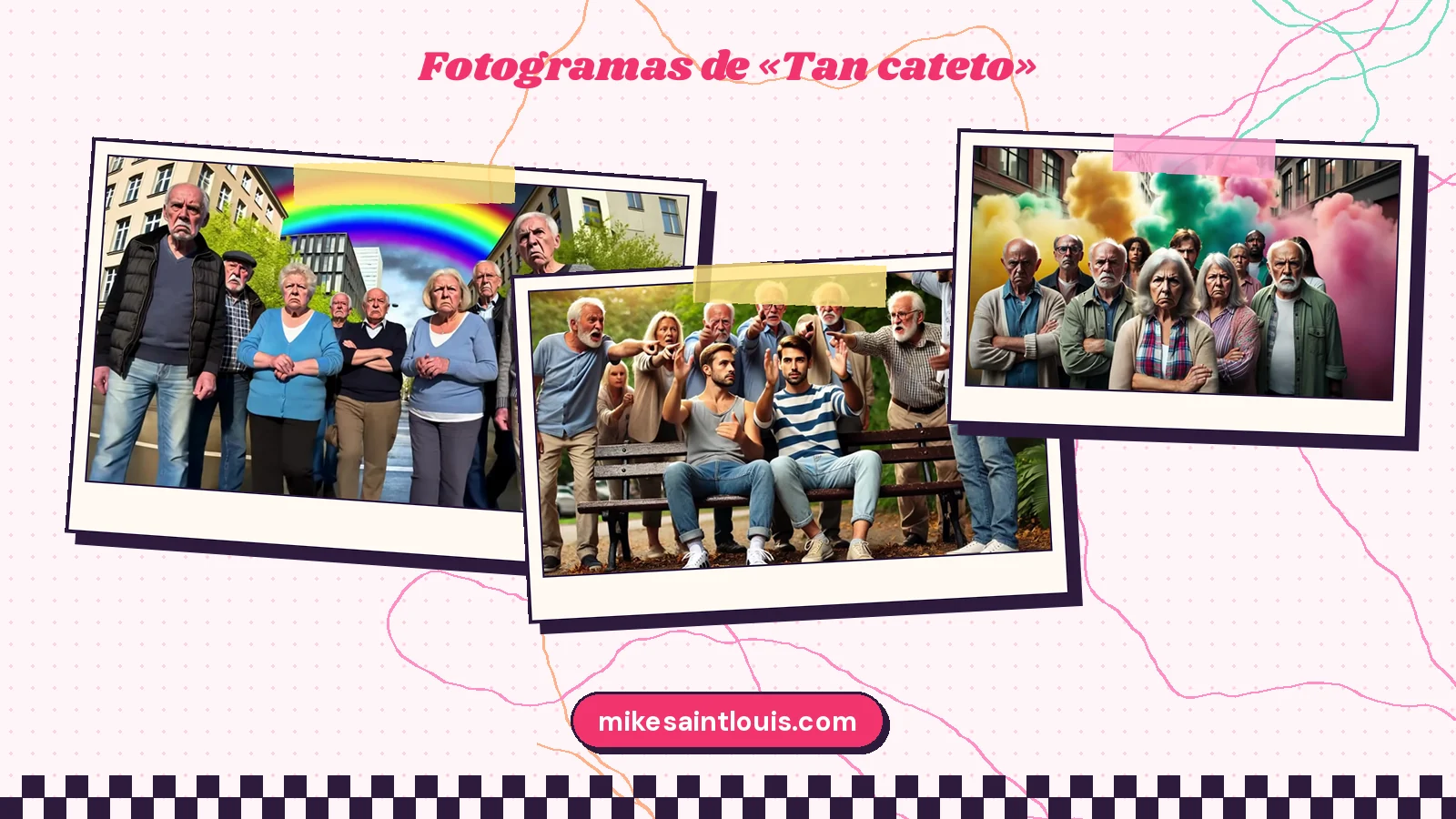
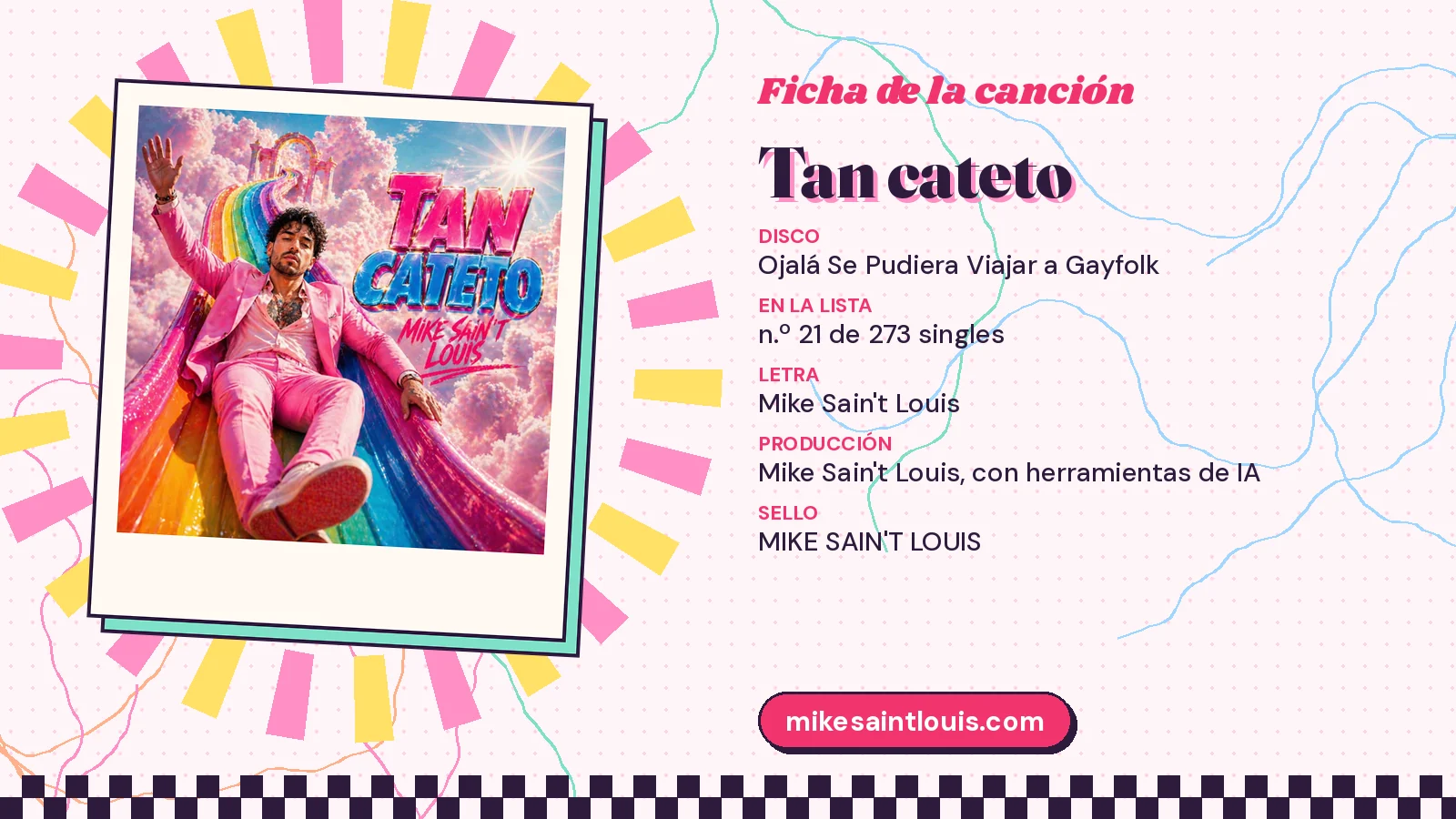
Does it bother you that your kids see a kiss, and you cover their eyes like a good dictator. Those are two lines from «Tan cateto» (So backward), a song from «Ojalá se pudiera viajar a GAYFOLK», the second album of the GAYFOLK trilogy. (If you want to read it all, the lyrics are here.) The song is about two men walking hand in hand and someone who looks at them like a judge. The narrator doesn't keep quiet: he asks him, with all the cheek of old Madrid, how he can be so backward.
The song has a twin, «Tan paleto», and I already wrote about that kiss scene in «Les tapas los ojos como un buen dictador». There I focused on the gesture of covering the eyes. Today I want to go a step further, because that gesture has an institutional version. There are adults who aren't content with covering their children's eyes in the street: they want to cover them at school too.
That's what this piece is about. Relationships and sex education, the diversity of families in classrooms, the so-called «parental pin» and what the laws say. And why, for an LGBTI girl or boy, seeing a kiss like theirs in a textbook can be the closest thing to breathing.
The gesture of covering the eyes
Covering a child's eyes is an old gesture. We do it at blood in a film, at an accident, at something we think will hurt them. That's why the line works: the character treats a kiss between two men as if it were a car crash.
What interests me is the question hidden in that gesture: what exactly is the child being protected from? A kiss between two people who love each other hurts nobody. What does hurt is learning, from an early age, that there are loves you look at and loves you have to look away from. Because some of those children whose eyes are covered will grow up and discover that the love they were made to look away from is their own.
What's learnt without anyone teaching it
People often say schools «shouldn't get involved» in these matters, as if they could stay out. The reality is that school always teaches something about sexuality and family, even without a single lesson devoted to it. It teaches it through the examples in maths problems, the families in reading books, the Father's Day and Mother's Day celebrations, what teachers cut short or let slide in the playground.
If all those examples show only a dad and a mum, the lesson has been given, even though nobody spelt it out: that's normal, the rest is strange. And when a classmate shouts «maricón» in the corridor and nobody says anything, there's a lesson too. As a child I was bullied at school, and I told that story in «La bomba de relojería».
Real families in class
In Spain, same-sex marriage has been legal since 2005, under Law 13/2005, which also allowed joint adoption. That means there are young people who have already finished secondary school having grown up with two legally married mothers or fathers. They're in classrooms, alongside children from single-parent, blended, adoptive and foster families, with grandparents who raise them or aunts who act as mothers.
Talking about family diversity in class isn't propaganda for anything. It's describing the reality of the group in front of you. When a teacher says «there are families with a dad and a mum, with two mums, with two dads, with just one person», she's telling every child in the class that their home counts too. I've already written about family in my lyrics in «Familia de sangre», and it's curious how what makes a joke in a song can, in a classroom, help a kid stop hiding a drawing.
What relationships and sex education is
When you hear «sex education» at school, you might picture an awkward talk with a banana and a condom. Relationships and sex education is much broader. According to UNESCO's international technical guidance, revised in 2018, it includes things like knowing your own body, understanding consent, learning to recognise abuse, handling emotions in relationships, respecting diversity and knowing where to ask for help. And it's adapted to each age: at six you don't talk about the same things as at sixteen.
At six, for example, it's about knowing that nobody can touch you if you don't want them to, that some parts of the body are private and that if someone makes you feel bad you can tell an adult you trust. I'm convinced that lesson, that your body is yours and that you can speak up, protects children. What leaves them defenceless is silence.
What the LOMLOE says
In Spain, the current education law is Organic Law 3/2020 of 29 December, which amended the 2006 Organic Law on Education and is known as the LOMLOE. Among the principles of the education system, it includes non-discrimination on grounds of sexual orientation or sexual identity, respect for sexual-affective and family diversity, and relationships and sex education adapted to pupils' level of maturity.
In practice, in primary and secondary school these contents aren't a subject of their own but are worked on across the curriculum: they appear in different subjects, in tutor sessions and in school activities. That has an advantage, because it normalises, and a risk, because it depends a lot on each school and each teacher.
What Law 4/2023 added
Law 4/2023, known as the trans and LGBTI law, devotes a whole section to education. Its article 20 asks for the curriculum to include knowledge of and respect for sexual, gender and family diversity. Article 21 requires education authorities to promote bullying-prevention protocols that take LGBTI-phobia into account, and coeducation and diversity plans. Article 22 deals with teacher training, so teachers can detect bullying and abuse on these grounds.
And article 23, my favourite, says the authorities will encourage «positive LGBTI role models» in school materials, «in a natural, respectful and cross-cutting way», at all levels and according to subjects and ages. In other words: that LGBTI people who did things appear in the history book, that in literature LGBTI authors are read knowing they were, and that two mothers buying oranges can show up in a maths problem without that being the news.
Article 24 adds information programmes for pupils, families and school staff, with special attention to trans and intersex people, and encourages running them together with LGBTI organisations.
The parental pin
And here comes the institutional version of covering the eyes. For the 2019-2020 school year, the Education Department of the Region of Murcia issued instructions in August requiring schools to ask families for express permission before pupils attended talks and supplementary activities given by people from outside the school during school hours. Its supporters called it the parental pin. Its critics, the parental veto.
The measure was presented as a defence of families' freedom, but everyone knew which talks were mainly at stake: those on sexual diversity, equality and violence prevention. The Ministry of Education challenged it before the High Court of Justice of Murcia on 18 February 2020.
What the court said
On 12 March 2020, the High Court of Justice of Murcia provisionally suspended the part of the instructions that set up the veto. It did so without ruling on the merits, but with interesting arguments. It said the suspension didn't deprive mothers and fathers of their right to take part in their children's education, because mechanisms already exist for them to voice disagreement, and that this «is something different from authorisation for each activity». And it warned that keeping the veto could harm pupils who stopped attending activities that are assessed, and therefore their right to education.
One of the judges issued a dissenting opinion and would have refused the suspension. And in July 2020, with the school year the instructions were issued for over, the court shelved the case without ruling on the merits. I'm telling it precisely because all sorts of things have been said: there was no judgment declaring the parental pin illegal, but there was an order suspending it while the case lasted.
When silence teaches too
There's an idea worth taking apart: that if school doesn't talk about diversity, nothing happens. Something does. Others fill the gap. It's filled by a classmate's joke, the video going round the class group chat, an uncle's comment at Christmas lunch, the insult repeated in the playground without anyone stopping it. A child who has never heard in class that being gay is normal has almost certainly heard that being gay is something to mock.
That silence weighs more on some kids than on others. It weighs on the village boy who doesn't know anyone like him, which I wrote about in «El qué dirán». It weighs on the girl of colour who gets two insults at once, an intersection I dealt with in «Doble mirada». And today it also weighs on the screen: bullying no longer ends when the bell rings, it carries on on the phone at night, something I covered in «Treinta insultos al despertar».
That's why education in diversity isn't an ideological extra. It is, among other things, a tool against bullying. When teachers name things normally, the insult loses some of its power, because it stops being the only thing said on the subject. And pupils who suffer it learn they have someone to tell.
Nor is it true that talking about sexual orientation «converts» anyone, just as talking about left-handedness doesn't make any child left-handed. That idea is the same one behind conversion therapies, which Law 4/2023 bans and which I wrote about in «No hay pastilla que cure lo que no es enfermedad». Orientation isn't caught in a classroom. What is learnt in a classroom is to respect or to despise.
Whose rights
The parental pin debate is usually framed as a clash between families' right to raise their children according to their convictions and the state's right to teach. But someone is missing from that equation: the child.
A twelve-year-old has the right to receive information that protects them from abuse, to know that families like theirs exist, and to discover, if it's their case, that what they feel has a name and isn't an illness. If their family decides they shouldn't hear any of that, who protects their right to know? For many LGBTI kids, school is the only place where they can hear that nothing is wrong with them. If we take it away, we sometimes take away the only mirror they had.
I won't take advice from any spectator
There's a line in «Tan cateto» I really like for this: «No voy a aceptar consejos de ningún espectador», I won't take advice from any spectator. The narrator is talking about someone who watches from outside and has opinions on a life that isn't his. I think it's a good description of many campaigns against diversity education: people who have never set foot in those classes, haven't read the materials and pronounce on them with astonishing certainty.
The diversity talks given in secondary schools are usually far less scandalous than their enemies claim. They talk about respect, what certain words mean, what to do if you see bullying, and that nobody has to hide. If anyone has doubts, the simplest thing is to ask the school what will be covered and ask to see the materials. That right to information already exists and nobody disputes it.
What happens elsewhere
Spain isn't the only place where this battle has been fought. In the United Kingdom, the so-called Section 28, passed in 1988, banned local authorities from «promoting» homosexuality, and many teachers understood they couldn't even mention it. It wasn't repealed in Scotland until 2000, and in the rest of the country until 2003. A whole generation of British LGBTI pupils grew up with teachers who didn't dare tell them it was all right.
In the United States, Florida passed a parental rights in education law in 2022, nicknamed «Don't Say Gay» by its critics, which restricts talking about sexual orientation and gender identity in the early grades. And in Hungary, in 2021, a law was passed limiting content about homosexuality aimed at minors. In every case the argument is the same: protecting children. And in every case LGBTI children are left unprotected.
What the data shows
There's evidence that the school environment counts. In the 2024 survey by The Trevor Project, a US organisation working on suicide prevention among LGBTQ+ young people, with more than 18,000 participants aged 13 to 24, 78% of those attending school said they had at least one adult there who supported their identity. The same report notes that young people with access to affirming spaces have lower rates of suicide attempts than those without.
You don't need to go to the United States to understand it. Just remember school. A single teacher who looks at you kindly, who stands up for you when it matters, who says one sentence in class that makes you feel you exist, can change your whole year. Sometimes, your life.
Role models matter
For decades, the LGBTI role models offered by Spanish television and film were almost always jokes: the effeminate man everyone laughed at, the queen in the farce. I wrote about role models in Spanish pop in «Visibilidad queer en el pop español», and about the masculinity tests at school in «El examen del lunes». What there wasn't anywhere was an ordinary gay man, with a job, a partner, a life that wasn't the punchline.
That's why what article 23 of the law asks for seems so important to me. It isn't about giving a class on being gay. It's about saying, when Lorca is studied, that he was gay; telling, when Alan Turing is studied, why he was convicted; and having all kinds of families appear in the examples. The natural, the cross-cutting, what needs no fanfare.
LGBTI families are watching too
There's another part of the story rarely told: LGBTI mothers and fathers with children in those schools. When a school letter talks about «mum and dad», when a school form has only those two boxes, when someone in a parents' meeting assumes there's a mother at home, those families receive a clear message. And so do their children.
The solution is as cheap as it is simple: write «families» instead of «parents», put «parent 1» and «parent 2» or «contact person» on forms, celebrate a family day instead of two separate days if the school prefers. Nobody loses anything with that. And some children gain a lot.
What families can do
If you're a mother or father worried about what your children are taught at school, I suggest this: ask, read the materials, talk to the tutor. If you're a mother or father worried that diversity isn't talked about at your children's school, you can also ask, and request that the articles of the law that call for it be applied.
And if you have small children, next time you see two men or two women holding hands in the street, don't cover their eyes. If they ask, answer truthfully: they love each other. It's the simplest explanation in the world, and children understand it straight away. The ones who take time to understand it are us adults.
What teachers can do
Teachers get the hardest part, because they're caught between the law, families, the head and thirty children who see everything. A few ideas that guides and teachers' groups repeat: always stop the insult in the corridor, even with a single sentence; use examples of diverse families without announcing it; know the school's anti-bullying protocol and apply it; and know where to refer a pupil who is struggling.
You don't need to be an expert for any of that. You need not to look the other way. And if a pupil ever tells you they're gay, lesbian, bi or trans, remember they chose you. Listen to them.
Where to find help
If you're a pupil being bullied for being LGBTI, or for any other reason, or a family member or teacher who doesn't know how to act, these resources can guide you. I checked their details on their websites:
- Fundación ANAR's line for minors: 900 20 20 10, free and at any hour.
- FELGTBI+'s Línea Arcoíris, aimed at young people, families and victims of hate crimes: 913 604 605 or WhatsApp on 676 78 58 30.
- If you live in Madrid, COGAM has information and groups on 91 523 00 70.
- For families of trans children, Chrysallis answers at contacto@chrysallis.org.
Bullying and rejection can hurt a lot. If you ever feel you can't go on or the thought of taking your life crosses your mind, in Spain you can call 024, free and confidential, day and night. If there's immediate danger, 112. Anyone outside Spain can turn to their country's crisis line or emergency number. Talking helps, and I explain why in «Hablemos del suicidio sin tabú»; there are more resources in my mental-health series.
I won't give you any more explanations
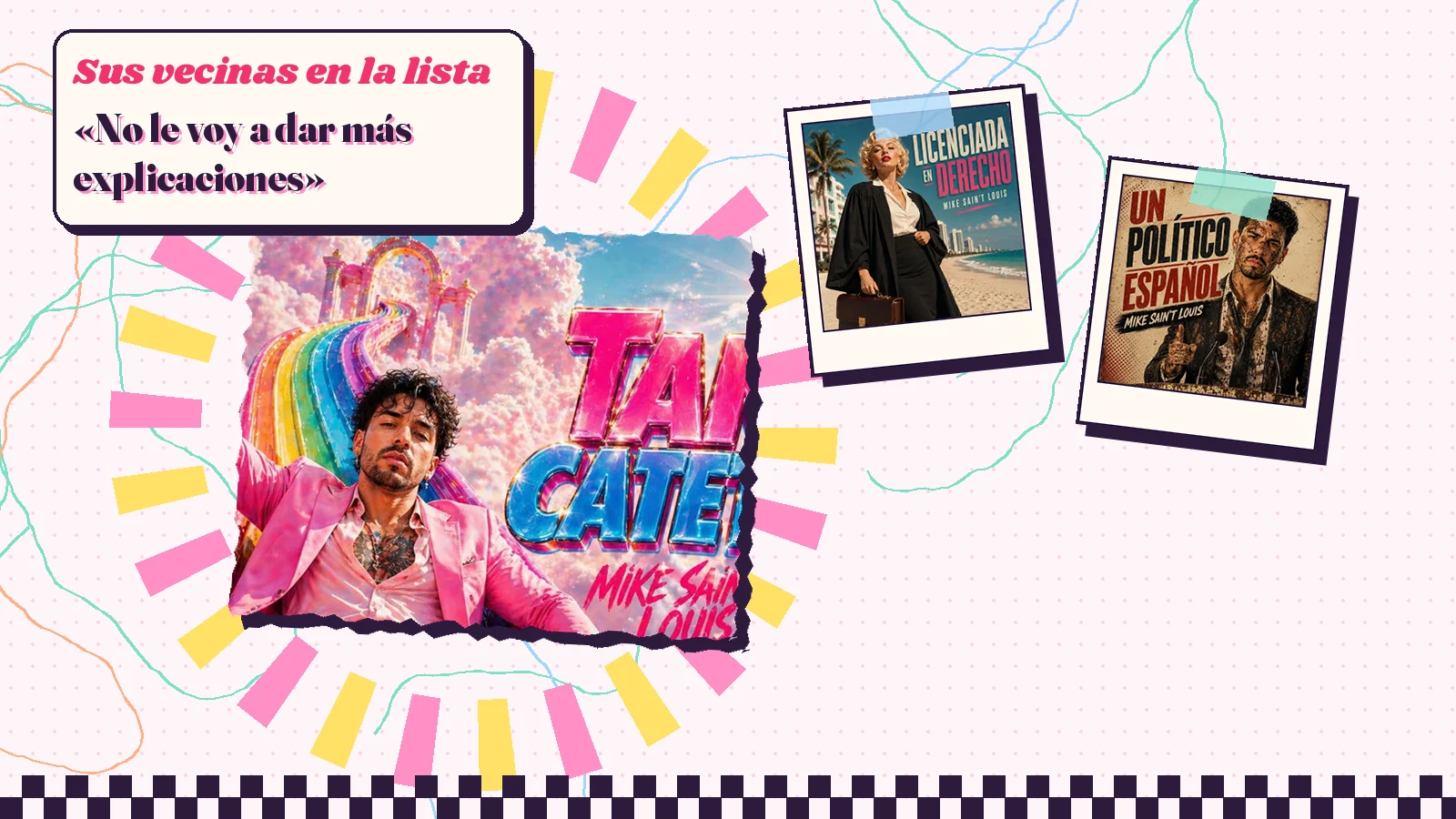
The song's chorus has a line that sticks: «No le voy a dar más explicaciones», I won't give you any more explanations. The narrator stands his ground. He won't justify his love to whoever judges him.
I like that firmness, but at school I ask for exactly the opposite: explanations. That children be told there are many kinds of family, that love has no single model and that nobody deserves an insult for who they are. That they be told early, calmly and with each child's age in mind. Because if school gives those explanations in time, maybe in twenty years nobody will need to write a song asking a man in the street how he can be so backward.
Frequently asked questions
What is the parental pin? The name given to instructions from Murcia's Education Department for the 2019-2020 school year requiring express permission from families before pupils attended talks and supplementary activities given by people from outside the school. Its critics called it the parental veto.
Is the parental pin legal? There was no ruling on the merits. The High Court of Justice of Murcia provisionally suspended the veto on 12 March 2020, and in July that year shelved the Ministry's challenge because the school year had ended.
What does the LOMLOE say about relationships and sex education? Organic Law 3/2020 includes among the principles of the education system non-discrimination on grounds of sexual orientation or identity, respect for sexual-affective and family diversity, and relationships and sex education adapted to pupils' maturity.
What does Law 4/2023 ask of schools? That the curriculum include respect for sexual, gender and family diversity, protocols against LGBTI-phobic bullying, teacher training and positive LGBTI role models in school materials, in a natural way adapted to each age.
What is «Tan cateto» about? Two men walking hand in hand and the person who judges them, points at them and covers his children's eyes at a kiss. The narrator answers him with humour and without asking permission. It's a song from «Ojalá se pudiera viajar a GAYFOLK», the second album of the GAYFOLK trilogy.
Who writes these songs? Mike Sain't Louis, lyricist, composer and music producer from Madrid, who presents himself as the first AI songwriter. The vocals and music of his songs are made with artificial intelligence.