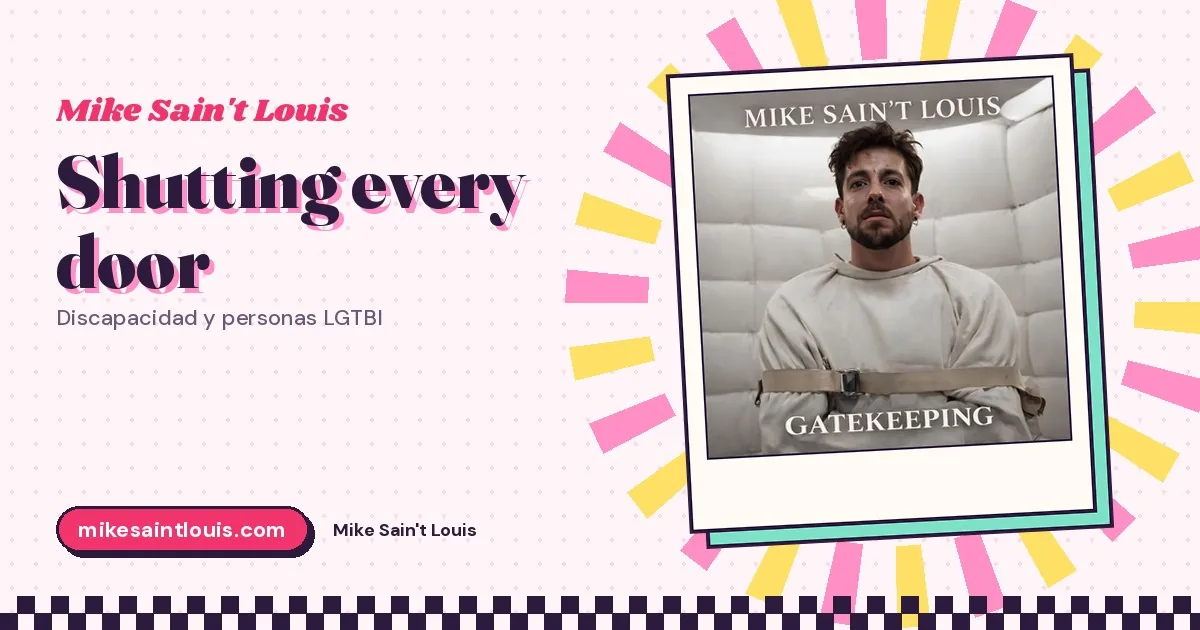
By Mike Sain't Louis ·
«Shutting every door»: disability and LGBTI people, the double locked door
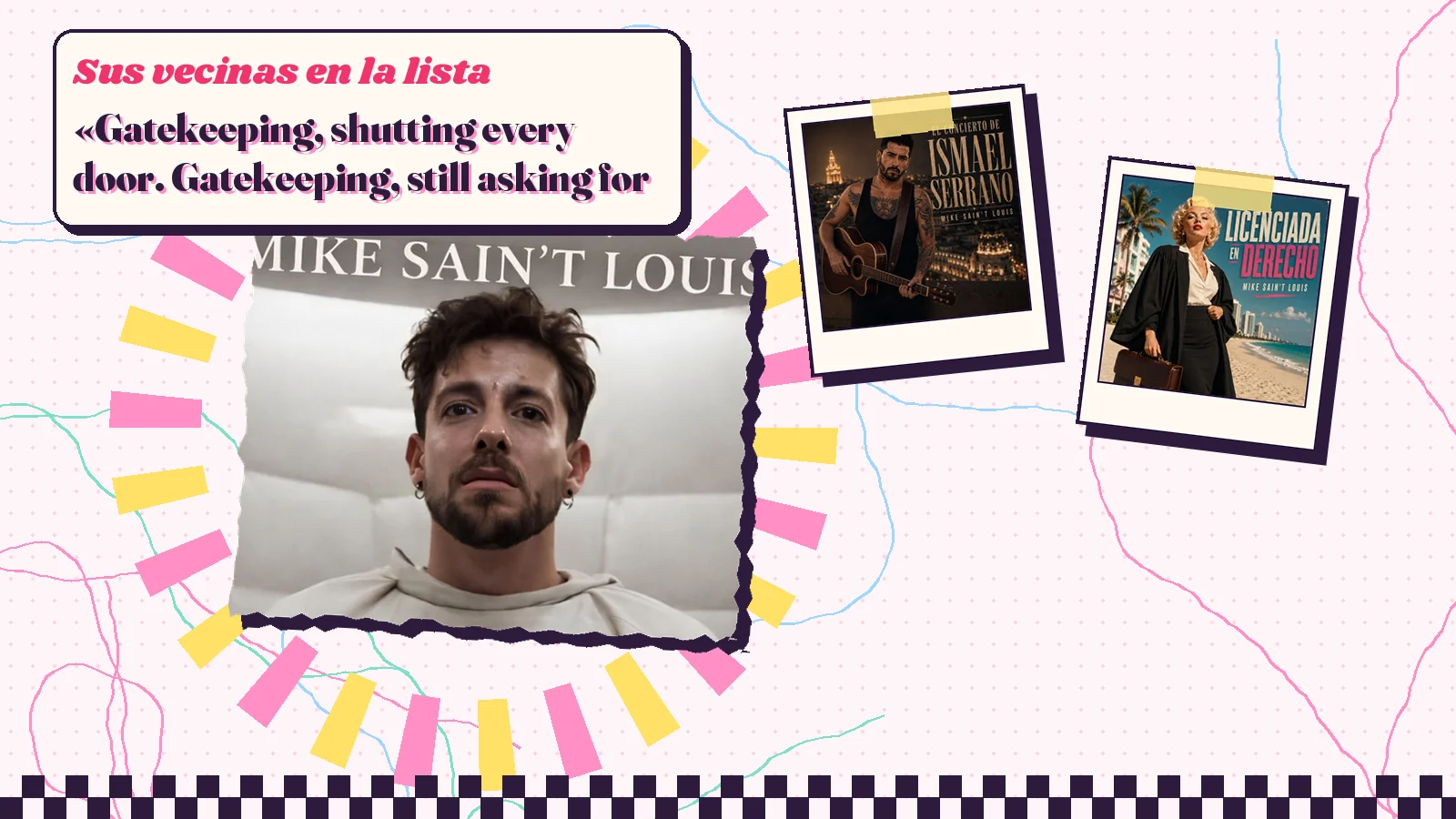
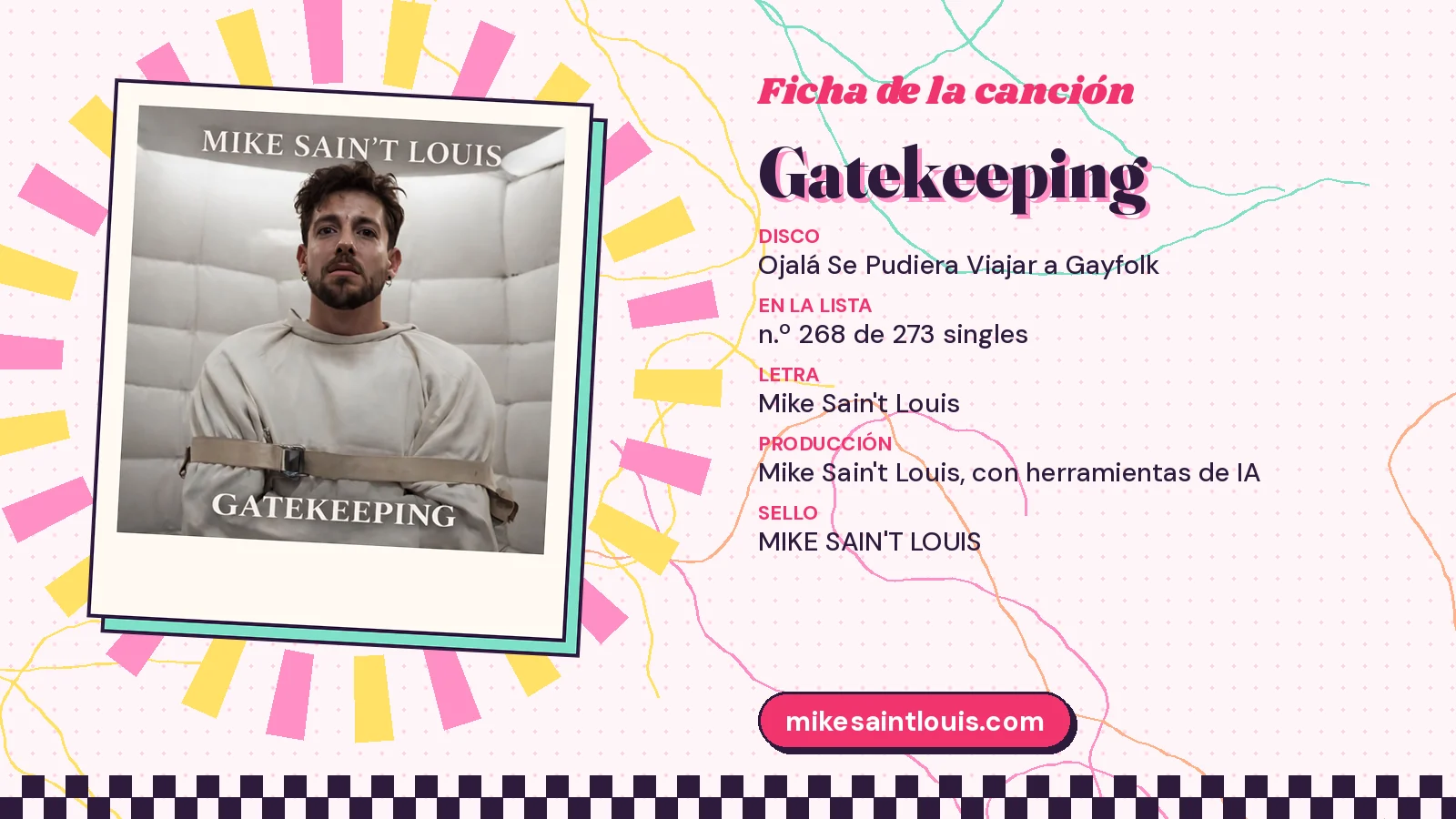
«Gatekeeping, shutting every door.»
It's the chorus of «Gatekeeping», a song I wrote in English, with very short sentences, almost like blows. It's about the gatekeepers of art: people who create nothing but decide who gets in and who doesn't, who's a real artist and who doesn't count. I already wrote about that reading in «No llamé, no esperé, me quedé». (The full lyrics are on gayfolkplanet.com.)
Today I want to take that chorus somewhere more literal. Because for some people «shutting every door» isn't a metaphor. It's the step at the entrance to a bar, the toilet a wheelchair won't fit in, an association's premises on a first floor with no lift, the video without subtitles, the leaflet nobody has written in easy-read.
This piece is about LGBTI people with disabilities. About those who find two doors shut at once: the one the world shuts on them for who they love or for their identity, and the one that the community itself also shuts when it forgets that not every body climbs stairs.
I'm writing from the outside and I want to make that clear: I won't speak on anyone's behalf. What follows is published data, laws and questions that seem urgent to me.
Two doors at once
There's a verse in the song that serves as my starting point:
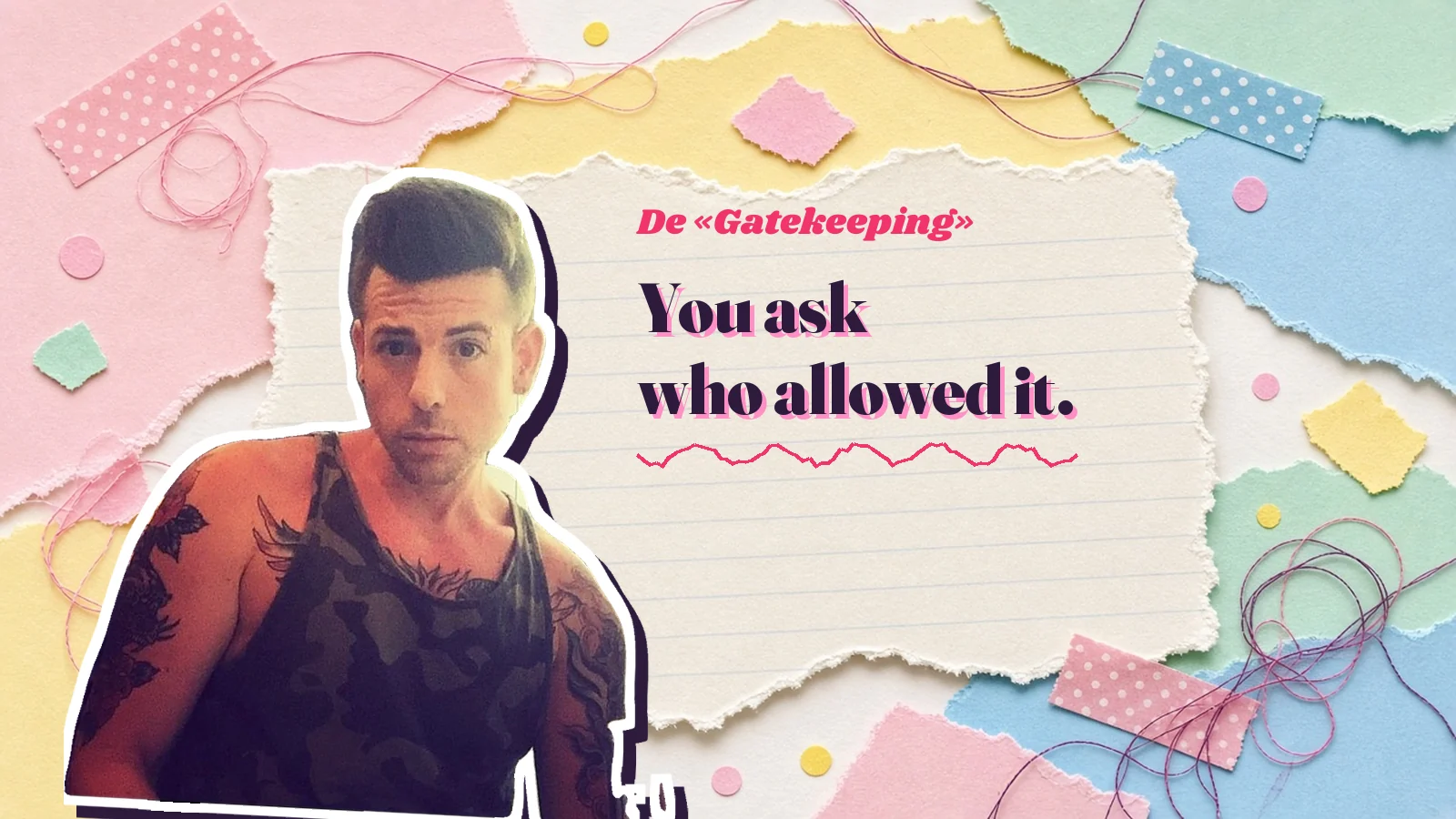
«You ask / who allowed it.»
The question is who authorised it. In the song I'm talking about art, but the line describes very well what many disabled people experience when they express their orientation or identity. The question they get isn't «how do you feel?» but «who put that idea in your head?». As if a person with an intellectual disability couldn't know they like girls, or as if a boy in a wheelchair needed permission to have a boyfriend.
That's called intersectional discrimination: the kind that can't be explained by adding two discriminations together, but by the way they cross. Spain's Law 15/2022 on equal treatment and non-discrimination expressly recognises it. And the crossing of disability and sexual diversity is one of the most invisible.
In Spain, according to the National Statistics Institute's survey on disability, personal autonomy and dependency (EDAD 2020), 4.38 million people living in households reported some disability or limitation: almost 95 in every thousand inhabitants. The most frequent type was mobility problems. If we cross that figure with any reasonable estimate of the LGBTI population, we're talking about hundreds of thousands of people. And yet it's extremely rare to see them in a Pride campaign, in a series or on the cover of a gay magazine.
What the data says
In January 2025 Spain's Ministry of Equality, together with the Royal Board on Disability, presented the study «The situation of LGBTI+ people with disabilities in Spain». It described it as pioneering research, and its figures are harsh.
- 78% of respondents had experienced some kind of discrimination in education, mostly from classmates but also from teachers.
- 46% had felt discriminated against at some point when accessing healthcare.
- 39% felt rejected, discriminated against or harassed while looking for work, and 41% once in their job.
- In leisure activities, discrimination reached 68%.
The study adds that LGBTI men with disabilities suffer less discrimination than women and non-binary people in the community. And it records something I think is key: family overprotection, with the resulting loss of autonomy and control over personal decisions.
Meanwhile, FELGTBI+'s report «State of Hate: LGBTI+ State 2025» found that more than 20% of LGBTI people with intellectual and developmental disabilities had suffered aggression in the past year. In May 2025 FELGTBI+ and Plena inclusión España signed a two-year agreement to work together against that discrimination, with easy-read materials and training in cognitive accessibility.
Measuring pain with a ruler
«You measure pain / with a ruler, / not with truth.»
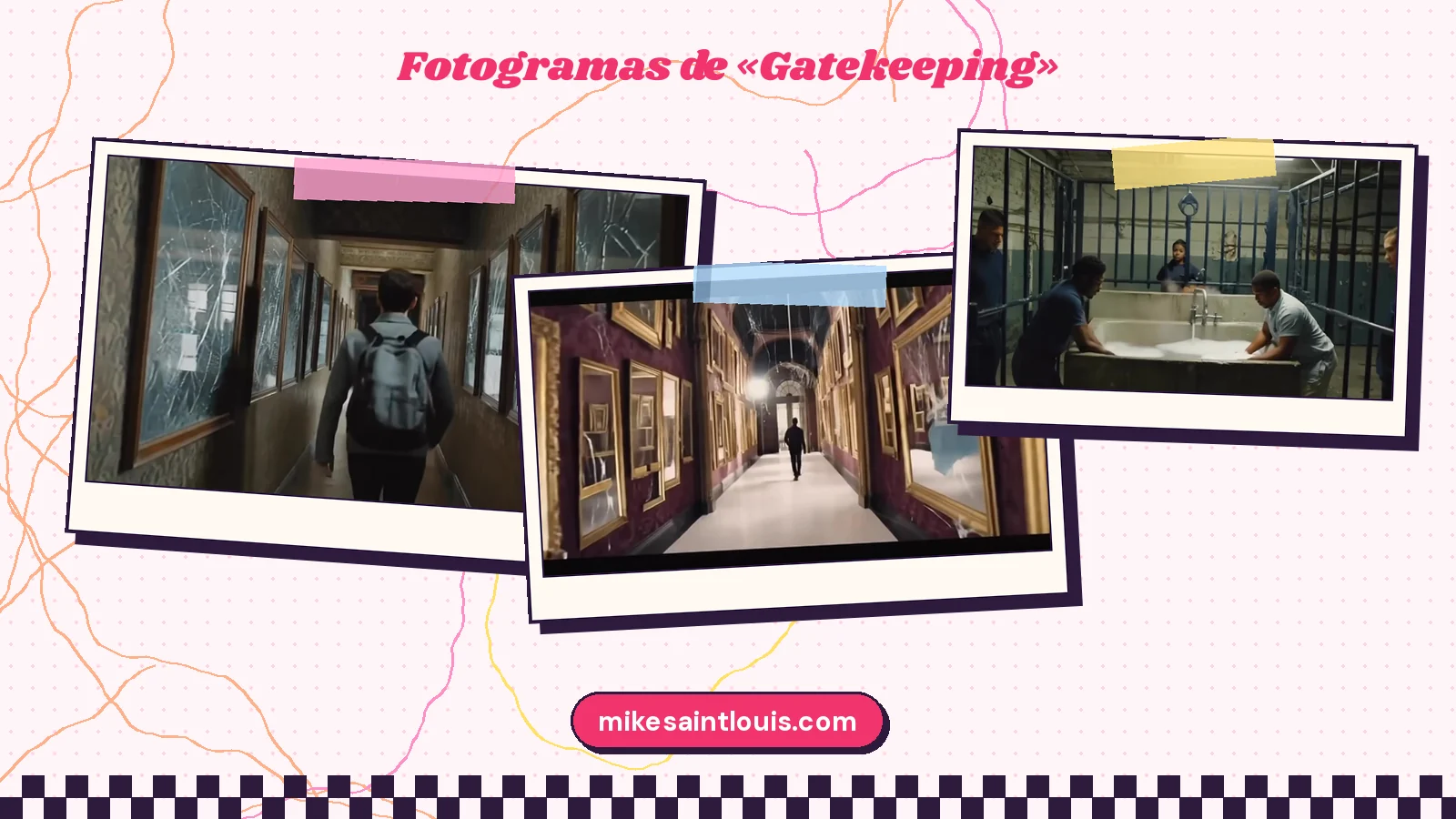
Someone else's suffering, gauged with a carpenter's tool instead of with honesty. In «Gatekeeping» that verse is aimed at critics who judge a work by whether it follows their rules. But there are few more exact images for what's called ableism: the idea that there's a «normal» body and mind and that everything else is measured by what it lacks.
Ableism sneaks into unexpected places. Into the phrase «poor thing, and gay on top of it». Into the person who talks to the companion instead of the person in the wheelchair. Into the doctor who doesn't ask a patient with cerebral palsy about her sex life because he assumes she doesn't have one. Into the family that, with all its love, decides for someone what clothes they wear, what time they come home and who they can see.
There's also a friendly-faced ableism. The Australian activist Stella Young called it inspiration porn: using disabled people as motivation for everyone else, as if their only function were to make us feel lucky. In a 2014 TEDx talk she summed it up with a line that became famous: I'm not your inspiration, thank you very much. A disabled person who goes out partying, flirts or falls in love isn't setting an example for anyone. They're living.
In the Spanish independent-living movement the expression «diversidad funcional» (functional diversity) was coined in 2005, precisely to escape the language of lack. Some people prefer it and some still say «disability», which is the word used by the laws and many organisations. What matters, as with any identity, is to ask and respect how each person wants to be named.
The scene has stairs
Now let's look inwards. The LGBTI scene, which I've written about so much, has many virtues, but it isn't always accessible.
Think of any night in Chueca. Many bars are in old premises, with steps at the entrance, narrow corridors and toilets in the basement. The music is so loud that a person with a hearing disability can't follow anything. Strobe lights can be a problem for people with photosensitive epilepsy. And at the mass Pride parties, getting around with a wheelchair, crutches or a guide dog is an obstacle course. In «Qué pide una pista de baile en el Orgullo» I talked about what a dance floor should have so that everyone can enjoy it.
According to the Royal Board on Disability, based on EDAD 2020, 36.2% of disabled people have difficulty getting around public buildings or the urban environment, and 39.4% have difficulty with information technologies. That includes dating apps, which have become the main gateway to gay dating. If an app doesn't work well with a screen reader, or if its filters and culture reward a single type of body, that door shuts too. I wrote about camp and profiles in «El planeta nació de un bloqueo», and about safety on the apps in «No quiero ver tus fotos».
The body that never makes the cover
There's another door, harder to see: aesthetics. In «Eres gordo, eres calvo» I wrote about beauty pressure on the gay scene and how the gym body has become a kind of uniform. If that model already weighs on a non-disabled guy, imagine it for someone with an amputation, a spinal cord injury or an illness that changes their body.
In my songs the body appears a lot, with humour and without apologising, and I explained that in «Escribir sobre el cuerpo sin pedir perdón» and in «Cachas, tatuados y con canas». But I admit that many bodies are missing from my planet's catalogue. Disabled bodies are almost never on the cover of anything, and when they are, it's usually in a story of overcoming, not of desire.
And desire is exactly what gets denied most. Disabled people are infantilised: it's assumed they have no sexuality, or that they shouldn't. In 2015 the documentary Yes, We Fuck!, by Antonio Centeno and Raúl de la Morena, put the subject on the table in Spain by showing the sexuality of people with functional diversity without filters or pity. Ten years later, the underlying idea is still necessary: the right to privacy, to pleasure and to getting love wrong doesn't depend on how your body works.
Nor does the catalogue of bodies we're all sold help. In «Las personas no son simples objetos» I talked about how the first album of the trilogy laughs at that shop window. When desire is bought from a catalogue, whoever doesn't fit the photo is left outside the shop.
Overprotection: the closet built by others
The Ministry's figure on family overprotection seems to me the key to everything. Many non-disabled LGBTI people come out when they gain autonomy: they leave home, earn a salary, move to another city. For someone who depends on their family to get dressed, move around or manage their money, that exit is much harder.
There are young people with intellectual disabilities whom nobody has ever talked to about sexuality because «they won't understand». There are adults living in care homes where privacy is impossible. There are deaf people who have nobody to talk to about what they feel in their own language. There are people who can't go to an LGBTI association alone because they need someone to take them, and that someone is precisely the person they don't dare tell.
That's why accessibility isn't a technical detail. An easy-read leaflet on what it means to be gay, lesbian or trans can be the first time someone finds words for what they feel. A support group in premises with a lift can be the first place someone goes without asking anyone's permission.
And then there's loneliness. There's a very particular loneliness you feel in the middle of a party, surrounded by people, which I wrote about in «Siempre apartado entre tanta gente». For many disabled LGBTI people that feeling isn't occasional: it's the norm. You arrive somewhere and nobody comes over, or they come over to ask what happened to you. You stay in a corner because the dance floor is full of invisible steps: looks, hurry, shoving. The Ministry's study puts it with statistical coldness, 68% discrimination in leisure, but behind that number there are many nights of going home early.
That loneliness has effects. The same study records that respondents link discrimination with mental health problems, psychological after-effects, loss of autonomy and difficulty relating to others. In «Salud mental sin tabú» I gathered what I've written about asking for help, and it applies here too: talking about how you feel isn't a luxury or a weakness.
What the laws say
In recent years Spain has changed its disability legislation a great deal, and several of those reforms directly affect sexual and emotional autonomy.
- UN Convention on the Rights of Persons with Disabilities. Adopted in December 2006 and in force in Spain since May 2008. It recognises the right to found a family, to privacy and to sexual and reproductive health on an equal basis with others.
- Law 8/2021. It reformed civil legislation to support disabled people in exercising their legal capacity. It ended judicial incapacitation as it existed and replaced it with a system of supports that respects each person's will and preferences.
- Organic Law 2/2020. It removed from the Criminal Code the possibility of a judge authorising the sterilisation of disabled people who couldn't consent. According to its own preamble, the UN Committee had already recommended this to Spain in 2011.
- Reform of Article 49 of the Constitution. Approved on 15 February 2024 and published in the Official State Gazette two days later. It replaced the old term «disminuidos» (the diminished) with «persons with disabilities» and recognises that they exercise their rights «in conditions of real and effective freedom and equality», in universally accessible environments and with special attention to disabled women and minors.
- Law 15/2022 and Law 4/2023. The first prohibits discrimination on grounds of disability, orientation and identity and recognises multiple and intersectional discrimination. The second develops the rights of LGBTI people in every sphere.
In «Gatekeeping» there's a verse that seems written for the excuses you hear when you ask for accessibility: there's no budget, the building is old, nobody in a wheelchair has ever come.
«Not care. / Not craft. / Just fear / wearing clean hands.»
Neither care nor craft: fear with clean hands. Very often the lack of accessibility isn't born of hatred but of comfort. Of not wanting to change anything because things already work for whoever decides. And that clean fear, which insults nobody, leaves as many people out as a slammed door.
Laws open doors. But a law doesn't build a ramp or subtitle a video. That's down to those of us who organise things: associations, bars, festivals and companies.
Pride is a good thermometer. Every June Madrid fills with floats, stages and sponsorships, something I analysed in «El arcoíris no se alquila». But there's rarely talk of whether there are accessible platforms at the concerts, rest areas, sign-language interpreters at the opening speeches or easy-read information about the route. A party that boasts of diversity should start there.
What we can do as a community
You don't need to be an expert to start. Some simple ideas:
- Ask before organising. Does the venue have step-free access? Is there an accessible toilet? Can you request a sign-language interpreter? If the answer is no, find another place or say so clearly in the announcement.
- Always subtitle. Every video from an association, an artist or a campaign should have subtitles. It costs very little and opens the door to many people.
- Write it easy. Texts on rights, sexual health or coming out can have an easy-read version. Plena inclusión works on exactly that.
- Count on disabled people, not just do things for them. On boards, on posters, on stages. Nothing about us without us, as the movement's motto says.
- Check the humour. Some scene jokes, without meaning to, treat disability as something ridiculous or as the opposite of desire. You can be very funny without trampling on anyone.
And personally: if you're flirting with someone with a disability, talk to them, not to their companion. Ask before helping. And don't turn every date into a life lesson.
And if you're the family of a disabled person who has told you they're LGBTI, or who you think might be, there's something you can do today: treat that part of their life as naturally as you treat the rest. Ask whether they'd like to go to an association's activity, instead of deciding for them that it isn't good for them. Respect their privacy, at home too. Let them get a relationship wrong, as we all do. Overprotection almost always comes from love and the fear that they'll suffer, but a love that leaves no room to decide ends up looking far too much like a locked door. Sometimes the best support is to step slightly away from the doorframe and let the other person cross alone, knowing you're nearby if they need you.
Deciding who's in
The song's last chorus changes one word and leaves it hanging:
«Gatekeeping, deciding who's in.»
Deciding who's inside. In the song the one deciding is the critic, the programmer, whoever thinks they own culture. Here the one deciding is often the architect who didn't think of a ramp, the organiser who didn't hire an interpreter, the app that never tested its design with a screen reader. None of them sees themselves as a gatekeeper. But they are.
Against that, I like to think of the disabled LGBTI people who have spent years doing activism, going out at night and showing up in places where nobody had thought of them. They didn't ask permission. They stayed.
What's fair now is that they don't have to do it alone. That the community stops being one more gatekeeper and starts removing steps.
Where to find support
If you recognise yourself in this piece, because you live with a disability and are LGBTI, or because you love someone at that crossing, you don't have to search alone. Here are the resources I checked today on their own websites:
- FELGTBI+ runs its Línea Arcoíris by phone (913 604 605) and by WhatsApp (676 78 58 30). It's free and you don't have to give your name.
- In Madrid, COGAM has an information service for LGBT+ people you can call on weekday afternoons, from five to eight (91 523 00 70), or message on WhatsApp (602 25 22 43).
- Plena inclusión brings together organisations of people with intellectual and developmental disabilities. Since 2025 it has worked with FELGTBI+ and prepares easy-read materials.
- 024 is the Spanish Ministry of Health's line for suicidal behaviour, and also for when distress becomes overwhelming. It works day and night, all year, free of charge. It can be used by chat and in sign language through video interpreting, something not everyone knows.
- For an emergency or immediate danger, 112.
- If you live in another country, dial its emergency number (112 works inside the EU) and ask about the crisis line that operates there; local disability and LGBTI organisations usually know it.
Frequently asked questions
What is intersectional discrimination? It's discrimination a person suffers because of a combination of characteristics, such as disability and sexual orientation, in a way that can't be explained by adding them up separately. Spain's Law 15/2022 on equal treatment expressly recognises it.
What does the Ministry of Equality's study on LGBTI people with disabilities say? Presented in January 2025, it records that 78% of respondents suffered discrimination in education, 46% in access to healthcare, 39% when looking for work and 68% in leisure activities, and it points to family overprotection as a key problem.
Can a disabled person be sterilised without their consent in Spain? No. Organic Law 2/2020 removed from the Criminal Code court-authorised sterilisation of people who couldn't consent, and proceedings that were under way were cancelled.
What changed in Article 49 of the Constitution? The February 2024 reform replaced the term «disminuidos» with «persons with disabilities», recognises that they exercise their rights in real and effective freedom and equality, and obliges public authorities to guarantee their autonomy and inclusion in accessible environments.
What is «Gatekeeping» about? The gatekeepers of art: people who don't create but decide who gets in, who counts and what art is. It's a song in English, with short sentences, that ends with a simple answer: I didn't knock, I didn't wait, I stayed.
Who writes these songs? Mike Sain't Louis, lyricist, composer and music producer from Madrid, the first AI songwriter. The vocals on his songs are generated with artificial intelligence.