By Mike Sain't Louis ·
No pill can cure what isn't an illness: conversion therapy
«Me he tomado una pastilla gay.»
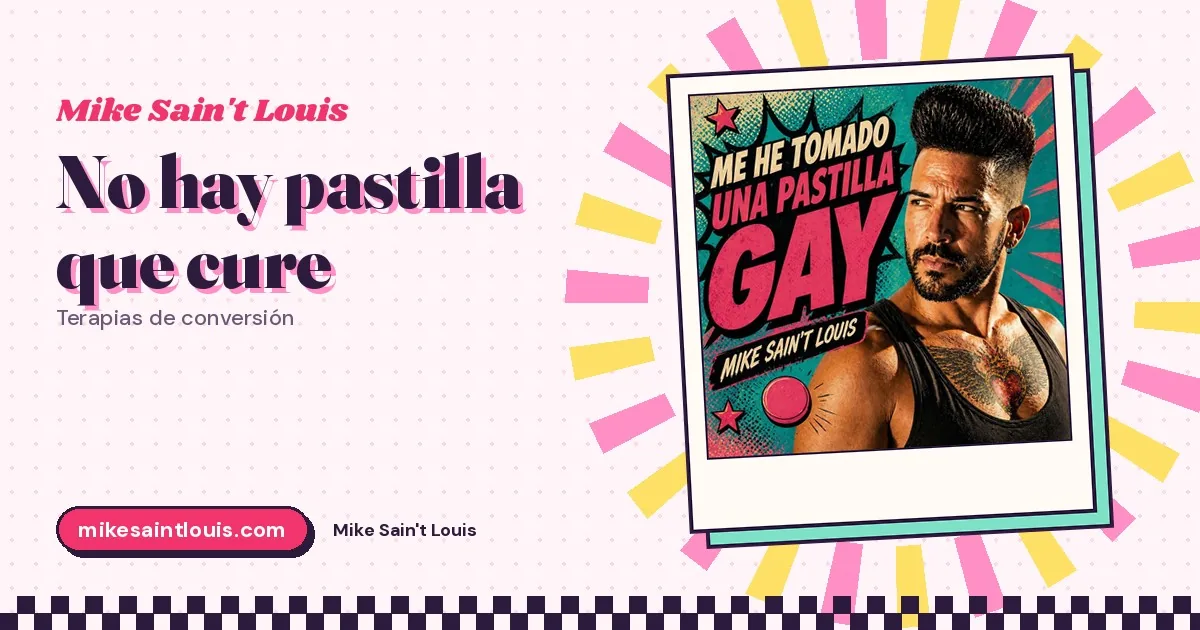
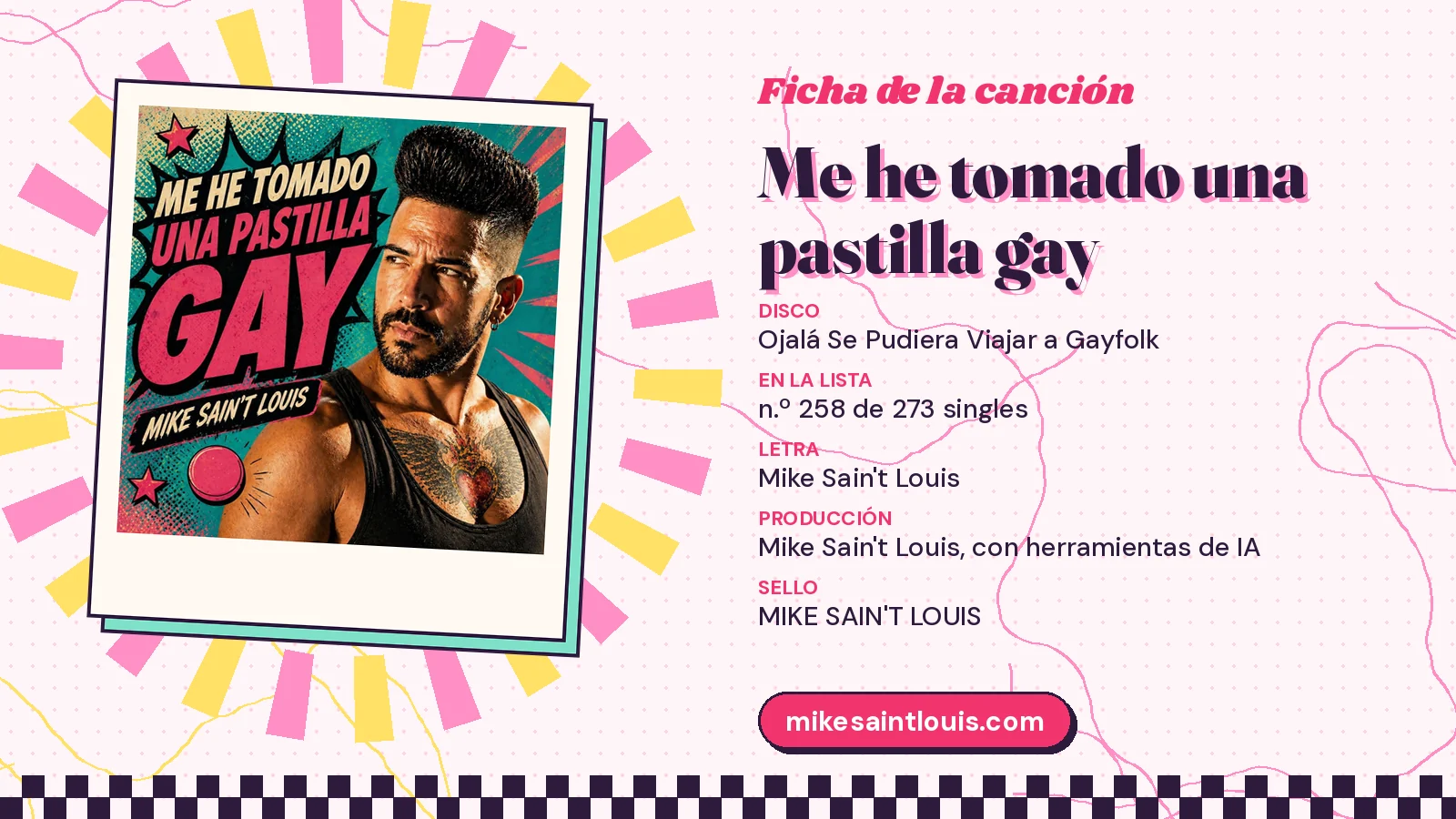
I've taken a gay pill. That's the title of a song from «Ojalá se pudiera viajar a Gayfolk», the second album of the GAYFOLK trilogy, and it's also how the song ends, with that phrase on its own, like someone leaving the empty packet on the table. (The full lyrics, uncut, are published on gayfolkplanet.com.) It's a cheeky party song, with a chorus asking a certain Juan to film people's faces. It isn't trying to teach anyone anything. But every time I listen to it I think of the opposite pill, the one so many families, so many priests and so many self-styled specialists have dreamed of for a century: the pill that would take the gay away.
That pill doesn't exist. It never has. And yet some people still sell it, under other names: accompaniment, healing, identity coaching, spiritual retreat, reparative therapy. This text is about that, about so-called conversion therapy. What it is, why it doesn't work, why it causes harm, what the law says in Spain and what you can do if someone offers it to you or to someone you love.
The pill in reverse
The joke of the song lies in its direction of travel. The conversion fantasy is a fantasy of subtraction: taking something away from a person so they fit in. The pill in the lyrics does the opposite. It erases nothing. It underlines. Whoever takes it doesn't come out different, they come out more themselves, less afraid to say so.
«Ya sabes lo que hay», you know what's what, the chorus repeats again and again, without asking permission. It's a bar-counter phrase, the nudge of a friend, the neighbour who no longer pretends. You know what's what: this is me, there's no package leaflet, no side effects to warn about. I love that such a homely Madrid phrase works as the best possible summary of what science has been saying for half a century: there is nothing to cure.
What conversion therapy is
Conversion therapy is any practice that claims to change a person's sexual orientation, from gay, lesbian or bisexual to heterosexual, or their gender identity, from trans or non-binary to cisgender. The word «therapy» is a trap, because it suggests a health treatment where there is no illness. That's why many organisations prefer to say «so-called therapy» or to talk about conversion practices.
In 2020 the United Nations Independent Expert on sexual orientation and gender identity, Víctor Madrigal-Borloz, presented a whole report on them to the Human Rights Council. He identified three main families. Psychotherapeutic ones, based on the idea that sexual diversity comes from an abnormal upbringing or a trauma. Medical ones, which treat it as a biological dysfunction and use drugs or hormones. And faith-based ones, which see it as something evil in itself and promise deliverance through prayer, retreats or even exorcisms. The report described humiliation, isolation, food deprivation, beatings and forced medication, and concluded that these practices are discriminatory, cruel, inhuman and degrading, and that depending on their severity they can amount to torture. It called for a global ban.
What the studies say
The American Psychological Association (APA) set up a task force in 2007 to review everything published on so-called sexual orientation change efforts. Its 2009 report looked at scientific articles going back to 1960. The conclusion was clear: those efforts are unlikely to change anyone's orientation, and they carry a risk of harm. The few studies with a serious design were old, from the late sixties and the seventies, and they did not support the promises of those offering change.

The same report recalled something worth repeating: attraction and love towards people of the same sex are normal and positive variations of human sexuality. The American Psychiatric Association had removed homosexuality from its diagnostic manual in 1973. The World Health Organization removed it from its international classification of diseases on 17 May 1990, which is why every 17 May is the International Day against LGTBI-phobia. In 2019 the WHO approved ICD-11, which stopped classifying trans identities as a mental disorder; it came into force in 2022.
What the literature does record is the harm. People who went through these practices describe shame, guilt, self-disgust, depression, anxiety, breaking with their family and with the faith they had, years lost trying to be someone else. The UN report summed it up with a harsh image: scars that last far longer than the practice itself.
Film their faces
There's a line repeated so often it becomes the song's heartbeat: «Grábales las caras Juan, las caras», film their faces, Juan, their faces. In the lyrics it's a party joke, someone who wants to capture the faces of the people staring in outrage.
I read it another way too. Conversion therapy survives in the shadows. It doesn't advertise itself as what it is. It works in parish halls, in private practices without professional registration, in WhatsApp groups, in weekend retreats at a country house. That's why in Spain almost every case that has come to light did so because someone filmed, documented, kept evidence: journalists posing as patients, associations capturing web pages, people who dared to tell what happened to them. Filming the faces, in this context, means bringing to light what wants to stay hidden.
A history that in Spain meant prison
Here the idea of «curing» gay people isn't a distant memory. The 1970 Law on Social Danger and Rehabilitation declared people who performed homosexual acts to be in a «dangerous state» and provided for their confinement in re-education establishments. Its preamble spoke of guaranteeing «the reform and social rehabilitation of the dangerous person». The prisons of Huelva and Badajoz were set aside for this.
Exactly what happened inside isn't fully documented, because many of the records from those years haven't survived. But there are testimonies. In 2005, when a plaque was unveiled in tribute to the gay prisoners of Huelva's old jail, some survivors recalled beatings, humiliation and even electroshocks so that they would «return to normal». The law stopped being applied to homosexuality with the 1978 reform, but it wasn't fully repealed until 1995.
I'm writing this in Madrid, in 2026, with a song that celebrates a gay pill. Between that re-education and this joke there are barely fifty years. That isn't so long. That's why I think it matters that the joke exists.
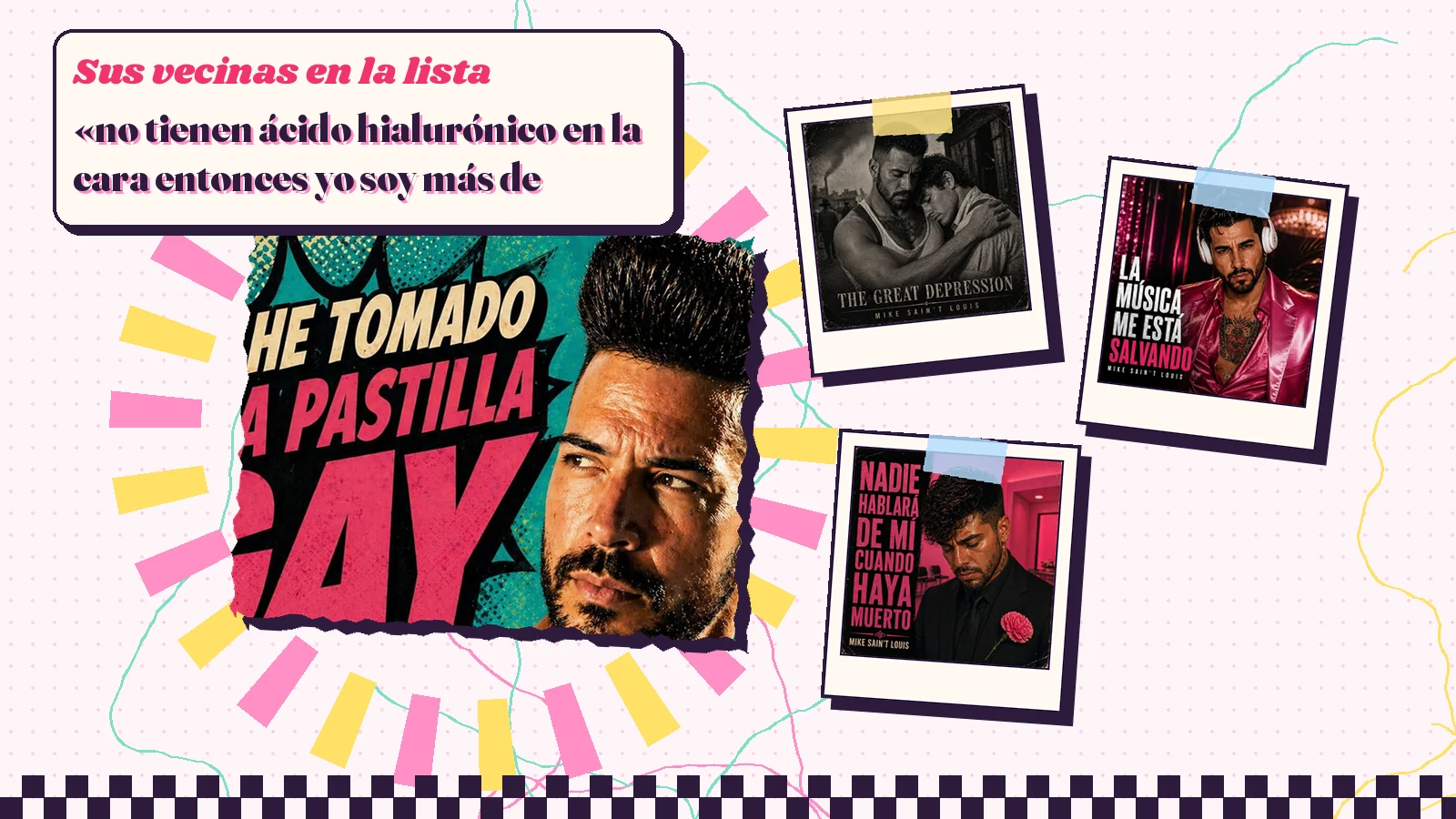
That memory is in my lyrics too. In «The Great Depression» I imagined loving in a time when you couldn't, and every time I go back to it I think of the men in those prisons, who had no song and no plaque until very late.
Today's law
In Spain conversion therapy is banned. The Community of Madrid led the way: its Law 3/2016 on comprehensive protection against LGTBI-phobia already treated it as a very serious offence. Since 2023 the ban has been national. Law 4/2023 of 28 February, for the real and effective equality of trans people and for guaranteeing the rights of LGTBI people, devotes its article 17 to banning «the practice of methods, programmes and therapies of aversion, conversion or counter-conditioning, in any form» aimed at changing sexual orientation or identity or gender expression, «even if they have the consent of the person concerned or their legal representative».
That detail about consent is key. «He asked for it» or «his parents asked for it» doesn't count. In the same law's penalty system, article 79.4.d classifies both practising and promoting these therapies, whether psychological, physical or using drugs, as a very serious offence. Article 80 sets fines of 10,001 to 150,000 euros for very serious offences, and also allows measures such as a ban on receiving public aid or the closure of the premises for up to three years.
From administrative case to Criminal Code
An administrative fine isn't the same as a crime, and many associations have spent years asking for these practices to be added to the Criminal Code. In June 2026 Spain's Congress of Deputies approved an organic law proposal to punish them with prison sentences of six months to two years plus a fine, even when there is consent. The text was sent to the Senate. As I write, in October 2026, its passage there hasn't finished, so it isn't yet law in force. What is in force is the administrative ban in Law 4/2023.
Madrid's experience shows that the road is slow. In 2019 the regional government imposed the first fine for a very serious breach of its law on a coach who offered «therapies to cure homosexuality» online, after a complaint filed in 2016 by the association Arcópoli. In 2021 the High Court of Justice of Madrid annulled that fine because of procedural irregularities. Another investigation, into courses linked to the Diocese of Alcalá de Henares, was closed without a case because the main evidence had been obtained without the consent of one of the people recorded. The laws exist; applying them is hard.
Neither psychologists, nor friends, nor brothers
In another song of mine, «La música me está salvando», there's a list that still makes me smile: «Ni psicólogos, ni amigos, ni hermanos», neither psychologists, nor friends, nor brothers. A few lines later, among the things that haven't worked, comes «rezar de rodillas en Madrid El Rosario», praying on your knees in Madrid's El Rosario. The song is about getting out of a bad relationship, not about conversion therapy. But that list lines up, with humour, every way out someone tries when they're struggling, religious ones included.
I want to be very careful here. Psychology isn't the enemy. Good psychology, the real thing, is exactly the opposite of conversion therapy. In my mental health series I wrote a thank-you to the therapy that helped me keep going. The difference is the goal. Serious therapy helps you live with yourself. Conversion therapy asks you to stop being you. The same goes for faith: there are LGTBI believers who live their faith fully and religious communities that welcome them. What is banned is using faith, or a white coat, to try to change someone.
The sacred without punishment
Priests, rosaries, last rites and fallen angels appear in my songs, and I gave them a whole text: the sacred in my lyrics. In «Nadie hablará de mí cuando haya muerto» the narrator imagines «El cura que quiere dar la extremaunción», the priest who wants to give the last rites, and a bitter farewell to the church. It's fiction, and it's bitter. But it reflects a relationship many LGTBI people know: having grown up inside a faith that later told them they didn't belong.
None of this is an attack on believers. There are LGTBI Christian groups, there are welcoming parishes, there are people who pray and love whoever they love without contradiction. The problem starts when religion becomes a tool for forced change: when the spiritual retreat is really a programme to stop being gay, when confession is used for surveillance, when a teenager is told their desire is a possession. Then we're no longer talking about faith, we're talking about a practice the law bans.
The words that wound
Before the therapy come the words. Sick, deviant, vice, disorder, against nature. They are the vocabulary that prepares the ground for someone to believe they need a cure. In «Marica, con todas las letras» I told how a word that was an insult can be reclaimed as a signature. With the words of pathologisation the opposite applies: they shouldn't be reclaimed, they should be retired.
How to recognise it
Conversion therapy almost never presents itself by that name. These are some warning signs:
- They promise you'll be able to stop feeling attraction to people of your own sex, or that you'll «resolve» your gender identity by going back to the one assigned to you at birth.
- They explain your orientation through a wound: an absent father, an overprotective mother, abuse, a bad friendship. As if loving someone were a symptom.
- They talk about «unwanted attraction», «identity wounds», «healing», «restoration» or «inner freedom», without saying clearly what they want to change.
- They ask for secrecy, keep you away from your LGTBI friends, ban certain websites, clothes or places.
- They use guilt: if you don't change it's because you don't pray enough, try enough or really want it.
- They aren't registered as health professionals or, if they are, they offer something no professional body endorses.
If a registered psychologist proposes something like this, you can report it to their professional association as well as to the authorities.
Families looking for a cure
Often the person looking for the pill isn't the LGTBI person but their family. Frightened parents who read something online, who listen to someone at church, who sincerely believe they're helping. I want to speak to them for a moment without judging, because the fear is understandable and the love is usually there.
What studies and people who have lived it agree on is this: what protects an LGTBI son or daughter isn't trying to change them, it's accepting them. Family rejection is linked to more depression and more risk; acceptance, to more wellbeing. If your son has told you he's gay, or your daughter that she's trans, you don't need a cure. You need information and perhaps to talk to other families who have been through the same thing. There are associations of mothers and fathers of LGTBI people in many cities. On my blog I wrote about blood family in my lyrics, and I know how much what a mother says weighs, in a song and in a life.
The price of what people will say
Conversion therapy thrives where there is shame. In a small village where everyone knows each other, in a very religious family, in a school where being different costs you in the playground, the pressure to «fix yourself» can be enormous. I wrote about that in «El qué dirán», starting from a nosy neighbour in my songs. Fear of other people's eyes is the fuel of those who sell cures.
That's why it matters so much to me that a song can say, without apologising, «Ya sabes lo que hay». It isn't just a phrase. It's a way of taking the fuel away from shame.
The internet as a shop window
Today many of these offers arrive online: videos, online courses, social media profiles talking about «healing attraction», self-help books, private groups. The preamble of the 2025 law proposal said so explicitly: new channels of distribution, such as web platforms and social networks, are one of the reasons for toughening the response.
If you come across an ad or an account promoting conversion therapy, save screenshots with the date and address, and report it to the platform and to the authorities. We already know, from what I wrote about online hate, that digital evidence disappears fast.
Where to report it
If someone has offered or applied conversion therapy to you, or you know it's being applied to someone else, there are several doors:
- LGTBI associations can advise and accompany you. Arcópoli, in Madrid, has filed several of these complaints. FELGTBI+ has a network of organisations across the country.
- The offence is handled as an administrative case by the competent authority; usually the equality department of your autonomous community.
- If there have also been threats, coercion, injuries, confinement or abuse, that's a criminal matter: Policía Nacional, Guardia Civil, regional police or the Public Prosecutor's Office directly.
- If you are under 18, the ANAR Foundation answers on 900 20 20 10 at any hour, free and confidential.
You don't need all the evidence to ask for guidance. It's enough to tell what happened.
If it happened to you
If you went through one of these practices, you may still carry phrases they told you. That you were broken. That your case could be fixed. That if you didn't change it was your fault. None of that is true. You didn't fail: what failed was a method that cannot work.
Many people need time to separate what they think from what was put in their heads. Talking to a professional who works from an affirmative approach, meaning one who doesn't try to change your orientation or identity but helps you live with them, can be a good step. The index of my mental health series has more resources.
Phone numbers worth having to hand
To talk to someone from the community, FELGTBI+'s Línea Arcoíris answers on 91 360 46 05. In Madrid, COGAM offers free psychological support on 91 523 00 70, and the Community of Madrid's LGTBI Information and Support Programme answers on 91 701 07 88.
Some wounds weigh so much that sometimes the thought of not wanting to go on appears. If that happens to you, or to someone close to you, Spain has 024, the suicidal behaviour helpline: it costs nothing, it doesn't record who you are and it answers at any hour of the day or night. In immediate danger, call 112. If you live outside Spain, look up your country's crisis line or call its emergency number. Talking about suicide doesn't cause it; silence leaves people alone. I wrote about it in «Hablemos del suicidio sin tabú».
I'm the perfect woman
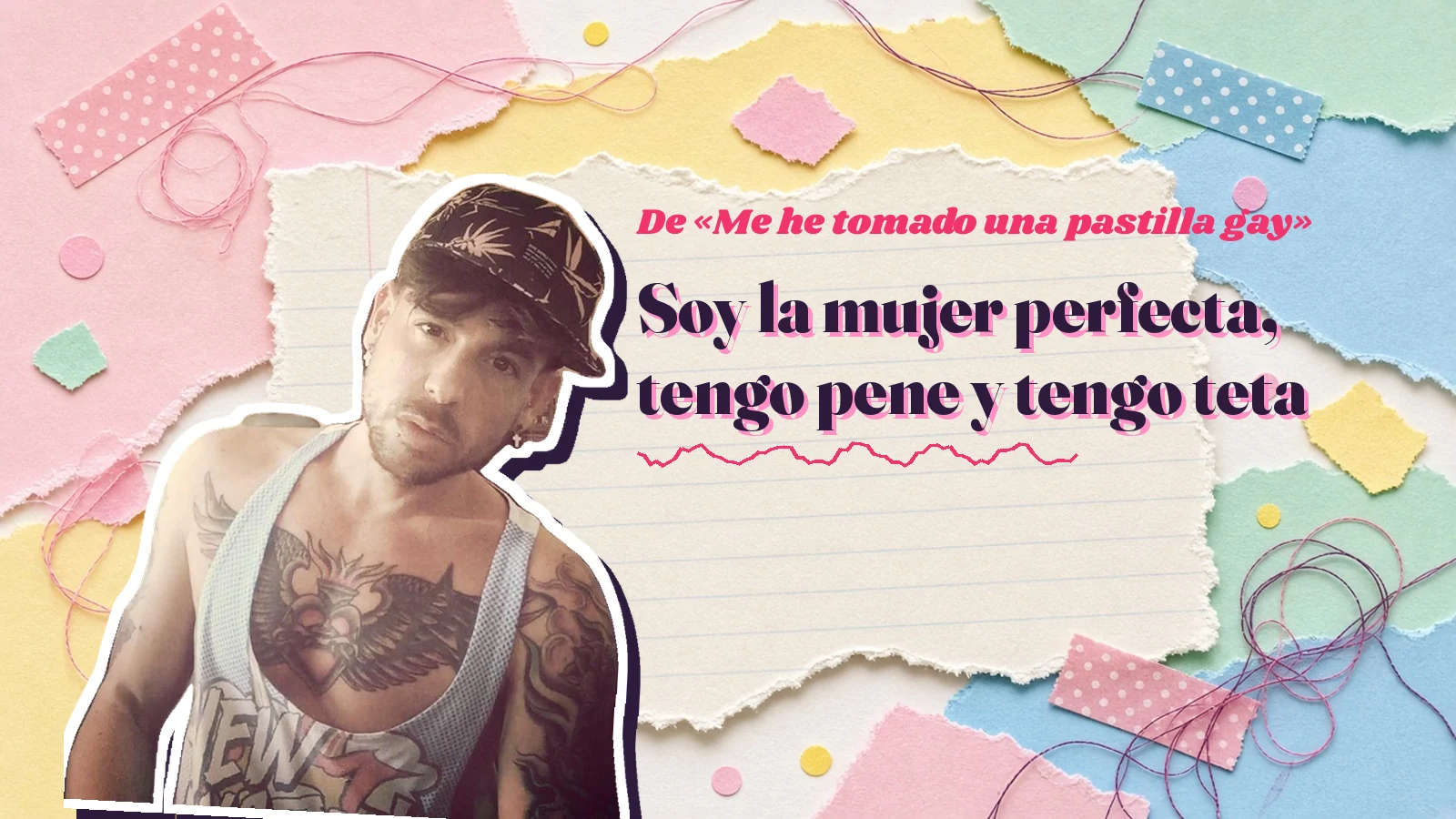
The song has a line that sounds like cabaret provocation: «Soy la mujer perfecta, tengo pene y tengo teta», I'm the perfect woman, I've got a penis and I've got tits. I read it as what it is, party excess, a joke from someone playing with gender the way you play on a drag night. It isn't a manifesto. But it does say something conversion therapy hates: that body, gender and desire don't fit in a box, and that this can be a reason for laughter and pride, not shame.
Trans people have been, and still are, one of the main targets of conversion practices. That's why Law 4/2023 expressly includes sexual identity and gender expression in the ban. There's no correct way to be a man, a woman or neither. There are people.
The pill I do recommend
I'll finish the way the song finishes, with the phrase on its own: «Me he tomado una pastilla gay». If it really existed, it wouldn't be a drug. It would be a mix of things that do work: a friend who listens, a family that learns, a professional who doesn't judge, a law that protects you, a song that makes you laugh at what used to scare you.
Music doesn't cure anything that isn't ill. But it keeps you company. And sometimes, in the middle of a bad night, a cheeky chorus reminds you that there's nothing in you that needs fixing. You know what's what.
Frequently asked questions
What is conversion therapy? It's any practice that tries to change a person's sexual orientation towards heterosexuality or their gender identity towards the one assigned at birth. It can be psychological, medical or religious. The United Nations considers it discriminatory, cruel and degrading, and calls for a worldwide ban.
Does conversion therapy work? No. The American Psychological Association's 2009 review concluded that it is unlikely to change sexual orientation and carries a risk of harm. Homosexuality isn't an illness: the WHO removed it from its classification on 17 May 1990.
Is it banned in Spain? Yes. Law 4/2023 bans it in article 17, even with consent, and classifies it as a very serious offence, with fines of 10,001 to 150,000 euros. In June 2026 Congress also approved making it a crime; in October 2026 that reform was still going through the Senate.
Where can I report conversion therapy? You can ask LGTBI associations such as Arcópoli or FELGTBI+ for guidance, file an administrative complaint with your autonomous community's equality department and, if there are threats or violence, go to the police or the Public Prosecutor's Office. If you're under 18, call the ANAR Foundation on 900 20 20 10.
What is «Me he tomado una pastilla gay» about? It's a party song from the second album of the GAYFOLK trilogy, «Ojalá se pudiera viajar a Gayfolk», with a chorus asking someone to film people's faces and a refrain repeating «Ya sabes lo que hay». The pill in the title doesn't change anyone: it confirms who they already are.
Who writes these songs? Mike Sain't Louis, a lyricist, composer and music producer from Madrid who introduces himself as the first AI songwriter. The music and vocals of his songs are made with artificial intelligence.