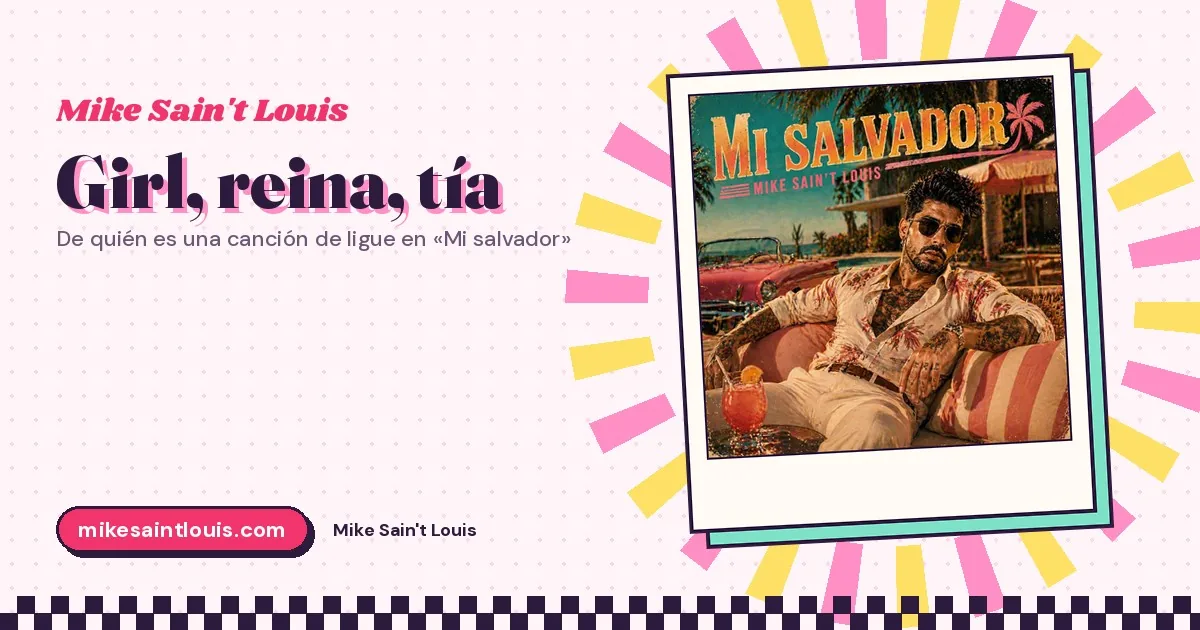
By Mike Sain't Louis ·
Girl, queen, sis: who owns a pick-up song in «Mi salvador»
There's a word in «Mi salvador» that will have raised more than one eyebrow. It comes at the start of the second verse, no anaesthetic:
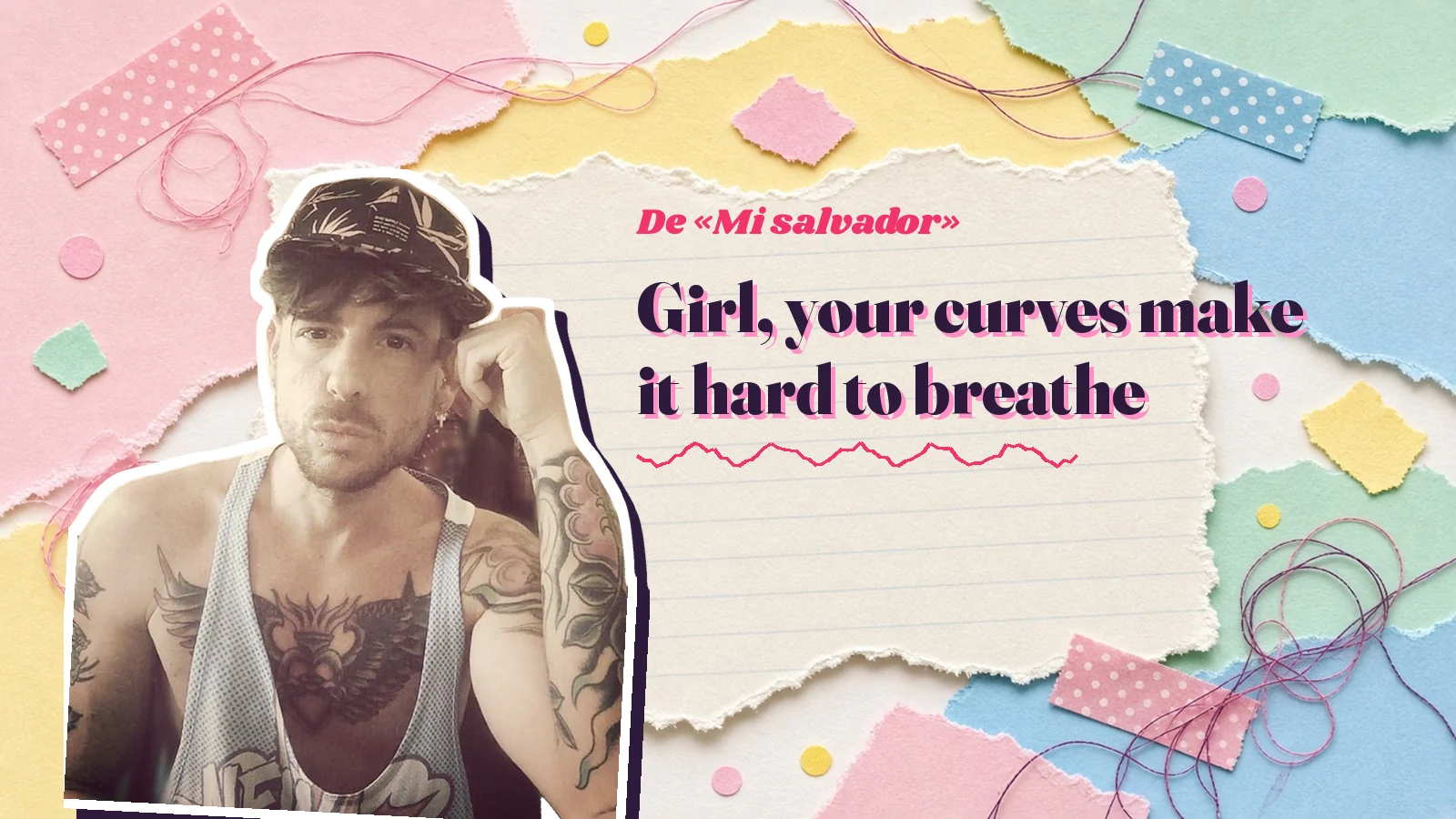
Girl, your curves make it hard to breathe
Girl. Curves. In a song by an openly queer artist, on an album called «El día de la liberación» (Liberation Day), part of a trilogy about a gay planet. What's that girl doing there?
I could answer with some elaborate theory, but I'd rather start with something anyone who's been out at night in Chueca, in the Raval or in the bar district of any city already knows: on a queer dance floor, everyone gets called «girl». The barman, the friend who's just walked in, the hunk at the bar and the drag queen hosting the contest. «Girl, that hair.» «Girl, I can't believe it.» «Sis, get over here.» «Queen, another one?»
On the song's own page I've already told you what this night out is about and why the saviour in the title is a rhythm, not a hero. The full lyrics are published. Here I want to talk about something else: who a pick-up song belongs to when it plays somewhere like ours, and why those two words, girl and queen, are far less innocent than they look.
The songs we were lent
Let's start with the obvious. For decades, almost every love song on the radio was written for a boy who loves a girl or a girl who loves a boy. Queers and dykes grew up on that repertoire. There wasn't any other. And what we did with it was very clever: we kept it.
We switched the pronoun in our heads. We gave the «you» in the lyric a different face. We bellowed heartbreak songs written for a woman at karaoke while thinking of the classmate who never looked our way. The straight diva crying over a man became the spokeswoman for our sorrows, and the club pick-up song, with its «baby» and its «girl», became the soundtrack to our nights.
It's no coincidence that so many pop divas have a devoted gay following. Their songs were about impossible loves, about waiting for a yes, about dancing to forget. And nobody understood an impossible love better than we did.
So when a dance-floor lyric says «girl», a queer ear doesn't stop at the surface. It hears the line the way it has always heard every line: free to put whoever it likes in there.
I've written before that we need gay love songs that end well, and I still think so. But I also like that the opposite exists: songs that don't spell anything out, that leave the «you» open, that play with labels without asking permission. «Mi salvador» is one of those.
Girl isn't a girl
«Girl» deserves a paragraph of its own, because it's one of the most well-travelled words in queer slang.
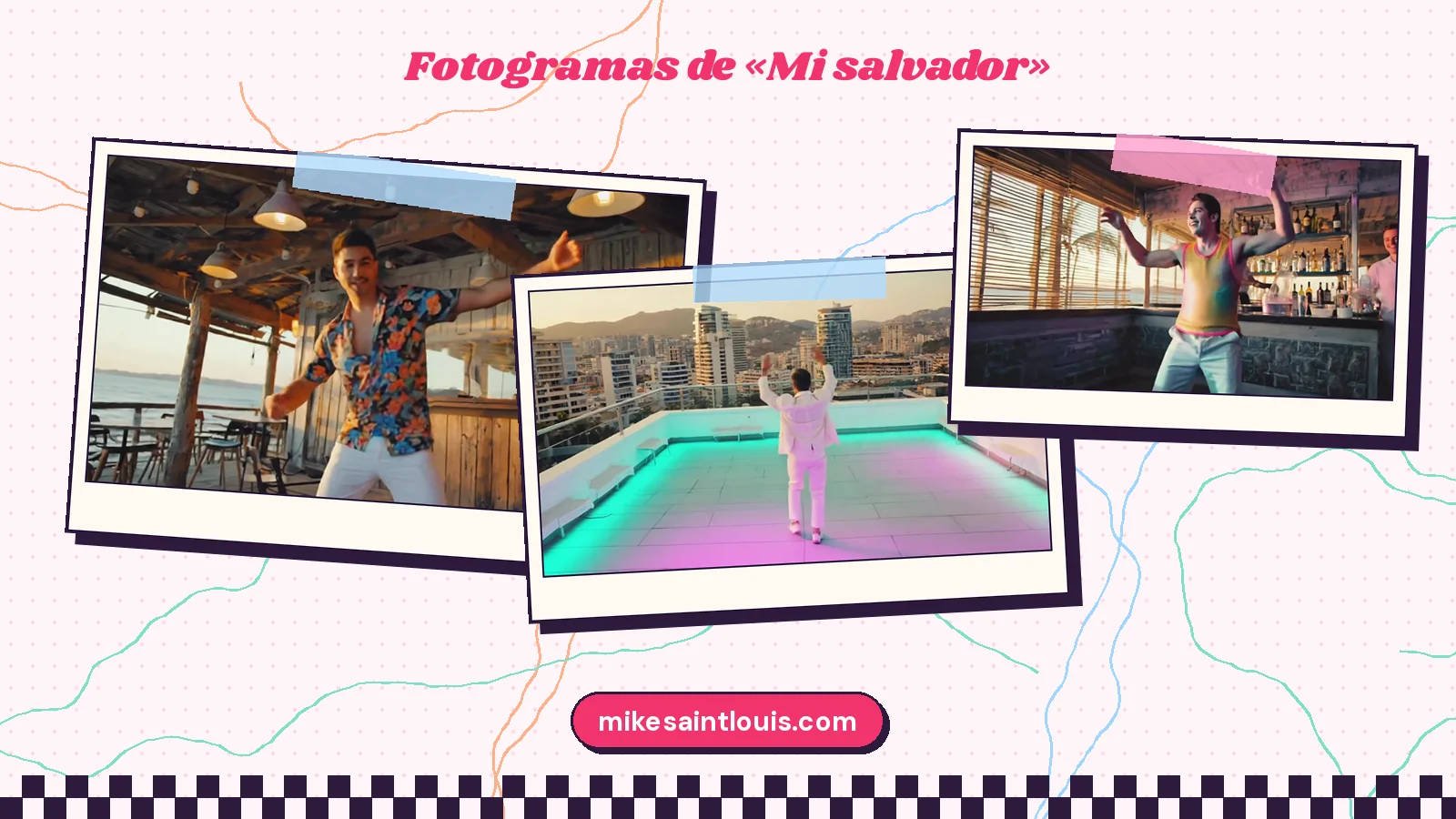
In English, gay men calling each other «girl» has a long history that runs through ballroom culture, through the Black and Latino communities of New York, through drag slang. There, «girl» stops being a description and becomes a greeting, an exclamation, a comment, a wink. It can mean «no way», «I love you», «don't make me laugh» or «turn around, I can see you». It depends on the tone, the eyebrow and the moment.
In Spanish we have our own versions. «Tía» is the most down-to-earth. «Reina», queen, is the most affectionate. «Maricona», depending on who says it, can be an insult or a medal. What they all have in common is that they turn grammar on its head: a man calling another man «tía» is doing something small and subversive, even if he does it a thousand times a day without thinking.
That's why the girl in the lyric amuses me so much. Inside the song, the scene is the classic one: someone dances, someone watches, someone can't breathe. But the moment the song leaves the record and plays somewhere full of people like us, the girl can be anyone. She can be the drag queen on stage. She can be the boy you've been trading looks with all night. She can be your best lesbian friend, who dances better than anyone. She can be you in front of the mirror before going out.
The queen at the end
There's another word in the lyric heading the same way, and for me it closes the circle. It's in the last verse:
Reina on the dance floor, it’s true
Reina. Queen. Now there's no doubt which language the song is speaking. «Reina» is what you call whoever owns the dance floor, whoever walks into the bar like they hold the deeds, whoever has won everybody's admiration with one swing of the hips. In any gay bar in Spain, «reina» is a noble title awarded on merit every night, and it expires at dawn.
What's lovely is how it sits alongside the «girl» at the start. The song opens with a compliment straight out of the reggaeton handbook and ends with a coronation straight out of a gay bar. Somewhere in between, the night has shifted key, and anyone listening with a straight ear suddenly realises they were at a different party.
That's one of the things I love most about pop: it can say two things at once without anyone asking it to explain itself.
Spanglish as a dance step
The other big oddity of «Mi salvador» is the language. Or rather, the languages. The lyric doesn't have a single verse entirely in Spanish or entirely in English. It jumps from one to the other within the same sentence, sometimes within the same line, like the chorus's «Mueve así, kill this dolor», where the pain stays in Spanish and the verb that kills it is in English.
Some people see Spanglish as a linguistic disaster, as if mixing languages meant you couldn't speak either. I think it's the opposite. Spanglish is how a lot of real people talk, especially in the United States and in Latino communities, and in urban music it has become almost a language of its own, with its own rules and its own rhythm.
In a dance track it also has a very physical job. Every switch of language is a little spin, a shift of weight, like when your dance partner turns you round. The ear is expecting a word in Spanish and gets it in English, or the other way round, and that gives the line an extra push. It's rhythm made out of vocabulary.
There's also the question of the audience. A song that jumps between languages can embrace more people at once: the ones who only understand Spanish, the ones who only understand English and, above all, the ones who understand both and enjoy the game. I've said more about writing for different accents and countries in Una canción, veinte acentos, and about why I write in Spanish even though my website is also in English in this other piece.
In that sense, «Mi salvador» is an exception in my catalogue. Most of my lyrics are in Madrid Spanish, with its swearing and its street turns of phrase. This one goes on a language holiday. And, as with holidays, it comes back wearing something it didn't have when it left.
Waiting for the yes
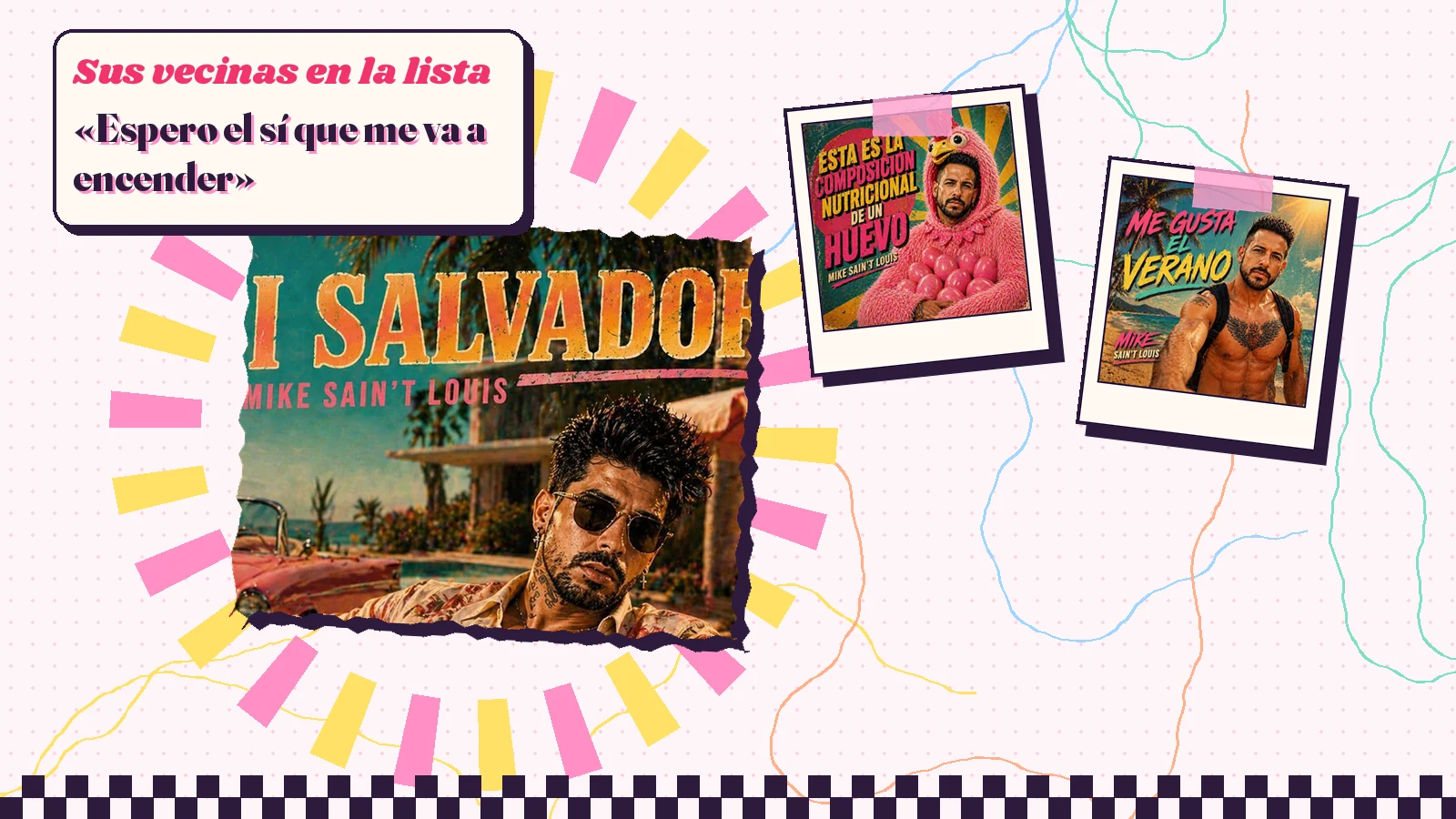
Just before the chorus there's a line almost nobody notices, and I think it's one of the best in the song: «Espero el sí que me va a encender», I'm waiting for the yes that will set me alight.
Look at the order. First the yes, then the fire. The narrator doesn't pounce, doesn't take anything for granted, doesn't read a glance as permission. He waits. And what lights him up isn't simply the other person, it's their answer. Desire kicks in when the other one says yes.
It might seem trivial, but in the genre of the club pick-up song it's pretty rare. The tradition is full of lyrics where «no» is read as «keep trying», and where the night is told only from one person's appetite. A dance track that makes consent the spark, rather than a formality, strikes me as a gorgeous detail.
And it fits everything else. The surrendered hunter, the one who wants to be part of the other's game, the one who asks to have his heart healed rather than demanding anything. «Mi salvador» is a song of very intense desire, but nobody steamrolls anybody.
This has been talked about a lot on queer dance floors in recent years, because in our spaces too there are people who confuse freedom with a free pass to touch without asking. A good night out is one everybody actually wants to be having. Even in the darkest corner of the club, it's the yes that lights the fire.
A hunter on the dance floor
There's a line in the chorus that, read slowly, has more to it than meets the eye: «Tonight I'm your hunter, amor».
The metaphor of flirting as a hunt is ancient and, in a lot of songs, pretty unpleasant. The hunter chases, the prey runs, and it tends to end the way hunts end. But here it sits in a song where the one doing the hunting has very little power. The narrator of «Mi salvador» spends the entire lyric at the other person's mercy: he loses control in their eyes, waits for their yes, wants to be in their game, begs them to cure his heart. He's the most surrendered hunter you'll ever meet.
I find that reversal funny. He's the classic club show-off who plays the predator and is actually dying for some attention. On the queer dance floor we know that character by heart: the one leaning on the bar looking like he's above it all, who by the third song is dancing as if his life depended on it.
Dancing close
There's a phrase that keeps coming back in the first verse: dancing «close», pressed together, until dawn. It seems like the most normal thing in the world. Two people who fancy each other, a dance floor, a song, bodies drawing closer. It's the scene from a thousand films and a thousand village fiestas.
For a lot of queer people, that scene has never been quite so normal.
For a good part of the last century in Spain, two men dancing close in public was an outright risk. There was a «social dangerousness» law that allowed homosexuals to be persecuted, and it wasn't reformed to stop doing so until the end of the seventies. The bars where we met were hidden places, door ajar, someone keeping watch in case the police turned up. Dancing close with another boy meant keeping one eye on your partner and the other on the entrance.
Today, in a big city, in a gay bar, you can dance with whoever you like without glancing at the door. But step outside that circle and you'll notice it isn't quite settled. Two boys dancing close at a village fiesta, at a cousin's wedding or in a mainstream club still draw looks, comments and sometimes worse.
That's why a song about dancing close until dawn, no drama, no fear, nothing to hide, feels like a small victory when it plays in our places. It doesn't say anything political. It doesn't need to. The simple fact that the night is just fun and desire, and not survival, is an achievement that cost a great deal.
I wrote about what a dance floor needs to truly belong to everyone, especially on the big dates, in Qué pide una pista de baile en el Orgullo.
Desire without irony
Something strikes me when I reread the lyrics of «Mi salvador» alongside the rest of my catalogue. In most of my songs, desire comes with a joke attached. The hook-up goes wrong, the ex is a disaster, the show-off turns out to be a loser, the date ends in second-hand embarrassment. Humour is my natural way into love.
Not here. «Mi salvador» takes its desire completely seriously. No wink, no punchline, no line that takes the edge off what's happening. Someone dances, someone watches, someone wants more, and the song laughs at nobody.
In a catalogue like mine, that's almost a rarity. And I think it has to do with what I was saying about the album: after all the score-settling, you want a song where nobody is the villain. Where the only thing that happens is that the night is good.
There's a whole tradition of queer pop that works like that. Dance-floor songs that celebrate the body and desire without apologising and without getting pompous about it. That don't need to explain that what they feel is legitimate, because they take it for granted. That naturalness is exactly what we lacked for so long, and that's why, when a song has it, you notice.
I'm not saying humour is a way of hiding. Sometimes it is, and sometimes it's the most honest way of telling something. But every now and then it's good to write something that doesn't laugh, that just dances.
Lights, camera, action
The bridge turns the night into a film shoot. «Lights, camera, acción», with the last word in Spanish, as if the director were shouting in two languages. And then comes an idea that feels very of-the-moment: the couple's song as a connection that keeps repeating on loop.
That loop image has something of the smartphone age about it. That's how songs are listened to now: a fifteen-second clip that plays forty times in an afternoon while you scroll. What used to be «our song», the one on the radio the day you met, is now more like «our snippet», the one looping endlessly in the video they sent you at three in the morning.
I touched on this in Lo que TikTok y los Shorts me enseñaron sobre las canciones. What I didn't say there is that the loop is also a form of love. Repeating something over and over is the simplest way of saying you don't want it to end.
Benidorm, capital of the dance floor
I don't want to repeat what I already said about Benidorm on the song's page, but I do want to add one thing. That a Spanglish dance track, with its girl and its hunter, ends up landing in Benidorm feels very much like my planet.
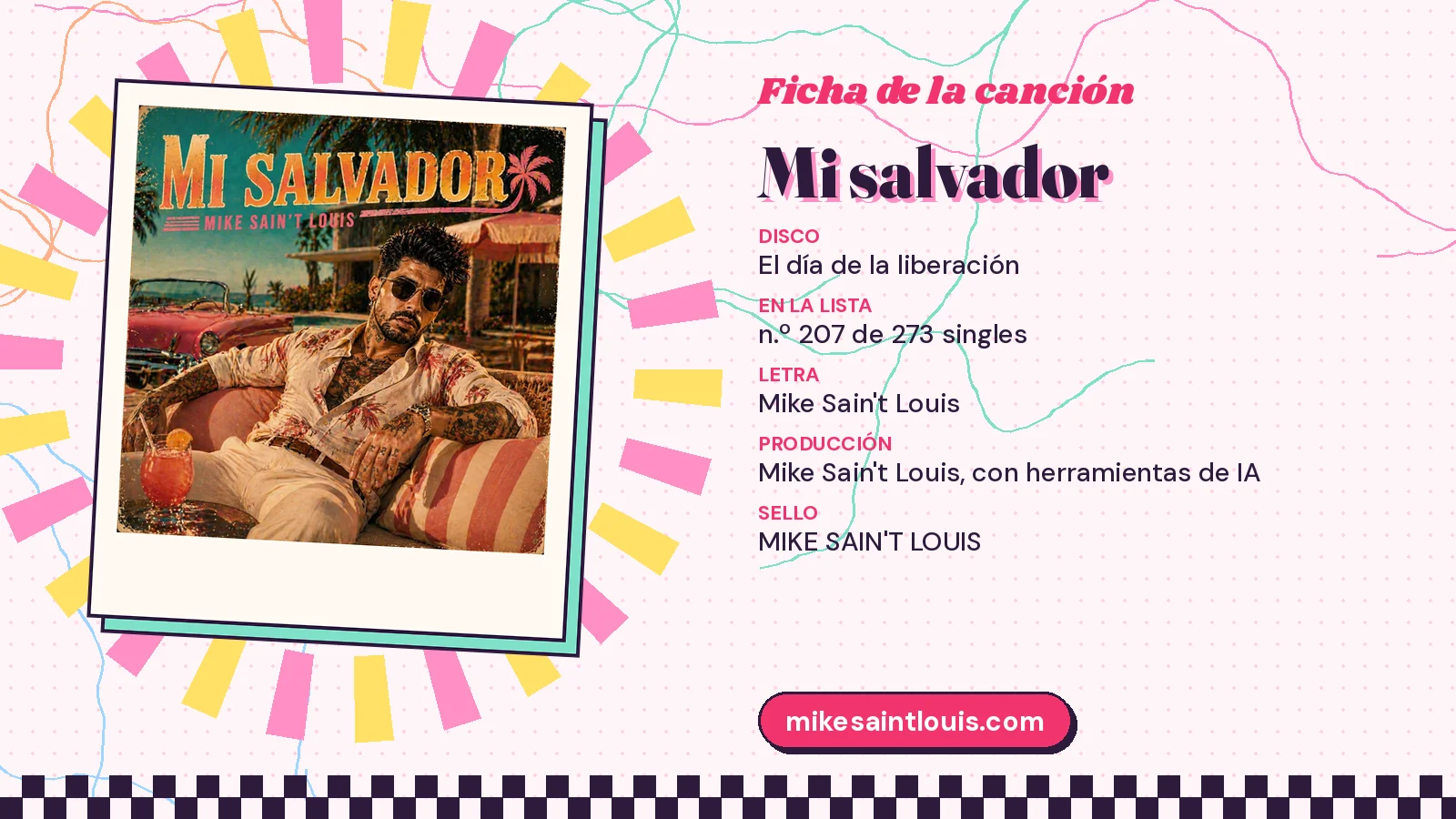
Because Benidorm is exactly the kind of place where everything mixes. Skyscrapers and beach umbrellas, the English tourist and the pensioner from Albacete, the karaoke bar and the gay club. It's a city that speaks Spanglish by nature, or rather a blend of twenty languages with an accent of paella and sun cream. If there was one place in Spain where this night could happen, it was there.
And Benidorm is also one of the gay capitals of the coast. The lyric doesn't need to underline it for anyone who knows the place to have it in mind on hearing the name.
The bright side of the album
«Mi salvador» is part of «El día de la liberación», an album with some far rougher songs. That's where the scores get settled with the hypocrites, the narcissists, the people who did harm. Which is why this song works almost as a breather. It's the night out that comes after you've said everything that needed saying.
I wrote about that album and about what happens after liberation in El día de la liberación y el día siguiente. And one of the things that happens the next day, I think, is that you feel like dancing again. The pain that used to fill everything retreats to a corner and the dance floor is free once more.
That's why the saviour in the title couldn't be a person who rescues you. If, after everything the album tells, Prince Charming turned up to fix it all, it would be a lie. What saves you, if anything does, is a good night, a rhythm you love, someone to dance with and the feeling that, for a few hours, your body is yours again.
Who this song is for
Back to the opening question. Who does a pick-up song like this belong to?
My answer is that it belongs to whoever dances to it. The words in the lyric may point to a girl, a queen, a hunter or a film, but the moment it starts playing somewhere full of people, it stops mattering who they were aimed at. The dance floor does with songs what queers have always done with love songs: shares them out among everyone, and each of us keeps our piece.
If you're putting together a playlist for heading out in the mood, I have a few tips on how to build a queer Spanish-language playlist that doesn't sound like all the others. «Mi salvador» fits nicely at the start of the night, while you're still getting ready and the glitter is half on.
And if someone calls you «girl» that night, whatever you are, answer with a smile. You're being crowned.
All the lyrics from the planet, with their invented characters and their nights on the dance floor, are in Letras.
Frequently asked questions
What is «Mi salvador» about? It's a dance track about a night of flirting on the dance floor in Benidorm, where the other person's rhythm works as a kind of salvation: it cures the pain and drives away the fear. The lyric mixes Spanish and English in almost every line.
Why is «Mi salvador» in Spanglish? The constant switching between languages gives the lyric extra rhythm, almost like a dance step, and brings it close to the language of Latin urban music. It's an exception in Mike Sain't Louis's catalogue, as he writes most of his lyrics in Spanish.
Which album is «Mi salvador» on? It belongs to «El día de la liberación», one of the albums in the Gayfolk trilogy, and it's on Spotify and all the other platforms.
Who makes «Mi salvador»? Mike Sain't Louis, a lyricist, composer and music producer who calls himself the first AI songwriter: he writes the lyrics and directs the production, and the music and vocal performances are generated with artificial intelligence.