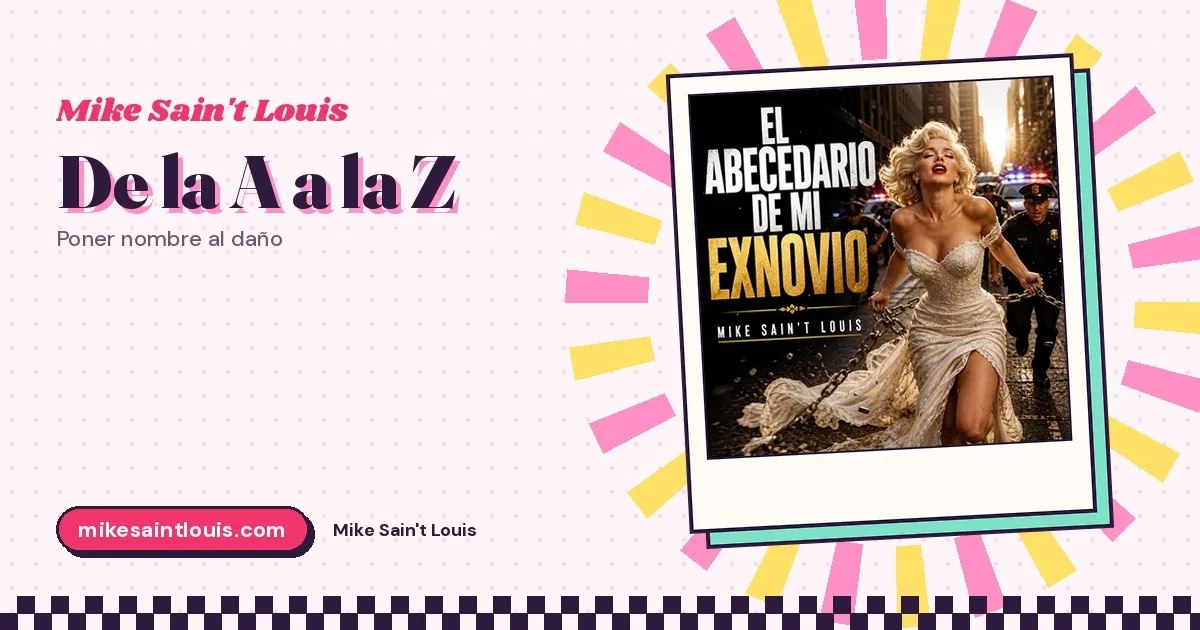
By Mike Sain't Louis ·
From A to Z: naming the harm with «El abecedario de mi exnovio»
A for alphabet. B for boyfriend, for how good he seemed at the start. C for careful, which nobody told you to be.
That's how you learn to read. With a primer, one letter per page and a picture beside it. A with its apple, B with its boat, C with its cat. Every child in Spain has been through it, with whatever reading book their school used. The alphabet is the first thing we're taught for putting the world in order.
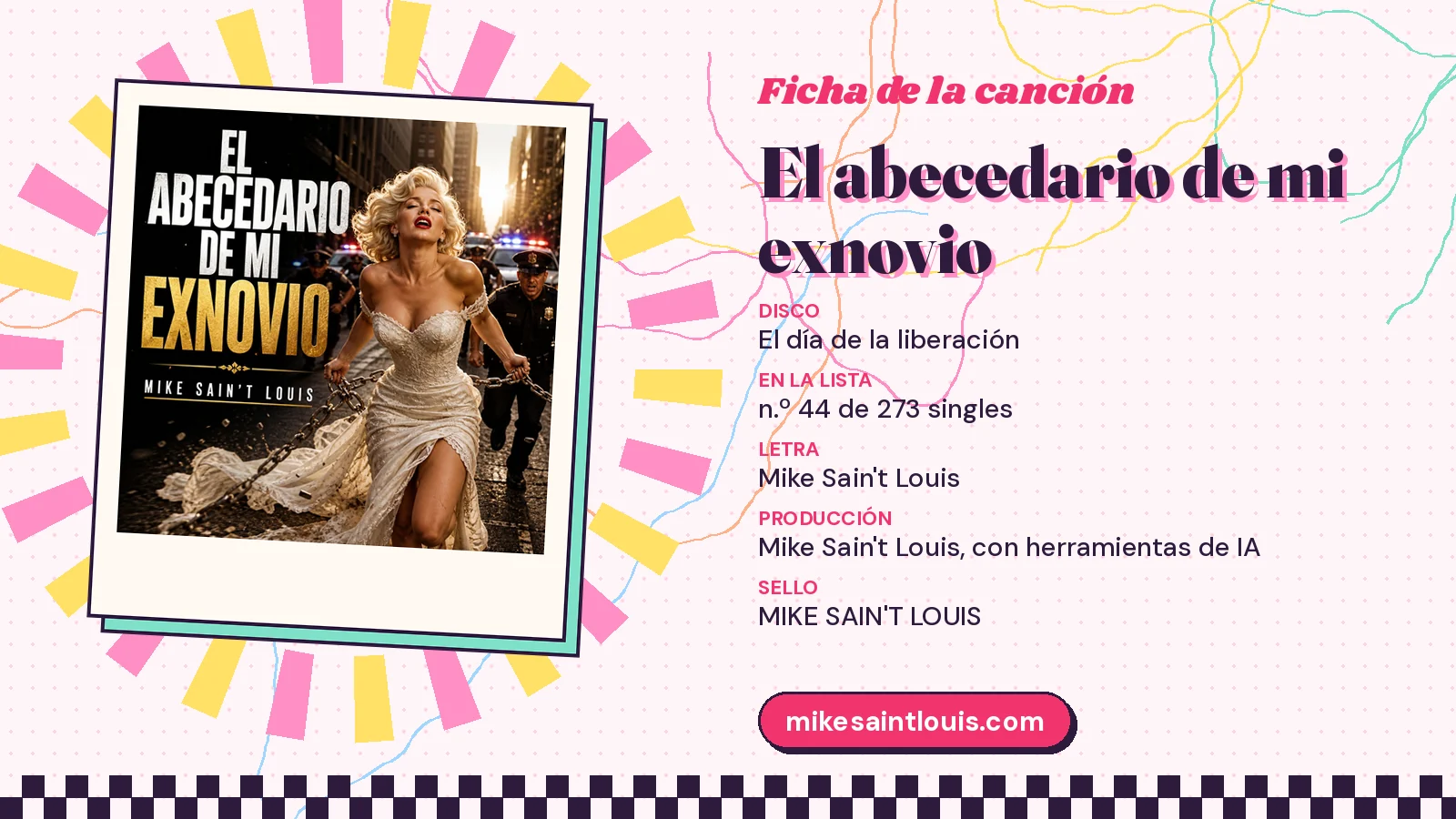
«El abecedario de mi exnovio», my ex-boyfriend's alphabet, uses that same form for something else. To put in order something that has no order. To name the harm, letter by letter.
The song's page has the basics. In this post I'm not going to recite the song's alphabet, because the song already says it and I'd rather you heard it whole. I'm going to talk about why I chose that form, about the sentence I introduced it with and about what it means to put a name to abuse.
«It isn't after revenge, it's after awareness»
On the song's page, in its lyrics entry, I left a short text that begins like this:
Esta canción no busca venganza, busca conciencia. (This song isn't after revenge, it's after awareness.)
I thought long and hard before writing that, because in my catalogue revenge is practically a genre. I've got letters of recommendation for the next victim, spitting on graves, fans spraying shit everywhere. I laugh at my exes because it's the most honest way I have of telling it, and I explained it in this piece. In my house, revenge comes by the bucketload.
So saying this song isn't after revenge is saying it's different. That there's no joke with a name here, no insult with a postcode, no belly laugh. There's something else: a list.
Awareness, in this case, means something very specific. That whoever listens recognises it. That someone inside a relationship like that, who doesn't yet know they are, hears a word and thinks: hang on, that's happening to me.
The alphabet as a form
Why an alphabet and not a letter, a diary, a plain list?
For three reasons, and I'll take them in order, since we're talking about alphabets.
The first is that the alphabet forces you. If you start at A, you have to get to Z. You can't skip letters because you can't be bothered or because it hurts. It's a form that makes you be thorough, name everything, including what you'd rather keep quiet. Abusive relationships have lots of things you'd rather keep quiet. The alphabet won't let you.
The second is that the alphabet is childish. It's the first thing we learn. Using a child's form to tell something so adult and so dark creates a clash. It's like finding a school primer at a crime scene. That clash is what I wanted.
The third is that the alphabet is a system. And so is abuse. It isn't a pile of separate bad moments, off days, normal couple arguments. It's a system, with its own logic and order, even if from the inside it looks like chaos. Putting the harm into alphabet form is saying: this has a structure. You're not making it up. It can be ordered from A to Z.
Ordering what you've written
I'm a bit obsessive about alphabetical order. My lyrics are sorted from A to Z on this site, and I wrote about it in ordering my lyrics from A to Z. Ordering what you've written yourself is a way of understanding it. You suddenly see which words keep coming back, which subjects return, how many times you've written the same wound under a different title.
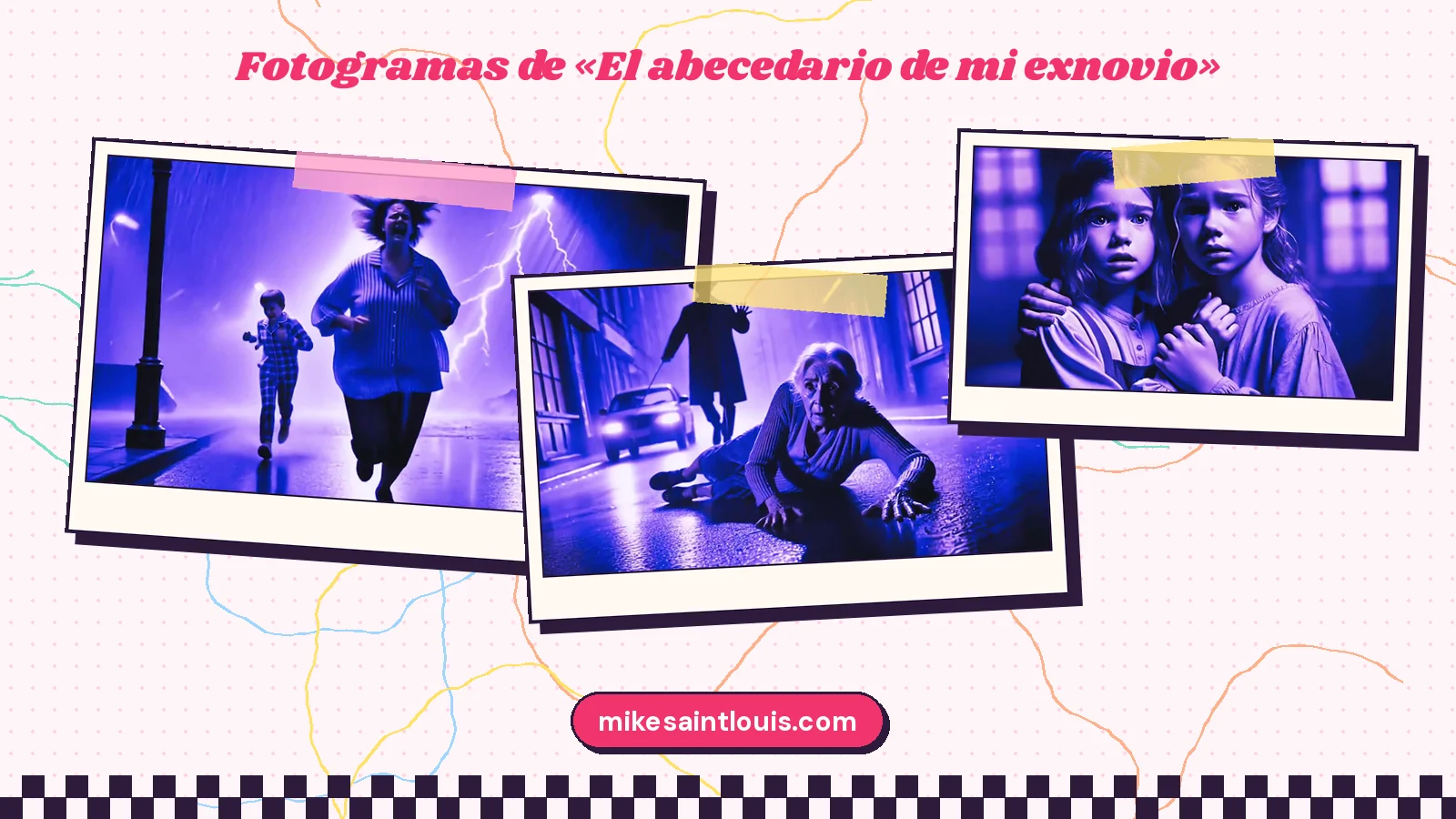
With this song I did something similar, but with the harm. I put it in order. And by putting it in order, I saw it.
That, I think, is the most useful part of the form. Someone living through abuse doesn't see the whole thing. They see a bad day, then a good one, then three bad ones, then an apology with flowers. From the inside you can't see the pattern. The alphabet brings the pattern out. It's like those satellite photos where, from above, you can see that what looked like an ordinary field is actually a maze.
The words for harm
To talk about abuse you need words. And until recently, hardly anyone knew a lot of those words.
Gaslighting. Love bombing. The silent treatment. Triangulation. Discard. Covert narcissism. No contact. Words that turn up today on TikTok and in psychology podcasts, but that twenty years ago nobody was saying in the Mercadona queue. And if you don't have the word, you can't name what's happening to you. You get stuck at «he's just got a temper», «he's just stressed», «I wind him up too».
My catalogue is full of those words, turned into titles: «Gaslighting», «No contact», «El descarte del narcisista» (the narcissist's discard), «Not your supply», «Usted es un puto narci psico encubierto» (You, sir, are a fucking covert psycho narc). Each title is a word in the alphabet of harm. Put them all together and you've got a dictionary.
In «Ni con un palo» there's a line that's probably the driest definition I've ever written: «No es rechazo, es cálculo. / Es saber que el otro sufre y quedarse quieto» («It isn't rejection, it's calculation. / It's knowing the other one is suffering and staying still»). That's a dictionary entry. «El abecedario de mi exnovio» tries to be the index.
Naming the harm
The second sentence of the text that goes with the song says it's «una forma de poner nombre al daño y convertirlo en arte», a way of putting a name to the harm and turning it into art.
Putting a name to it. It's what doctors do with diseases, biologists with creatures, parents with children. Naming is the beginning of control. What has a name can be googled, told to a friend, taken to therapy, reported.
What has no name stays inside, going round and round. Like a washing machine with no programme selected, spinning like mad at three in the morning, and nobody knows how to stop it. You press every button and nothing. Until someone tells you what the programme's called, and finally you can choose it, or switch it off.
That's why I think songs about abuse with concrete words are more useful than songs about abuse with pretty metaphors. A metaphor moves you. A word gives you a tool. If someone hears «gaslighting» and then looks it up and reads what it means, they've gained something they didn't have before.
And I don't say «turning it into art» pompously. I say it with the modesty of someone who makes songs with what he's got. Turning harm into a song is getting it out of you and putting it outside, into an object you can look at, that you can share, that isn't just in your head any more.
For all the ones who can't speak
The text ends with two sentences that matter a lot to me:
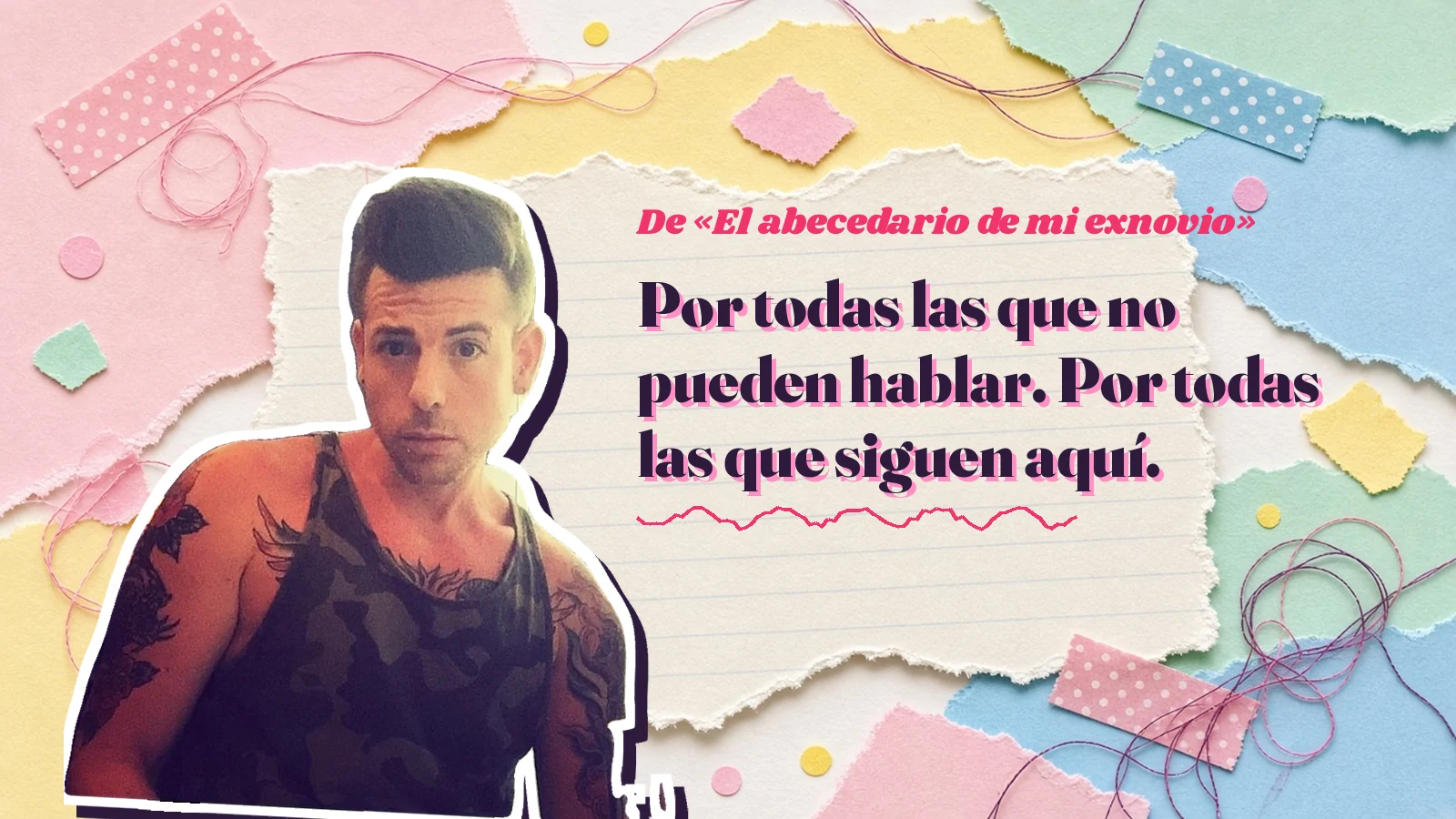
Por todas las que no pueden hablar. Por todas las que siguen aquí. (For all the ones who can't speak. For all the ones who are still here.)
In the feminine, in Spanish. «Todas las que.»
I've said it in other posts: in queer Spanish slang the feminine is less about grammar than about intimacy. But there's more to it here. Intimate partner violence is almost always associated with women abused by men, and rightly so, because they're the overwhelming majority of cases and victims. But it also happens between two men. And that gets talked about far less.
By writing «todas» in the feminine, the sentence embraces both. The women who suffer it and the gay men who suffer it and who, often, don't even have the words to tell it, because the public conversation about abuse wasn't designed with them in mind. There are no government campaigns with two boys. No posters at the bus stop. There's an enormous silence.
«For all the ones who can't speak.» Because they're still inside it. Because they're scared. Because they don't have the word.
«For all the ones who are still here.» Because they got out. Because they survived. Because they're alive and can listen to this.
A text with no jokes
What surprises people who know the rest of the catalogue most is the tone of the text I introduced the song with. It isn't funny. At all. No celebrity, no brand, no «¡Patán!», no affectionate «maricón». Four serious sentences, and that's it.
It's not that I think you can't joke about abuse. You can, and I do in other songs, with plenty of venom aimed at the abuser. But there's a moment, before the humour, when you need to name it. And naming demands seriousness. First you say what it is. Then, if you like, you laugh.
The humour comes later. Once you have the word and some distance. That introduction is from before.
Ex-boyfriend: the word in the title
The title says «exnovio», ex-boyfriend. Not «abuser», not «aggressor», not «narcissist». Ex-boyfriend.
I chose the most ordinary word possible. Everyone has an ex-boyfriend. It's a bar-conversation word, «how's your ex these days?», «I bumped into my ex in Carrefour». There's nothing dramatic about it.
And that's exactly why it works. Because abuse isn't carried out by monsters with horns. It's carried out by boyfriends. Ordinary people you go for a drink with, whom your friends invite to birthdays, whom your mum likes. The title says: this was done by someone you called your boyfriend. Not a film villain. Your boyfriend.
If the title were «The abuser's alphabet», the song would be for other people. People who already know they've been abused. With «ex-boyfriend», the song also speaks to someone who doesn't know yet. Who thinks theirs was just a difficult boyfriend.
The typology and the alphabet
I have a post called a little comic typology of exes. It's a comedy piece, a classification of the exes who appear in my songs, with their quirks and their flaws. I had a great time writing it.
«El abecedario de mi exnovio» is the serious typology. If the other one is a list of characters, this is a list of harms. Both are lists. Both put things in order. But one makes you laugh and the other makes you go quiet.
I like that they live on the same site. Because exes are both things. You laugh at them and, at the same time, they hurt you. You don't have to choose. You can have a comic typology and a serious alphabet of the same man.
On the liberation album
The song is on «El día de la liberación», the third album of the trilogy. And it makes perfect sense.
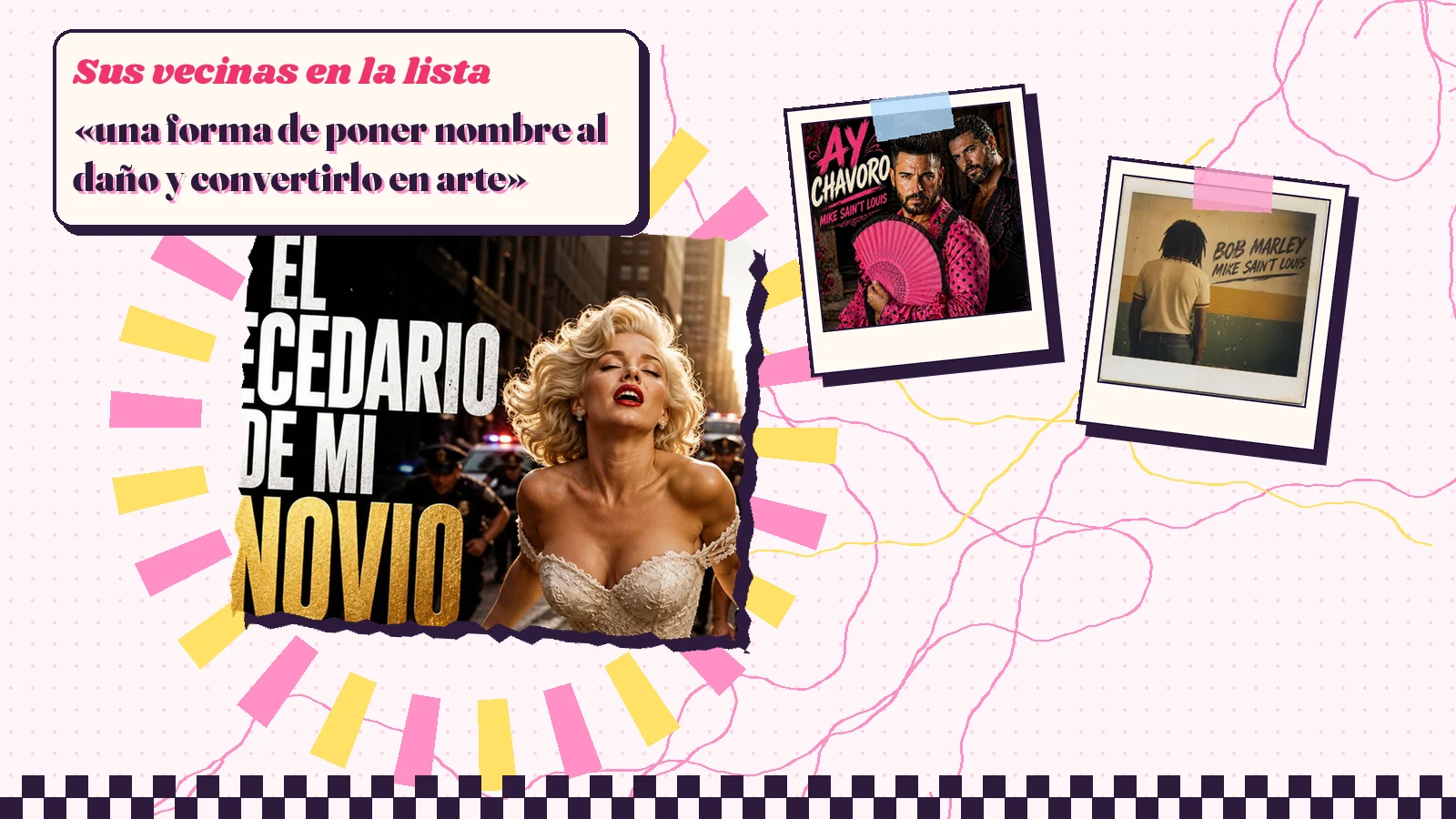
The first album, «Descubierto un nuevo planeta llamado GAYFOLK», is full of fresh rage, insults, open wounds. The second, «Ojalá se pudiera viajar a GAYFOLK», is about longing to leave. The third is about having arrived. And when you arrive, you can look back and put things in order.
You don't write an alphabet with an open wound. With an open wound you shout, insult, spit. The alphabet comes after. It's for when you can finally sit down, take a sheet of paper and start at A without your hand shaking.
I told it in «El día de la liberación» and the day after: liberation isn't a party, it's the day you can finally see what happened to you. This song is that day. With a primer.
What the song asks
If «El abecedario de mi exnovio» asks for anything, it isn't for you to hate anyone. It's for you to learn your letters.
To know what gaslighting is, so you can recognise it. To know what the silent treatment is, so you don't mistake it for a bad day. To know what love bombing is, so you're a little wary of someone who gives you everything in two weeks. It isn't paranoia. It's literacy.
Some people never learnt to read as children and had a terrible time as adults, because the world is full of signs. Harm is the same. If you can't read it, the world is full of signs you don't understand. And someone uses them against you.
Epi, Blas and the letter of the day
Anyone who grew up in Spain with eighties and nineties telly will remember «Barrio Sésamo», our Sesame Street. Epi and Blas (our Ernie and Bert), Gallina Caponata, the Cookie Monster. And the letter of the day: one letter, one word, one picture, one song to learn it. «Today, the letter M.» That's how a lot of us learnt.
I think a lot about that way of teaching, one letter at a time, calmly, with repetition, with a word to illustrate it. It's teaching at its most basic and most effective. Nobody learns the alphabet in one go. You learn it letter by letter.
The words for harm are the same. You don't learn them all at once. One day someone mentions gaslighting to you, and you get it. Months later you read about the silent treatment, and you recognise it. Then you hear «discard» and realise it happened to you. It's a slow literacy, one word at a time.
If a song can be someone's letter of the day, I'm happy. It doesn't need to be the most played song. It's enough that, for one particular person, on some ordinary Tuesday, it teaches a letter they didn't know.
Awareness, not awareness-raising
I wrote «conciencia», awareness, and not «concienciación», awareness-raising, and the difference matters to me.
«Awareness-raising» is a government-campaign word. Council leaflet, bus-shelter poster, themed week with a coloured ribbon. It's something someone does to other people: we're raising your awareness. It comes from above.
«Awareness» is something else. It's what you have, or don't have, inside. Realising. Becoming aware is something you do, not something done to you. Nobody can become aware on your behalf.
That's why the sentence says the song is after awareness. It isn't trying to raise anyone's awareness from a pulpit. It's hoping that someone, listening, realises something. By themselves. With their own head.
It's the difference between a sermon and a mirror. This song wants to be a mirror.
When to play it
People sometimes ask me when you'd listen to a song like this. Because it isn't for Saturday's party, or the gym, or the Pride float.
I don't have an answer, and I'm wary of anyone who does. Some songs you listen to alone, with headphones, on the bus home. Some songs you send to a friend without saying anything, just the link, because the link says it all. Some songs you play once and never again, but that once counts.
I suspect this is one you send. One someone shares with a person they can see is in a bad way, without daring to say «I think your boyfriend is abusing you». The song says it for you. It's a very clumsy, very human way of helping, and I'm glad songs can be used for that.
If that's how it's been used, if someone sent it with that intention, I hope it helped.
For anyone who hasn't told anyone yet
A while ago I wrote a letter to anyone who hasn't told anyone yet. It was about coming out, but the title works for this too. Lots of people haven't told anyone what happened to them, or what's happening to them.
I'm not going to tell those people what to do. I'm not a psychologist, or a lawyer, or a social worker, and it would be very irresponsible for a bloke who makes songs to start handing out instructions. What I can say is that there are professionals for this. That in Spain 016 helps victims of gender-based violence and leaves no trace on your phone bill. That there are LGBTQ+ organisations with support services. That if you're outside Spain, you can call your local emergency number or helpline. That asking for help isn't exaggerating.
And that, if it helps, you can start at A.
No names
There isn't a single name of any real person connected to the story in this post, and that's deliberate. Some of my songs have names, and each has its story. Here I don't want them.
First, because an alphabet of harm has to work for anyone. If I put a name in, the text becomes mine and his. Without a name, it belongs to whoever reads it.
Second, because a piece about awareness can't turn into a piece about one particular person. That would be revenge again, and the introduction says the opposite.
And third, because harm, once you put it in order, looks very similar from one story to the next. The letters of the alphabet are almost the same for everyone. What changes is the handwriting.
The notebook
A lot of my lyrics come out of a notebook, and I wrote about what I've learnt writing in it in my lyrics notebook. An alphabet is, in a way, the most basic kind of notebook: one page per letter.
If someone wants to make their own alphabet, not to publish but to understand themselves, I'd tell them to try. One page per letter. A, B, C. What word goes on each. It doesn't need to rhyme or be pretty. It needs to be true.
Sometimes, by the time you reach Z, you know something you didn't know at A.
And if you get stuck on a letter, that's fine. X is hard for everyone, in primers and in life. Leave it blank and carry on. What matters about the alphabet isn't completing it perfectly, it's going through it. Getting to the end, even with gaps, means you've looked at all of it head-on once. For any questions about how I work, how the songs get released or what Planeta Gayfolk is, there's the site's FAQ.
Frequently asked questions
What is «El abecedario de mi exnovio» about? About intimate partner abuse, told in the form of an alphabet. According to the text that goes with it, the song «isn't after revenge, it's after awareness» and is «a way of putting a name to the harm and turning it into art».
Which album is it on? «El día de la liberación», the third album of Planeta Gayfolk's GAYFOLK trilogy.
Does this article name anyone real? No. Mike Sain't Louis prefers not to use names so that the alphabet of harm can work for anyone.
Why does the text say «todas», in the feminine? Because it embraces both the women who suffer abuse and the gay men who suffer it and often find no words or campaigns that speak about them.
Who wrote the song? Mike Sain't Louis, a lyricist, composer and producer from Madrid. The music and vocals are produced using artificial intelligence as a tool; the lyrics are his.