By Mike Sain't Louis ·
Giving a Song the Worst Possible Title
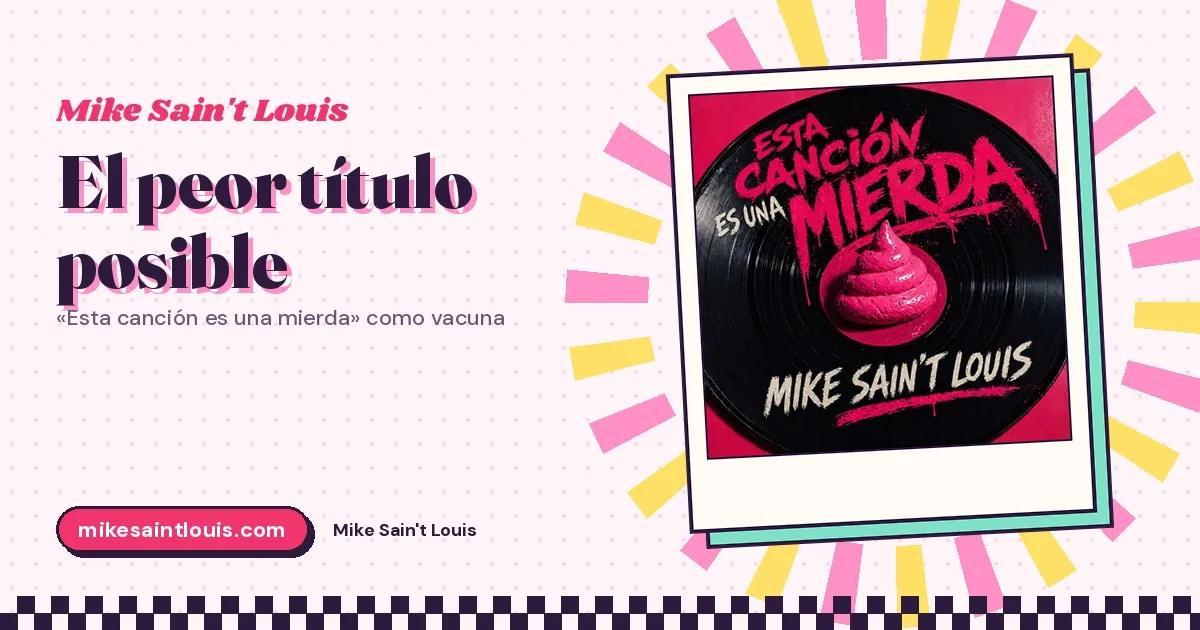
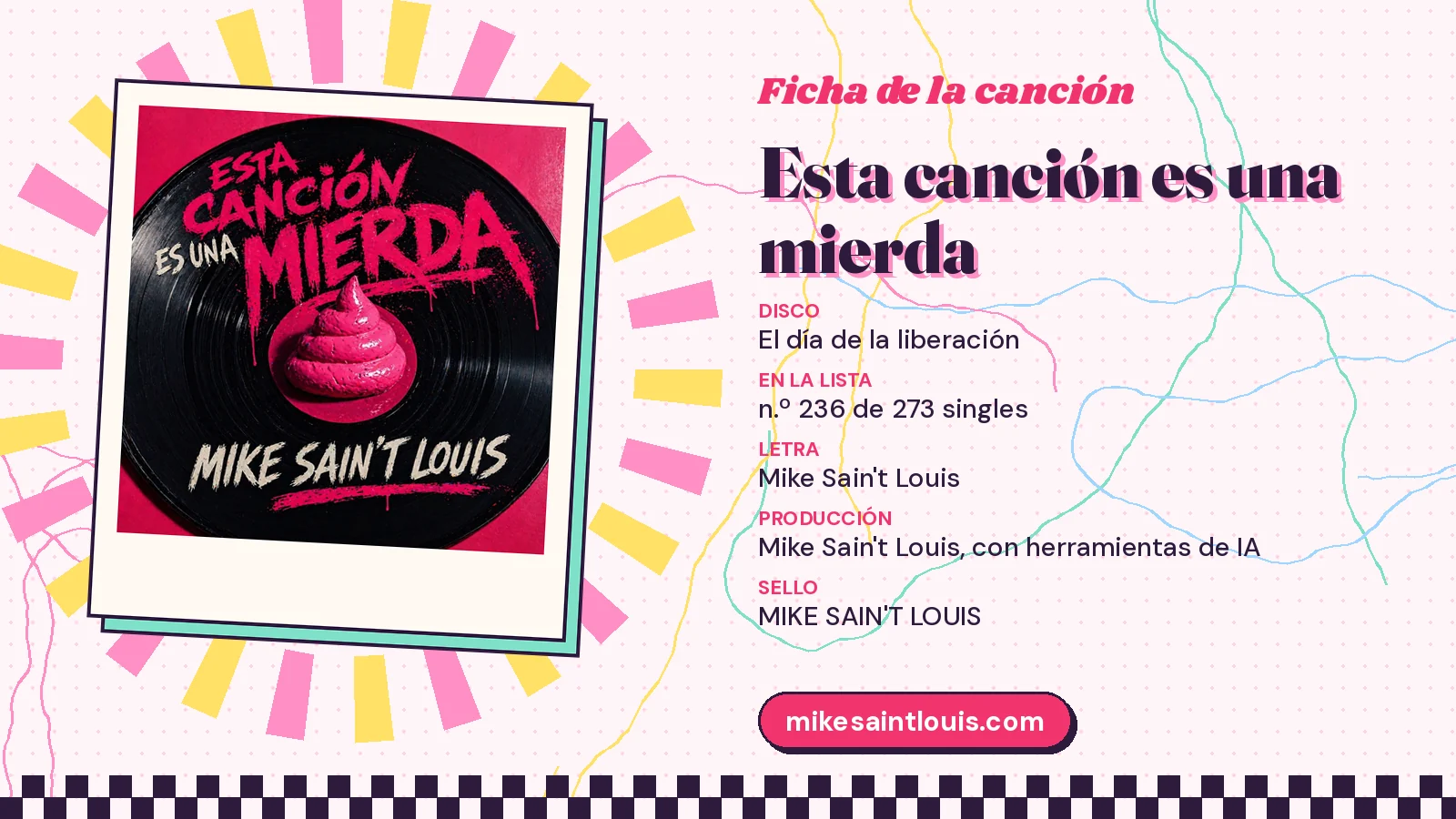
A black vinyl record on a bubblegum-pink background. In the middle, where the label with the record company's name would go, a shiny pink swirl in the exact shape of the poo emoji. Above it, in spattered graffiti lettering, the title: «Esta canción es una mierda» ("This Song Is Shit").
I was told so before it even existed. Maybe not in those exact words, but in all their cousins: my lyrics are weird, they're too personal, that's not music, anyone could do it at the press of a button. So I did what any queer with a minimum of dignity and a maximum of spite would do. I made the insult the title. If you're going to call me shit, at least let the shit carry my signature.
I'm Mike Sain't Louis, the man who writes the lyrics of Planeta Gayfolk, and the song page already explains what it's about. Here I want to tell you why a title like that works like a vaccine, what's under the joke and why, at this point, it makes me laugh more than it hurts.
Born of exhaustion, but also of laughter
The text accompanying the song explains it with a sentence I could hang on my front door: it was born of exhaustion, but also of laughter. Exhaustion from having to justify every lyric. Laughter because, at a certain point, exhaustion becomes comic.
When you've spent years hearing that what you do is worthless, you can do one of two things. One, hide under the duvet with a tub of supermarket ice cream and binge an old sitcom until it passes. Two, take the insult, turn it inside out and wear it as a hat. The first is very human and very respectable. But the second produces songs, and the first only produces love handles.
The song is the result of option two. A protest with a belly laugh included.
A title that insults itself
A title like that does something very strange: it disarms the enemy before he fires. The person who was going to write "what a shit song" in the YouTube comments finds it's already written, in capitals, on the cover. What's he going to say now? That yes, it's shit? Very well, we agree. Welcome to the club.
It's the same mechanism queer culture has always used with insults. They call you maricón and you answer "maricón, yes, so what?". They call you a screaming queen and you put on a feather boa. I wrote about that move in «Cateto, de insulto a bandera», with a different word and the same logic. What I'm doing here is applying it to music criticism. Once the insult is yours, it stops hurting.
There's also a meta joke in it that I enjoy. A song called «Esta canción es una mierda» is a song talking about itself, like those comedy characters who look straight at the camera. It's the pop version of an old-school comic actor winking at the theatre audience.
Irony as a shield
Irony is my shield, and I'm not ashamed to say so. When something hurts, I put a layer of mickey-taking over it, like cling film over a plate to keep the flies off. The food is still underneath. But it's protected.
Some people think irony is a way of not saying things. I think it's the opposite: a way of saying them without having them thrown back in your face. If I say "it hurts when people say my lyrics are bad", I'm exposed. If I say "this song is shit", the one who's exposed is the critic, because he looks like someone who took ages to reach a conclusion I'd already printed on the cover.
I set it down in the house rules on my about page: you can tell the truth with humour too. Camp, exaggeration and the everyday are serious ways of talking about life. This song is proof that I apply that rule to myself, which is the hardest part.
The lyrics are mine, and so is the irony
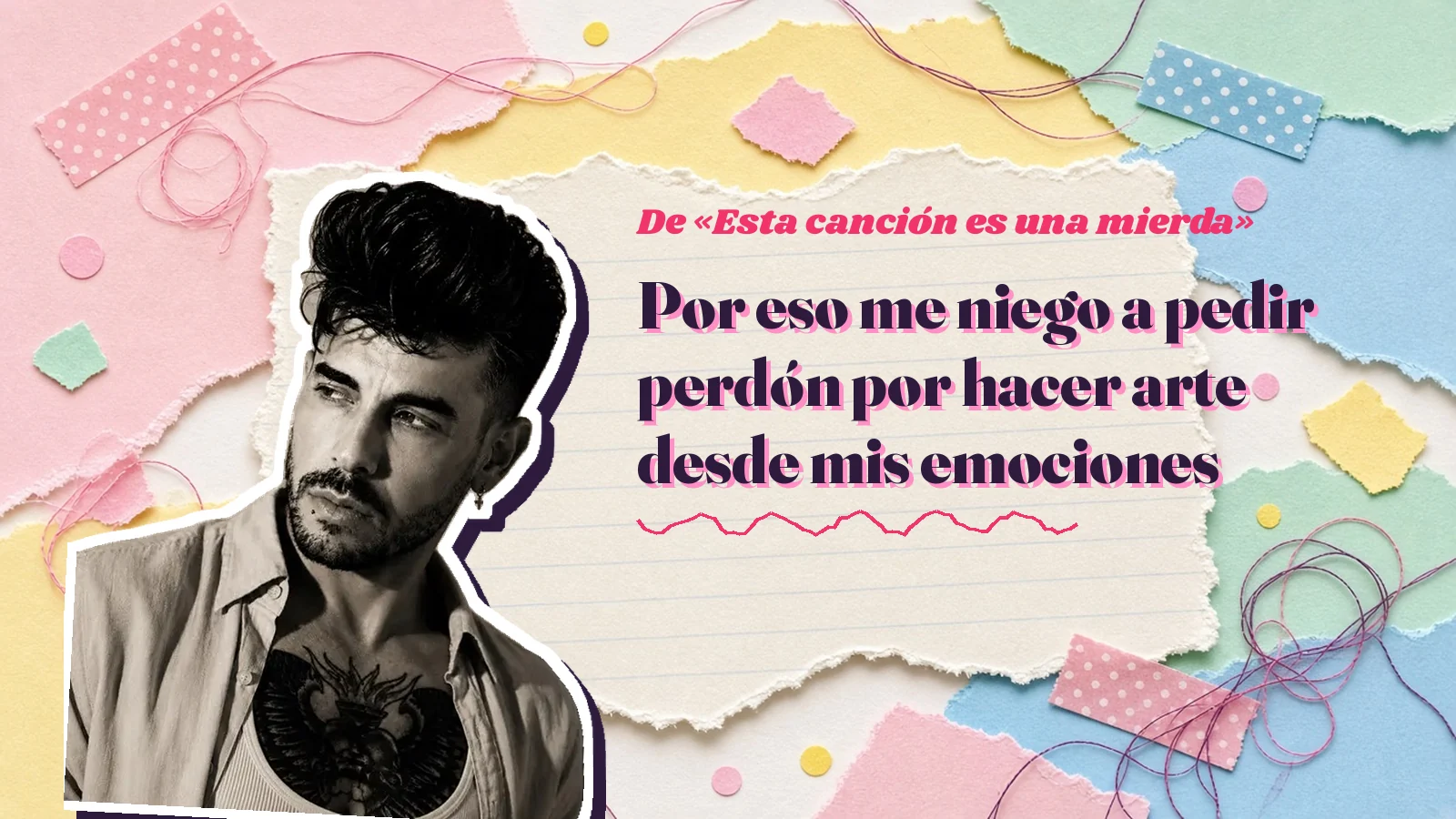
There's a sentence in the text that's almost a notarised signature: «Las letras son mías, la ironía también» (the lyrics are mine, and so is the irony).
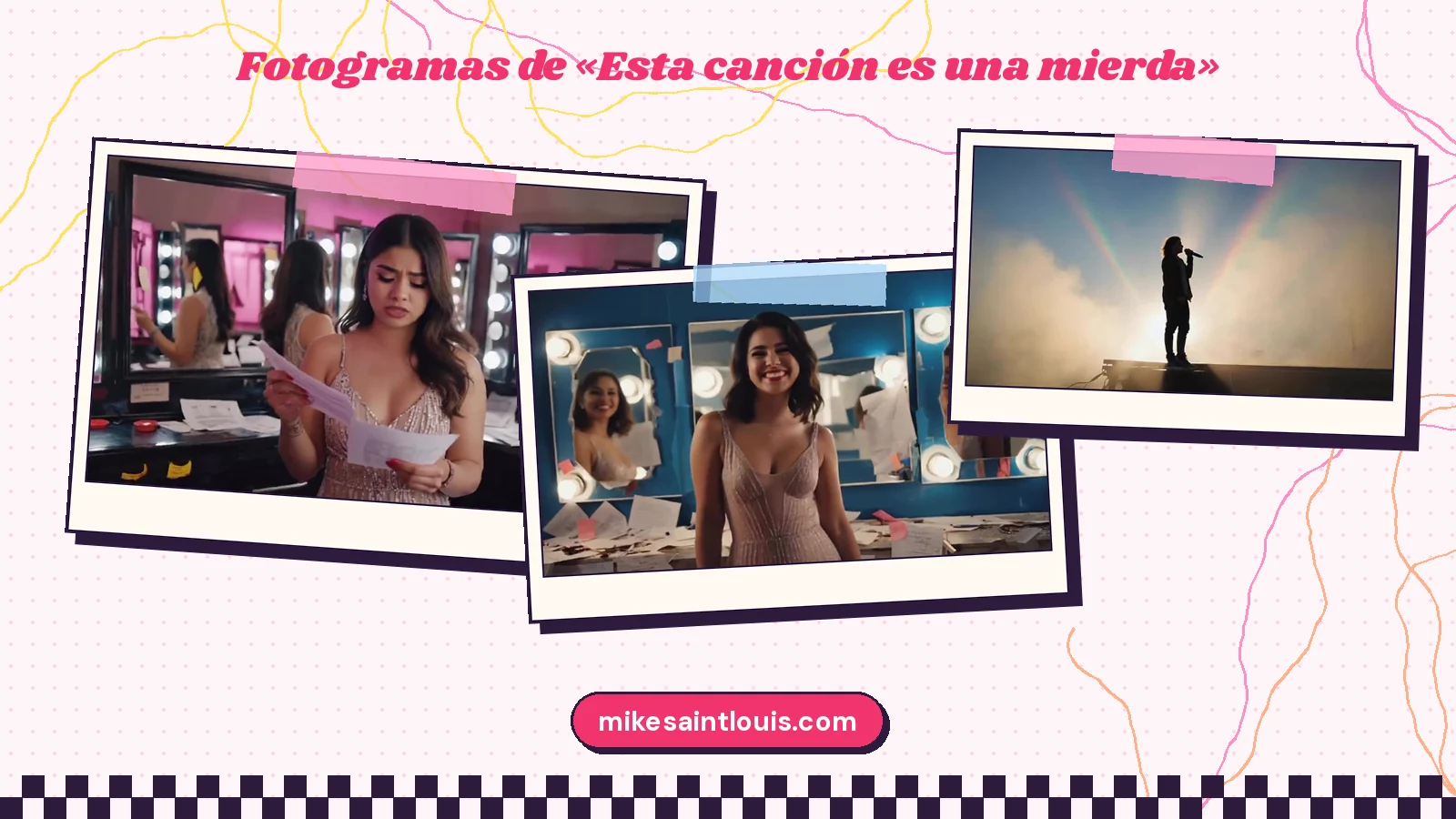
I wrote it for anyone who thinks everything I do is done by a machine. I write the lyrics, word by word, from the first to the last comma. The music and vocals come from artificial intelligence tools such as Suno, which I use for production and arrangement, and I always say so openly. But I don't delegate the words. Or the irony, which is the most me part of all.
You can ask a machine for a sad song or a happy one. What you can't ask it is to understand why a Madrid queer titles a song with an insult against himself and laughs while he does it. That takes having been insulted first. I wrote about that boundary in «Lo que me preguntan cuando digo que hago música con IA», because it's the question I get asked most.
I refuse to apologise
The second sentence I want to quote is the one that matters most to me: «Por eso me niego a pedir perdón por hacer arte desde mis emociones» (that's why I refuse to apologise for making art from my emotions).
I refuse. Just like that, with a general-strike verb.
For a long time, writing from your emotions was frowned upon. Too intense, too personal, too much like a teenager's diary with a padlock. Elegance meant distance, coldness, the bloke in thick-rimmed glasses writing about rain in Berlin without letting on that he has feelings. I can't write like that. My lyrics come from what happens to me, and what happens to me nearly always involves an ex, a narcissist or a cruise with cheap wine and cola.
And I wouldn't swap places with him. Songs about rain in Berlin are lovely to listen to with a natural wine in a Malasaña bookshop, but nobody puts them on in the car right after being dumped. They put mine on, or so I hope. I'd rather be the lyricist people turn to in a crisis than the one quoted in a doctoral thesis.
Apologising for that would be apologising for existing. And we had more than enough of that as teenagers in a nineties secondary school.
My chihuahuas, my story and my truth
The text ends with a sign-off I repeat in several songs: with my chihuahuas, my story and my truth. The chihuahuas are real and appear in more than one of my descriptions. The story and the truth are the ones in the lyrics.
It amuses me that two pocket-sized dogs turn up in the middle of such a serious statement of principles. It's very me. I talk about the artist's authenticity in the face of criticism and end with a dog that weighs as much as a bag of rice. That's self-parody: never letting solemnity settle in, not even when I'm talking about myself. If I start getting grand, let a chihuahua come and bark at me.
The cover: a vinyl record and a pink joke
This single's artwork is the most literal in the whole catalogue. Bright pink background, a black vinyl record seen almost head-on with its grooves gleaming, the title in spattered pink graffiti. And in the middle of the record, where the label would go, the pink swirl of the emoji we all have on our phones.
Vinyl is the most revered object in recorded music. It's the collectors' format, the format of record shops on Calle del Espíritu Santo where people whisper as if in a library, of men who'll spend forty minutes explaining why the Japanese pressing sounds better. Putting a pink poo in the middle is committing a tiny sacrilege with great affection. The cover says the same as the title, but with a pop-art look and a colour that turns the mockery into candy.
Pink is the colour I use most on Planeta Gayfolk. Painting the ugliest possible criticism pink is a way of defusing it: it's no longer an insult, it's an ornament, almost a toy for the shelf. All the covers, in order, are on the singles page.
A little taxonomy of criticism
Over the years I've learned to tell several types of criticism apart, and since I'm addicted to lists, I classify them.
There's the criticism that listens first and then gives its opinion. That's gold, even when it hurts. If someone tells me a song is a minute too long and they're right, I thank them and make a note. Then there's the criticism that gives its opinion without listening, from someone who sees the title or the word AI and has the verdict written before pressing play. You can't answer that, because it hasn't come to talk. There's also textbook criticism, from someone explaining how a song should be according to rules nobody taught them either. And there's criticism that's really a personal attack in disguise: they don't like your music because they don't like you, or because they don't like a queer laughing so loudly.
And then there's a fifth kind, the one any lyricist inflicts on himself at three in the morning, rereading his work and thinking it's the worst thing in the world. That's the cruellest. And the song is a little bit for that one too.
For the first, I have respect. For the next three, this song. For the fifth, a glass of warm milk and bed. I wrote more slowly about all this in «Lo que aprendí de los comentarios negativos».
What hurts today
The last sentence I'll quote is the one that closes the text: «porque lo que duele hoy… mañana será historia» (because what hurts today… tomorrow will be history).
It has something of a grandmother's proverb about it, the kind said to any child who came home from school crying because someone had called him a sissy in the playground. It'll pass. Tomorrow's another day. Part of me rebels against that resignation, because some things don't pass on their own. But another part knows it's right.
What hurts today, a cruel comment, an unfair review, silence instead of a "like", is an anecdote tomorrow. And the day after, if you're a lyricist, it's a song. That's the sweetest revenge I know: turning what hurt you into working material.
Its place on the third album
The song is on *El día de la liberación*, the third album of the GAYFOLK trilogy. It's the album about arriving, shedding the weight and celebrating. A song that frees itself from criticism by making it its title fits there like a sequinned glove.
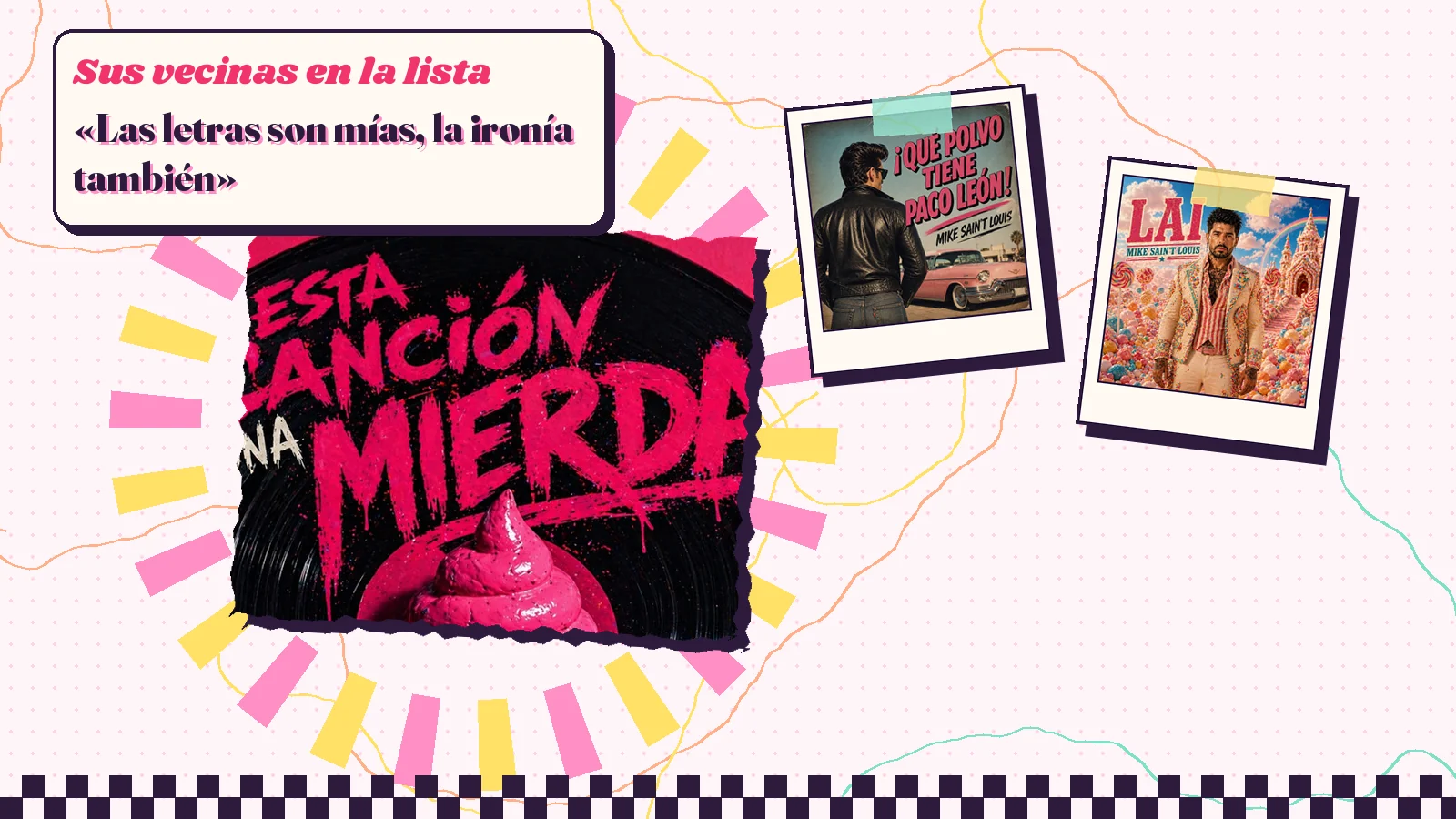
In the catalogue of 273 singles it's track 236. Just before it comes «La dieta del cucurrucho», the one with Paco León and Chueca, which is pure mischief. Just after, «Not Your Supply», about denying the narcissist his fuel. A joke, an insult owned, and a slammed door. Without my planning it, the sequence has its logic: first you laugh, then you defend yourself, then you close the door.
If you want to hear the three albums in order, the guide to listening to the trilogy from start to finish makes it easy.
A title you can't say everywhere
There's a practical problem with a title like this, I admit: you can't say it everywhere. Imagine a radio presenter on a mainstream station introducing it at nine in the morning. Imagine some aunt at a Sunday family lunch asking what my latest song is called.
That's part of the joke too. A title that's awkward to say out loud forces whoever says it to take a position. Either you laugh, or you blush, or you change the subject. None of the three reactions is indifference, and indifference is the one thing I don't want for my songs.
Besides, it saves me work with certain audiences. Anyone scandalised by the title wasn't going to enjoy the song. Anyone who laughs has understood what this house is about before walking in.
Finish and release
There's a rule in my house that says a song kept in a drawer is no use to anyone. This song is, deep down, a tribute to that rule. If I'd listened to every criticism, every "that's not music", I wouldn't have released anything. I'd have 273 songs in a folder on my computer and none out in the world.
Releasing means exposing yourself. And exposing yourself means getting criticism, some fair and much not. This song's title is my way of saying I accept the deal. I know what they'll say. I'm releasing it anyway. I wrote about that fear, and how you lose it, in «El miedo a publicar».
The family of songs about the craft
«Esta canción es una mierda» isn't my only song about making songs. I have a little family of tracks steeped in the craft, like those chefs who end up creating a dish about the kitchen itself.
There's «Tus letras son basura» ("Your Lyrics Are Trash"), almost its twin sister, with another insult for a title and the same answer: I write the lyrics, they're not signed by a record company or written by a machine. There's «El segundo exacto», where I literally quote the line about it all being a matter of pressing a button and reply with a cheeky "move along, butterfly boy". And there's «Discutiendo con la IA», where I argue with the tool while listening to Locomía, which is a pretty faithful picture of my working life.
The four form a corner of the catalogue that could be called "self-defence". None asks permission. All of them laugh. And all of them have, under the joke, someone tired of explaining himself.
I like how the insult changes shape from one to the next. Trash, shit, button. The same reproach in different dresses, like a drag queen changing wigs between numbers. And the answer changes too: sometimes it's a slammed door, sometimes a belly laugh, sometimes a sad line that sneaks in unannounced.
The most used emoji in the group chat
The emoji on the cover has more to it than a prank. It's the most democratic drawing there is. Your twelve-year-old niece uses it, the school parents' group uses it, your boss uses it when you ask for holidays in August. It's an insult with little eyes and a smile, a poo that winks at you.
That ambiguity was perfect for the song. A serious, brown, realistic poo would just have been scatological, toilet humour. A shiny pink poo is something else: it's criticism turned into a cuddly toy. That's what happens to an insult once you own it. It's still a poo, but it no longer disgusts you. It's even rather endearing.
I picture someone with this cover as their phone wallpaper, and it strikes me as the most punk thing that could happen to a song. The insult ending up as decoration.
Authenticity, that worn-out word
The word authenticity appears in the song's text, and it's a word to handle with tongs because it's been worn thin. Influencers selling face creams say it, beer ads with whitewashed villages and smiling grandparents say it, politicians on the campaign trail with their sleeves rolled up say it.
I use it in a very specific and very unglamorous sense. Authentic, to me, means the lyric says what I think even if it isn't pretty. That if an ex hurts me, the ex appears in the song with his nickname and his absurdity. That if people tell me my songs are shit, the song gets called that. No tortured-artist pose: just too lazy to lie, full stop.
Because lying in a lyric is exhausting. You have to remember the lie in the next song, and the next, and in the end you've got a character to keep up, like a houseplant you don't even like. I'd rather tell the truth, even with a pink poo on top. It works out cheaper.
Read it before you judge it
With this song I make a request that may seem contradictory: before you say it's shit, read it. The full text is on its lyrics page, and all the others are in the lyrics archive on the site if you want to compare.
Whoever reads the text will see that the joke in the title covers something pretty serious: someone refusing to apologise for the way he writes. And whoever then listens on Spotify will notice the tone isn't a tantrum, but the laughter of someone who's been there already.
If after reading and listening you still think it's shit, we agree. It says so on the cover.
What I'd tell someone starting out
If you're starting to write songs and you're terrified of what people will say, try this. Write down the worst comment anyone could make. Put it on paper. Read it aloud in the voice of a TV quiz host. If it makes you laugh, you've already won. If it doesn't, it isn't ripe yet: put it away and try again in a month.
The song itself says exhaustion came before the laughter. And that in the end the laughter won so completely that the comment became the title, with a pink poo on the cover.
And if one day someone tells you your work is shit, remember there's a whole song with that title, with its vinyl, its music video and its pink poo, and the world didn't end because of it. On the contrary: it has its own page, its own song card and even its place on an album.
I don't know if it's shit. I know it's mine.
Frequently asked questions
What is «Esta canción es una mierda» by Mike Sain't Louis about? It's an ironic reply to people who criticise without listening. The title owns the insult before it arrives, and the text stands up for writing from your emotions: «Las letras son mías, la ironía también» (the lyrics are mine, and so is the irony).
Which album is «Esta canción es una mierda» on? On El día de la liberación, the third album of the GAYFOLK trilogy. In Planeta Gayfolk's catalogue of 273 singles it's track 236, between «La dieta del cucurrucho» and «Not Your Supply».
Who wrote «Esta canción es una mierda»? Mike Sain't Louis, a lyricist, composer and music producer from Madrid, the first AI songwriter. The lyrics are his; the music and vocals are made with artificial intelligence tools such as Suno, under his direction.
What does the cover look like? A black vinyl record on a pink background, with the title in pink graffiti and, in the middle of the record, a pink swirl shaped like the poo emoji.