
By Mike Sain't Louis ·
Too weird, too intense, too personal: in defence of three flaws
"Too." It's the word I've heard most about my lyrics, always with something after it. Too weird. Too intense. Too personal. As if writing songs were salting a stew and I'd gone overboard with the shaker.
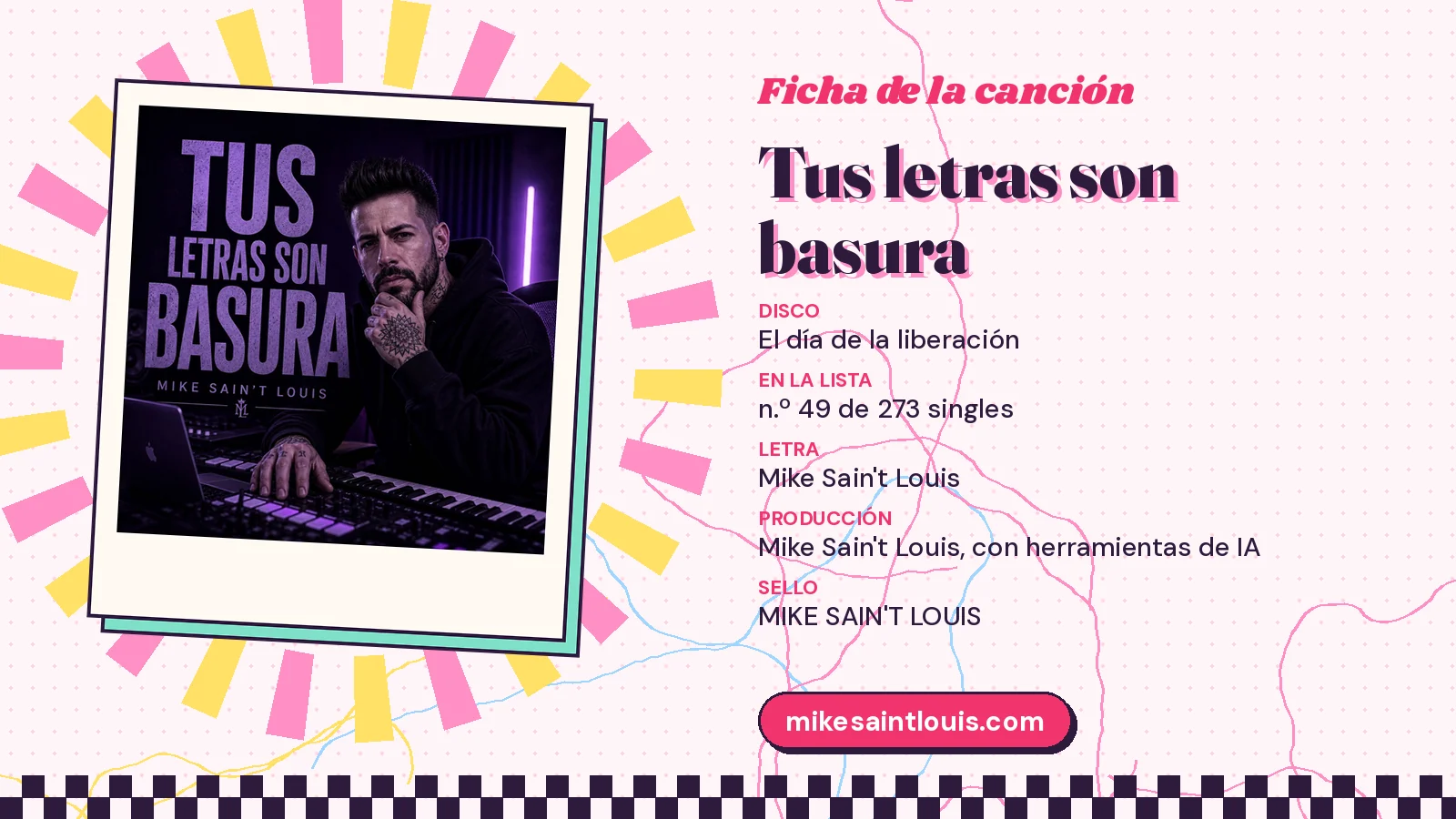
«Tus letras son basura», "your lyrics are rubbish", was born from those complaints. On its lyrics page, at gayfolkplanet.com/letras, there are no verses in the usual sense, just a text of mine that says it straight: for years I was told my lyrics were too weird, too intense, too personal. That they didn't fit. That nobody would understand them.
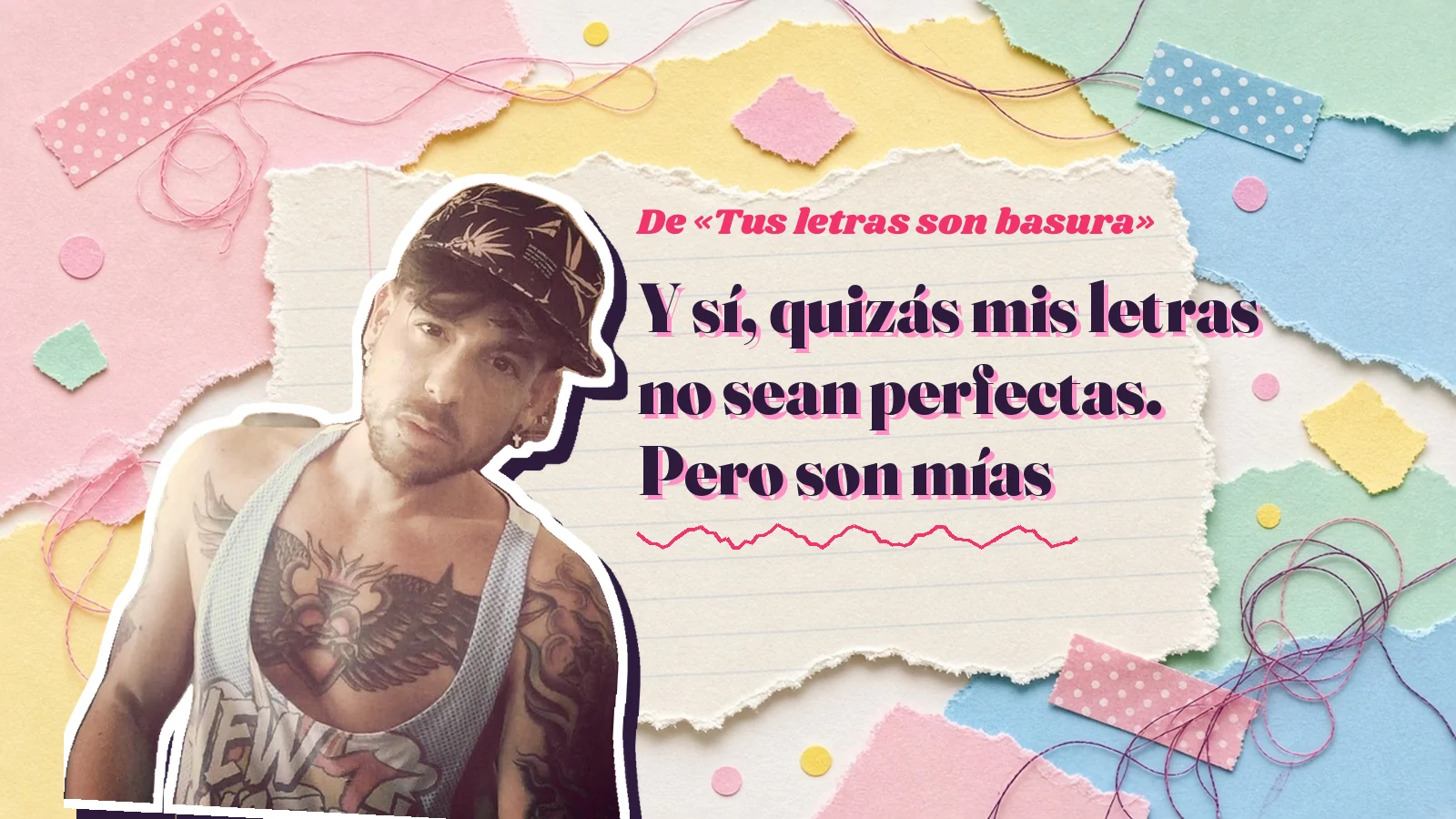
That text ends with two lines that are probably the nearest thing I have to a motto: «Y sí, quizás mis letras no sean perfectas. / Pero son mías» («And yes, maybe my lyrics aren't perfect. / But they're mine»).
Today I want to do something other than answer the people with opinions. I want to take the three "toos", one at a time, and defend them. Not deny them. Defend them. Because I think each of those supposed flaws is, in fact, the reason anyone listens to my songs.
The adverb of suspicion
First, a note on the word.
In Spanish, "demasiado" is a very handy way of criticising without looking like you're criticising. It doesn't say "your lyrics are bad". It says "they're too something". In other words: they have a quality that would be fine in normal doses, but you've overdone it. It's the aunt at Sunday lunch: "You look lovely, but you're too thin." "That boyfriend's nice, but he's too old for you." The poisoned compliment.
What tickles me about the adverb is that it always assumes a correct measure nobody has ever defined. How weird can a lyric be before it's too weird? Is there a gauge? Do they sell it at the DIY shop? The answer, of course, is that the measure belongs to the critic. Too weird means "weirder than I'm used to hearing".
And for someone making Spanish-language queer pop with titles like «Esta canción es una mierda» or «Gofio de calcetín», that's practically a compliment.
Too weird
I'll start with the first.
My lyrics are weird, yes. They have words you won't hear on the radio: haemorrhoid, gofio, Movistar cloud, balance coordinator, intracranial mask. They have names nobody would expect in a chorus: Carmina Barrios, Ylenia Padilla, Paco León, Esperanza Gracia, La Veneno. They have structures that ignore the verse, chorus, verse, bridge manual. Some are lists. Others are letters. Others are almost a stand-up routine over an electropop beat.
In music, weird has a bad name because it gets confused with difficult. But the weirdness in my lyrics isn't difficult. It's specific. The standard love song talks about "your eyes", "your skin", "the night", "my heart". Mine talks about the ex's coloured contact lenses, the harness of the boyfriend from Albacete, the buffet on the cruise. The weird thing isn't that I use strange words. The weird thing is that I use the words of real life, which have become strange in songs from lack of use.
If that's too weird, then life is too weird. And it is, isn't it?
Think about your last week. I bet there was an absurd moment that, put into a song, would sound made up: the chat with the caretaker about the water meter, the message you sent to the wrong group, the man on the bus video-calling his parrot. That's what goes into my lyrics. I don't supply the weirdness. The world does.
Too intense
The second is the one I find funniest, because intensity is literally what you ask of a song.
Nobody goes to a gig to feel a little. Nobody puts on a sad song to be slightly sad. Songs exist to amplify what we feel, to make big what everyday life forces us to shrink so we can get to work. If a lyric isn't intense, what's it for?
The thing is, there's an approved intensity and an unapproved one. The intensity of the bolero, of copla, of a summer heartbreak: that's respectable. It's the intensity we already know. Mine is different. It's the intensity of a gay man who calls his ex a narcissist under a symbolic full name, who talks about chemsex and saunas, who wails and stretches out his vowels and a minute later cracks a bum joke.
That intensity makes people uncomfortable because it won't stay in one register. It jumps from drama to mockery, from confession to insult, without warning. And for anyone used to songs that pick a tone and stick to it, that's too much.
For me it's normal. That's how life goes. Nobody is sad twenty-four hours a day. You're sad, then you laugh at something, then the sorrow comes back, then a message arrives and changes your day. My lyrics try to follow that rhythm, which is anyone's rhythm on any old Tuesday.
Too personal
And the third, which stings most, because it's true.
My lyrics are personal. They come from what happens to me, what I see, what I'm told, what I imagine could happen to me. In the text of «Tus letras son basura» I put it like this: I write them with my history, my scars and my way of looking at the world. It isn't a pose. It's the only way I know of writing something that doesn't sound like an advert.
The "too personal" complaint comes from a widespread idea: that songs should be universal, that anyone should be able to step into the speaker's shoes. And for that, they say, best skip the details. Best a faceless "you" and "me", no city, no job. That way everyone fits.
I believe the opposite. The more specific a detail, the more people recognise themselves. Nobody else has had a boyfriend from Albacete who left a note in the loo. But everyone has had someone who made an absurd romantic gesture just before vanishing. The personal detail doesn't shut anyone out. It opens a door, and everyone walks through with their own story.
The personal, besides, is the only thing I have that nobody else does. Anyone can write about "the night" and "your skin". Only I can write about what happened to me on Mal Pas beach.
I write them myself
There's a sentence in the song's text worth reading carefully, because it's easy to misread: «Lo que muchos no soportan es que mis letras las escribo yo» («What many can't stand is that I write my lyrics myself»).
I work with artificial intelligence as a production tool: the music and vocals of my songs are made with it. I always say so, and I explain it in artificial intelligence and authorship, what I'm sure of and what I'm not. But the lyrics are another matter. The lyrics are mine, start to finish. I write them in notebooks, on my phone, in voice notes. I talk about it in where I write.
And there's the irony the song points at. Some people hear I use AI and assume the machine does everything, lyrics included. Then they read the lyrics and say they're rubbish. Well, if they're rubbish, at least they're artisan rubbish. Handmade. With my own spelling mistakes. No machine would write «el marrano de El Médano», the pig of El Médano, because no machine would ever think El Médano needed a pig.
The comments section
I won't draw up a catalogue of haters here; the comments section manages that perfectly well on its own. I have a whole piece on what I learnt from negative comments, and what I learnt fits in one line: they're almost never about the song. They're about what the commenter expected to find and didn't.
«Tus letras son basura» answers all of them at once, but it isn't an angry answer. The text says so: it's for anyone who ever got that comment and kept creating anyway. It isn't for the hater. It's for the person reading the hater at three in the morning and having doubts.
To them I say: keep going. If your lyrics are too weird, too intense or too personal, congratulations. You're writing something only you could write.
Three cousins of this song
«Tus letras son basura» isn't alone. In my catalogue there's a little family of songs that each, in their own way, answer the people who look down on what I do. Put them together and they look like a long after-lunch chat where everyone's talking about the same insufferable brother-in-law.
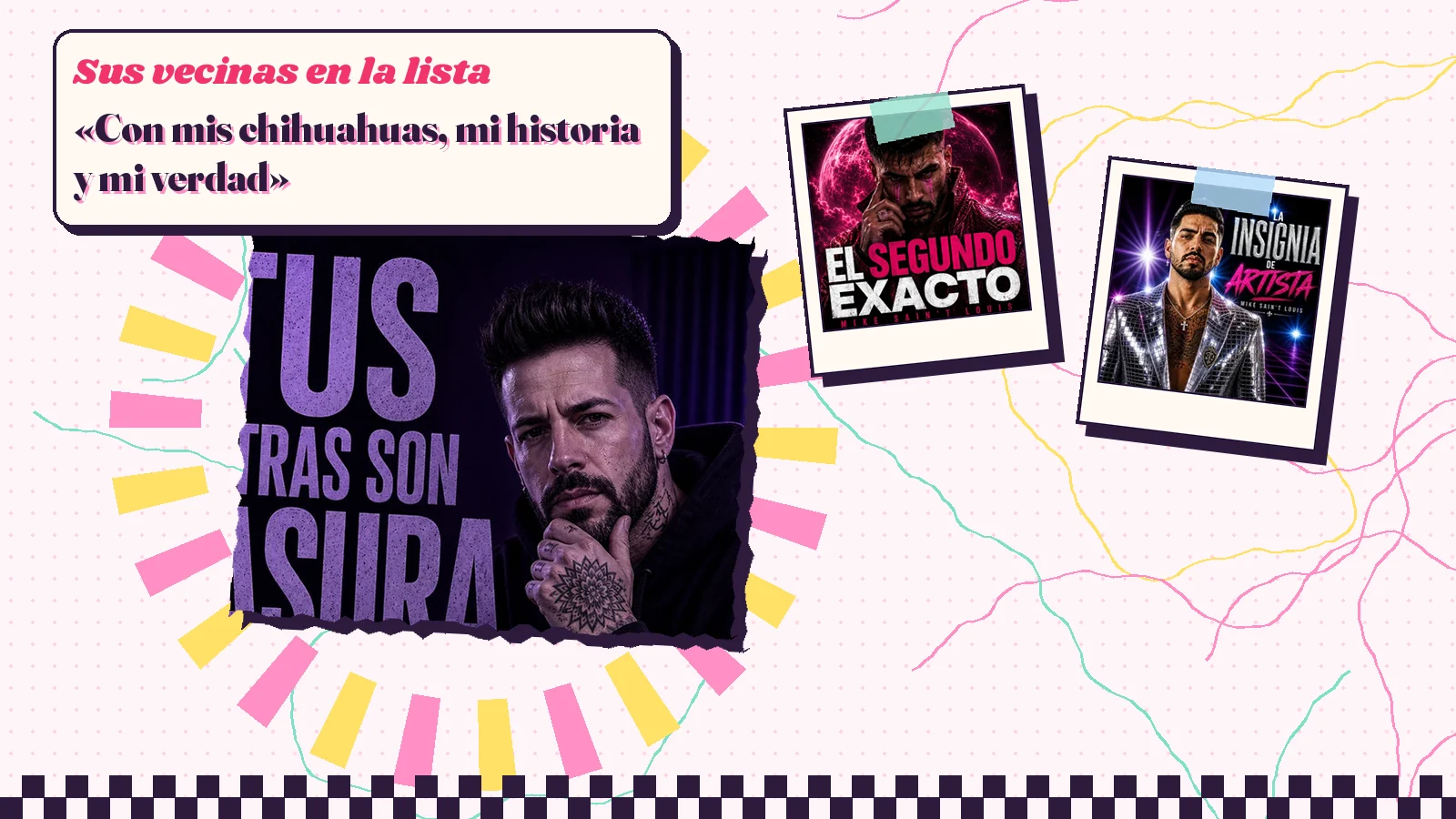
The first is «El segundo exacto», which picks up the usual comment almost word for word, the one about all I do being press a button, and sends it back with a camp little wave. In the middle of the mockery, as I've said before, sneaks the most serious question in my whole catalogue: whether a machine could choose the exact second when someone bursts into tears.
The second is «La insignia de artista», which puts itself in the shoes of the important man with contacts who hands out artist cards as he sees fit. There the tone is more like fencing: short lines, rhymes with a sting, first class against economy.
And the third is «Discutiendo con la IA», where the anger is no longer at the haters but at the tool itself, in one of those domestic rows you have with the router at eleven at night.
«Tus letras son basura» is the most direct of the three. It has no character and no scene. It has a text that looks straight at the camera and says: these lyrics are mine. The others bring the joke; this one brings the signature.
My notebook
Since I'm talking about lyrics, a word on where they live before they become songs.
They live in a mess. In notebooks, phone notes, voice notes. There are stray lines waiting for their song and songs born from a single line. I go into it more calmly in my lyrics notebook.
I mention it because the "rubbish" complaint forgets there's a process behind every lyric. Not a very glamorous one, admittedly. Closer to the notebook with the shopping list than to the poet's desk with a fountain pen. But a process all the same. Crossings-out, drafts, rhymes that don't work, jokes left out because they'd hurt someone who doesn't deserve it.
If anyone thinks a lyric of mine writes itself, I invite them to look at a page of my notebook. They'd run off before reaching halfway.
The fear of publishing
Negative comments have another effect people rarely mention: fear. Not of being insulted; you learn to live with that. Fear of publishing the next thing.
When someone tells you your lyrics are rubbish, the easy option is to start writing so they never say it again. Soften things. Drop the name that might annoy. Swap "haemorrhoid" for something more refined. Make the song a bit more like the others. And so, without noticing, you end up writing songs nobody would criticise and nobody would remember.
I talk about it in the fear of publishing. My way of fighting it is one of the house rules: a song kept in a drawer is no use to anyone. I'd rather publish something imperfect than keep something correct. If it's rubbish, let it be published rubbish. At least someone can laugh at it, or recycle it.
Authentic and commercial
The song's text says it's for independent artists who'd rather be authentic than commercial. I'd like to add a nuance, because I don't want it to sound like contempt for the commercial.
I adore commercial pop. One of my lyrics shows me arguing with the AI while Locomía plays, and I've dedicated songs to Camela and to more than one folk diva. Commercial isn't the enemy. The enemy is the formula: writing to what's supposed to work rather than to what you want to say. And the formula exists in the independent scene too, mind. Plenty of indie songs sound like they came out of a mould.
What I defend, and what the song defends, is writing without asking permission. If that then turns out commercial, wonderful. If it turns out weird, weird it is. But let the song make the decision, not fear of the comments section.
Writing in 2025
The text mentions a year: it says that writing in 2025 with honesty, without filters or formulas, is almost an act of rebellion. I wrote that at the time and I still think it now.
We're surrounded by texts that seem written by nobody. Adverts, corporate posts, welcome messages, product descriptions, motivational quotes on social media. It all sounds the same, with the same background music and the same plastic words. Amid that noise, a lyric that says "haemorrhoid", names a specific town, insults with wit and weeps with long vowels sounds different. For better or worse.
That's what I want to defend. That you can tell somebody wrote this. That they have quirks, mistakes, obsessions, a vocabulary of their own. That it isn't nobody's text. It's mine.
Rubbish and proud
The title, by the way, is another of my vaccines. As with «Esta canción es una mierda», "this song is shit", I grab the insult before anyone throws it at me and put it on the cover. If my lyrics are rubbish, the song's called that, and that's that. Nobody need bother telling me; I've already said it, in capitals and with artwork.
The technique is part defence, part joke. It disarms you, because it's hard to insult someone who's already insulted himself more wittily than you could. And at the same time it mocks how absurd the criticism is: rubbish? The lyrics of someone who's spent two years writing more than two hundred and seventy songs? Rubbish, perhaps. But rubbish with overtime.
Rubbish, but sorted
While we're on rubbish, let's do it properly. In Spain we sort our waste by colour, so I propose sorting my lyrics the same way, so nobody can say I'm not a model citizen.
The yellow bin, for packaging, gets the songs that are all pose: shiny outside and hollow within. I think I have few, but there must be some; nobody's perfect. The blue bin, for paper, gets the letters: «La última carta», «Carta de recomendación», all the songs written like a note to someone who won't reply. The green bin, for glass, gets the ones that break: the crying ones, the Mal Pas beach ones, the ones that sound like a glass hitting the kitchen floor. The brown bin, for food waste, gets the food songs: gofio, croquetas, the cruise-ship calimocho, everything in my lyrics you can chew. And the recycling centre, for hazardous waste, gets the narcissist songs. Those you handle with gloves and never dump just anywhere.
Seen like that, my lyrics aren't rubbish. They're recyclable. Each has its bin, and all can be reused for something else: a playlist, a night of crying, a long lunch with friends.
Tell that to the commenter. I bet he doesn't sort his.
A wound that rhymes
The song's text has an idea I think is the key to everything: that every line is a transformed wound. I don't say it to sound deep. I say it because it's the most accurate description I have of what I do.
A wound on its own is no use to anyone. It hurts, and that's it. But if you pick it up, look at it, find its shape and give it a rhyme, it becomes something another person can use. Someone with a similar wound who didn't know how to put it into words. That's the deal with personal songs: I bring my wound, you bring yours, and in between the song acts as a bridge.
That's why it amuses me to be told my lyrics are too personal. If they weren't, there'd be no wound, and without a wound there'd be no bridge. There'd be a pretty song about "the night" and "your skin" that nobody needs.
My chihuahuas know
The text ends with a line that makes me smile every time I read it: «Con mis chihuahuas, mi historia y mi verdad» («With my chihuahuas, my story and my truth»). I put it at the end of many of my song texts, almost like a signature.
The chihuahuas aren't decoration. They're proof that all this comes from a real life, with dogs that bark when the doorbell goes and give you funny looks when you cry in front of the computer. Personal lyrics come from there, from a flat with chihuahuas, not from a record-label office overlooking the Castellana.
They don't read my lyrics, of course. But I very much doubt they think they're rubbish.
What I won't fix
I'll finish with a list, because that's who I am.
I won't fix the weird, because it's specific. I won't fix the intense, because it's life at real volume. I won't fix the personal, because it's all I have. I won't fix the names, because they're what makes people laugh. I won't fix the insults with a postcode, because they're what makes it true.
I'll fix the spelling mistakes when someone points them out kindly. That, yes.
And I'll keep reading the comments, good and bad, because sometimes among ten insults there's one that's right, and that one deserves my attention. Not many. One in a hundred, at a generous estimate. But that one deserves a moment's thought. The rest go in whichever bin they belong to, as per the chart above.
Frequently asked questions
What is «Tus letras son basura» about? It's a reply to those who spent years saying Mike Sain't Louis's lyrics were too weird, intense or personal. Its text ends with «Y sí, quizás mis letras no sean perfectas. Pero son mías» ("And yes, maybe my lyrics aren't perfect. But they're mine"). It's at gayfolkplanet.com/letras.
Does Mike Sain't Louis write his own lyrics? Yes. Every lyric on Planeta Gayfolk is his. Artificial intelligence is used as a production tool, for the music and vocals.
Which album is it on? It's part of «El día de la liberación», the third album of the GAYFOLK trilogy.
Who is the song for? In its own words, for everyone who ever got that comment and kept creating anyway.