By Mike Sain't Louis ·
Here We Publish: the five house rules, explained through my lyrics
On the page of my website where I explain who I am, there is a section called «Reglas de la casa», the house rules. And above the heading, in small print, it says: «Colgadas junto a la caja registradora», «hanging beside the till».
I like that image. The website introduces me as the owner of the place, and every real bar or shop has a sign by the till. «No credit given.» «No smoking.» «The customer is always right, except when they're not.» Short phrases that tell you what kind of house you have walked into.
Mine are five. I copy them exactly:
First: Aquí se publica: here we publish.
Second: La letra manda: the lyric is in charge.
Third: Cada canción, su imagen: every song gets its image.
Fourth: Con humor, también se dice la verdad: humour tells the truth too.
Fifth: Sin intermediarios: no middlemen.
Each one carries a line underneath that explains it. And the lovely thing, going back over them, is that I do not need to invent anything to illustrate them. They are in the songs. Some songs even say them better than the sign does.
So that is what this piece is: a stroll past the till, rule by rule, with the lyrics alongside.
The owner of the place
Before the rules, my website does something else that matters to me. It introduces me through five trades. It puts it like this: «Cinco oficios, un mismo nombre», «five trades, one name».
Producer, because I build each song from scratch and decide how it sounds. Writer, because every lyric carries my signature. Composer, because the melodies run from electropop to copla, from alternative pop to ballad. Art director, because the covers, the videos, the titles and the concept are mine as well. And CEO of my own label.
Look closely and you will see the five rules grow out of those five trades. The writer says the lyric is in charge. The art director says every song gets its image. The CEO says here we publish and there are no middlemen. And humour, the fourth rule, is what they all share when they end up in the same head.
The biography on the site sums it up in one sentence: I make the whole trip of a song on my own, from the first line of the lyric to release day. That explains why rules are needed. When nobody stops you, you have to stop yourself. And when nobody pushes you, you have to push yourself.
That is what the rules are: the boss I do not have, hung on a sign.
Rule one: here we publish
Beneath the first rule it says: «Una canción guardada en un cajón no le sirve a nadie. Terminar y sacar es parte del oficio» («a song kept in a drawer is of no use to anyone. Finishing and releasing is part of the craft»).
It is the rule you notice most from the outside. According to the same page, the PLANETA GAYFOLK catalogue adds up to 273 singles and more than 280 music videos, released over roughly two years of work. Not much more to explain. Here we publish.
But what interests me is the drawer. Because the drawer turns up in my lyrics.
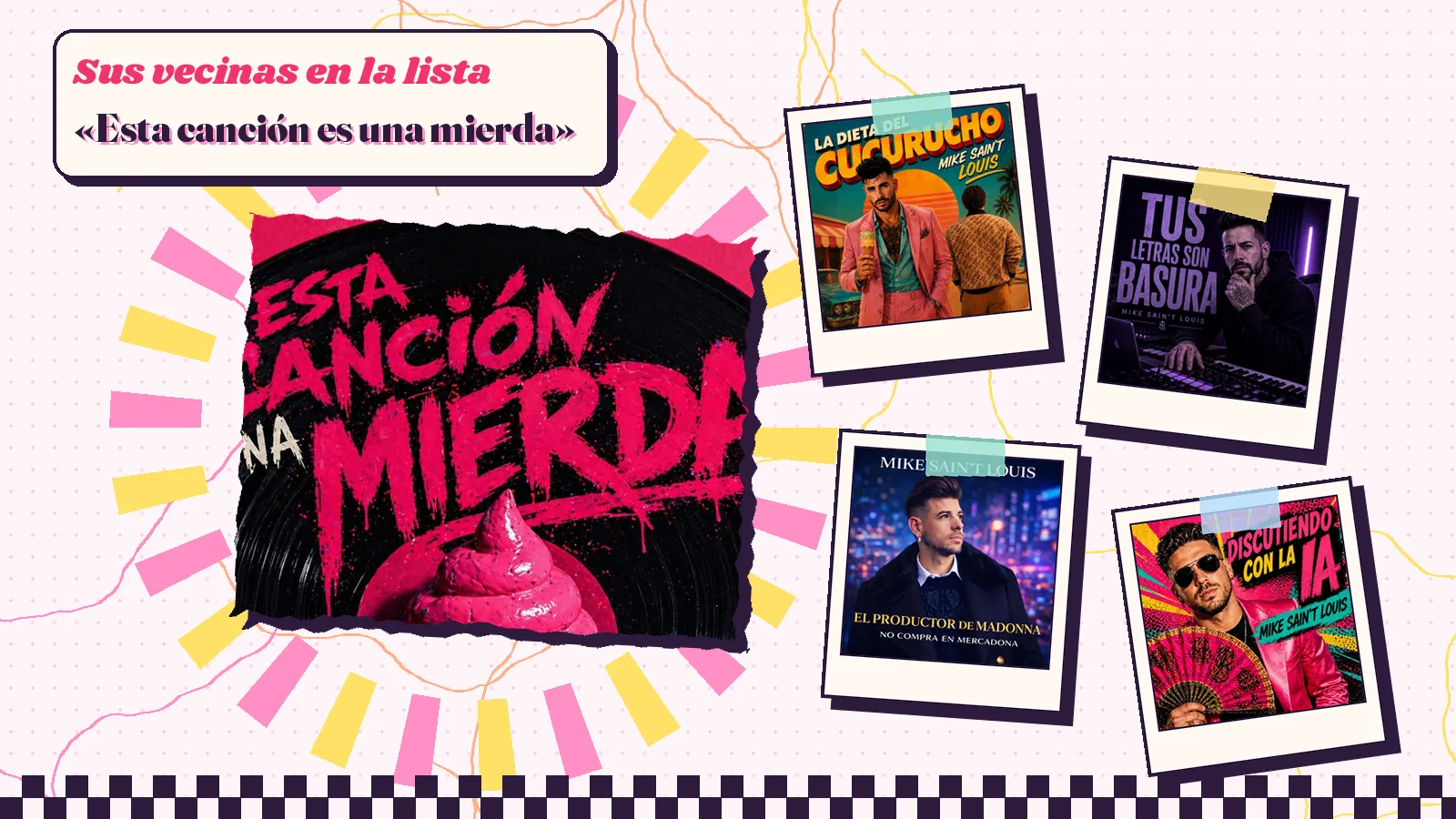
In «La dieta del cucurucho», in the middle of a jealous row over a famous man, the song stops and comes out with this: «Tenía esta canción / Guardada / En un / Cajón / ¡Qué liberación!» («I had this song / kept / in a / drawer / what a release!»).
And a little later, in case it was not clear: «Tampoco es / una confesión» («it's not / a confession either»).
I adore that moment, because the song is talking about itself. It recognises itself as something that was hidden and is now coming out. And what it feels on the way out is not shame. It is release. Taking a song out of the drawer is very like coming out of another place we all know. And it feels just as good.
On the page for «Tus letras son basura» there is another line that seals the idea. It says that song is, above all, «para quien tiene una libreta llena de canciones guardada en un cajón por miedo a lo que digan» («for anyone with a notebook full of songs shut away in a drawer for fear of what people will say»).
That is the enemy of the first rule. Not a lack of talent. The fear of what people will say. The drawer is full of songs someone did not dare to show.
The second half of the explanation matters too: finishing and releasing is part of the craft. It does not say publishing is a reward. It says it is work. That a song is not finished until someone can hear it. The rest are drafts.
What people say when you publish a lot
Publishing that much has a price, and one of my songs tells it with plenty of cheek.
In «El productor de Madonna no compra en Mercadona» the lyric starts word by word, almost stammering, like someone justifying himself before a tribunal: «Tengo / Que / Demostrar / Constantemente / A / Toda / La / Gente / Talento» («I / have / to / keep / proving / to / every / body / talent»).
Then, further on, comes the plan to shut people up: «Tendré que superar con creces / Cualquier disco tradicional / Noventa y tres canciones en vez de trece» («I'll have to outdo by miles / any traditional album / ninety-three songs instead of thirteen»). With ninety-three music videos thrown in if need be.
It is a joke, of course. But a joke with something underneath. When you do things a new way, they ask twice as much of you. And the house's answer, sometimes, is to exaggerate to the point of absurdity: you want proof? Here are ninety-three.
It is not a rule. It is the consequence of keeping one.
Rule two: the lyric is in charge
Beneath the second it says: «La tecnología cambia cada mes; lo que se quiere contar es lo único que no se negocia» («technology changes every month; what you want to say is the only thing that is not up for negotiation»).
This is the rule that explains how I work. My website puts it this way: artificial intelligence is my production and arrangement tool, just as earlier generations used the drum machine or the synthesiser. And elsewhere it says it even more plainly: every lyric carries my signature. The direction, the concept and the words are always mine.
Technology changes every month. That holds for anyone working with these tools. What sounded one way yesterday sounds another way tomorrow. What is new today is old in six months. If my songs depended on the sound of the moment, they would go off just as fast.
What does not go off is what you want to say. And no machine decides that.
There is another fact on my website that backs this rule. PLANETA GAYFOLK songs are mostly in Spanish, but also in English, French and Portuguese. Changing language is almost as radical as changing sound. And yet, when a lyric moves from Spanish into English or French, what it wants to say stays the same. The form changes. The substance is in charge.
«Esta canción es una mierda» has a line that could hang beneath this rule: «Las letras son mías, la ironía también» («the lyrics are mine, and so is the irony»).
And «Tus letras son basura» says it in so many words: «No las firma una discográfica, no las corrige un productor» («no record label signs them, no producer corrects them»). I write them, with my history and my way of looking at the world. And it ends with two lines that sum it up: «Y sí, quizás mis letras no sean perfectas. / Pero son mías» («and yes, perhaps my lyrics aren't perfect. / But they are mine»).
That is what «the lyric is in charge» means. Not that it is perfect. That it is mine, and that it rules over everything else.
Arguing with the tool
The second rule has a whole song to itself: «Discutiendo con la IA». I have already given it a piece of its own, so here I will only note what concerns the till.
The song answers anyone who thinks using AI means pressing a button. It says so with its usual bite: «Hija mía si usar IA es / dar a un botón / hazlo tú» («darling, if using AI is / just pressing a button / you do it, then»). And then it asks why someone claimed that, because my work was AI, it did not count, when I spend every hour arguing with it.
Arguing. That is the word the song chooses for the relationship with the tool. Not obeying, not pressing a button. Arguing. And in every argument, someone has the last word.
The rule says who: the lyric. The tool may change every month. What you want to say is the only thing that is not up for negotiation.
That is why I present myself as the first AI songwriter and not as anything else. AI makes the music and the vocals. I write the lyrics. The order of that sentence is the order of the rule.
Rule three: every song gets its image
Beneath the third it says: «Ningún single sale sin su portada y su videoclip: la estética se piensa a la vez que la letra» («no single goes out without its cover and its video: the look is conceived at the same time as the lyric»).
This is the art director's rule, another of the trades listed on my website. Covers, videos, titles and concept.
The phrase «at the same time as the lyric» is what counts. The image does not come afterwards, like wrapping paper. According to the rule, it is born with the song: title, cover and video are conceived together, as parts of the same idea.
The page for «Tus letras son basura» describes its cover in detail: «un estudio en penumbra, luces moradas, un teclado y una mano en la barbilla, con cara de estar leyendo una crítica sin inmutarse» («a studio in half-light, purple lights, a keyboard and a hand on the chin, with the face of someone reading a review without flinching»). Then it explains why: the words of the title take up half the image, enormous, as if the accusation were a billboard. «Me parece la mejor manera de quitarle importancia» («it seems to me the best way to take the sting out of it»).
There is the rule at work. The image does not decorate the lyric. It finishes it off. The insult becomes a billboard, and the billboard drains the insult of all its weight.
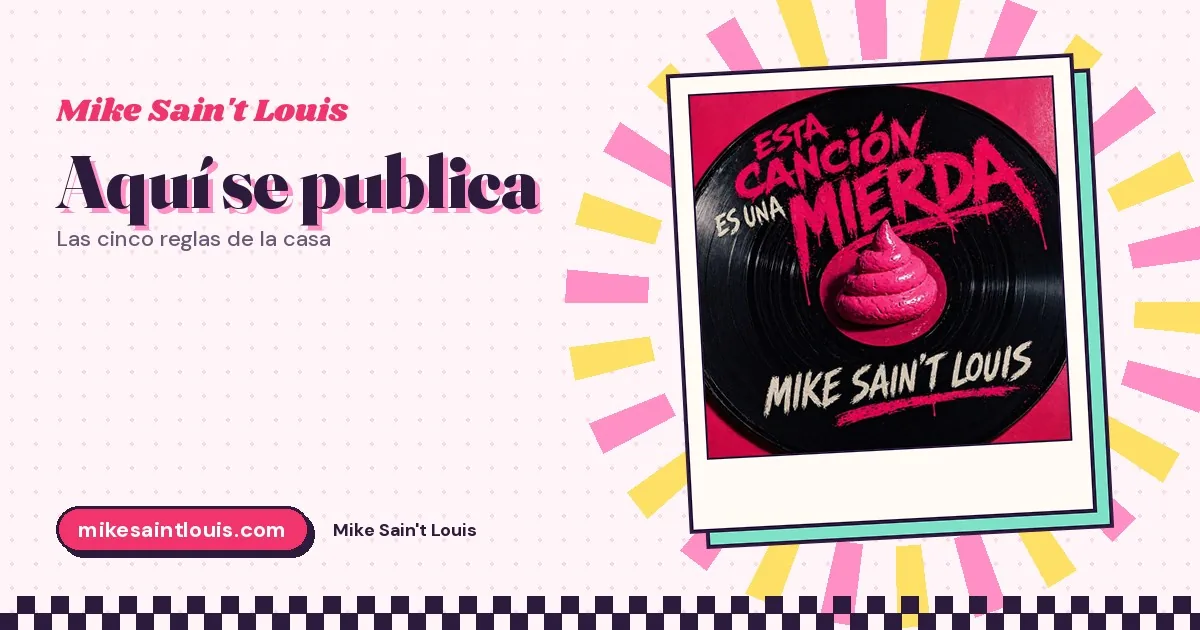
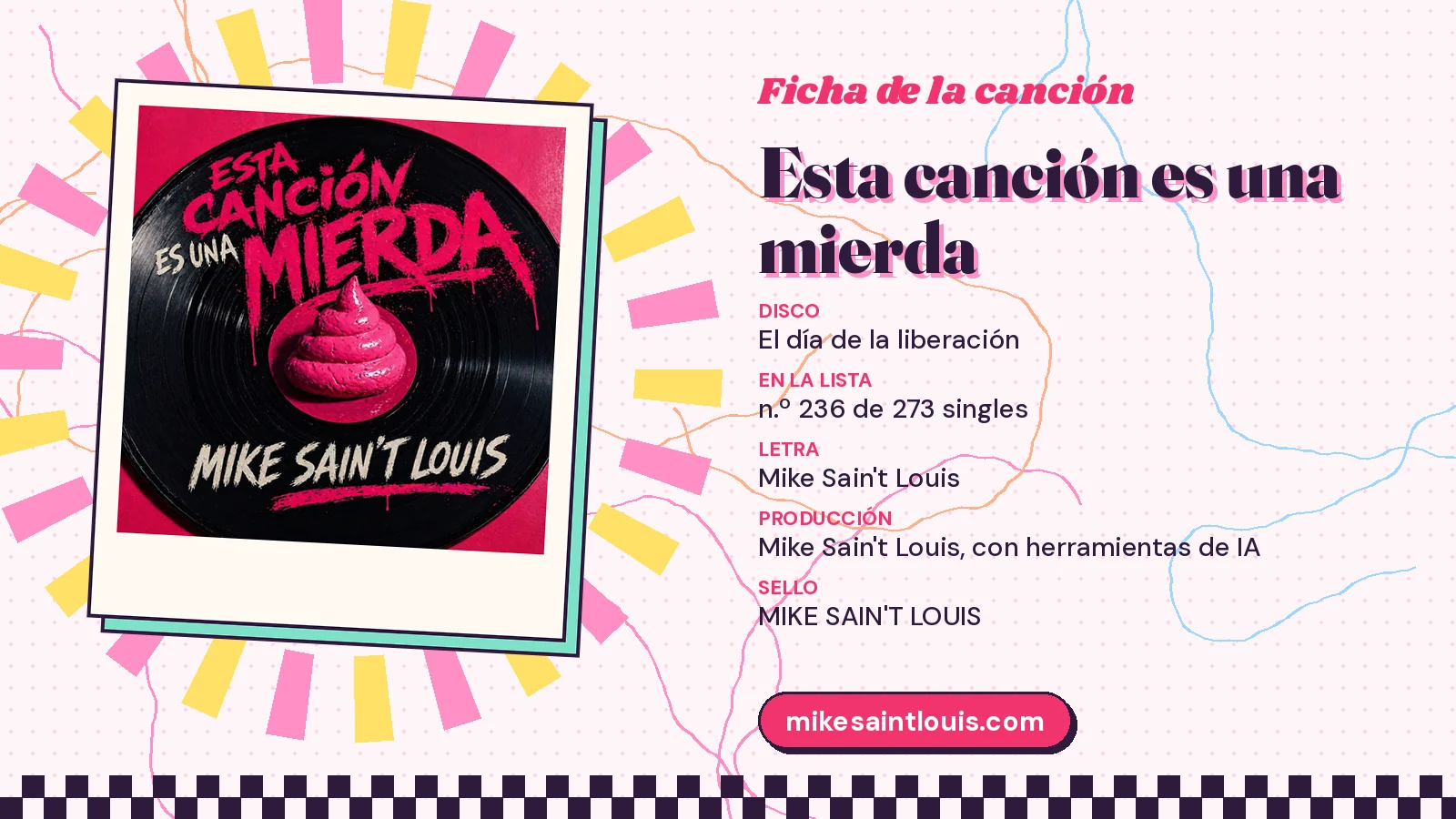
The same goes for «Esta canción es una mierda». Its page says the best way to disarm a critic is to take the phrase out of their mouth and put it on the cover, in capitals. The cover as a weapon.
And in the text for «Cada cornada», which takes on bullfighting, there is a run of lines that could be this rule's manifesto: «Este videoclip no busca agradar. / Busca mostrar. / La imagen no acompaña: corta» («this video is not out to please. / It is out to show. / The image does not accompany: it cuts»).
The image does not accompany: it cuts. I am keeping that one.
Rule four: humour tells the truth too
Beneath the fourth it says: «Lo camp, lo exagerado y lo cotidiano son formas serias de hablar de la vida» («the camp, the exaggerated and the everyday are serious ways of talking about life»).
It is the rule people misread most. Because my titles make people laugh, some think my songs are a joke. They are not. They are true. It is just that truth sometimes goes down better with a belly laugh.
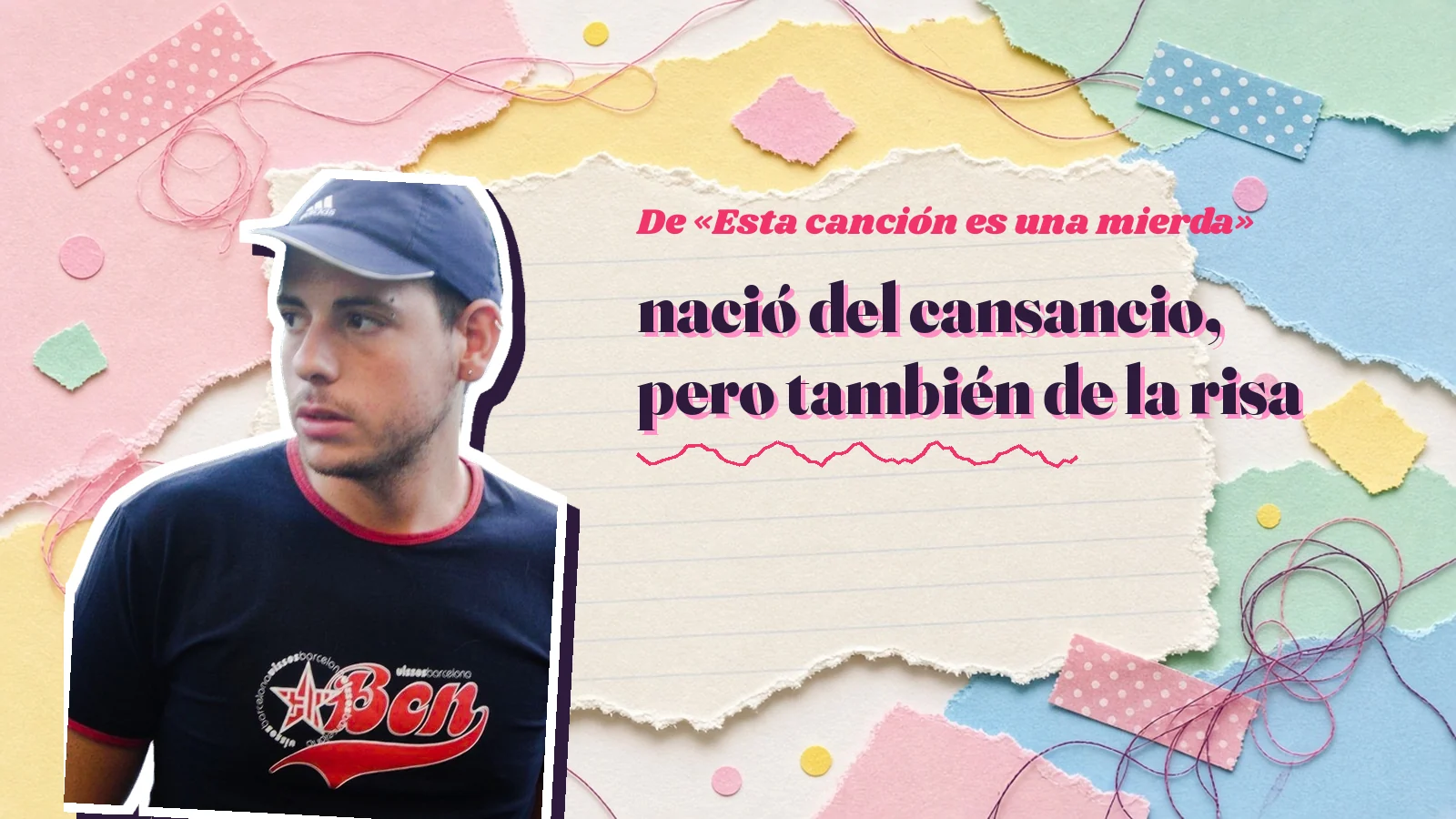
«Esta canción es una mierda» tells its own origin like this: «nació del cansancio, pero también de la risa» («it was born of exhaustion, but of laughter too»).
That double root is the whole of rule four. Exhaustion and laughter. With only exhaustion, it would be a complaint. With only laughter, it would be a gag. With both, it is a song.
The same lyric closes on an idea I find very consoling: «lo que duele hoy… mañana será historia» («what hurts today… tomorrow will be history»).
In «El calcetín», the sequel to a story with a narcissist, the text says it straight: «Aquí ya no hay dolor, hay ironía» («there is no pain here any more, there is irony»). And the song ends with the glow of someone who survives manipulation and learns to laugh at it.
Learns to laugh at it. That is what humour does in my lyrics. It does not deny the pain. It turns it into something you can live with.
And in «Primer aniversario» the laughter aims at something smaller and more everyday: twenty WhatsApp statuses viewed without a single «like». It is a song about the loneliness of the independent artist, written from irony. Because if you take those twenty unanswered statuses seriously, you sink. If you laugh, you carry on.
The same song gathers a line anyone who makes something on their own has heard at some point, from the people who say «eso no da dinero, búscate otra cosa» («there's no money in that, find something else»). That is the line that fills the drawers. The one that convinces people it is not worth publishing. And the song's answer is not to get angry. It is to turn the line into a lyric. And publish it.
The everyday as a serious way of talking about life. WhatsApp statuses. The sock. The drawer. None of it is small if you look properly.
Rule five: no middlemen
Beneath the fifth it says: «El sello es suyo, las decisiones también. Si algo sale mal, se corrige y se vuelve a publicar» («the label is his, and so are the decisions. If something goes wrong, it gets fixed and published again»).
My website presents me as CEO of my own independent record label, MIKE SAIN'T LOUIS, which publishes, distributes and manages the whole catalogue without middlemen. No record company behind it.
That has obvious advantages. Nobody tells me which title is too crude, which lyric is too strange, which track will not work. The decisions are mine.
But the second sentence of the rule is the one I like best, because it is the humblest: if something goes wrong, it gets fixed and published again. It does not say everything goes right. It says that when it goes wrong there is nobody to blame, and that the fix is the same as the first rule: publish again.
«Tus letras son basura» has a line for this rule too: it is for independent artists who would rather be authentic than «commercial». «Es para quien escribe sin pedir permiso» («it is for anyone who writes without asking permission»).
Without asking permission. That is what no middlemen means. There is nobody to ask.
The industry and the people
One song illustrates rule five from the other side. Not from my label, but from the industry I do not have.
In «Ya no nos gusta La Oreja de Van Gogh» the text separates the artists from the machinery. We like them, Amaia and Leire, but not the domesticated packaging the industry turned a band into, a band that was once pure emotion. And it sums it up in one line: «las divas siguen brillando, pero el sistema ya no emociona» («the divas still shine, but the system no longer moves anyone»).
Domesticated. That word is the fear behind rule five. That someone gets in between you and your song to soften it, comb it, make it presentable. Strip out the strangeness so it sells better. Domesticate it.
No middlemen does not mean what I make is better. It means that if it comes out strange, it comes out strange because I wanted it that way. And if it goes wrong, it gets fixed and published again.
The sign on the door
If the rules hang beside the till, there is one song that works as the sign on the door. The one that warns you before you step in.
It is called «Vas a escuchar un disco muy raro», it is on the second album, and it opens like this: «Si vienes con prejuicios, échate a un lado» («if you've come with prejudices, step aside»).
Then comes a welcome that is one of my favourite lines in the whole catalogue: a welcome to Amsterdam with four adjectives in a row, «agradable, disfrutable, amable, brutal» («pleasant, enjoyable, friendly, brutal»). In Spanish the first three rhyme and lull you. The last one smashes everything.
That is the place. Pleasant, enjoyable, friendly. And brutal. If you have come with prejudices, step aside. And if you come in, there are the rules, beside the till, so you know where you are.
All five together
Read one at a time, the rules look like loose bits of advice. Read together, they hold each other up.
Here we publish, because if you do not publish, nothing else matters.
The lyric is in charge, because if you publish a lot and the lyric is not in charge, you end up publishing noise.
Every song gets its image, because a lyric in charge deserves to be seen.
Humour tells the truth too, because without humour all this would be unbearable, for me and for whoever is listening.
No middlemen, because it is the only way to keep the other four without asking anyone's permission.
And if something goes wrong, it gets fixed and published again. Which is another way of saying: go back to rule one.
What the sign does not promise
There is something I love about these five rules, and it is what they leave out. None of them promises success. None says «here you make it», or «here you sell», or «here you get famous».
They say here we publish. Which is something else.
«Primer aniversario» knows this well. Its text speaks of what nearly all of us feel and few of us say: that in this digital world dreams are celebrated in silence, achievements go unnoticed, and the applause goes to those who have not put in the graft. It is a song written from irony and from the loneliness of the independent artist. And in spite of everything, or precisely because of it, it was published.
Sometimes a song takes off. My website notes that «Tan Cateto» went round on TikTok. And other times a song goes out and stops at twenty statuses viewed without a single «like». The rules are the same either way. Here we publish regardless.
I think that is what separates house rules from a business plan. A business plan tells you what to do to win. House rules tell you what to do to stay yourself, win or lose. And in a catalogue that runs to hundreds of songs, staying yourself is the hardest part.
That is why they hang beside the till. To look at every time something does not work. To remember that the next song will be published too, that the lyric will still be in charge, that it will have its image, that I will laugh at whatever needs laughing at, and that I will not ask anyone's permission.
The song that insults itself
I have saved for last the song that best sums up the house. And it is the one with the ugliest title.
«Esta canción es una mierda» («this song is shit») is, according to its own page, more manifesto than song in the usual sense. It is aimed at those who give opinions without understanding, who criticise for the sake of it. And it has a line at the centre of everything: «si te molesta mi autenticidad, el problema no es mi canción, es tu filtro» («if my authenticity bothers you, the problem isn't my song, it's your filter»).
The page explains it with a very modern image: there is endless talk of filters on social media, the ones that smooth skin and erase dark circles. Here the filter belongs to the one looking, the prejudice you listen through.
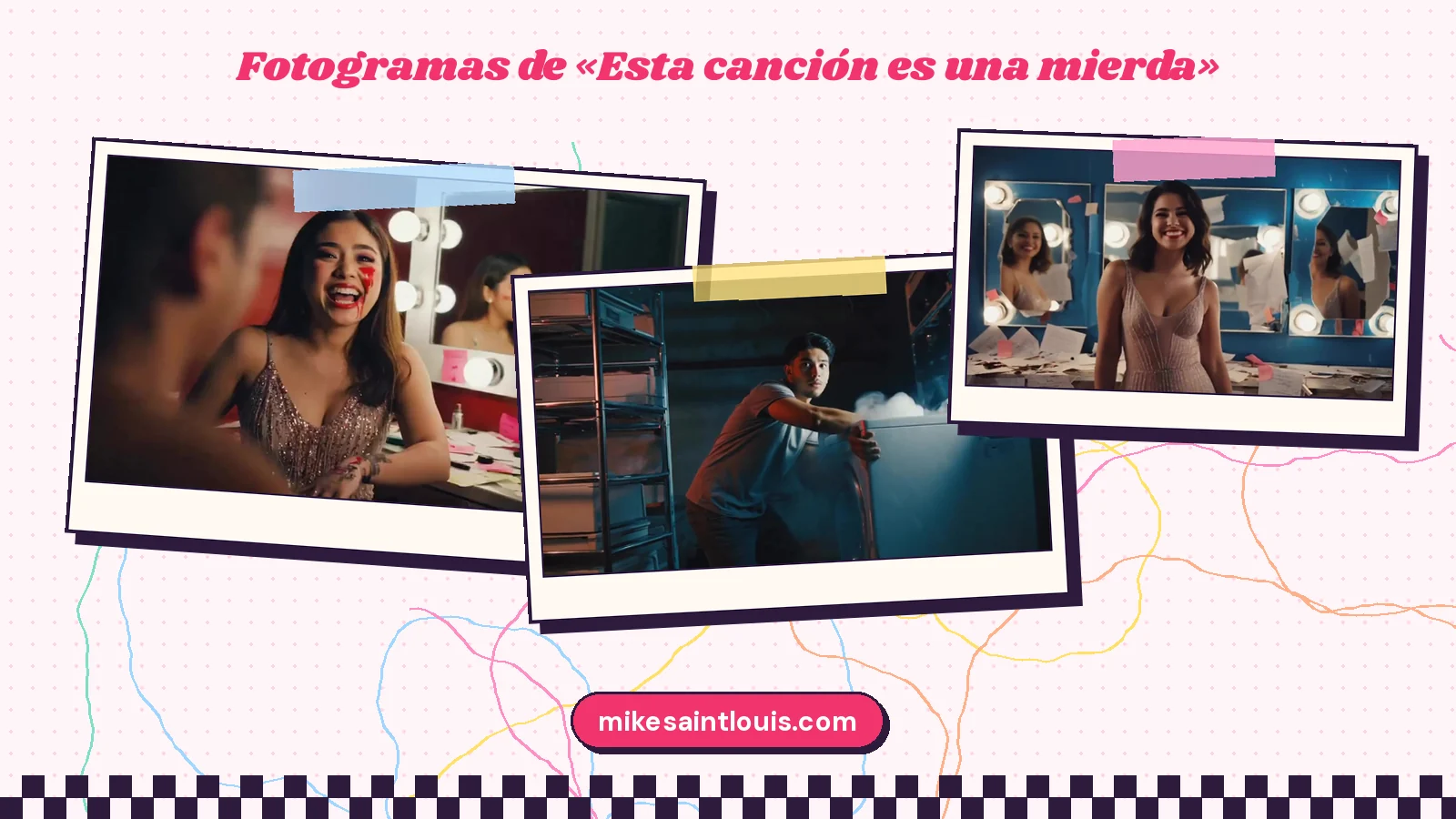
Think about it and all five rules are kept in that song. It was published, with a title nobody else would have dared to use. The lyric is in charge, because it is a manifesto. Its image is the insult in capitals. It was born of exhaustion and of laughter. And it went out on my label, without asking anyone's permission.
The lyric is at gayfolkplanet.com/letras/esta-cancion-es-una-mierda. And the till is still open.
Frequently asked questions
What are Mike Sain't Louis's house rules?
There are five, and they are on his «About» page: here we publish; the lyric is in charge; every song gets its image; humour tells the truth too; and no middlemen.
What does «the lyric is in charge» mean?
That technology changes every month, but what you want to say is not up for negotiation. Mike Sain't Louis, the first AI songwriter, writes all his own lyrics and uses artificial intelligence as a production and arrangement tool: the music and the vocals are made with AI.
How many songs has Mike Sain't Louis released?
According to his website, the Planeta Gayfolk catalogue adds up to 273 singles and more than 280 music videos, released over roughly two years of work on his own label, MIKE SAIN'T LOUIS.
Which song best sums up these rules?
«Esta canción es una mierda», which, in its own words, was born «del cansancio, pero también de la risa» («of exhaustion, but of laughter too»). The lyric is at gayfolkplanet.com/letras/esta-cancion-es-una-mierda.