By Mike Sain't Louis ·
Highs you don't smoke: «Feel That High», the Jamaican flag and the tribute to Bob Marley
There's an English word that has slipped into everyday Spanish almost without asking: high. Being high. Going around high. We use it for what everyone thinks of, of course, but also for the afternoon when everything goes right, for the gig where you forget to look at your phone, or for that minute after a run when your body feels like someone else's. Spanish has its own word, subidón, and it's just as generous: it works for almost anything that lifts you off the ground for a while.
When I wrote the page for «Feel That High» I left that door open on purpose. I said the high could be the one from weed, the one from music or the one from a good afternoon with the people you care about, and that I'd rather not close it. This text doesn't close it either. But it does look into each of those rooms.
Green, gold and black
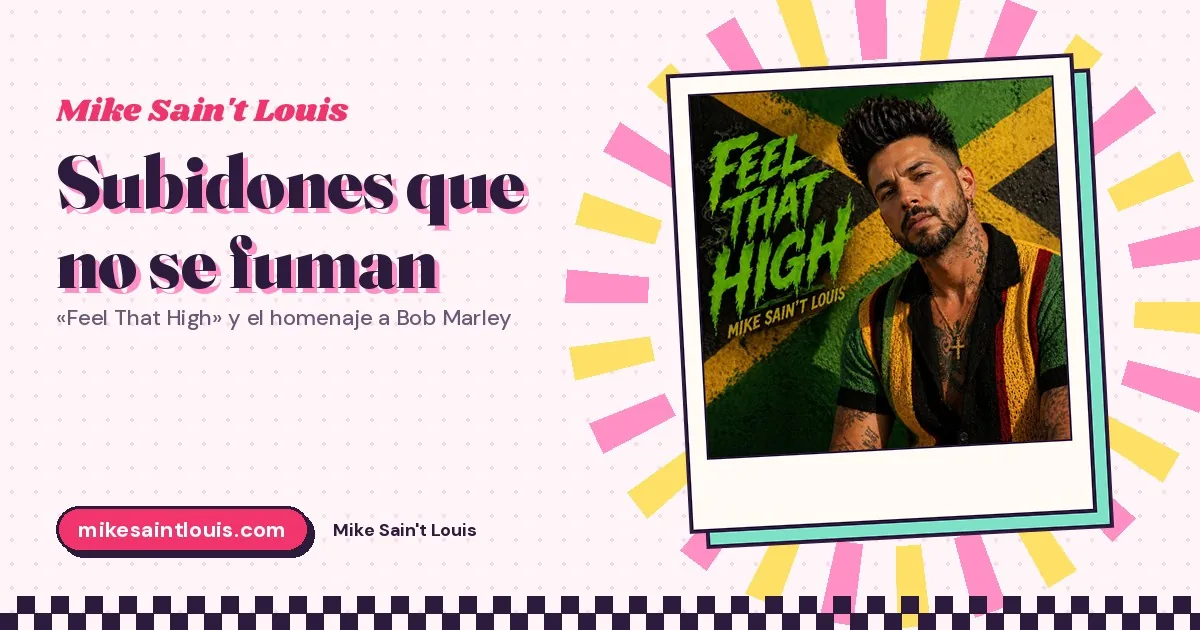
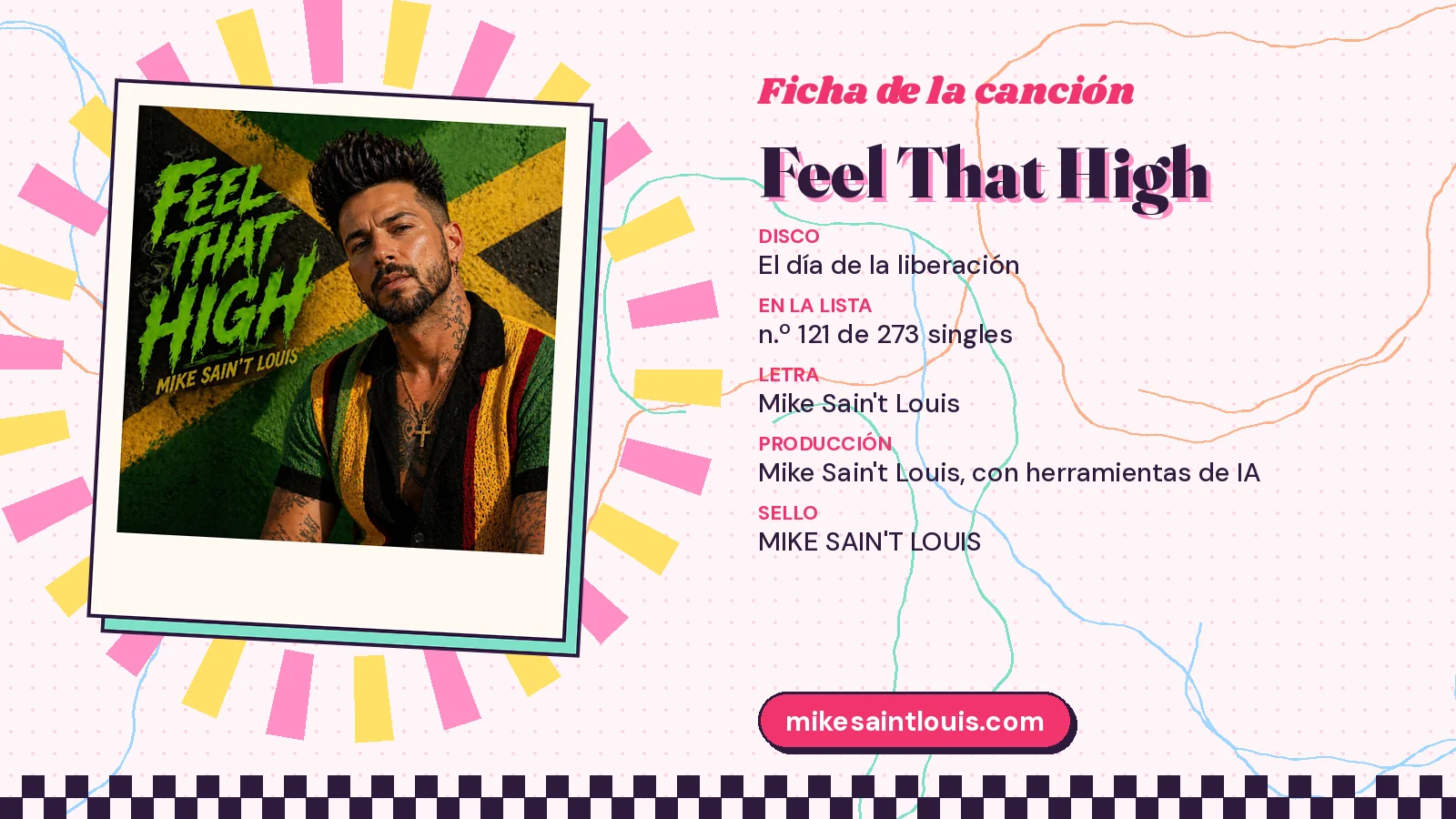
The cover is almost entirely a flag. Jamaica's fills the whole background, with its yellow saltire crossing the square corner to corner, leaving green triangles at top and bottom and black ones at the sides. It isn't freshly pressed: it's worn, the paint cracked, as if someone had painted it on a brick wall and left it for years in the sun and rain.
In front is a young man, shown from the waist up. A tall quiff brushed upwards, a trimmed beard, small earrings, a chain with a cross hanging on his chest and tattoos climbing his neck and running down his arms. He's wearing an openwork knit shirt, one of those crochet ones that are back in every shop window, with vertical stripes in yellow, green, red and black, open to mid-chest. He looks straight at the camera, head slightly tilted, expression serious.
On the left, the title. The letters of «Feel That High» are written in an acid, loud green that looks like freshly sprayed paint: they drip at the bottom, and wisps of grey smoke curl from the edges and fade into the background. Underneath, my name in yellow.
It's a very direct cover. It doesn't hide where it comes from or who it's greeting.
What I have in front of me
Before going on, a warning of the kind I like to make clear: I haven't published the lyrics to «Feel That High» yet. They're not on my lyrics page, so you won't find a single line of this song here, neither copied nor imagined. Nor am I going to rely on what YouTube's automatic captions think they hear, because with a reggae backing they invent more than they catch.
What I can count on is first-hand material. The cover I've just described. The English title. The date I put the music video up on my channel, 12 June 2026, the same day as other songs from the album. The album it belongs to, the third in the trilogy. And above all, the label on the video itself, which presents it in so many words as a tribute to Bob Marley. That word, tribute, is what gives me permission to write what follows.
A tribute with a name
Robert Nesta Marley was born on 6 February 1945 in Nine Mile, a village in the parish of Saint Ann, in the Jamaican interior. He grew up between the countryside and Trench Town, a poor neighbourhood of Kingston, and there, with Peter Tosh and Bunny Wailer, he formed the group that would end up being called The Wailers. He died on 11 May 1981 in Miami, aged only thirty-six, of a melanoma that had appeared on one of his toes.
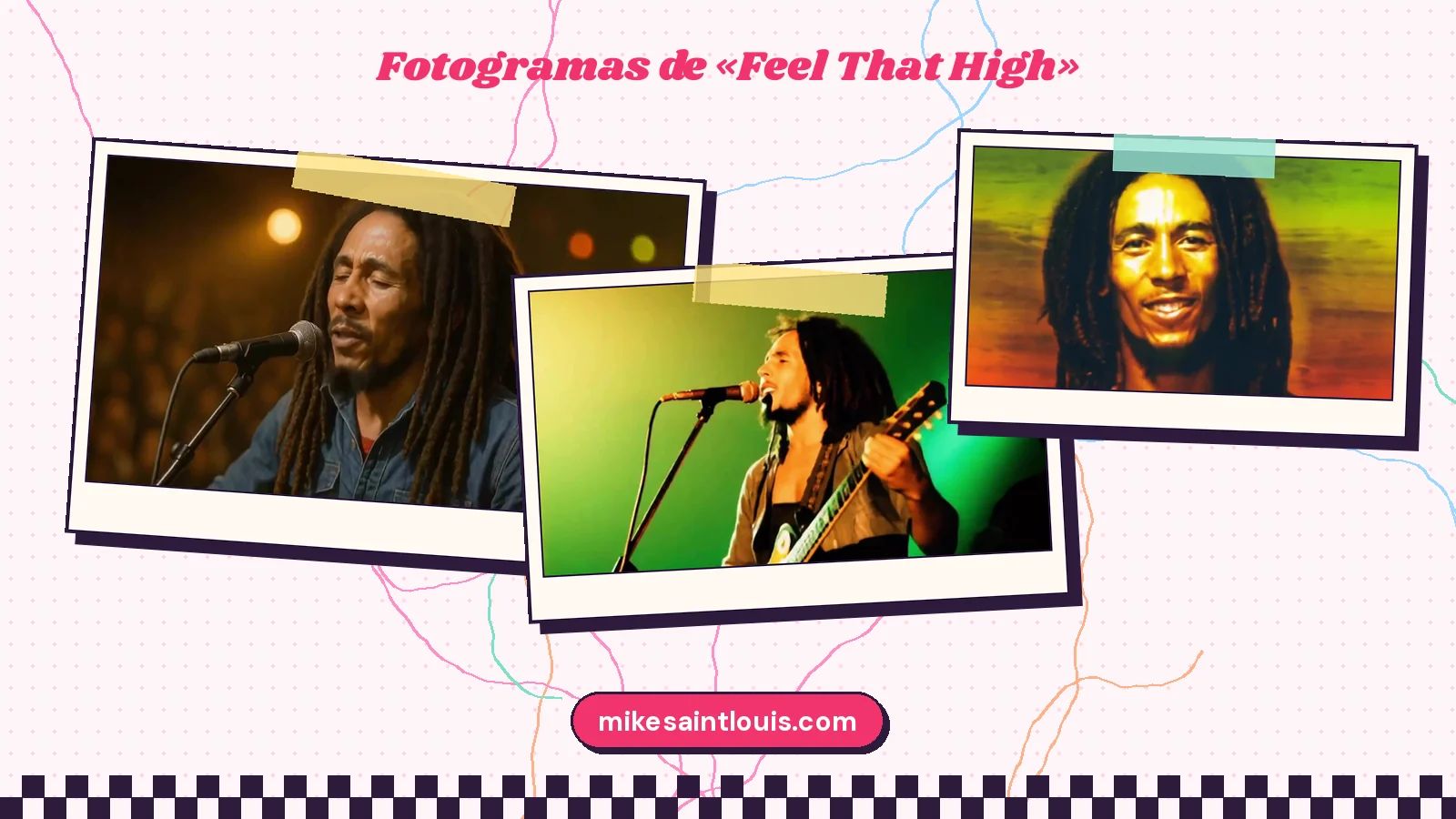
In that short time he turned a neighbourhood music into a world language. His album «Exodus», from 1977, was chosen by Time magazine in 1999 as the best album of the twentieth century. And «Legend», the compilation released in 1984, three years after his death, has stayed for decades on best-selling album charts around the world.
But what interests me most about him for this post isn't the sales figure, it's a concert. On 22 April 1978, at the National Stadium in Kingston, in the middle of a war between Jamaica's two big parties, Marley brought the two rival leaders, Michael Manley and Edward Seaga, up on stage and joined their hands above his head. It was called the One Love Peace Concert. A year and a half earlier, in December 1976, armed men had burst into his house and shot him. Two days later he played a free concert in the city anyway.
That's a high too: getting up on a stage when the reasonable thing would be to hide.
Two songs for the same man
«Feel That High» isn't the only song on the album that looks towards Jamaica. In the same part of the trilogy there's another that carries his name outright, «Bob Marley», whose lyrics aren't published yet either. That an album gives two tracks to the same figure says a lot about the weight he has in that record's imagination.
Close by is «Mejor hierba que guerra» ("Better weed than war"), a title that plays with the old pacifist slogan of the sixties and which, by its name alone, talks to everything around this cover. And on the same album there's «Verde», the rumba that does have published lyrics, which steals a line from Lorca and steers it openly towards the plant: «verde que te quiero verde, marihuana querida». That line is mine and it's published; I quote it as it is.
With these pieces on the table, it's clear «Feel That High» isn't a stray wink. It's part of a small corner of the album where reggae, the plant and the idea of peace hold hands.
A flag without red, white or blue
The flag on the cover was raised for the first time on 6 August 1962, the day Jamaica became independent from the United Kingdom. It's often cited as the only national flag in the world with no red, no white and no blue. According to the official explanation, the black stands for the strength and creativity of the people, the gold for sunlight and natural wealth, and the green for the land and hope.
The funny thing is that the colours people associate with Jamaica on a market-stall T-shirt aren't exactly those. They're red, gold and green: the colours of the Rastafari movement, which took them from the flag of Ethiopia. For Rastas, the Ethiopian emperor Haile Selassie had a sacred meaning, and his visit to Jamaica on 21 April 1966 is still remembered every year.
The cover mixes both palettes without apologising. Behind, the country's official flag. In front, a shirt with Rasta red tucked between the stripes. It's the Jamaica of the state and the Jamaica of the street at once, and in the middle a guy who comes from neither, but pays tribute to both.
Heritage of humanity
In November 2018, UNESCO inscribed the reggae music of Jamaica on its list of the Intangible Cultural Heritage of Humanity. The nomination described it as music born on the margins that became a vehicle for protest, love, spirituality and social criticism.
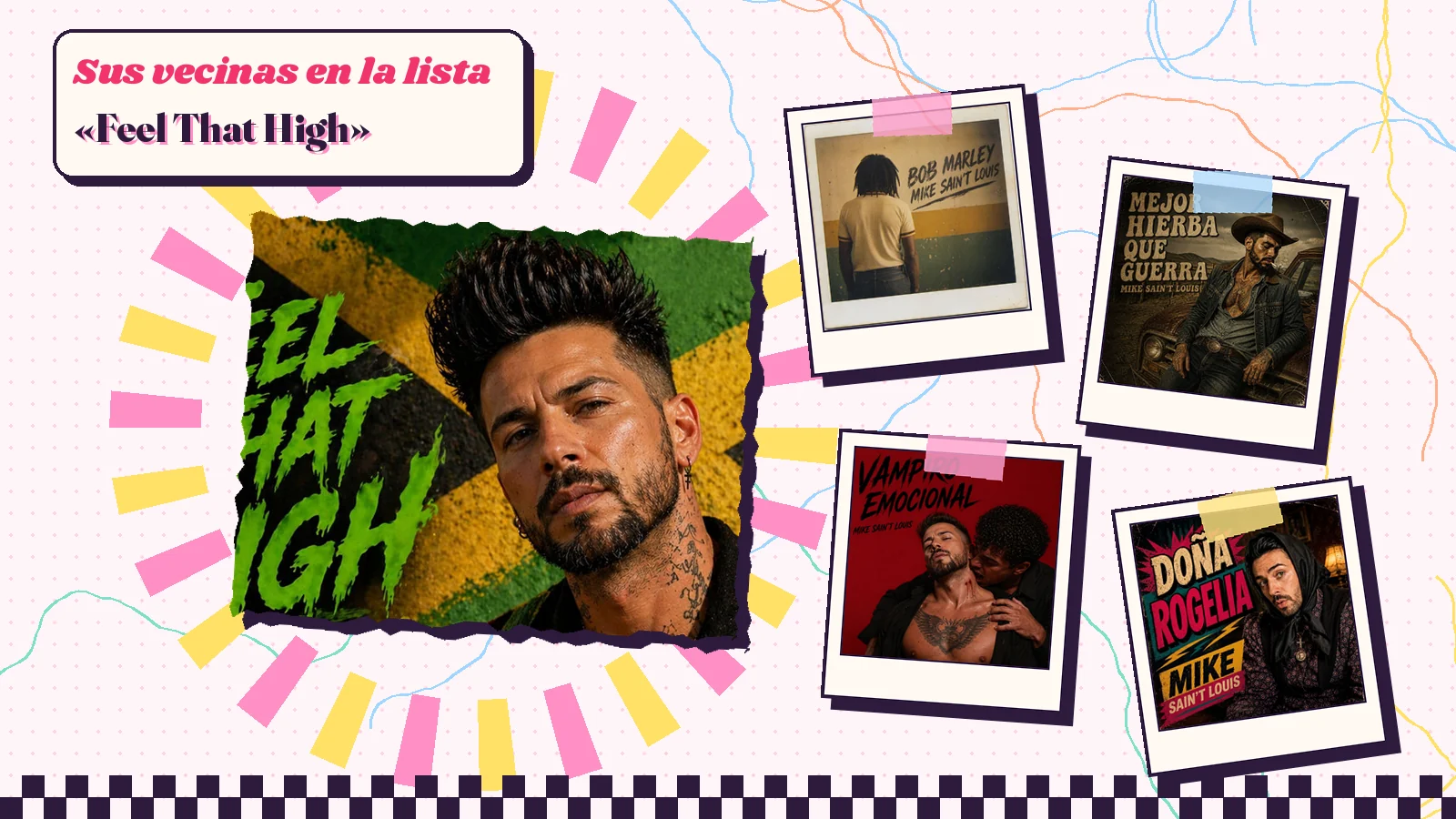
I like to think about that when I'm accused of making songs that are too light. Reggae is danced with a lazy sway, on the offbeat, unhurried. And under that friendly rhythm, for decades, have run songs about poverty, political violence, racism and freedom. Lightness isn't at odds with saying things. Sometimes it's the best wrapping to get them across.
On the song page I recommended playing it «with the sway on and the volume up». In reggae, the sway isn't decoration. It's almost a philosophy.
The highs of music
Back to the word in the title. There's a lovely line of research on what happens in the brain when a song gives us goosebumps. In 2001, neuroscientists Anne Blood and Robert Zatorre, at McGill University in Montreal, asked several people to bring their favourite music and scanned their brains while they felt those chills. The areas that lit up were the same ones that respond to food, sex or certain substances.
A decade later, in 2011, Valorie Salimpoor's team published in Nature Neuroscience that in those moments of peak musical emotion the brain releases dopamine, and that it even does so a little earlier, when it anticipates that the good part of the song is coming. In other words: music gives literal highs. Chemical. Measurable.
You don't need to be a scientist to know it. Anyone who has waited for the chorus of their favourite song with their eyes closed knows that tingle. I've already written about this, and about what music does when things go wrong, in a text on anxiety and breathing room. Here I'll stick to the bright side: there are highs you don't smoke, you listen to them.
What the body makes on its own
Besides music, the body has its own pharmacy. Anyone who runs regularly knows the famous runner's high, that calm euphoria that arrives after a stretch of effort and that for years was put down to endorphins; today we know endocannabinoids are involved as well, molecules the body makes by itself.
Something similar happens with shared laughter, dancing in a group and long hugs. That's why it amused me, writing the song page, to include among the possible readings of the title «a good afternoon with the people you care about». It wasn't a way of dodging the subject. Good afternoons give you a lift too.
If I had to choose, I'd put these free highs on the list: the first swim of the summer, a lunch that stretches into dinner, bumping into someone you'd missed in the street, hearing a song you didn't know and playing it three times in a row, laughing until your stomach hurts. None of them needs a prescription.
Weed, without a sermon and without an advert
Now, the room everyone thought of when they read the title. The cover has smoke and it has green, and I'm not going to play dumb. The plant is part of the imagery of reggae and of the Rastafari movement, which uses it in a spiritual sense. Jamaica decriminalised possession of small amounts in 2015 and recognised its religious use.
In Spain the situation is different: using it in public is punishable by a fine under Organic Law 4/2015 on the protection of public safety. With this post I'm not trying to encourage or judge anyone. What I will say, because it seems like common sense, is that nothing you smoke should be the only way to feel good. If you ever notice you need something to get through the day, to sleep or to be around people, it's worth talking to your GP. Asking for help doesn't make you anything bad.
That's why the post's title says what it says. I like the word high, but I like the highs that don't send you the bill the next day even more.
The other side of the island
An honest tribute also has to look at what hurts. Jamaica, the island of One Love, is also a country where sex between men is still punished by law. The law that does it, the Offences Against the Person Act, dates from 1864, from the British colonial era, and provides for up to ten years in prison with hard labour.
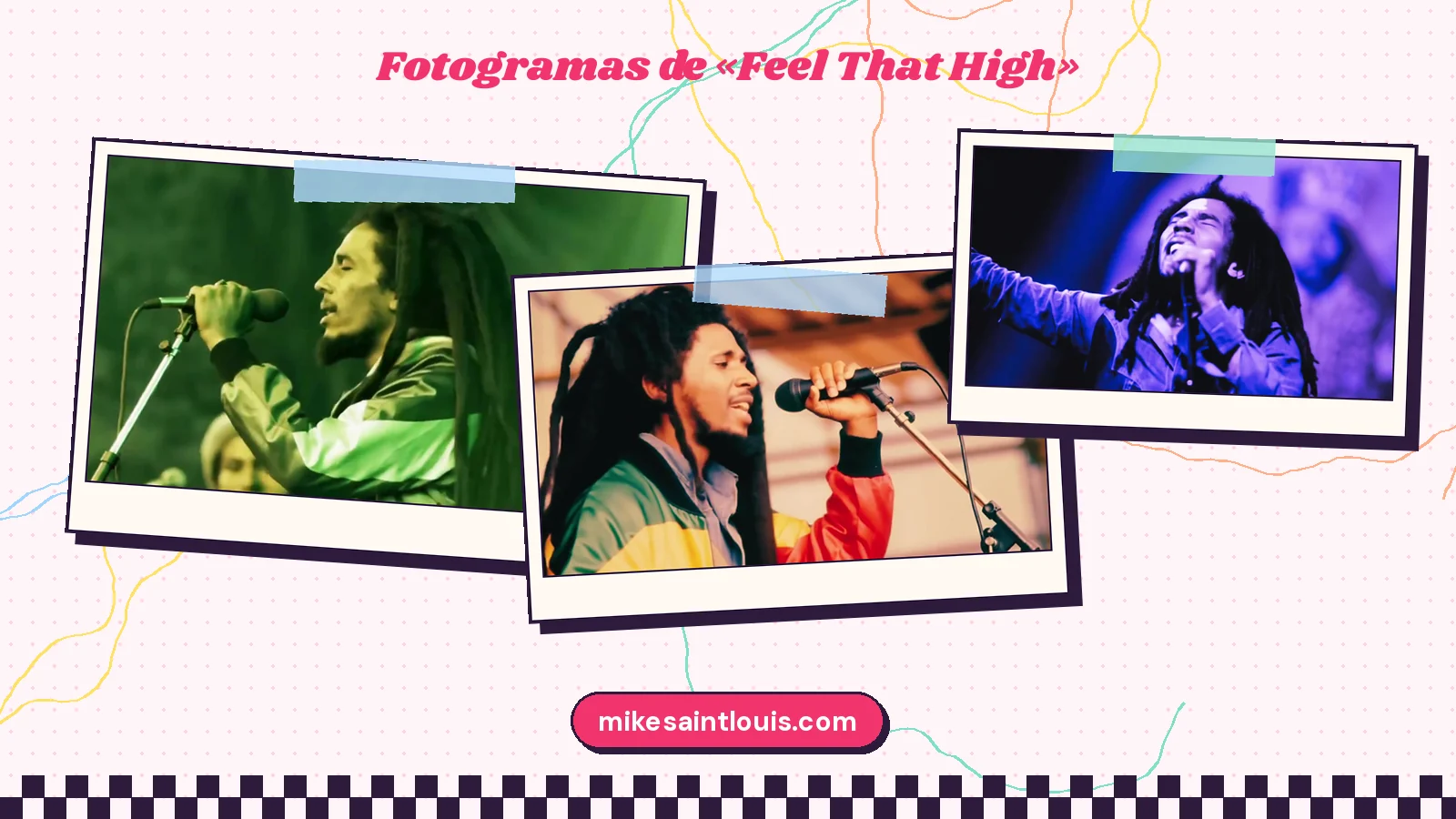
In April 2006, Time magazine published an article asking whether Jamaica was the most homophobic place on Earth. Two years earlier, in June 2004, Brian Williamson, one of the founders of J-FLAG, the country's main LGBTI organisation, created in 1998, had been murdered in Kingston. During the nineties and two-thousands, some dancehall songs with lyrics calling for attacks on gay men sparked international protest campaigns and concert cancellations in Europe.
And even so, people resist. In 2015, J-FLAG organised in Kingston the first Pride week held openly on the island. There are Jamaican activists, lawyers and artists who have spent years fighting for One Love to really reach everyone.
Paying tribute to Bob Marley from a project called Gayfolk is also a small, affectionate provocation. A way of saying that this music belongs to everyone, including those who in their own land still have to hide. I talked about the double discrimination faced by people who are Black and gay in another text on racism and LGBTI-phobia.
The guy you can't take for a ride
On the song page I wrote that what works best in the image is the contrast between so much colour and the guy's serious look, like someone who is very relaxed but won't be taken for a ride. I still think so.
The reggae covers we all have in our heads tend to show huge smiles, half-closed eyes, colourful knitted hats. Not here. The guy in the crochet shirt stares at you, unsmiling. There's something defiant about him. As if he were saying: I can be calm and at the same time very clear about things.
That combination feels very of-the-moment to me. Being relaxed isn't not caring. You can have the sway on and know perfectly well what you won't put up with.
Crochet, a quiff and a cross
The clothes have their story too. Openwork and crochet shirts, which for a long time belonged to grandmothers and sofa doilies, have come back strongly in men's summer fashion in recent years, especially in bright colours and geometric patterns. Wearing a crochet shirt is a gesture that not long ago would have seemed too delicate for a man. Today it's in every shop.
The quiff, that voluminous hair swept upwards, goes back much further: to fifties rockabilly, to the boys who copied Elvis and to the films about rebels in leather jackets. And the cross on the chain is a classic on so many of my covers that it's already part of the character. On how I try to make hundreds of covers look alike without getting boring, there's a whole post.
Together, summer crochet, fifties quiff and Rasta colours make up something that isn't from anywhere in particular. It's a mix. Which is exactly what reggae did with ska, American rhythm and blues and Jamaican mento.
Between a vampire and a lady
In the ordered list of singles on gayfolkplanet.com, «Feel That High» is number 121 of 273. Right before it comes «Vampiro emocional» ("Emotional vampire") and right after it «Doña Rogelia». Seen as a sequence, it's quite funny: first someone who drains your energy, then a breather under a Jamaican flag, and finally one of those ladies they don't make any more.
I'm not looking for hidden meaning in the order. But I like that the high arrives right after the vampire. As if it were the antidote.
A June song
I put the music video up on my channel on 12 June 2026, right at the start of summer and a few weeks before Pride in almost every city. Other tracks from the same album came out that day, like «Light It Up», with its angel with burning wings on a beach at sunset. June was the month of hot-weather songs.
It makes sense. Reggae is music for sun, for courtyards, for beaches with a small speaker. It isn't scarf music.
The third album
The album the song lives on is «El día de la liberación» ("Liberation Day"), the one that closes my Gayfolk trilogy. If the first was the news of a planet being discovered and the second the urge to travel there, this third one is about letting go, breaking with what held you down.
A tribute to Bob Marley fits there naturally. Few twentieth-century figures talked as much about liberation as he did: of slaves, of the poor, of minds. One of his most famous songs called for emancipation from mental slavery, because no one but ourselves can free our heads. That idea, that there are chains we carry inside, has a lot to do with what it means to come out of the closet and stay out.
If the high turns into a low
Highs have a B-side. Sometimes, after a stretch of euphoria, or when whatever lifted us stops working, a low arrives that won't leave. If it happens to you, don't brush it off. Talk to someone you trust, to your doctor or to a mental health professional.
And if at any point thoughts of hurting yourself or not wanting to go on cross your mind, in Spain you have 024, the suicidal behaviour helpline: it's free, confidential and available at any hour. In an emergency, 112. If you're in another country, call your local emergency number or look up the right helpline for you at findahelpline.com.
I've gathered more numbers and resources in my series on mental health without taboo.
With the sway on
I imagine it playing for people who dance with their shoulders more than their feet. For whoever discovered Bob Marley on an inherited vinyl or a summer playlist. For whoever wears a crochet shirt for the first time and notices the looks, and wears it anyway.
For whoever is looking for highs that don't send the bill. For whoever lives in a country where they still can't love who they love without fear, and turns the music up anyway. And for whoever knows how to be very calm and, at the same time, not be taken for a ride.
Frequently asked questions
What is «Feel That High» about?
Its lyrics aren't published yet, so I don't summarise or invent them. The title of the music video presents it as a tribute to Bob Marley, and the cover shows a guy in a crochet shirt in front of a worn Jamaican flag. On my song page I left open what kind of high the title means.
Which album is it on?
«El día de la liberación», the third album of the Gayfolk trilogy. The video has been on YouTube since 12 June 2026.
Is it about marijuana?
I can't say so without the lyrics. The cover plays with green and smoke, and the title allows several readings: the plant, the music or a good afternoon with friends. This post doesn't encourage use and reminds you that smoking in the street is fined in Spain.
How is it related to the song «Bob Marley»?
Both are on the same album and look towards the same artist. Neither has published lyrics yet.
Who makes the music and the vocals?
Mike Sain't Louis, a lyricist, composer and music producer from Madrid, the first AI songwriter. He writes, composes and produces; the vocals are generated with artificial intelligence.