By Mike Sain't Louis ·
What's folk about GAYFOLK: villages, fairgrounds and coplas in my songs
«Aquí la Tarara baila entre neones, tacones y azoteas futuristas» («Here the Tarara dances among neon lights, high heels and futuristic rooftops»).
That's what I wrote to introduce my version of «La Tarara». And if anyone asks me what this GAYFOLK business is, sometimes I just answer with that sentence and save myself the rest. A playground ring song as old as the hills, the one with the frilly-tailed shirt and the little bell, dancing on a rooftop under neon. The same old thing in a place it had never been before.
GAYFOLK is a word with two halves. Almost everyone fixes on the first, because it's the one that makes the noise. Gay. Fine. There's not much mystery there: my songs are about love between men, about exes, about Grindr, about Chueca, about what goes on in saunas and what goes on in the kitchens of couples who've been together seven years.
But the second half is there too. Folk. And people talk about that one less.
Folk, in English, means people. The popular. The music of the village, in the sense of the town square rather than the brochure. In Spain that has very specific names: copla, rumba, tablao flamenco, playground ring songs, the band at the summer fiesta, the Camela tape in the glovebox. And looking calmly through my catalogue, that second half turns up far more often than I'd realised.
You don't copy: you reinvent
I'll start with «La Tarara», because it explains it best.
«La Tarara» is one of those folk songs nobody knows who wrote, because absolutely everyone has chanted it. Little girls in the playground, grandmothers in the kitchen. In the text that goes with my version I put it like this: «La infancia convertida en resistencia, la tradición remezclada con sintetizadores» («Childhood turned into resistance, tradition remixed with synthesisers»).
I stand by every word of that. It's almost a manifesto. I don't leave tradition in the display cabinet. I take it out, remix it, put synths on it and carry it up to a rooftop.
And then comes the other line, the one that for me sums up the planet: «Porque en el Planeta GayFolk no se copia: se reinventa» («Because on Planet GayFolk you don't copy: you reinvent»).
You don't copy. That matters to me. There are plenty of covers out there that are just nostalgia with better sound, an old song played exactly the same but cleaner, so you hear it and go «aw, how lovely, just like the old days». That doesn't interest me. If I bring back an old song, it's so it can say something it couldn't say before. So the Tarara can dance in heels. So it can be heard by someone who couldn't dance it in the school playground without being called something.
The dedication makes it clear. To Marisol (the Spanish child star). And to the girls who danced when it wasn't allowed. And to those of us who are still dancing, even though it still bothers people.
That's the folk in my GAYFOLK. Not tradition as it was. Tradition with the people tradition left out.
Ring games, playgrounds and school
There's something about the word «childhood» in that line that I don't want to let slip by.
Ring songs are the first thing a child learns in Spain without anyone teaching them. You hold hands in the playground and that's it, you know them. «La Tarara», «Al corro de la patata», «Quisiera ser tan alta como la luna». They belong to everyone. They have no author, no record, no owner.
And yet they didn't belong to everyone. The playground has its rules, and one of the first things the boy who doesn't fit in learns is that there are games he isn't allowed to join. Or he is allowed in, but then they laugh. That if you dance the Tarara with too much enthusiasm, hand on hip, spinning a bit more than you should, someone is going to call you a name you don't understand yet.
That's why «la infancia convertida en resistencia» doesn't strike me as a grand phrase. It strikes me as an exact one. Taking the playground song, the one they used to chant at you, and finally dancing it however you like. In heels. On a rooftop. Under neon. Without asking permission from the girl who used to point at you.
That's the part of folk that gets me most. The part that takes back what was yours and got taken off you at break time.
The ones who danced when it wasn't allowed
The dedication on my Tarara also looks further back, beyond the playground.
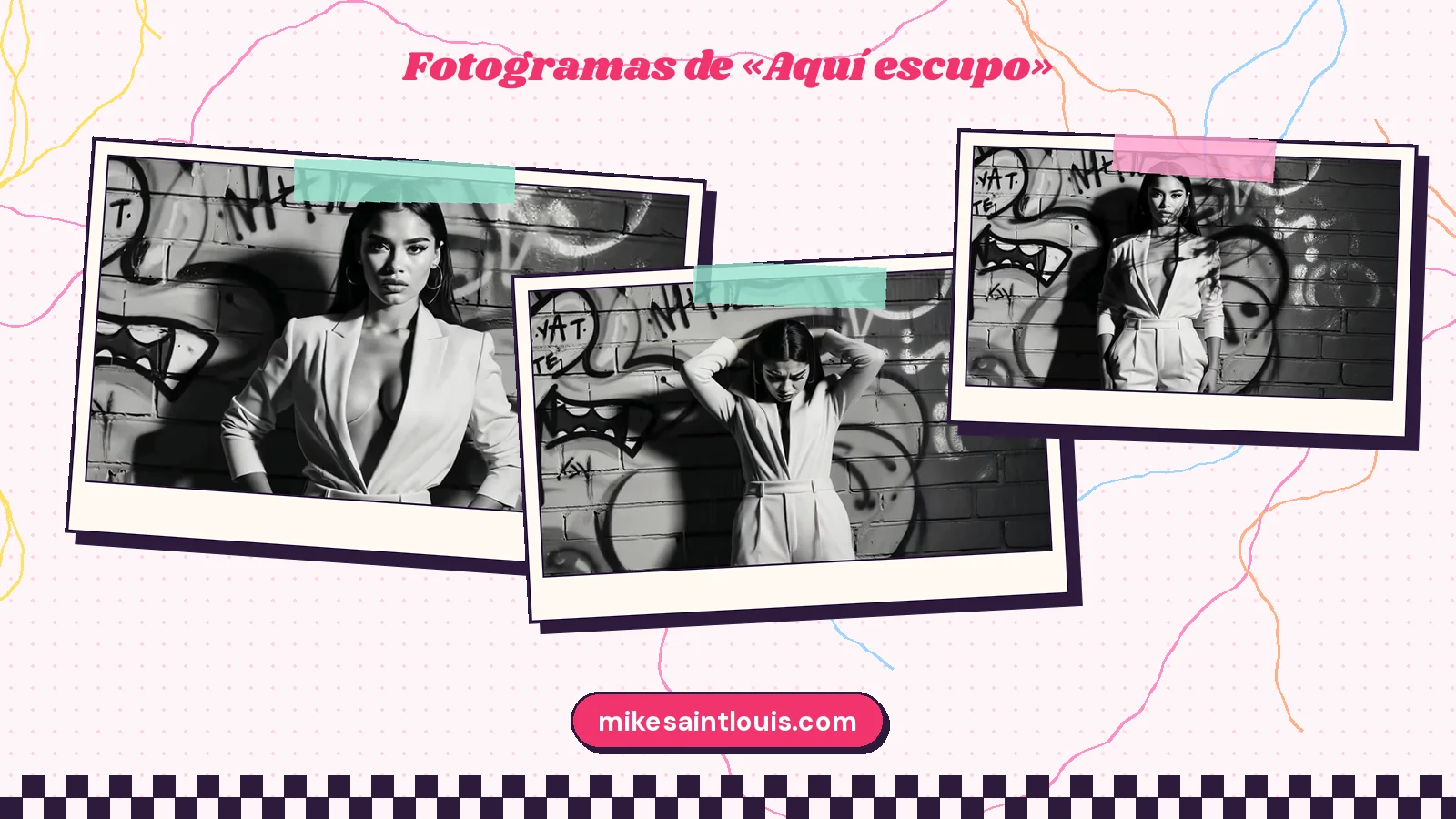
There was a time in this country when dancing like a loca could cost you a lot more than being laughed at. And in that time copla, Spanish song and the great folclóricas (the larger-than-life female stars of Spanish folk-pop) were, for many men like me, a place to hide in plain sight. You couldn't say you loved another man. But you could know every copla about forbidden love by heart, do Rocío Jurado in the kitchen, sob along to a song about jealousy and revenge. The great copla divas supplied the drama. We, in the living room, supplied the rest.
I don't want to tell that story as if I'd lived all of it. It isn't mine to tell. But I do know my catalogue owes it a great deal. That when I write a break-up in the language of funerals, or with a folclórica's «hasta nunca», I'm using a language other people invented, people who were far more frightened than I am. That's why Marisol is in the dedication. That's why I leave Carmen Sevilla's lyrics untouched. It's a way of saying thank you.
Cariño trianero, without changing a comma
With «Cariño trianero» I did the opposite. Or so it seems.
In my version of «Cariño trianero» I wrote that it's a tribute to Carmen Sevilla and to an era of Spanish music with «alma, lentejuelas y verdad» («soul, sequins and truth»). And that I'd kept the lyrics exactly as they were, because there was no need to touch a single word.
Not a single word. It's an odd decision for someone who rewrites everything he lays hands on. But there's a logic to it. Some songs don't need correcting. They need looking at from somewhere else. And that's what I say in the same text: that I bring it back «con una mirada diferente, marica, libre y contemporánea» («with a different gaze: queer, free and contemporary»).
Same lyrics. Different gaze.
And that's the other way of doing folk from here. Sometimes you change the song. Sometimes you leave it alone and change who's listening. A copla from Triana sounds different when it's put on by someone who knows what it is to love a man quietly. You don't need to add a line. It's all already in there.
I wrote at more length about copla in why the same old drama suits gay love today so well. Here I'll just note one thing: copla was always a bit ours. Enormous women weeping over impossible loves, jealousy, betrayal and waiting at the window. You'd have to be very blind not to see half of Chueca in there.
In every car, in every village
If there's a genuine Spanish folk, made by the people for the people, with no academy or conservatoire, it's Camela.
I mean it. No irony. Or very little.
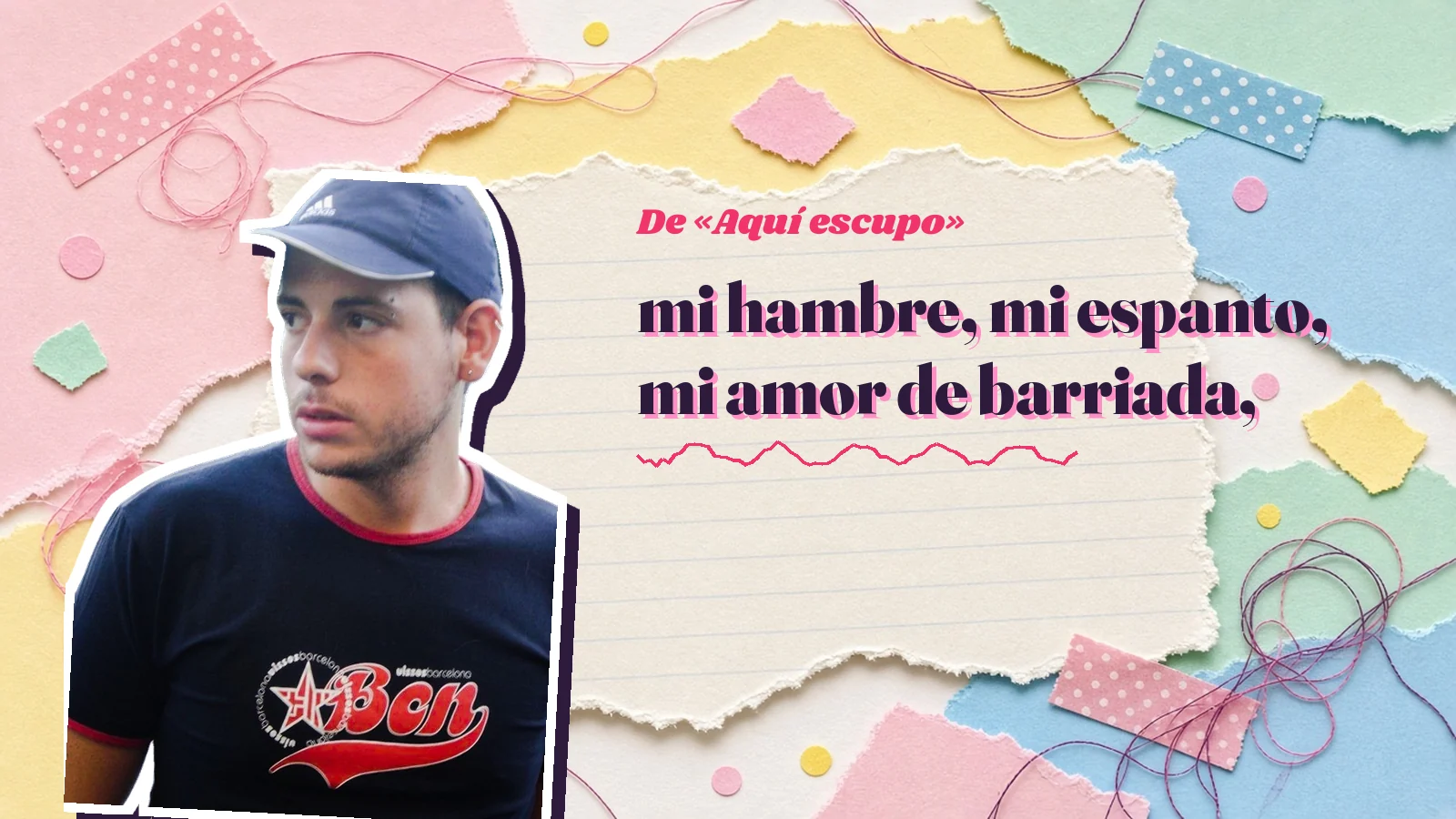
In the text for «Camela» I wrote that the song is my tribute to «ese sonido que sigue sonando en cada coche, en cada pueblo, en cada corazón» («that sound still playing in every car, in every village, in every heart»). Of road trips, summers, impossible loves and the ones that worked out.
That «in every village» is the key to this whole piece. Camela didn't get played on posh radio. It got played at petrol stations, street markets, fairs, roadside clubs and in your cousin's car. It was the music real people put on when nobody from the music press was looking. That's folk. What gets bellowed in the car with the windows down.
And that's why Camela keeps coming back into my catalogue. In «La despedida» there's a line in capitals that names them at the most fragile moment, the first time the narrator goes to Chueca alone, scared. Camela as company. As the thing you carry in your head to give you courage.
It isn't nostalgia, says the song's text. It's living memory. And I agree, even though I know the phrase could come printed on a mug.
Un pueblo es
On the third album of the trilogy, «El día de la liberación», there's an adaptation of «Un pueblo es», María Ostiz's song from 1977. That's how the credits put it: an adaptation.
I'm not going to quote its lines, because they aren't mine. They belong to whoever wrote them, and that deserves respect. But I do want to explain why it's on that album and not another.
The song is about a pueblo in the big sense: a people. About winning people over face to face, not with pretty phrases. And I put it on the liberation album because that album is about exactly that: finally reaching a place where you can live as you are, and knowing that place isn't built with a slogan. It's built with people.
I love that a song from 1977 sits on an album about an invented planet. It's folk again. A song someone wrote almost fifty years ago for a country learning to be something else, now in the mouths of other people who are also learning to be something else. A people's hopes don't have a sell-by date.
And there's something else. In a catalogue this personal, this first-person, this full of «my ex» and «my boyfriend» and «my mother-in-law», including a song that speaks in the plural is almost a breather. «Un pueblo es» isn't about me. It's about us. And an album called «El día de la liberación» needed at least one song that wasn't about a single man with a broken heart, but about lots of people opening their windows in the morning.
Ya está amaneciendo
There's another borrowed song in the catalogue that strikes me as pure popular culture: «Ya está amaneciendo», the El Fary one. The lyrics I have on file credit its writers, as they should.
El Fary (a Madrid star adored by working-class Spain) is another of those names posh people mention with a half-smile. But that song, about heading out into the street to start the daily grind in the big city and coming home to your own, is a working-class song in the truest sense. Getting up early. Grafting. Coming home.
Nothing is more folk than that. And nothing is easier to sneer at. That's why I want it on my planet. Because Spanish queer culture doesn't only come from divas and cabarets. It also comes from neighbourhoods where El Fary played in the kitchen while someone did the ironing.
My fairground blood
Folk isn't only in the covers. It sneaks into my own lyrics too, sometimes in a single word.
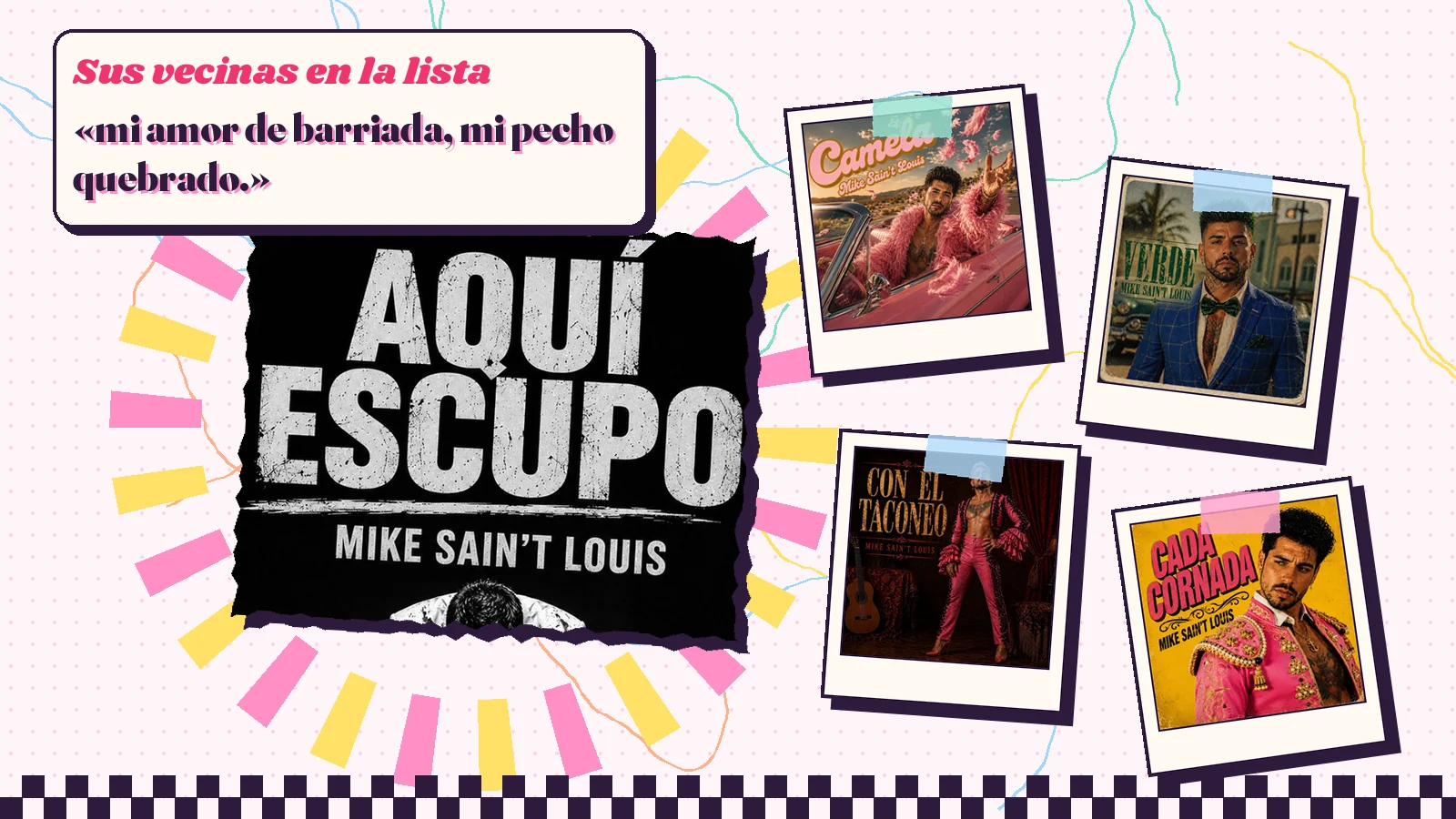
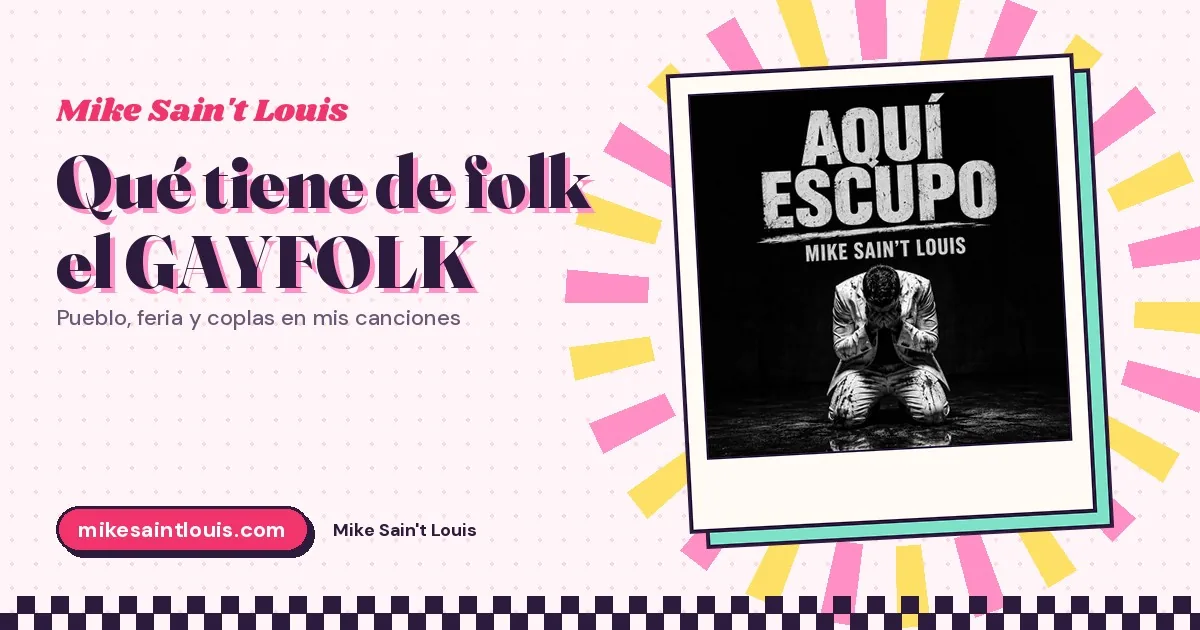
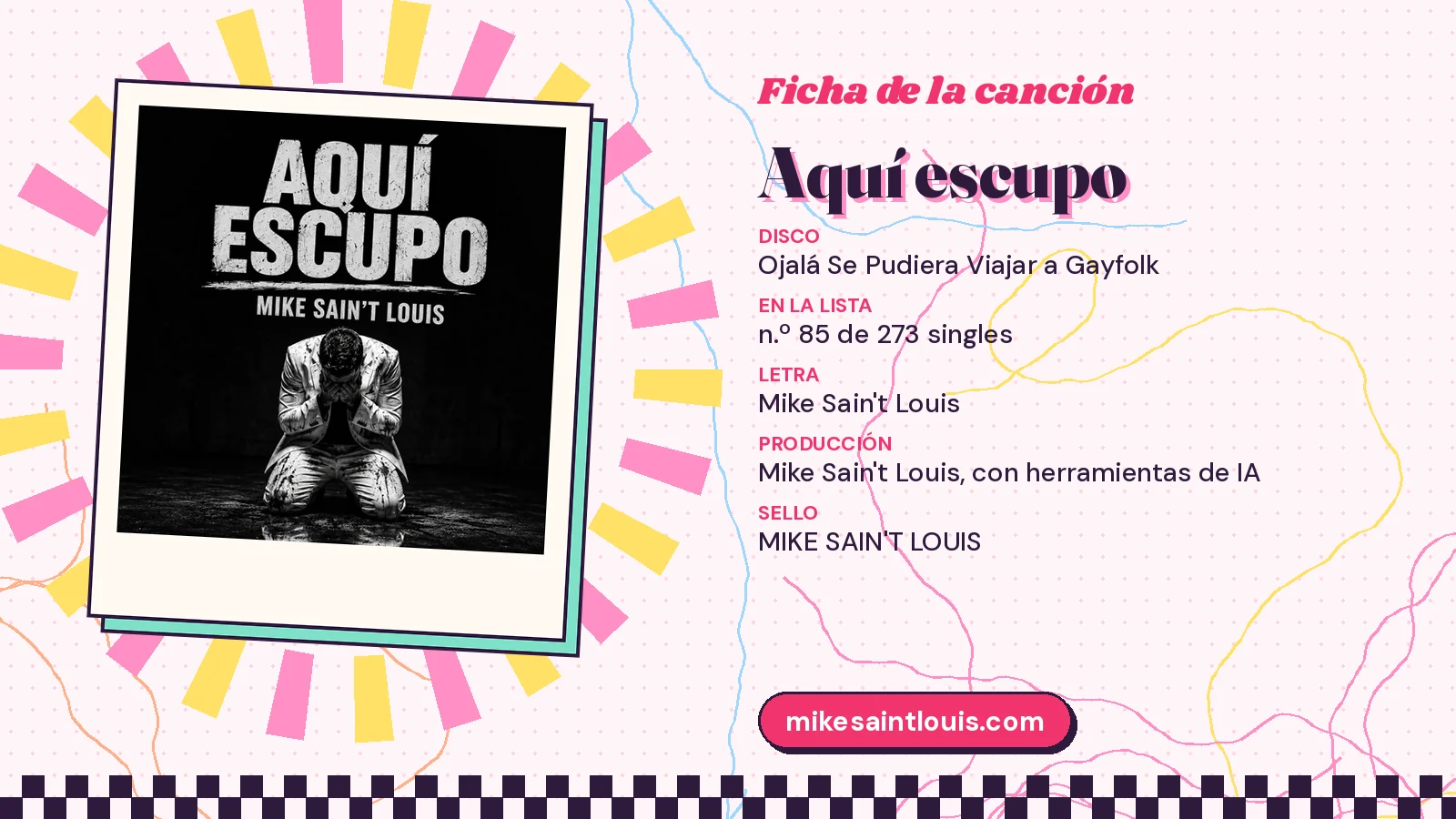
In «Aquí escupo», one of my starkest lyrics, the kind where almost every line is an object, there's this: «mi sangre de feria, / mis noches de polvo, / mis sueños de piedra» («my fairground blood, / my nights of dust and sex, / my dreams of stone»). And a little later: «mi amor de barriada» («my love from the estate»).
Fairground blood. I love that expression because nobody explains it and everybody gets it. It's the blood of someone who grew up between the stalls, between rides with flashing lights, between the smell of churros and fried food and the tombola music at full blast. The blood of someone who can ride the Waltzer without throwing up. Or throwing up, but with dignity.
And love from the estate. Not from the gated development. From the estate. With its tower block, its park and its bar downstairs.
In a song about spitting out what you carry inside, those two phrases say where that inside comes from. From the fair and the estate. From the village, again, even if it's a village inside a city.
That's why this song is on the cover of this piece and not a cover version. Covers are tributes, and tributes look at someone else. «Aquí escupo» looks inward. And what it finds inside, among the rage, the broken heels and the stained skirt, is a fairground. The lights. The noise. The tombola. The boy you fancied riding the dodgems. Folk isn't something I bring in from outside to decorate the planet. It was already in the blood before I wrote the first line. And when a lyric starts spitting out what it carries inside, that's what comes out: the fair and the estate, before anything else.
Rumba, handclaps and a borrowed line
In «Verde», from the third album, it's straight-up rumba. Handclaps, guitars and cajóns, the square filling up, the night lighting up. And a line everybody recognises: «verde que te quiero verde» («green, how I love you, green»). That line is Lorca's, and I nicked it for a rumba about a very particular herb.
It strikes me as one of the most folk things I've done. Because that's what people do with poetry: they make it theirs. People don't read Lorca in the critical edition. They bellow him at weddings, put him on T-shirts, turn him into rumba. Lorca, who was a village boy and a marica, would understand, I think.
And that song has another phrase that's pure Spanish folk: «Un poco de gracia y otra de sal» («A bit of charm and a pinch of salt»). It's almost a proverb. Almost a grandmother's recipe.
The heels on the boards
«El día de la liberación» also has «Con el taconeo». Its lyrics aren't published on the site yet, so I won't quote them. But the title already puts the dance floor boards centre stage.
Taconeo, the stamping of heels, is flamenco and it's drag at the same time. Both strike the floor to be heard. Both wear heels. Both have had to defend their place in front of people who said it wasn't for them. That those two traditions make sense on the same stage is, for me, one of the things that best explains the project's name.
Gay and folk aren't two things stuck together with Sellotape. Very often they're the same thing, seen from two sides.
The tradition I won't bring
But folk has a part I don't want on my planet. And I say so.
In the text for «Cada cornada» I wrote against bullfighting. Against violence dressed up «con mantillas, luces y un discurso viejo que ya no sostiene nada» («with mantillas, lights and an old speech that no longer holds anything up»). And against that «“tradición” sostenida por aplausos automáticos» («“tradition” propped up by automatic applause»), with the word tradition in inverted commas, because the inverted commas are the opinion.
That matters in a piece about the popular. Because loving your country's culture doesn't mean loving all of it. You can weep at a copla, dance a rumba at a wedding, put Camela on in the car, worship Carmen Sevilla and, at the same time, refuse to applaud a bullring. There's no contradiction. There's judgement.
Folk isn't a museum where anything goes because it's old. It's what people decide to keep bellowing along to. And people can also decide to stop applauding something.
On my planet, what stays is what doesn't hurt anyone. The rest can stay with the old speech.
Today's popular
There's another kind of folk in my lyrics that has nothing to do with covers or genres. It's today's popular.
If folk is what ordinary people live, the folk of 2026 is Mercadona (Spain's everywhere supermarket), the pound shop, the 100 Montaditos, WhatsApp statuses, the all-you-can-eat cruise buffet, afternoon telly. All of that is in my songs because it's what's in the lives of the people who listen to them. And in mine too.
People sometimes tell me my lyrics are really tacky. And I think: of course. The popular has always looked tacky from above. Copla was tacky to opera-goers. Camela was tacky to people who read the music press. El Fary was tacky to almost everyone except the people who put him on in the kitchen. Tacky is just the popular before someone decides it's heritage.
I've talked about this in other ways in against nostalgia and in camp isn't a joke. Here I'm putting it all together: camp, tacky, retro and popular are one family. Cousins who see each other at weddings.
People
So that's what's folk about GAYFOLK. The Tarara in heels. Carmen Sevilla without a comma changed. Camela in every village. A song from 1977 about winning people over. El Fary heading out to the daily grind. Fairground blood and love from the estate. Lorca in a rumba. Heels stamping on the boards. And a bullring I'm not going back to.
Seen like that, the project's name isn't an odd mash-up. It's almost a tautology. Being gay in Spain has always had a lot of folk in it: copla in the living room, the fair with the girls, a folclórica impersonated in front of the mirror, a ring song danced with more gusto than was strictly necessary. And folk has always had a lot of gay in it, even if the textbooks kept quiet about it. All I've done is put together two words that were already eyeing each other up.
I write all of it. My own lyrics, the texts that go with the covers, the decisions about what comes onto the planet and what doesn't. I produce the music with artificial intelligence, which in my studio is one more tool, as the drum machine or the synthesiser were for other generations. But the machine doesn't supply the memory. People supply the memory. That's what folk means, after all.
People.
The full lyrics of «Aquí escupo», the one with the fairground blood, are at gayfolkplanet.com/letras/aqui-escupo. And the text of my version of «La Tarara», with its dedication, is at gayfolkplanet.com/letras/la-tarara. Read both, then put one of the songs on up on a rooftop. If you haven't got a rooftop, a balcony will do.
Frequently asked questions
What does GAYFOLK mean?
It's the name of Mike Sain't Louis's musical universe, PLANETA GAYFOLK, and of his trilogy of albums. It brings together gay and folk, that is, the popular: copla, rumba, playground ring songs, Camela and El Fary, reinterpreted through a queer lens.
Which covers of popular songs are in the catalogue?
Among others, «La Tarara», «Cariño trianero» (with the lyrics kept exactly as they were, as a tribute to Carmen Sevilla), «Un pueblo es» (an adaptation of María Ostiz's 1977 song) and El Fary's «Ya está amaneciendo».
What does Mike Sain't Louis say about his version of «La Tarara»?
That it's «la tradición remezclada con sintetizadores» («tradition remixed with synthesisers») and that «en el Planeta GayFolk no se copia: se reinventa» («on Planet GayFolk you don't copy: you reinvent»). The full text is at gayfolkplanet.com/letras/la-tarara.
Who makes the music for these songs?
Mike Sain't Louis writes the lyrics and texts, composes and produces. The music and vocals are made with artificial intelligence tools, under his direction.