
By Mike Sain't Louis ·
«Por dentro te escupía»: prepositions of place in my lyrics
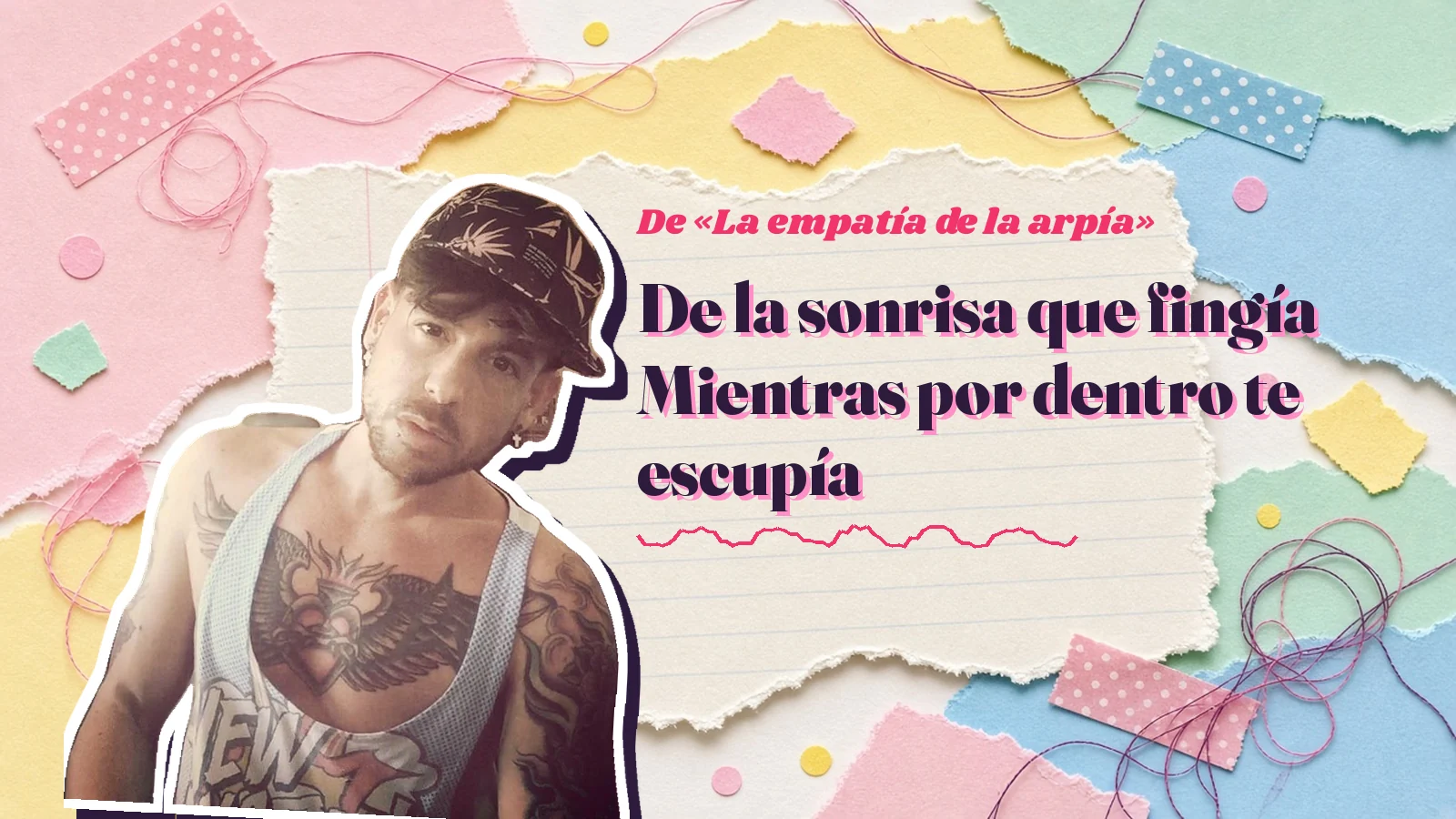
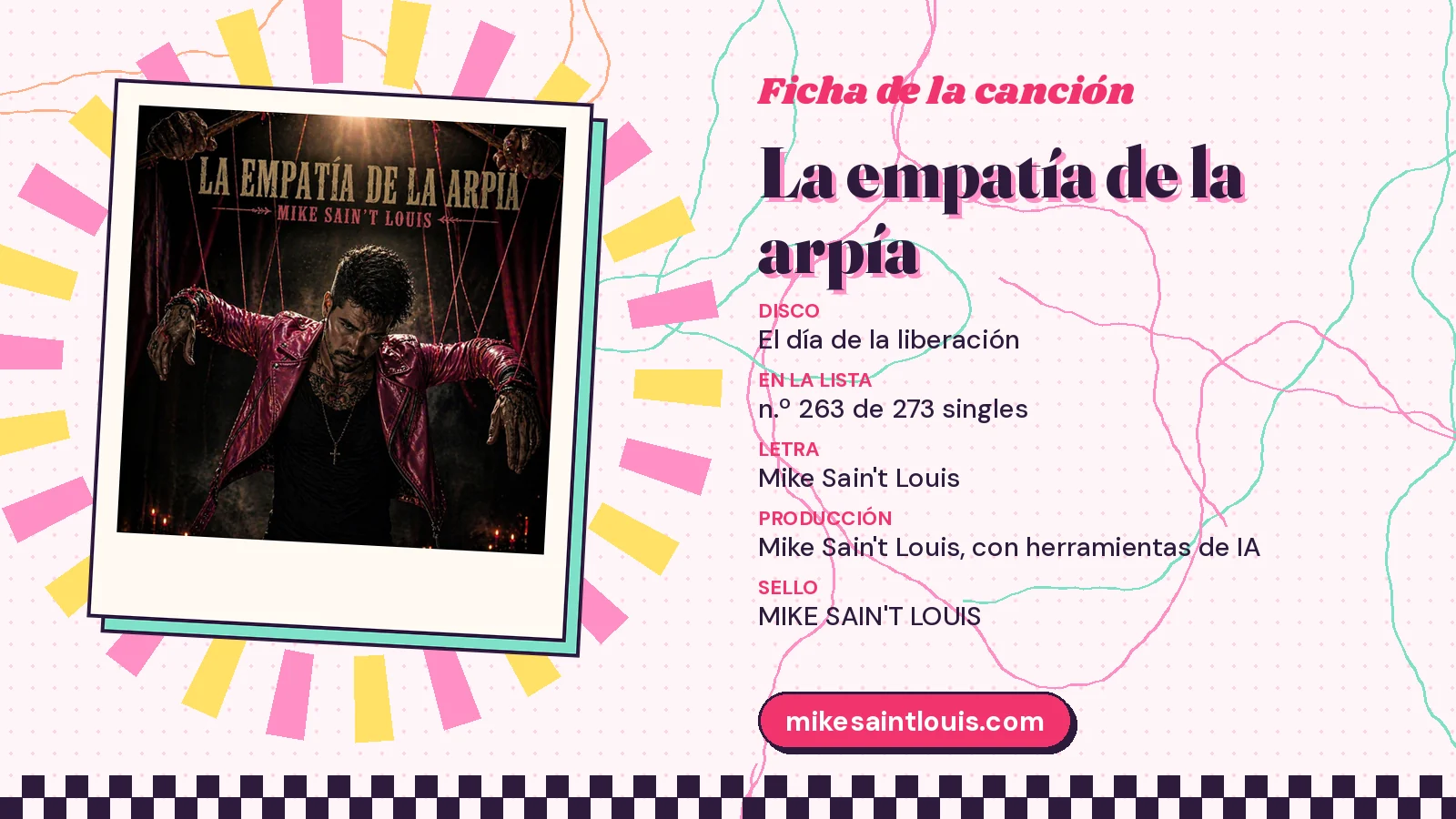
There's a song of mine in which almost everything happens somewhere you can't see. It's «La empatía de la arpía», the harpy's empathy, and it's about someone who smiled at you while doing something very different. The lyric sums it up like this: it's the story «De la sonrisa que fingía / Mientras por dentro te escupía», of the smile they faked while inside they spat at you. (The full lyric is on gayfolkplanet.com.)
What strikes me when I reread it is that the harm isn't in a verb or an adjective but in a word of place: dentro, inside. Outside, a smile. Inside, spit. The whole song is built on that border, as if the person were a house with a spotless façade and a basement nobody goes down to.
Since I noticed that, I see words of place all over my lyrics. Dentro, fuera, entre, bajo, encima, detrás, delante, lejos, aquí, ahí: inside, outside, between, under, on top, behind, in front, far, here, there. They're small words, the kind school grammar puts in a list to learn by heart, and yet they're the ones that do the most work in my songs when I want to say how I feel without saying it directly.
This piece is about those words. Not about the house or its rooms, which have come up in other pieces, but about the prepositions and adverbs that place things in space, and about why mood is so often told as if it were a place.
Por dentro and por fuera: the harpy's border
I'll start with the most important pair. Dentro and fuera, inside and outside, look like simple words, but in Spanish they do something curious: when we put por in front of them, they stop talking about places and start talking about people. Por dentro estoy roto, inside I'm broken. Por fuera parece tranquilo, on the outside he seems calm. Nobody thinks of a container when they hear that; they think of someone hiding something.
In «La empatía de la arpía» por dentro appears twice, and both times it's a betrayal. The first is the spitting. The second comes a few lines later: «Te miraba con ternura / Mientras por dentro te vendía», they looked at you tenderly while inside they were selling you out. The look is outside, in plain view. The selling out is inside, where it can't be seen. And mientras, while, joins the two in the same instant, which is what hurts most: it wasn't affection first and betrayal later, it was both at once.
I've already written about this song from another angle in «La gente que toma notas», about empathy used as a weapon. Here I'm interested in geography. The harpy in the song is someone with two zones: a public one and a private one. And whoever loved them spent years in the public zone without knowing the other existed.
The funny thing is that in other lyrics por dentro doesn't belong to the harpy but to me. In «Voy a olvidarme de ti» there's a fire «Que por dentro a mí me quema», that burns me inside. In «Tu mendigo», what looked calm from the outside «por dentro era tormento», was torment inside. In «Dark Corners» there's a «Pero por dentro no hay más gas», but inside there's no more fuel, the image of an empty tank. The same por dentro serves to hide poison and to hide pain. It depends on who's saying it.
And then there's fuera, outside, which in my lyrics is almost always a way out: out of my sight, out of my house, out of the problem. If inside is where things are hidden, outside is where you can finally breathe.
Entre: the preposition that traps you
If I had to choose the saddest preposition in my lyrics, I'd choose entre, between or among. It seems neutral, because it's used for things as dull as «between Monday and Tuesday», but as soon as you put it next to something that surrounds you, it becomes a cage.

The clearest case is in «Entre cuatro paredes», whose title already says it all: «Y estoy sólo entre estas cuatro paredes», and I'm alone between these four walls. Between four walls isn't the same as in a room. In a room you can be comfortable. Between four walls you're trapped. The preposition turns the space into an enclosure. There's already a whole piece on the loneliness of that song, «Siempre apartado entre tanta gente», so I'll just point out the grammar: the same entre appears in the next line applied to people, and the crowd works just like the walls. Being among people who don't see you is another way of being shut in.
But entre can also be a gap something escapes through. In «Canguros» there's a «Saltando entre galaxias», jumping between galaxies, which is pure freedom: entre no longer traps but marks the path from one place to another. And in «La noche no es para mí» there's an «Entre lo incierto y la realidad», between the uncertain and reality, an entre of borders, of having a foot on each side without knowing where to stand.
I like that a single preposition can be a prison, a springboard and a tightrope. It all depends on what you put on either side.
A room with no way out: the space that promises and lies
I'm going back to «La empatía de la arpía», because it has the line about place that impresses me most in all my lyrics: «Prometía ser refugio / Y era una habitación sin salida», they promised to be a refuge and were a room with no way out.
There's no preposition of place here in the strict sense, but the whole line is space. A refuge is a place you flee to in order to be safe. A room with no way out is a place you can't flee from. The same person promised to be the first and turned out to be the second. And what seems brutal to me is that the change isn't noticeable until you try to leave.
In «Tu mendigo» there's an almost twin image, addressed to someone who opened the door with a borrowed key: «y dijiste que era mi refugio, / pero era una celda alquilada», and you said it was my refuge, but it was a rented cell. Refuge again, and the trap again. I realise that when I talk about relationships that hurt, I keep returning to that broken spatial promise. I don't say you lied to me, I say you offered me a place and the place wasn't what it seemed.
I think that's why these images work. We all know what it's like to go into a place and not be able to get out, even if it's a stuck lift or a bathroom with a broken latch. That physical anguish is what carries over into the lyric. You don't need to explain psychological abuse in technical terms if you can say: it was a room with no way out.
If you've ever felt like that inside a relationship, whether with a partner, a friend or family, you're not exaggerating and you don't have to get out alone. In Spain you can call 024, free and confidential, at any hour, if you're going through a bad time emotionally. If there's immediate danger, 112. If you live outside Spain, look for your country's crisis line or call its emergency number. Asking for help is looking for the door the other person told you didn't exist.
Bajo and debajo: the light that falls from above
Bajo, under, is a preposition that in my lyrics almost always comes with light. Under the moonlight, under the sun, under the sky. And that makes sense, because what's above us, the sky, the moon, a lamp, is what lights us and at the same time what exposes us.
In «El castigo más duro» bajo is dramatic: I compare myself to a vampire crying «bajo la luz de la luna», under the light of the moon. It's a horror-film image, the kind I love so much, but also a way of saying that even when you cry somebody is watching. The moon as a spotlight.
In «Mentes diabólicas» bajo becomes philosophical, in a phrase the song itself puts in inverted commas as if it were an aphorism: «Bajo el sol somos iguales, en la sombra se disfrazan», under the sun we're equal, in the shade they wear disguises. There, under the sun is the public light, what can be seen, and the shade is the harpy's inside. It's the same border as at the beginning, but told with the sky instead of the body.
And in «Verde» bajo is pure party: «Rumba y risas bajo el cielo sin fin», rumba and laughter under the endless sky. There's no surveillance or drama, just a huge open ceiling. Under the endless sky is the opposite of between four walls. It's limitless space where you can finally move.
The difference between bajo and debajo, by the way, is subtle but real. Bajo is the preposition, more literary: bajo la lluvia, bajo control, in the rain, under control. Debajo is an adverb that needs de to take a complement: debajo de la mesa, under the table. We say bajo la luna but debajo de la cama. The first sounds like a poem; the second, like home.
Encima: what runs over you and what piles up
Encima is my favourite word of place, because in Spanish it has two lives. One is about place, being on top of something. The other is about addition, «and on top of that, to cap it all». And in my lyrics the two lives get mixed.
In «Garrafón de China», after a night of bad drinks, the hangover is described like this: «Ahora me ha pasado por encima un camión», now a lorry has run over me. It's the literal encima: a lorry crushing you. But the expression is already a set phrase for being wrecked, which is why it works in a comic song. Nobody imagines a real lorry; everyone recognises the feeling.
In «Spoiler», on the other hand, encima is the «to cap it all» one: «Y encima ofendido me gritas», and on top of that you shout at me, offended. Here nothing is on top of anything. Encima adds one offence to another, like someone stacking dirty plates. And it's a perfect word for indignation because it contains the idea of weight: each thing the other person does is placed on top of the last, until the pile falls over.
It amuses me to think those two lives of encima are related. When something is on top of you, it weighs. And when one bad thing is added to another, that weighs too. The language turned physical weight into moral weight, and now we say encima without realising we're describing a mountain of grievances.
Sobre and tras: the prepositions that stayed in books
There are two prepositions of place that hardly appear in my lyrics, and I think their absence also says something. They're sobre and tras.
Sobre means on or on top of, but it sounds more formal. We say el libro está sobre la mesa in an exam and el libro está encima de la mesa in the kitchen. In everyday speech, sobre has specialised in something else: the topic. A piece about loneliness, a song about an ex. It has stopped placing objects and started placing ideas. That's why, when I write a lyric, I almost never use it for places: what comes out is encima, the street word.
Tras is rarer still. It means behind or after, and today it's used mostly in newspaper headlines and written texts: tras la reunión, tras el accidente, uno tras otro, after the meeting, after the accident, one after another. In a bar conversation nobody says tras la puerta; they say detrás de la puerta, behind the door. Tras has stayed a newspaper word, a word of reports and official statements.
I find it revealing that my songs almost always choose the colloquial version. Encima instead of sobre, detrás instead of tras, debajo instead of bajo when I'm talking about household things. The lyrics talk the way I talk when I'm angry or laughing, not the way I'd write a report. And in that register, the cultured prepositions sound like a disguise. If the harpy in the song smiled tras una máscara, behind a mask, it would be a poem. Because she smiles while spitting at you inside, she's a person you might know.
Detrás and por detrás: the place of those who gossip
Detrás, behind, is the preposition of suspicion. What's behind can't be seen, and what can't be seen may be plotting something.

In «No quiero otro novio cojín» the most classic expression appears: «A criticar por detrás», off to criticise behind people's backs. Criticar por detrás, hablar por detrás, are phrases everyone understands as talking about someone when they're not there. And what's interesting is that the language treats it as a matter of position in space. It doesn't say criticise in secret, it says criticise from behind, as if gossip were a dagger that can only be thrust from the back.
In «Como en la matanza de Texas» detrás is even more horror-film: «llega el vampiro emocional detrás», the emotional vampire comes up behind. The one who comes from behind is the one chasing you, the one you don't see coming. The whole horror genre is built on that: the danger is always behind the victim, and the audience sees it before she does.
There's a grammatical issue with detrás that always comes up in language debates: whether you can say detrás mío, literally behind mine, or must say detrás de mí, behind me. Grammars recommend detrás de mí, because detrás is an adverb and the normal complement is de plus a pronoun. But detrás mío is heard everywhere, especially in Latin America and increasingly in Spain, and although the educated norm advises against it, the Academy acknowledges it's very widespread. The same happens with delante mío, encima mío or cerca mío. I find it fascinating that people feel the need to turn place into possession: not behind me, but behind mine, as if the space behind me belonged to me.
Delante: the place of those who perform
If behind is the place of those who gossip, delante, in front, is the place of those who perform. What's done in front of someone is done so they'll see it.
In «No te vuelvo a mirar más» there's a line that's pure theatre: «Ahora lloras delante de los que no saben nada», now you cry in front of those who know nothing. Delante de turns the crying into a show. You don't cry alone, you cry before an audience, and that audience is chosen: those who know nothing, those who'll believe the crier's version.
I love how delante unmasks. If it said now you cry, it would be a compassionate line. By saying in front of those who know nothing, it becomes an accusation: you cry for them. The preposition of place is what changes the moral meaning of the sentence.
And this connects with the harpy from the beginning. What the harpy does in front of you is smile; what she does inside is spit. What the ex does in front of others is cry; what he did before, when nobody was watching, is another story. In front and behind, outside and inside: they're the two faces of the same person.
Lejos and desde lejos: the distance that heals
There's one word of place that in my lyrics is almost always good news: lejos, far away.
In «El descarte del narcisista» it appears as a wish: «mejor, más vale que estés lejos», better, you'd better stay far away. It's the far away of someone who has understood that distance is the only thing that protects. It doesn't ask for revenge or explanations, it asks for kilometres.
And when lejos goes with desde, from, things change again. Desde lejos, from afar, no longer says where the other person is, but where I am. Looking at something from afar means having got out of it. Being able to see it whole, with perspective, without it dragging you along. The distance you suffer at first becomes, with time, a viewpoint.
I think many of my songs are, deep down, attempts to move from inside to from afar. They start with someone trapped in a room with no way out, between four walls, burning inside, and end with someone looking at all that from outside and able to name it. Writing the song is, in a way, that movement.
Aquí, ahí, allí: pointing with your finger
The most basic adverbs of place in Spanish are aquí, ahí and allí, and they form a three-way system not every language has. Aquí is where I am. Ahí is where you are, or nearby. Allí is far from both of us. English gets by with here and there; Spanish is more precise.
Grammarians call these words deictics, from the Greek deiknymi, to show. They're words that mean nothing on their own: aquí isn't any specific place until somebody says it and points. That's why they're so useful in songs, which are texts said by someone from somewhere.
In «Me rindo» aquí is the place of comfort, in a memory: when the other person used to say «ven aquí, no llores», come here, don't cry. It's an aquí of hugs, of physical closeness, which the song remembers bitterly precisely because it's gone. The aquí that used to be a refuge is now something else.
And in my lyrics ahí is usually the one of the door, of pointing someone to the exit. There's the door, you stay there, that's where you stay. Ahí places the other person at an exact distance: not as close as aquí, not as far as allí. One step from the exit.
The lovely thing about deictics is that they force the listener to imagine the place the speaker is talking from. If someone says aquí, you have to stand beside them to understand. A song full of aquí is a song that invites you to stand where its writer stood.
Space as a metaphor for mood
After all this I wonder why we talk about mood so much with words of place. Why we're sunk, on the floor, at rock bottom, beside ourselves, down a well or in a room with no way out.
Some linguists have studied exactly this. Leonard Talmy, for example, devoted much of his work to how languages encode space and motion, and how those spatial structures are used to talk about things that aren't spatial. George Lakoff and Mark Johnson, in a 1980 book I already mentioned in the piece on comparisons, talked about orientational metaphors: good is up, bad is down; the intimate is inside, the alien is outside.
The underlying idea is that we think with the body. Before we have words for sadness, we have the experience of lying down, of not being able to get up. Before we have words for betrayal, we have the experience of someone attacking us from behind. Prepositions of place are the bridge between what the body knows and what the mouth says.
That's why I don't think it's a coincidence that my hardest lyrics are so full of space. When something is too complicated to explain, I put it somewhere. Inside. Between four walls. Behind. And by placing it, somehow, I understand it.
Getting out of the room with no way out
I'll finish where I started, with «La empatía de la arpía». The song doesn't tell you how to get out of that room. It only describes it. But describing it is already a way out, because to see a whole room, with its walls and its missing door, you have to be a little outside it.
I think that's what words of place do in my songs. They let me draw the map of something I lived through blind. Where the false refuge was. Where the spitting was hidden. Who cried in front and who gossiped behind. And by drawing it, the map stops being a trap and becomes a plan with an exit marked.
If you want to look for more insides and outsides in my songs, all the lyrics are in the archive. And if you're in a room like that right now, remember that the exit exists even if someone has convinced you otherwise: 024 in Spain, 112 if there's danger, and your country's line if you live abroad.
Frequently asked questions
What's the difference between bajo and debajo? Bajo is a preposition and goes directly with the noun: bajo la lluvia, bajo la luna, in the rain, under the moon. Debajo is an adverb and needs the preposition de to take a complement: debajo de la mesa, under the table.
Is it detrás mío or detrás de mí? The educated norm recommends detrás de mí, because detrás is an adverb complemented by de plus a pronoun. Detrás mío is very widespread in speech, especially in Latin America, but is considered colloquial.
What are deictics? Words whose meaning depends on who's speaking, when and where, such as aquí, ahí, allí, hoy or yo, here, there, today or I. The term comes from Greek and means to show or point.
What does por dentro mean in a song lyric? With por, dentro stops indicating a physical place and refers instead to what a person feels or hides, as opposed to what they show por fuera, on the outside.
In which song does Mike Sain't Louis say something was a room with no way out? In «La empatía de la arpía», which describes someone who promised to be a refuge and turned out to be a room with no way out.
Where can I get help if I feel trapped in a relationship that hurts me? In Spain, call 024, free, confidential and available 24 hours a day. If there's immediate danger, call 112. Outside Spain, contact your country's crisis line or emergency number.
Who writes these songs? Mike Sain't Louis, a lyricist, composer and music producer from Madrid, the first AI songwriter. The music and the vocals of his songs are made with artificial intelligence.