
By Mike Sain't Louis ·
The shortest word in the title: why «Sí, soy una puta» begins with «sí»
Sí.
That's all of it. Two letters, an accent and a comma. Before the big word arrives, the important thing has already happened.
The title of this song is «Sí, soy una puta», "Yes, I'm a whore", and almost everyone who reads it gets stuck on the last word, the noisy one. Naturally. Big words exist precisely so you won't notice the small ones. But I spend my life placing words, and I know the one in charge here is the first. This piece is about that one.
The insult arrives by itself
Some insults nobody needs to say out loud. Looks say them, silences say them, other people's jokes laughed at a touch too loudly say them. Puta is one of those. You first hear it in the school playground, pinned on a girl who kissed two boys on the same trip. You hear it later on the gay scene, pinned on a lad who's had more than three dates in a month. You hear it in the family, in a whisper, when talk turns to the cousin who moved in with her boyfriend without getting married.
It's always the same manoeuvre: someone lives their desire freely and someone else slaps a label on them to make them stop.
My song doesn't argue with the label. It doesn't say "I'm not". It doesn't say "so what if I were". It says "yes". That changes the whole conversation.
Three ways to answer
When someone calls you something meaning to wound, you have roughly three ways out.
The first is to deny it. "I'm not that." It's the commonest and works worst, because by denying it you accept that the word is bad and that you ought to be ashamed if it fitted. The insult wins even if you win the trial.
The second is to hit back. "Well, look who's talking." Sometimes it works, especially in a row at the bar, but it pulls nobody out of the mud. You both end up rolling around in the same word.
The third is the one the song chooses: owning it calmly. "Yes, I'm a whore." Head up, no shouting, in the same tone you'd use for "yes, I'm from Madrid" or "yes, I like cheese". That's the one that disarms. Whoever wanted to hurt you is left holding the insult, like someone who turns up at a party with a present and finds out you've already got two.
The text that comes with it
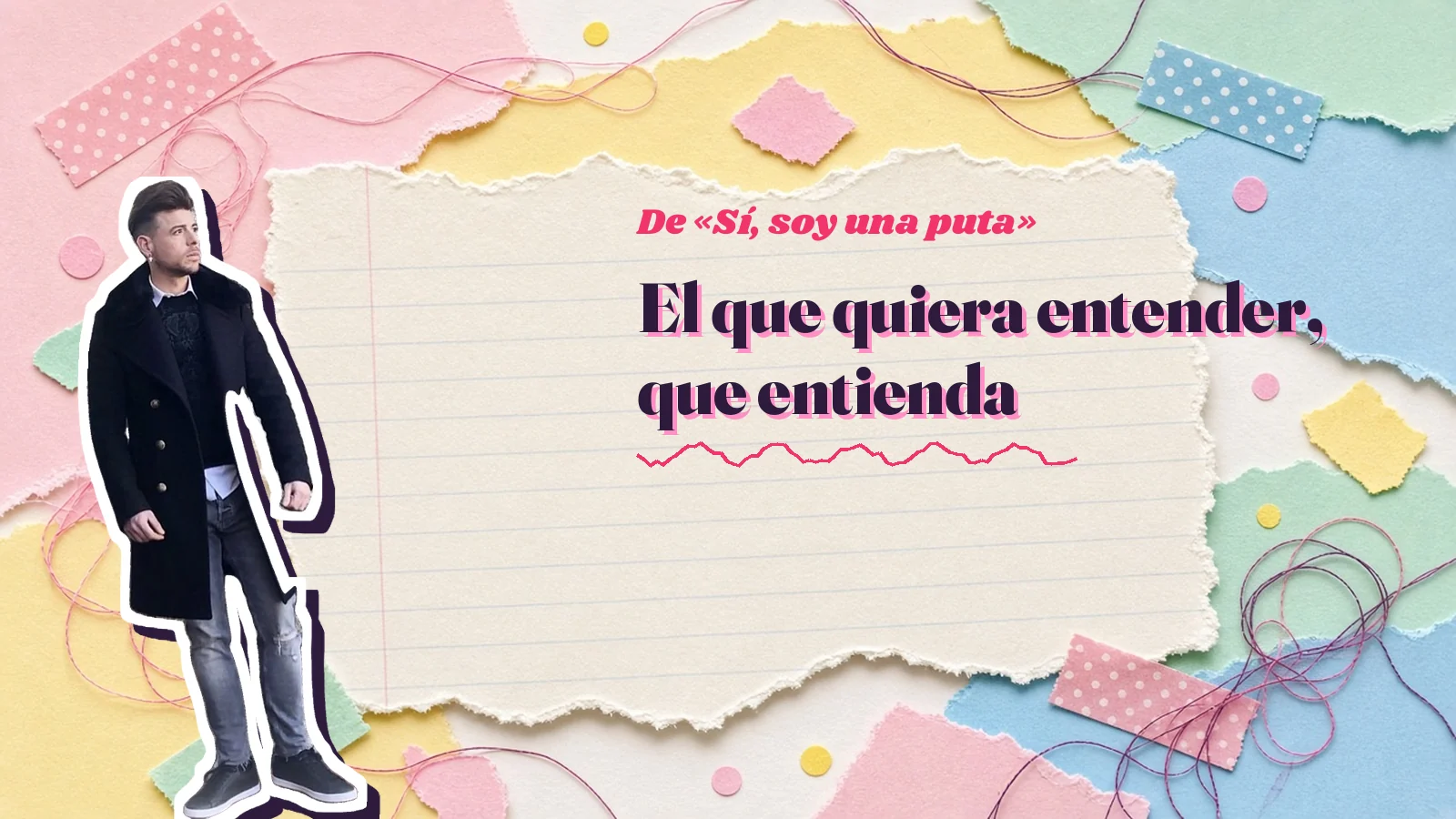
On this song's lyrics page, at gayfolkplanet.com/letras, there are no verses in the usual sense. There's a short text explaining the intention, and I'll borrow two sentences from it because they sum it up better than I could now. One says: «No busco simpatía ni disculpas», "I'm not after sympathy or apologies". The other closes the text: «El que quiera entender, que entienda», "Whoever wants to understand, let them understand".
The first sentence explains the tone. It isn't a song for anyone to hug me or agree with me. It isn't a sob. It isn't a manifesto with a placard. It's a statement that expects no reply.
The second is an age-old saying, the kind ladies use in the fishmonger's queue when they're dropping a hint aimed at the neighbour. I put it there because the song works just like a pointed hint: it explains nothing, it just lets it drop. If you get it, fine. If not, carry on.
What others repeat without thinking
In the same text I say it's my way of handing back what others repeat without thinking. That "without thinking" is the key.
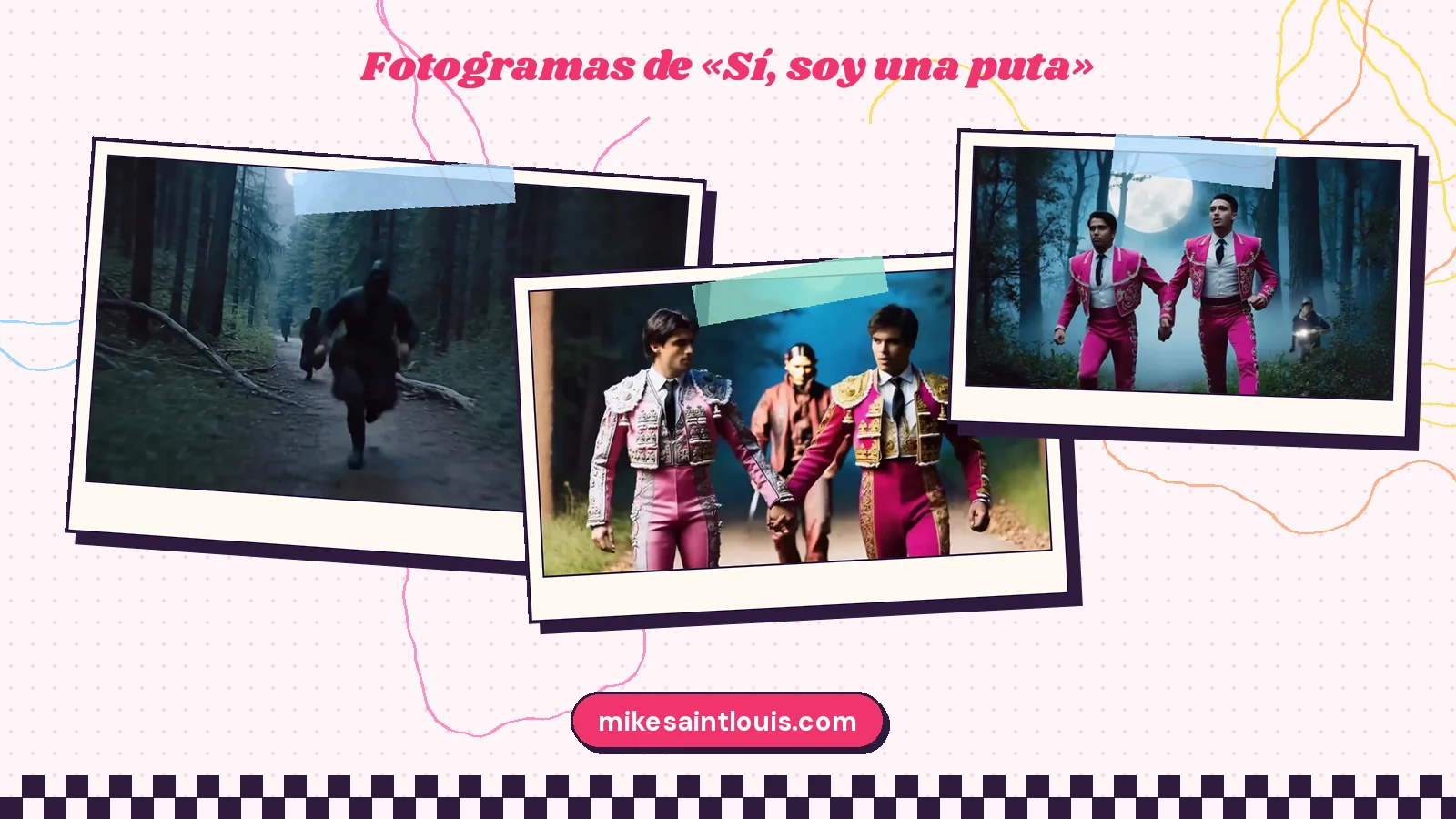
Most people who use puta to judge have never thought about what they're saying. They repeat it because they heard it. Because their mother said it about the woman on the fifth floor, because in the school changing rooms it was the word for girls who were too popular, because on Grindr there are profiles asking for "no sluts" as breezily as they ask for "no fems". It's an inherited word, like an ugly dinner service nobody dares throw out.
Handing it back isn't hurling it in anyone's face. It's showing them they've dropped something. "Here, this is yours. I've no use for it at all, but you might like to know what you're carrying in your bag."
The family of stolen words
This song has sisters on the blog. The closest is cateto: from insult to banner, where I explain how a word used to sneer at country folk, roughly "bumpkin", became the title of my song that took off on TikTok. The mechanism is the same, but the tone differs: «Tan cateto» is a party, «Sí, soy una puta» is a reply.
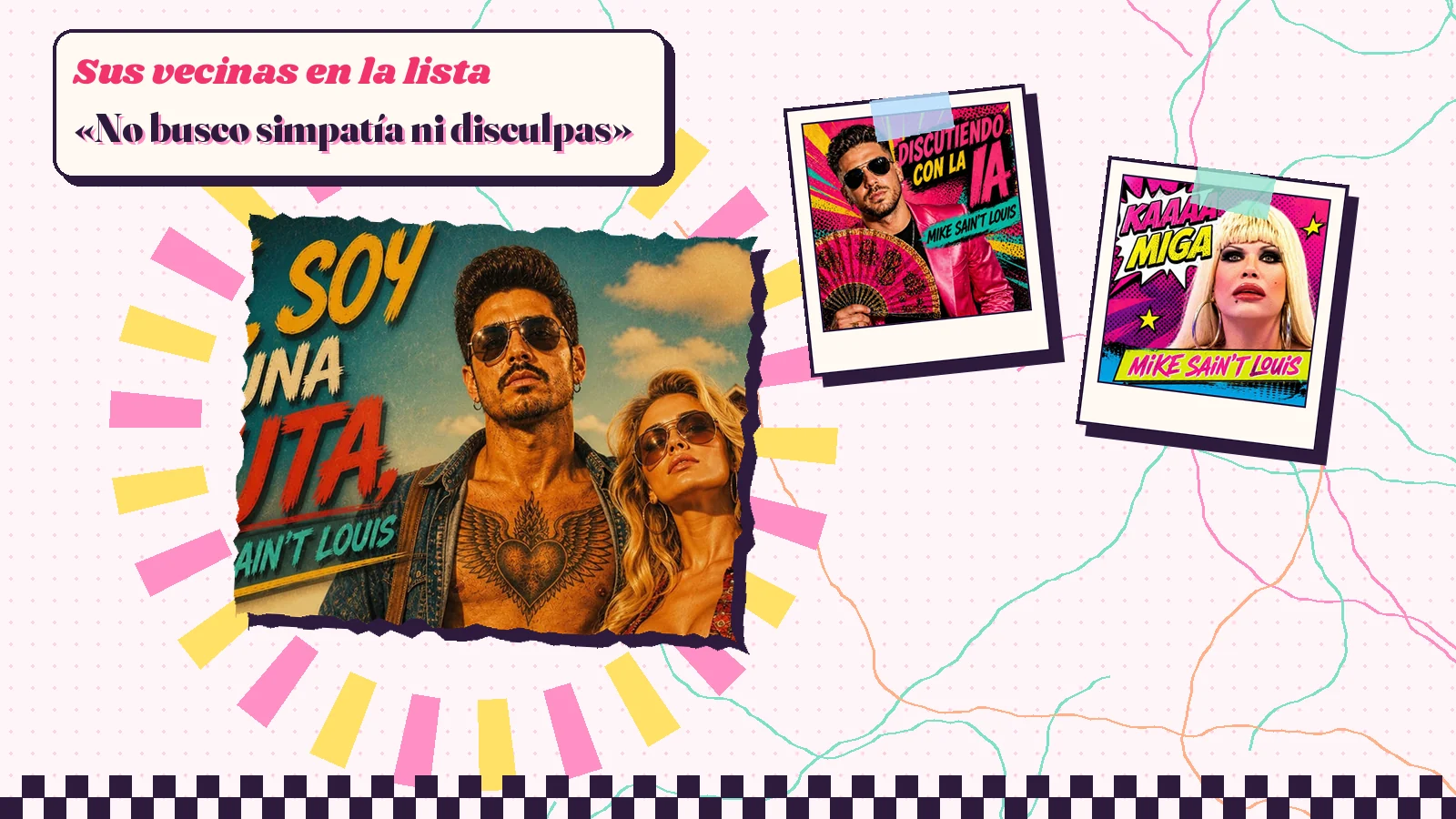
My catalogue has more words like that. Marica, maricón, loca, pluma: the Spanish arsenal of words for queer and camp. I use them with affection, as reclamation or as a dart, but never neutrally. In «Discutiendo con la IA», for example, the insult flies back at whoever looks down on me:
«Hija mía si usar IA es / dar a un botón / hazlo tú maricón» "Darling, if using AI is / just pressing a button / you do it, faggot"
There maricón is a dart sent back. In other lyrics it's a caress. Same word; different intention.
Stealing words from the enemy is one of the loveliest traditions in queer culture. I talk about it in from being laughed at to laughing for ourselves: for decades gay men appeared on television as other people's punchline, and little by little we learnt to tell the joke ourselves. Keeping the word they throw at you is the smallest version of that gesture. You don't need a TV show. A "yes" will do.
The ranch and the windmill
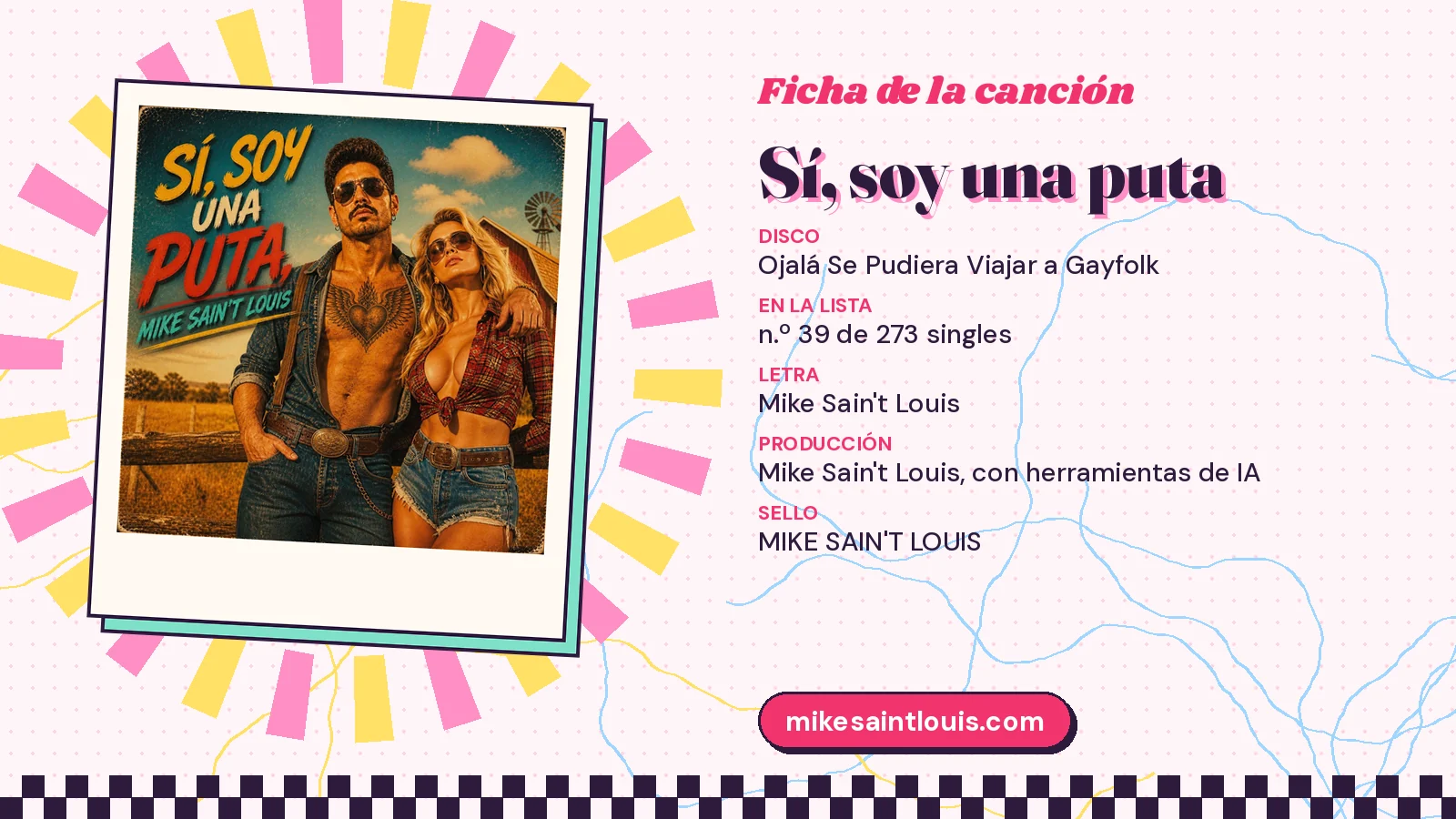
The cover is the last thing you'd expect for a song with this title. A ranch in blazing sun, with a red barn, a wooden fence, a windmill in the background and clouds out of a breakfast-cereal advert. In front, a couple: him in an open denim shirt, aviator glasses, tattoos and a big-buckle belt; her blonde, in a gingham shirt knotted at the navel and denim shorts. The title is in yellow, red and blue, in county-fair poster lettering.
It looks like the cover of a country album from an American petrol station, the kind sold on a spinning rack next to the chocolate bars. And that's what amuses me: country is the genre of traditional morality, of family, God and the tractor. Putting a line like «Sí, soy una puta» there, in that set dressing of good old values, is like hanging a poster of La Veneno (Spain's legendary trans icon) in the village church.
And there are two of them, him and her. Not a boy alone, nor a girl alone. The word touches them both, because both have had it thrown at them at some point. Women have carried it for centuries. Gay men carry it the moment we live our sex lives without asking permission. The cover puts them both in the same photo, with the same "so what?" face.
A hard-working comma
Back to grammar, because I feel like it.
The comma after «sí» is a pause. Take it out, «Sí soy una puta», and the sentence becomes a rushed confession, like someone blurting it out because they can't hold it in any longer. With the comma, the sentence breathes. First you answer. Then you explain. "Yes. I'm a whore." There's a moment in between when the other person doesn't know what's coming, and that disarms them even more.
Then there's the verb. Soy, not estoy. Spanish has two verbs for "to be", and the difference matters a great deal: estar is temporary, ser is identity. When someone says estás hecho un putón, "you've turned into a right slapper", they mean a phase, a streak, something you'll grow out of. When the song says soy, it turns it into a mark of identity. Not a bad patch. A way of being in the world, chosen and owned.
I could have written "yes, sometimes I behave like…". It sounded like a lawyer. Soy is shorter and has more swagger.
*Una*, in the feminine
One more grammatical detail, the last, I promise. The title says una puta, feminine. Not un puto.
You might think it's because there's a woman on the cover, or because the classic insult is feminine. But there's more to it. Among gay men, the feminine is practically a language of its own. We call each other "she", la loca, la Mari, tía ("girl"), and nobody doubts for a second that we're men. It's a very old identity game, older than social media, from the days when everyone in the gay bars had a feminine nom de guerre.
Una puta, said by a gay man, slips the sentence into that language. It's no longer just the label they stick on you: it's how you name yourself among your own. With the feminine article, the insult puts on its camp finery. And with camp, as you know, everything hurts less and sparkles more.
Besides, un puto sounds like something else. It sounds like a curse, un puto lunes, "a bloody Monday", un puto atasco, "a bloody traffic jam". The joke would have been lost.
Silence answers too
On the song's page I say it's a good song for after someone has made a comment you didn't ask for, for replying without opening your mouth. I stand by that. And I want to add something: the silence a "yes" produces is very different from the silence of shame.
When you're ashamed, you go quiet because you've no answer. When you own it, the other person is the one who goes quiet. The conversation is left dangling and nobody knows how to carry on. That awkward silence, lasting two seconds, is a small victory. The kind that never makes the news but has you walking home a little straighter.
If the song's page is the quick version, this is the version under a magnifying glass.
*¡Qué puta eres!*
There's one use of the word everyone in Spain knows and that almost never comes up in the debates: the girlfriends' use.
¡Qué puta eres!, said with a cackle on a terrace when a friend tells you how she slipped a fib past her boss or bagged the last ticket for the gig. There puta means clever, crafty, resourceful. Something like "you sly minx". It's almost a compliment. And among gay men, don't get me started: ay, qué puta, la muy puta, puta ama ("absolute queen"). There's a tone for everything, and nearly all of them are affectionate or admiring.
That double life of the word interests me because it proves it has no fixed meaning. The tone gives it meaning, and the mouth that says it, and the hand that goes with it. The same word that was a stone thrown in the playground is a hug on the terrace in the square. The song plays in between: it takes the stone and says it in the terrace tone.
That's why the text alongside the song talks about mala leche fina, refined sharpness. Not the sharpness of a fight. The sharpness of a friend who pinches you with a smile. Of someone who knows she's right and has no need to shout.
The word is also a trade
And now something serious, no joke, because it's called for.
The word isn't only an insult. It also names a trade, and there are women, men and trans people who work in it and who carry the word for real, with all the legal, social and family weight that brings. For them the word is neither a metaphor nor a reclamation game. It's their life, with its risks.
My song doesn't speak for them and doesn't pretend to. It's about the moralising use of the word, the one hurled at anyone who sleeps around freely. But I don't want the song's "yes" to sound as though I'm pinning on a medal that others wear without having chosen it. If someone who does that work hears the song and enjoys it, I'm glad. If it bothers them, I understand.
There. Said once, without frills.
"No sluts"
Back to the apps, because there the word has a very specific and very hypocritical use.
Anyone who's opened Grindr has seen profiles with demands that read like a residents' association rulebook. No camp. No over-forties. No fatties. And sometimes, no sluts. The beauty of it is that many of those lists are written by men online at four in the morning looking for exactly what they condemn.
That contradiction is first-class comedy material. The bloke who calls you a slut for having an active sex life while he's got three chats open with strangers and a plan for Saturday. I don't say it bitterly; I say it with the smile of someone who's seen the same scene a thousand times on a thousand screens. Morality, on a phone, lasts as long as it takes for the next message to arrive.
The song doesn't name them. It doesn't need to. They know who they are.
Women first
I said it when talking about the cover, but I want to stress it: women carried this word long before we did. And they still do.
A girl need only wear a short skirt, laugh too loudly in a club or have a list of ex-boyfriends longer than her family thinks decent. A straight man, on the other hand, gets medals for the same list. That asymmetry is as old as the world and still works.
Gay men came into that asymmetry through the back door, as it were. To old-fashioned morality, a man who sleeps with men is already a bit of a puta by definition, and if he enjoys it, all the worse. That's why the song doesn't speak on behalf of anyone in particular. It speaks alongside the couple on the cover, her and him, in the same photo. An alliance of the pointed-at.
It's no accident that many of my role models are women who stood up to the world with a cheek that seems normal now and was scandalous then. La Veneno, whom I paid tribute to in «Kaaa miga», is the first who comes to mind.
When the yes is hard
One more thing, so it doesn't seem easy.
Saying "yes" calmly doesn't come first time. For years, the normal reaction to that word is the opposite: going red, explaining, swearing you're not, changing the subject. The calm "yes" is what's left after a long time turning it over, after many nights thinking about what you should have said. The song is the end of that road, not the start.
So I understand anyone who hears the title and feels a pinch of discomfort. They may still be at the going-red stage. That's fine. It's a stage almost all of us go through. The "yes" will come, or it won't, and that's fine too.
The album of longing
The song is on «Ojalá se pudiera viajar a GAYFOLK» ("If only you could travel to GAYFOLK"), the second album of the trilogy. I call it the album of longing, and I explain why in the grammar of longing. It's an album full of frustrated desire, of wanting to go somewhere and not being able to, of imagining a planet where everything is easier.
It makes sense for this song to live there. On the planet I imagine, nobody would have to answer that word because nobody would use it to judge. Meanwhile, on this planet, the most useful answer I've found is "yes". It's a way of already living a little as you would on Gayfolk, without waiting for the spaceship.
What the song doesn't say
There are things I chose to leave out, and I'm glad.
I didn't want to explain how many times, with whom or how. That's everyone's own business, and the song isn't there to justify any particular life. Nor did I want a named villain, the someone who called me that one day. It would have been easy, and it would have made the song one more score-settling. I'd rather the villain be the word, or rather, the use people make of it.
And I didn't want to apologise for the title. Some think putting something like that on a cover is courting scandal to get attention. There may be a bit of that; I won't play the saint. But if it scandalises, the scandal says more about the scandalised than about me. If you still have doubts about how I work, there are the site's frequently asked questions, and if the answer isn't there, write to me.
Titles you can't say on the radio
My catalogue is full of titles that wouldn't get past an old-school radio station. I talked about that in long and strange titles, though there I focus on the long ones. This is the exact opposite: tiny and emphatic. Four words, and the first has two letters.
I don't know whether it'll ever play on a mainstream station. Probably not. But I didn't write it for that. I wrote it so that someone in their bedroom, phone in hand, with some shitty remark still lodged in them, will see it in a playlist and think: "Look, someone answering the way I wish I had."
That, to me, is worth more than radio rotation.
A "yes" to take away
I'll leave you with an exercise, if you fancy it. Next time someone throws a word at you meaning to make you small, try answering with a calm "yes" before anything else. No shouting. No explaining. Just "yes". And watch their face.
It doesn't always work. Some words hurt too much to own like that, in one go, and there are situations where the wise thing is to leave. But when it works, it works wonders.
Yes. Done. Next.
Frequently asked questions
What is «Sí, soy una puta» about? It's a blunt statement: it takes an insult used to judge anyone who lives their desire freely and owns it with a "yes", without apology. The song's text is at gayfolkplanet.com/letras.
Which album is it on? «Ojalá se pudiera viajar a GAYFOLK», the second album of the GAYFOLK trilogy, Planeta Gayfolk.
What does the cover look like? A ranch in blazing sun with a red barn and a windmill, and a couple dressed as cowboys: him in an open shirt and aviators, her in a gingham shirt and shorts.
Who made it? The lyric, composition and production are by Mike Sain't Louis. The music and vocals were made with artificial intelligence.