
By Mike Sain't Louis ·
Making the other one look crazy: the fan, the ostrich and what people will say
In Spanish we have a very graphic way of talking about scandals. When someone starts airing dirty laundry in every direction, we say they've turned on the fan. The shit flies everywhere, splatters whoever was nearby and whoever wasn't, and there's no way of getting it back in the bag.
One of the songs on my first album has that image in its title, which is also enormously long: «No puedo desenchufar este ventilador que está esparciendo mierda», I can't unplug this fan that's spreading shit. And the published lyric repeats it over and over at the end, with the last word stretched out until the air runs out.
On the song's own page I've already described the scene: the last day, someone who comes home and hides in the other room so as not to have to explain anything. The full lyrics are published. Here I want to dwell on three things the song touches on in passing that deserve much more: the ostrich burying its head, the fear of the truth reaching «toda su gente», all his people, and the oldest tactic in the world when someone gets caught, which is making the other person look crazy.
Before I start, a reminder I always give: the characters in my songs are characters. There are no names here and no need to go looking for any. What matters is the mechanism, because a great many people have suffered it.
Where the fan comes from
The expression has a curious origin. English has long had the phrase «when the shit hits the fan» for the moment everything blows up and the consequences start splattering. In Spanish we've adapted it our own way, and in the press and on talk shows it's used above all for someone who, when cornered, starts spilling everybody's secrets so that nobody comes out clean.
What's interesting is that the song turns the expression around. Normally, whoever switches on the fan is the attacker: the one leaking information to do harm or to spread the blame. Here nobody has switched the fan on out of malice. It's running because the truth has come out, and the truth, once out, has a life of its own.
That's why the title says it can't be unplugged. It isn't that the narrator wants to hurt anyone. It's that stopping what's been set in motion is no longer in his hands. What was known in private starts to circulate, and every turn of the blades carries it a little further.
I love the image because it captures a very particular feeling so well: knowing something that's going to change how other people see someone, and realising you can't control it. Neither to stop it nor to steer it. The fan spins on its own.
The locations
There's a very contemporary detail hidden in the first part of the lyric. The narrator knows everything, «incluso las ubicaciones», even the locations.
Thirty years ago, uncovering a betrayal took something close to detective work. A receipt forgotten in a pocket. A call at an odd hour. A smell that wasn't the usual one. Today a map on your phone screen is enough. Location sharing, the feature so many couples switch on as a gesture of trust, suddenly becomes an exact record of where someone was while claiming to be somewhere else.
Technology hasn't changed lying, but it has changed how long it takes to fall apart. And it has changed something else: the amount of evidence. It's no longer your word against his. There are screenshots, there are times, there are blue dots on a map.
That's why the tactic of making the other person look crazy becomes even more desperate in this context. When the evidence is right there on a screen, the only way out left to the liar is to attack whoever's looking at it. He can't deny the map, so he denies the mind of the person who saw it.
Coward
The song starts with one word. «Cobarde.» Coward.

No preamble. No context. No verse to ease you in. The first word is a verdict, and everything that follows is the case for it.
I love that it opens like that, because that's how those conversations you have with yourself after discovering something really do begin. You don't start with «well, it turns out that». You start with the insult, the word that's burning you, and then, maybe, you put the facts in order.
And the word isn't chosen at random. It isn't «liar», or «traitor», or «cheat». It's «coward». What outrages the narrator most isn't the deception itself but the way it's handled: hiding, keeping quiet, not facing up to it. You can just about understand someone making a mistake. What's hard to forgive is that, once caught, they don't even have the nerve to look you in the eye.
The ostrich
The first image in the lyric is an ostrich. Someone who comes home on the last day and, instead of looking you in the face, slinks off into the other room looking guilty.
There's a fact that tickles me: ostriches don't bury their heads in the sand. It's an ancient myth, going back to Roman times, and it has never been true. What they sometimes do is lower their heads to tend their eggs, or lie flat to go unnoticed. But the image of the buried head has survived for centuries because it describes something humans do constantly: believing that if we don't look at the problem, the problem doesn't exist.
The character in the song does exactly that. He knows he's been found out. He knows the other person knows everything, locations included. And still his strategy is to hide in a room, as if a closed door could stop a conversation that's already unavoidable.
There's something almost childish about that gesture, and the song underlines it later with a comparison I adore: the answers he gave when it all came out seemed to have been dictated by a preschooler. The ostrich and the toddler are two sides of the same coin. Someone who has done something very grown-up, with very grown-up consequences, and reacts like a kid caught with his hand in the biscuit tin.
The silence that protects the façade
There's a detail in the lyric I find very sharp. The character keeps quiet, and not out of shame or respect. He keeps quiet so the shit won't reach all his people.
That «his people» is the key. His family, his friends, his colleagues, the circle in which he's built an image. What worries him isn't what he did, but that it might get out. It isn't the harm he caused that hurts him, it's the harm he might do himself if the story spreads.
It's a very Spanish worry, by the way. «El qué dirán», what people will say. That invisible force that has organised the lives of whole villages, neighbourhoods and families for centuries. What matters isn't being decent but looking it. What matters isn't what happens inside the house but what can be seen from the landing.
And «what people will say» has hit queer people close to home for a long time, but the other way round. We were the ones who had to keep quiet so nobody would find out. We were the secret to be hidden so the family wouldn't look bad. Many of us grew up knowing that, for some, our very existence was a stain that could splatter all «their people».
So there's an irony in the fact that, in this song, the one hiding to protect the façade is the one who lied. The secret to be covered up is no longer anyone's orientation, but a deception. And the silence no longer protects a vulnerable person, but someone who doesn't want to pay for what he's done.
Making the other one look crazy
Now we come to the hardest part of the lyric. The narrator foresees what's going to happen: if the other one has to lie once more, he will. And if, to cover up what he is, he has to make the narrator out to be unhinged, mentally ill, he'll do it without a second thought.
This tactic has a name in psychology. It's called DARVO, an English acronym describing a very recognisable sequence: deny what happened, attack the person who reports it, and reverse the roles of victim and offender. The one who did the harm presents himself as the injured party, and the one who suffered it ends up looking like the problem.
And one of the most effective ways of reversing the roles is the accusation of madness. If the other person is crazy, nothing they say can be trusted. If they're unhinged, their evidence is paranoia, their locations are obsessions, their questions are attacks. The lie doesn't need defending: it's enough to discredit whoever uncovered it.
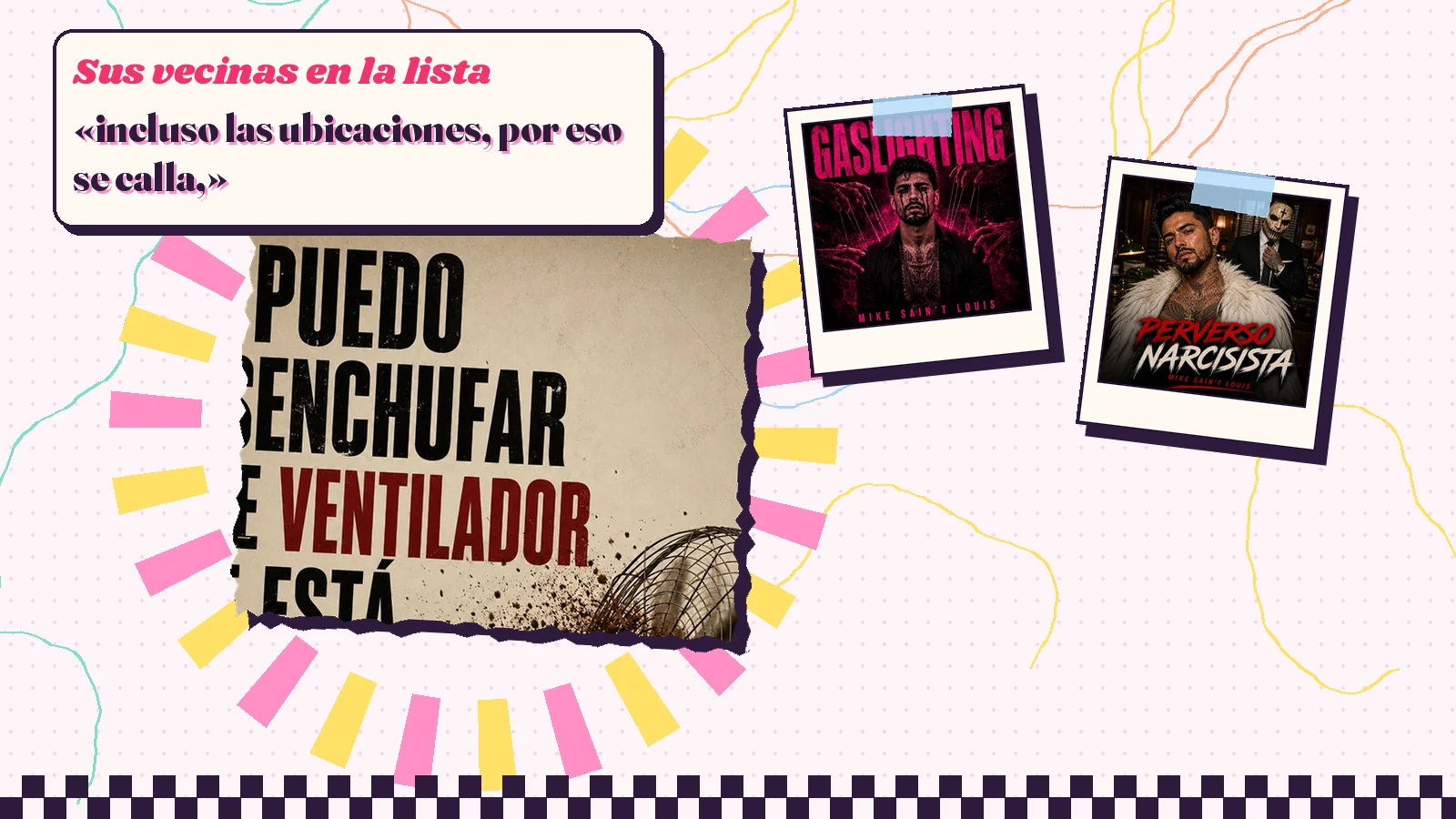
This connects directly with gaslighting, which I deal with in «Gaslighting», and with the portrait I paint in «Perverso narcisista». But here the mechanism is crueller still, because it's no longer about making you doubt yourself in private. It's about convincing everyone else that you're not well. It's gaslighting on a public scale.
An accusation with a history
There's something that makes this part of the song feel especially sharp from a planet like mine, and it's that queer people were officially called mad for a very long time.
Homosexuality was listed as a mental disorder in psychiatric manuals for much of the twentieth century. The American Psychiatric Association removed it from its manual in 1973, and the World Health Organization didn't take it out of its classification of diseases until 1990. Trans identities took even longer to stop being treated as a pathology. For decades, saying someone like us was sick wasn't an insult: it was the official line.
That history leaves a mark. Plenty of queer people have heard, in a family row or a break-up, some version of «you're not well», «you need help», «it's all in your head». Sometimes well-meant. Often as a weapon.
So when the lyric says the other one will paint the narrator as an «esquizofrénico desquiciado», an unhinged schizophrenic, to cover up what he is, to me it sounds like more than a couple's fight. It sounds like a very old device, turning whoever's inconvenient into a patient, applied this time to a single person and a single story.
And the song's response is the best one possible: don't take the bait. Don't set about proving you're sane, which is exactly what the manipulator wants. Tell what happened, name the tactic, and let the fan do its work.
Winning them over
There's a line in the lyric describing something anyone who's been through a break-up like this will know: he'll win them over to his side.

When a relationship ends in deception, the social circle splits in two. And the one who lied usually has the upper hand in that battle, for a very simple reason: he's been preparing for a while. While you're still trying to understand what happened, he's already told his version. He's already rung round the friends, already let slip that «you haven't been well lately», already sown the doubt.
The most painful part isn't losing the partner. It's watching people you thought were close take the other version without asking you. People who look at you with pity or suspicion, who suddenly change the subject when you walk in, who treat you as if you were fragile.
The song doesn't linger on this, but it says it in one line. And that one line holds an experience a great many people have lived through.
Over time, mind you, the sides rearrange themselves. Prepared versions have a problem: they have to be kept up. Whoever lives off a lie has to keep lying so it doesn't collapse, while whoever tells what happened only has to repeat the same thing. In the end, many of the people who took the other side start noticing the cracks. Not all of them come back, and they don't need to. But the ones who do usually come with a very similar sentence: «now I get it». And that sentence, even when it arrives late, is worth a lot.
Preschool answers
Amid all the rage, the lyric has a moment of humour I think is essential. The answers the other one gave when the truth came out were so clumsy that the narrator isn't sure whether a preschooler was dictating them.
That joke does something very important. It strips the manipulator of his evil-genius aura. Because one of the things that does the most damage in these stories is the feeling that the other person was terribly clever, that he fooled you with some cinematic master plan, that you were stupid not to see it. And it turns out he wasn't. When he was asked for an explanation, he stammered out excuses that wouldn't convince a nursery class.
Laughing at that isn't trivialising. It's putting things back where they belong. The liar wasn't a strategist; he was someone who lied badly and got lucky for a while.
Humour is my favourite tool for writing about things that hurt, and I've tried to explain where I draw the line in Hacer humor gay sin hacer daño. In this song the joke isn't aimed at anyone vulnerable. It's aimed at someone who spent the relationship lying and, when caught, couldn't even come up with something half decent.
A lyric like a 3 a.m. WhatsApp audio
The shape of this lyric is very different from almost all my songs. It has no short verses and no obvious rhymes. The first two sections are practically prose: long sentences, full of asides, punctuated like someone talking fast and furious. Then comes the title, repeated a dozen times.

On paper, the first part reads like one of those WhatsApp audio messages sent at three in the morning after discovering something. No pause for breath. Jumping from one idea to the next. Mixing insult with precise observation, the «coward» with the detail about the locations.
And then the chorus, if you can call it that, which is a single sentence that never ends. The repetition captures the feeling of the title beautifully: a fan doesn't stop because you want it to, it keeps spinning as long as it's plugged in. Twelve times the same line is twelve turns of the blades. And the last word, stretched out to infinity in the published lyric, is the sound of air that won't stop moving.
Titles that are whole sentences
This song's title is one of the longest in my catalogue, and it isn't the only one. I have quite a few like it, titles that are complete sentences, almost newspaper headlines or text messages. I talked about the habit in Títulos largos y raros.
A title like that has its pros and cons. The con is obvious: it doesn't fit anywhere, it gets cut off in playlists and it's impossible to remember in full. The pro is that it tells you the song before you hear it. You know from the first second what it's about, in what tone and with how much rage.
In the case of the first album, it also fits the album's own title, which reads like a news story too. I explained that in Por qué el primer disco de Gayfolk tiene título de noticia. «Descubierto un nuevo planeta llamado Gayfolk» (New planet called Gayfolk discovered) and «No puedo desenchufar este ventilador que está esparciendo mierda» belong to the same family: sentences that read like a headline or a scream.
Saying shit in a song
Someone might think there are more refined ways of saying the same thing. That a song about deception and manipulation doesn't need the word «mierda» in its title, repeated twelve times.
I think it does. Spain's Spanish is wonderfully rich in scatological expressions, and almost all of them say something very precise that can't be said any other way. «Spreading shit» isn't the same as «spreading rumours» or «revealing the truth». It has a smell. It has weight. It has the physical feeling of something that stains and won't wash out.
That way of exaggerating everyday speech is very me, and I devoted a whole piece to it: Me muero: la exageración del habla cotidiana española y mis letras. In this song, the exaggeration isn't a joke. It's the exact word for what's going on.
When the fan stops
Every fan stops one day. The power goes, the motor burns out, someone finally finds the plug. And what's left afterwards is a room where everything's a bit of a mess, but where you can breathe again.
The song doesn't get as far as that moment. It stays in the whirlwind, in the twelve turns, in the word that never ends. It's a song about the during, not the after. And I think that's why it works so well for anyone going through something similar: it doesn't promise you everything will be fine, it just keeps you company while the air keeps moving.
If you're at that point, where the truth is out and they're trying to make you look crazy, know this: you're not. What you see is what there is. And even if the fan keeps spinning and people line up on one side or the other, the truth doesn't need you to shout in its defence. It's already circulating.
All the lyrics, this one included, with their invented characters and their rage, are in Letras.
Frequently asked questions
What is «No puedo desenchufar este ventilador que está esparciendo mierda» about? It tells the end of a relationship in which a deception has come to light. The one who lied hides, keeps quiet so his circle won't find out, and gets ready to make the other person look unhinged. The title uses the image of a fan spreading the truth with nobody able to stop it.
What does «turning on the fan» mean in Spanish? It's a colloquial Spanish expression used when someone starts airing dirty laundry in every direction. It comes from the English phrase about the moment «the shit hits the fan», when everything blows up.
Which album is it on? It's part of «Descubierto un nuevo planeta llamado Gayfolk», the first album in Mike Sain't Louis's Gayfolk trilogy, available on Spotify and all the other platforms.
Who makes this song? Mike Sain't Louis, a lyricist, composer and music producer who calls himself the first AI songwriter: he writes the lyrics and directs the production, and the music and vocal performances are generated with artificial intelligence.