
By Mike Sain't Louis ·
"That's not music": Vas a escuchar un disco muy raro and the eternal fear of the new
There's one sentence that has outlived every fashion, every style and every generation. It was said about jazz, rock, punk, Madrid's Movida, reggaeton and trap. It's being said now about music made with artificial intelligence. The sentence goes roughly like this: that's not music, the old stuff was the good stuff.
Vas a escuchar un disco muy raro (You're about to hear a very strange record) laughs at that sentence from its very first line. On the song page I talked about how it feels like a sign at the door of a party and how well it works as an opening track. Here I want to focus on a single line, the one about the troublemaking musicians who don't do things the way they used to, and pull on that thread. Because behind that line there's a very long history of prejudice against the new, and in my case that history is very personal. The full lyrics are published, and they're best read with a smile.
The warning at the door
The song opens with a warning:
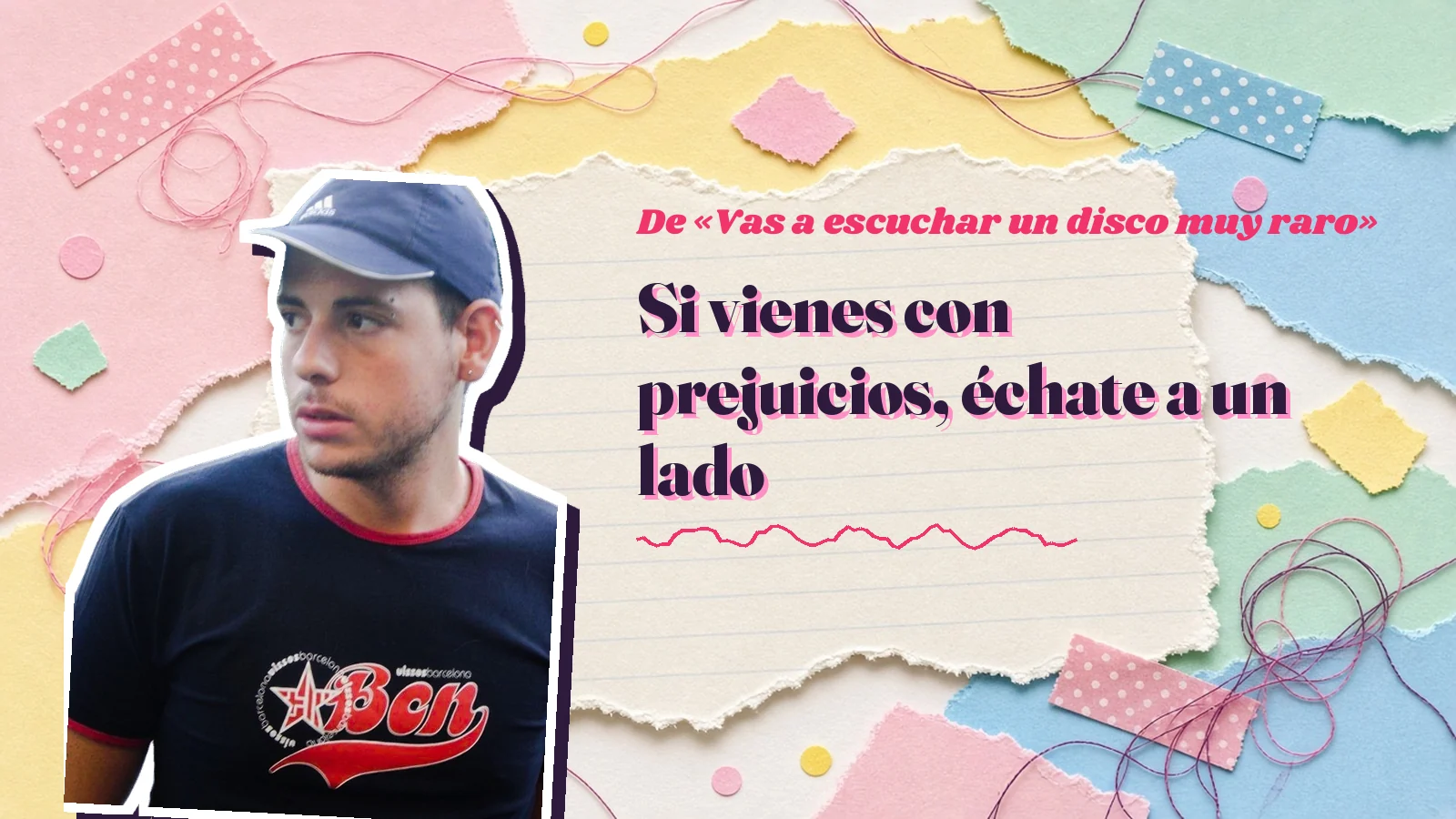
«Si vienes con prejuicios, échate a un lado»
"If you've come with prejudices, step aside." It's a line that works like a nightclub bouncer, only in reverse. It doesn't stop you getting in because of how you look. It asks you to leave your way of looking at the door.
I really like that opening because it sets the rules of the game from the first second. There's no trick. Whoever keeps listening knows they're about to find something different, and if they decide to stay, they do so accepting the deal. It's an honest way to start a record: I tell you what's on offer and you choose.
It's also a bit of a dare. Saying something is very strange is a way of stirring curiosity. Nobody really steps aside when they're told to. On the contrary, they lean in a little closer to see what's so strange that someone was trying to hide it from them.
The complaint that never expires
The central line of the song puts the age-old complaint into the mouth of someone scandalised:
«Esa mierda que hacen no es como la de antes»
"That crap they make isn't like it used to be." Anyone who has sat through a family meal with the radio on knows that sentence. Grandad says it when something comes on that he doesn't recognise. Dad says it, having grown up with other music. And sooner or later we all end up saying it, because it's almost a law of nature: the music we listened to when we were young seems like the good stuff, and whatever comes after sounds like noise.
The funny thing is that the sentence is exactly the same, generation after generation. Styles change, instruments change, the devices we listen on change. The complaint doesn't. It's one of the most solid traditions in popular culture.
Elvis's hips
The history of twentieth-century music is full of scandals that look naive today. When Elvis Presley appeared on American television in the fifties, his hip movements caused such a fuss that in one of his most famous appearances he was only shown from the waist up. Today those images look utterly innocent.
The same happened with rock in general, accused of corrupting young people. And with many other styles afterwards. Each new genre arrived with alarmed articles, worried parents and experts announcing the end of real music. And every one of those genres ended up, over the years, becoming a classic.
That's the irony the song captures without needing to explain it. Today's troublemaking musicians will be tomorrow's classics. And someone, a few years from now, will say that the music of their day isn't like it used to be, meaning precisely what scandalises people today.
The Movida and its critics
In Spain we have our own chapter in this story. In the eighties, Madrid's Movida was received by part of society as an outrage. Bands who could barely play, impossible looks, provocative lyrics. For many, it wasn't music, it was a scandal.

Today the Movida is studied, celebrated in exhibitions and part of the country's sentimental memory. Songs that sounded like noise back then are the ones played at weddings now. Time has a way of turning scandal into nostalgia.
I love thinking that the scandalised auntie in the song might have been, forty years earlier, one of those young women dancing in Movida clubs while her parents threw up their hands in horror. Prejudice doesn't belong to any one generation. It's something we all end up inheriting as we get older.
The auntie who's scandalised
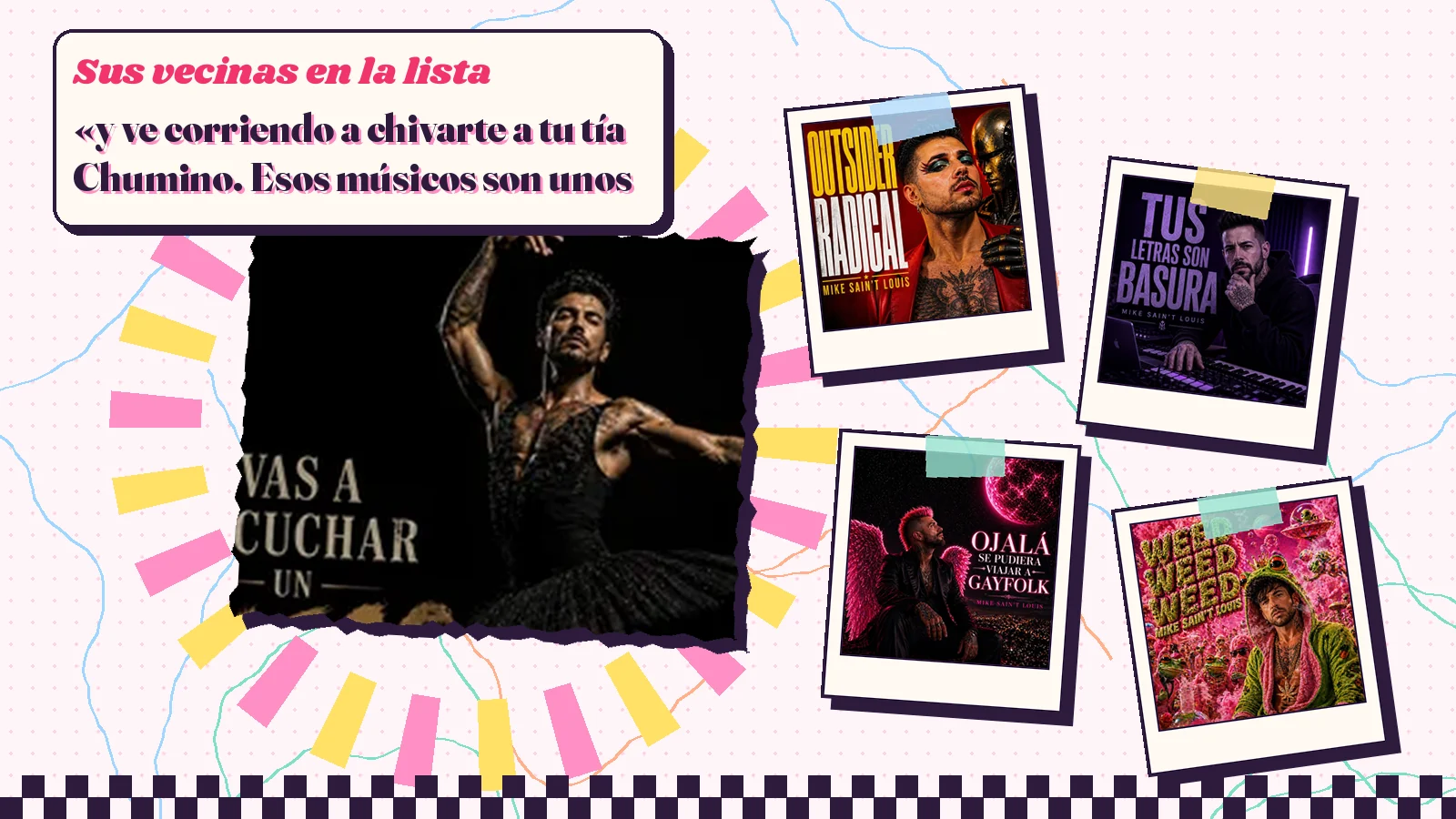
The song has a delightful supporting character: an auntie with an absurd nickname whom someone rushes off to tell tales to. She's an invented character, like almost everyone in my lyrics, but everyone recognises her. She's the wedding auntie, the one who comments on everything, the one who always has an opinion about her nieces' and nephews' clothes, music and habits.
What I like about her is that she never actually appears. All we know is that someone is going to tell her what they've seen. She's more of a threat than a character. The family's moral authority, the person you run to when something steps out of line.
Lots of Spanish families have that figure. The person everyone is a little afraid of, whose opinion counts more than anyone else's, and whose outrage is anticipated with a mix of dread and amusement. The song turns her into a caricature, with a name so ridiculous it's impossible to take her seriously.
Telling tales
The verb the lyrics use is very playground: chivarse, to tell tales, to run and tell a grown-up what the others have done. It's a childish verb, and that says a lot about whoever does it. Someone who tells tales doesn't discuss or argue. They just look for someone with more authority to do the telling-off.
There's a bit of that attitude in a lot of prejudice. New music isn't debated, it's reported. Nobody tries to understand it; it's denounced to a higher authority, whether that's the family, tradition or good taste. The song laughs at that gesture with a verb that reduces it to what it is: a child's tantrum.
And the best part is that the song doesn't defend itself. It doesn't answer the accusation. It just carries on with its party. Whoever wants to tell tales can go ahead, because here the lerele keeps going.
My own strange record
Here I have to talk about something close to home. I make songs with artificial intelligence. I write the lyrics, compose and direct the production, and the music and the vocals are generated with AI tools. For many people, that's exactly the kind of thing that isn't like it used to be.
I wrote it myself in the description of another song in the catalogue, Outsider radical: I've been told many times that using AI isn't art, that what I do doesn't count, that a machine does it. And in that same description I asked a question I still ask myself: why nobody says the same about a painter who uses brushes or a musician who uses a synthesiser.
That's why Vas a escuchar un disco muy raro has a special meaning for me. The troublemaking musicians in the song could be anyone. But they could also be me, with my way of making songs that some people see as cheating and others simply as something new.
The synthesiser was a suspect too
The comparison with the synthesiser isn't random. When synthesisers started to become popular, there were musicians and critics who viewed them with great suspicion. People said they were cold, soulless, that anyone could play them without knowing music. Over time they became just another instrument, and today it's hard to imagine pop music without them.
Something similar happened with drum machines, with sampling, with editing software on computers and even with automatic pitch correction in the studio, which was heavily criticised and ended up becoming an aesthetic device in its own right. Every new tool raises the same suspicion: if the machine does part of the work, is it still art?
I'm not trying to settle that question here. I just want to point out that it isn't new. Every generation has asked it with its own technology. And so far the answer has always depended more on what's done with the tool than on the tool itself.
Your lyrics are strange
Another song in the catalogue talks directly to this one. In the description of Tus letras son basura (Your lyrics are rubbish) I wrote that for years I was told my lyrics were too strange, too intense, too personal. That they didn't fit.
Strange is a word that has been aimed at me many times, and I've ended up adopting it. If something is strange, it means it doesn't look like what already exists. And for someone who writes songs, that shouldn't be an insult. It should be a goal.
Vas a escuchar un disco muy raro turns the word on its head. It's no longer an accusation. It's a proud warning, almost a slogan. Yes, it's strange. And if you don't like it, step aside, there are people behind you waiting to get in.
The lerele
The catchiest part of the song is a word that means nothing and everything: lerele. It comes out of a sound game with another phrase in the lyrics and repeats again and again until it stops being a word and becomes rhythm, handclaps, a party chant.
That kind of filler is very typical of rumba and Spanish fiestas. Syllables that say nothing but that everyone can chant along to. They work as an invitation to join in. You don't need to know the lyrics to join the lerele. You just need to let yourself be carried along.
I think it's a perfect answer to prejudice. Faced with people who say today's music makes no sense, the song replies with a meaningless word repeated eleven times in a row. It's almost a provocation. And at the same time it's the oldest thing in the world, because folk songs have always had choruses like that.
Whoever smokes enjoys it
In the middle of the song there's a kind of made-up proverb that I find very funny: whoever smokes enjoys it and whoever cries, well, they cry. It's built like a popular saying, but it ends with a shrug.
That way of ending sentences, leaving them hanging with a "well, you know", is very typical of spoken Spanish. You don't need to finish the thought; the listener already knows what's coming. And in this case what's coming is a kind of philosophy of tolerance: each to their own, everyone enjoys or suffers as they please.
It's worth saying clearly: the song describes a scene, it doesn't give health advice. There are joints and there's smoke, as in so many popular songs from so many eras, but consumption isn't the heart of the lyrics. The heart is the attitude of the person who gets scandalised versus the person who just wants to have a good time without bothering anyone.
Welcome to Amsterdam
Halfway through, the song breaks off for a kind of announcer welcoming passengers as if on a charter flight, with a string of adjectives that ends on a very emphatic one. The city chosen is Amsterdam, and not by chance.
In the popular imagination Amsterdam has a very specific image. Canals, bikes, narrow houses and, above all, coffeeshops, the places where selling small amounts of cannabis has been tolerated for decades thanks to the Netherlands' tolerance policy. For many people in Spain, saying Amsterdam means saying freedom, or at least one version of it.
It's also a city with a long history of openness towards sexual diversity. The Netherlands was the first country in the world to legalise same-sex marriage, in 2001. It's no surprise that a song about leaving prejudice at the door picks that city as its destination.
The flight-attendant tone
I love the register of that interruption. It's the impersonal tone of the public address system, that friendly, slightly put-on tone they use to welcome you on a plane or in a hotel. And the song uses it to slip in a string of adjectives that start off polite and end up as crude as can be.
That contrast between courtesy and excess is very much my way of writing. I like mixing registers, jumping from tourist-brochure language to bar-counter language in a single sentence. It's a kind of humour that works by surprise: you think you know where the sentence is going and suddenly it gets away from you.
A record inside a record
There's something curious about the title, which the lyrics themselves repeat when they come back round to the beginning:
«Vas a escuchar un disco muy raro»
The song is called You're about to hear a very strange record, but it's a song, not a record. It works like an introduction, like the warning you'd put on the first track of an album. And in fact it's part of Ojalá se pudiera viajar a Gayfolk (If only you could travel to Gayfolk), an album about escaping to an imaginary planet where you can be who you are.
Seen like that, the song is a kind of boarding gate. The announcement before take-off. If you've come with prejudices, stay on the ground. If not, fasten your seatbelt, because we're off to Gayfolk, with a stopover in Amsterdam.
I like the catalogue having songs like this, songs that work almost like road signs. They point the way, warn you what's coming and make it clear that whoever comes in does so of their own free will.
Other songs of smoke and parties
The song has relatives in the catalogue. Weed weed weed also plays with grass in its title, though from a much more intimate place, the days that weigh too much. And Mejor hierba que guerra (Better grass than war) turns the wordplay into a slogan.
In a different register, Camela pays tribute to a band that was looked down on by certain critics for years and adored by millions of people. It's another way of talking about musical prejudice: what some call tacky, others carry in their hearts.
All these songs share the same attitude: not asking permission. Not to enjoy themselves, not to make the music they want, not to listen to whatever they please.
The troublemakers
The lyrics call the musicians "unos liantes", and the word is fun. A liante is someone who stirs things up, complicates matters, drags others into trouble they had no intention of getting into. It's a mild insult, almost affectionate, the kind mothers use when their son's friend looks like he might bring trouble.

Calling the musicians troublemakers means unwittingly granting them a power. If they can drag someone into trouble, it's because their music pulls people in. Nobody calls a bore a troublemaker. The accusation, looked at closely, is almost a compliment.
And it has a double meaning the song makes use of later on, because in Spanish liar also means to roll, as in rolling a joint. The wordplay is right there without needing to be underlined. It's one of those details I like to drop into lyrics for anyone who wants to pick them up.
Put the cuffs on them
There's another expression in the lyrics I love, échales un guante, roughly "get your hands on them". It comes from street and prison slang, where echar el guante means to catch someone. Coming from the scandalised auntie, it sounds like a request for immediate arrest: somebody stop those musicians before they get up to any more mischief.
That exaggeration is very comic. Asking for musicians to be arrested for making different music is the height of prejudice, and the song presents it just like that, without comment. There's no need to explain how absurd the request is. It's enough to put it in the character's mouth.
Why musical prejudice matters
Musical prejudice might seem minor, a quirk for the dinner table. But it often hides other things. When a style is looked down on, very often it's the people who listen to it who are being looked down on: the young, working-class kids, people from another social class, people with a different skin colour or sexual orientation.
The history of music is full of examples. Styles born in marginalised communities that were branded vulgar until the industry realised they made money. Dance music associated with the gay community that became the target of campaigns of rejection. What people say about music usually says a lot about what they think of the people who make it.
That's why I like the song laughing at prejudice instead of arguing with it. Laughter disarms. And it makes it clear that, on this strange record, the one who doesn't belong isn't the one who's different, but the one who comes to judge.
Who this song is for
For anyone who has ever heard that their music isn't music. For anyone who makes new things and is tired of justifying themselves. For anyone with an auntie who comments on everything. And for anyone who wants to start a party by making it clear from the outset that nobody gets judged here.
And for the auntie too, if she fancies it. Let her come in, sit down, leave her handbag on the hall table and stay for the lerele.
How to listen
The song is on the singles page and on every platform, and you can download it from the downloads section. Put it on first, when people arrive, so everyone knows what they've got themselves into.
As a lyricist, composer and music producer, this song represents me especially, because it's about what people say to me. The music and the vocals are generated with artificial intelligence, and I know some people find that strange. That's exactly why I wrote it.
Frequently asked questions
What is Vas a escuchar un disco muy raro about? It's an introductory song that warns that what's coming is different and asks listeners to leave their prejudices at the door. It laughs at people who are scandalised by new music, with an auntie someone runs to tell tales to, some troublemaking musicians and a party chant, the lerele.
Why does Amsterdam come into it? Halfway through the song a kind of announcer welcomes listeners to Amsterdam, a city associated in the popular imagination with tolerance, coffeeshops and openness towards diversity.
Does it have anything to do with AI music? The lyrics don't mention it, but the complaint that new music isn't like it used to be is very similar to the criticism aimed at music created with artificial intelligence, which is how Mike Sain't Louis produces his songs.
Who makes this song? Mike Sain't Louis, a lyricist, composer and music producer who calls himself "the first AI songwriter": he writes the lyrics and directs the production, and the music and vocals are generated with artificial intelligence.