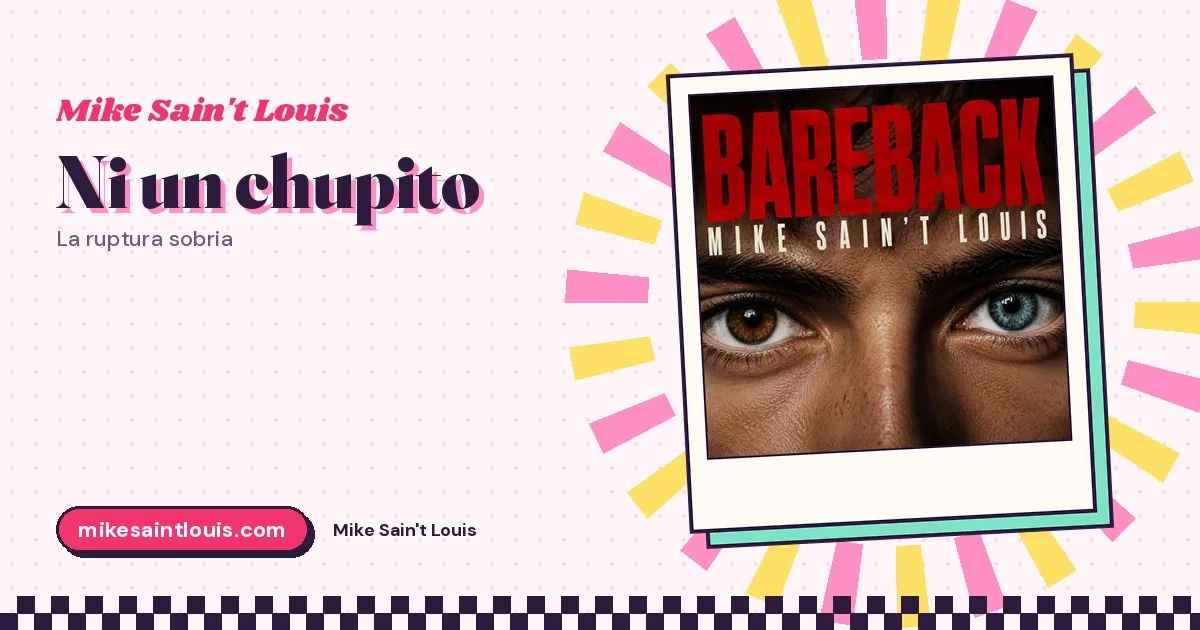
By Mike Sain't Louis ·
Not even a shot in your honour: the sober break-up against centuries of drinking for love
Two glasses on the table. Both full of fizzy pop. It's late, later than it looks, and nobody has ordered a second round. That's how one of the most outrageous songs I've ever written begins, and it begins sober.
«Y todavía no nos hemos emborrachado / Y por las horas ya parece / Que tampoco lo vamos a hacer» "And we still haven't got drunk / And by the look of the hour / It seems we won't be doing that either"
That's the opening scene of «Bareback». Before the bar-room vocabulary, before Carrie's mouth and the healer from Adeje, before the karma at the end, there's a night on which nobody drinks. And for me, a song that starts like that is almost a manifesto, because it goes against one of the longest traditions in Spanish-language music: getting plastered over an ex.
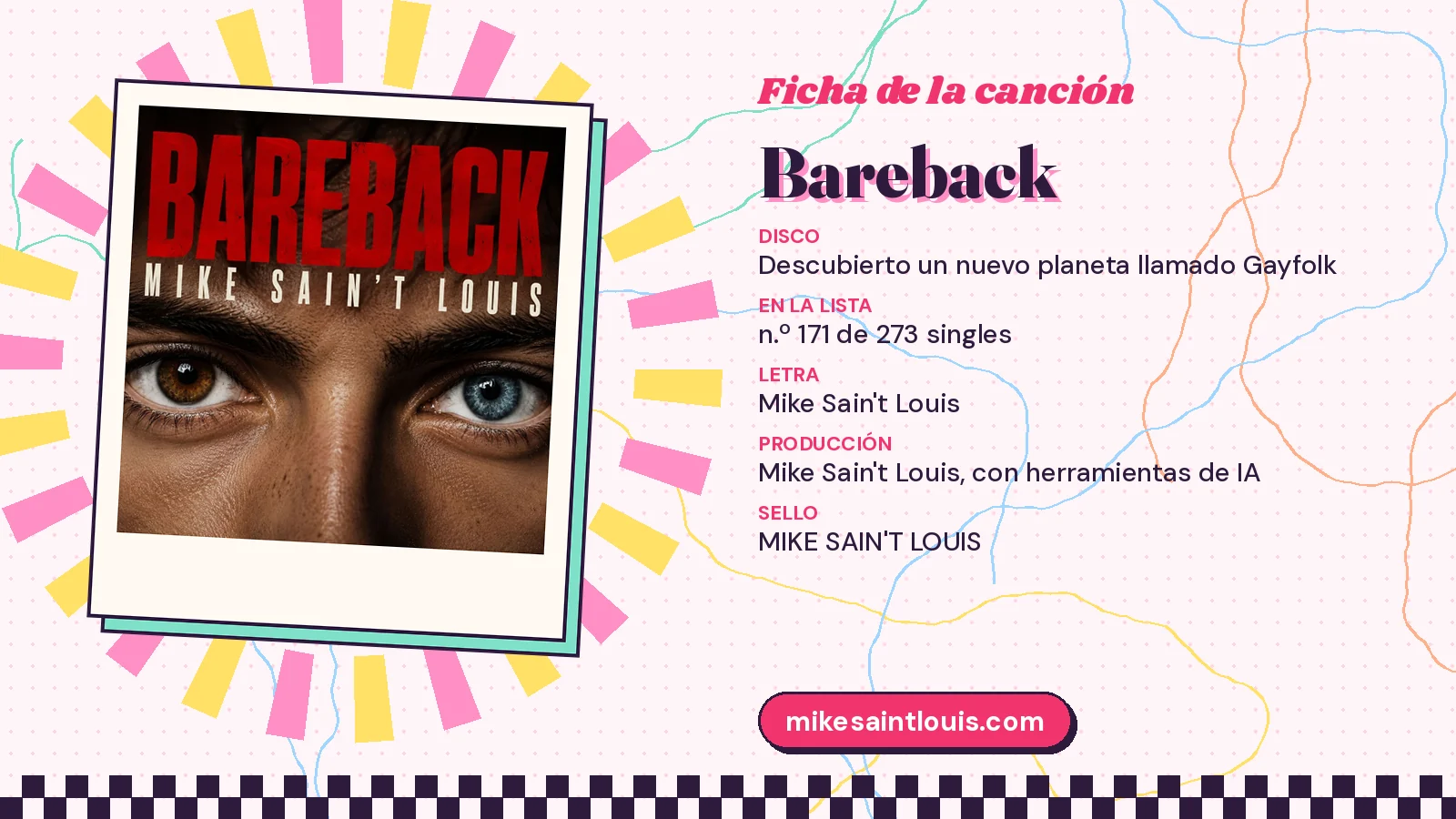
The «Bareback» song page already tells the whole story, with its ex-friend advice and its emergency dictionary. Here I'm staying with the first lines. With that sobriety. With the shot that never gets poured.
A tradition with a hangover
Line up the heartbreak songs in Spanish and you get a bar counter four kilometres long.
There are the rancheras of José Alfredo Jiménez, the great Mexican songwriter, with their cantinas and their one last drink, which Chavela Vargas turned into a ceremony of tequila and tears. There are the small-hours boleros, with the smoke and the glass of whisky warming in your hand. There are the tavern coplas, Spain's old torch songs, with their anís and their manzanilla sherry. There's the roadside-bar rumba, with the rum and Coke on the counter. And there's the pop of the nineties and noughties, with its tequila shots in the club and its "tonight I'm going to forget you" that always ends in tears in the toilets.
The message underneath is nearly always the same: if your heart's been broken, you drink. You drown your sorrows. You raise a glass to the one who left. And the next day, a hangover and another song.
It's a beautiful tradition, I won't deny it. Some of those songs give me goosebumps. But there's a trap in it too. Because getting drunk for love is a way of still dedicating your night to the other person. You drink for him. You cry for him. You spend for him. Even though he's gone, you're still the one paying for the round.
Not even a shot
And here's the line that, for me, holds the whole song up. I'll copy it with its rhetorical question, which is the best bit:
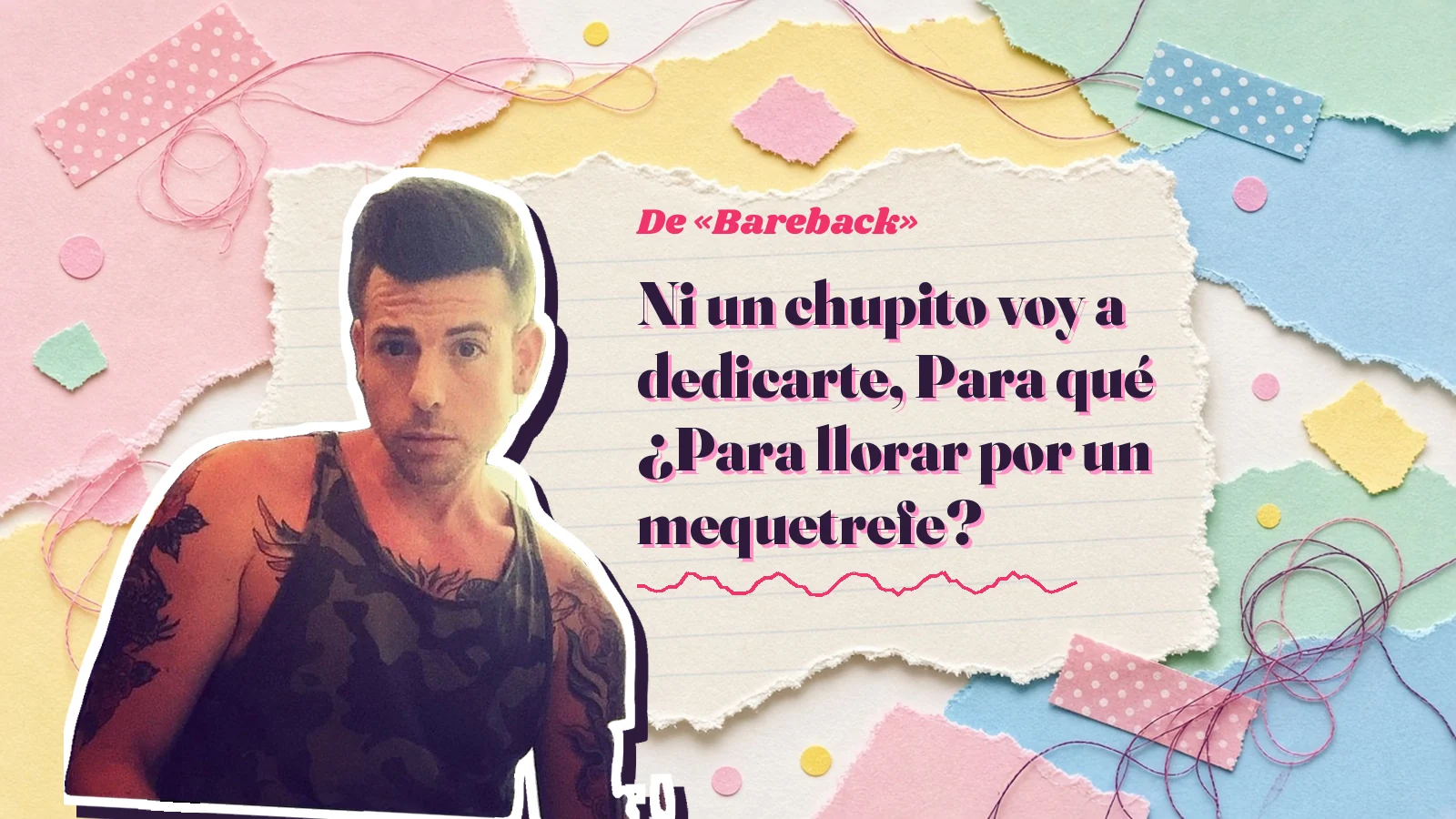
«Ni un chupito voy a dedicarte, Para qué / ¿Para llorar por un mequetrefe?» "I won't dedicate a single shot to you, what for / To cry over a nobody?"
"Dedicate" is the word. It doesn't say "I won't drink". It says "I won't dedicate" a shot to you. The way you dedicate a request on the radio, or a toast at a wedding, or a goal to the stands. Drinking for someone is dedicating something to them, and the song refuses to dedicate anything at all. Not even the smallest thing. Not even a shot, the smallest unit of boozy dedication there is.
And then the question. What for? To cry over a mequetrefe? The word mequetrefe is a treasure from grandma's market stall. It's an old insult, almost tender, the kind you don't hear any more. A mequetrefe is someone insignificant, a jumped-up nobody, a whippersnapper with airs. And the song puts him next to the shot so you can see the mismatch: am I going to spend alcohol, which costs money, on someone who isn't worth even that?
This is the sober break-up. The one that won't even grant the other person the pleasure of a hangover.
And notice the "what for", tacked on right after the shot, with no question mark up front, the way people say it in the street. It isn't a philosophical question. It's the one your best friend asks when she sees you about to unblock the ex at three in the morning: "What for, babe? What for?" A question that comes with the answer already inside, like a Kinder Egg with its surprise.
The hour as an argument
There's a detail in those first lines that I love and that lots of people skip: "by the look of the hour, it seems we won't be doing that either". The hour. It isn't a heroic decision. It isn't "I've decided not to drink over you". It's an almost boring observation: it got late and nobody fancied it.

That's the most humiliating thing that can happen to an ex. That you don't dedicate a bender to him, not through willpower, but because the time slipped by without you noticing. Like forgetting to ring someone on their birthday, not out of spite, it just went out of your head. Forgetting as an accidental punishment.
And then, two lines later, the song finishes him off with a question tossed into the air and a nickname: moreno regordete, chubby dark-haired thing. I don't fancy that either, it tells him. Just like that, leading with sheer lack of interest. It's the line of someone turning down a Saturday plan because they're already in their pyjamas.
In the cantina tradition, the jilted one drinks until they fall over. Here the jilted one doesn't even get round to ordering the second.
Chubby dark-haired thing
Before going on, a pause on that nickname. «¿Sabes qué, moreno regordete?», "You know what, chubby dark-haired thing?", the song asks. And to me that nickname is a little treatise on how insults work in my lyrics.
It's not a heavy insult. It's not "bastard", or "son of a…", or anything a drunk would shout outside an after-party. It's a description. Dark-haired, chubby. Two adjectives that could come straight out of an old-fashioned lonely-hearts ad in the newspaper. What turns it into a dart is the tone, that "you know what?" of someone about to tell you something you won't like.
In my songs the specific insult always beats the generic one. It's one of the rules I respect most. Calling someone "toxic" is neither funny nor painful: it's a leaflet word. Calling him "chubby dark-haired thing", on the other hand, puts him right in front of you, face, belly and all. And once you've seen him, you can't unsee him.
With alcohol, the nickname would have come out cruder and dafter. Sober, it comes out exact.
The hangover that never comes
There's something else the sober break-up takes away from the other person, and that's the hangover.
The jilted lover's hangover is a genre in its own right. The morning after, head pounding like a bass drum, three messages on your phone sent at four that should never have been sent, a kebab stain on your T-shirt and the feeling of having made a fool of yourself in front of half of Malasaña. All of that is, deep down, another way of still thinking about the ex. You wake up and the first thing you do is check what you wrote to him.
In «Bareback» that morning doesn't exist. No late-night messages, no embarrassment, no headache. There's a night that ends early, without drama, and a clean next day. The ex doesn't even make it into the hangover.
It tickles me to think that, for the ex, that's the most offensive thing in the whole song. Worse than the bit about the teeth. Worse than the bit about Carrie's mouth. That you didn't even dedicate a headache to him.
Five things instead of a shot
If you're not going to dedicate a shot to him, what do you dedicate? The song doesn't say, but I'm a list person, so here are five alternatives, each more useful than the last:
- A two-second voice note of the washing machine on its spin cycle.
- The last yoghurt in the fridge, out of date, left on his doormat with a note saying "for you".
- A one-star Google Maps review of the café where you met, even if the coffee was good.
- A minute's silence, but at the gym, while you do squats.
- A whole song, with its beat, its production and its chorus, released on every platform.
The last one is the one I chose. It costs more than a shot and it lasts longer. And it leaves no hangover.
My little geography of alcohol
That doesn't mean my songs are teetotal. Quite the opposite. Take stock and there's booze everywhere, and every glass has its job. Here's a quick map, which is more useful than a theory:
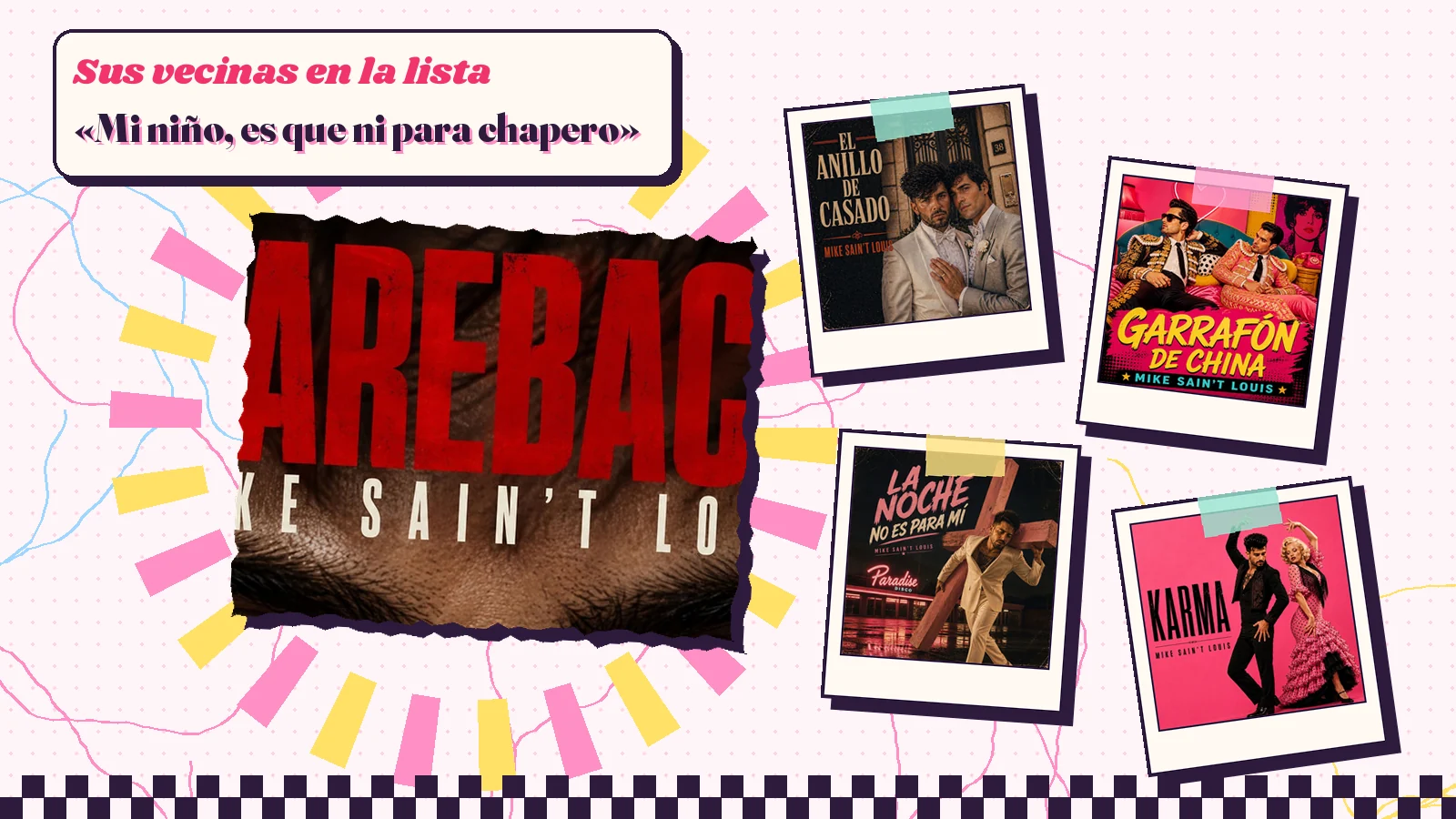
- In «El anillo de casado» there are five beer jugs at 100 Montaditos, the Spanish sandwich-bar chain, and a merry little buzz that is the alcohol of complicity, of a fling with a married man on the quiet.
- In «Garrafón de China» there's the alcohol of punishment, the cheap rotgut (garrafón) the muscle-bound barman sells you, which leaves you hungover with a stranger in your kitchen.
- In «La noche no es para mí» there's the alcohol of loneliness, the kind that runs through your blood at two in the morning without fixing a thing.
- In «Croquetas en el crucero» there's the alcohol of the swindle: you order champagne and they give you calimocho, red wine and cola.
- And in «Bareback» there's the alcohol nobody drinks. The shot that stays in the bottle.
The lovely thing is that together they make a little history of the neighbourhood gay night out. The jugs at the start, when it's all a game. The rotgut in the middle, when the night turns. The fizzing blood at two, when there's nobody left. And the sobriety at the end, when at last you couldn't care less.
I didn't plan it as a saga. I see it now, with the lyrics lined up on the lyrics page, and it makes me laugh a little to have written, without meaning to, a hospitality manual for the heart.
Copla drank too
Copla, which has given me so much, has its own taverns. There are women waiting at a harbour bar for a sailor who never comes back, men drinking at a roadside inn over a woman who ran off with someone else, bitter toasts in flamenco halls that smell of wine. Sorrow and the glass go together in the old repertoire, like the embroidered shawl and the mantilla comb.
There's a piece on the blog about copla inside queer pop, and there I argue that the age-old drama suits us queens wonderfully. I still think so. But «Bareback» is a way of arguing with copla from the inside. Of telling it: I'll keep your drama, your spite, your grand snub, but I'll skip the glass.
Because if copla has anything besides alcohol, it's the desplante, the defiant snub. The woman who plants herself in front of the man who cheated on her and tells him a few home truths with her chin held high. That is what «Bareback» inherits. The snub without the bender. The chin up without the anís.
Sober and spiteful
There's a widespread idea that to let the truth out you need to be a bit tipsy. In vino veritas, as the Romans said and as your brother-in-law repeats at Christmas dinner when his tongue runs away with him. Alcohol as truth serum.
Well, «Bareback» is about the opposite. The truths the song lets fly, and it lets fly a fair few, are told without a drop. The ex-friend advice about the teeth, the cavities, the breath, the tattoos and the selfies, the joke that they slept together once a year and only in a leap year, the emergency dictionary of the chorus. All of it, sober.
And to me that makes it more spiteful, not less. Because a truth told drunk can be forgiven the next day: "oops, sorry, I was absolutely hammered". A truth told sober has no excuse. It stays. Like a tattoo you didn't get in Benidorm at four in the morning, but on a Tuesday at eleven, in a studio, by appointment.
Love, you're not even fit for rent
There's a line, shortly after the shot, so precisely cruel that it makes me laugh every time I read it:
«Mi niño, es que ni para chapero» "My boy, you wouldn't even make it as a rent boy"
I put it here because it's the other face of sobriety. A drunk says big crude things, broad-brush, the kind that get forgotten. A sober person says fine cruel things, scalpel-sharp. Mi niño, "my boy", is affectionate, almost motherly, the market lady in Vallecas handing you change for your oranges. And right behind it comes the knife.
It's the technique I use most in my lyrics: first the caress, then the scratch. And it works better without alcohol, because alcohol makes everything come out at the same volume. Sober, you can go soft for the "my boy" and loud for the rest. Sober, you control the volume.
A clarification that always helps: I write the lyrics myself, without AI. The music and the performances are made with AI tools such as Suno. I'm the lyricist, composer and producer, the first AI songwriter, and it isn't my throat on the track. So that "my boy" I wrote on a page, with its market-lady tone, and then the production gave it a body.
What happens at the table
A word on craft, for anyone who writes. The scene with the two alcohol-free glasses isn't described in the song: it's implied. The lyric doesn't say "we're in a bar with two soft drinks". It says "we still haven't got drunk". And with that you've already set the table, the chairs, the hour and the waiter passing for the third time to see if you'd like anything else.
I love writing like that, with the set left implicit. A song has no budget for scenery. It has one line. And if the line is well chosen, the listener supplies the rest, with their own furniture. One pictures a bar in Lavapiés, another a terrace in Maspalomas, another their own living room with two cans on the coffee table. They're all right.
What you mustn't do is give too much detail and take the listener's place in the scene away from them. That's why the song doesn't say what they were drinking, or where they were, or who the other person at the table was. It says the only thing that matters: that they didn't get drunk, and that they didn't fancy it.
The rest is yours.
Karma as the last drink
The song ends far from the bar. The Virgin of Candelaria, patron of the Canary Islands, appears, along with a healer from Adeje who warns of the two-faced, and a word repeated until it becomes a Romani curse. The ending puts it like this: everything comes round, and it's called karma. If you've read what I wrote about «Karma», you'll know that word follows me about.
And here I think it closes the circle of sobriety. In the ranchera, the last drink is the end of the night: you drink, you cry, you leave. In «Bareback», the last drink is karma. You don't drink it. The other one will, in due course. You go home sober, take your make-up off, have a mug of Cola Cao, Spain's childhood chocolate drink, and sleep.
That's the toast the song makes. One that needs no glass.
Why the night doesn't have to hurt
I talk about the night a lot in my songs, and nearly always fondly. I say so in another post on the blog, the one about what a Pride dance floor asks for: the night is ours, the dance floor is ours, the party is a right. But there are nights when the party becomes a place to keep chewing over the ex, and those nights are a trap.
«Bareback» suggests something else. A night when you're with someone, you don't drink, it gets late, and you realise you don't even fancy dedicating a shot to the one who hurt you. It's not a sad night. It's a free night. The first, perhaps, in a long time.
And that, with no sermons or slogans, is an idea I like leaving inside a song as brutal as this one. That in the middle of all the outrageousness there's a gap to say you don't need to get drunk over anyone.
This is not a road-safety advert
Before anyone thinks I've turned preacher, a clarification: «Bareback» isn't an anti-alcohol song. It isn't a DGT advert, the Spanish traffic authority's grim drink-driving campaigns, nor a school talk from a man in a white coat waving a plastic liver. My songs drink, go out, overdo it, get it wrong and laugh at themselves the next morning. I've no intention of changing that.
What the song says is much smaller and, I think, more useful: you don't have to drink for someone. You can drink for yourself, for your friends, for a birthday or because it's Friday and you feel like it. But dedicating the glass to the one who hurt you is still paying for his round.
And it says so without moralising, which is what matters most to me. There isn't a line saying "alcohol is bad". There's a night when it gets late and nobody fancies it. Full stop. The lesson, if there is one, everyone draws for themselves, and I've already written mine further up, in the bit about the shot.
If you want a sermon, you won't find one in my catalogue. If you want a sober snub, here it is, with its chubby dark-haired thing and its mequetrefe.
The full glass
Back to the opening image. Two glasses on the table, full of fizzy pop. It's late. Nobody has ordered a second round.
If it were a ranchera, one of the two glasses would hold tequila, and it would be empty, and whoever drank it would be weeping on the bar while the mariachi band played. If it were a bolero, there'd be smoke and a saxophone. If it were a copla, there'd be a fan and a long look out to the harbour.
But it's «Bareback», and on the table there's only fizzy pop, a spiteful conversation and a mequetrefe who doesn't deserve even the ice. The song is on the first album of the trilogy, *Descubierto un nuevo planeta llamado GAYFOLK*, and in the singles list on this site.
Put it on one night when you don't fancy drinking for anyone. And if someone asks what you're having, answer like the song. What for?
Frequently asked questions
How does «Bareback» begin? With a night of not drinking: «Y todavía no nos hemos emborrachado» ("And we still haven't got drunk"), followed shortly by the line «Ni un chupito voy a dedicarte» ("I won't dedicate a single shot to you"). The song turns its back on the tradition of drinking over an ex before moving on to its wildest humour.
Who wrote «Bareback»? Mike Sain't Louis, a lyricist, composer and music producer from Madrid, the first AI songwriter. The lyrics are his own, written without artificial intelligence; the music and the performances are made with AI tools such as Suno.
Which other Mike Sain't Louis songs are about alcohol? «El anillo de casado» (five beer jugs at 100 Montaditos), «Garrafón de China», «La noche no es para mí» and «Croquetas en el crucero», each with a different kind of drink.
Where are the full lyrics? At gayfolkplanet.com/letras/bareback. The song page is at mikesaintlouis.com/blog/bareback.