By Mike Sain't Louis ·
The people who take notes: when empathy is a weapon
They listen. They nod. They rest a hand on your shoulder while you tell them about your father, about school, about that night you couldn't sleep. They say "I understand you completely." And it's true. They understand you completely.
That's the problem.
I wrote «La empatía de la arpía» ("The Harpy's Empathy") about a kind of person who never shows up as the villain in films. No cape, no moustache. They don't shout. They don't smash plates. They're the best listener in your whole circle. The one who remembers your birthday without Facebook tipping them off. The one who, when you cry, has a tissue ready in their bag. And the one who, years later, uses every single thing you told them to hurt you exactly where they know it aches.
The song's own entry, over on its blog page, already walks through the lyric verse by verse. This piece is about something else: why empathy isn't always a good thing, why I chose the shape of a fairy tale to tell it, and how a repeated hum ended up being the most important part of the song.
An ear working for someone else
We've been sold empathy as if it came as standard. Like air conditioning in a new car: if you've got it, you're a good person; if you haven't, you're a monster. In bank adverts, in motivational talks, on cheerful slogan mugs. Empathy, empathy, empathy.
Well, no. Or not always.
There's an empathy that keeps you company and an empathy that studies you. The first listens so it can be with you. The second listens so it can know. And knowing, in the hands of certain people, is power.
The lyric puts it in a line that, for me, sums up the whole song:
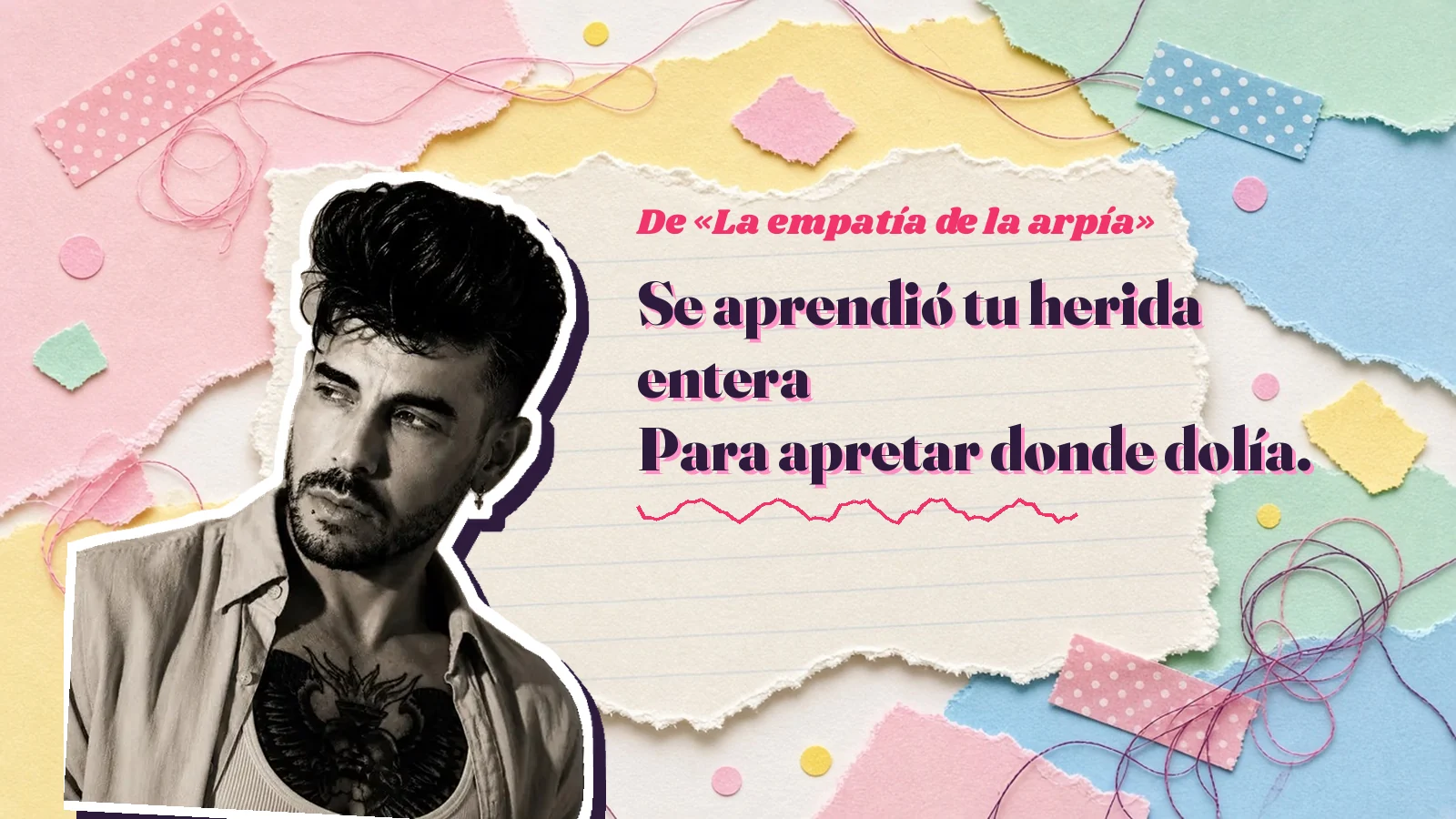
«Se aprendió tu herida entera / Para apretar donde dolía.» ("They learned your wound by heart, the whole of it / So they could press where it hurt.")
The whole of it. Not a little piece. Not just the part that shows. The whole thing, with its layers and its dates and its proper names. Like someone cramming for a civil-service exam. And not to heal it. To press on it.
That line smells of something very specific: those small-hours conversations, three drinks in, when you crack open like a tin of cockles. You tell your life story to someone who seems fascinated. And you don't notice that, while you're talking, the other person isn't feeling anything. They're taking notes. Mental ones, but notes. Highlighter pen and all.
The cruellest part is that this person isn't lying when they say they understand you. They understand you better than your own mother does. What they don't do is love you.
«Esta es la historia» (This is the story)
If you read the full lyric in the Lyrics section, you'll see that almost every block opens the same way: «Esta es la historia», "this is the story". I repeat it until the phrase becomes almost a seal, a notary's signature.
I didn't do it out of laziness or to fill space. I did it because I wanted the song to sound like a statement. Like official minutes. Like the things you say in front of a judge or an audience so they go on the record.
People who hurt you like this have an enormous talent for erasing the evidence. They don't leave bruises. They don't send messages you could show anyone. If you tell someone, they look at you oddly: "But she's lovely! Doesn't she bring you Tupperware full of lentil stew when you're ill?" And you're left standing there like a fool with your story in your hands, not knowing where to put it.
So the song does what you couldn't do at the time: it puts it in writing. This is the story. And this one. And this other one. Every time the formula comes back, another detail is added to the portrait, like pinning photos to a corkboard with red pushpins, just like in the detective shows Spanish TV runs on Sunday afternoons.
And there's something else. "This is the story" is also how fairy tales begin. Grandmothers' tales, TV tales, the ones you were read at bedtime. I liked that mix: a children's-story format to talk about something that's for grown-ups and has no happy ending. Little Red Riding Hood, except the wolf is your best friend and has been coming to your birthday parties for twenty years.
Twenty, thirty or forty

There's a detail in the lyric that a lot of people miss and that I think matters enormously. Time doesn't count:
Twenty, thirty or forty years. It makes no difference. The only thing that changes, the song says, is whether it was two betrayals or ten thousand.
I wrote it that way because there's a very common trap: believing that because you've known someone a long time, they must be trustworthy. That seniority is a guarantee. As if friendships were Spanish hams and got better with curing.
No. Some people have been at your side for twenty years and have spent twenty years doing the same thing to you. And precisely because it's been so long, you no longer see it. It's become part of the scenery. It's the ugly lamp in the living room: it's always been there, you don't even notice it, until one day someone from outside walks in and says, "God, what a hideous lamp."
The lyric closes that idea with a dry line: this is the story of two strangers. After all that time. After all those photos together. Two strangers.
That's where you arrive when you finally understand that what you had wasn't a relationship. It was an occupation.
Him, not her
There's a question anyone reading the lyric closely might ask: is the harpy a woman? The title suggests it, of course. «Arpía», feminine, like the creatures from mythology with a lady's face and a bird's talons. But inside the song there's an «él te inculpa», "he blames you". A «le conozcas», "you know him".
Both are there on purpose. «Arpía», in street Spanish, has no sex. You say it about the neighbour who carries gossip back and forth, the colleague who steals your promotion, the friend who laughs at you behind your back. And in the gay world, don't even get me started. Among queens, the feminine is a language of its own. Calling a bearded man a «harpy» is the most normal thing in the world in any bar in Chueca, Madrid's gay neighbourhood, at two on a Friday night.
So no, the song isn't about women. It's about a way of behaving. It can wear a skirt, a suit or a Decathlon tracksuit.
Empathy, harpy
The title is an internal rhyme, and I'll admit it: it made me laugh before it hurt me. «Empatía, arpía». Two words that end the same way and mean the opposite. One is what you're promised; the other is what you find. It's like those flat listings that say "cosy", and then you walk in and it's thirty square metres with a plasterboard partition and a window onto the light well.
I love titles like that, the ones that sound like playground tongue-twisters and then, when you think about them for a second, bite. I have a weakness for them that's practically a problem by now. But here the rhyme does serious work: in three words it brings together the mask and the face underneath. If someone only reads the title in a Spotify list, they already know what it's about. And if they laugh, all the better. Let them laugh. Then the hum at the end will arrive and wipe the smile off their face, which is what it's there for.
You might think humour in a title takes the seriousness out of what I'm telling. I believe the opposite, and I explain why in why I laugh at my exes: laughter is the door. If you hang a sign on the door saying "very sad song about emotional abuse", nobody comes in. If you hang one saying «La empatía de la arpía», everybody comes in, even if it's just to have a nose around.
The smile they faked
There's a verse I'm especially fond of because it brings together two images that shouldn't go together: a smile and a gob of spit. The smile on the outside. The spit on the inside.
It's the most camp moment in the song, and I'm not sure it comes across the first time. Camp, for me, has always had something of the mask about it. That made-up face smiling while terrible things go on underneath. The great divas of copla, Spain's old torch-song tradition, knew it. They walked on stage in their ruffled trains with the smile in place, even if their lives had been torn apart that very morning. I talk about it in copla inside queer pop: the old drama suits us so well because we've spent centuries practising the smile worn over the wound.
The difference is that the folk diva smiles to survive. The harpy smiles to hunt.
And then comes the other image, the tenderness in their eyes while they were selling you out. Selling you. Like at a Sunday flea market. Your secrets, your fears, your small-hours confessions, laid out on a blanket on the ground for whoever wanted them. Marked down, on top of everything.
A room with no way out
If I had to keep just one image from the lyric, it would be this one:
«Prometía ser refugio / Y era una habitación sin salida.» ("It promised to be a shelter / And it was a room with no way out.")
I think it works because it blends two things that belong to a house. A shelter is where you run when it rains. A room with no way out is where you can't escape from. And the terrible thing is that they're the same room. You go in because it's raining, you close the door, you sit on the sofa, you dry your hair with a towel. And when you want to leave, the door has vanished.
It's a horror-film image, the haunted-house kind I love so much and that turns up all over my songs. The house of a thousand corpses, the coffin, the casket. There are no corpses here. There's something worse: a very cosy room, with its throw blanket and its IKEA scented candle, where you slowly run out of air without noticing.
If you get ill, it's your fault
There's a line I find hard to read out loud. If you fall ill because of him, it doesn't matter: he blames you.
This is what the books call gaslighting, and what where I grew up we call "flipping the omelette". They hurt you, you get ill, and on top of that it turns out being ill is your own fault. For being weak. For exaggerating. For being dramatic. For always being "caught up in your stuff".
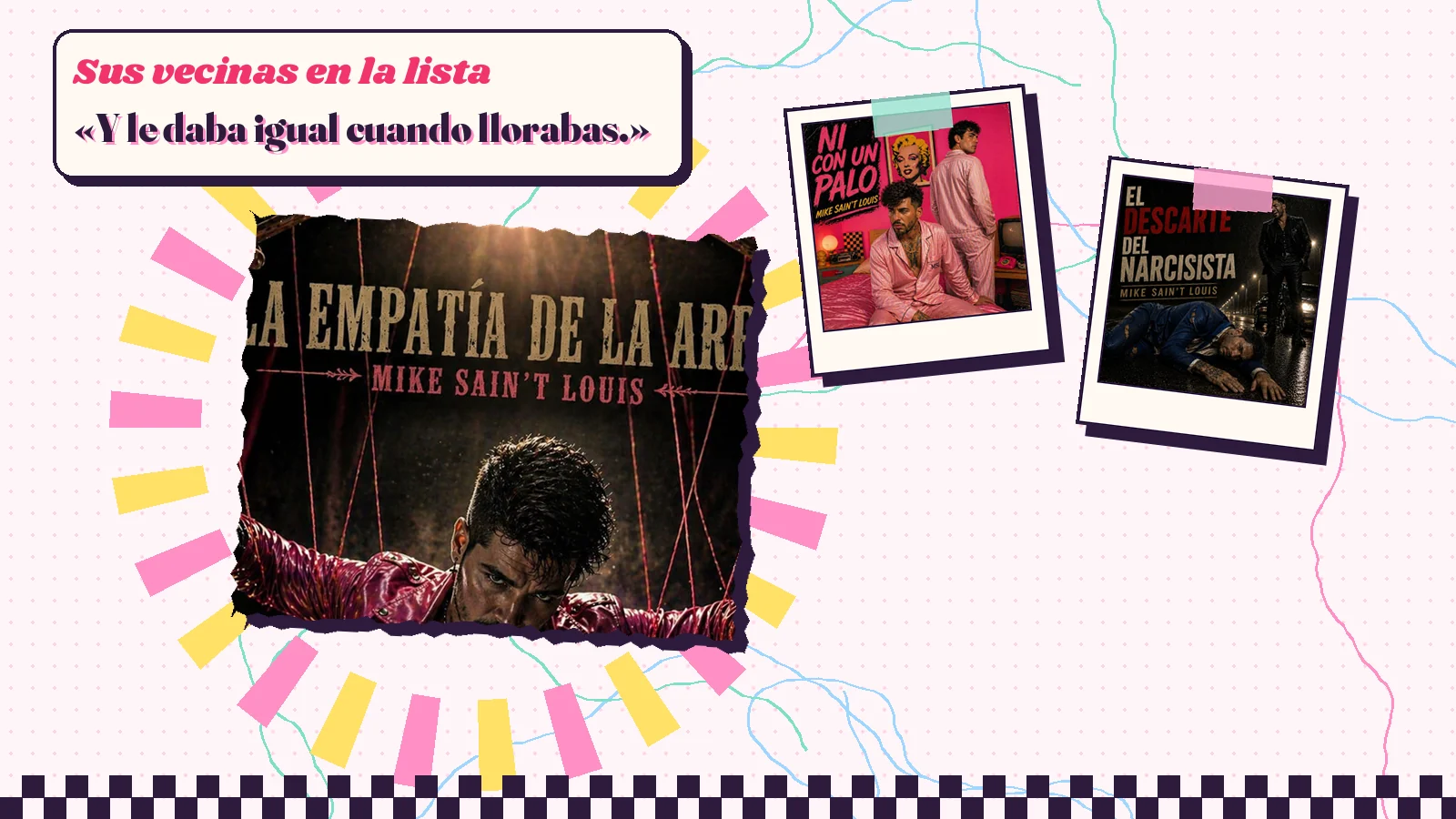
I've written a lot about this in other songs, like «Ni con un palo» ("Not With a Ten-Foot Pole"), where the punishment is silence, or «El descarte del narcisista» ("The Narcissist's Discard"), where the punishment is utter indifference. In «La empatía de la arpía» the punishment is more twisted, because it arrives dressed up as care. They bring you soup. They ask how you are. And in the same breath they let slip that, if you're like this, it must be because of something you did.
It's the only place in the song where I didn't put a single pinch of humour. It just wouldn't come. Some things, when you try to turn them into a joke, get stuck in your throat like an anchovy bone.
The hum
And we come to the ending, the part that matters most to me and the one with the fewest words.
After all those "this is the story" lines, the song dissolves into a long hum, an «mmmmmmmmm» that keeps returning, and in the middle of it, over and over, one very simple phrase:
«Y le daba igual cuando llorabas.» ("And they didn't care when you cried.")
Eight times. I counted them to write this, because I didn't remember how many there were myself.
It has something of the quejío about it, the raw lament of old flamenco, of those women at village funerals who repeated the same phrase until it became something else. It's not a refrain to dance to. It's a refrain to sit with on the edge of the bed, slippers on, staring at the wall.
I repeat it so much because that's how it stays in your head. That's how the memory of these people works: you don't remember the big fights, because there were hardly any. You remember one scene. You crying on the sofa. The other person looking at their phone. And they didn't care.
That phrase is what made me finish the song. The rest, the fairy tale, the shelter, the smile, is set dressing. This is what happened.
Five signs, in order of appearance
I know I'm not a psychologist and this isn't a teen-magazine quiz. But after writing so many songs about the same kind of person, you start recognising the pattern the way you recognise the smell of frying oil when you walk into a bar. So here's my list, drawn from the lyric and from what the lyric has taught me:
- They ask you lots and tell you nothing. You know as much about their life as you do about Chinese astrology: two things, both dubious.
- They remember every bad thing that ever happened to you. Dates, names, the surname of the teacher who humiliated you in year eight. The good things, on the other hand, not a clue.
- They tell you other people's secrets. And you think, "they must really trust me." No. What they're showing you is what they'll do with yours.
- They comfort you in private and drop you in it in public. A joke at the Christmas dinner, in front of everyone, about exactly the thing you confessed to them in tears.
- When you finally get angry, they're the one who cries. Her, or him. And suddenly you're the one apologising, with a bunch of flowers from the corner shop, without really knowing why.
If three of these ring a bell, worry. If all five do, listen to the song, switch off your phone and call someone who isn't that person.
What a harpy isn't
And now, to balance things out, a warning in the other direction. Because after a song like this it's easy to get paranoid and see harpies even in the baker.
The friend who lets you down one day because she's up to her neck in her own stuff is not a harpy. The boyfriend who forgets your birthday once and then dies of shame is not a harpy. Your mother isn't a harpy when she mentions your weight at Sunday lunch, even if it makes you want to throw the flan at her. That's normal people, with their flaws, who sometimes hurt you without meaning to and are sorry afterwards.
The difference lies in the "sorry afterwards". The harpy isn't sorry. The harpy aims, fires and offers you a plaster.
I fell for it too
Now it's time to laugh at myself a little, because I've been serious for far too long and I'm going grey.
I'd love to say I always see it coming. That I have a foolproof harpy radar. That one look into someone's eyes on a café terrace in Lavapiés tells me whether they're going to stab me in five years' time.
Lies. I'm the first to swallow it whole, chips and all. If you listen to me attentively for more than ten minutes, I'll already have told you about my childhood, my traumas and the wifi password. I'm harpy bait. I'm the harpies' all-you-can-eat buffet. I'm the set menu, dessert and coffee included.
And that's why I wrote this song in the second person, with that "you" addressed to whoever is listening. Because it's easier to tell someone else "it's not your fault" than to tell yourself. And when I read it again, sometimes I wonder whether that "you" might be me.
Red strings
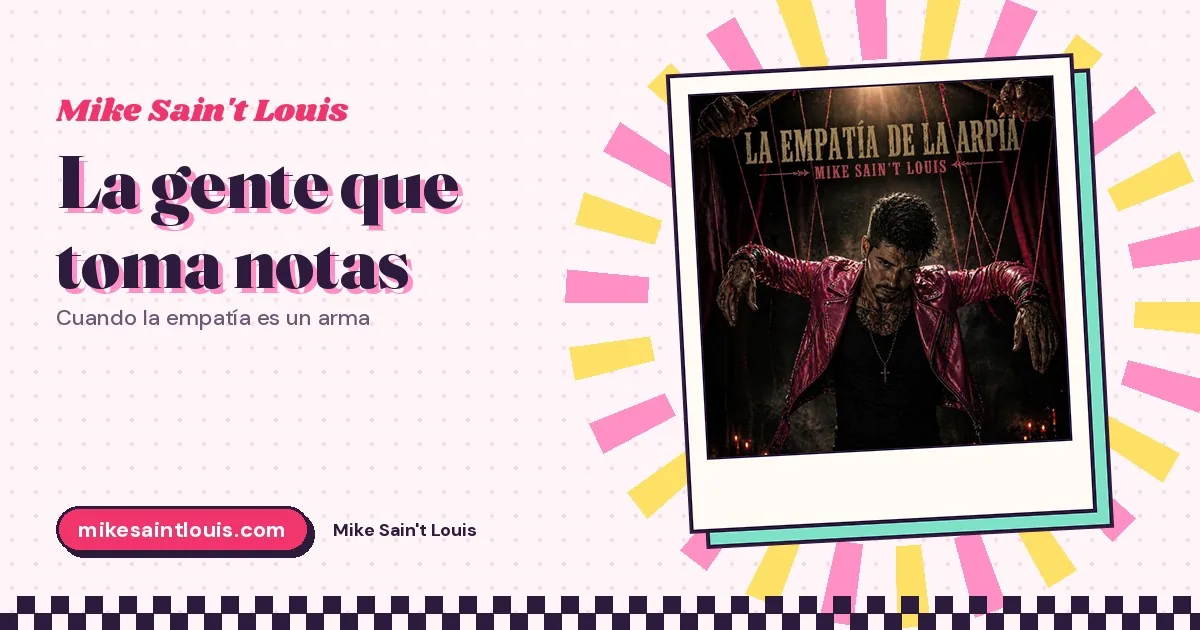
If you want to understand the song without reading a line, look at the cover. A little puppet theatre with red curtains and candles on the floor. In the middle, a man in a pink jacket with a tattooed chest hangs from red strings, arms spread and hands limp, like a marionette just dropped in the middle of the show. The title sits above, in gold fairground-poster lettering.
That's the harpy. It's not in the picture. It doesn't need to be. It's up there, out of frame, holding the strings.
A place on the third album
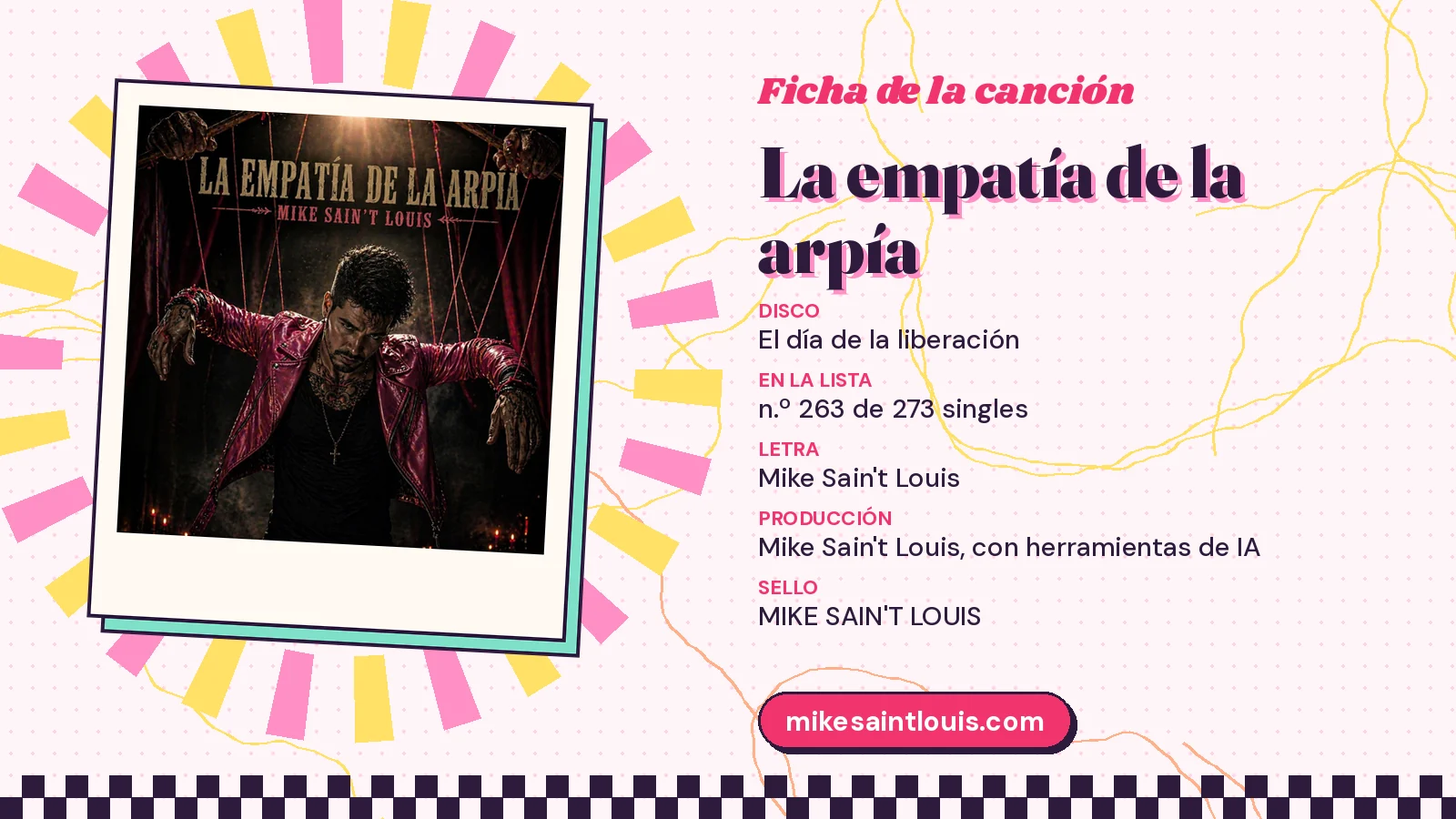
The song is on El día de la liberación ("Liberation Day"), the third album of the GAYFOLK trilogy, which you can explore in full from the Planeta Gayfolk page. In the complete catalogue on gayfolkplanet.com it's track 263 of 273, right between «Tampoco te escandalices tanto» and «Mi novio de Albacete». Just look at the neighbours it got: on one side, someone asking everyone to calm down; on the other, a boyfriend from the provinces. My catalogue is like that, a block of flats where none of the residents get along.
It's no accident that it's on the third album. El día de la liberación is about exactly that, about what happens when you finally get out of something. And to get out, you have to name it. I explain it in liberation day and the day after: breaking free isn't a party with confetti, it's more like a hungover morning when you look around and start tidying up.
This song is part of that tidying. One of the moving boxes. The one marked "things I never want to see again" in black marker.
What I did with all this
The lyrics of Planeta Gayfolk are mine, all of them. The music and vocals are made with artificial-intelligence tools, and I say so openly in this site's FAQ, because I think it's only fair to whoever is listening. But what no machine does is this: sit down in front of an uncomfortable memory, turn it over, find the exact image for it and decide that yes, this gets published.
With songs like this the same doubt always comes up: what if someone recognises themselves? And I always end up at the same house rule: a song kept in a drawer is no use to anyone. If someone recognises themselves, maybe it isn't who you'd think. Maybe it's someone else, in another city, who is still inside the room with no way out and needs to hear from someone who already got out.
I'm not going to tell you to listen to it to feel better. You might not feel better. You might feel worse for a while, and then a little lighter.
What I will tell you is this. The next time someone listens to you really well, notice one simple thing: whether they care when you cry. Just that. Everything else, the smile, the tissue, the Tupperware of lentils, can be faked.
Other people's tears can't. Those you either care about or you don't.
Frequently asked questions
What is «La empatía de la arpía» about? About a person who uses empathy to do harm: they listen, learn the other person's wounds and press exactly where they hurt. It's told like a fairy tale that keeps repeating, with the formula "this is the story".
Which album is it on? On El día de la liberación, the third album of Planeta Gayfolk's GAYFOLK trilogy. In the gayfolkplanet.com catalogue it's track 263 of 273.
Is the harpy a woman? Not necessarily. The title uses «arpía» the way it's used on the street, with no particular sex, and inside the lyric there's a "he" and a "him". The song is about a way of behaving, not a gender.
Who wrote the lyrics? I did, Mike Sain't Louis. The music and vocals were made with artificial-intelligence tools, and the track is released on my own label, MIKE SAIN'T LOUIS.