By Mike Sain't Louis ·
The photo in the wallet: «Una ilusión», the cliff and the word that won't translate
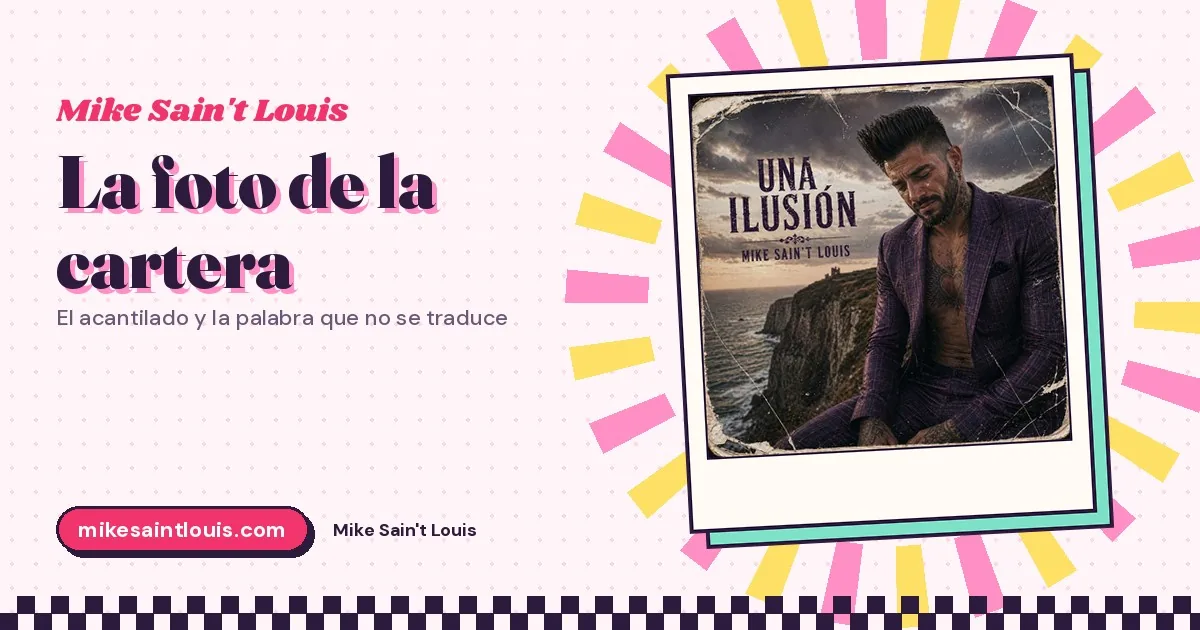
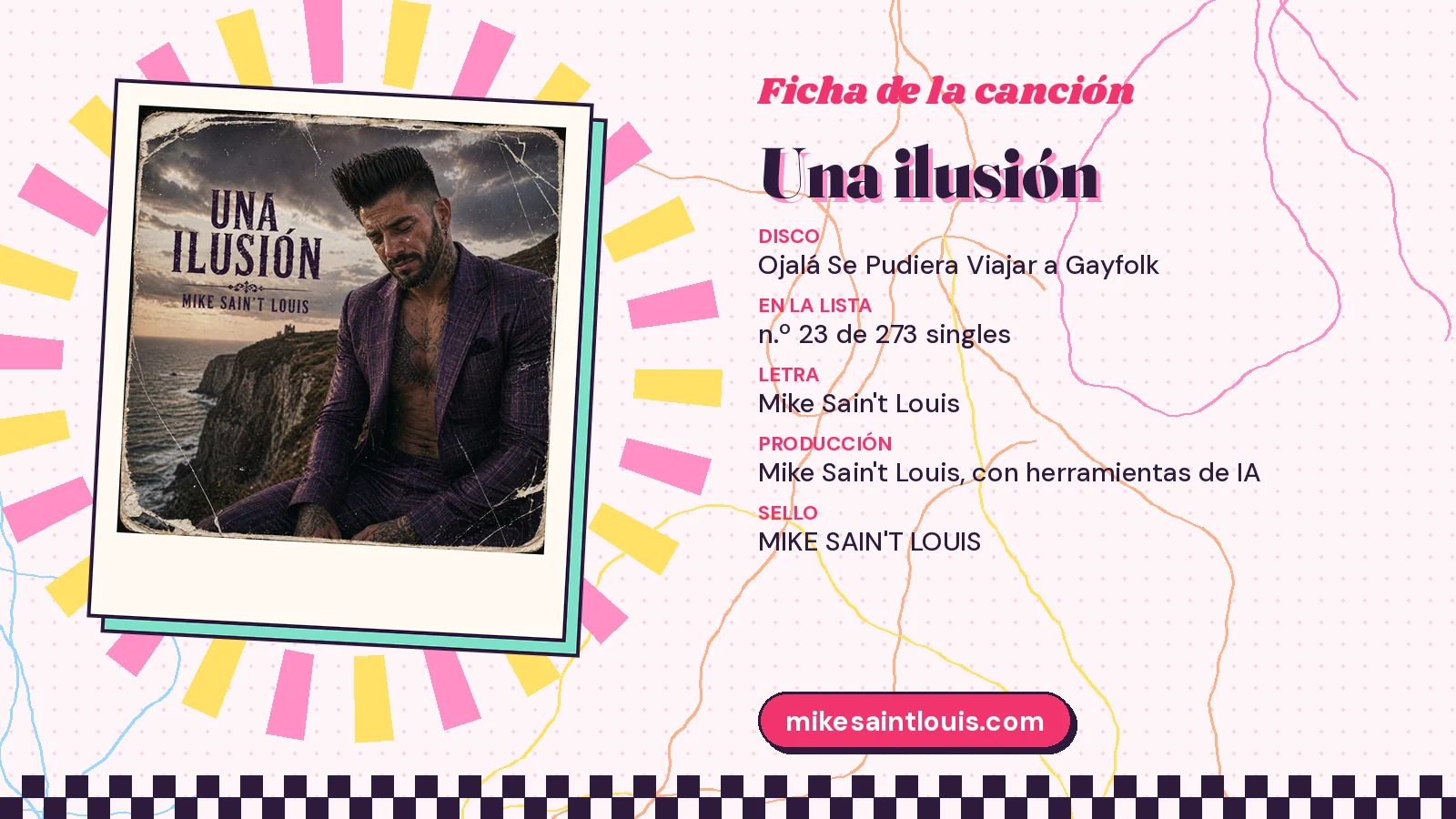
Some photographs don't get framed. They get kept. They travel in the wallet, behind the ID card, folded in half, and over the years their corners break, their surface cracks and their colour fades a little. We don't take them out to show them. We take them out, now and then, to look at them alone. The cover of «Una ilusión» looks exactly like that: a photo someone has carried around for too long.
A note before we begin: this track's lines haven't been published yet. Its page in the gayfolkplanet.com lyrics section says they'll arrive, and here I won't copy or imagine any. I lean on what's in plain sight: the image, the title, its number in the catalogue and the album it sits on. And on one word, «ilusión», which goes much further than it seems.
A photo with broken edges
The first thing that catches the eye isn't the protagonist but the medium. The whole image is treated as an old print: irregular white edges, chewed, with fine cracks crossing the sky and the sea like the creases in a much-handled paper. It's a photo that has lived. That has got wet, been folded, passed from one pocket to another.
That worn frame completely changes the reading. We're not seeing a scene in the present. We're seeing a memory. Something that happened, or that someone wants to believe happened, and that survives despite the damage. When a photo reaches that state it's because it has been looked at a lot. Nobody wears out images that don't matter to them.
And here the game with the title begins. A «ilusión» can be exactly that: what you keep in your wallet because it keeps you going. But an illusion can also be something that never quite existed, an image we make up and cling to. The worn photo works for both.
A purple suit facing the sea
In the image, a man sits high on a cliff, with the sea to his right and a cloudy sky above. He wears a checked suit in shades of purple and plum, well cut, with the jacket open and nothing underneath: a bare chest covered in tattoos, with a large heart drawn in the centre. He has a neat beard and a perfect quiff, tall and swept back.
But what defines the image is the expression. Eyes closed, head slightly bowed, mouth pressed tight. It's the expression of someone holding something in. A sorrow, tears, a memory that hurts. The contrast is brutal: everything about his appearance says care, effort, presence, and everything in his face says defeat.
That contrast interests me a lot. How often we dress up precisely when we're at our worst. The nice suit, the flawless hair, the perfume. As if clothes could hold up what's collapsing inside. Sometimes it works. Sometimes it's the only armour available. And sometimes, as on this cover, the armour is on but the body underneath has already surrendered.
The purple isn't accidental either. It's the colour of mourning in some traditions, the colour of Holy Week in Spain, of the hooded penitents. And it has also, for decades, been a colour linked to feminism and diversity. A purple suit is elegant, unusual, eye-catching. It's a colour that doesn't go unnoticed, worn by someone who, right now, would rather disappear.
A tattooed heart on show
There's another detail that carries weight. On the bare chest, right in the centre, the protagonist has a large tattooed heart, dark-lined, surrounded by other designs that vanish under the jacket. With no shirt, that heart is exposed, visible to anyone, while the face closes up.
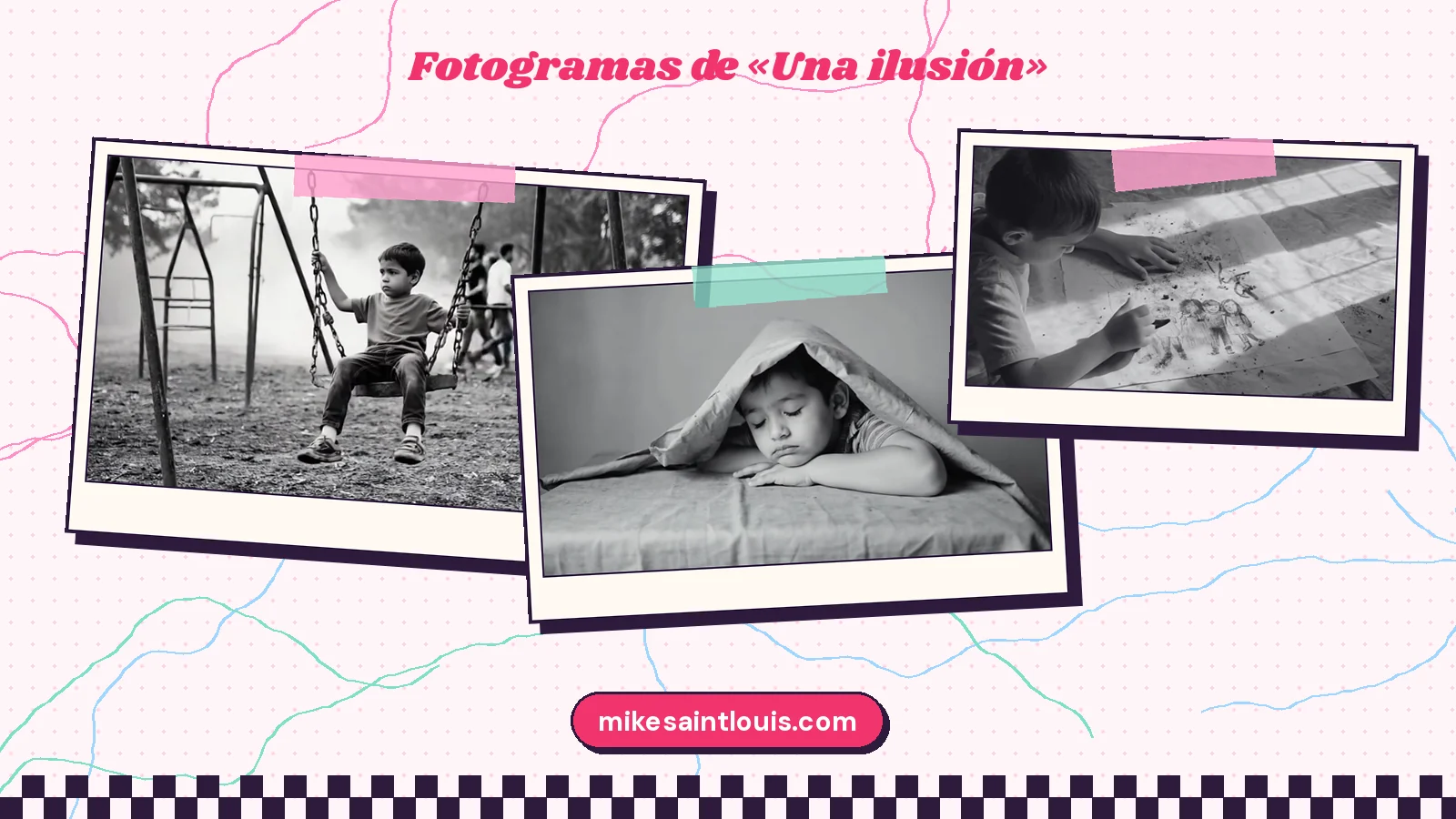
It's an almost literal image of an expression we use a lot: wearing your heart on your sleeve. Here it's tattooed, that is, forever. It isn't something you can cover with a smile or hide under a tie. It's there, etched into the skin, even if the rest of the body tries to hide it.
Heart tattoos have a long popular history: sailors got them with their mother's name or a love in port, and for decades they were almost a public declaration of loyalty. Wearing a tattooed heart says someone or something mattered so much you decided it shouldn't be erased. And maybe that's why it hurts so much to look at it when that someone is gone. Ink knows nothing of break-ups.
The ruined castle on the cliff
In the background, high on the cliff, you can make out the remains of a castle or a tower. Stone ruins cut out against a heavy sky, with a strip of warm light on the horizon, as if the sun were about to leave or had just tried to come out.
Ruins by the sea are a first-rate Romantic cliché. Nineteenth-century painters adored them. Caspar David Friedrich painted «The Monk by the Sea» between 1808 and 1810, a tiny figure seen from behind facing an immense sea and sky, and around 1818 «Wanderer above the Sea of Fog», with a man seen from behind contemplating a landscape that overwhelms him. In those works, nature is so vast that a human being can only stand still and feel.
The cover of «Una ilusión» resembles those paintings, but with an important difference: the protagonist doesn't turn his back to us. He faces us, in full view, eyes closed. He isn't contemplating the landscape. He has shut himself inside himself, his back to the sea beside him. The ruined castle behind him is almost a mirror: something that was once big and strong and that time has left in loose stones.
A ruined castle is also a classic image of broken dreams. In Spanish we say «hacer castillos en el aire», building castles in the air, for plans with no foundation. Here the castle isn't in the air, it's on rock. But it's just as broken. Maybe it's the visual way of saying that a hope, however solid it seemed, can also collapse.
The word that won't translate
Now, the title. «Ilusión» is one of those Spanish words that drive translators mad. In English, "illusion" mostly means deception, mirage, false perception. In Spanish it means that too, but also something bright: the joyful hope that something good will happen, the excitement of what's to come. «Me hace mucha ilusión» has no exact English equivalent. Nor does «tengo ilusión por este proyecto». You have to go round it: excitement, hope, looking forward to.
That double face is fascinating. With the same word we name what deceives us and what thrills us. As if the language knew that the border between hope and mirage is very thin. That everything we await with joy could turn out, in the end, to be an illusion in the other sense. And that, even so, it's worth waiting for.
This single's title says «una ilusión», singular, with an indefinite article. Not "the hope", not "my hopes". One. Like someone saying they only have one left, or only need one. And the cover, with its closed eyes, leaves the question open: is he keeping it or has he just lost it?
It makes me «ilusión»
Before going into the dark, I want to stay a moment in the bright part of the word. In Spain, the expression «me hace ilusión» is used for almost everything good: a visit, a present, a trip, an unexpected call. It has something childlike and clean about it. You say it with shining eyes.
If one night stands for «ilusión» in this country, it's the night of 5 January. On the eve of the Three Kings, millions of children leave their shoes by the window, water for the camels and something to eat for the Magi, and go to bed unable to close their eyes from nerves. That mix of waiting, faith and impatience is exactly what Spanish calls «ilusión». And it's curious: it's built on something the child discovers, years later, wasn't what it seemed. An «ilusión» in both senses at once, and yet one of the happiest memories many of us keep.
Maybe that's why the word is so dear to us. Because we learned at the same time that illusions can be a deception and that they can make us immensely happy. And that the two don't exclude each other.
What is life? An illusion
In 1635, Pedro Calderón de la Barca published «La vida es sueño» (Life is a dream), in which Prince Segismundo, locked in a tower since childhood, delivers one of the most famous monologues in Spanish theatre:
¿Qué es la vida? Un frenesí. ¿Qué es la vida? Una ilusión, una sombra, una ficción, y el mayor bien es pequeño; que toda la vida es sueño, y los sueños, sueños son.
(What is life? A frenzy. / What is life? An illusion, / a shadow, a fiction, / and the greatest good is small; / for all of life is a dream, / and dreams are only dreams.) There the word appears in its most unsettling sense: the whole of life as a deception, as something we can't be sure is real. Segismundo doubts everything because he's been made to doubt everything. They took him out of his confinement, made him king for a day and sent him back to the tower telling him he'd dreamed it.
I find it significant that the most famous character who asks what life is and answers "an illusion" is someone locked in a tower. Like the ruined castle on the cover. Like the room you don't want to leave. Illusions, in both senses, grow a lot in confinement.
Mirages over the sea
There's an optical phenomenon that suits this cliff landscape. It's called fata morgana, after Morgan le Fay of the Arthurian legends, and it's a kind of mirage seen above all over the sea: layers of air at different temperatures bend the light and make floating ships, cities that don't exist and impossible cliffs appear on the horizon. For centuries, sailors swore they had seen things that weren't there.
I like to think that the man on the cover, if he opened his eyes, might see a fata morgana on the horizon. Something beautiful and false. Or maybe something real he believes is false. Because one of the hardest things when you're low is trusting what you see. Sometimes the good things in front of you look like a mirage, and the bad things you imagine look like the only truth.
The art of deceiving with permission
There's a whole trade devoted to illusions: magicians, whom Spanish also calls «ilusionistas». The Frenchman Jean-Eugène Robert-Houdin, in the nineteenth century, is considered one of the fathers of modern magic, the man who took tricks out of fairgrounds and into elegant theatres, in tails and with fine manners. A young Erik Weisz admired him so much that he adopted a stage name in his honour: Harry Houdini.
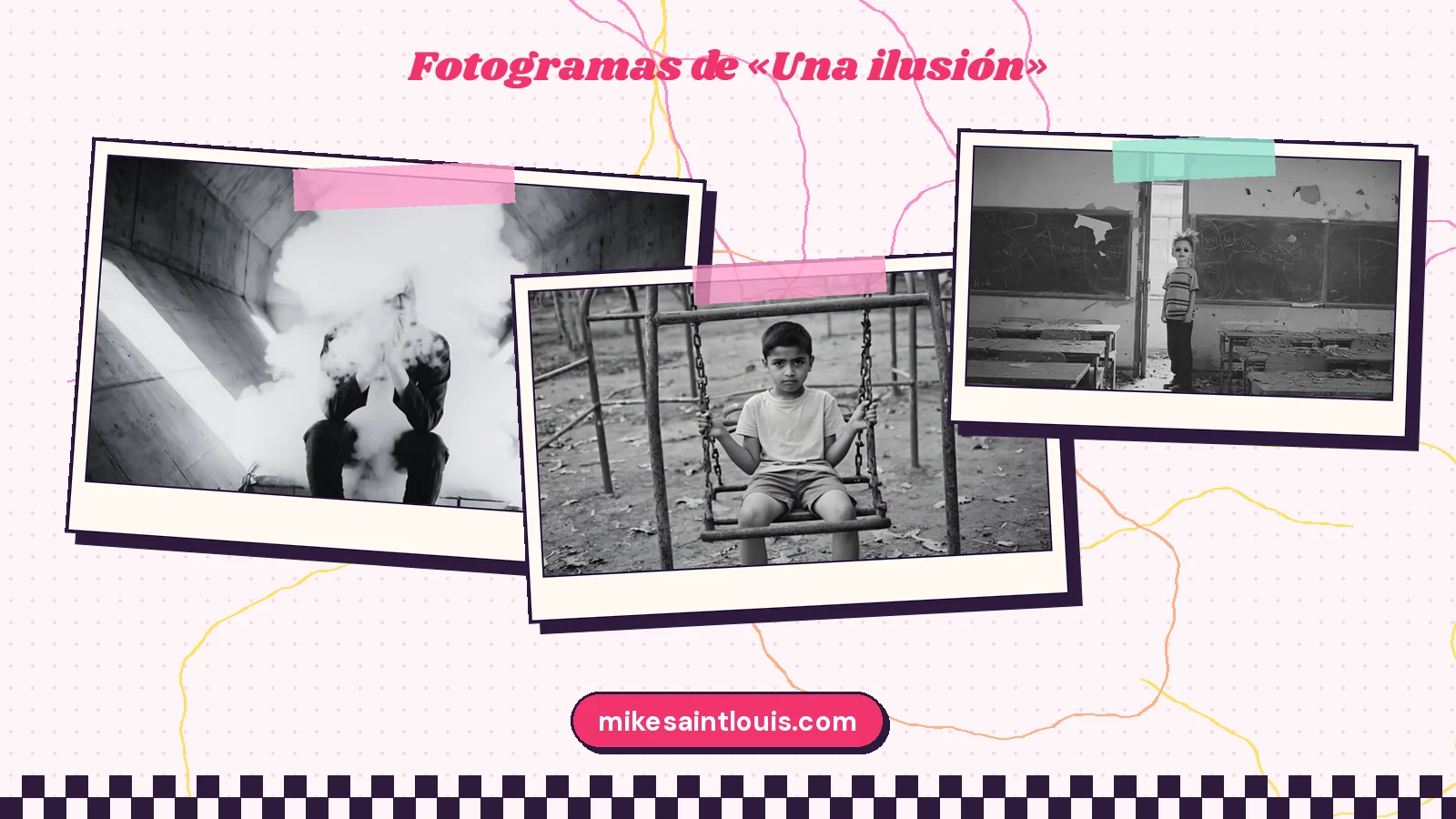
The lovely thing about magic is that it's an agreed deception. The audience knows it's being fooled and pays precisely for that. Nobody leaves a magic show angry because the woman wasn't really sawn in half. They leave amazed. For an hour we've accepted that the impossible happens before our eyes, knowing it isn't real.
There are illusions like that in life that are also worth it. The hope of a first love that may not last. The hope of a project that may not work out. The hope of a song that doesn't have its lyrics yet. They don't need to be true to do us good while they last. The problem isn't having illusions. The problem comes when someone uses them to deceive us without our permission.
I know that last one well, and I've written about it more than once. But I've also learned to look at the past without getting trapped in it, something I discuss in «Contra la nostalgia» (Against nostalgia). An old photo can be an anchor or a springboard. It depends how you look at it.
The neighbour who can't find any
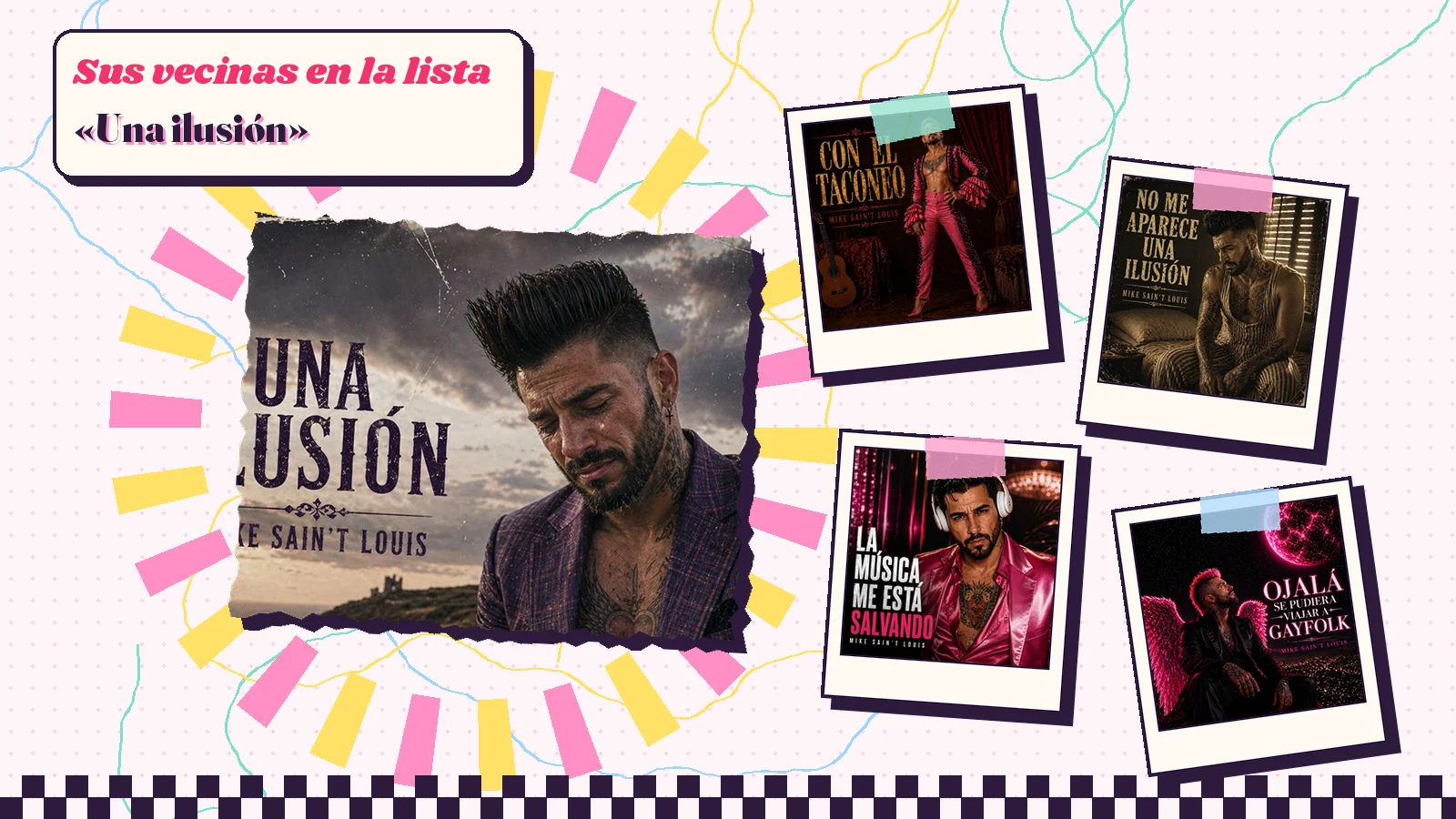
In the full catalogue, this track is number 23 of 273. It's preceded by «Con el taconeo» (With the heel-tapping), which I wrote about in «La misma tarima» (The same stage), and followed by a song with an almost identical title: «No me aparece una ilusión» (No hope shows up for me).
That neighbour does have published lyrics, and they're among the rawest I've written about feeling low. It begins like this:
No me apetece salir de la habitación No encuentro la fuerza, la motivación
(I don't feel like leaving the room / I can't find the strength, the motivation.) And its chorus keeps coming back to the same phrase: «No me aparece una ilusión». I've already analysed that repetition, made almost entirely of negatives, in «Una canción hecha de noes» (A song made of noes).
Together, the two songs form a strange diptych. One is titled with what you have, or had, or hope for: one «ilusión». The other, with what's missing: none shows up. Side by side on the list, like two photos of the same person on different days. I don't know if it's a sequence or a swing. Probably both, because that's how mood works: not in a straight line, but in waves.
When none shows up
Losing interest in everything has a name in psychology: anhedonia, the inability to feel pleasure or interest in things that used to bring it. It's one of the central symptoms of depression. It isn't laziness, it isn't a lack of character, it isn't a matter of "pulling yourself together". It's a state in which the brain stops responding to what used to light it up. Food has no taste, music doesn't move you, plans don't appeal.
I bring it up here because the word «ilusión» is at the heart of that experience. When someone says «no tengo ilusión por nada», "I'm not looking forward to anything", they're not being dramatic. They may be describing a symptom. And it deserves to be taken seriously.
The good news is that anhedonia, like depression, can be treated. With therapy, sometimes with medication, with time and support. You don't have to wait to hit rock bottom to ask for help. Noticing that you've gone weeks without looking forward to anything is enough reason to talk to your GP or a mental health professional.
If you recognise yourself in the photo
If you see yourself in that cover, eyes closed, well dressed on the outside and broken inside, you don't have to carry on like that alone. Tell someone. One sentence is enough: "I'm not OK." In Spain, 024 is available all day, every day, free and confidential, for anyone going through a very hard moment or having thoughts of harming themselves. If there's immediate danger, call 112. If you're outside Spain, check your country's crisis line or dial its emergency number.
Music keeps me company a lot in those stretches, and I talk about it in «La música me está salvando» (Music is saving me). But a song is company, not treatment. If you need it, ask for both.
Keeping just one
Back to the wallet. To that photo nobody is shown. I like to think we all carry one, even if it isn't on paper. An image, a memory, a promise, a person. Something small we take out on bad days to remember there were good days, or that there could be.
Some people keep a photo of a grandparent who's gone, of a summer in the village, of one particular afternoon when everything seemed possible. Some keep a concert ticket, a train ticket, a napkin with a phone number written in biro. Objects worth nothing to anyone else, worth exactly the weight of a hope to their owner. When we lose them in a house move, it hurts disproportionately, and rightly so: we haven't lost a piece of paper, we've lost proof that something good existed.
In the world of screens, that wallet photo has moved. Now it lives in the phone's gallery, among thousands of screenshots, and turns up unannounced when the app decides to remind us what we were doing on this day five years ago. But the gesture is still the same: looking for it alone, gazing at it a while and putting it away again.
You don't need many. The title says so: one. A single hope can be enough to get up in the morning. A trip still to take, a dog waiting for you, a song you haven't written yet, a friend who's going to call on Thursday. Small things. When sadness covers everything, big hopes are frightening. Small ones fit in a pocket.
It's not the first time one of my covers contradicts in light what the lyrics tell in the dark; I took that game apart in «La foto que no es el final» (The photo that isn't the end). Something similar happens here, but the other way round: the image is sad and the title, in its most common sense, is a promise.
And if one day the photo tears completely, you can take another. Hopes renew too. It isn't a betrayal of the old one. It's staying alive.
For whoever listens with the house in silence
For anyone who keeps a photo they no longer dare look at. For anyone who puts on their best suit on their worst day. For anyone who has lost hope and is waiting for it to come back. For anyone who still has one and protects it as best they can.
And for anyone who loves cliff landscapes, ruined castles, Golden Age theatre and words that refuse to be translated. For anyone who knows that elegance and sadness sometimes dress alike.
The album that holds this track is «Ojalá se pudiera viajar a Gayfolk» (If only you could travel to Gayfolk), the second of my trilogy, a title that is itself an «ilusión» in both senses. Until its lines are published, you can listen on the platforms and download it free, with no sign-up, from my downloads page. When the lyrics arrive, I'll upload them whole, just as they are, without retouching a single corner of the photo.
Frequently asked questions
What is «Una ilusión» about? The lyrics aren't published yet, so this post doesn't quote them. The cover shows a man in a purple checked suit, eyes closed, sitting on a cliff above the sea, with a ruined castle behind him and the image treated as a worn old photo. The post reads the title through both meanings of «ilusión».
How is it related to «No me aparece una ilusión»? They're neighbouring tracks on the singles list: «Una ilusión» is number 23 and «No me aparece una ilusión» number 24. One names the hope you keep or wait for; the other, published with lyrics, describes a low in which none shows up.
Which album is it on? On «Ojalá se pudiera viajar a Gayfolk», the second album of the Gayfolk trilogy. It's track 23 of 273, between «Con el taconeo» and «No me aparece una ilusión».
Why is «ilusión» hard to translate? Because in Spanish it means both deception or mirage and the joyful hope that something good will happen. The English "illusion" only covers the first sense.
What can I do if I've lost interest in everything? If it lasts weeks, talk to your doctor or a mental health professional: it can be a treatable symptom. In Spain, 024 answers free 24 hours a day and 112 is there for immediate danger. Outside Spain, look for your country's crisis line.
Who makes this song? Mike Sain't Louis, a lyricist, composer and music producer from Madrid, the first AI songwriter. He writes the lyrics and directs the production; the music and performances are generated with artificial intelligence.