By Mike Sain't Louis ·
Carrie's mouth: insulting people with the horror films of the video shop
The aisle at the back. The one with less light, the darkest covers, killer dolls, chainsaws, ketchup-coloured blood and girls screaming with their mouths wide open. The horror aisle at the video shop. You went in with your mum for a Disney film and, while she paid, you slipped off to stare at those boxes the way you'd peer down a well.
A lot of my insults smell of that aisle. I mean it.
«Madre mía / ¡Si parece la boca de Carrie!» («Good grief / It looks just like Carrie's mouth!»)
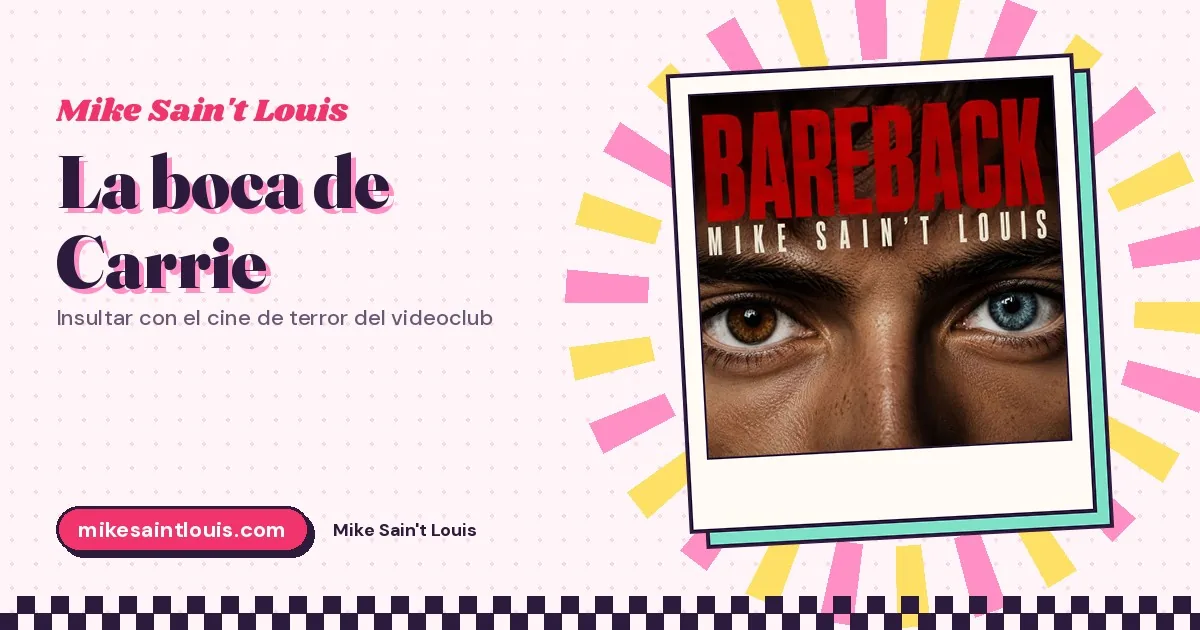
That line is in «Bareback», right in the middle of some ex-friend advice about teeth, molars and cavities. And the comparison isn't with any old monster: it's with Carrie, the one from the Brian De Palma film based on the Stephen King novel. The prom one. The bucket-of-blood one.
The song's page already explains what happens in the lyrics. Here I'm sticking with that one line, and everything it drags along behind it: a way of insulting people that comes from horror films, from the dark aisle of the video shop and from the covers that kept us up at night.
The cheapskate cinephile's insult
There are playground insults, garage insults, office insults, chat-show insults. And then there's a kind of insult I adore and use constantly: the cheapskate cinephile's insult. It doesn't call you ugly; it compares you to a film character. It doesn't say you've got a foul mouth; it says your mouth looks like Carrie's.
What that insult does is summon a huge image with a single name. Carrie brings the stained dress with her, the bulging eyes, the gym in flames. No description needed. Just say her name. And because the comparison is so over the top, it makes you laugh before it hurts. It's such a monstrous exaggeration that nobody could take it literally.
That's what I love about horror as a source of insults: it's pure exaggeration. Nobody's mouth looks like Carrie's. Nobody lives in the house of a thousand corpses. Nobody is Leatherface. When I compare you to them, I'm saying something very nasty, but wrapped in a costume so outrageous that the insult turns into a show.
I feel like Pepi Valladares
In «La casa de los mil cadáveres», horror isn't there to insult the other person but to describe me:
«Me siento como Pepi Valladares / En la casa de los mil cadáveres» («I feel like Pepi Valladares / In the house of a thousand corpses»)
There, the film is the set for my own misfortune. And I drop a character from my own universe into it, like someone sneaking into somebody else's frame. I don't need to explain how I feel: if I tell you I'm in the house of a thousand corpses, you already know it's about basements, screaming and not getting out alive.
The lovely thing is that the same device works both ways. To mock the other person, with Carrie's mouth, and to mock myself, with the house of corpses. Horror is a language that lets me swing from one side to the other without changing register.
And in that same song, by the way, you'll find the most famous bit of self-parody in all my lyrics, the «pero ¿cómo soy tan tonto?» («but how can I be so stupid?»). Horror and self-parody go hand in hand. When you compare yourself to the victim in a scary film, you're laughing at how little you saw the killer coming.
The emotional vampire
There's one horror figure that keeps coming back in my songs: the vampire. In «Como en La matanza de Texas», the other person is an emotional vampire, and there's a line I think is one of the most precise things I've ever written about manipulators:
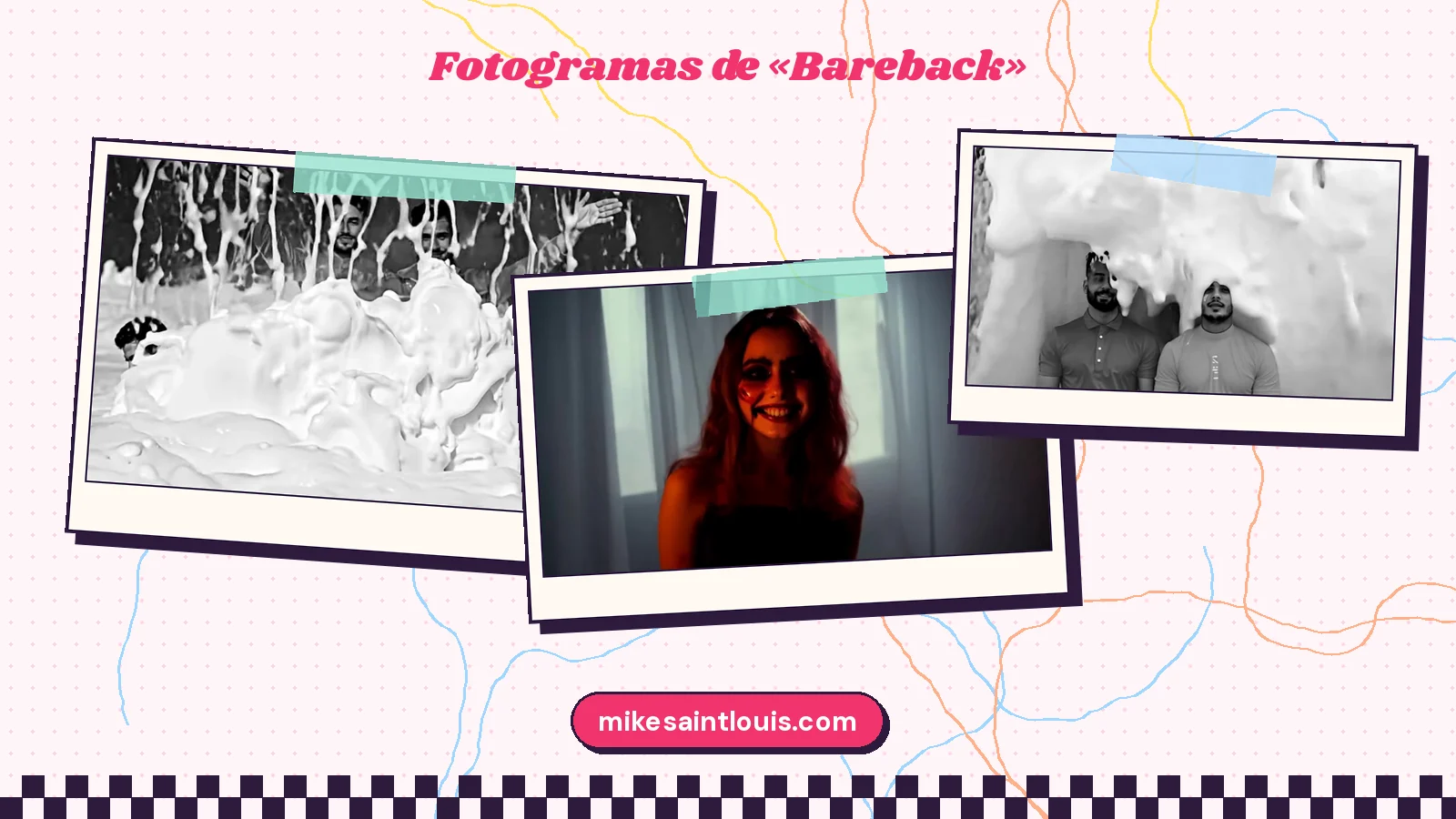
«Te alimentas de esperanza y la conviertes en sal» («You feed on hope and turn it into salt»)
The vampire is the perfect metaphor for the narcissist because it feeds on somebody else. It doesn't kill in one go: it sucks a little at a time, night after night, and the victim grows pale and weak without knowing why. And what it sucks, in my line, isn't blood: it's hope. Hope that turns into salt, which is what's left on your face when the tears dry.
The title also sticks two different terrors together: the vampire from the castles of Transylvania and the chainsaw from Texas. That's what happens when you grow up in the video shop aisle: you mix everything, gothic with gore, Dracula with Leatherface, like mixing your penny sweets in the paper bag from the kiosk.
There's another post on this blog, the one about fangs in the neck, that takes this more slowly. Here I just want to point out that the vampire, in my lyrics, is always the other person. Except once.
The vampire who cries
The exception is in «El castigo más duro». There, the vampire is me, or at least that's what passers-by think:
«la gente que pasa cerca se cree / que soy un vampiro que llora bajo la luz de la luna» («the people walking past believe / I'm a vampire crying under the moonlight»)
It's one of my favourite images out of everything I've written. Words with spikes come out of me, my mouth bleeds, and the people walking by think I'm a vampire. But not a vampire on the attack: a vampire who cries. Under the moon, like in the old films, but with tears instead of fangs.
Here horror flips over. The monster is the victim. The blood isn't someone else's, it's mine. And the moon, which in horror films announces the attack, here lights up a heartbreak.
To me it's the best proof that horror, in my songs, isn't set dressing. It's an emotional language. I use it to insult, to laugh at myself and, sometimes, to tell pain in a way that doesn't sound like a daytime-radio ballad.
Why horror and not melodrama
You might ask why I don't just use good old-fashioned melodrama. The copla kind, the bolero kind, the telenovela kind. I use that too, of course. But horror has something melodrama doesn't: unintentional comedy.
B-movie horror, the stuff that filled the video shop aisle, is as funny as it is frightening. The blood is too red. The screams go on too long. You can tell the puppets are rubber. And that excess is exactly what turns them into camp material. They let you say something terrible and laugh at the same time.
Melodrama, on the other hand, takes itself seriously. If I compare my ex to a soap-opera villain, the insult has something solemn about it. If I compare him to Carrie drenched in pig's blood, the insult has something of a village fair about it.
There's a piece on the blog about why camp isn't a joke even if you laugh, and video-shop horror is one of the clearest examples. It's over the top, it's tacky, it's theatrical, and that's precisely why it can say things nobody would dare say straight.
The covers
Back to the aisle at the back, because I think it matters for understanding where all this comes from.
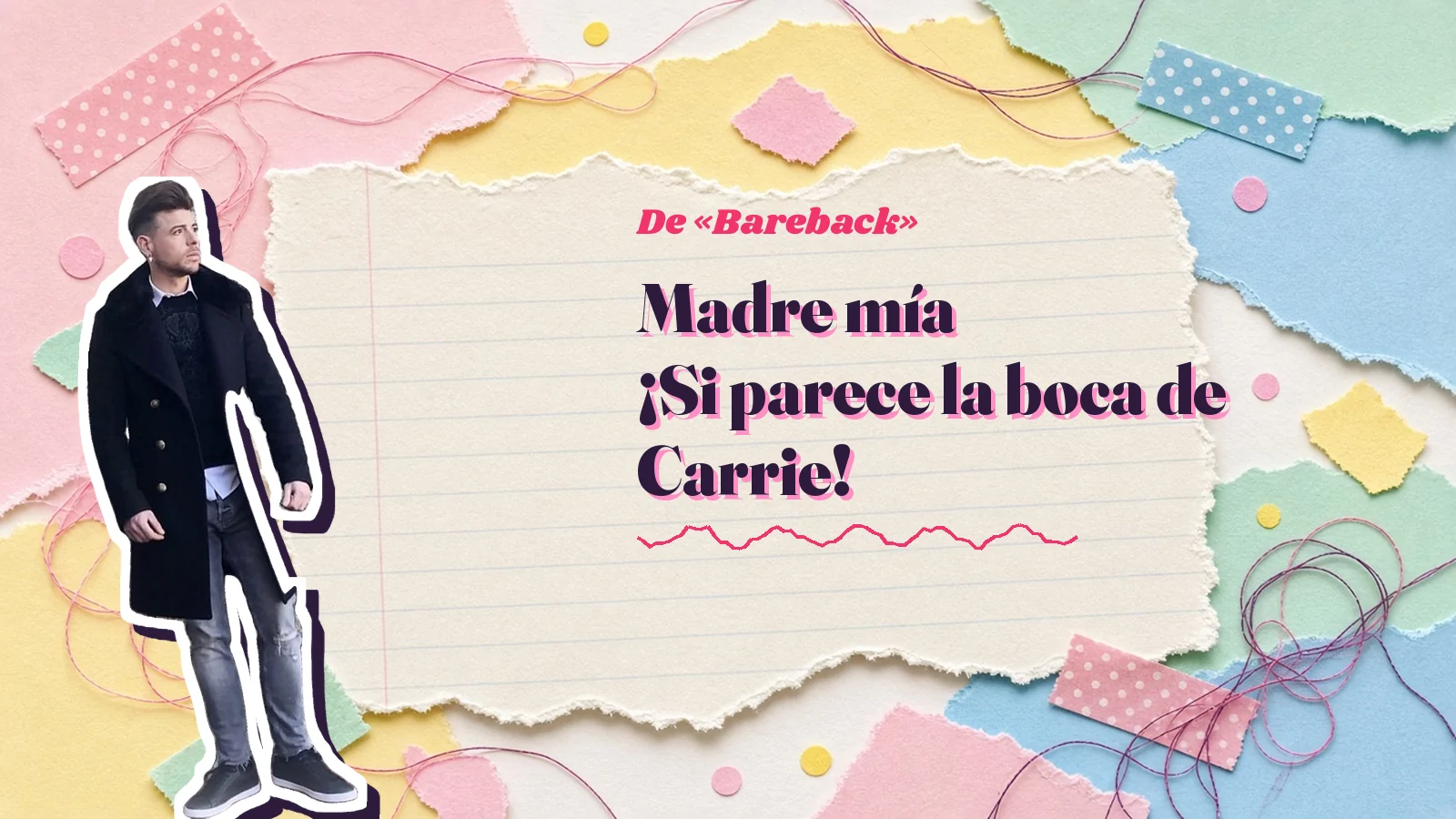
For a lot of us kids who grew up in Spain in the eighties and nineties, the video shop was our first brush with horror. And not with the films, which we often weren't allowed to watch, but with the covers. Those overblown sleeves, with lettering dripping blood, eyes glowing in the dark, taglines along the lines of «don't watch it alone». The covers were little masterpieces of fright. They promised far more than the films ever delivered.
And I think that stayed inside me as a way of writing. My titles are a bit like video shop covers. They promise a lot. They exaggerate. They grab you by the lapels. «La casa de los mil cadáveres». «Como en La matanza de Texas». «Igual que en las pelis slasher». Titles that could sit in the aisle at the back, right next to the real ones.
I tell it another way in the piece about retro as a way of looking forward: it isn't nostalgia for the video shop. It's using what we learnt there to tell what's happening now.
Slasher films
In «Igual que en las pelis slasher», horror becomes the frame for the whole song. There's a «hola, hola, hola» with the vowel stretched out, an «is anybody there?», an «are you coming to kill me?», like the girl in the film who goes down to the basement with her torch while the whole audience is yelling at her not to.
That slasher moment, the victim doing exactly what she shouldn't, is one of the campest images I know. We all know you don't go down to the basement. We all yell at the screen. And down she goes. She always goes down.
To me it's the perfect metaphor for getting back with an ex. You know you shouldn't. Everyone tells you. Your friends yell at you from the sofa like a cinema audience. And down you go to the basement with your torch and your pyjamas and your dressing gown. And there he is, the killer, with that same old smile.
The girl who screams
There's one horror figure we maricas (queers, said with love) have always worshipped, and it isn't the monster. It's the girl who screams. The one running through the woods in her nightie, the one who trips at exactly the wrong moment, the one who survives at the end with her make-up smeared and a thousand-yard stare. In English she even has a poster-ready name: the scream queen.
I can't fully explain why we love her so much, but I have a hunch. The girl who screams is over the top, she's theatrical, she's vulnerable and in the end she holds out. Every misfortune in the world happens to her and she comes out alive, hair a mess but alive. She's a survival diva. And for a lot of people who grew up feeling odd, there's something of a mirror in that.
In my songs, when I cast myself as the film's victim, that's the part I take. Not the muscly boy who dies in minute ten. The one who screams, the one who goes down to the basement, the one who gets it wrong again and again and still makes it to the end credits. In her dressing gown and pyjamas, like in the slasher song.
Being the girl who screams is part defeat and part victory. She screams because she's scared. But she screams. She doesn't keep quiet.
Rubber monsters
Another thing I love about video-shop horror is how cheap it was. Rubber monsters, blood from a bottle, sets that wobbled if an actor shut a door too hard. A lot of those films were made on a shoestring and a load of imagination, and it showed. And that's exactly why they were such a joy: there was something handmade, almost school-play, about that fear.
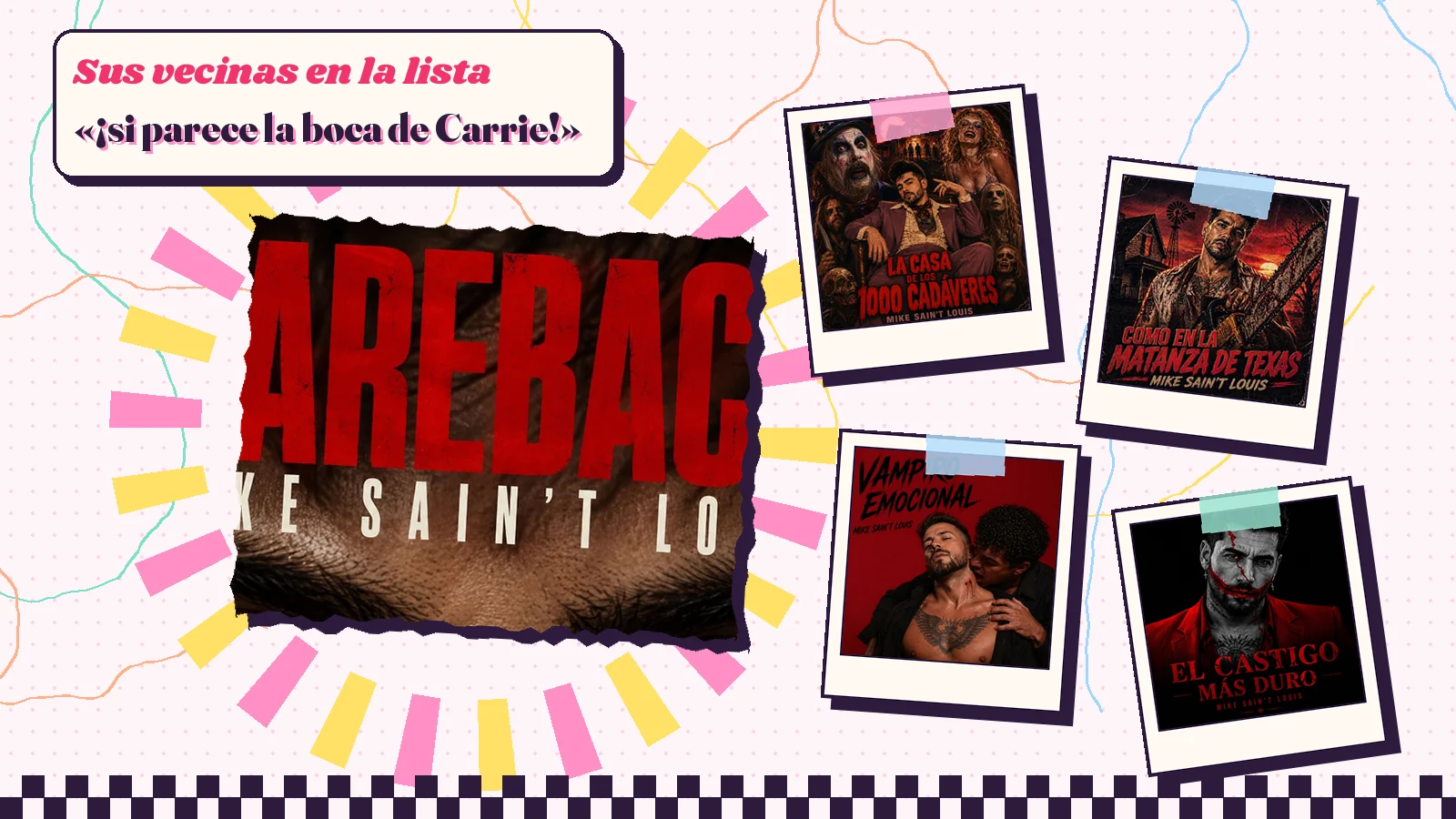
I relate to that a lot. My songs, my covers and my music videos are made without big budgets, with whatever there is. I talk about it in a blog post on what an art director does when there's no budget. The B-movie taught me, without my knowing it, that you can scare people, move them and make them laugh with a rubber monster, as long as you truly believe in it.
And that's the key: believing in it. The cheap horror films that worked were the ones that took their own nonsense seriously. None of them winked at the audience. They went all in with their latex puppet. My lyrics try to do the same: say the most outrageous thing in the world with the straightest face possible. Carrie's mouth, delivered with all the conviction of a lady in the queue at the fishmonger's.
Screaming in a lyric
Horror also gave me a way to punctuate. The scream. The stretched vowel, like the «holaaaaaaaaa» in the slasher song, the girl walking into the dark house and asking if anyone's there. We all know someone's there. She doesn't.
That stretched vowel is pure horror film. It's a scream turned into spelling. And it turns up in more of my songs, in other contexts, because I found that a long vowel on the page has much the same effect as a scream in a film: it braces you for something.
What comes after the scream, in horror, is usually the jump scare. In my songs, it's usually a joke. Or a blunt truth. But the mechanism is the same: tension, scream, punch. I learnt it, without knowing, from staring at covers.
The insult that doesn't really wound
I'll get a little serious here, because the cinephile's insult has an ethical advantage that matters to me.
When I compare someone to Carrie or to a vampire, I'm not attacking anything real about them. I'm not going after where they come from, their actual body, the way they're queer or anything else. I'm going after an exaggerated image that looks like nothing real. It's a fictional insult. And fictional insults hurt less and get bigger laughs.
Some people insult others for what they are. I'd rather insult people for what they've done, and dress it up as a film. Carrie's mouth in «Bareback» comes after some advice about teeth and cavities, yes, but the insult itself is so exaggerated it becomes a caricature. Nobody's going to think his mouth really looks like Carrie's. They'll think whoever wrote it is very, very angry, and has watched an awful lot of rented videos.
There's a piece on the blog about doing gay humour without doing harm that's all about that line. I don't always respect it to the millimetre, I'm only human and a good joke gets the better of me. But horror helps me stay on the right side of it.
A tiny film library
For anyone who wants to see where my insults come from, here's a tiny film library from the aisle at the back. It isn't a list of recommendations, I'm no film critic. It's a map:
- Carrie, for mouths and for proms that end badly.
- The Texas Chain Saw Massacre, for manipulators who won't let go of the chainsaw.
- House of 1000 Corpses, for when I feel trapped in my own story.
- Every vampire film, all of them, for those who feed on hope.
- Saw, with its mask, for the twisted games of people who set you tests to see if you love them.
If you've seen all five, you'll understand half my lyrics. If you haven't seen any, no matter: the covers speak for themselves.
I write it myself
Something that's always worth saying. I write all these comparisons myself, in my lyrics, with no artificial intelligence. The music and the vocals on my songs are made with AI tools such as Suno; I'm a lyricist, composer and producer, and the throat on the track isn't mine. But no machine decided on Carrie. That was decided by someone who used to peek into the back aisle of the video shop while his mum paid for the Disney film.
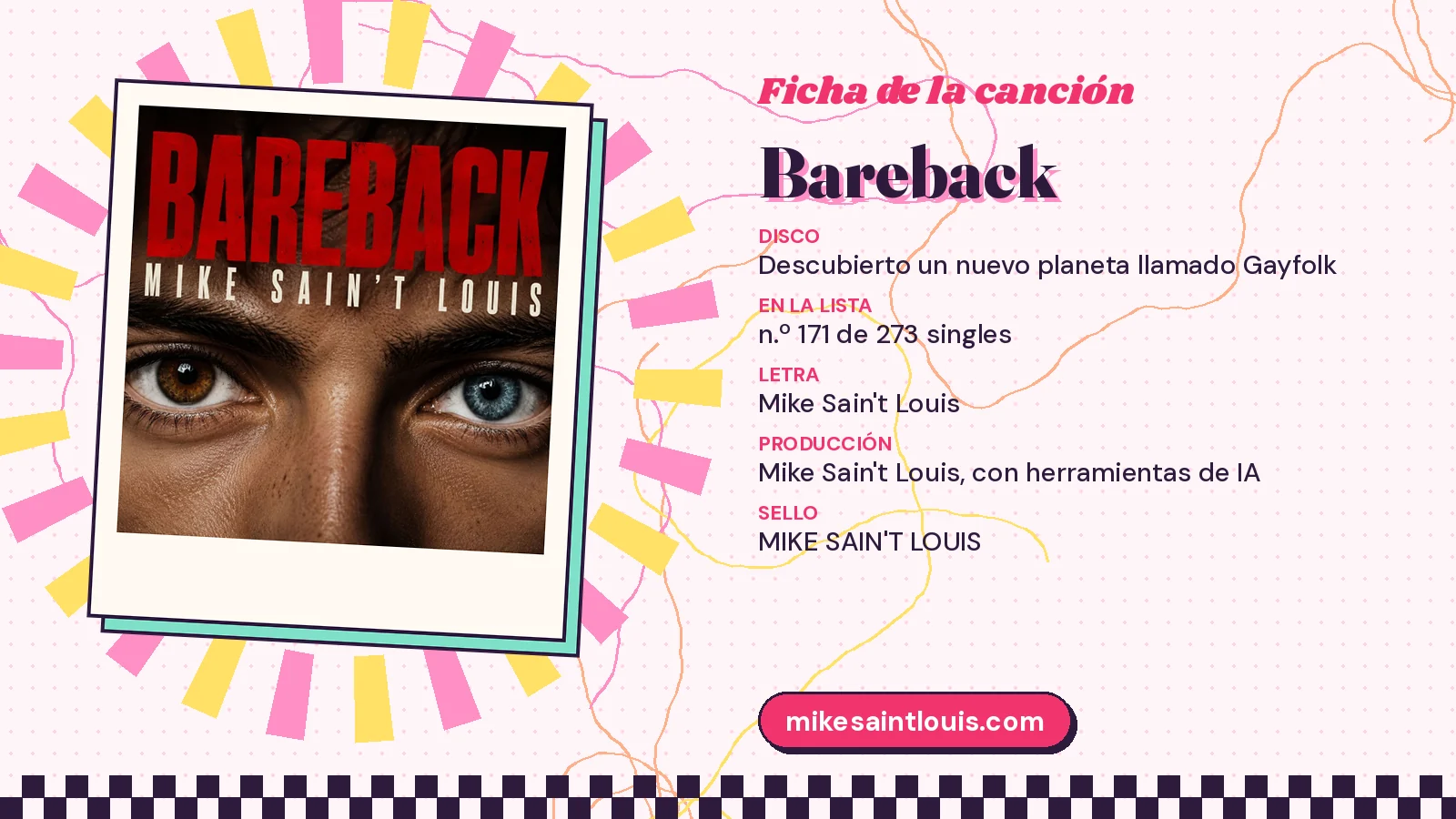
Well, that last bit is an image, I'm not going to tell you about my childhood in details that are beside the point. But the aisle existed, and so did the Carrie cover.
Rewind
There's a video shop ritual that's been lost and that strikes me as a wonderful metaphor for what I do when I write about an ex: rewinding.
You had to return tapes rewound. Otherwise they fined you, or the guy behind the counter gave you a look, which was worse. So when the film finished, before taking it back, you put it in the machine again, pressed the button and waited while the tape whirred back to the start. Sometimes, out of curiosity, you rewound while watching the screen, and saw the film backwards at top speed: blood flowing back into bodies, the dead getting up, the killer walking in reverse.
Writing a break-up song is a lot like that. You rewind the story at full speed and watch it backwards. What was monstrous at the end was charming at the start. The killer in the final scene was, in minute one, a nice boy at a party. And as you rewind you realise the signs were there, in every frame, you just didn't know how to look.
That's why my lyrics are full of details from the first days. The candles on the cake, the eyes that seemed the colour of the sea, the selfie, the Canarian's smile. They're rewound frames. Clues the script had left lying around that the victim never spotted.
And then, once you've rewound the whole tape, you take it back. You pop it out of the machine, slide it into its box with the over-the-top cover and leave it on the counter. That's it. Someone else can rent it.
The bucket of blood
To finish, Carrie's most famous image: the bucket of pig's blood pouring over the prom queen. Public humiliation turned into a scene. And what comes after is the most outrageous revenge in film history.
In my songs there's no revenge on that scale. At most, there's a line. A comparison. A «¡si parece la boca de Carrie!» tossed out between laughs, on a night when, on top of everything, we haven't had a single shot.
The same song makes it clear before it even gets to Carrie: «Ni un chupito voy a dedicarte, para qué / ¿Para llorar por un mequetrefe?» («I won't even raise a shot to you, what for? / To cry over a nobody?»). Someone who won't waste a single shot on you isn't going to waste a bucket of pig's blood on you either. The insult arrives, yes, but in passing, like a remark about the weather.
Pocket-sized revenge. Cover-sized, not film-sized.
But it has its charm. And if he takes offence, I can always tell him what we used to say at the video shop when you brought a tape back without rewinding it: not my fault, it came like that.
The song is on the singles list and the full lyrics are on gayfolkplanet.com. Play it with the lights off. For atmosphere.
Frequently asked questions
Why does Carrie turn up in «Bareback»? Because, in the middle of some mocking advice about the ex's teeth, the lyrics come out with: «¡Si parece la boca de Carrie!» («It looks just like Carrie's mouth!»). Mike Sain't Louis often uses horror films as a source of outrageous comparisons and camp humour.
Which other songs of his use horror films? «La casa de los mil cadáveres», «Como en La matanza de Texas», «Igual que en las pelis slasher» and «El castigo más duro», with its vampire crying under the moon.
Who writes the lyrics? Mike Sain't Louis, a Madrid lyricist, composer and music producer. The lyrics are his and are written without artificial intelligence; the music and vocals are made with AI tools such as Suno.
Where can I read the lyrics of «Bareback»? At gayfolkplanet.com/letras/bareback. The song's page is at mikesaintlouis.com/blog/bareback.