
By Mike Sain't Louis ·
«Hasta nunca, maldita cucaracha»: how my songs end
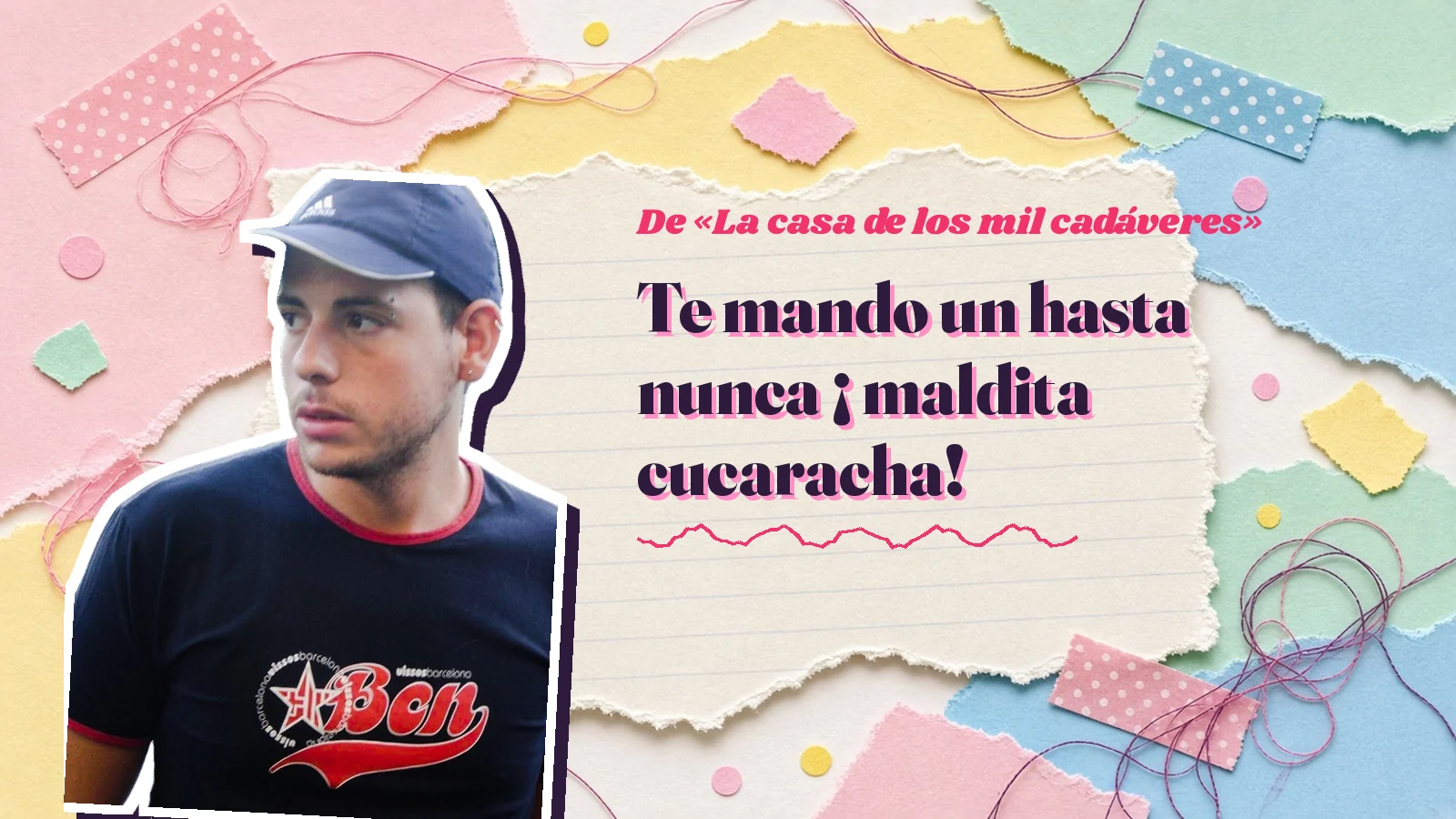
«Te mando un hasta nunca ¡ maldita cucaracha!» "I'm sending you a good riddance, you damned cockroach!"
That's the last line of «La casa de los mil cadáveres», "The house of a thousand corpses". I wrote it with that odd space before the exclamation mark, as if I'd taken a second to draw breath before letting fly. And it still strikes me as one of the most honest endings I have. No resolution, no lesson, no forgiveness. Just an insect. And a door slammed so hard the frame shudders.
There's a way of reading songs I'm very fond of: backwards. Starting from the end. It's an exercise I'd recommend to anyone who writes: take everything you've done and read only the last lines, one after another, like someone reading the final pages of a stack of novels in a bookshop with no intention of buying any. What comes out is a fairly faithful portrait of how I say goodbye. To people, to stories and to songs.
That's what this piece is about. How my lyrics end.
The slammed door
The commonest ending in my catalogue is the slammed door. The goodbye with an insult, with spite, with the last word filed to a point.
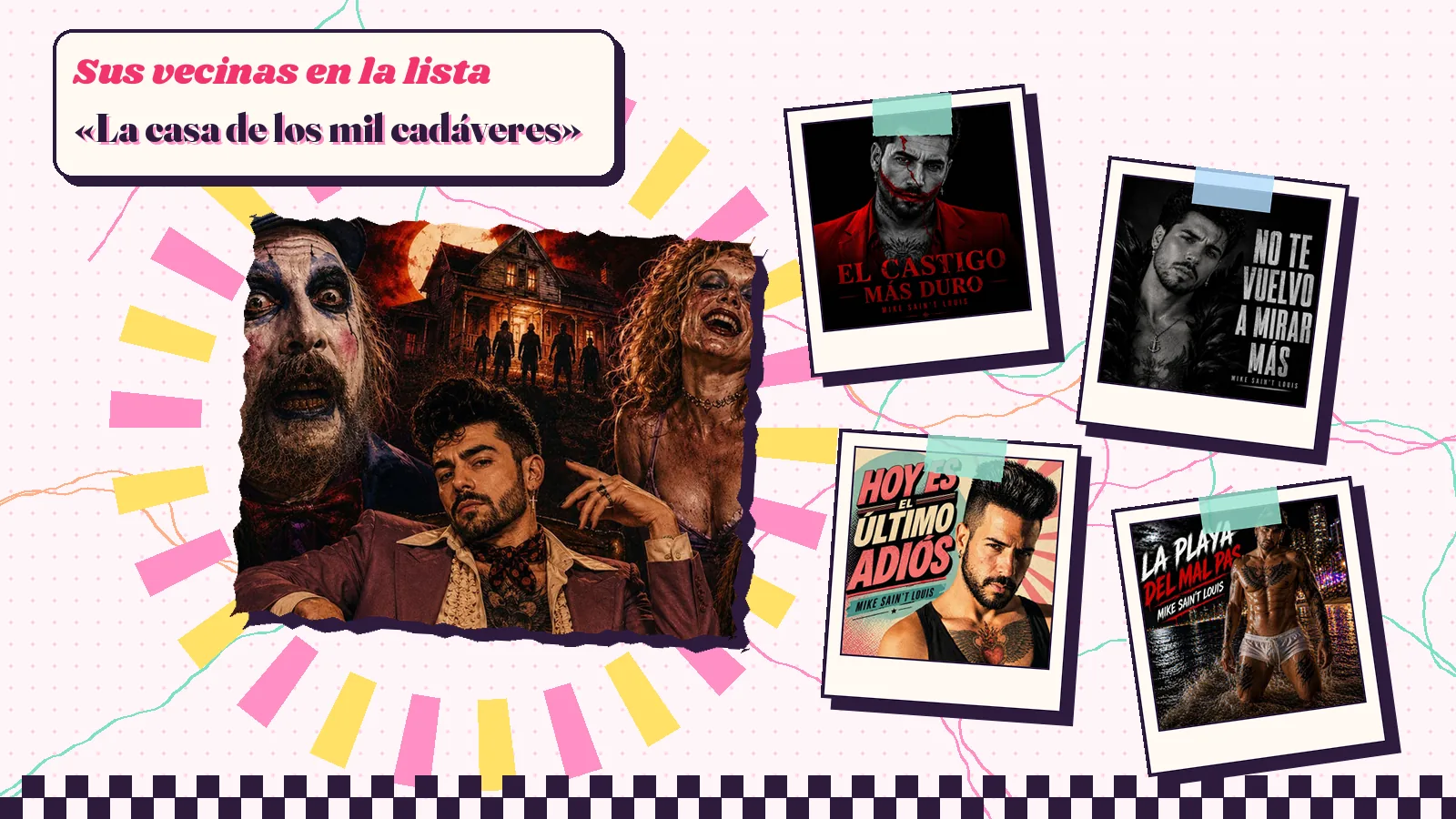
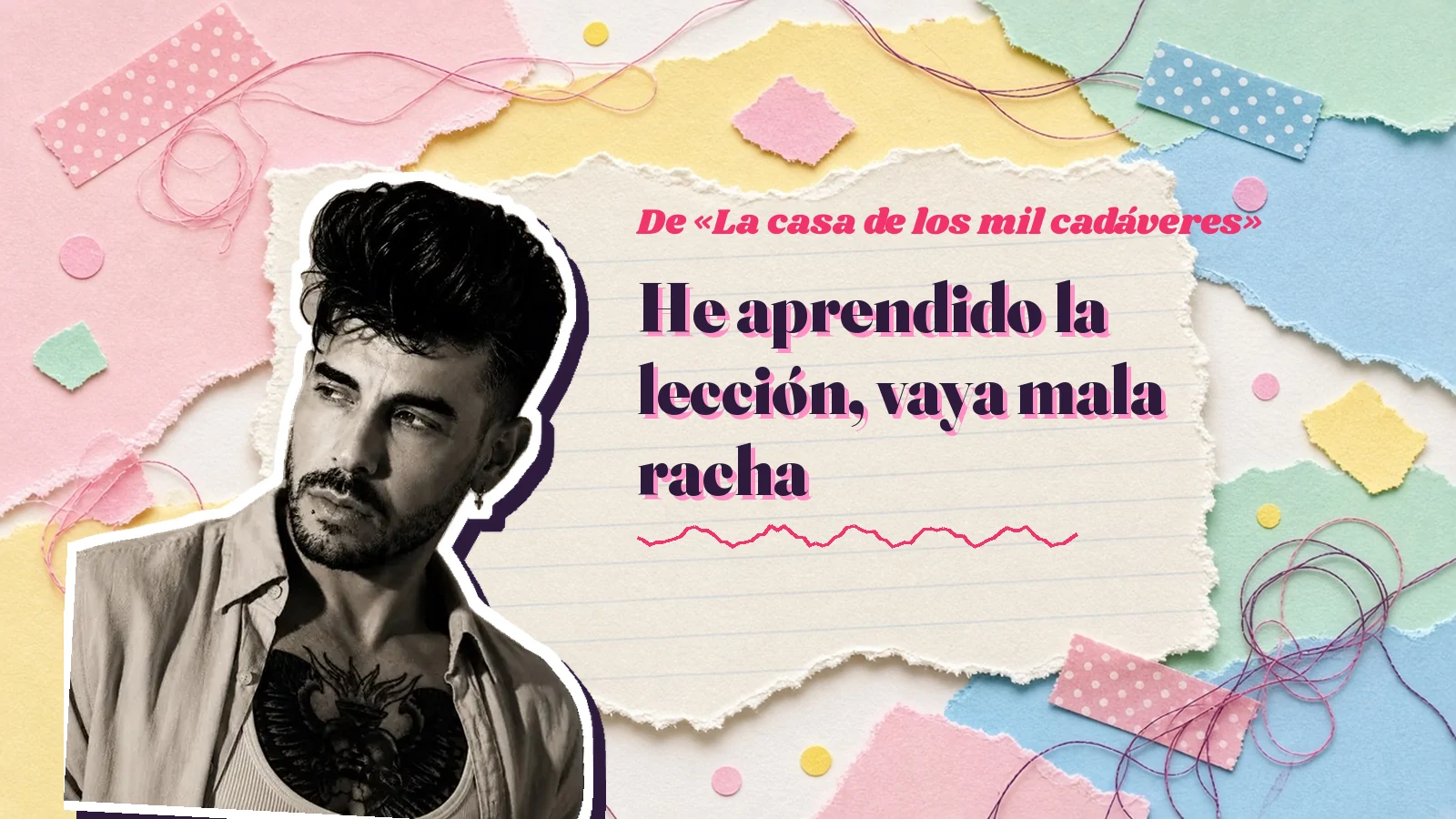
In «La casa de los mil cadáveres», before the cockroach, two lines set up the blow: «Y ahora que lo pienso, me río de mi suerte», "And now I think about it, I laugh at my luck", and straight after, «He aprendido la lección, vaya mala racha», "I've learnt my lesson, what a losing streak". Look at the order. First I laugh at myself. Then I say I've learnt. And only then, once I've risen above the situation, do I let the insult go. The door slams when I'm already outside.
That's the trick behind nearly all my slammed doors: they aren't hot-headed rage. They're rage with the suitcase packed. The protagonist has already left by the time he insults. That's why the insult doesn't sound like pleading, which is how it sounds when you shout from inside a relationship. It sounds like a farewell.
There are other endings like that. In «El castigo más duro», "The harshest punishment", the lyric signs off with a line that has nothing funny about it: «que ni vales ni un mensaje / que no eres nada para nadie», "you're not even worth a message / you're nothing to anyone". A slammed door without the joke. Dry. The kind that makes no noise but leaves the house silent for days. And I like it being there, in a song that's precisely about the punishment of silence. The ending hands the other person back his own method: contempt without words, only this time with words.
In «No te vuelvo a mirar más», "I won't look at you again", the slammed door is practically a contract clause: «Las reglas las pongo yo… / y no las vas a dictar», "I make the rules… / and you won't be dictating them". The ellipsis in the middle is the best bit. It's the second's pause in which the other person still thinks he'll get a word in. And then, no.
The repeated goodbye
Some songs end not with a sentence but with a word. Repeated. Like an echo fading down a corridor.
«Hoy es el último adiós», "Today is the last goodbye", is the clearest. The lyric is very short and gradually eats itself until only the essential is left: «El último adiós / Adiós». At first there's a complete sentence, with its «yo solo he venido a decirte que hoy», "I've only come to tell you that today". Then it shrinks to "the last goodbye". Then just "goodbye". It's like watching someone walk away down a long street. First you see all of them. Then only their back. Then a dot.
I've already written about that song in another piece, the one about breaking up in the language of funerals, so I won't repeat myself. I'll say just one thing: I didn't plan that ending as a device. It came out that way because when you really say goodbye to someone, you don't have many words. You have one. And you repeat it to convince yourself.
That closing repetition turns up in far cheekier songs too. «Karma» ends with the word stretched to absurdity: «KAAAAAARMAAAAAA». There the repetition isn't an echo: it's a trumpet. A public-address announcement that life has sent in the bill. Same mechanism, opposite temperature. A word left alone at the end of a song can be a whisper or a car horn. It all depends on the vowels.
The clean line
And then there are the endings that surprise even me. The ones that arrive after a whole song of comedy or drama and suddenly say something without any frills.
The clearest is «La playa del Mal Pas»: «Sigue siendo la misma, aunque yo ya no lo sea. / Y eso, quizás, también es amor». "It's still the same, even though I'm not. / And that, perhaps, is love as well." That song hasn't a single joke in the whole lyric. It's a small beach in Benidorm seen from a distance, and it's a look back at a life. And the ending closes nothing. It opens. That «quizás», that "perhaps", is the most important word in the line. It doesn't say "that's love". It says it might be. That I don't know. That I sense it.
Those clean endings are few in my catalogue, and I think that's why they work. If all my songs ended on a tender line, the tenderness would wear thin. Like an expensive perfume you spray on every day until you can't smell it any more. I'd rather have twenty slammed doors and one "perhaps". That way the "perhaps" carries weight.
Another clean ending, albeit in another language, is «Gatekeeping». The song is a list of reproaches to whoever decides who gets into art and who doesn't. And the ending, three sentences of a few words each, is almost a poem of its own: «I didn't knock. / I didn't wait. / I stayed». No insult. No shouted victory. Just someone sitting on a chair they weren't offered, not budging. It's the calmest and most defiant ending I've ever written.
I bleed and I dance
There's one kind of ending that's my favourite, though it doesn't come to me often. The one that puts the wound and the party in the same line.
«La primera drag de Benidorm», "Benidorm's first drag queen", is a brutal lyric. Broken heels, a skirt on fire, snapped nails, censored photos, a severed tongue. A list of injuries told in the first person by a drag queen dragging herself past the traffic lights of a city that doesn't remember her. And the ending, after all that, comes down to three words separated by silences: «Aquí... / me desangro... / y bailo». "Here… / I bleed… / and I dance."
For me that ending sums up much of what I try to do with my songs. Not deny the wound. Not prettify it. But not stay lying on the floor either. Bleeding and dancing at once. Which is, if you think about it, what our people have done for decades on dance floors that were the only safe place.
That "and I dance" isn't optimism. It's stubbornness. And stubbornness, in certain contexts, is the most dignified form of hope I know.
The ending that gives up
Not all my endings win. Some give up. And I think it matters that they're there.
In «La insignia de artista», "The artist's badge", the last line is one of the most disarmed I have: «No sé, / creo que ya me rindo». "I don't know, / I think I give up." After a whole song about who hands out artist's membership cards and why I don't get one, the ending isn't a battle cry. It's a shrug. An "I don't know". And in a catalogue as scrappy as mine, that's almost a scandal.
In «Me rindo», "I give up", the surrender is right there in the title, and the ending keeps spinning on itself: «y me rindo, y sigo temblando siempre», "and I give up, and I keep on trembling, always". Giving up and still trembling. That isn't peace. It's exhaustion with the shivers.
I like having songs that end like this because life very often ends like this. Not with a slammed door or a beautiful "perhaps". With an "I don't know". With wanting the day to be over. And if I only wrote victorious endings, I'd be lying to the people who listen to me on their bad days.
The ending that stays on the dance floor
Some endings don't close the song: they leave it open, like a club door at six in the morning.
In «Dark Corners» someone at the bar asks if you're all right. «Hey… are you okay?» And the reply, the one we all give, is the final line: «Yeah… just dancing…». Nothing is resolved. The protagonist is still on the floor, sorrow intact, pretending he's only dancing. The song ends, but the night doesn't.
I like that kind of ending because it leaves the listener inside. It doesn't walk them to the door. It leaves them there, with the music playing and the doubt about whether the dancer is all right or not. An ending that asks instead of answering.
The ending that falls silent
There's one ending in my catalogue that does exactly what it says. It goes quiet.
«Montaña rusa», "Rollercoaster", is a song of creative grief: the day the muse, the person who inspired you, leaves. The lyric plays with the rhyme between rusa, musa and muda, "Russian", "muse" and "mute", stretching the vowels until they sound like an ambulance siren. And the ending is this word, first drawn out and then dry, no extra vowels: «Muda». Mute. A single word. And then, nothing.
I love that ending because the song switches off with the very thing it describes. The muse has gone mute and so has the lyric. No closing chorus, no well-rounded line. It ends the way a conversation ends when the other person hangs up. You're left with the phone to your ear, listening to the dial tone.
The ending that answers late
And then there's the ending that arrives behind schedule. The one that answers a question you were asked years ago.
In «Envejecer», "Growing Old", the whole song revolves around a question the ex used to ask while he was cheating: whether I could picture the two of us as little old men holding hands. And for almost the entire lyric there's no answer. There's rage, there's stretched-out sadness, there are loose words, one per line, like someone walking with difficulty. And at the end, finally, the answer. Given «cuando ya es demasiado tarde», "when it's already too late". Yes. I could picture it. I was so sure we'd grow old together.
That ending still hurts me. It's answering with the truth when the truth is no use any more. And it is, I think, one of the most sincere endings I have: nobody wins, no door closes. Something is simply admitted that can no longer be changed.
The B-movie ending
And some endings are pure spoiler. Literally.
In «Spoiler» the lyric recounts, stage by stage, how someone starts flirting with other boys on social media. First a "like" on a diva's photos. Then stories. Then hearts. And the protagonist, who has seen this film before, announces it: here's a spoiler for this B-movie horror flick. And the song's ending is the film's ending told ahead of time: «lo acabamos dejando, pero esta vez soy inmune», "we ended up calling it off, but this time I'm immune".
That "this time I'm immune" tickles me because of its bravado. Like the horror-film character who says "I'm not scared any more" just before the lights go out. I don't know if it's true. The song doesn't know either. But it sounds good to say it.
The ending that speaks to you
There's one ending that doesn't speak to the ex, or to me, or to the audience. It speaks to whoever was standing alongside.
«Una obra de teatro», "A stage play", is one of the most bewildered songs I have. Someone discovers that seven years of a relationship were a performance. A stage. Fake tears. And they're stuck on the question of how you explain that, especially when you're the one being made to look mad. The lyric goes round, repeats itself, gets stuck, the way you get stuck when you're told something your head can't hold.
And at the end, suddenly, it changes addressee. It no longer speaks to the actor in the play, or to itself. It speaks to someone who's still inside a similar performance: «lo suyo no tiene solución / al menos sálvate tú», "there's no fixing him / at least save yourself". A friend's ending. A hand on the shoulder. A "get out of there while you can".
That "save yourself" seems to me among the most useful things I've written. I don't know if it works as a line of verse. I know it would have helped me to hear it sooner.
The ending that asks
Some endings close nothing because they end on a question. And not a rhetorical one: a question left dangling.
In «Mi último ex era una IA disfrazada», "My last ex was an AI in disguise", the song keeps playing with the idea that it would be better to create a boyfriend with artificial intelligence, because at least he wouldn't lie. And the ending is suspicion taken to the absurd: «¿Entonces mi último ex era una I A disfrazada?», "So my last ex was an A I in disguise?". With the i stretched to infinity and the a in capitals, like the shriek in a farce when the truth comes out.
I love ending on that question because it flips everything people say to me about AI. They accuse me of having my songs made by a machine, when the lyrics are mine from the first syllable to the last. And in that song I throw the ball back at life: here the one who seemed programmed, the one with «el chip de la traición», "the betrayal chip", wasn't the machine. It was the ex. A question like that doesn't get answered. You leave it there, for the listener to laugh or worry, depending on the day.
The groan-worthy ending
And not all my endings are profound. Some are pure after-dinner wordplay.
In «La dieta del cucurrucho», after a whole song of jealousy, letters to an actor and absurd plans to have a child with a double-barrelled surname, the ending is a joke that only works in Spanish and makes me laugh every time I read it: «¡De Paco bastante / Y de León mucho!». I won't explain it. Explained jokes are like croquetas reheated in the microwave.
In «Tengo argumento», "I've got a plot", the ending is practically a stock-cube advert: «Rica rica con fundamento, tengo argumento», borrowing the catchphrase of a famous Spanish TV chef, roughly "tasty, tasty, and with substance". After a muddle of Marías and a twenty-year-old boyfriend sent packing, the song signs off like a telly cook. Just like that. I think it's a very healthy way to end a story that could have been a drama: with a bar-room phrase we all know.
Those silly endings matter to me as much as the serious ones. A song that ends on a joke leaves you smiling, and sometimes a smile is all you need from a song. Not everything has to hurt to be worth something.
The ending with a dedication
Some endings, instead of looking at the other person, look at whoever keeps me company.

«El abrazo de Pitufo», "Pitufo's hug", ends with a direct dedication, no irony: «Gracias por ser mi refugio», "Thank you for being my refuge". In «Tus letras son basura», "Your lyrics are rubbish", after answering those who say my work isn't worth anything, the text closes with a short phrase that's almost a signature: «Pero son mías», "But they're mine". And in «Ojalá se pudiera viajar a GAYFOLK», the text introducing the trilogy's second album, I take leave of whoever has made it to the end with a line I'm very fond of: «Nos vemos al otro lado del espejo», "See you on the other side of the mirror".
Those endings are like the last line of a letter. They don't close the song's story. They close the conversation with whoever is listening. And in a catalogue so full of slammed doors, it seems only fair to leave a door ajar now and then for those who stay.
What my endings have taught me
Reading my songs backwards has taught me a few things I didn't know.
The first is that the ending is in charge. Read backwards, many of my songs seem built in reverse, as if the last line were the station and everything else the train that takes you there. The broken heels exist to reach "and I dance". The conditionals, to reach the cockroach.
The second is that a good ending doesn't summarise. It doesn't repeat what you've already said. It adds one more thing, small and unexpected. The beach's "perhaps". The "I stayed" of the one who didn't ask permission. The drag queen's "and I dance". If the ending only repeats, the song stays in a circle. If it adds, it opens.
The third is that endings have to vary. If all my songs ended on an insult, the insult would stop surprising. If they all ended tenderly, tenderness would sound like a formula. The catalogue needs slammed doors and echoes, clean lines, surrenders, unanswered questions, groan-worthy jokes and open dance floors. The way a party needs fast songs and slow ones.
And the fourth, the most personal, is that read in a row my endings look like a mood diary. The slammed doors sound like days of rage. The repeated goodbyes, like exhaustion. The "perhapses", like strange days, the ones when, without knowing why, you look at something fondly. I've no way of knowing which ending will come next time. But I like to think that as long as there are different endings, I'm still alive inside.
And there's a fifth thing, more practical, that I learnt almost by accident. The ending is what people remember. You can have a song with a weak opening and a so-so chorus, but if the last line lands, the listener walks away with it. They hum it on the Metro, repeat it in the group chat, write it in a comment. «Maldita cucaracha.» «I won maricón.» «Y bailo.» That's why the last line deserves more care than any other. If it leaves nothing in the mouth, the whole song is forgotten.
The last line of this piece
Now it's my turn to end. And I don't know which of my endings to choose.
I could slam a door, but I've nobody to slam it on. I could repeat a word until it sounds like an echo, but on a blog that looks odd. I could give up, but I don't fancy it.
So I'll go for the one I find hardest to write. The clean line. All these songs are in the lyrics archive, and the cockroach one, the slammed door with the suitcase packed, is there in full on gayfolkplanet.com.
Thank you for reading this far. That, perhaps, is love as well.
Frequently asked questions
How do Mike Sain't Louis's songs usually end? Many end with a slammed door: an insult or a curt line aimed at an ex or a narcissist. Others end on a repeated word, such as «Adiós» or «Karma», and a few on a clean, tender line, like the ending of «La playa del Mal Pas».
What is «La casa de los mil cadáveres» about? It's a song against an ex in which the protagonist first laughs at himself («¿Cómo soy tan tonto?», "How can I be so stupid?"), runs through, in conditionals, everything he'd have done had he known, and ends with a "good riddance". The lyrics are by Mike Sain't Louis, the first AI songwriter; the music and vocals are made with artificial intelligence tools.
Which song ends with «me desangro y bailo»? «La primera drag de Benidorm», from the trilogy's second album, «Ojalá se pudiera viajar a GAYFOLK».