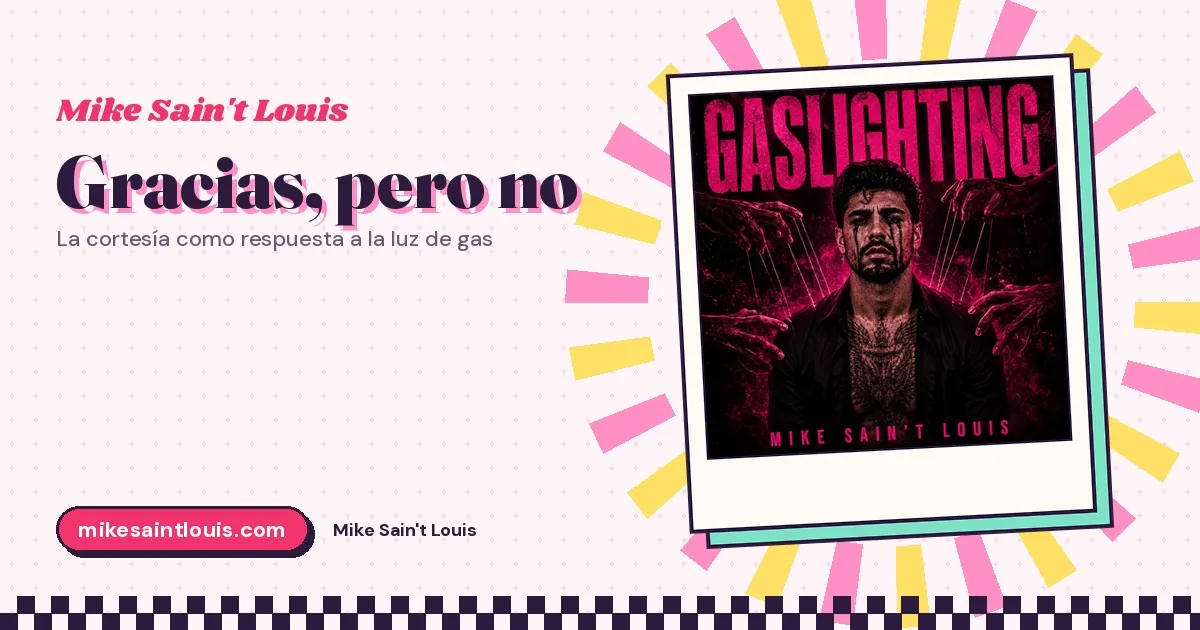
By Mike Sain't Louis ·
«Gracias, pero no»: good manners as the answer to gaslighting
«Me dices baby no pasó / Que lo soñé, que todo fui yo» («You tell me, baby, it didn't happen / That I dreamt it, that it was all me»). That's how «Gaslighting» opens, and every time I reread those two lines the first thing out of me is a nervous laugh. Because anyone who has shared a flat, a bed or a Netflix login with the wrong person has heard them. Not in those words, not with that perfume-advert «baby», but in the slippers-and-dressing-gown version: «You're making it up», «That's not how it went», «Always so dramatic, you». Gaslighting is the only magic trick that works better the closer the audience sits.
And then, in the chorus, the answer. No «son of a bitch», no «I'm going to ruin your life», no door slammed so hard the hinges fly off. Just the formula of a well-mannered lady turning down a second slice of cake at a wedding in Getafe: «Gracias pero no». Thanks, but no.
This piece is about that line. About why, after years of writing insults with first name, surname and postcode, I decided to answer gaslighting with good manners.
You dreamt it, darling
I'll start with the mechanism, because if you don't understand it you won't understand why the answer has to be so short.
Gaslighting doesn't hit you. It corrects you. It corrects your memory the way a teacher marks an exam in red biro: not this, not this either, wrong here, too far there. At first you laugh. «Yes it was, it was Thursday.» «No, it was Tuesday and you were in a mood.» By the third month you've stopped laughing. By the sixth you're jotting things down in your phone's notes app to have evidence, as if you were your own legal aid lawyer. By the end of the year you jot nothing down, because you've learnt that the right version is always his.
The twisted part is that there's no blow you can show anyone. No bruise. There's a conversation in the kitchen, with the extractor fan on, in which suddenly you're the one who's lost his mind.
That's why the song starts right there, with the other person's line. I didn't write it to describe gaslighting from the outside, in a psychologist's white coat with glasses on the tip of my nose. I wrote it from inside that kitchen, with the extractor fan still humming.
The line that follows is the one holding up the whole song: a «sorry» and the smallest statement in the world, that the person knows what they saw and what they felt. It looks like nothing. It's everything.
The sorry that doesn't apologise
Look at that «sorry». It's the most ironic word in the entire lyric.
Sorry is what you say when you tread on someone's foot on the metro at Sol at half eight in the morning. But there's no apology here. It's the sorry of the shop assistants on Calle Serrano, Madrid's poshest shopping street, when they tell you they don't have that size: a sorry that means «no». A sorry with the handbag already on the shoulder.
I like using English that way, like a butter knife: it doesn't cut, but press hard enough and it hurts. I slip English words into a lot of my dance-floor lyrics, and there's always someone asking why I don't write the whole thing in Spanish, being from Madrid with the accent of Plaza de Lavapiés stuck to the roof of my mouth. I said something about that in the piece on writing pop in Spanish from Spain to the Americas, but with «Gaslighting» there's a more specific reason.
The word has no good translation in Spanish. «Luz de gas» sounds like an old black-and-white film, with Ingrid Bergman and a moustachioed husband turning down the flame of the lamps so she'll think she's going mad. Which is exactly where the term comes from. But on the street, in WhatsApp groups, in TikTok videos with sad music underneath, people say gaslighting. The song needed that word in that language, because it's how the person going through it right now says it, phone in hand.
And if the title is in English, the rest of the lyric can come and go. Spanish for the wound, English for the sparkle. That was the rule I set myself, and I didn't always keep it.
Why not an insult
Here comes the thing people ask me most when I talk about this song, or the thing I ask myself when I compare it with my others.

I insult well. I say it without false modesty, because it's one of the few things I can do without checking the manual. I have entire songs built out of nicknames, bar-stool diagnoses and portraits with defects numbered one to ten. In «El narcisista» there's a flamethrower and a frozen heart. In «Ni con un palo» there's a line so dry it still gives me a chill to reread it. I laugh at my exes because, as I wrote in another piece on this blog, it's the most honest way I have of telling it.
But with gaslighting, the insult doesn't work. Let me explain why.
Whoever gaslights you lives off your reaction. If you shout, you prove his theory: «See? Hysterical». If you cry, same: «See? There's no talking to you». If you write him a song full of insults, he posts it in the friends' group as proof that you're obsessed. Any excess of yours is ammunition for him. It's a game where whoever loses their temper loses, and he's spent years training never to lose his.
So the only move that knocks the board over is the one that gives him nothing. No drama, no rage, no tears worth framing. Just the line of a lady who's seen a lot of the world. «Gracias pero no.»
It's the answer of someone who no longer needs to win the argument. Because they're no longer arguing.
Parlour table and mirror ball
We all know a lady who says no without raising her voice. The aunt who listens to the entire pitch from the electricity company salesman, asks after his family, thanks him ever so much for stopping by and shuts the door with a smile. The lad goes down the stairs not quite sure what just happened. We've seen that way of saying no in the neighbour on the fourth floor, in the lady at the haberdashery, in the concierge who knows everything and gives away nothing, and it's far more dangerous than a scream.
Because a scream gets answered with another scream. A smile with the door shut has no possible comeback.
That's the register I wanted for the chorus. Manners from the mesa camilla, that round Spanish table with a heater under the skirt where every family secret gets aired, but set on top of a club beat, with coloured lights and smoke. The mix tickled me. A lady with a perm saying «gracias pero no» while the mirror ball spins. If that isn't camp, let Alaska come down and judge for herself.
Then there's the rest of the chorus, which keeps turning up the heat with English phrases straight off a neon sign: that she's free now, that the game is over. And the finishing blow, which is what I love most about the whole song and probably the whole album: «I won maricón».
I won maricón
That line still makes me laugh every time I read it, and I'm the one who wrote it.
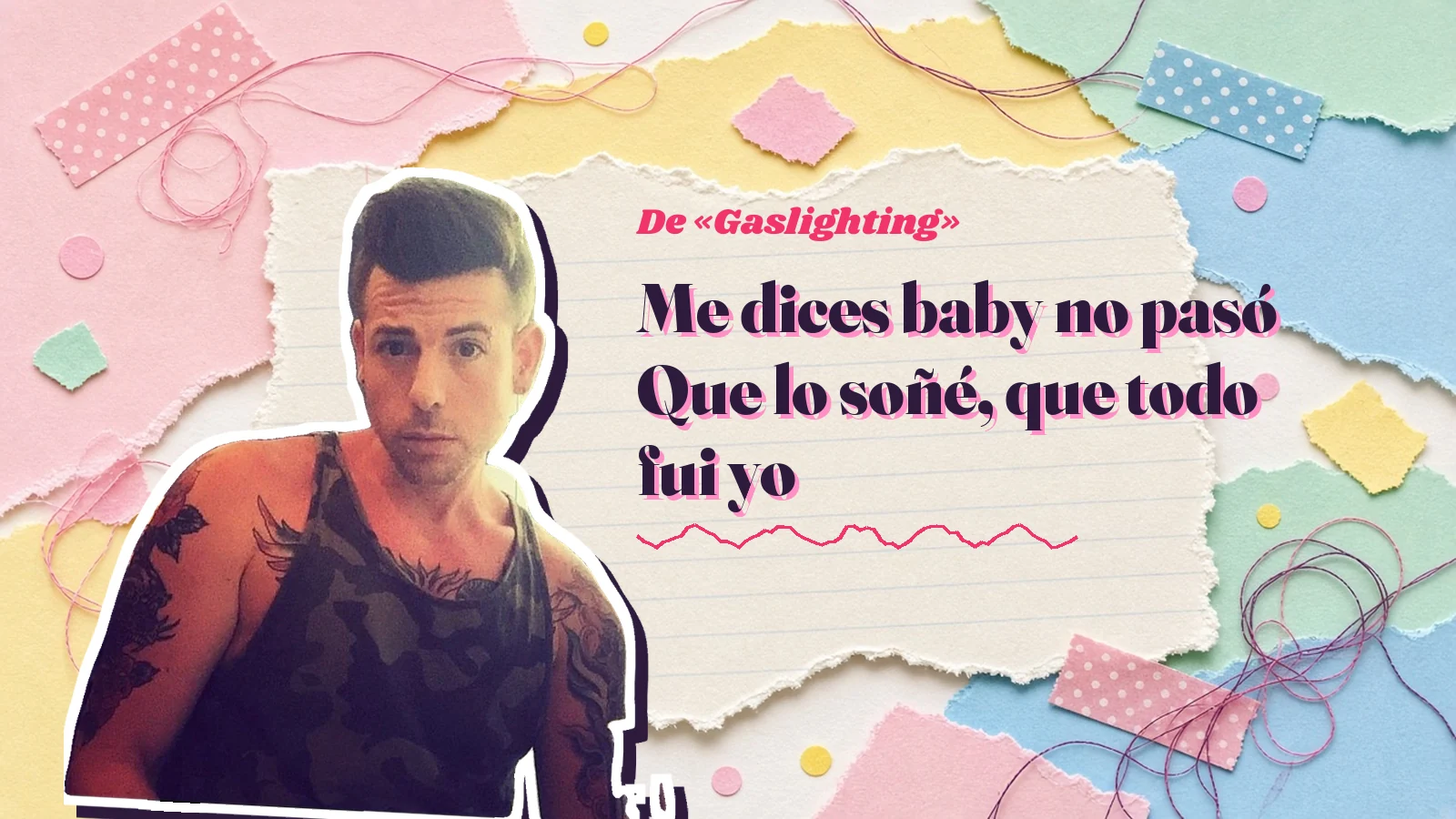
It has a trick in it, like almost everything I write. It starts in English, with an «I won» from an American TV game show, the kind where they throw their arms up as confetti rains from the ceiling. And it ends on the most Spanish word there is, the most school-playground, the most street-corner word that exists for people like me. Maricón: faggot, more or less, with the same sting and the same chance of being reclaimed. The word they shouted at you from a passing car when you walked down Gran Vía holding your first boyfriend's hand.
Together, the two halves do something strange. The «I won» lifts you up. The «maricón» drops you to the floor. And in between there's a laugh I can't quite explain, but it has to do with not asking permission to win.
Because the man who gaslit you took that from you too: the right to celebrate. If something went well for you, he found a way to make it his doing, or luck, or not really such a big deal. Winning in front of him was impossible. So the song wins in front of everyone, with the biggest word I have to hand.
Someone might think that last word is too much. That the victory in English had already said it. For me, without that word there's no song.
Pinning playground insults on a victory isn't new for me. I've done it a lot, and I'm not sure I'd ever thought about it as much as I have writing this. Some people see it as bad manners, and I see it as the most polite way I have of telling the truth: with humour, which is the fourth house rule and the one I keep best, as I explained on the page where I say who I am.
The mirror and the heel
In the second half of the lyric there are two objects holding everything up.
One is the mirror, in front of which the protagonist says, in English, here I am. There's nobody else here. You don't answer the other person by looking him in the eye, because you already know that's useless. You answer yourself, the one who believed for months that he was mad. The mirror is the witness the other person can't manipulate. However much he tells you that you weren't there, your face is right there, dark circles and all.
I like that the phrase is in English and so simple. Here I am. Like the first sentence of a child learning a language. Sometimes, after gaslighting, you have to learn all over again how to say where you are.
The other object is the heel. «Cada paso sobre este tacón / Es mi grito contra tu prisión» («Every step in this heel / Is my scream against your prison»). I wrote that line for all the trans women, the drag queens and the locas I know, and the ones I only know by sight, who have spent years walking in heels down streets that weren't made for them. A heel makes noise. You can't wear heels and go unnoticed down a tiled corridor. Every step is heard. And that, after someone has spent months telling you that you didn't notice a thing, is a way of saying: here I am, and you can hear me.
One more thing, for the record. The song doesn't say who's wearing the heel. It could be the protagonist, it could be someone who's borrowed a pair from his sister to go out that night, it could be someone who has never worn heels in his life and only imagines them. I had no interest in pinning it down.
What burns
There's a play on words in the lyric that might seem too obvious: asking the other person's gas to burn, and crowning yourself queen in the same line.
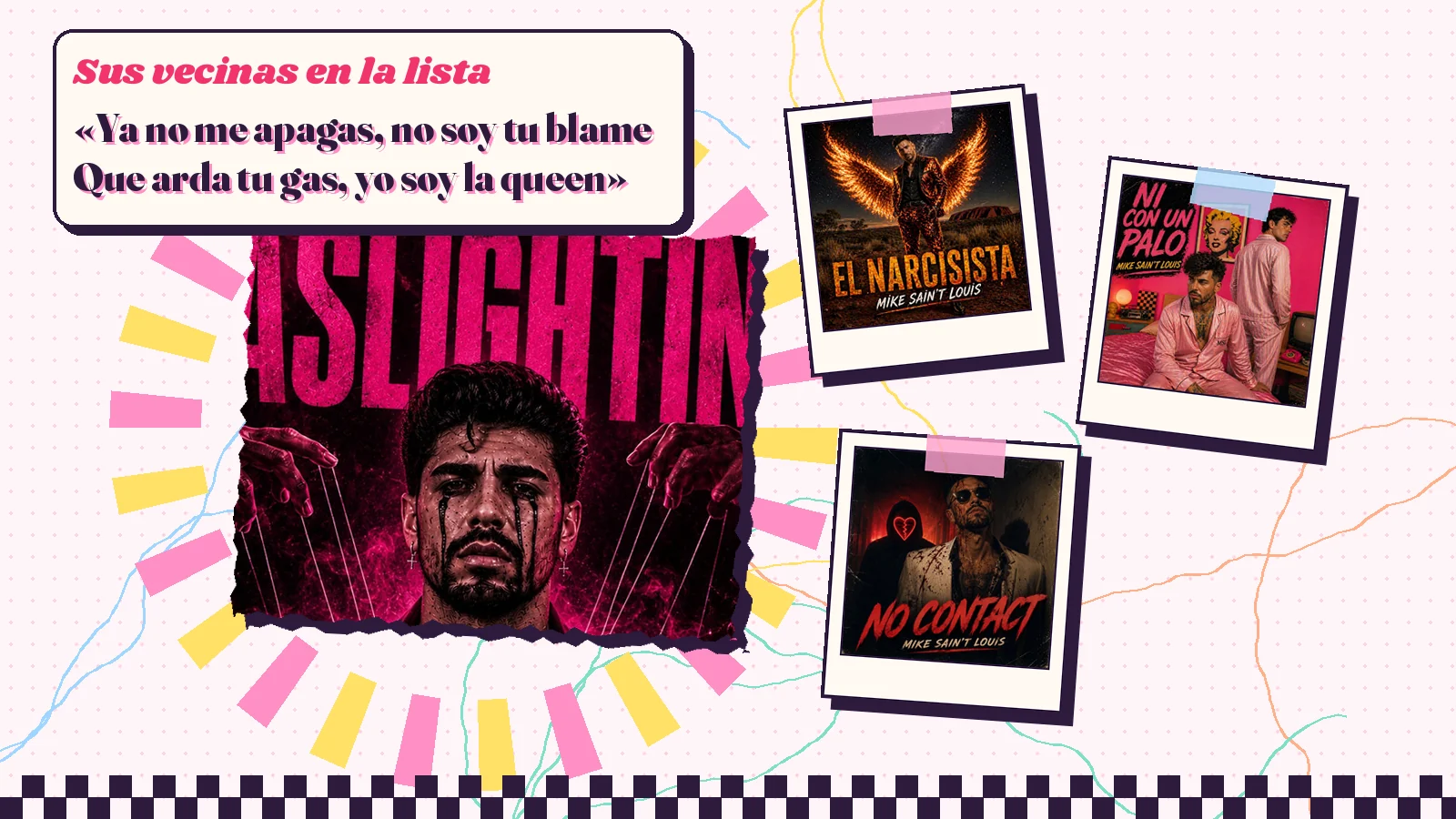
I kept it because it's obvious in the good way. The gas he used to put you out, to turn down the lamps like in the film, is now fuel. What was going to leave you in the dark now lights you up. It's a playground game, the kind you play with a word until you've wrung it out, and I adore those games because nobody takes them seriously, which is exactly why the most serious things slip through underneath.
And then there's the neon, which in the lyric covers the protagonist and makes her immortal. A person who got out of the gaslighting and finds herself in a club in Chueca, Madrid's gay quarter, at three in the morning, with every colour on her, finally feeling in one piece. I find that image beautiful and a bit ridiculous at the same time, and that mix is where the best of what I can do lives.
The dance floor as courtroom
Why a club? People ask me that too.
I could have written a ballad. Piano, strings, someone in a polo neck watching the rain from the window of a third-floor walk-up. There are plenty of songs like that about psychological abuse, and some of them are very good. But I didn't want the person getting out of gaslighting to have to keep crying in order to be believed.
Nobody argues on a dance floor. There's no evidence, no versions, no «well, you did it too». There's a beat and a body moving. And a moving body is the hardest proof to refute that you're alive. He told you that you'd dreamt it. Well, look: now I'm dreaming in front of two hundred people with the lights on.
I've written more than once about the difference between writing to be danced to and writing to be read. «Gaslighting» clearly belongs in the first drawer. It's a song to move to. But I wrote it thinking that someone, some day, would read it all the way through on the bus at seven in the morning, no music, and recognise themselves in the very first line.
That person matters more to me than the one dancing.
The orders at the end
Near the end of the lyric there's a stretch where the tone changes. I stop describing and start giving orders.
That's where a repeated English command turns up, glued to Spanish verbs: don't you dare say no, don't you dare deny what happened. The construction is a mash-up that would have got me a fail in English class: half the sentence in one language, half in another. But that's how a lot of people I know talk when they're properly angry. They start in one language and finish in whichever one comes up from the gut.
That part is a warning, not a plea. You're no longer asking him to admit what happened. You're forbidding him to deny it. A small change in the grammar and an enormous one in life. Going from «please, tell me you believe me» to «don't you even think about saying it didn't happen».
And then a line that sounds like a market-stall T-shirt, and I love it precisely for that: the one about being the boss. In another song it would have embarrassed me. Not here. After everything before it, being the boss of your own memory is the bare minimum.
The notes on your phone
Let me go back for a moment to the kitchen at the start, because there's a detail of gaslighting that doesn't fit in any three-minute song, and yet it explains why this one has such a short chorus.
When someone corrects your memory for long enough, you start keeping evidence. Screenshots of WhatsApp conversations. Voice notes you don't dare delete. Notes on your phone with the date and time, written in secret in the bathroom, with the tap running so nobody hears the keyboard. It's a survival archive, and at the same time it's a trap, because it turns you into a detective of your own life. You spend all day gathering, and the day you finally show the evidence, he looks at the screen, shrugs and says it's been taken out of context.
That's where I understood, writing this lyric, that the problem was never a lack of evidence. It was believing I needed to convince him.
That's why the song has no evidence at all. No dates, no messages, no witnesses. There's someone who knows what they saw, full stop. It's the lyric with the fewest arguments I've ever written on this subject, and I made it that way on purpose. Whoever gets out of gaslighting doesn't need another case file. They need to stop filing cases.
Delete the notes, if you like. Or keep them in a folder you never open. They're not for him any more.
The little sister
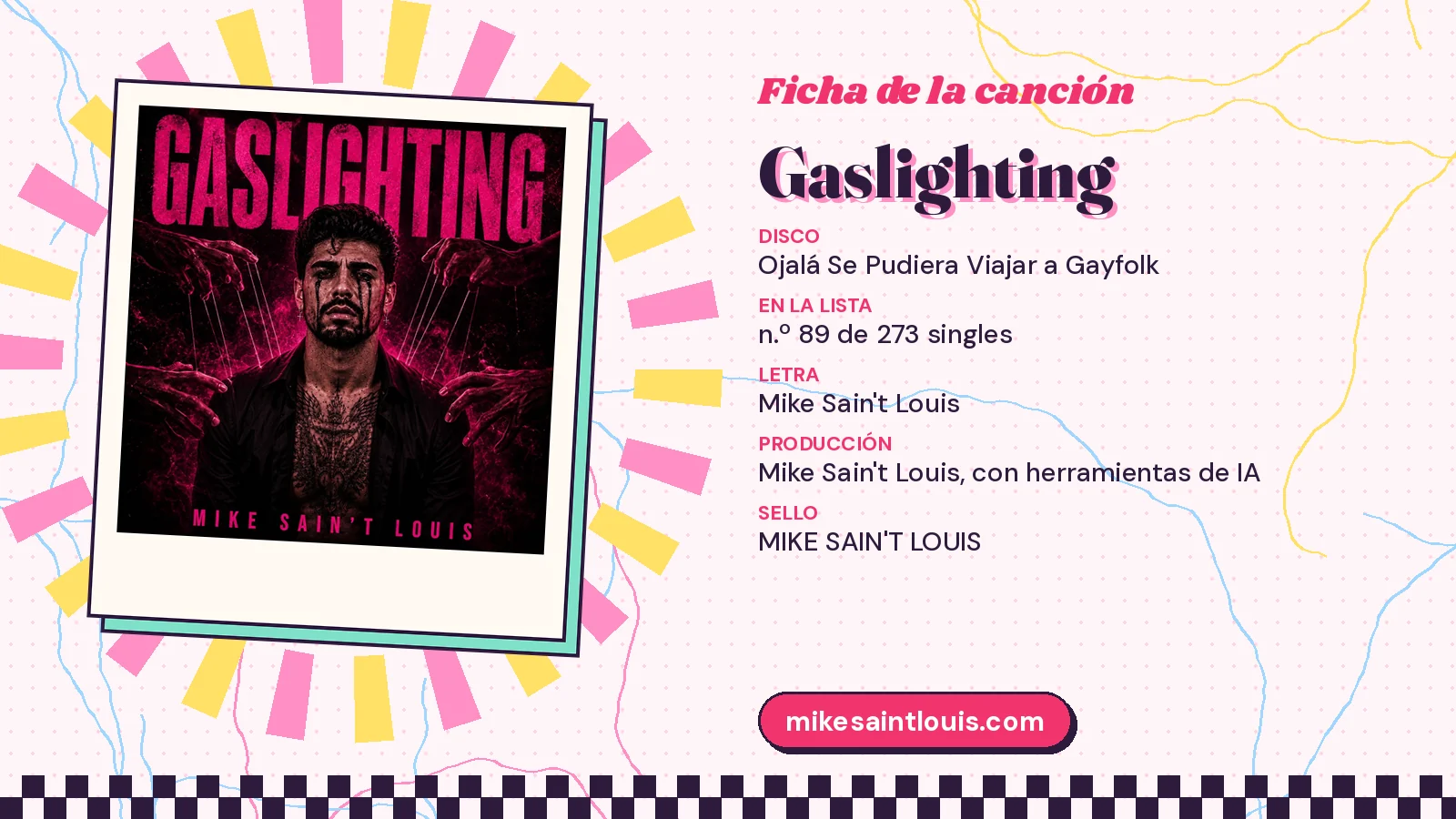
On the song's page I mentioned that «Gaslighting» has a sister. It's «No Contact». One is the fight and the other is what comes after, when you no longer answer the messages or watch his stories or check what time he was last online.
I didn't write them meaning them to go together, or at least I don't remember it that way. But put one after the other and they make more sense. In the first there's still someone in front of you to say no to. In «No Contact» there's nobody left. Only silence, and this time it's a silence you choose.
Both are on the second album of the trilogy, «Ojalá se pudiera viajar a GAYFOLK», which is an album of longing, of wanting to be somewhere else. And getting out of gaslighting is exactly that: wanting to be somewhere where what you saw is what happened.
Who does what
As always when I talk about a song, let me make this clear so there's no confusion.
The lyrics of «Gaslighting» are mine. Every line, every sorry, every maricón. I wrote them myself, without machines. I'm not the performer: I'm a lyricist, composer and producer. The music and the vocals are made with artificial intelligence tools, Suno among them, and what stays in the final version is my call. I don't hide it, and I've explained at length in other pieces how I work with all that and why I say so openly.
I bring it up because of something that ties in with the song itself. People have tried to gaslight me about the AI. «You didn't make that.» «That's just pressing a button.» «Don't kid yourself.» They say it in exactly the tone people use to tell you that you dreamt it. As if my notebook, my crossings-out and my late nights didn't exist.
So even though the song isn't about that, when I reread its opening line it sounds like those comments to me too. And the answer is the same.
Thanks, but no.
A line to carry in your pocket
I'll finish with something practical, which I don't usually do.
If you're getting out of a relationship where you were made to doubt what you saw, I'm not going to tell you to go to therapy, though I hope you can, or to read books, though some of them help. I'm going to give you a line. Two words of thanks and one of refusal in Spanish, three in English. Carry it in your pocket like a mint. When someone tells you it didn't happen, that you dreamt it, that it was all you, take it out.
No need to explain it. No need to defend it. It works just as well in a kitchen with the extractor fan on as on a dance floor at three in the morning.
And if after saying it you feel like dancing, dance. Let it burn.
Frequently asked questions
What is «Gaslighting» about? About gaslighting: the manipulation that makes you doubt your own memory. The lyric opens with the manipulator's line («Me dices baby no pasó», «You tell me, baby, it didn't happen») and answers from the dance floor with a polite, firm chorus: «Gracias pero no», «Thanks, but no».
Which album is it on? «Ojalá se pudiera viajar a GAYFOLK», the second album of Mike Sain't Louis's GAYFOLK trilogy.
Why does it mix Spanish and English? Because gaslighting is the word people use today when they're living through it. The lyric moves back and forth between the two languages: Spanish for the wound, English for the sparkle of the dance floor.
Who writes the lyrics and how is the music made? The lyrics are by Mike Sain't Louis, a lyricist, composer and music producer from Madrid, written without AI. The music and vocals are made with artificial intelligence tools such as Suno.
Where can I read the full lyrics? On the song's page on this blog and on the lyrics page at gayfolkplanet.com.