By Mike Sain't Louis ·
«There’s already a winner»: «El día de la liberación» and permission to celebrate a break-up
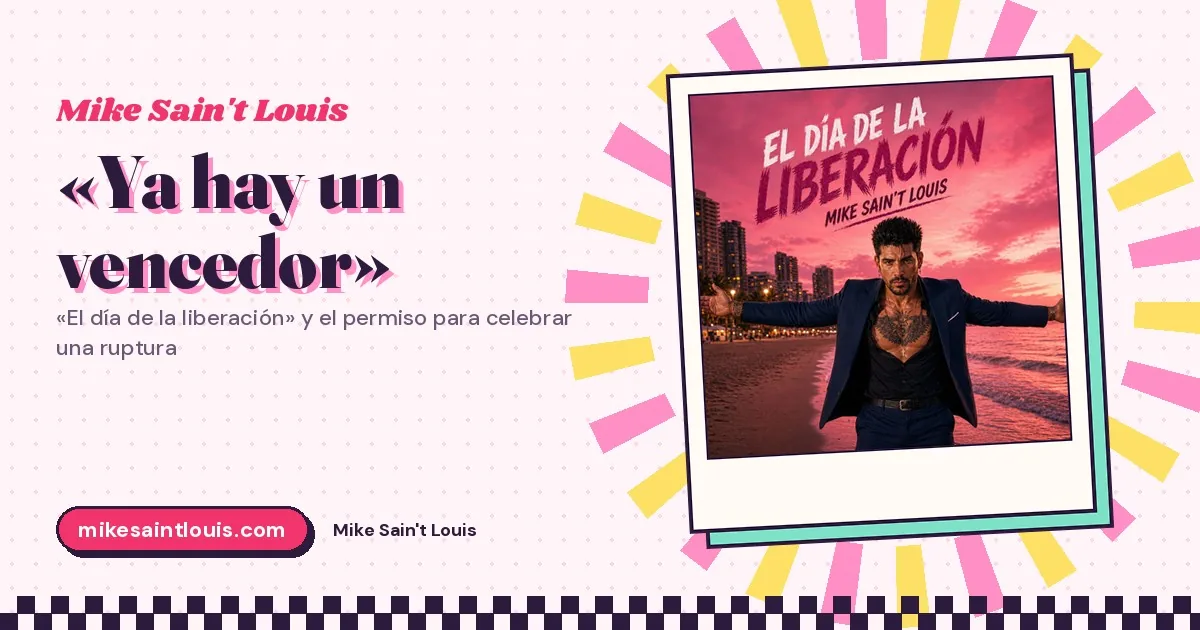
A bearded man with spiky black hair and a navy blazer open over his tattooed chest stands on a beach with his arms flung wide, as if hugging the air. Behind him, the sky is a pink and fuchsia blaze, the sea has turned the same colour and, to the left, the lit-up high-rises of a seaside city rise into the dusk. Above his head, in white and maroon brush lettering, the title.
That’s the cover of «El día de la liberación», «Liberation day», and you don’t need to be a genius to guess which city it is. Skyscrapers facing the sea, a promenade lined with streetlights, a postcard sunset: Benidorm, the exact place the lyrics name. The man in the photo isn’t sad or pensive. He’s open. His arms, his chest, his blazer. Everything about him says the same thing as the chorus.
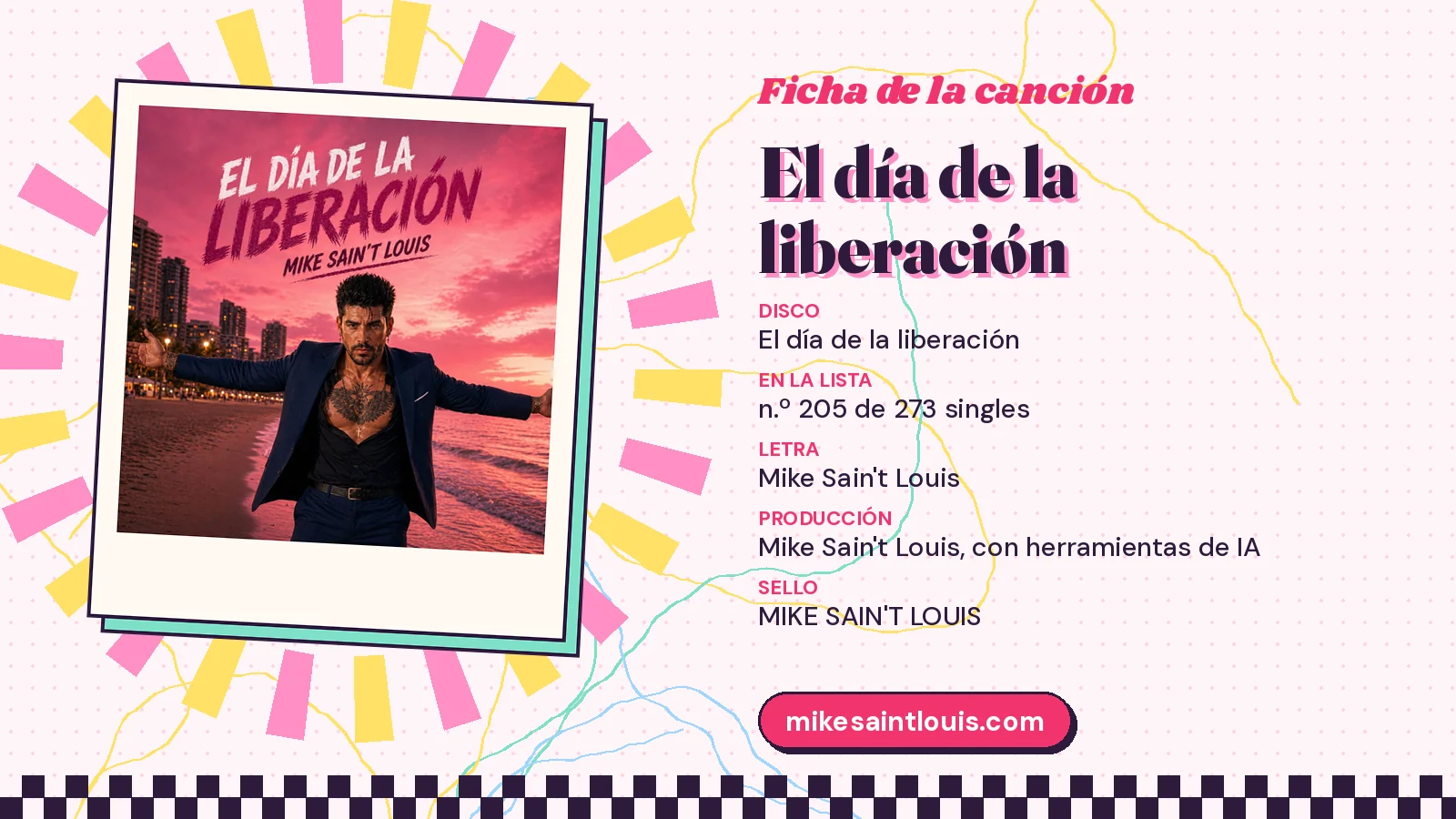
The song gives its name to the third album of the trilogy, and I’ve already written about that album in «El día de la liberación, y el día siguiente». It’s number 205 in the full list of singles. Its page on the blog already covers the humour in the lyrics. Here I want to defend an idea that I think needs defending more often: that it’s fine to be happy when a relationship that was hurting you ends. No caveats, no fake sorrow, no apologies.
Break-ups get bad press
If you think back over the break-up songs you know, almost all of them are sad. Tears, sleepless nights, letters never sent, the phone that doesn’t ring. It makes sense, because sorrow is one of the emotions that has produced the most songs in history.
But some break-ups don’t bring sorrow. They bring relief. Some relationships, when they end, leave you with the feeling that at last you can breathe. And those break-ups have very little music of their own. Hardly anyone writes for them. As if being glad that something is over were in bad taste.
This song exists to fill that gap. It’s a break-up song without a single tear. There’s a party instead.
A scoreboard with no draw
The first chorus says it straight out: today is «el día en el que ya hay un vencedor», «the day when there’s already a winner». And it adds right away who it isn’t: the losing manipulator.
I really like that the lyrics talk in terms of competition, because relationships with someone who manipulates have something of that about them. Not because the person suffering wants to compete, but because the other turns everything into a battle. Who’s right. Who gives in. Who apologises. Who gets the last word. For a long time, the score always favours the same side.
And then, one day, the score changes. Not because of some brilliant move, but because one of the two gets up and leaves the pitch. And that gesture, which looks like a retreat, turns out to be the win. The only way to beat someone who cheats is to stop playing.
And I think it’s right that the lyrics tell it as a victory and not as running away. For a long time, people who leave a relationship like that have been looked at as if they’d failed: they couldn’t make it work, they couldn’t take it, they threw in the towel. The song turns that view around. Leaving isn’t losing. Leaving is finally winning the match the other had been rigging for years.
Today, not tomorrow
The song repeats one word over and over: hoy, today. Today is the day. Always today. Never yesterday or tomorrow.

I find that significant. Relationships that hurt tend to be lived in another tense. In the past, remembering how lovely it was at the start. Or in the future, hoping he’ll change, that it’ll go back to how it was. What’s almost never lived is the present, because the present is exactly what hurts.
This song, by contrast, is planted firmly in the present. Today. And there’s something of a declaration in that: I no longer live on what was or what could be. I live on what is. And what is, today, is that I’m free.
Wounds that no longer bleed
There’s a line the song’s page also highlights, and I think it’s the subtlest in all the lyrics: today is the day when no more blood comes from the wounds the other caused yesterday.
Notice the precision. It doesn’t say there are no wounds. It doesn’t say they’ve fully healed. It says they’ve stopped bleeding. It’s a very specific stage of recovery: the moment when the wound is still there, you can see it, you can feel it, but it no longer opens up every time you move.
Celebrating that moment seems very healthy to me. You don’t have to wait until you’re completely fine to be happy. It’s enough to be better than yesterday. And the lyrics turn it into a reason to party: I’m not healed, but I’ve stopped bleeding. That deserves a chorus.
The other man’s kitchen
Then comes the funniest part of the song: «que te cocine ahora tu madre», «let your mother cook for you now», or let him live off a tube of crisps. The song’s page already talks about how comic the image is, and I agree. But I want to look at what lies beneath the joke.
That line is about dependence. If now his mother has to cook for him, it’s because someone else used to. The person speaking. And that says a lot about how the work was divided in that relationship. One looked after, the other let himself be looked after. One held the house together, the other lived in it.
It’s very common in unbalanced relationships. Whoever is with someone who manipulates ends up taking on a mountain of invisible work: the meals, the cleaning, the errands, the birthdays of the other’s family, the other’s problems. And when they leave, it shows. Suddenly the fridge is empty and nobody knows how to turn on the oven.
Crisps as revenge
The tube of crisps strikes me as perfect revenge precisely because it’s small. There’s no curse, no wish for his life to go to pieces. Just an image: the other man, alone in the kitchen, having crisps for dinner.
It’s the kind of revenge you allow yourself once you’re all right. While it still hurts, revenge fantasies are big and dark. When it doesn’t hurt so much, they turn comic. And the song choosing comedy says a lot about where the person speaking is at. They no longer need the other to suffer. It’s enough to picture him looking a bit ridiculous.
Benidorm as a destination
While the other man eats crisps, the narrator is happy in Benidorm. The song’s page already points out that it isn’t a paradise island or a secret beach, and I think it’s the best possible choice.
Benidorm is known as a popular, unpretentious destination, with its skyscrapers, its promenades, its nightlife and its beach bars. It’s a place you go to have a good time, not to find yourself. And that’s exactly what someone who has just got out of a relationship like that needs. They don’t need a spiritual retreat. They need sun and people around them, a bit of noise and plenty of reasons to laugh.
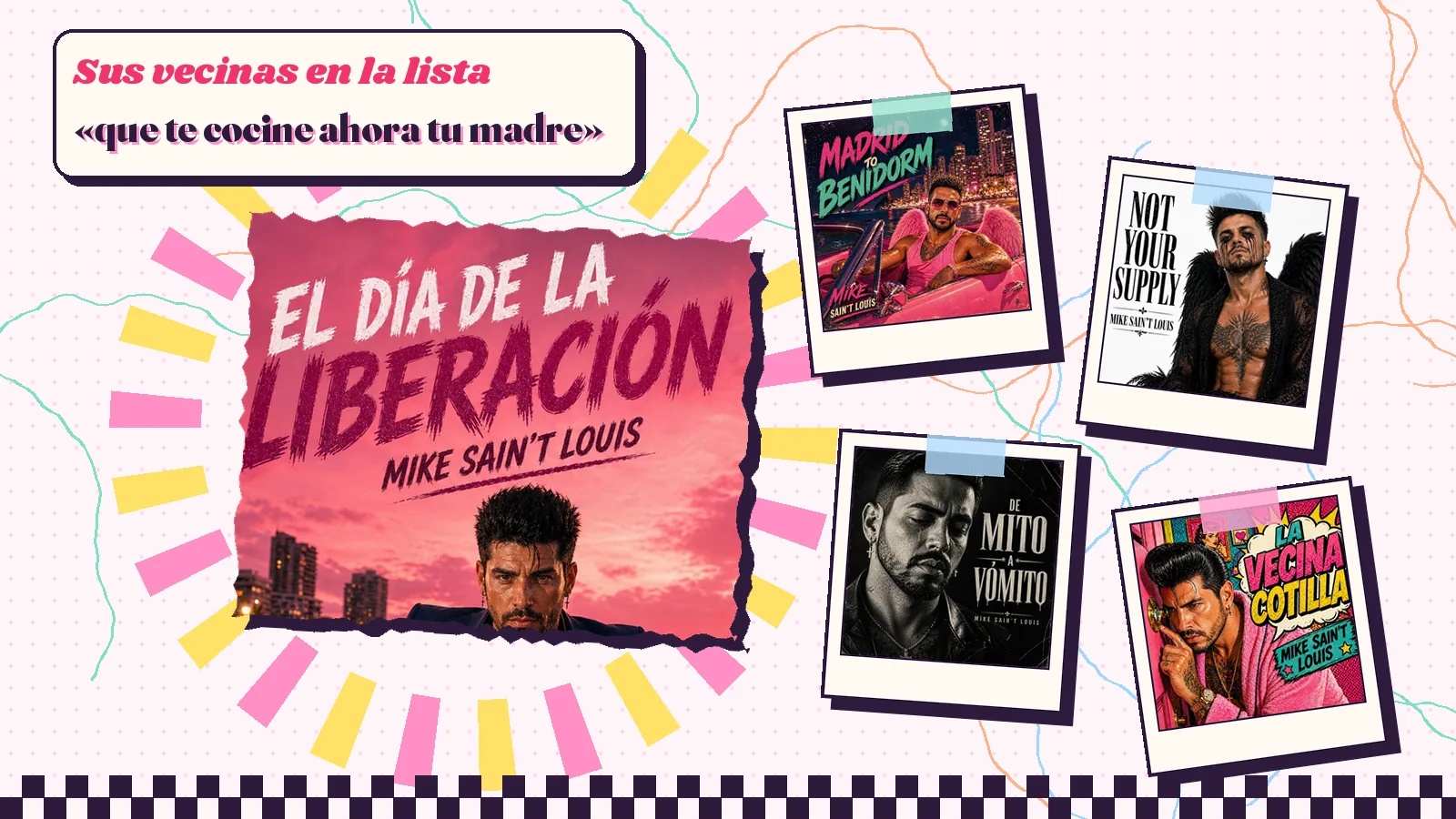
Benidorm turns up in more of my songs. In the list of singles there’s one called «Madrid to Benidorm», and the city appears again in other lyrics. For Planeta Gayfolk it’s almost a place of pilgrimage: where you go when at last you can.
Joy without glamour
I love that liberation has no glamour. No yacht, no five-star hotel, no getaway to Bali. There’s Benidorm and there’s a tube of crisps. Everything very everyday, within anyone’s reach.
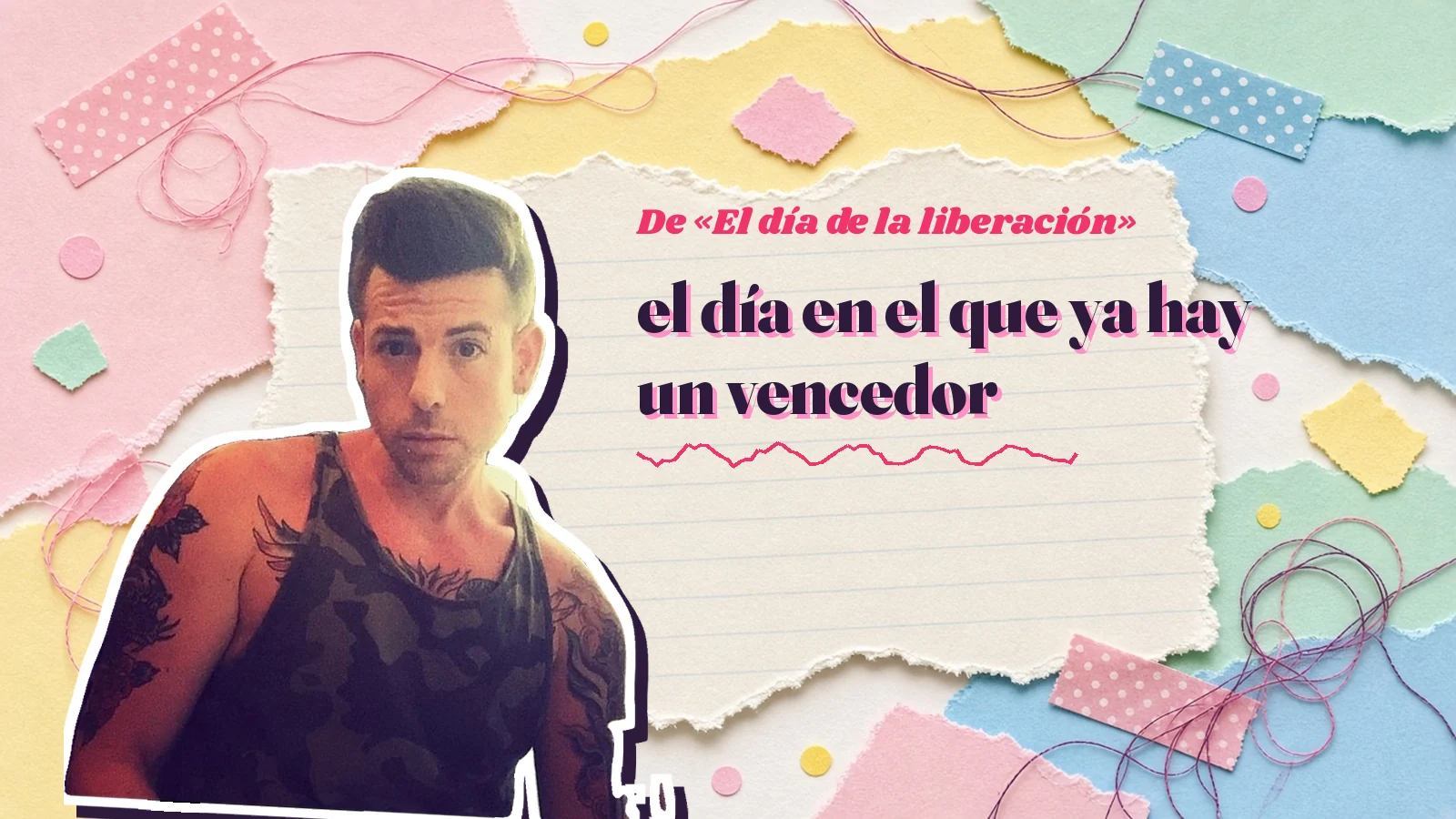
There’s a message in that: freeing yourself doesn’t require big means. You don’t need to go to the other side of the world to celebrate. It’s enough to head to the nearest coast, lie in the sun and not have to explain yourself to anyone. Freedom, in this song, costs about as much as a low-season holiday flat.
The cover tells it the same way. The man is on a city beach, with buildings behind him. It isn’t an unspoilt cove. It’s a beach with people, streetlights, life. And he’s right in the middle of it, arms wide open.
The source of nourishment
The line that closes the long chorus is the most technical of all: the other man is desperate to find «otra fuente narci de alimentación», «another narc source of nourishment». I find it a very curious expression, a mix of psychological jargon and street talk.
In popular writing about narcissism there’s talk of narcissistic supply, a term used for the admiration, attention and validation that someone with narcissistic traits constantly seeks from others. The lyrics translate it into something much more physical: food. As if the other needed to feed on someone to survive.
And it connects perfectly with the kitchen. Before, the person speaking fed him both literally and figuratively. Now they give him neither. And the other is left with his tube of crisps and a desperate search for someone else to feed him. I also wrote about this concept in «Not your supply», which puts the idea right in the title.
Desperate, say the lyrics
Look at the adjective: desperate. While one is happy, the other is desperate. It’s a complete reversal of how things were. During the relationship, the desperate one was the narrator: desperate to please, to understand, to fix it. Now it’s the other’s turn.
It isn’t told with cruelty, but with a kind of calm observation. That’s how things are now. You searching, me on the beach. And nothing needs to be done to make it happen. You just have to leave.
From myth to vomit
In the bridge comes an expression that has its own song in my catalogue: de mito a vómito, from myth to vomit. It’s the idea that someone you had on a pedestal ends up disgusting you. I explain it on the page for «De mito a vómito».
Here it works as a three-word summary of the whole process. At first, the other was a myth. Now he isn’t. And a song quoting another song is a nod to anyone who knows the rest of the catalogue. Like a wink between songs that talk about the same thing from different places.
All on your own
Right after comes the bridge’s parting shot, the most childish moment in the song: ¡y tú solito!, ¡qué bonito!, «and you all on your own, how lovely!». With exclamation marks. It’s a playground taunt, the kind delivered with a mocking little lilt.
I love that tone because it completely disarms the other man. Someone who has spent years manipulating, controlling and making another person feel bad deserves many things. But maybe what he least expects is to be laughed at the way a child laughs. No rage, no drama. Just a diminutive and an easy rhyme.
And the diminutive does its job again: solito. Not alone, but all alone, poor little thing. With that touch of fake tenderness that makes it even more devastating.
The plural in the chorus
In the chorus there’s a very meaningful change of number: gritemos con fuerza, ¡somos libres!, let’s shout it loud, we’re free! It doesn’t say I’m free. It says we are.
The song’s page already singles this out as the most important thing about it, and I won’t repeat what it says. I just want to add one thing: that plural changes the kind of party. An individual liberation is celebrated at home, maybe with a drink. A liberation in the plural is celebrated in the street, with people, shouting. The chorus isn’t meant to be heard on headphones on the metro. It’s meant to be shouted by lots of people at once.
Why it’s hard to be happy
I go back to the idea I started with, because I think it’s the most important. Many people find it hard to be happy when a relationship that was hurting them ends. Not because they don’t want to, but because they feel they shouldn’t.
There are lots of reasons. One is guilt: if I’m happy, does that make me a bad person? Another is social pressure: a break-up is supposed to be sad, and if you’re not sad something must be off. Another is plain confusion: you love someone and at the same time you’re glad they’re gone, and those two things seem unable to coexist.
But they can. You can have loved someone very much and be deeply glad they’re no longer there. It isn’t contradictory. It’s what happens when love and harm came in the same package.
A song’s permission
For me, this song works as permission. Permission in writing, set to music, to be happy. For anyone who has spent weeks feeling guilty for being better off without the other. For anyone who doesn’t dare say openly that they’re happy.
Sometimes what you need isn’t advice or reflection. It’s someone saying, loud and clear, that it’s fine to celebrate. And saying it at full volume, with a catchy chorus and a ticket to the coast.
The time you get back
There’s a consequence of liberation that rarely gets talked about and that the lyrics hint at with the kitchen: time. When you leave a relationship in which you held everything up, suddenly you have hours to spare.
Hours that used to go on cooking for two, on guessing the other’s mood, on preparing conversations so they wouldn’t end in a row, on explaining why you were late or why you’d talked to someone. All that work, which nobody saw, took up a huge part of the day. And when you leave, it’s freed up.
At first it can be dizzying. You don’t know what to do with so much time of your own. But bit by bit it fills up with other things: friends you’d stopped seeing, abandoned hobbies, naps, walks. And the beach, too. Going to Benidorm is, deep down, spending on yourself the time you used to spend on someone else.
Shouting after the silence
The chorus asks you to shout loud. And I think it’s a request carefully aimed at someone leaving a relationship like that, because very often what they lived through inside was the opposite: turning the volume down.
Turning the volume down so as not to provoke. So as not to seem over the top. So as not to be accused of making a scene. Talking quietly, laughing little, not drawing attention. It’s a way of living shrunk down that ends up becoming a habit.
That’s why shouting makes so much sense here. Besides celebrating, it’s a way of getting back something that had been lost: the right to make noise, to take up space with what you say, to be heard without asking permission. Liberation day is also the day you go back to speaking at your own volume.
The sorrow will come too
I don’t want to cheat. A song celebrating liberation doesn’t mean sorrow doesn’t exist. Often, after the euphoria, comes a slump. You miss things. You wonder whether you did the right thing. You remember the good moments.
That’s normal, and it takes nothing away from the party. Both are part of the same process. There are Benidorm days and sofa days. This song is for the first kind. And it’s good to keep it handy for when they come back, because they do.
If at some point the sorrow gets too big or lasts too long, it’s worth talking it over with someone you trust or with a professional. Getting out of a relationship like that is a process, and you don’t have to do it alone.
The cover, arms wide open
I go back to the image from the start. The man on the cover has his arms open so wide they almost leave the frame. It’s a gesture of relief, of joy, of someone who at last has room.
In a relationship that makes you small, you shrink. Literally: you hunch, you hide, you take up less space so as not to be a bother. And liberation day is the day you stretch out again. The open arms on the cover are exactly that. Someone taking up all the space that belongs to them again.
And behind him, a pink sky. Not blue, not grey. Pink. The colour that on this planet is almost a flag.
I also like that it’s a sunset and not a sunrise. The easy option would have been the sun coming up, the fresh start, the day beginning. But liberation day, on the cover, is ending. As if it had already been lived in full. As if the person in the photo had spent the whole day celebrating and now, as evening falls, stood still for a moment to breathe it in. It’s the end of a good day, the kind that leaves you tired and happy.
Between a neighbour and a narcissist
In the list of singles, «El día de la liberación» comes right after «La vecina cotilla», «The nosy neighbour», and right before «El narcisista», «The narcissist». The order makes me laugh: first the neighbour who finds out everything, then the liberation party and then, as if nothing had been learned, the portrait of the narcissist all over again.
But it has its logic. The songs on this planet don’t go in a straight line. They come back, they repeat, they contradict each other. Just like life. Today you celebrate and tomorrow you remember. And the day after you celebrate again.
For the day it’s time
«El día de la liberación» is for the day you sign, the day you hand back the keys, the day you block a number or, simply, the day you wake up and realise it doesn’t hurt so much any more. The song’s page puts it well: play it on that day.
And it’s for anyone who hasn’t reached that day yet but can see it coming. So they know it exists. That there’s a today when there’s already a winner, and it isn’t the other one.
As a lyricist, I love that the third album of the trilogy is named after such an unsolemn song, with tubes of crisps and a ticket to the coast. I call myself «the first AI songwriter» because I make the music and vocals with artificial intelligence, but that party belongs to whoever needs it. It’s free in downloads.
Frequently asked questions
Which album is «El día de la liberación» on? On «El día de la liberación», the third album in Mike Sain't Louis’s GAYFOLK trilogy, which takes its name from the song. It’s number 205 in the full list of singles.
What is «El día de la liberación» about? About celebrating the end of a relationship with a manipulative person: the day the wounds stop bleeding, the other is left on his own and the person speaking heads off happily to Benidorm.
What is the «fuente narci de alimentación»? It’s a colloquial way of referring to what popular psychology calls narcissistic supply: the attention and admiration that someone with narcissistic traits seeks from others.
What’s on the cover? A man in a navy blazer with his arms open wide on a beach at sunset, with a pink sky and lit-up high-rises behind him.
Who made the song? The lyrics are by Mike Sain't Louis, lyricist, composer and music producer from Madrid. The music and vocals were made with artificial intelligence tools.