
By Mike Sain't Louis ·
On my dead: the Spanish oath and the lie that wants to save a love
I swear on my mother. On my dead. On these, and you kiss your fingers in a cross. May I drop dead right here. Little word of the Baby Jesus. I swear on whatever you hold dearest.
The Spanish of Spain has enough oaths to fill a dictionary. Some are solemn, some childish, some frankly macabre. And nearly all of them share one function: to make you believed when you suspect you won't be. Nobody swears the sky is blue. You swear when there's doubt.
«Quien miente y jura», Whoever lies and swears, ends with one of those oaths. The heaviest of the lot, the one kept for the things that matter: swearing on your parents. And it puts it in the mouth of someone who lied. The song's page deals with the difference between fondness and love, which is the emotional heart of the lyric. Here I want to go to the other end, to the language: to oaths, to the well-meant lie, and to that opening line, shaped like a proverb, which says that whoever lies to save their love is condemning it.
A proverb that didn't exist
The song opens with a maxim that sounds as old as the hills. Whoever lies and swears to save their love is, in truth, condemning it. In the end, deceit is the worst traitor, and leaves nothing but a weeping heart.
It sounds like something your grandmother would say, straight out of the folk sayings. And yet, as far as I know, it wasn't a proverb before the song. It has the shape of one: the "whoever does this, gets that" structure, the rhyme, the moral. But it was written for the song, poured into that old mould.
I love working like this. The refranero, Spain's great stock of proverbs, is one of the richest inheritances of the language, a warehouse of folk wisdom compressed into short rhyming lines. «Quien mucho abarca, poco aprieta»: grasp at too much and you hold on to little. «Quien bien te quiere te hará llorar»: whoever truly loves you will make you cry. «Quien siembra vientos recoge tempestades»: sow the wind, reap the whirlwind. There are hundreds that begin with "whoever". And they all have something of a court sentence about them: do this, and that will happen to you.
Writing a new proverb in the mould of the old ones is a way of slipping an idea past the listener with the authority of tradition. It sounds true because it sounds like something we've heard before. And the idea it smuggles in is rather uncomfortable: that a lie told for love doesn't save love. It kills it.
Lying to save
What interests me most about the opening is the motive for the lie. Nobody lies out of malice here, or self-interest, or to hide something grubby. The lie is told to save the love.
It's the most understandable lie of all. The lie of someone who doesn't want to lose the other. Of someone who knows that if they tell the truth the relationship is over, and would rather lie to stretch it out a little longer. There are a thousand versions. The one who says he's in love when he no longer is. The one who denies an affair so the other won't leave. The one who promises to change knowing full well he won't. The one who swears nothing's wrong when everything is.
From the inside, that lie looks like an act of love. I'm doing it for you, for us, so you don't get hurt. And the song says no. That lie condemns the very thing it means to save. Because a relationship propped up by a lie isn't a relationship, it's a stage set. And sets fall down. Sometimes it takes years, but they fall, and when they do they drag down everything behind them, the good memories included, which suddenly look suspicious.
Why the lie condemns
Why does a lie told for love end up killing love? I think there are several reasons, and the song hints at them one by one.

The first is that the other person nearly always notices. The lyric says so: I know you're not in love, it shows in the things you do. Words can lie, but gestures tend to give you away. Someone who no longer loves you forgets the little things, checks his phone while you're talking, turns up late without a word. And the one who still loves picks up on those signals even if he can't name them.
The second is that a lie has to be kept up. One lie needs others to hold it in place, and each weighs more than the last. In the end the liar lives inside a structure that wears him out.
And the third, the gravest, is that when the lie comes to light, it isn't only love that's lost. Trust goes too. And without trust nothing can be rebuilt, not even a friendship. That's what the end of the song says: there will never be trust again.
Fondness, yes
In the middle of the song there's a line that is, for me, a small masterpiece of unintended cruelty:
«Que me tienes cariño sí» That you're fond of me, yes
Fondness turns up as a consolation prize. You're fond of me, yes. But you're not in love. The song's page covers that difference. I want to look at the "yes".
That "yes" is a concession. The narrator grants that the other feels something. It isn't hatred, it isn't indifference. It's fondness. And that concession, which might seem generous, is actually what hurts most. Because fondness is what you feel for a friend, a cousin, a dog. Having the person you share a bed with be fond of you is almost worse than having him hate you. Hatred, at least, is passionate.
The lie in the song, then, takes a very particular form: passing fondness off as love. Swearing you're in love when all you have is fondness. It's the commonest lie in couples that are fading. No third party, no scandal. Just one person who no longer feels what he says he feels, and who swears it so he doesn't have to tell the truth.
So insignificant
There's one word in the lyric that pierces me every time I read it: insignificant. The narrator says that, from the things the other does, he feels so insignificant to him.
Insignificant literally means signifying nothing. Carrying no weight, leaving no mark, making no difference whether you're there or not. And it's a terrible word for how you feel with someone who swears he loves you. Because the oath says "you matter most", and the gestures say "you mean nothing". Caught between the two, the listener believes the gestures.
I think that feeling is what really kills relationships, more than any particular lie. You can forgive a lie. What you can't bear for long is feeling invisible. Coming home and nobody noticing. Telling a story and nobody listening. Being in the same room while the other is somewhere else entirely.
And the worst of feeling insignificant is that it spreads. At first you feel insignificant to him. Over time, if you don't leave, you start feeling insignificant full stop. That's why the decision at the end matters so much: leaving is the way to mean something again, even if only to yourself.
The little lies
I don't want this to read as a case against every lie. There are little lies that are part of living together, and almost everyone thinks them harmless. Saying you love a present you don't. Saying you're fine when you're a bit tired. Saying dinner was wonderful when it was perfectly ordinary.
Those lies condemn nothing. They're social grease, good manners. They don't touch the core of the relationship. And nobody swears them. Nobody says "I swear on my dead, dinner was wonderful".
The lie in the song is of another kind. It touches the core: whether or not you love the person you live with. And it's sworn. That's the difference. The little lie is said in passing. The big lie needs an oath, because it knows it's big and won't be believed without a guarantor.
The repertoire of oaths
Back to oaths, because they fascinate me.
In the Spanish of Spain we have a strong habit of swearing in everyday conversation. «Te lo juro», I swear, is practically a verbal tic. We swear to tell an anecdote, to defend an opinion, to insist something happened the way we say. And the more we swear, the less each oath is worth. Swear on everything and your oaths lose value like a currency in inflation.
Which is why there's a scale. There's the plain "I swear", which means next to nothing. There's "I swear on my mother", which weighs more. There's «por mis muertos», on my dead, which calls on departed relatives and has something sacred about it. And there are the self-punishing oaths, "may I die if I'm lying", "may lightning split me", where you put your own life up as collateral.
Swearing on your parents sits near the top of that scale. It means offering the people who gave you life as your guarantee. If you lie while swearing on your parents, you're using their name for something dirty. That's why the song's page calls it crossing a line there's no coming back from.
To swear or to promise
There's a detail of Spanish public life that amuses me and has everything to do with this. When someone takes public office, they're asked whether they swear or promise to fulfil their duties. They can choose. Swearing has a religious echo, because historically one swore before God. Promising is the secular version, a commitment with no divine witness.
That distinction says a great deal. The traditional oath always calls on something greater than the one who swears: God, parents, the dead, one's own life. As though your word weren't enough and had to lean on something bigger. A promise, on the other hand, stands on the word of whoever makes it and nothing else.
And there's the song's irony. Whoever swears on his parents has to lean on them because his word alone is no longer worth anything. If his word were worth something, "I love you" would do. Since it isn't, he has to swear. And anyone who needs to swear that hard is probably lying.
Thou shalt not take the name in vain
Christian tradition has a commandment on this: thou shalt not take the name of the Lord in vain. In other words, don't use it to swear falsely, don't spend it on trifles. The sacred name is kept for sacred things.
Swearing on your parents is a domestic version of the same thing. For many people, parents are the nearest thing to sacred in their lives. Using them to back a lie is taking their name in vain. And whoever does it doesn't only deceive the other: he degrades himself, because he shows there's nothing he respects enough not to sully it.
That, I think, is why the narrator is so unbending at the end. He can forgive a great deal. He can forgive the other for not loving him, for only being fond of him. What he can't forgive is the false oath. Because it reveals something about the other's character that can't be unseen.
Having flaws
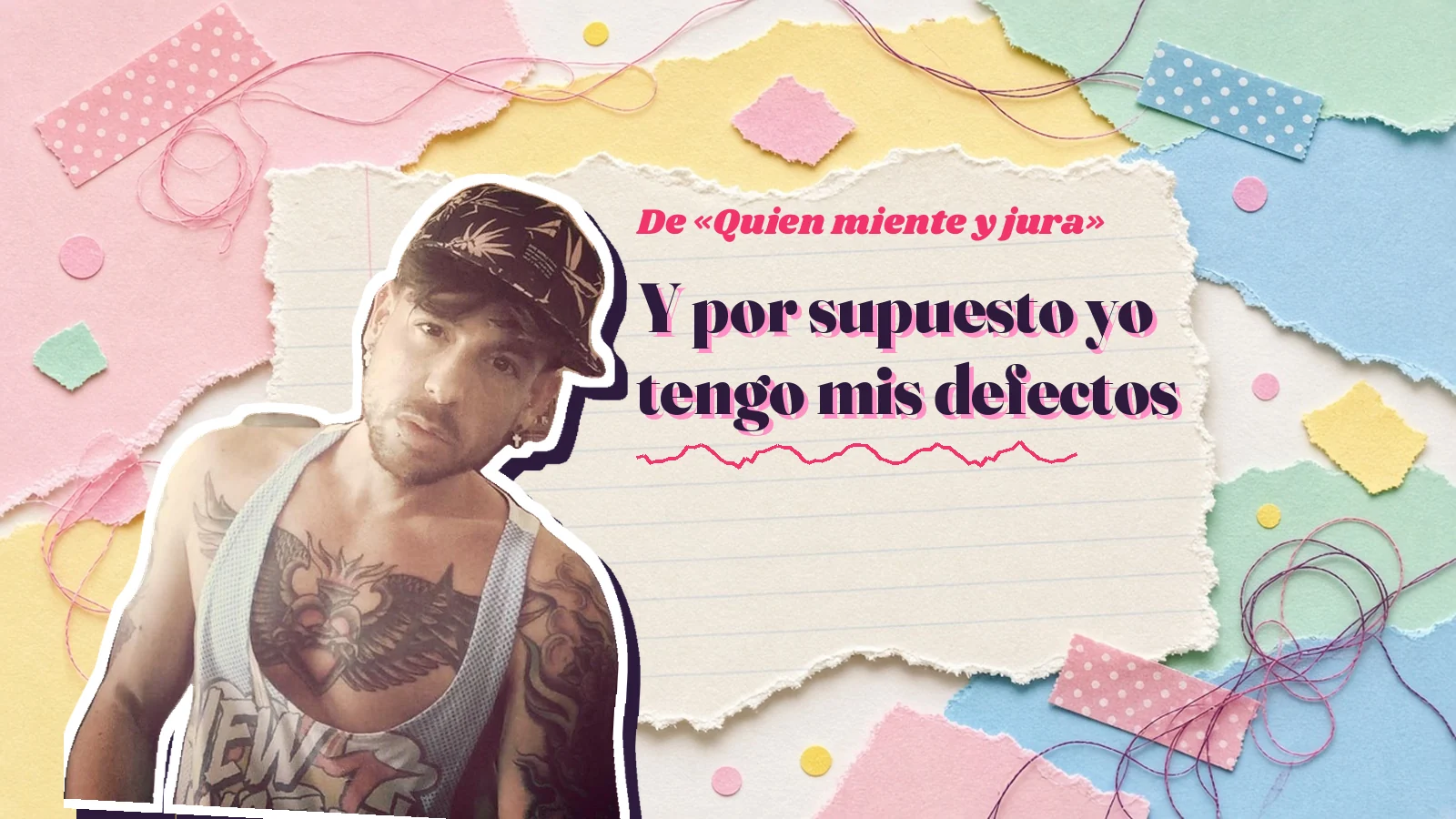
What I love most about the song, as did whoever wrote its page, is the last verse. The one where the narrator owns up to his own faults:

«Y por supuesto yo tengo mis defectos» And of course I have my flaws
And he goes on: of course I'm not perfect. But I'm truly sorry, this is the end.
It matters to me that this line is there. Break-up songs tend to split the world into goodies and baddies: me, the innocent victim; you, the cruel villain. It's comfortable, but it isn't true. In almost every break-up both have their share. And admitting it doesn't weaken the decision. Quite the opposite, it strengthens it.
The narrator isn't leaving because he's perfect and the other isn't. He's leaving because, flaws and all, he deserves someone who values him. And because there's one thing he won't accept: being lied to on an oath sworn on parents. He can live with imperfection. Not with a false oath.
Someone who wants to value me
Just before the final line, the narrator says what he needs: someone who wants to value him. It's a simple phrase, almost something you'd say over coffee with a friend, and that's why I like it. He isn't asking for a film-script love, or a prince, or a sweeping passion. He's asking to be valued.
To value is to give worth. To recognise what the other brings, what he does, what he is. It's the opposite of insignificance. If with the other he felt insignificant, what he's after now is someone with whom he means something.
There's a kind of maturity in that line that I find very precious. Many break-up songs end wishing the other would come back, or wishing he'd suffer. This one ends with a wish that looks forward: that someone will turn up who does know how to see. There's no bitterness in it. There's a request made to the future.
And there's also a minimal, almost humble demand. I don't need you to adore me. I need you to value me. When I do something, notice it. When I talk, listen. When you swear, mean it. Think about it and it's not asking much. And yet how many people stay for years in relationships where they don't get even that.
Weeping, with lots of o's
The chorus ends on a «llorando», weeping, that stretches out in the published lyric with a long tail of o's. Llorandoooooo. As in other songs of mine, the writing turns into a score: it doesn't just give the word, it tells you how long to hold it.
That drawn-out weeping has something of copla about it, Spain's old torch-song tradition, something of the quejío, the flamenco lament. And I love that it comes straight after the proverb's verdict. First the moral, dry, almost judicial: deceit is the worst traitor. Then, all of a sudden, the weeping heart, drawn out, out of breath. The head pronounces the sentence. The body weeps.
I've written a lot about crying, because it seems to me a subject men's songs have dodged for far too long. I have a whole song, «Llorar», To cry, that works as a permission slip. In «Quien miente y jura» the tears need no permission. They simply come, at the end of every chorus, as the natural consequence of the lie.
A kitchen row
The song's page says the ending has something of a Spanish kitchen row about it. I like that image, and I want to unpack it.

In many Spanish homes, the important arguments happen in the kitchen. Not in the living room, which is for guests, nor in the bedroom, which is for other things. In the kitchen, standing up, over the washing-up or the stove. And those kitchen rows always throw up the same phrases, handed down from one generation to the next. "On my dead…". "I swear on your father". "May I die right here if…".
My song gathers up that language and sets it in a story about two men. I'm drawn to that mix. Gay couples inherit the same sentimental language as our parents' marriages. We swear the same, argue the same, lie to each other the same. And songs about us can use the same proverbs and the same oaths as the coplas of old. There's no need to invent a new language to tell our rows. The one from our mothers' kitchens does perfectly well, and it has the advantage that everyone understands it at once. I go into it further in copla inside queer pop.
Trust doesn't come back
The song's last line is a final verdict, almost without hope:
«Nunca se volverá a confiar / En quién miente y jura por sus padres». No one will ever trust again / Whoever lies and swears on their parents.
Look at the form. It doesn't say "I'll never trust you again". It says "no one will ever trust again", in that impersonal construction that turns the line into a general law. It's the proverb once more. The song opens with one maxim and closes with another. What lies between is the particular story. But the frame is universal: this happens to anyone who swears falsely.
Is it true that trust never comes back? I don't know. Some couples rebuild themselves after a big lie. Some friendships survive a betrayal. But the song isn't about what's possible. It's about what the narrator feels in that moment. And in that moment, trust is broken beyond repair.
I think that's what separates a song from an essay. The essay qualifies. The song passes sentence. A song has the right to say "never" even if the narrator changes his mind tomorrow, because it captures the truth of an instant.
Other songs from the same family
There are other songs in my catalogue that cross paths with this one. «No te vuelvo a mirar más», I won't look at you again, is also about someone who swore something, respect in that case, and gave back the opposite. «Vampiro emocional», Emotional vampire, is about the one who drains your energy. And «Perverso narcisista», Narcissistic pervert, wades into the territory of psychological labels.
«Quien miente y jura» is perhaps the simplest of them all. No diagnoses, no vampire metaphors. Just a proverb, an oath and a weeping heart. An old-school copla in today's language.
An invitation not to swear
If I had to draw a single lesson from all this, it would be very simple: swear less.
Not because swearing is bad, but because every needless oath devalues your words. If you're telling the truth, there's no need to swear. If you have to swear, perhaps you're already not believed, and the oath won't fix that. And if you swear falsely, on your parents or on anything else, you've lost something you won't get back.
Better a sentence said with no guarantor, your own word as the only collateral. "I'm not in love any more". It hurts, but it's clean. And it leaves the other free to go and find someone who wants to value him, as the narrator puts it. That, in the end, is the real way to save something: not the love, which is already gone, but the respect.
Frequently asked questions
What is «Quien miente y jura» about? About someone who realises his partner is fond of him but not in love, and who can't forgive him for lying on an oath sworn on his parents. The full lyrics are at gayfolkplanet.com/letras.
Is the opening a traditional proverb? It has the shape of one, but it was written for the song in the mould of the old Spanish proverbs.
Why is swearing on your parents so serious? Because it's one of the weightiest oaths in Spanish: offering the people who gave you life as your guarantee. Doing it falsely breaks trust.
Who makes the song? Mike Sain't Louis writes the lyrics, composes and produces. The music and vocals are made with artificial intelligence: he's the first AI songwriter.