
By Mike Sain't Louis ·
«Ni con un palo»: why I wrote a text and not a chorus
Two men in pink satin pyjamas. A bed with silky sheets. A metre of distance that looks like the Strait of Gibraltar in a storm.
That's the cover of «Ni con un palo», and that's the song. A gorgeous set with the affection taken out. What happens in that room leaves no bruises and never makes it into the A&E report at the Gregorio Marañón hospital. It happens in silence, with the bedside lamp on and someone waiting for a touch that never comes.
I'm Mike Sain't Louis, the one who writes the lyrics for Planeta Gayfolk, and I've earned my reputation for not taking anything seriously. I laugh at my exes, at my love handles, at the cruise where they served me calimocho instead of champagne. Not with this one. I wrote this one without rhyme, without a catchy chorus, almost without breathing. The song's page sums up what it's about. Here I'll tell you why it has such an odd shape and what each line does.
I wrote it because silence is abuse too
There's a line in the text that explains it all better than I can right now. I put it in just like this: «I wrote it because silence is abuse too».
No metaphor. No vampires, no neon coffins, no Carmina Barrios as an imaginary mother-in-law. Just a statement. The subject is sexual punishment within a relationship with a narcissist: the form of control that consists of withholding the body, of not touching, not looking, not coming close, so the other person wonders what they did wrong.
Anyone who has lived through it knows there's nothing funny about it. What it has is clockwork logic. Not tonight. Not tomorrow either. And meanwhile you're going over what you said at dinner, whether you've put on weight, whether you've become boring, whether it was because you didn't put the washing on.
The title does keep the language of the street. «Ni con un palo», not even with a stick, is what people say in any bar in Lavapiés about someone they wouldn't touch even if they were paid to. I needed that crude phrase on the cover so the text inside would sound even colder. The title is from the bar. What's inside is a forensic report.
It isn't rejection, it's calculation
If I had to keep a single line from everything I've written about narcissism, it would be this one: «It isn't rejection, it's calculation».
Five words. I wrote them for anyone who has spent months believing the problem is their body. Rejection happens to everyone: one day you're not in the mood, the next day neither, and that's fine. Calculation is something else. It's knowing exactly what your distance causes and doling it out like someone rationing water on a ship.
Short sentences come to me when I'm serious. In party songs I ramble, I list, I put Locomía and Mercadona in the same line. In this one, out came one dry sentence after another, like a GP delivering a diagnosis without looking up from the computer. And I think that dryness is what hurts. It says it without asking permission.
It's a line that stands up without music, and for a lyricist that's the acid test. Take it out of the song, stick it on a Post-it on the fridge, and it still hurts. Some of my lines are half a joke without their backing track. This one doesn't need a backing track. It needs someone to read it in time.
The mistake of justifying his emptiness

The text moves the way the mind of someone suffering this punishment moves. First you try to understand. Then you justify. Then you blame yourself. You start thinking something changed in you, that nobody fancies you any more, that you've let yourself go since you quit the gym on Calle Fuencarral.
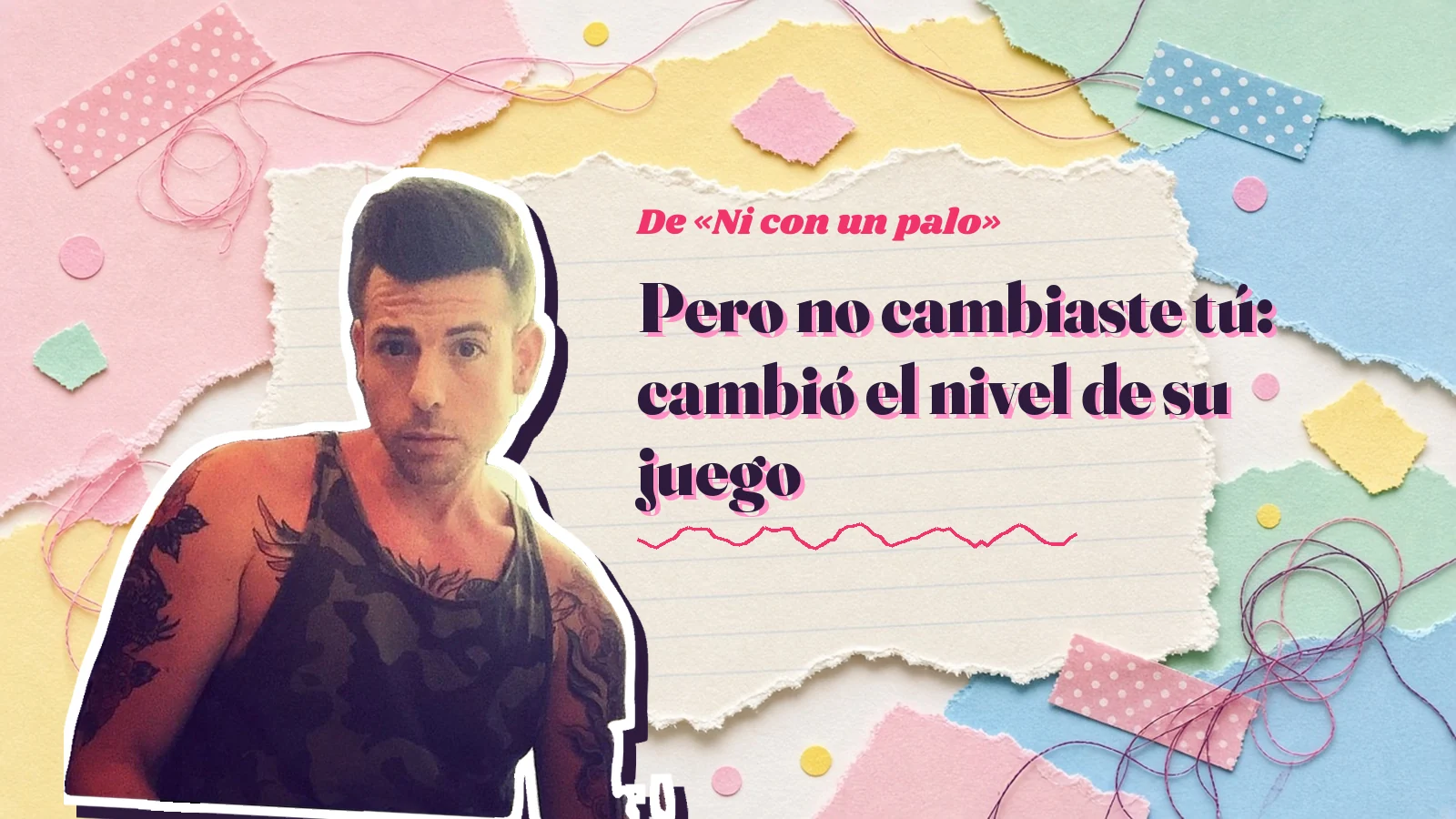
And then comes the line that turns the tables: «But you didn't change: the level of his game did».
I really like that line because it moves the blame without shouting. It doesn't say «he's a monster». It needs no adjectives. It says there's a game and the level has gone up, like those video games where the next screen looks the same but is faster and full of more enemies. You're still the same person. He's the one who changed the rules.
The colon in that line is there on purpose. It's like a judge's gavel. Before it, the victim. After it, the verdict.
A croquette lyricist writing a report
I'll admit it: I'm not cut out for solemnity. I'm the same person who wrote «Was this a cruise or a funeral home on the high seas?». Who rhymed SHEIN with narcissist. Who has a whole song called «Esta canción es una mierda», this song is shit. Asking me to write a serious text about abuse is like asking Paquita Salas to say Midnight Mass.
And yet here I am. Or there I was, when I wrote it.
I laugh at my exes because it's the most honest way I have of telling it, and I explained that in a piece with that very title. But humour needs distance. I can laugh at the boyfriend who turned out to be a frog because the frog is already in another pond. In sexual punishment I see no pond and no frog. I see someone on the edge of a pink bed wondering if he's ugly.
Laughing at that would take weight away from something that carries it. That's why the joke stayed out. Only the title has a bit of street in it, like walking into a courtroom in your slippers.
No chorus
A normal song has a chorus that comes back round so you can belt it out in the shower. Not this one. This one is a text that moves forward and never turns back, like a case file.
I cut the chorus because a chorus has something comforting about it. You return to the familiar, to what you already know, and that relaxes you. I didn't want to relax anyone here. I wanted every line to land fresh, with no safety net. A catchy chorus about sexual punishment would have been frivolous, like one of those government awareness campaigns with a ribbon and a summer jingle that do more to embarrass than to help.
The music, which comes from artificial intelligence tools such as Suno, I chose so it would accompany without sweetening. The vocals are AI too. I write, decide and discard until the result resembles what I had in my head. The words are mine. What I didn't want was a melody that got your foot tapping while you heard that someone is enjoying your hunger. I wrote about why I always mention the AI, without hiding it, in «Por qué digo abiertamente que uso IA».
It's knowing the other one is suffering and staying still
There's a third line I find hard to reread: «It's knowing the other one is suffering and staying still».
Staying still. That's the terrible part. You don't have to do anything to do harm. It's enough not to move when the other one comes close. Enough to turn towards the wall. Enough to say «I'm tired» four hundred nights in a row.
The violence everyone recognises makes noise: slammed doors, shouting, plates on the floor. This kind makes none. That's why it's so hard to name. That's why, when someone tells it, they're told nothing happened. And the text answers that with a very short line I won't quote in full so I don't use up all the verses, but which comes down to: everything happened.
Everything happened.
Someone else's hunger
There's another image in the text that I won't quote word for word so I don't overdo the verses, but I'll tell you about it: the narcissist enjoys the other one's hunger and dresses it up as indifference. Hunger. I chose that word carefully. It isn't a whim or a passing itch. It's a basic need, like eating or sleeping, that someone rations on purpose.
Indifference is the costume. From the outside it looks as if he simply isn't in the mood, that he's a cold person, one of those who aren't huggers. There are people like that, of course, and that's fine. What the text points to is something else: the coldness that appears exactly when the other one feels it most, and vanishes as if by magic when there's an audience. At dinner with friends, a hand on the knee. At home, the Berlin Wall before it fell.
That double face is what drives the victim mad. If they treated you badly all the time, you'd see it. Because they treat you well now and then, and in public, you doubt your own memory. And that's where gaslighting comes in, this punishment's first cousin, with its own song in the catalogue, «Gaslighting».
The words I didn't use
Writing this, I set myself a rule: no self-help-leaflet words. No «toxic relationship» as a comfy label. No healer's verbs or promises of rising like a phoenix, none of those phrases printed on Tiger mugs that have never helped anyone out of a cold bed.
Instead, words from the courtroom and the consulting room: punishment, control, calculation, domination, abuse. Words that leave no way out. Say «he's a bit toxic» and everyone nods and keeps eating. Say «it's abuse» and someone puts their fork down.
Nor did I use insults, which in other songs come out of me on their own. I don't call this character a pig, or a lout, or the coordinator of anything. An insult would give him an importance he doesn't deserve and, on top of that, would pull the attention towards him. The text looks at the victim. The one doing the punishing stays out of focus, like a shadow in the doorway.
It cost me, I confess. Creative adjectives come out of me like hiccups.
An autopsy, not a funeral
In the description that goes with the music video I call this song an emotional autopsy, and the word still seems exact to me. A funeral is for mourning the dead. An autopsy is for finding out what they died of. There's no weeping here: there's a scalpel.
That explains the tone. The pathologist doesn't get emotional over the steel table; he describes. This organ, this injury, this cause. The text does the same with the relationship: desire turned into currency, the most intimate scene used as a stage for manipulation, silence used as torture. It tells it with the calm of someone who has seen a lot of corpses. And I, as a lyricist, put on the white coat for once and left the feather boa on the coat stand.
Planet GAYFOLK has room for both. For the street party and for the autopsy room. What it has no room for is pretending nothing happened.
Under the neon

The music video goes the same way as the cover, but with the light changed. Neon instead of a bedside lamp. What it shows is exactly what usually goes unshown: the coldness, the guilt, the rejected body. No fight scenes, no grand gestures. Just distance on film.
I think up every music video at the same time as the lyric, because for me a song without an image is only half dressed. Here the image had to be uncomfortable without being lurid. No explicit sex, no blows. Just two bodies that could touch and don't. If a video like that makes you reach for your phone to escape, it's worked: that's exactly what someone living that situation does every night.
Why silence is so hard to tell
There's a reason this punishment hardly ever appears in songs. Heartbreak songs need an event: an affair, a fight, a slammed door, a message read at four in the morning. Sexual punishment has no event. It has absence. And absence is very hard to rhyme.
That's why there are so many songs about cheating and so few about this. Cheating is enough for a Rocío Jurado copla. The cold bed is only enough for a silence nobody wants to hear on the radio at aperitivo time. I didn't really know how to fit it into a song either, until I stopped trying to make it a regular song. I turned it into a text, and the text found its own shape.
Many people who have lived it don't tell it because, if they do, they get asked what happened. And the honest answer is that nothing happened, every night, for years. Said out loud, that sentence sounds ridiculous. The text gives it a place where it doesn't.
The cover: two pairs of pyjamas and a metre of distance
I art-directed the cover so it would say without words what the text says. A bubblegum-pink room from top to bottom: pink walls, pink satin sheets, a pop-art Marilyn Monroe on the wall, an old television, a pink rotary phone, a lamp switched on and a chessboard on the bedside table. A bedroom out of a sixties film, the kind that turned up in Doris Day comedies.
In the middle, two men in striped satin pyjamas, also pink. One sitting on the edge of the bed, looking down. The other standing with his back turned, glancing over his shoulder at nowhere. They don't touch. They don't look at each other.
The pink is no accident. It's the colour of tenderness, of candyfloss, of Barbie's house. Here it wraps the exact opposite. And the chess, read it however you like; for me it's a tiny black joke: one of them is playing the game and the other doesn't even know he's on the board.
Every Planeta Gayfolk song comes out with its own image and music video, one of the rules pinned up on my about page. The videos are gathered in the music video section.
Between a funeral and a ring
In the catalogue of 273 singles, «Ni con un palo» is track 158. Right before it comes «Nadie hablará de mí cuando haya muerto», black humour about loneliness and being forgotten. Right after, «El anillo de casado», which is about another kind of commitment and another kind of lie.
I didn't order the catalogue with those neighbours in mind, but it tickles me that it worked out this way: first the dead man nobody remembers, then the bed where nobody touches you, then the ring someone wears without keeping the promise. If anyone wants a three-chapter novel about how a relationship rots, there it is, unplanned.
The song belongs to *Descubierto un nuevo planeta llamado GAYFOLK*, the first album in the GAYFOLK trilogy. An album about arriving on a new planet, with what they did to you on the last one packed in your luggage.
The other narcissist songs

«Ni con un palo» isn't alone. Planeta Gayfolk has a whole corner devoted to narcissists, with songs that range from the most savage mockery to the driest diagnosis. There's «El castigo más duro», with its spiked words and its block of concrete. There's «El narcisista», with its frozen heart that not even a flamethrower could thaw. There's «La última carta», a written farewell that never reaches the person it's addressed to.
In almost all of them I laugh. Not in this one. And I think the contrast gives all of them strength: when someone who laughs at everything stops laughing, the silence weighs more.
If you're curious about the catalogue of exes scattered through the songs, with their types and subtypes, there's a little comic typology of ex-boyfriends on this very blog. That one is for laughing. This song is the flip side of that typology: the ex you can't possibly make a joke of.
Who I wrote it for
For anyone who has spent months sleeping on the edge of the mattress. For anyone who has googled whether it's normal for your partner not to touch you for half a year. For anyone who has looked in the bathroom mirror at two in the morning trying to work out what's wrong with their body.
And also for that person's friends, who are sometimes the ones saying «well, that happens to every couple». No. Every couple has bad days. The other thing has another name.
The text ends with a direct slogan, the kind that in another context would make me cringe for how placard-like it is. Here I kept it. If someone punishes you with silence, don't call it love. That's the only moral I allow myself in the whole text, and I allow it because it's true.
Read it before you hear it
With this song I recommend something I almost never recommend: read the text before you press play. It's there in full on its lyrics page, and in the lyrics archive on this site you can see how it fits among the others.
Read it slowly. Notice the colons, of which there are many, and none for decoration. Notice how the sentences get shorter towards the end, like someone running out of air. Then listen to it on Spotify or with its music video on gayfolkplanet.com.
The first time you hear it after reading it, the music will seem like something else. Colder. Closer.
What I won't do with this song
I won't turn it into a meme. I won't make a TikTok short of it with dancing in pink pyjamas. I won't slip it into a «songs to get over your ex» playlist between Shakira and Rosalía.
It's the song that isn't for sale, the one that doesn't get promoted with a joke. If it reaches someone, let it reach them because they needed it. And if the person who needs it finds it at three in the morning googling what's happening to them, I hope it helps them stop blaming themselves.
For the questions I usually get about the project in general, there's the FAQ page.
The rest the text already says. Better than me, and drier.
Frequently asked questions
What is Mike Sain't Louis's «Ni con un palo» about? Sexual punishment in relationships with narcissists: withholding physical contact as a form of control. It's a text with no chorus and no humour, with lines like «It isn't rejection, it's calculation». Mike Sain't Louis sums it up in the lyric itself: silence is abuse too.
Which album is «Ni con un palo» on? Descubierto un nuevo planeta llamado GAYFOLK, the first album in the GAYFOLK trilogy. In Planeta Gayfolk's catalogue of 273 singles it's track 158.
Why doesn't «Ni con un palo» have a chorus? Because Mike Sain't Louis wanted every line to land fresh, without the comfort of repetition. The subject, silent abuse, didn't allow for a catchy melody or jokes.
Who writes it and who makes the music? The lyrics are by Mike Sain't Louis, a lyricist, composer and producer from Madrid. The music and vocals are made with artificial intelligence tools such as Suno, under his direction.