
By Mike Sain't Louis ·
The perfect victim: old wounds and "at first I didn't notice" in Usted es un puto narci psico encubierto
Almost everyone who knows this song remembers the ending. The announcement over the loudspeaker, the stiff formal "sir" of a ticket counter, the psychologist from Villaverde, and that title fired off four times in a row like a terrace chant. That's what sticks, and fair enough. But the song doesn't start there. It starts with four very serious lines, almost a diary entry, that go by quickly and that I think are the key to everything else.
On the song page I talked about the PA announcement and the fun of using the most formal language imaginable to deliver a gloriously crude insult. And a while back I wrote a long post on when calling someone a narcissist helps and when it's too much, so I won't rerun that debate. Here I want to stay with the confession at the start. With what comes before the party. The full lyrics are published and very short, so it's worth reading them through before you go on.
Four lines before the announcement
The first verse says, more or less, this: at first the narrator noticed nothing, still had old wounds that hadn't healed, the other person picked up on it and knew straight away there was someone easy in front of them. Four sentences. No joke. No insult. No cheeky rhyme.
Then suddenly the "attention, attention" rings out and the song turns into something else. That contrast feels essential to me. If the song opened straight on the loudspeaker, it would be a joke. A good joke, but only a joke. By putting those four lines first, the joke has a reason. We know the person laughing has suffered first, and that the laughter is what comes after.
Plenty of revenge songs forget to explain why the avenger has the right to get even. Not this one. It gives you the context in fifteen seconds and then lets you enjoy the show.
"At first I didn't notice a thing"
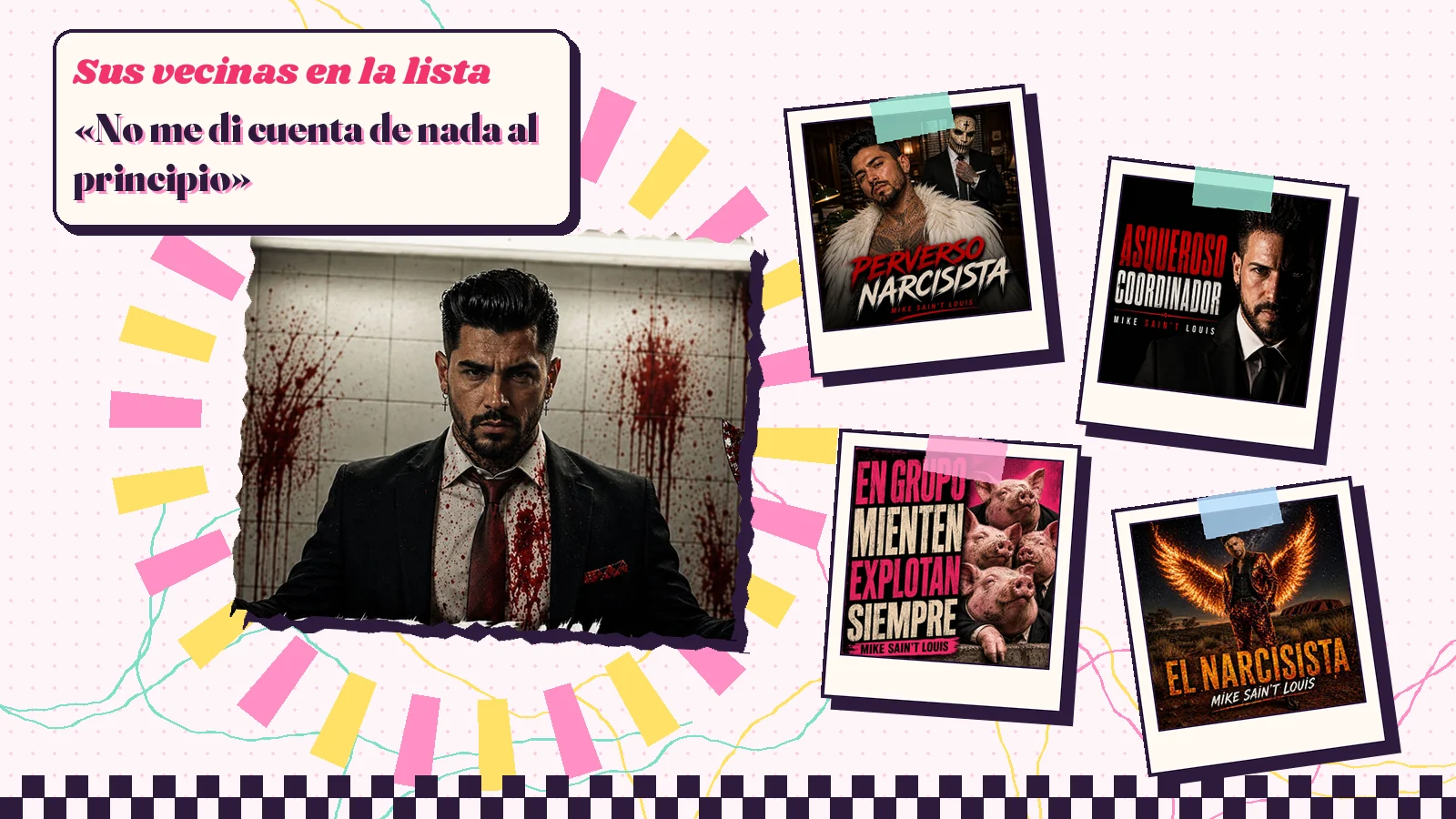
The very first line is "No me di cuenta de nada al principio": at first I didn't notice a thing. It's something a huge number of people say after a harmful relationship, whether romantic, a friendship or at work. And it's almost always said with a little shame, like someone owning up to being clumsy.
That shame interests me, because it's unfair. There's a well-studied phenomenon in psychology called hindsight bias. The researcher Baruch Fischhoff, among others, described it in the seventies, and it's very simple: once we know how a story ended, the ending seems to have been obvious from the start. We look back and see warning signs everywhere. But those signs only look like signs because we already know the outcome. At the time they were loose details, mixed in with good things, with affection, with promises.
So "I didn't notice" isn't a confession of stupidity. It describes how memory works. Nobody lives their life having already read the last page. And people who manipulate well know exactly how to hide the signs among plenty of pleasant gestures. If it were easy to spot, it wouldn't work.
I like that the song says it without apologising. It doesn't say "what a fool I was". It says the narrator didn't notice, and explains why. A small difference in form, a huge one in substance.
Old wounds
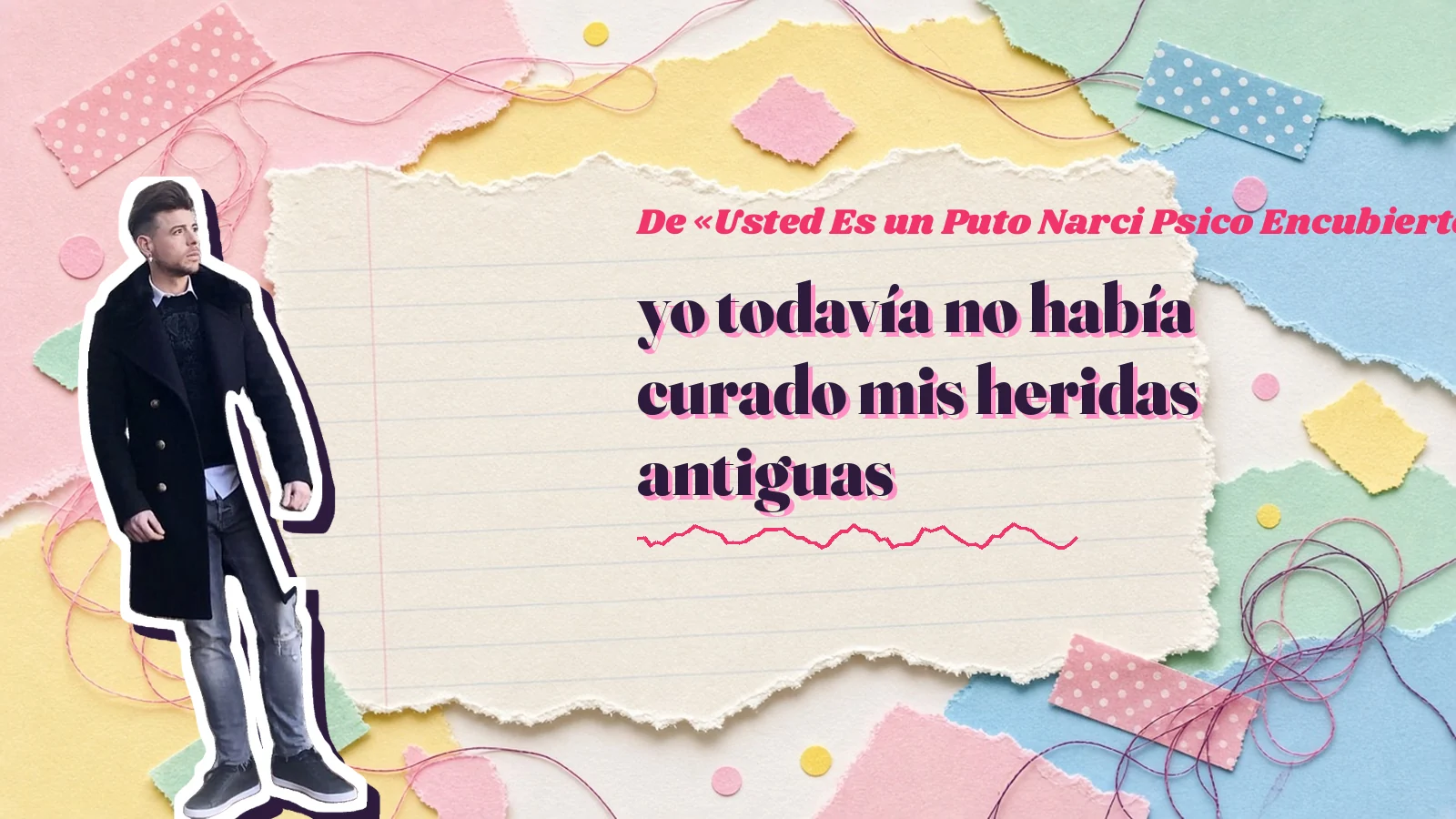
The second line is the one that moves me most: "yo todavía no había curado mis heridas antiguas", I still hadn't healed my old wounds. Here the lyrics do something very honest. They don't put all the blame outside. They admit the narrator arrived already bruised, with unfinished business from other chapters, and that this made them more vulnerable.

This happens to so many people. You start a new job after a redundancy that left your self-esteem on the floor. You begin a relationship while the last one still hurts. You make friends with someone during a stretch when you feel terribly alone. In every one of those situations, anyone who gives you a bit of attention shines brighter than they should. And anyone with bad intentions can tell.
Recognising that isn't self-blame. It's self-understanding. Old wounds aren't a character flaw; they're the logical result of having lived. All the song says is that it's worth knowing they're there, because some people know how to go looking for them.
In the LGBTQ+ world this idea carries special weight. Many of us reach adulthood with wounds that go back a long way: school, family, the years in the closet. That sometimes leads us to accept treatment we shouldn't, simply because someone makes us feel seen for the first time. It isn't a rule, but it's a risk worth knowing about.
Healing in time, or at least knowing where it hurts
If the song has anything like a moral, it's hidden in that second line of the first verse. It doesn't say the problem was having wounds. It says they hadn't healed yet. And that raises a practical question I find useful: what can you do with old wounds so they don't turn you into an easy target?
I don't have a recipe, and I'm wary of anyone who claims to. But there are a few things many people say helped them. Giving yourself time between one painful chapter and the next, rather than leaping straight across. Having someone on the outside, a friend, a sister, a professional, who sees things from a distance and dares to say "this doesn't sound right to me". Being a little suspicious of whatever seems too perfect too soon. And above all, knowing your own soft spots, not to be ashamed of them, but to recognise when someone is pressing on them on purpose.
None of that guarantees anything. But it helps the radar work in both directions next time.
The perfect victim
The third and fourth lines complete the thought: the psychopath picks up on it, and already knew they had "la víctima perfecta" in front of them, the perfect victim. It's a harsh phrase, and the song uses it without decoration.
What I find interesting is the verb. To detect. Like radar, like a dog catching a scent. The lyrics present that person as someone who doesn't choose at random but hunts for a profile. And the profile, mind you, isn't someone weak. It's someone whose guard happens to be down.
That's one of the most common threads in accounts from people who've left relationships like this: the feeling of having been chosen. Of everything being so perfect at first that it seemed tailor-made. Some call that phase love bombing: an avalanche of attention, compliments and plans that leaves you no room to look calmly. If you arrived with wounds already, the effect multiplies.
I don't want to turn this into a psychology lecture, because I'm no psychologist and the song doesn't pretend to be one either. But I do value the fact that such a cheeky song rests on something so recognisable. Many listeners see themselves in those four lines before they start laughing at the rest.
The signs you only see afterwards
When someone gets out of a situation like this, they often go through a very painful exercise: reviewing. Going back to the first days, the first messages, the first meeting, searching for the exact moment they should have realised. And they nearly always find something. An odd comment. A joke that wasn't funny. A favour that later came at a steep price.
The thing is, at the time those signs came gift-wrapped. The odd comment arrived right after a huge compliment. The unfunny joke was followed by a lunch invitation. The favour was presented as pure generosity. Separating the sign from the wrapping is only easy once you've seen the end of the film.
That's why I love that the song opens the way it does, without melodrama. It doesn't flagellate itself or list its own mistakes. It states a fact: the narrator didn't see it, and there were reasons not to. From there, it allows itself to turn the page and laugh.
I think that's a useful lesson for anyone in the middle of their own review. Looking back helps you learn, helps you recognise patterns next time. But it's pointless to turn that review into a trial against yourself. The person you were at the start didn't have the information you have now. Treating them with a little kindness is the least you can do.
The workplace as a stage
Another thing that sets this song apart from many others in my catalogue is the setting. It doesn't happen in a bedroom or a nightclub. It happens in a company. The announcement says the danger is inside the firm itself, and a director and a psychologist appear.
Bullying at work gets talked about far less than it should. In Spain, occupational health and safety law requires employers to protect their staff's health, and that includes psychosocial risks; many companies have specific anti-harassment protocols. But between what a document says and what happens in an office there can be a chasm. Plenty of people put up for months with a colleague or a boss who makes their life impossible, because they need the salary, because they have no proof, or because nobody believes them.
That's what makes the song's fantasy so funny. It imagines a company where someone finally takes the problem seriously. Where a meeting is called, an announcement goes out over the speakers and a diagnosis needs confirming. It's exactly what many bullied people would have wanted: someone in authority saying out loud, in public, what they'd been seeing for ages.
There are other songs in the catalogue that look at that world of offices, coordinators and bosses, like Asqueroso coordinador (Disgusting coordinator) or En grupo mienten, explotan siempre (In a group they lie, they always explode), which shares this song's invented company. Together they make up a little workplace saga.
Why it's so hard to be believed
There's another reason the PA fantasy is so satisfying, and it has to do with something anyone who has reported abuse in a closed environment knows well: how hard it is to be believed.
People who manipulate well are often charming to almost everyone. They're the ones who bring croissants on Fridays, remember birthdays, get on with the boss. When someone says that person is hurting them, the usual reaction is surprise, and often disbelief. But he's lovely, people say. He's always been nice to me.
That leaves the person suffering in an exhausting position. They don't just have to endure what's happening; they also have to convince everyone else that it's happening. And the more they insist, the easier it is to label them dramatic, bitter or unstable.
The song solves that problem in one stroke. In its imaginary world, nobody needs convincing anymore. The company itself makes the announcement over the speakers. The director and the psychologist are already waiting. The suspicion is official. It's the fantasy of someone tired of explaining themselves: that for once the truth comes looking for them, and not the other way round.
From the one who suffered to the one who summons
The loveliest twist in the song, for me, is a swap of roles. In the first verse, the narrator is the one who didn't notice, the one with wounds, the perfect victim. In the second, the situation suddenly flips: now it's the other person being paged over the loudspeaker. Now they're the one summoned to a meeting they never asked for. Now they're under suspicion.
That shift is very liberating. Anyone who has lived through manipulation knows what it's like to feel constantly examined, always on the defensive, always explaining. The song turns that around. The examiner becomes the examined.
And it does so politely. It'll only take a moment, says the announcement. We're terribly sorry. That exaggerated courtesy is part of the revenge. No shouting, no slammed doors. Just a procedure. And nothing irritates someone used to being in control more than finding themselves inside a process they can't control.
Why the laughter comes later
People sometimes ask me about songs like this: isn't it making light of something serious? I don't think so, and the song's own structure is my answer.
The laughter comes later. First comes the wound, told without jokes. Then comes the belly laugh. That order matters. Laughing at what hurt you is one of the oldest ways of taking back control. It doesn't erase what happened, but it changes your relationship with it. What once frightened you becomes ridiculous, and the ridiculous can't hurt you as much.
Madrid has a long tradition of this. Castizo humour, the chotis, zarzuela, old-school revue: a whole culture of laughing at what aches. And queer humour, the humour of the old-guard queens, has been doing the same for decades. Turning the insult into your own weapon, mockery into spectacle, fear into a cabaret number.
This song drinks from both springs, and not by chance: both know that whoever laughs last doesn't always laugh best, but certainly laughs more calmly, because they're no longer afraid of what was done to them. It has the psychologist from Villaverde, pure southern-Madrid geography, and it has the nerve to drop the full title in the chorus without asking anyone's permission.
The insult as diagnosis
There's a detail in the language that tickles me. The title mixes the vocabulary of the consulting room with that of the bar. "Narci" and "psico" are clipped versions of technical words, narcissist and psychopath, trimmed the way words get trimmed when they're used a lot on the street. And in front of them sits a "puto", a fucking, that leaves no doubt about the tone.
It's a very accurate portrait of how we talk today. Terms once used only by specialists now circulate in friends' group chats, short videos, long Sunday lunches. That has a good side, because it helps name things that had no name before, and a risky side, because you can end up calling anyone who doesn't reply to a message a narcissist.
The song plays with that ambiguity on purpose. It asks to confirm a diagnosis, as if you needed an official document to say what everyone already knows. At the same time, it makes clear it's a fantasy: nobody is going to page anyone over a loudspeaker in real life. It's letting off steam, not a clinical report. And precisely because it's letting off steam, it can exaggerate as much as it likes, which is what songs are for.
What the song doesn't say
It's also worth pointing out what the lyrics leave out. They give no concrete details of what happened. No scenes, no list of grievances, no dates. The characters, Señor Don Andrés, the director, the psychologist, are figures in a kind of office theatre, invented for the occasion.

That lets the song work for lots of different people. Each listener can cast whoever they like as the gentleman being paged. The boss who shouted, the colleague who stole the credit, the ex who made them doubt their own memory. The song judges no real person. It stages a fantasy of justice.
Sister songs
This song has plenty of cousins in the catalogue. El narcisista (The narcissist) stays with the portrait. El descarte del narcisista (The narcissist's discard) looks at what happens when you're dropped. No contact is about cutting ties completely. And Andrés refuses even to keep a friendship. Usted es un puto narci psico encubierto is the most theatrical of them all, the one that turns letting off steam into a show.
It's on Ojalá se pudiera viajar a Gayfolk (If only you could travel to Gayfolk), the second album in the Planeta Gayfolk trilogy, a record where the longing to escape somewhere else mingles with plenty of unsettled scores from here.
If you recognised yourself in those first lines
If, while reading this, you thought of someone specific, a relationship or a job where you felt this way, I want to tell you something: not noticing at first doesn't make you a fool. It makes you human. And getting out, however hard, is possible.
Talking to someone you trust helps a great deal. And if what you're going through is draining your will to do anything at all, ask for help today. In Spain you can call 024, the suicide prevention line, free and open around the clock, or 112 in an emergency. If you're outside Spain, call your local emergency number.
Who this song is for
For anyone who took months to see what now looks obvious. For anyone who arrived at a job or a relationship with wounds nobody could see. For anyone who's been called into the boss's office without knowing why. For anyone who needs to laugh at what kept them up at night.
And for anyone who still shares a floor, a desk or a group chat with someone like that. Let them listen with headphones on, on the way to the office, and smile quietly when the announcement comes.
How to listen
The song is on the singles page and on every platform, and you can download it free from the downloads section. Listen from the very start, without skipping those four serious lines: without them, the chorus isn't half as funny.
As a lyricist, composer and music producer, I like writing songs that begin in the wound and end in a belly laugh. The music and vocals are generated with artificial intelligence, but that way of laughing at what hurt is very much from round here.
If this subject hits close to home: in the series «Mental health without taboo» I talk openly about my mental health (narcissistic abuse, the bullying and abuse I suffered as a child, my diagnosis at 41, and therapy) and gather where to find help. If you're thinking about suicide, call 024 in Spain, or your local emergency number elsewhere.
Frequently asked questions
What is Usted es un puto narci psico encubierto about? About someone who, after a manipulative relationship at work, imagines a scene of justice: a loudspeaker announcement summoning the person responsible to confirm a diagnosis. It opens with a serious confession about old wounds and ends in a chorus of pure mockery.
What does "the perfect victim" mean in the lyrics? It refers to the idea that manipulators tend to spot people whose guard is down, for instance because they're carrying wounds that haven't healed. The lyrics use it to explain why the narrator noticed nothing at first.
Are the characters real? No. Señor Don Andrés, the director and the psychologist from Villaverde are invented characters in a kind of office theatre. The song isn't about any real person.
Is it a song about workplace bullying? Partly. The setting is a company, and the fantasy is that someone in authority finally takes seriously what the victim had been seeing. But it works for any relationship where someone has felt manipulated.
Who makes this song? Mike Sain't Louis, a lyricist, composer and music producer who calls himself "the first AI songwriter": he writes the lyrics and directs the production, and the music and vocals are generated with artificial intelligence.