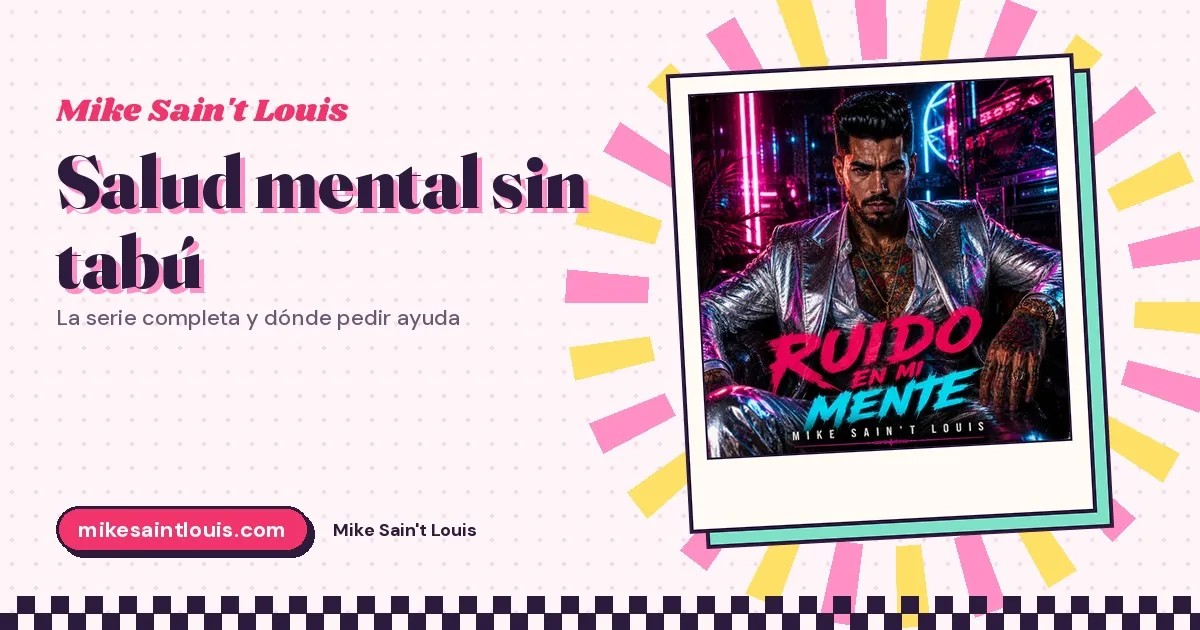
By Mike Sain't Louis ·
Mental health without taboo: the complete series and where to find help
This page brings together every piece in which I talk about my mental health. I wrote them to be useful to other people, so here I put them in order, explain what each one is about, and leave you a map of where to get help depending on what you're going through.
If you're struggling right now, you don't need to keep reading: call 024. They answer at any hour, free, and nothing ends up on any public record; if you can't talk, there's a chat. If there's immediate danger, call 112. And on 717 003 717, the Teléfono de la Esperanza stays with people through crises day and night. If you're outside Spain, call your local emergency number. Asking for help works.
Why this series exists
I've decided to tell this openly for a simple reason: if someone going through something similar reads it and feels a little less alone, or finds the nerve to ask for help, it will have been worth it.
With my music and these blogs I want to contribute something to social awareness. I want mental health to be talked about clearly, without morbid curiosity and without shame. And I want, above all, for suicide to stop being a taboo.
I write lyrics, compose and produce; the music and vocals come from artificial intelligence, which is why I call myself the first AI songwriter. But there's nothing artificial, and no character, in what I tell in this series. It's my life.
What I've shared, in a few lines
For anyone arriving here without having read anything else, this is a summary of what I share in the series:
- I fell in love at 22. After two failed relationships, I came to understand that both of the people I'd been with were narcissists.
- As a child I suffered bullying and repeated sexual abuse. All of it kept building up inside until it became a ticking time bomb.
- At 41 I was diagnosed with severe major depression, social phobia, post-traumatic stress disorder, avoidant disorder and anxiety.
- I'm now working through those wounds, and a good psychologist is helping me move forward.
I don't name anyone or give details of what happened. They aren't needed to understand what matters, and I don't want this series read as a lurid story. I want it read as a hand held out.
The pieces in the series
These are the pieces, in the order I published them. You can read them straight through or go directly to the one that speaks to you most.
1. [In love since 22: two relationships and what I understood afterwards](/en/blog/enamorado-desde-los-22-dos-relaciones-y-lo-que-entendi-despues). About falling in love with your whole heart and, afterwards, understanding that both people you were with were narcissists. I explain what I mean by that word, why I don't use it as a clinical diagnosis, and which warning signs I wish I'd known.
2. [The ticking time bomb: childhood wounds that explode in adulthood](/en/blog/la-bomba-de-relojeria-heridas-de-la-infancia-que-estallan-de-adulto). The school bullying and sexual abuse I suffered as a child, told without details, and what research says about how childhood trauma can explode decades later. The closing line of the video for «El panda del acoso sexual» appears here too.
3. [Diagnosed at 41: putting names to what weighed on me](/en/blog/diagnostico-a-los-41-ponerle-nombre-a-lo-que-pesaba). What each of the five diagnoses I received means, in general terms and with reliable sources. With myths, a small glossary and advice on telling other people.
4. [Thank you to my psychologist: therapy, and songs to keep going](/en/blog/gracias-a-mi-psicologa-la-terapia-y-las-canciones-para-seguir). A thank-you to the professional who is helping me, a plain explanation of what psychological therapy is and how to find it in Spain, and the place songs hold in all of this.
5. [Let's talk about suicide without taboo: asking for help works](/en/blog/hablemos-del-suicidio-sin-tabu-pedir-ayuda-funciona). A piece that isn't about me, but about recognising the signs, asking someone you're worried about, the myths that do harm, and who to call. Written following WHO guidance.
The series continues on gayfolkplanet.com, with its own reading guide and pieces on narcissistic abuse in LGBTQ+ couples, anti-LGBTQ+ bullying in childhood, survivors of childhood sexual abuse and social phobia and avoidance (in Spanish).
Where to start, depending on what you're looking for
Not everyone arrives at this page for the same reason. Here's a way in, depending on your situation:
- If you suspect your partner manipulates you, belittles you or makes you doubt yourself, start with the first piece. And listen to my song «El narcisista».
- If you carry something from your childhood you've never told anyone, the second piece is for you. Read it slowly and stop whenever you need to.
- If you've just received a diagnosis, or suspect something isn't right, the third explains what each name means and where to get help.
- If you're thinking about therapy but it scares you, the fourth is the one most likely to help.
- If you're worried about someone, or you're thinking about suicide yourself, go straight to the fifth. And if it's urgent, call 024 first.
- If you're supporting someone who is struggling, almost every piece has a section written for you.
How to read this series without getting hurt
Talking about these subjects is necessary, but reading about them can stir things up too. Some ideas for looking after yourself while you read:
- The pieces mention narcissistic abuse, school bullying and childhood sexual abuse, always without details. Even so, if you've lived through something similar, they may touch a nerve.
- You don't have to read it all at once. You can read one piece, close it, and come back another day.
- If something shakes you badly, talk to someone you trust or to a professional. 024 is there for that too.
- If you recognise yourself in something, that isn't a diagnosis. It's a sign to consult a professional.
- And if you're reading to understand someone else, remember that every story is different.
What you won't find here
There are things I've chosen to leave out, and I want to explain why.
You won't find names. Not of the people I was with, not of those who hurt me as a child, not of the person treating me now. This series isn't a settling of scores.
You won't find details of the abuse. You don't need them to understand what it means, and details can hurt anyone who has lived through something similar.
You won't find diagnoses of other people. When I say I came to understand that my two ex-partners were narcissists, I'm talking about what I lived through, not a clinical diagnosis, which only a professional can make.
And you won't find methods or descriptions related to suicide. I follow the World Health Organization's recommendations for talking about it in a way that protects rather than puts people at risk.
If someone tells you they were abused as a child
You may be reading this series because someone close to you has told you something like what I tell here. If so, what you do in that moment matters a great deal. Organisations that work with survivors agree on some general guidelines:
- Believe them. For many people, the first reaction they get decides whether they'll ever talk about it again.
- Don't ask for details. Let them tell what they want, at their own pace. It isn't an interrogation.
- Tell them it wasn't their fault. It never is. Whoever abuses a child is the only one responsible.
- Don't decide for them. You can offer to help find professional support or to report it, but respect their timing.
- If the person telling you is a child, protect them: get help that same day. Fundación ANAR also advises adults who don't know what to do.
- Look after yourself as well. Hearing something like this is unsettling. Talking to a professional can help you.
Telling it as an adult, sometimes decades later, is very common. The passing of time takes nothing away from its truth or its importance.
If you're in a relationship that's hurting you
The first piece in the series is about my two relationships, but I want to leave some general ideas here for anyone who is, right now, inside a relationship that makes them feel small.
Certain patterns tend to repeat in relationships built on control and manipulation: making you doubt your memory or your judgement, swinging between intense affection and contempt or coldness, cutting you off little by little from your people, blaming you for everything that goes wrong, telling a version of you that you don't recognise. None of this is love, even when it comes wrapped in it.
In same-sex couples it can be even harder to name, because abuse is almost always associated with heterosexual couples and we have few reference points. But it exists, and there's a way out of it too. The LGBTQ+ services in Madrid listed in the resource map can advise you. If you're a woman suffering violence from a male partner or ex, 016 is there for you. And if at any point you fear for your safety, call 112.
Leaving isn't simple, and you don't have to do it all at once or alone. Telling one trusted person or a professional is already a step.
Looking after yourself day to day
No habit replaces treatment, and nobody cures severe depression with walks. But professionals agree that some everyday things help hold the days together while you're getting help:
- Sleeping at fairly regular times, as far as you can.
- Moving a little, even if it's just ten minutes outside.
- Eating at similar times and not skipping meals.
- Cutting down on alcohol and avoiding other drugs, which make anxiety and depression worse.
- Keeping some contact, even a message to a single person.
- Doing one small thing you like, without demanding that you enjoy it as you used to.
- Being kind to yourself on the days you manage none of the above.
If none of this feels possible, it isn't your failure. It's a sign that you need more support, and it's fine to ask for it.
The songs that go with the series
Many of my songs deal with these things, sometimes directly and sometimes with a great deal of irony. Some that can keep you company while you read:
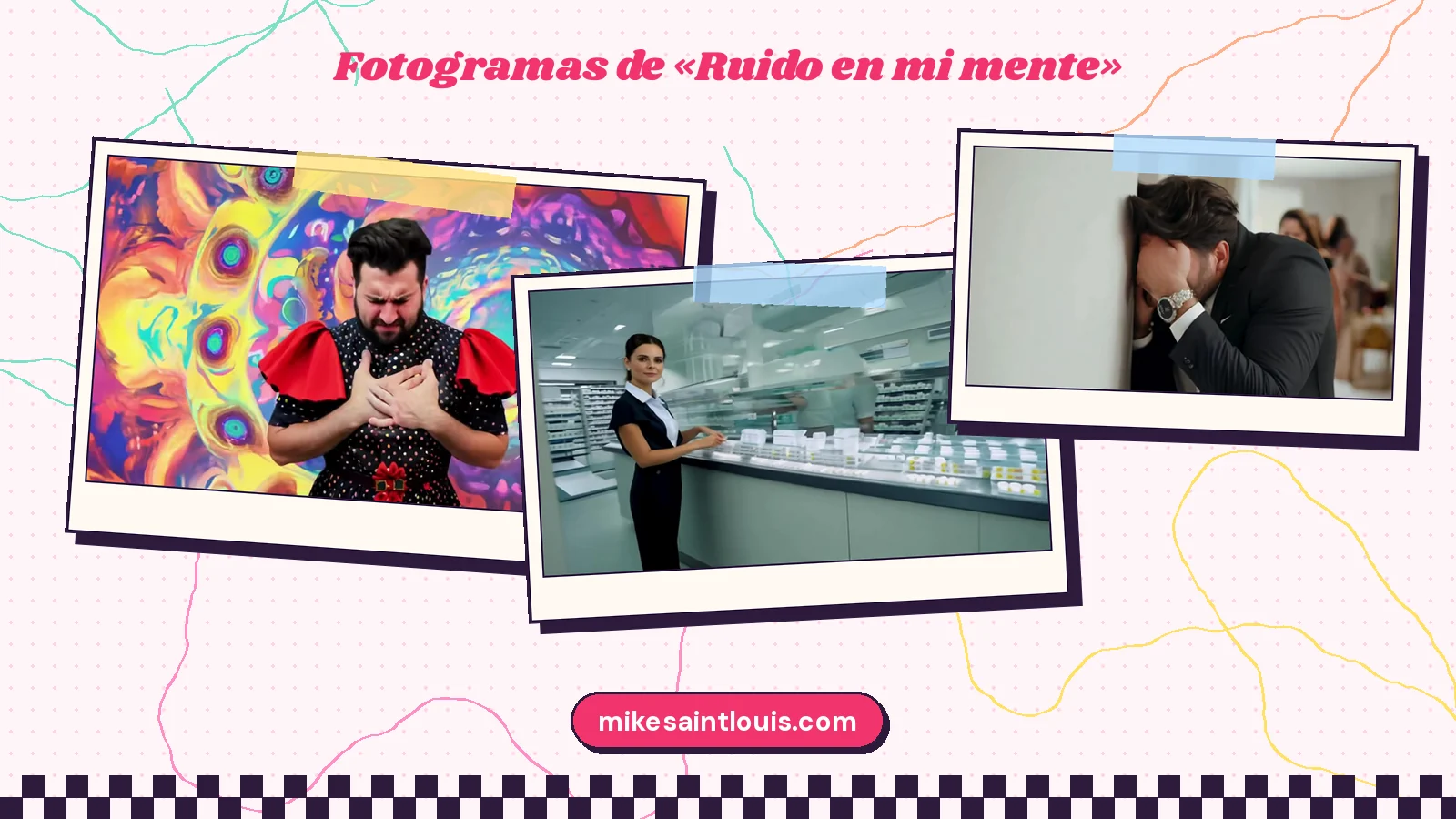
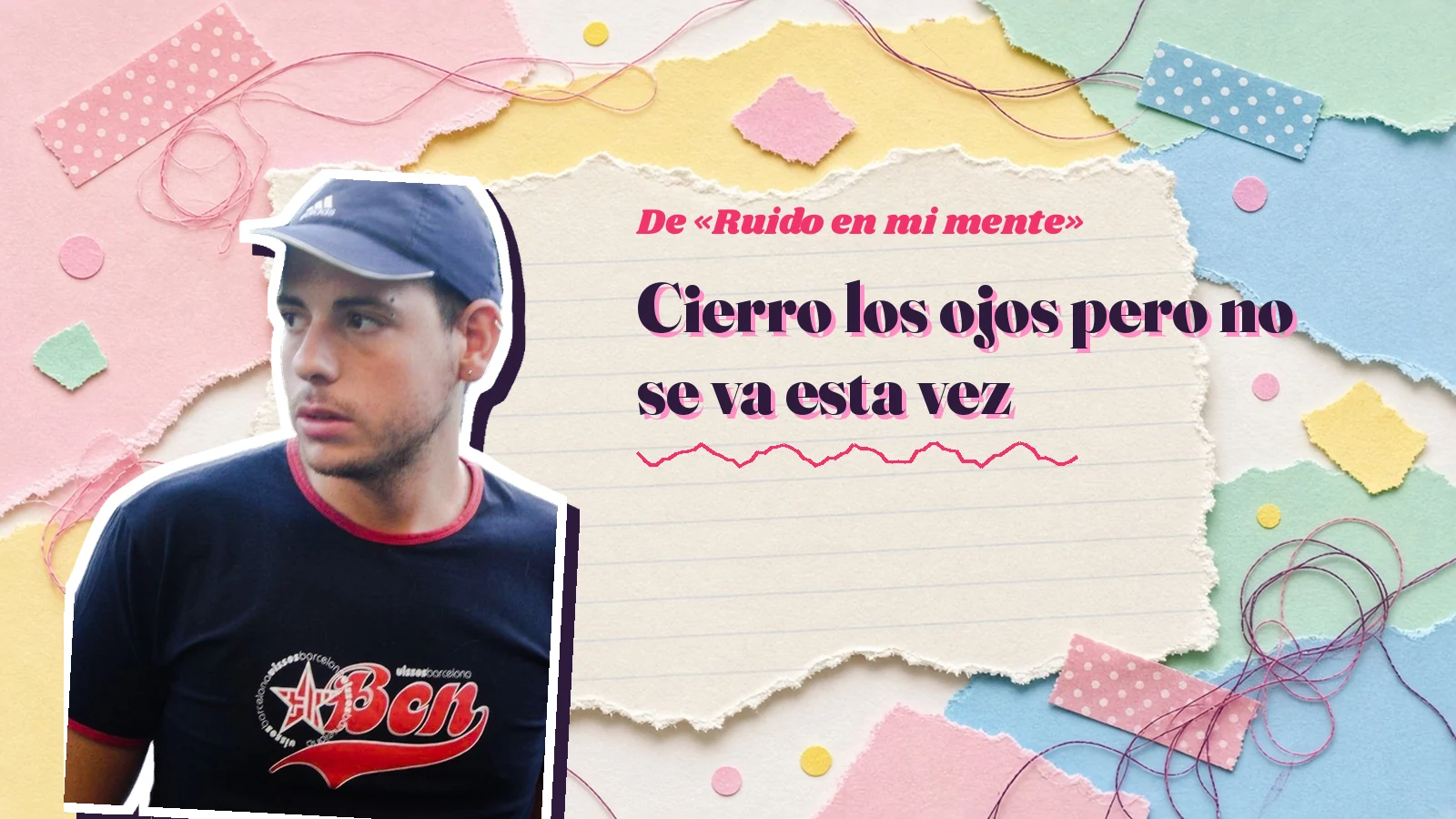
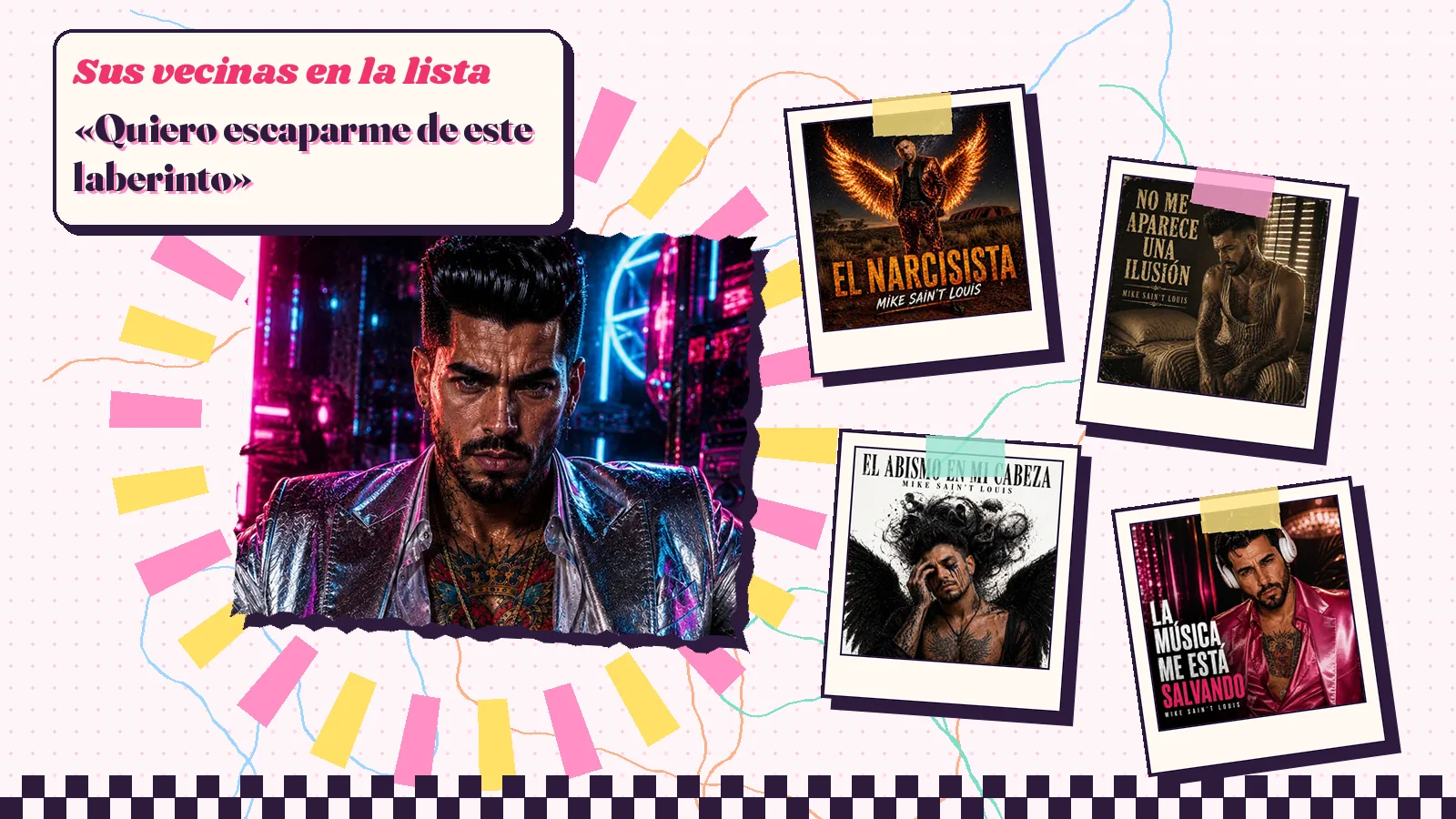
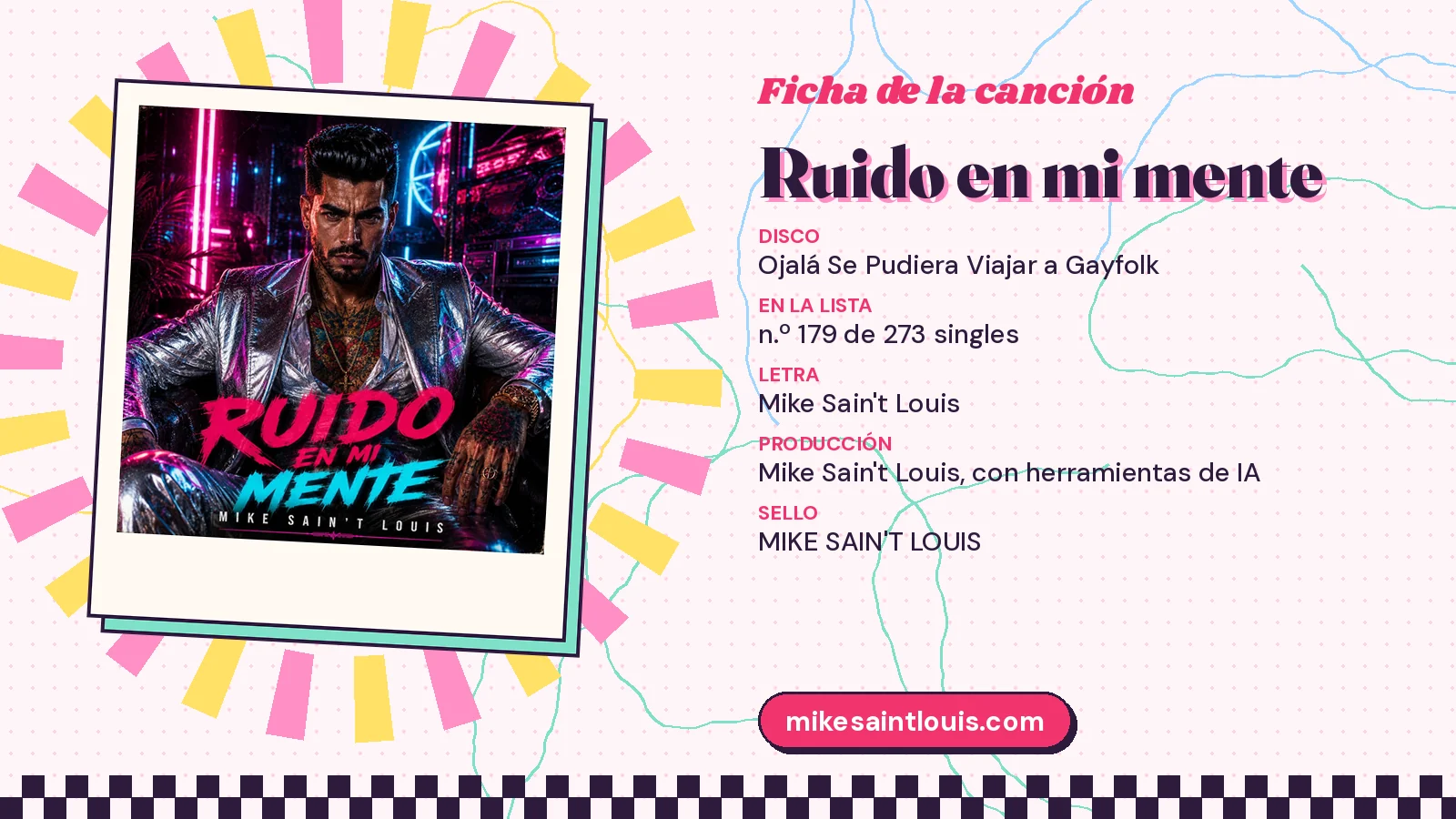
- «Ruido en mi mente» («Noise in my mind») describes living with a head full of echoes: «Cierro los ojos pero no se va esta vez», I close my eyes but this time it won't leave. Further on: «Quiero escaparme de este laberinto», I want to escape this labyrinth. For me it's one of the clearest descriptions of how anxiety and trauma feel from the inside.
- «No me aparece una ilusión» and its chorus, which circles the way thoughts circle on a day of depression.
- «El abismo en mi cabeza», about the sadness nobody can see from outside.
- «La música me está salvando», about what songs do for me.
- «El panda del acoso sexual», which plays with irony to the very end and closes on a line that is no joke: «por eso mi vida es como la de South Park, pues todo empezó con un abuso sexual», that's why my life is like South Park, because it all began with sexual abuse.
- «No Contact», about cutting contact so you can breathe.
In «Ruido en mi mente» there's another line I find very honest: «Construyo un muro para verme después», I build a wall so I can see myself later. That, to me, is what many people with trauma do: build walls to protect themselves. Therapy, given time, helps you decide which ones stay and which ones can slowly come down.
A map of resources by situation
All of these resources are in Spain and were checked on 22 October 2026. I've arranged them by situation so you can quickly find the one you need.
If you're thinking about suicide or worried about someone. 024 is the suicide-prevention line: free, confidential, 24 hours, with chat, and it also supports relatives. The Teléfono de la Esperanza, on 717 003 717, supports people in crisis at any hour. If there's immediate danger, 112.
If you're under 18, or worried about a child. Fundación ANAR answers on 900 20 20 10 and 116 111, and also supports families and teachers.
If you're suffering gender-based or sexual violence. 016, which leaves no trace on your phone bill.
If you're LGBTQ+ and live in Madrid. COGAM offers free psychological counselling (91 523 00 70; WhatsApp 602 25 22 43). The Community of Madrid's LGBTI Information and Support Programme sees people by appointment on 91 701 07 88. FELGTBI+'s Línea Arcoíris is on 91 360 46 05.
If you're an older LGBTQ+ person. Fundación 26 de Diciembre, on 910 028 417.
If you're an LGBTQ+ migrant or refugee. Kifkif.
If you've suffered an LGBTQ-phobic attack in Madrid. The City Council's victim support service, on 604 953 169.
If you want to start treatment. Your GP at your local health centre, who can refer you to mental-health services. If you go private, check that the professional is a registered health psychologist; in Madrid, with the Colegio Oficial de la Psicología de Madrid.
If you're looking for information and support as a patient or relative. Confederación Salud Mental España, at consaludmental.org.
If you're outside Spain. Call your local emergency number.
For journalists, creators and anyone who wants to share this
If you're going to talk about this series in the media, a podcast, a video or on social media, thank you very much. I'd ask a few things of you, the same ones the WHO recommends:
- Always include helpline numbers, such as 024, and the emergency number.
- Don't use sensational headlines or details of the abuse. What I tell can be summarised without them.
- Don't mention methods or present suicide as a way out.
- If you quote my diagnoses, use their full names and don't turn them into labels: severe major depression, social phobia, post-traumatic stress disorder, avoidant disorder and anxiety.
- Remember that I don't name anyone. Please don't try to identify the people I talk about.
- Put the emphasis on help: that asking for it works, and that there are professionals and organisations ready to give it.
If you're unsure how to handle the subject, my FAQ and my page have information about me and how to get in touch.
Why talk about this as an LGBTQ+ artist
There's one more reason to tell all this, and it has to do with who I am. I'm a queer artist from Madrid, and I know that mental-health problems weigh more heavily in the LGBTQ+ community. Many studies link this to what's called minority stress: rejection, bullying at school, having to hide, discrimination.
For decades, what's more, LGBTQ+ people were treated as ill simply for being who we are. Homosexuality wasn't removed from the World Health Organization's list of diseases until 1990. That history makes it hard for many of us to talk about mental health, as if admitting to depression meant proving right the people who called us sick.
It doesn't. Being LGBTQ+ isn't a disorder. What does harm is what's done to us. And that's exactly why it matters so much that we can talk about our mental health without fear, ask for help and find professionals who understand us.
A minimal glossary
Some words that come up throughout the series:
- Narcissistic abuse: a term used to describe a pattern of manipulation, contempt and control in a relationship. It isn't a clinical diagnosis.
- Bullying: repeated physical, verbal or social aggression between peers at school.
- Trauma: psychological harm that a deeply painful or threatening experience can leave behind.
- PTSD: post-traumatic stress disorder.
- Major depression: a mood disorder that goes far beyond sadness, and that can be treated.
- Social phobia: intense fear of social situations in which you might be judged.
- Avoidant disorder: a broad pattern of inhibition and hypersensitivity to criticism.
- Survivor: a respectful way to refer to someone who has suffered abuse, and also to someone who has lost a person to suicide.
- Minority stress: the wear that ongoing discrimination takes on mental health.
What you can do to break the taboo
You don't need to be a psychologist, or to have a story like mine, to help mental health stop being a forbidden subject. There are small gestures that, added together, change the climate of a home, an office or a group of friends:
- Ask properly. «How are you?» can be a formula or a question. Make it a question, and stay to hear the answer.
- Don't laugh at what isn't funny. Jokes about «crazy people», about suicide or about people who see a psychologist make whoever is struggling go quiet.
- Share the numbers. Whether 024 becomes as well known as 112 depends partly on us putting it into circulation.
- Talk about your own mental health, if you can and want to. When someone close says they're in therapy, others find the courage.
- Demand resources. Public mental health needs more professionals and shorter waiting lists. Signing, voting and talking about it are prevention too.
- Remember the dates. 10 September is World Suicide Prevention Day and 10 October is World Mental Health Day. Both are good excuses to raise the subject.
- Mind your language. Saying «die by suicide» instead of «commit suicide» looks like a detail, but it lifts blame and stigma.
Each of these things is small. Together they make someone, somewhere, feel allowed to say they're not OK.
What I'd like to happen
I'd like this page to be found by someone who today doesn't know who to tell. I'd like them to read one of the pieces and think: that happens to me too. And then to dial a number or book an appointment.
I'd also like it to be read by someone who has a person close to them who is struggling, and who, because of this, finds the courage to ask how they really are.
And I'd like talking about depression, trauma, therapy or suicide to become, little by little, as normal as talking about any other health matter. That's what all of this is for.
If you need it today
You don't have to go through this alone. These are the numbers for today:
- 024: suicide prevention. Free, confidential, 24 hours, chat.
- 112: emergencies.
- Teléfono de la Esperanza: 717 003 717.
- Fundación ANAR: 900 20 20 10 and 116 111.
- 016: gender-based and sexual violence.
- Outside Spain: call your local emergency number.
Asking for help works. With support, things change.
Frequently asked questions
What is Mike Sain't Louis's mental-health series about? It's a series of first-person pieces in which Mike talks openly about his mental health: two relationships with people he came to understand were narcissists, the bullying and sexual abuse he suffered as a child, his diagnosis at 41, therapy and suicide prevention. Every piece includes support resources.
What was Mike Sain't Louis diagnosed with at 41? In his own account, he received five diagnoses at that age: severe major depression, social phobia, post-traumatic stress disorder, avoidant disorder and anxiety. He says a good psychologist is helping him move forward.
Why does Mike Sain't Louis tell his story? To help other people going through something similar, to contribute to social awareness, and to help suicide stop being a taboo.
Where can I get help if I'm thinking about suicide? In Spain, call 024, the suicide-prevention line, free and open 24 hours. If there's immediate danger, call 112. Outside Spain, call your local emergency number.
Does Mike Sain't Louis name the people he talks about? No. The series includes no names and no details of the abuse. Mike sees it as a way of helping, not as a settling of scores.