
By Mike Sain't Louis ·
The leather boy's lullaby: «Holy Stillness», Lorca and the right to be tucked in
It's night. Behind, out of focus, a fifties diner glowing red and white, and a black vintage car with its headlights on. In front, a guy with a quiff, a few days' stubble and a little cross dangling from one ear. He's wearing a sleeveless black leather shirt, open to the chest, showing a big tattoo across his breastbone and arms covered in ink. He looks at the camera through half-closed eyes. Top left, in pink neon script, the title.
That's the cover of «Holy Stillness», and if you didn't know the song you'd bet money it was rock and roll. A track of leather jackets, petrol and open road. Something to drive to at night with the window rolled down.
Then you press play and it's a lullaby.
The song is on «El día de la liberación», the third album of the trilogy. It came out on 14 May 2026, and it's number 259 in the full list of singles, between «Me he tomado una pastilla gay» and «The Northern Lights». Its page on the blog already talks about its stillness, its carol-like air and who I'd dedicate it to. Here I want to go somewhere else: into the clash between that cover and that music, into what we know about lullabies, and towards all the men who never had anyone tell them they could finally rest.
A light learning to breathe
The first verse has an image that I think is one of the loveliest on the whole album: a fragile light that begins to breathe. Not a dawn. Not a sun rising in triumph over the horizon. A small light, one that barely dares, that thinks twice before it exists.
And straight after, hope arrives very quietly. I love that idea, because we're used to hope making noise. In speeches, in adverts, in stadium anthems, hope always turns up with a fanfare. Here it tiptoes in, like someone trying not to wake anybody.
I think that's how it really arrives, almost always. You don't notice the day you start feeling better. You notice weeks later, one morning when you catch yourself humming while the coffee brews and think: huh, it's been a long time since that happened.
A cover that doesn't match
I love it when a cover doesn't match its song. Not by accident, but because the gap tells you something. Here the gap is enormous. On one side, the whole visual vocabulary of hard masculinity: leather, tattoos, the car, the swagger of a petrol-station tough guy. On the other, lyrics in English about stars leaning low and a little one being told to rest without fear.
For a long time those two things were sold to us as incompatible. Either you're the leather guy or you're the lullaby guy. Either you're tough or you're tender. And in gay culture especially, leather has always had a double reading. It's a uniform of strength, yes, but also a look that many men chose so they could feel desirable in a world that told them they weren't.
The cover mixes both without explaining either. The neon boy doesn't take off his leathers for the quiet song. He stays exactly as he is. And the lullaby plays all the same.
The man nobody tucks in
I think a lot about a figure I've come across again and again in gay life: the man who seems carved from stone. The one at the gym, the one who never cries, the one who answers everything with a joke. The one whose tattooed arms work like armour. And who, if you scratch the surface a little, turns out never to have heard anything as simple as there, there, you can stop now.
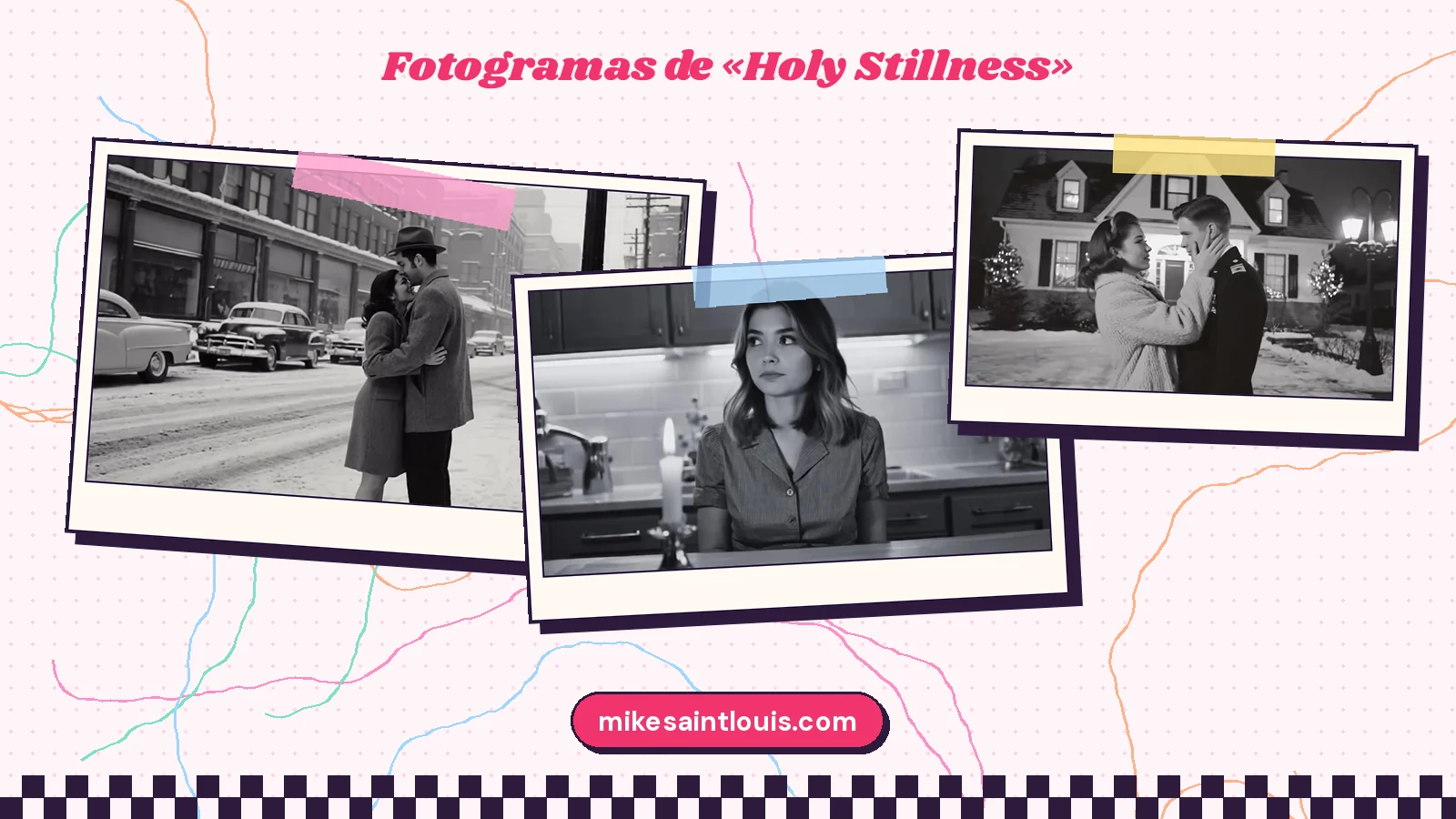
He doesn't need to have had a terrible childhood. Sometimes it's enough to have grown up knowing there was something to hide. When a boy learns early to keep watch over how he speaks, how he walks and how he looks at people, he also learns never to drop his guard. And that habit doesn't vanish at eighteen. It stays.
That's why I find it so moving that this song has this cover. Because the lullaby isn't meant for some nappy-advert baby. It's meant for him. For the leather boy. For the one nobody imagines needing to be tucked in.
What Lorca said about lullabies
In the late 1920s, Federico García Lorca gave a lecture on Spanish children's lullabies. He'd spent years collecting them in villages, listening to mothers, grandmothers and wet nurses, and he reached a conclusion that still gives me goosebumps: that Spain used some of its saddest melodies to send its children to sleep.
Lorca said lullabies weren't just for the child. That very often the woman rocking the cradle was pouring out her own sorrow, her weariness, her crooked loves, and the child, who didn't understand the words, drifted off to the music. The lullaby was a place where grown-ups could say what they said nowhere else.
I find that a beautiful idea, and it helps me understand «Holy Stillness». Because this lullaby isn't only for a little one either. It's for whoever hears it as an adult, in the small hours, still in their clothes. And it's also for whoever says it. Sometimes we soothe someone else so we can soothe ourselves a little.
A lullaby without sorrow
The odd thing is that «Holy Stillness» goes the opposite way from the lullabies Lorca described. There's no hidden grief. No bogeyman, no wolf, no sack-man coming to take you. No exhausted mother confessing her troubles in code. Quite the reverse: this is a lullaby that arrives once the storm has already passed.
The lyrics say so from the start. The world exhales. The darkness turns gentle, «the dark turns kind». This isn't a night to fear. It's a night that, at last, keeps you safe.
That makes it something of a rarity in my catalogue. I have loads of songs born from conflict, from an ex, from a betrayal, from a fury that needed letting out. Not this one. This one is what comes after the letting out. The minute of silence once you've finished screaming.
Silent night
It's hard to hear an English song that opens with something holy and a gentle night without thinking of «Silent Night». The original carol, «Stille Nacht», was first performed in an Austrian village, Oberndorf, on Christmas Eve 1818. The words were by a young priest, Joseph Mohr, and the music by a schoolteacher, Franz Xaver Gruber. It was played on a guitar. It has since been translated into hundreds of languages.
What has always struck me about that carol is how little happens in it. No spectacular miracles, no armies of angels with trumpets. A night, a calm and a sleeping child. All its power lies in the stillness.
«Holy Stillness» drinks from that same silence, even though it never mentions a manger or any particular holiday. It's a holy night in the most secular sense possible. Holy because, at last, nothing bad is happening. Holy because, at last, you can sleep.
Stars that come closer
There's another detail in the second verse that feels very cinematic to me: the stars lean low, stoop down, come closer. It's a storybook image, the kind you find in the picture books read aloud at bedtime. The sky stops being far away and bends down to look at whoever's sleeping.
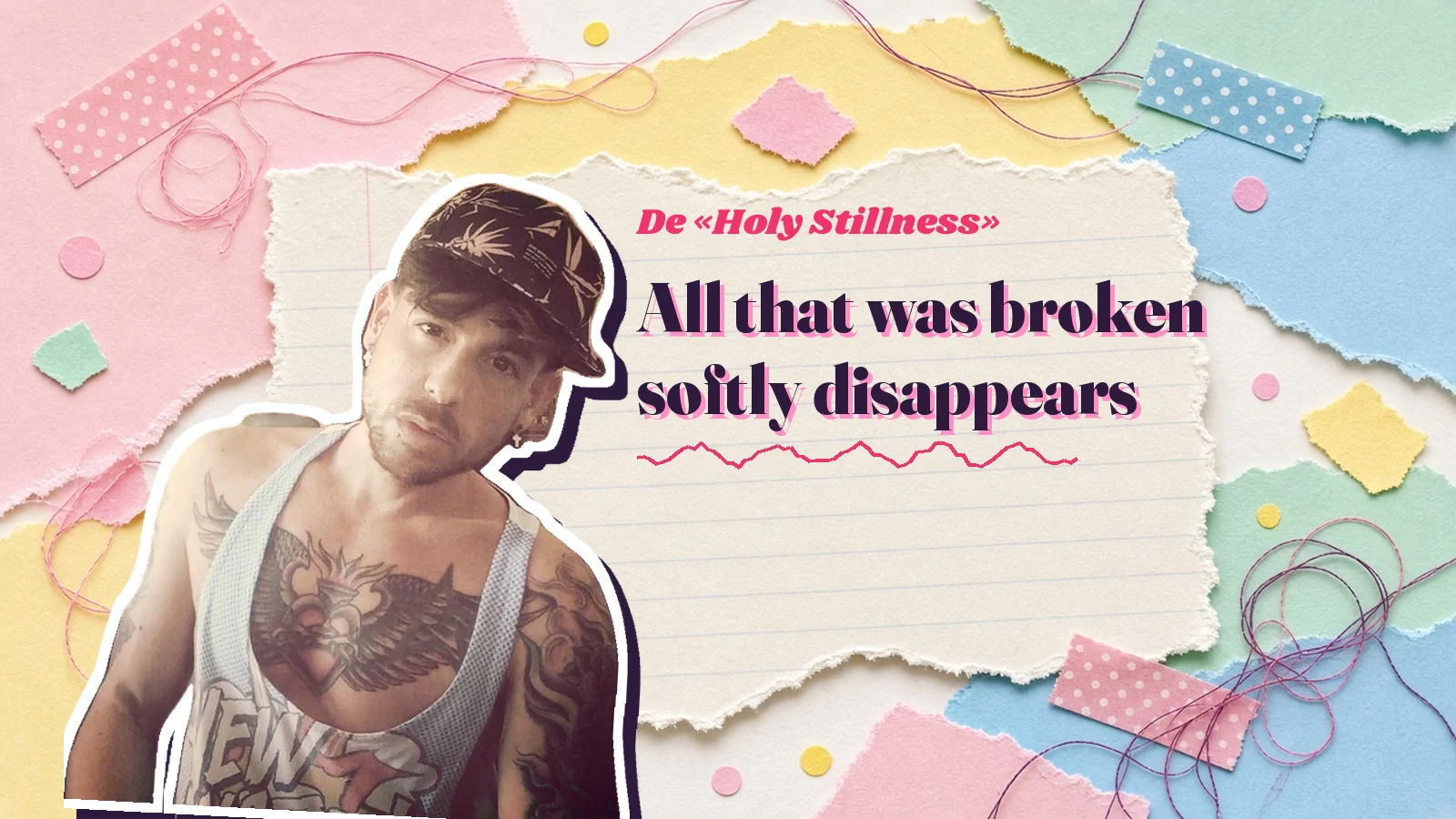
It makes me think of how you tuck a child in. You lean over the bed, lower your head, come down to their height. The stars in the song do exactly that. The whole universe takes on the posture of someone tucking you in.
And there's that contrast with the cover again. The leather boy has the neon right above him, as if the title were a star leaning in towards him too. I don't know if whoever designed the image meant it that way, but it works for me: a pink light bending over a man who looks as if he doesn't need it.
The lullabies we all know
Nearly every culture has its lullabies, and many sound alike. Slow melodies, short phrases, lots of repetition. Spain has a huge repertoire, from «A la nanita nana» to the «Duérmete, niño» that almost all of us have heard at some point. Germany has Brahms's cradle song, used in so many music boxes that it's become part of the sound of childhood for half the planet.
What they all share is repetition. Lullabies don't go anywhere. They circle the same phrase, like a rocking cradle. They aren't meant to make you pay attention to the words but to make you stop paying it. To let the ear surrender.
«Holy Stillness» follows the same rule. The chorus repeats the same plea over and over. No twist, no surprise, no ending with a moral. Just a gentle sway. And that's why it works.
Asking to be tucked in
There's something I think matters and that hardly ever gets said: asking for tenderness is mortifying. Asking for help moving house, fine. Borrowing money, people do it. But telling someone that tonight you need them to hold you until you fall asleep? Plenty of people find that unbearably hard.
Men especially. And especially men who've built their whole image around seeming self-sufficient. The boy on the cover is the perfect picture of that: someone who gives the impression of needing nobody.
That's why I think this song does something useful. It doesn't make you ask for anything. It gets there first. It tells you what you needed to hear without you having to admit you needed it.
The holy without the church
I've written elsewhere about how priests, rosaries and angels crop up in my lyrics, almost always with a wink. There's no wink here. The word holy is used with complete respect, but without religion. It's the holiness of small things.
I like that idea because many LGBTQ people have had a complicated relationship with the sacred. Churches haven't always been welcoming places, to put it mildly. And yet the need for a holy moment, for a pause that feels like a prayer, doesn't disappear just because you've been thrown out of the temple.
This song offers exactly that. A holy moment with nobody deciding whether you deserve it. A stillness that asks for no confession first.
Trembling hands
There's a line I find among the most physical in the song: hands are trembling, hearts all slow. It's not an idyllic picture. It's someone who's just been through something big and whose pulse is still shaking.
Anyone who's come out the other side of a crisis knows that state. The worst is over, but the body hasn't got the memo yet. You're still running on adrenaline, fingers trembling, chest racing even though there's no need any more. It takes a while to believe you can lower your guard.
And the song doesn't ask that body to stop trembling. It simply keeps it company while it calms down. I find that enormously tender. No hurry. As the ending puts it, «Nothing is rushed».
The little one
The chorus calls someone little one. In English it has no gender, and I love that, because it lets everyone take it however they like.
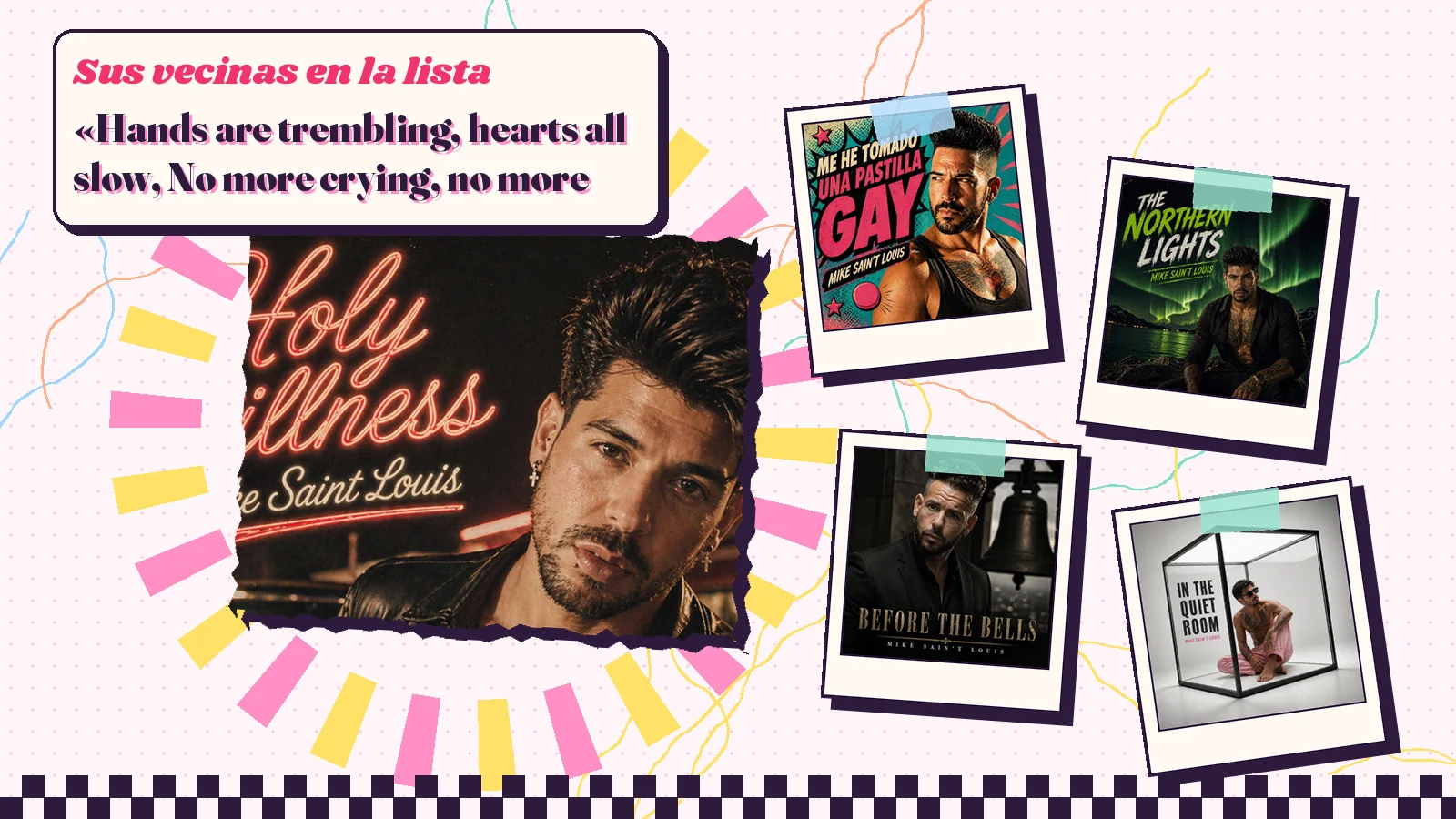
But what interests me most is what happens when that word is aimed at an adult. Calling a grown man little one, tattooed, in leathers, has something almost subversive about it. It takes away his obligation to be big. It lets him, for a while, not have to cope with everything.
«Rest now, little one» is the line that comes back most often. And I think it's one of those sentences many people have never heard in their lives. Or heard once, as a tiny child, and then never again.
What was broken
Then comes one of my favourite lines: «All that was broken softly disappears». Notice it doesn't say it gets fixed. It says it disappears. And softly.
There's a huge difference between the two. Fixing something takes work, effort, glue, scars. Something softly disappearing is another matter: it's what happens when you finally stop staring at it. When the pain isn't solved but simply stops taking up all the room.
I don't know if that happens as easily in real life as in a song. Probably not. But lullabies aren't there to tell the truth. They're there so you can fall asleep tonight. Tomorrow there'll be time enough for the glue.
An English song on a Spanish album
Most of my catalogue is in Spanish, and very much Madrid Spanish. But every now and then a song in English turns up, and they're almost always the gentlest ones. «Before the Bells», «In the Quiet Room», this one. I don't think that's a coincidence.
Writing in another language strips away a little of your shyness. In Spanish, certain tender phrases sound to me like a TV advert or a soap opera. In English, with that distance, I can say them without blushing. It's like putting on different clothes so you dare to dance a different way.
The funny thing is that the cover makes exactly the same move, only in reverse. The song puts on English to dare to be tender. The boy on the cover puts on leather, and with the leather on he dares all the same.
Corny and proud
I know some people hear this song and think it's corny. Stars leaning low, fragile light breathing, love remaining. It is, a little. And I have no problem with that whatsoever. I defended it in in defence of corniness: corniness is often the only language available for saying things that would ring false in any other key.
Besides, I love that the corniness here comes wrapped in a cover that's anything but. If the cover were a teddy bear and some clouds, the song would turn saccharine. With the leather and the neon, it becomes something else. Tenderness with tattooed knuckles.
The day after liberation
The album the song lives on is called «El día de la liberación», Liberation Day. And in Liberation Day and the day after I wrote about the strange hangover that follows any victory. You celebrate, you shout, you laugh. Then the next day you find yourself at home, not quite sure what to do with so much calm.
«Holy Stillness» sounds to me like the exact soundtrack of that day after. No more fighting. Nobody left to answer back. What's left is learning to be at peace, which plenty of people find harder than fighting.
Because a fight, however much it hurts, keeps you busy. Silence leaves you alone with yourself. And for that, too, you need company. A lullaby, for example.
For listening in the dark
I'm not one for telling people how to listen to my songs, but with this one I'll make an exception. Don't put it on in the background while you do something else. It doesn't work. It's a song that needs you to be doing nothing at all.
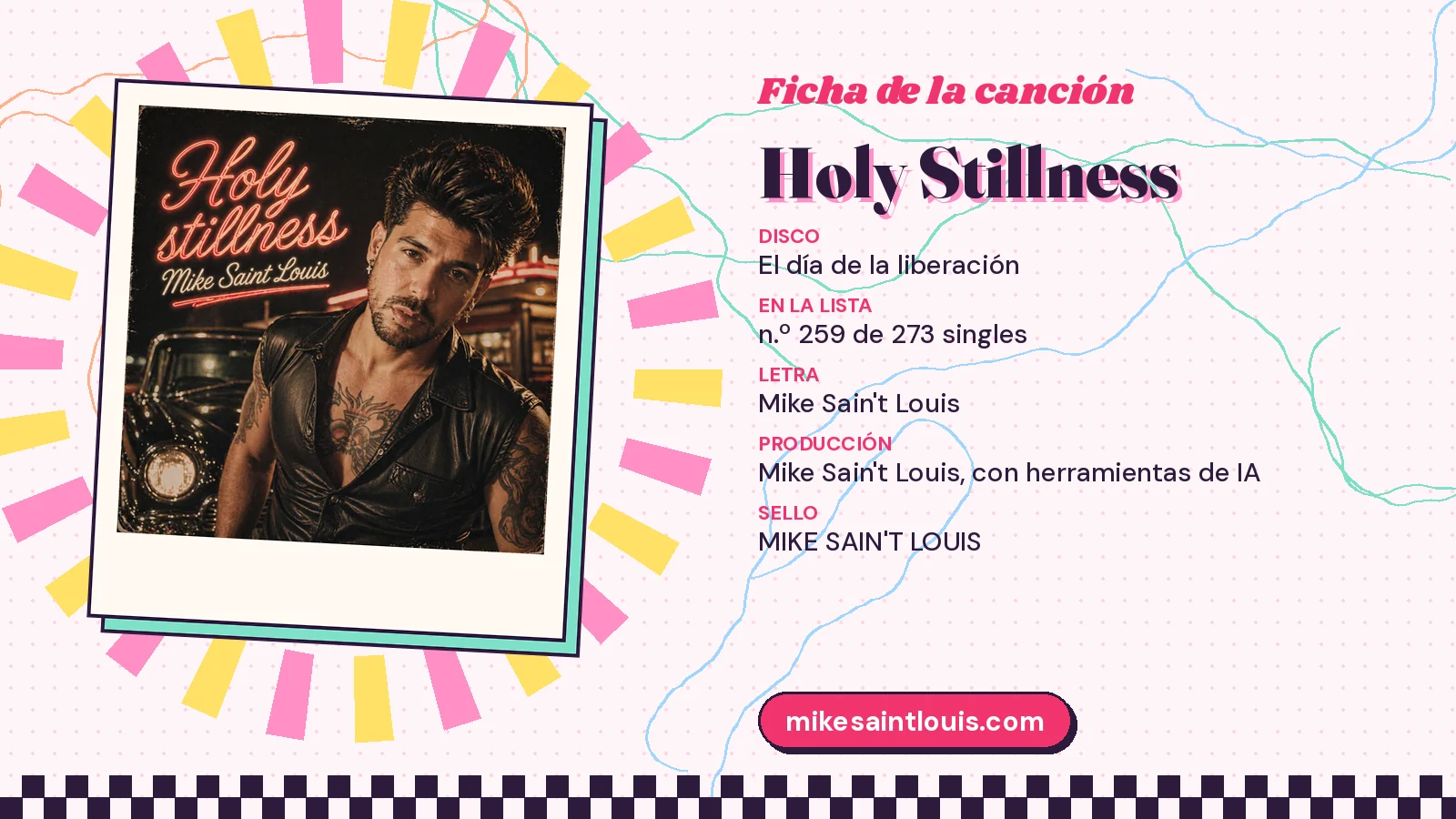
Turn off the light. Put your phone face down. If there's someone beside you, even better. If not, that's fine too. And let it tell you what it tells you. That the night is kind. That there's no need to cry or fight any more. That nothing is in a hurry.
If you fall asleep afterwards, the song will have done its job. And if you don't, you'll at least have had four minutes of something close to peace, which is no small thing.
Lullabies for grown-ups
I love that my catalogue has another song with the word lullaby in its title, «Nana para adultos», a lullaby for grown-ups, and that it has nothing to do with this one. It proves how far the word can stretch. A lullaby can be a joke, a provocation or a caress.
But I think the idea underneath is the same: adults need to be put to sleep too. We're just embarrassed to ask. So we disguise it as something else. A series on loop, a sleep podcast, white noise, videos of rain on a window. They're all lullabies by another name.
«Holy Stillness» doesn't disguise itself. It's a lullaby without ever saying so, and it treats you like a little one without asking your permission. That's its way of being brave.
Tenderness between men
One last look at the boy on the cover, because I think the key lies with him. There's a widespread idea that men don't look after each other. That they slap each other on the back, buy each other a pint and that's about it. That tenderness belongs to mothers and girlfriends.
In gay life that breaks down a lot, thankfully. Every group of friends has scenes like these: the big lad tattooed up to his ears tucking a blanket round the friend who's dozed off on the sofa, or the tough guy who turns up with a tub of broth when someone's down with flu. Tenderness between men exists, even if it never makes the covers.
Well. Now it's on one.
Who this song is for
For anyone who hasn't been told for years that they can stop. For anyone whose hands are still shaking after a bad patch and who can't quite believe it's over. For anyone who acts tough and knows perfectly well they're not that tough.
Also for the carers. For the people who spend their lives tucking others in and never have anyone to tuck them in. This song is so that, just once, the one who tucks in gets tucked in.
And for the leather boys. All of them. The real ones and the dressed-up ones.
Stillness, in the end
I keep coming back to the contrast on the cover. The pink neon, the leathers, the car, the diner. Everything set for a loud night. And in the middle of it, a song asking for silence.
I think that's the best way to understand it. Not as a quiet song for quiet people, but as a pause in the middle of a noisy life. The moment the leather boy switches off the engine, sits on the bonnet and, at last, breathes.
Everything is right. Nothing is rushed. Rest now, little one.
Frequently asked questions
Which album is «Holy Stillness» on? On «El día de la liberación», the third album of Mike Sain't Louis's GAYFOLK trilogy. It came out on 14 May 2026 and it's number 259 in the full list of singles.
What is «Holy Stillness» about? It's a lullaby in English for a night when everything finally calms down. It tells someone it calls little one that they can rest without fear, because what was broken is fading away.
Is it a Christmas carol? It doesn't mention any particular holiday, but it has the feel of gentle carols like «Silent Night»: a holy night where what matters is the stillness.
What's on the cover? A guy with a quiff, tattoos and a sleeveless black leather shirt, at night, in front of a fifties diner and a vintage car. The title glows in pink neon.
Who made the song? The lyrics are by Mike Sain't Louis, a lyricist, composer and music producer from Madrid, known as the first AI songwriter. The music and vocals were made with artificial intelligence tools.