By Mike Sain't Louis ·
The same stage boards: the flamenco heel and the drag heel in «Con el taconeo»
Tac. Tac. Tac-tac-tac.
Close your eyes and you can't tell where it's coming from. It could be a bailaora in a tablao on Calle Bailén, finishing off a bulería with her skirt gathered up in one hand. It could be a drag queen on the stage of a Chueca bar at two in the morning, stepping down off a stool in six-inch heels. The sound is the same. Wood, strike, echo.
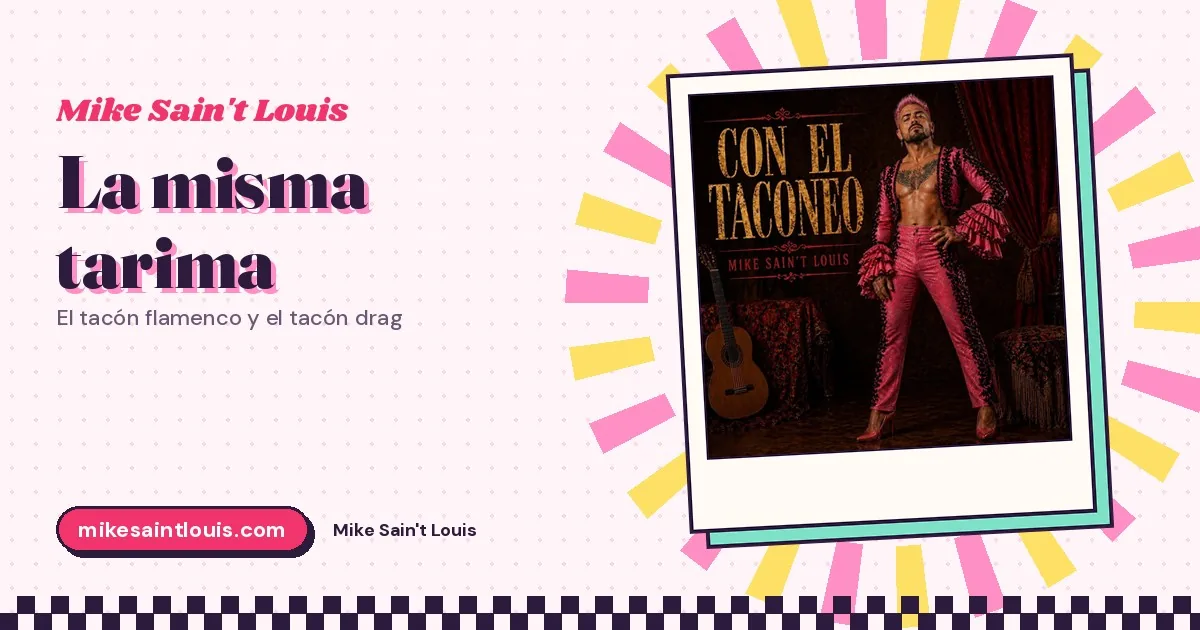
That sound is what the cover of «Con el taconeo» is about. And that closeness between flamenco and camp is what I want to talk about today, because it's one of the things I love most about being from here.
First things first: the lyrics
The lyrics of this song aren't up yet in the Lyrics section, so I'm not going to tell you what they say. I won't quote them, summarise them or make them up. Once they're published, you'll be able to read them in full. Meanwhile, I'll talk about what is in plain sight: the title, the cover, and everything they stir up in me.
Which, coming from me, I'll warn you now, is quite a lot.
Look at the feet first
On the song's page I wrote that the first thing to look at on the cover is the feet. And I stand by it.
A pair of raspberry stilettos, glossy as a sucked boiled sweet, planted firmly on a dark wooden stage. Not on tiptoe, not in the air. Planted. Like a bailaora's feet just before she starts, when she stands still for a second, all her weight on the floor, and the audience knows something is about to happen.
That's the first thing I love: this is not a catwalk heel. It's not for walking slowly while people stare. It's for striking. It's an instrument.
Then you work your way up. Traje de luces trousers, the bullfighter's suit of lights, in pink with black embroidery. An open little jacket with ruffled sleeves, and a tattooed chest out in the air. Pink hair, a beard, one hand on the hip. All around, red velvet curtains, a table draped in an embroidered shawl, a Spanish guitar resting on the floor, a fringed lamp.
An old-school tablao. With a different figure in the middle.
The heel as percussion
There's something a lot of people don't know about flamenco, and it fascinates me: the shoe is part of the orchestra.
In flamenco dance, the feet don't accompany the music. They make it. Zapateado, the footwork, is pure percussion, with strikes of the sole, the heel, the toe. Flamenco shoes have nails hammered into the soles so they ring louder. The stages are built hollow so they boom. A good bailaora can hold an entire rhythm cycle with her feet alone, no guitar, no handclaps.
Now think of a drag queen. Of what she does with her heels when she walks onto a stage. Stamp, turn, stamp. The sharp crack at the end of a routine. The strut before the number, making noise on purpose so everyone shuts up.
It's the same idea. The heel as an announcement. As a blow. As «here I am».
The cover brings the two together as naturally as anything, and I think that's because they were always together. It's just that nobody said so.
Old neighbours
Flamenco and camp have been neighbours for a long time. It isn't just me saying it; anyone who's looked even a little knows.
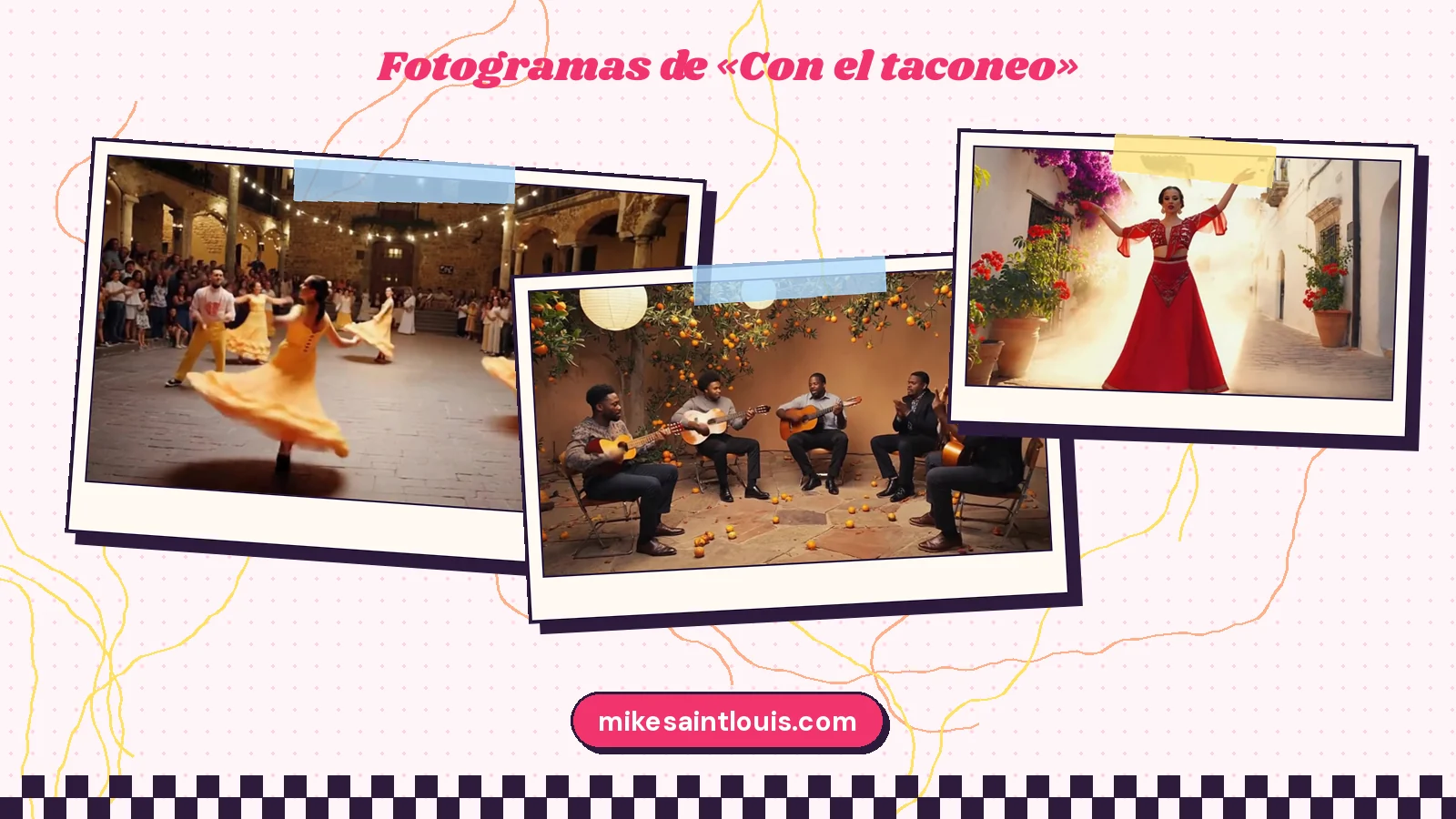
The old tablaos have always been a refuge for people who didn't fit anywhere else. Gitanos, artists, night owls, «people of loose living», as grannies used to say. And among those people, maricas. Male dancers with more flounce than a Seville fan. Cantaoras, the great flamenco women, who were godmothers to half the neighbourhood. Folk divas with an entourage of friends who somehow never married.
Copla, which I've already written about in Copla inside queer pop, is the best example. Songs of forbidden love, of women who were pointed at, of passions that couldn't be spoken. Women performed them, but a lot of us listened thinking about ourselves. «Tatuaje», «Ojos verdes», «La bien pagá». All of that is queer drama from before the word existed.
And the ruffled dress, the shawl, the bata de cola, the hoop earrings, the bun with its tall comb. If that isn't drag, someone come and explain it to me.
The bata de cola is a queen's gown
Let me pause on this for a moment, because it really tickles me.
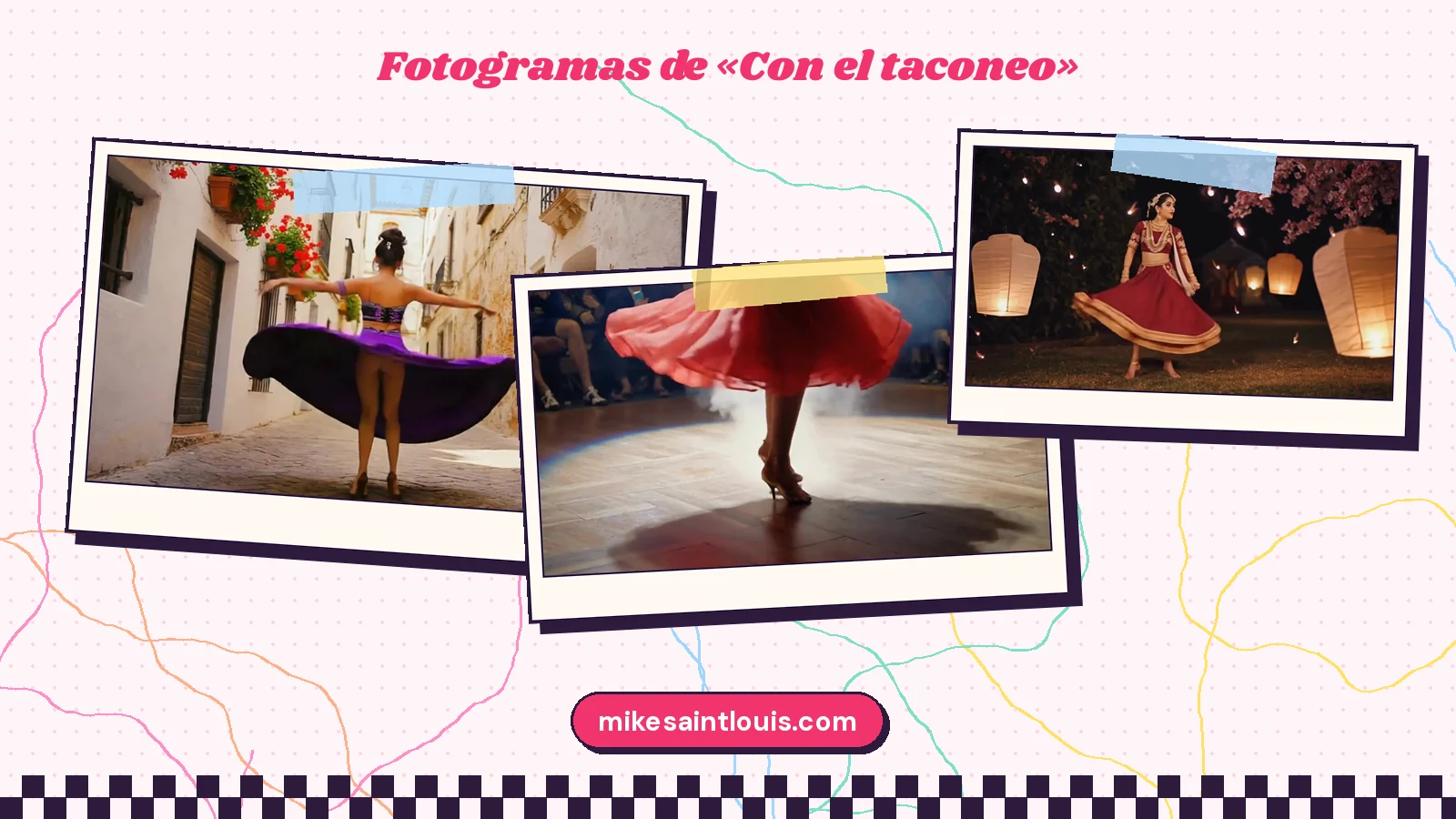
A bata de cola is a dress several metres long that the dancer has to move with her legs, kicking it, making the train spin, fly, coil and uncoil like a serpent of ruffles. It's one of the hardest things in flamenco dance. It takes strength, technique, years of practice. And at the same time it's one of the most theatrical things in existence. A spectacle made of fabric.
Now picture a drag queen in a gown with a train at the final of a competition. Same thing. Fabric as a character. The dress that moves by itself. The entrance that lasts a full minute because all that has to be dragged along.
A drag number with a bata de cola is the most logical thing in the world. Of course it is. If ever a dress was made to exaggerate, it's that one.
A pink suit of lights
Then there's the outfit on the cover, which isn't a dancer's. It's a bullfighter's.
The traje de luces is another piece of Spanish culture that is outrageously camp and has always been dressed up as deadly serious. Pink stockings, by the way. Bullfighters' stockings have always been pink. Embroidered bolero jacket, skin-tight breeches, the montera hat, a fake pigtail. A man dressed as a jewel, in front of thousands of people, making passes with an almost balletic elegance.
And everyone insisting that this is the very peak of manliness.
I'm not getting into bullfighting; it isn't the subject and I don't fancy it. I'll keep the suit. The cover takes it, paints it entirely pink, opens the jacket to show the tattooed chest and puts it in stilettos. In other words: it strips away the seriousness and leaves the camp. Which is what it had from the start.
An outfit that says one thing and means another. My speciality.
Tablaos and gay bars
Let me tell you about a feeling, not a fact, so I'm not misunderstood.
Anyone who has walked into a Madrid tablao, the kind with red curtains and old photos of artists on the walls, and then into a proper old-school gay bar, knows they're more alike than you'd think. Both smell of wood, of night, of people who've come to leave something of themselves on the stage. Both have an audience that shouts things in the middle of the number: olé in one, guapa in the other. Both have that mix of solemnity and mischief that only exists in places where people come to feel a lot.
The cover of «Con el taconeo» is exactly that. A tablao that could be a drag bar. A fringed lamp that could be in a showgirl's dressing room. A guitar on the floor that could be part of a musical's set. Everything in the same place, without a fight.
Duende and camp
There's a flamenco word I adore, and it's almost impossible to translate: duende.
Lorca wrote an entire lecture about duende, and not even he pinned it down completely. It's the moment an artist stops doing things well and starts doing them for real. When the cry cracks where it wasn't supposed to, when the dance breaks out of the rhythm and is better for it. When the audience goes silent because something has happened that can't be explained.
Well, I think camp has duende. The good kind, the real kind. Not the joke camp, the kind you put on so people laugh at you. The other one. The one that slips out in a gesture, in a hand that moves by itself, in the way you turn your head. The one you can't rehearse.
Joke camp is what they ask you for at dinner parties to liven things up. Duende camp is what comes out when nobody's watching, in front of the bathroom mirror, music blaring, hairbrush for a microphone. One is made to order. The other is yours. And the funny thing is that the second is the one people remember, even if they only saw it once, out of the corner of their eye, in a doorway or on a train platform, not quite sure what they were looking at.
When a drag queen has duende, you can tell. When a bailaora has camp, you can tell that too. And the cover of this song, for me, tries to put both in the same photo.
Since I've mentioned Lorca, it's only right to remember that they killed him in 1936. For being a red and a maricón, as it's always been said. I'll leave it there, in one line, because nothing more is needed.
My cry against your prison
I've written about heels more often than I thought. When I went digging through my own lyrics, I found heels turning up in several of them, and almost never as decoration.
In «Gaslighting», for example, the heel is an outright weapon:
«Cada paso sobre este tacón / Es mi grito contra tu prisión» («Every step upon this heel / Is my cry against your prison»)
There, the heel isn't a pretty shoe. It's the way out of a relationship that locks you in. Every step you take in it is a strike on the floor that says: I'm leaving. Which is exactly what zapateado does. Strike the floor to say something that can't be said in words.
The song with that lyric is on its page, if you're curious.
Broken heels in Benidorm
And in another lyric, the heel turns up the other way round. Broken.
«Aquí me arrastro, / con tacones rotos, / escupiendo sueños / por cada semáforo.» («Here I drag myself, / in broken heels, / spitting out dreams / at every traffic light.»)
That's from «La primera drag de Benidorm», one of my rawest lyrics. There, the drag queen isn't on a stage. She's in the street, in the small hours, dragging herself along in broken heels. It's the after of the number. The part that never makes the photos.
I like putting it next to the cover of «Con el taconeo», because they're two sides of the same shoe. In one, the heel is firm on the boards, planted, gleaming, about to begin. In the other, the heel is snapped on a Benidorm pavement. Both are true. Both are drag. Both are flamenco, if you push me, because flamenco is about that too: the party and the grief on the same night.
If you want to know how I see drag, without the broken heels, I told it in Drag as a party, not a costume.
Only if you dance flamenco
So it isn't all serious, here's one of my favourite lines about flamenco, from a song with nothing flamenco about it.
«Un turista said: can I kiss your hand / Le dije: only if you dance flamenco, man» («A tourist said: can I kiss your hand / I told him: only if you dance flamenco, man»)
It's from «Marica chill», a beach song, all fans and see-through shorts. A tourist asks to kiss his hand, and the answer is: only if you dance flamenco.
It cracks me up because it's what we do here with the guiris, the tourists. We set them flamenco as an exam. As if it were the entrance test to our affection. You want something with me? Stamp your heels first.
And the cover of «Con el taconeo» is, in a way, the answer to that tourist. Here's your flamenco, darling. In stilettos. Let's see if you dare.
Lola, always Lola
I can't talk about flamenco and camp without naming Lola Flores. I have a song page devoted to her, «Lola Flores», because she's one of those figures who, in my head, is everywhere.
People said she didn't have the best technique, with her feet or anything else. And yet, when she came out on stage, nobody could look anywhere else. That's duende and that's camp, both at once. Excess as art. Exaggeration as truth. The hair, the ruffles, the shrieks, the hand gestures. If Spanish drag queens have a spiritual godmother, it's her.
There's a famous line about her, attributed to a New York newspaper, saying more or less that she did nothing perfectly but she was not to be missed. Whether the quote is accurate or legend, I don't know, and I'm not going to pretend I do. What I do know is that the spirit of it is true. And that it could be the motto of half of Planeta Gayfolk.
Five heel sounds I know
Since this is all about sound, here's an inventory. Five heel sounds anyone who lives in Madrid has heard at some point, even if they never noticed.
The neighbour on the fifth floor at seven in the morning, crossing her living room in her work shoes, right over your ceiling. A spiteful metronome that wakes you before the alarm does.
The escalators at Sol metro station on a Saturday at midnight, when six friends on a hen do come down wearing light-up willy headbands and Primark heels. An out-of-tune drum roll.
A hospital corridor at night, when a nurse in clogs walks past and you're in the waiting room knowing nothing. That one isn't funny. That one stays with you.
A tablao, of course. The real thing. The one that shakes your chest even from the back row.
And a drag queen stepping down from the stage of a Chueca bar at half two, number done, wig askew, on her way to the dressing room. Tac, tac, tac. The sound of someone who has left everything up there and is turning back into an ordinary person with wrecked feet.
Five sounds. All the same strike, deep down. All saying the same thing: someone is here.
Why raspberry pink
One last thing about the colours on the cover, which are never accidental on my artwork.
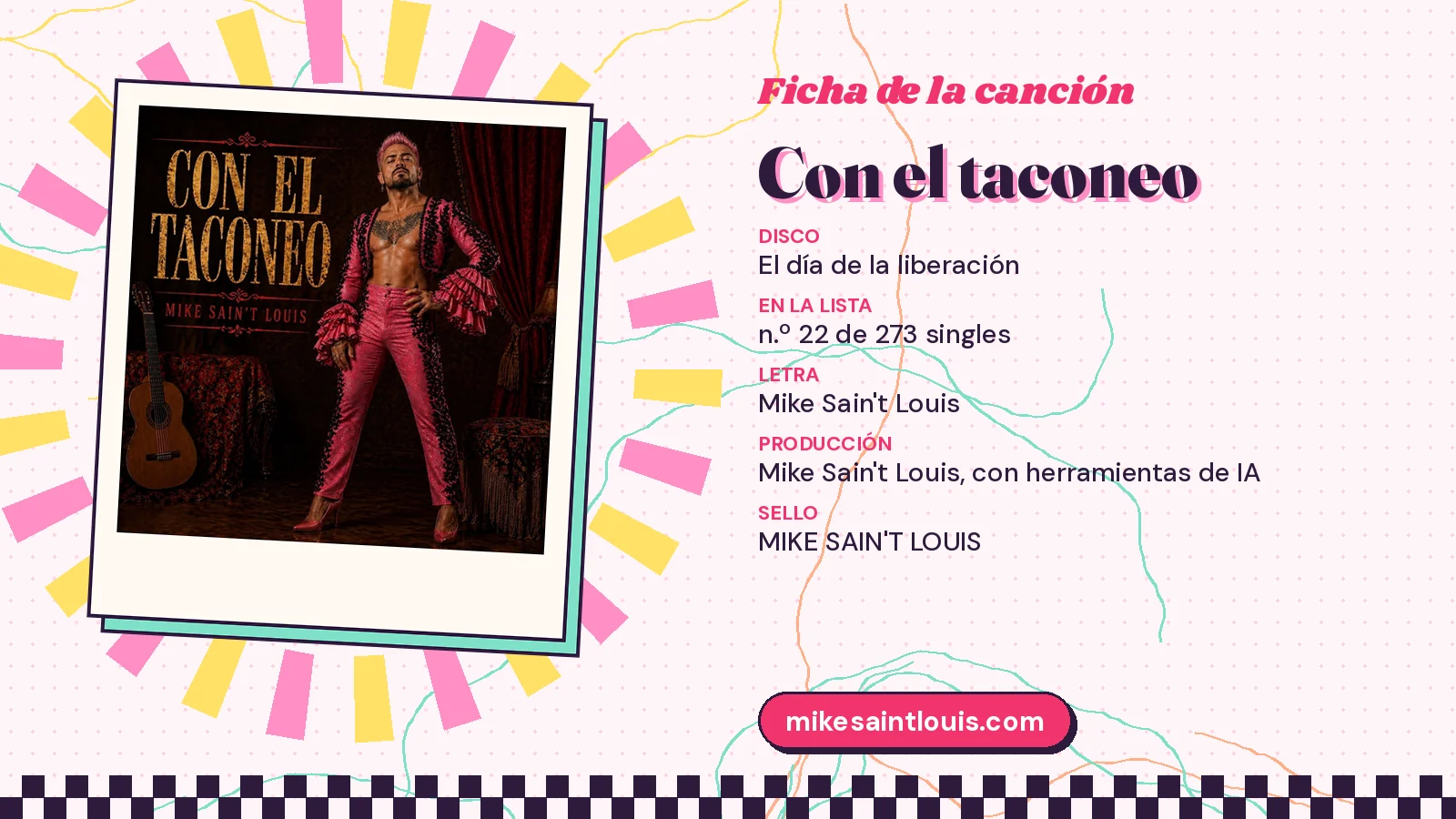
The shoes are raspberry. The suit, pink with black embroidery. The hair, pink. The curtains, red. It's a whole scale of a single colour, from tablao red to Barbie pink, by way of the raspberry of sour strawberry bubblegum.
Red is flamenco's classic colour. The carnations, the shawls, the tablao curtains. Pink is the colour of my planet, of GAYFOLK, of the ships and rockets on my other covers. And raspberry sits right in between. It's the colour where the two worlds meet.
If you think about it, the whole image is a colour transition. From the red of tradition to the pink of camp. And the feet, which are what's in charge, sit at the exact point where they blend.
I don't know whether anyone looking at the cover will notice. I don't care. I know.
Between the bumpkin and the hope
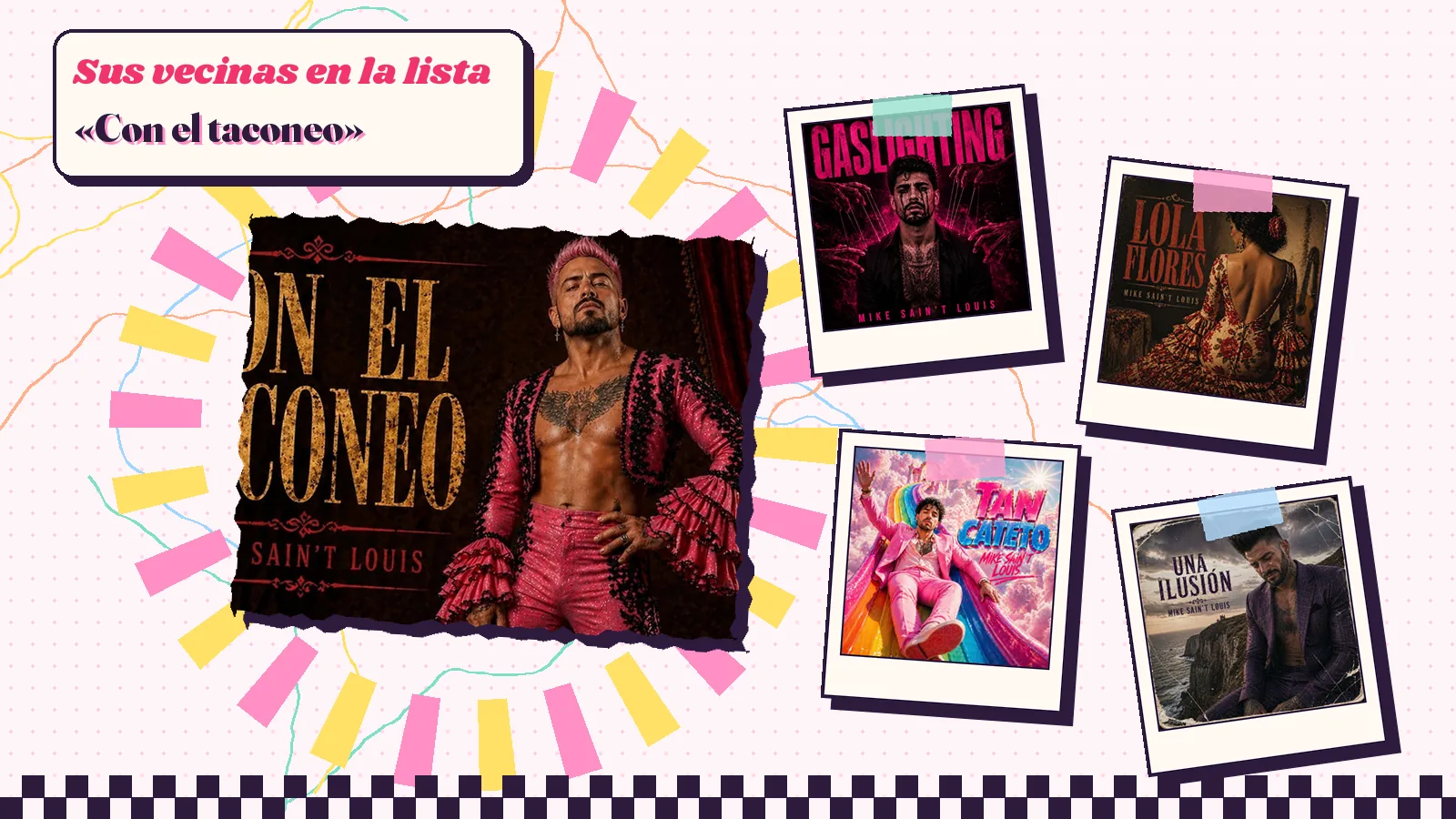
In the site's discography, the song has landed between «Tan cateto» and «Una ilusión». Don't tell me that isn't funny. First the cateto, the village bumpkin, the one who doesn't know how to behave. Then the tablao, the heel-stamping, the pink suit of lights. And then, una ilusión, a hope.
It's almost a little life journey. The village boy they call a bumpkin, who one day stumbles on flamenco, heels and camp, and something lights up inside him. I didn't plan it that way, but I love that it ended up in that order.
An album called liberation
The song is on «El día de la liberación», the third album of the trilogy. And it couldn't be on a better one.
Because what the cover does is liberate a tradition. It takes flamenco, which for a long time was used as the emblem of a very serious, very macho, very tourist-postcard Spain, and gives back what it always had. The camp. The ruffles. The drama. The odd folk who made it all possible in the tablaos in the small hours.
Liberating flamenco from the postcard. That's what I'd like this song to do, even just a little.
Made with machines, dreamed up in heels
I'll say it as always: the lyrics of «Con el taconeo» are mine, written without artificial intelligence, even though I haven't published them on the site yet. The music and the vocals are made with AI tools, Suno among them. I'm a lyricist, composer and producer, and I'm not the one on vocals in my songs.
And here I have a little laugh at myself, because it's ironic. A song about heel-stamping, the most physical, most bodily, most wood-and-sweat thing there is, made with the help of tools that have no feet. AI has never set foot on a stage. It has no idea what a nail in a sole is. What I do is give it the words and the idea, the tablao, the pink suit, the raspberry heels, and it brings the sound.
The duende, if there is any, comes from the lyrics.
Put your heels on
My advice is the same as on the song's page: listen to how that heel-stamping sounds. And if you've got a pair of heels to hand, even better.
Now I'll add something. If you haven't got heels, it doesn't matter. Strike the floor with whatever you're wearing. Trainers, flip-flops, bare feet. The stamping doesn't belong to the shoe; it belongs to whoever's stamping.
And if anyone looks at you funny while you do it, stamp harder. Make the parquet boom, let the neighbour downstairs hear it, let the caretaker come up to ask what's going on. Tell him it's flamenco. And that it's yours.
Tac. Tac. Tac-tac-tac.
Frequently asked questions
What is «Con el taconeo» about? The lyrics aren't published on the site yet, so Mike Sain't Louis doesn't give them away. The cover shows a figure in a pink suit of lights, with a tattooed chest and raspberry stilettos, in an old-school flamenco tablao, and he uses it to talk about how close flamenco and drag culture are.
What does flamenco have to do with drag? According to Mike, they share the heel as percussion, over-the-top costume such as the bata de cola or the suit of lights, and a long history as a refuge for people who didn't fit in.
Which album is it on? «El día de la liberación», the third album of the Planeta Gayfolk trilogy.
Who does the vocals on his songs? The vocals and the music are made with artificial intelligence tools such as Suno. Mike writes the lyrics without AI and is the composer and producer.