
By Mike Sain't Louis ·
The hour before the bells: «Before the Bells» and grief without ceremony
In Spanish villages, the bells talk. They ring for Mass on Sundays, they ring for the fiesta when the patron saint’s day comes round, they peal for weddings and they toll for the dead, that slow, spaced-out toll that sends the neighbours to their windows, apron still on, wondering who it’s been this time.
The bells were the WhatsApp of the old days. They tell everything, and they tell everyone at once.
«Before the Bells» isn’t about that moment. It’s about the time before. The hour when nothing has rung yet, when the bell tower is still silent and the news, whatever it is, hasn’t gone public. It’s on «El día de la liberación», the third album of the GAYFOLK trilogy, and it’s one of the stillest songs I’ve released. The song’s page on the blog already covers its copla opening and that beautiful idea that time loosens what it came to claim. Here I want to talk about something else: grief that has no ceremony yet. The kind you live through before anyone announces it, or the kind that never gets announced at all.
Ay, mi pena
The song begins with a lament:
«Aaaaaaayyyyy mi pena / Ayyyyyyyyyyyy mi penita» («Ohhhh, my sorrow / Ohhhh, my little sorrow»)
Just like that, with the vowels stretched exactly as they appear in the published lyric. It’s the only Spanish in the whole song, and it’s the most Spanish thing you can say. Ay, mi pena. You’ve heard it from Rocío Jurado, from Isabel Pantoja, from La Paquera de Jerez, from your grandmother doing the washing-up with the radio on. It’s the oldest way we have here of saying something hurts without giving any explanation.
And then, suddenly, English. Everything else is in English, and a very restrained English at that, with no jokes, no proper names, none of the things that usually fill my songs. Not one Mercadona. Not one narcissist. Not one mother-in-law.
That opening interests me a lot. It’s as if sorrow arrived in its usual clothes, shawl and hair in a bun, and on sitting down took it all off and stayed in a T-shirt. The lament is the public part of pain, the part you can hear from the street. The English is the inside part, the one you only say quietly and alone.
In the copla, sorrow is cried out. In this song, after the cry, it listens.
Before the bells remember how to ring
The first verse opens with the image that gives the song its title:
«Before the bells remember how to ring, / Before the night is told what it should bring»
Look at the verbs. The bells have to remember, as if they’d forgotten. The night is told what it should bring, as if someone outside were dictating the script.
All of that is what comes afterwards: the noise, the announcement, the protocol. The funeral home with its room number three and its coffee machine that dispenses brown water. The wreaths with purple ribbons. The cousin who turns up late and double-parks. The woman you’ve never met who offers her condolences with a hug that goes on too long. The «so sorry, you know I’m here for whatever you need» messages from people who will never write to you again. All of that has its place, and sometimes it helps. But it arrives with the bells.
The song stays in what comes before. In the small hours when you’ve just had the phone call and haven’t told anyone yet. In the hospital corridor at four in the morning. In the kitchen, with the cup of camomile going cold, when you already know something the world doesn’t.
And there’s another version of that hour, less dramatic but just as real. The one where you know something is ending, a relationship, a friendship, a whole stage of your life, and you still haven’t said it out loud. The one where you’ve known for weeks that you’re going to leave the flat, the job or the city, and you keep eating breakfast as if nothing were happening. That is an hour before the bells too.
It’s a very strange hour. It belongs entirely to you.
What won’t be tamed
The next line says we sit with what we cannot make behave. What won’t be tamed. And then it speaks of a breath between the living and the brave.
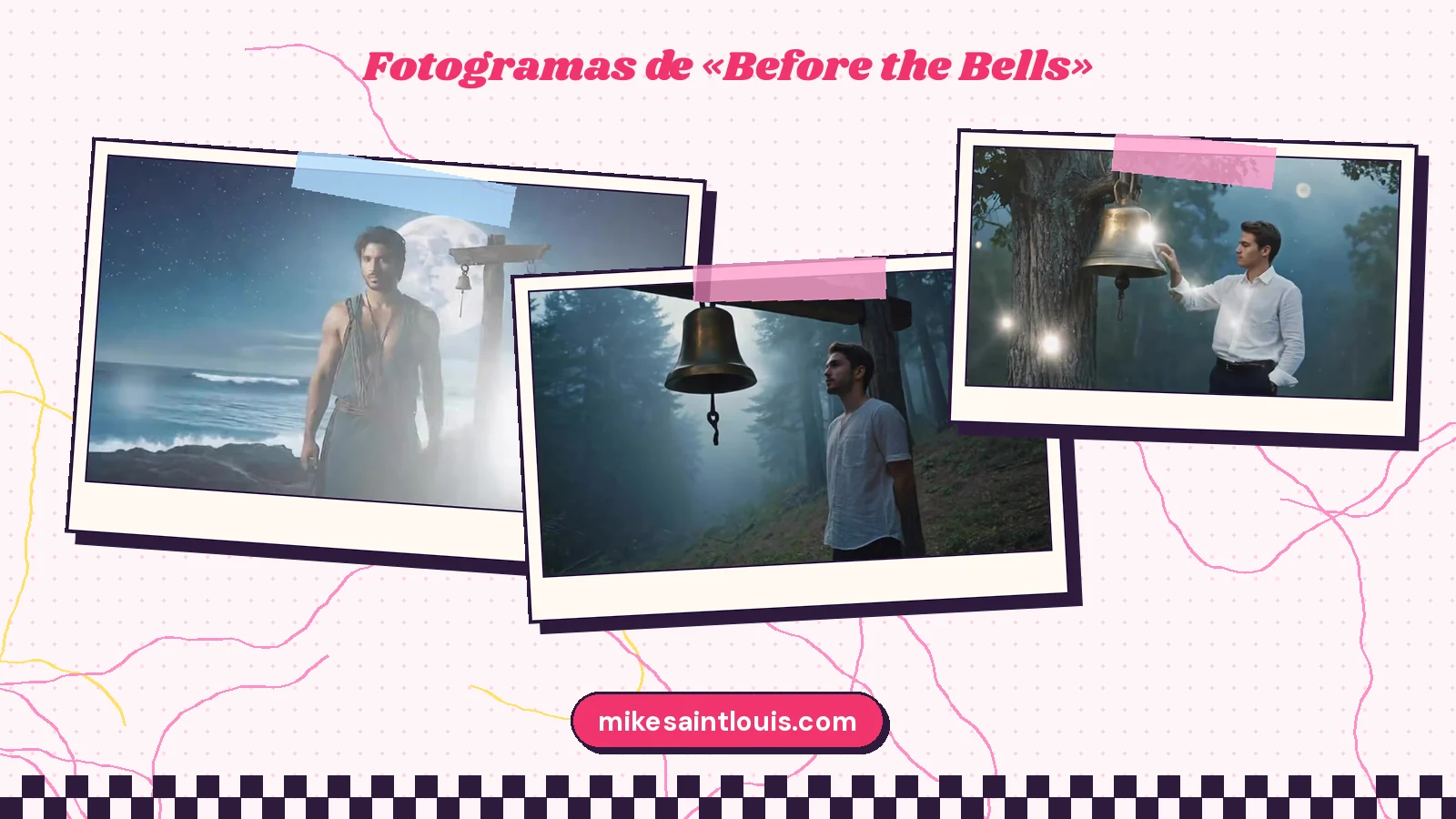
I love that it doesn’t say you have to get over it, or understand it, or accept it. It says we sit with it. Like sitting next to a big, nervous dog in the vet’s waiting room: you’re not going to calm it, you’re not going to control it, but you can stay there without running off.
Our age is in a great hurry to fix pain. Mugs with slogans, the self-help books on airport shelves, TikTok videos with piano music explaining the five stages of grief in thirty seconds the way someone explains a tortilla recipe. And it’s good that help exists, of course it is. But there’s a moment, right at the start, when none of that works, and all you can do is sit with what has happened to you.
This song is for that moment. It doesn’t fix anything. It keeps you company.
Before the names are spoken into stone
The second verse brings the line that strikes me most in the whole lyric:
«Before the names are spoken into stone, / Before the body learns to stand alone»
The names spoken into stone: the headstone, of course. The name carved in marble in the cemetery, with the two dates and sometimes a phrase the family chose. And before the body learns to stand on its own.
That second line seems to me one of the most honest things in the catalogue, and I say that knowing the catalogue is mine. Learning to stand alone isn’t a pretty metaphor. It’s what really happens: the first time you sit down to eat and there’s one plate too many. The first time you wake up and the other side of the bed is cold. The first time you go to tell someone something and remember halfway through the sentence that they’re gone. The body takes a long time to catch on. It keeps waiting for the sound of keys in the door.
And here I want to say something the song doesn’t say, but that comes to me every time I hear it. For a long time in this country, there were people who had no right to any of those ceremonies. Lifelong couples who, when one of them died, were pushed aside by the other’s family. Who didn’t appear in the death notice. Who couldn’t sit in the front row at the funeral. Who found out when the burial was from an acquaintance. Men who had shared thirty years of a flat and a life and who, at the funeral home, were «a friend». The bells rang, but they didn’t ring for them.
That grief without ceremony, without a name in the stone, also fits in the hour before the bells. For some, it was the only hour they had.
The hands forget every fight
The same verse continues with two images the song’s page already mentions: hands forgetting the shape of every fight and a heart unknotting itself without a light. Then it lands the blow: no victory, no hidden plan, just being here the best we can.
The bit about fights strikes me as very subtle. When you lose someone you’ve fought with a lot, and almost every real relationship has its rows, there comes a moment when the rows stop mattering. The argument about the unwashed dishes. The New Year’s Eve sulk from six years ago. The horrible thing you said in the car. All of that, which seemed so big, starts to loosen. The hands no longer know how to make a fist.
It doesn’t always happen, mind. Some losses leave the fight unfinished forever, and that hurts in a different way. But the song is about the ones that do loosen. About when resentment gets tired before you do.
And then there’s that «no victory». I like that it says so, because we’re surrounded by the language of war when we talk about pain. Fighting cancer. Winning the battle against depression. Beating anxiety. As if the person who dies had lost a match for not training hard enough. The song refuses all that. No victory. Just being here.
A truth that never learned to shout
The last verse is the one I most like reading aloud:
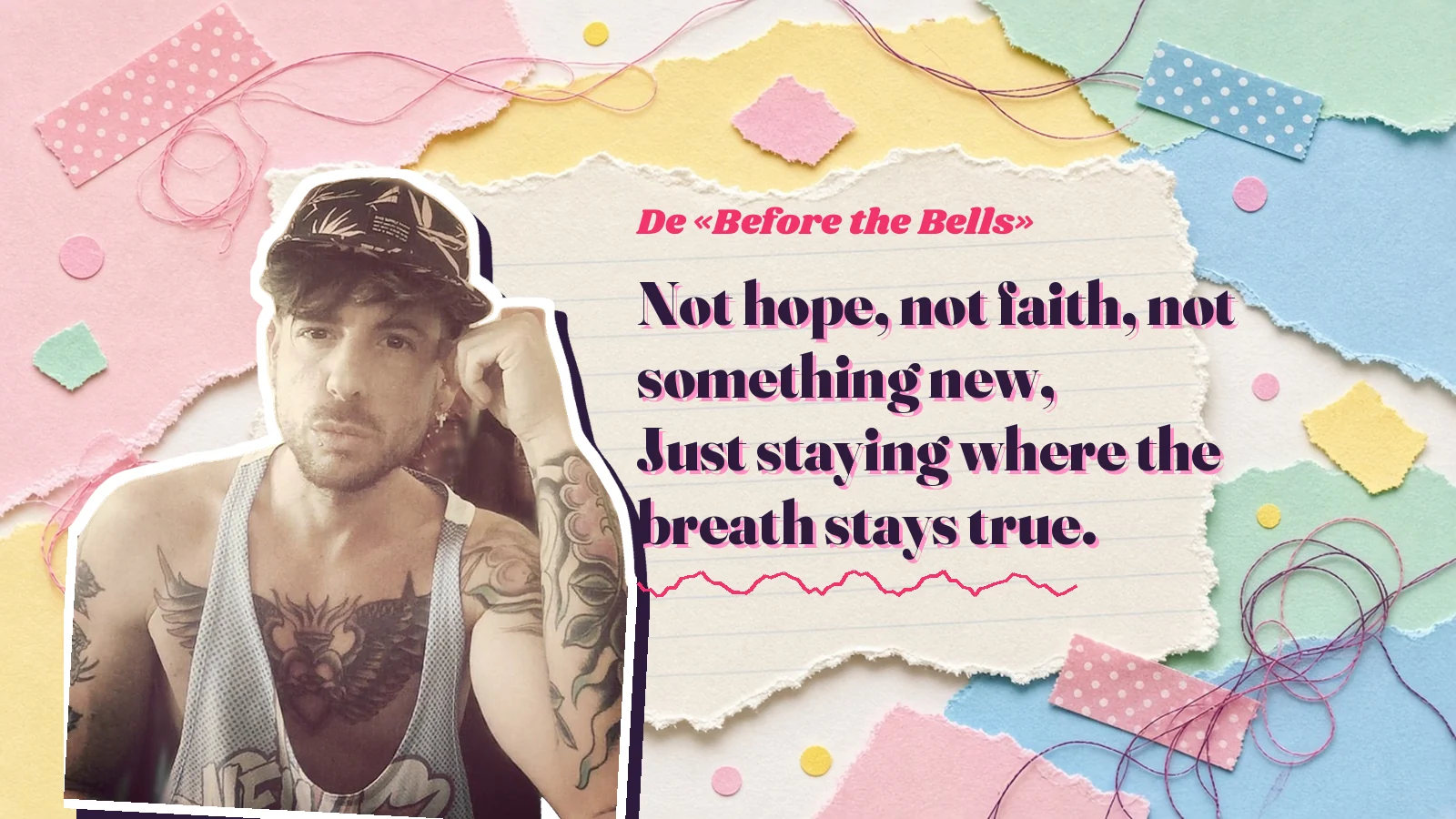
«Not hope, not faith, not something new, / Just staying where the breath stays true.»
Just before it, the lyric has spoken of a warmth that doesn’t ask for proof and a truth that never learned to raise a roof.
Coming from someone who has written songs like shouting matches across a block of flats, that has its funny side. My lyrics raise their voice a lot. They insult, they exaggerate, they cackle at the ex of the moment, they call the narcissist by his invented name and air his dirty laundry in front of everyone. And here, suddenly, a truth that doesn’t know how to shout.
I think both things are true at once. Some sorrows are shouted, and that’s what the «ay, mi pena» at the start is for, and that’s what all the spite songs I’ve released are for. And some sorrows can’t be shouted, because they have no strength, because they have no addressee, because there’s nobody to blame. Those stay in the breath. In that place where the breath stays true even when everything else is a lie.
What I like most is what the verse refuses. It doesn’t promise hope. It doesn’t promise faith. It doesn’t promise a new life. None of the things they sell you in the bad times. It just tells you to stay where you can breathe.
Sometimes that’s already a lot.
The bell tower on the cover
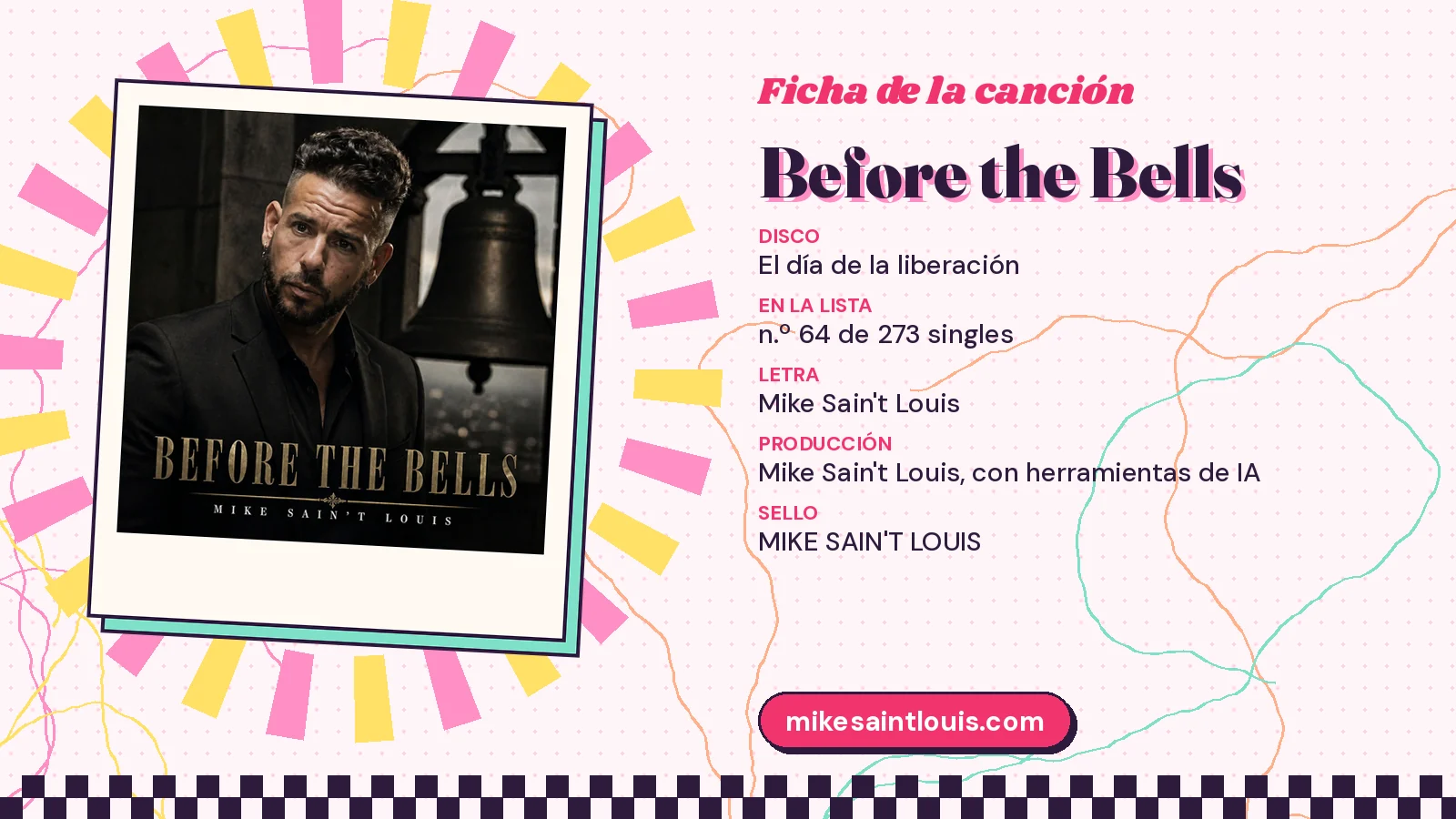
The cover shows a man dressed in black, dark suit and dark shirt, looking straight ahead with a serious face, at the top of a bell tower. Behind him hangs a big bronze bell in the stone opening, and in the background the blurred lights of a city at night. The title sits at the bottom in gold serif letters, like an old death notice or the sleeve of a bolero record.
It’s a very solemn image compared with what I usually do. No pink, no glitter, no straitjackets. Black and stone. And a bronze that weighs. And the bell is still. It isn’t ringing. That’s exactly the moment the song describes: someone has climbed the tower before anyone rings, and is up there, watching, waiting, with the sleeping city below.
I like to think the man on the cover isn’t going to ring the bell. That he’s climbed up to be alone for a while with what he knows, before the whole village finds out.
The copla in a T-shirt
I’ve already explained in «La copla dentro del pop queer» why the old drama suits us queers so well. The copla, Spain’s torch song, has been ours for decades. The folklóricas were the first divas many of us had, and their songs of forbidden loves, of men who walked out, of sorrows that couldn’t be told, were really our songs, even if nobody knew it.
«Before the Bells» takes only the beginning of that, the lament, and leaves it hanging. As if someone launched into a copla in the kitchen and, halfway through the first line, fell silent because the strength wasn’t there, and carried on thinking in another language. It’s a copla in a T-shirt. No frills.
And there’s something very current about that, I think. Many of us have inherited our mothers’ and grandmothers’ sorrow, the way of crying with your hands over your face and the «ay» in your mouth. But we no longer quite know how to use it. We’re left with the lament, and then each of us has to find our own words.
Three still songs
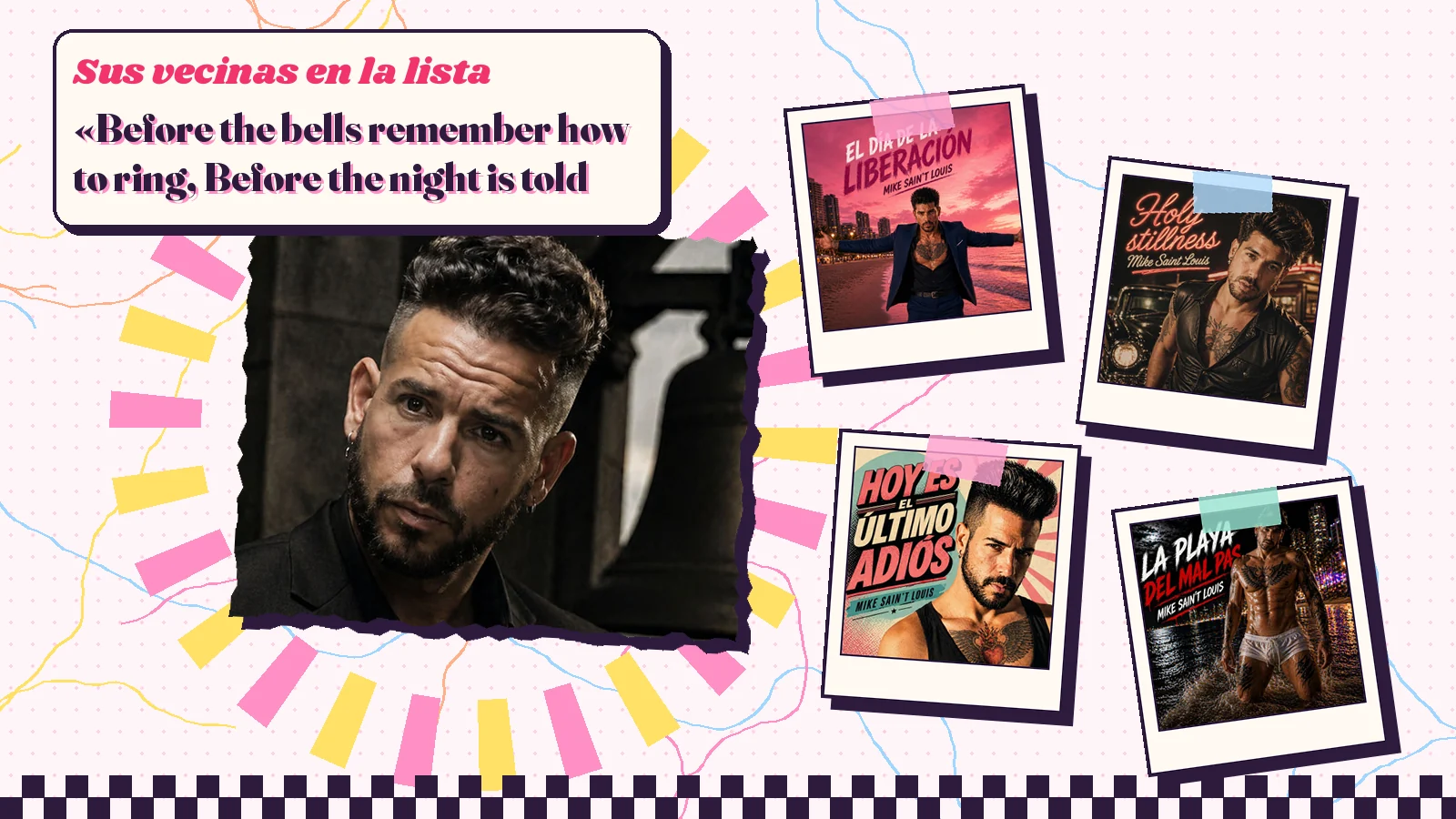
On «El día de la liberación» there are several songs that lower their voice, and I like to think they talk to one another. «Holy Stillness» is almost a lullaby: a gentle night, a fragile light, someone telling someone else to rest without fear. «Hoy es el último adiós» is the opposite of stillness: one phrase repeated until it’s down to the bone, someone who has only come to say goodbye and won’t budge from there.
«Before the Bells» sits between the two. It doesn’t comfort like the first or say farewell like the second. It stays in the time before.
And if I keep pulling the thread, I reach «La playa del Mal Pas», another song with no jokes, with that line about how at forty you understand that half your life was a lie and the other half loneliness. It isn’t about a death; it’s about a place. But it has the same kind of gaze: someone looking at something from a distance and letting it be.
Going back to the village for a funeral
There’s a scene almost every queer who left their village for Madrid, Barcelona or wherever knows. The phone call in the small hours. The grandmother, the uncle, the neighbour who looked after you when you were little. And the next day, the morning coach from Estación Sur, the small suitcase, the suit you only wear for weddings and funerals, and three hours at the window watching tower blocks turn into wheat fields.
You arrive and the bell has already rung. The whole village knows. The square is full of people who look at you and half recognise you: «Aren’t you Encarna’s grandson, the one who went off to Madrid?». And everything fits into that sentence. The one who left. The one who never married. The one who comes alone. The one who, according to the butcher, «is one of those». Nobody says it out loud, because it’s a funeral and appearances must be kept, but you can tell from the way they offer their condolences, with a mix of affection and curiosity that clings to your clothes like the smell of church wax.
At those funerals, the hour before the bells is the one you spent alone, in Madrid, after hanging up the phone. The one nobody in the village saw. By the time you arrive, the grief is already public, and you have to fit into it however you can: in the third row, in your wedding suit, beside cousins you haven’t seen since their First Communion.
And then there’s the opposite case, which also exists. The one where you go back to the village and find out that your grandmother knew everything and didn’t mind in the slightest. That the neighbour gives you an endless hug and whispers in your ear, «your gran was so proud of you». Those things happen, and they’re the ones that take you apart.
The song tells none of these stories. But I think they all fit into that time before the bronze, when you don’t yet know what face you’ll have to put on in front of everyone.
What you feel before anyone knows is the most yours.
When to listen
The song’s page recommends listening very early, before the alarm goes off, or in that strange hour of the small hours when everyone is asleep except you. I agree, and I’d add one thing: listen alone, without doing anything else at the same time. It isn’t a song for washing up or for the gym. It’s for sitting down.
If you’re in that hour right now, the one before the bells, with something you haven’t told anyone yet, this song won’t tell you what to do. But maybe it’ll keep you company for a while.
And if the sorrow grows too big, if at any point you think about hurting yourself, don’t stay alone in the bell tower. In Spain you can call 024, the suicide-prevention line, at any hour, free and without giving your name. If there’s immediate danger, call 112. If you’re outside Spain, call your local emergency number. Talking to someone isn’t ringing the bell so the whole village hears. It’s coming down one step.
What time loosens
I’ll finish with what the chorus says, which the song’s page has already chosen as its favourite line: time loosens what it came to claim. I won’t quote it again, but I want to say why I think it’s the most useful idea in the whole song.
It doesn’t say time heals everything, the line people trot out at every wake and nobody believes. It says it loosens. That whatever had you by the throat squeezes less, with time. It doesn’t go away. It stays there, hand in place, but it lets you breathe.
That isn’t celebrated with bells. There’s no day on the calendar when the bronze rings out to say you’re better now. It happens little by little, without witnesses, just as everything before it did.
And one day you realise you’ve climbed the bell tower, looked out over the city, and come back down.
Without ringing a thing.
The whole trilogy, with this song and all the others, is on the singles page.
Frequently asked questions
Which album is «Before the Bells» on?
It’s part of «El día de la liberación», the third album of Mike Sain't Louis’s GAYFOLK trilogy.
What language are the lyrics in?
It opens with a lament in Spanish, «ay, mi pena», and the rest of the lyric is in English.
What is «Before the Bells» about?
The still moment before the world starts making demands: the hour before the announcement, the ceremony and the noise, when someone sits with a loss or an exhaustion they can’t yet control.
What’s on the cover?
A man dressed in black at the top of a bell tower, with a bronze bell behind him and the lights of a city at night in the background.
Who made the song?
The lyrics are by Mike Sain't Louis, lyricist, composer and music producer from Madrid. The music and vocals were made with artificial intelligence tools.