By Mike Sain't Louis ·
"Ignore him hard," says the man who gave him a whole song
Hey, hey, listen up. Here's the recipe.
That's how «Manual de escape de un narci» ("A Narcissist Escape Manual") opens, with the swagger of a 3 a.m. infomercial host. Like someone about to sell you a non-stick frying pan, or a belt that burns fat while you watch TV. Except what I'm selling is a way out. An instruction manual for escaping a narcissist, step by step, warnings and fine print included.
And in the chorus, the star tip, the one highlighted in neon marker:
«Su mayor castigo es verte brillar, / ignóralo fuerte, lo harás colapsar.» ("Watching you shine is the worst he can take, / ignore him hard and you'll make him break.")
Ignore him hard. Gorgeous. I'd sign it. I'd put it on a mug.
The problem is that I wrote it. And to write it, I devoted an entire song to the man, with its intro, its verses, its repeated chorus and its closing coda. Three-odd minutes of my life, plus the time it took to write, plus making the cover, plus releasing it. If that's ignoring someone, may Rocío Jurado come down from heaven and see it for herself.
The song's own page already goes through the manual's rules one by one. Here I want to talk about the contradiction. About why we write manuals we don't follow, why that doesn't make them worthless, and why, in my case, the song was precisely how I started following it.
Emotional home shopping
First, the form. Because the form here is half a joke.
The song is written like a tutorial. Like one of those YouTube videos called "Five Steps to…" or "What Nobody Tells You About…". It has its attention-grabbing opening, its promise ("don't worry, I've got the way out"), its numbered list of tips, its recap in the chorus and its sign-off with a "game over". Even the emojis that come with the published lyrics, fire, blue diamond, explosion, musical note, look lifted from the description box of a self-help video with a shocked-face thumbnail.
I loved the idea of putting narcissism, such a serious subject, into the tackiest format imaginable. Home shopping. The Instagram guru selling you a €49.99 course to "reclaim your power". Because that's part of the story too: when you get out of a relationship like that, the world fills up with people who want to teach you how to get out. Books, podcasts, videos, accounts with names like "healing your inner child" telling you the same thing in different fonts.
So I made my own self-help video. As a song. For free. And with a streetwise rap attitude that strips away any whiff of a seminar.
What the manual says
I won't repeat the rules, that's what the song page is for. But I do want to stop at one, because it's the hardest for me and the one I love most:
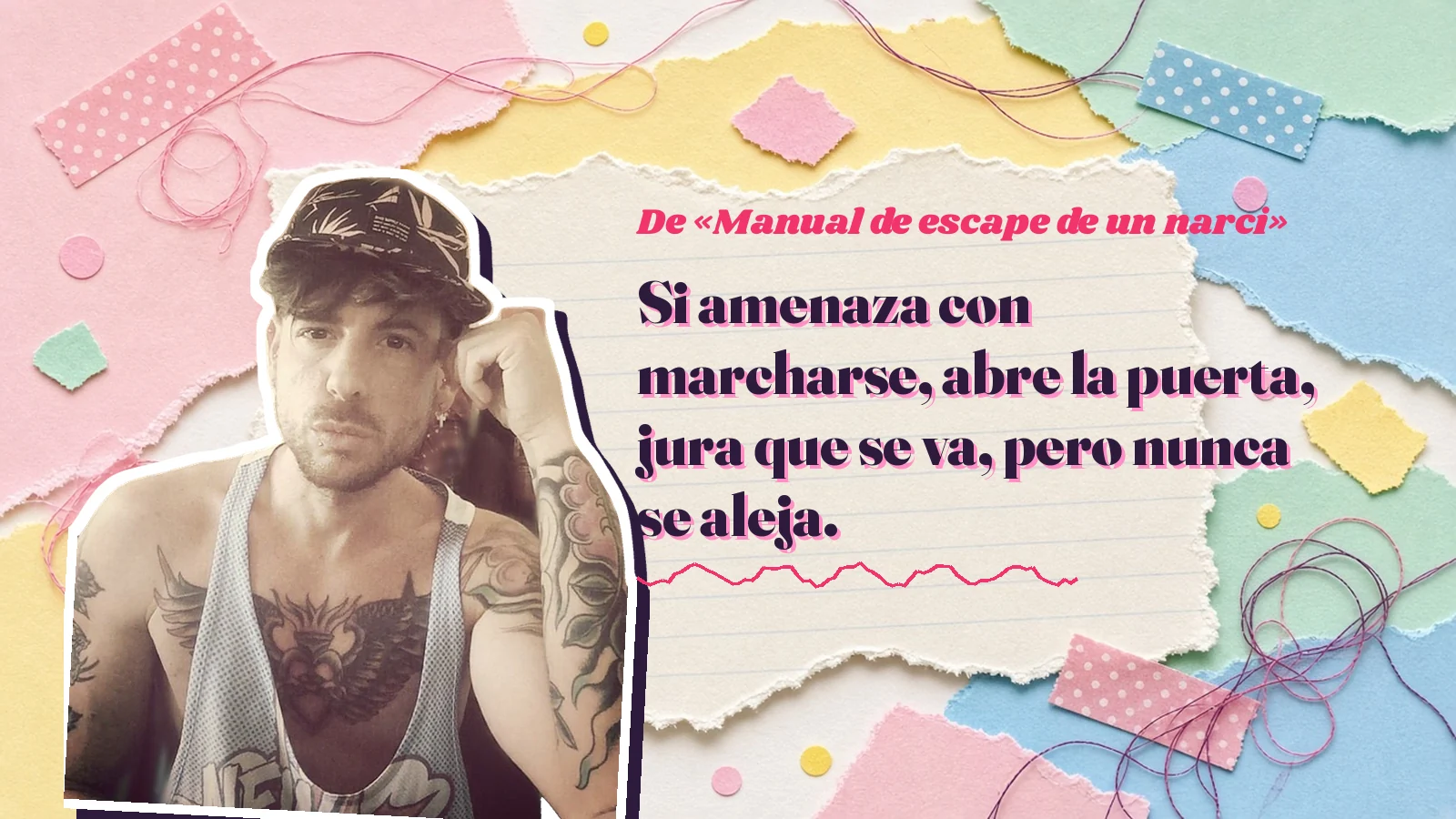
«Si amenaza con marcharse, abre la puerta, / jura que se va, pero nunca se aleja.» ("If he threatens to leave, hold the door open wide, / he swears that he's going but never steps outside.")
Open the door. So easy to say, so hard to do.
Because the threat of leaving is some people's favourite weapon. "I'm leaving." "You'll never see me again." "Do what you like." And you, who only want him to stay, for everything to go back to how it was in those first months, give in. You apologise for things you never did. You swallow your pride with a spoonful of sugar.
The song says the opposite: open the door for him. Hold it, if need be, like a white-gloved doorman at a five-star hotel. Let him go. And you'll see he doesn't. He lingers on the landing, pretending to hunt for his keys, waiting for you to call him back.
That image, the one who swears he's leaving and never goes, strikes me as one of the most precise things I've written on the subject. And it has no ornament at all. It's almost an entomologist's field note.
The contradiction
Back to what I said at the start, because it's what really interests me.

A song that says "ignore him" is, by definition, a song that doesn't ignore him. It's like hanging a giant sign on your front door reading "I DON'T THINK ABOUT YOU". If you didn't, you wouldn't have made the sign.
I know. I know it by heart. And I laugh at myself every time it crosses my mind. I'm the guy who writes a no-contact manual and then gives the man three minutes with a catchy chorus. I'm the one who says "I don't even remember him" while designing his cover art. I'm a walking contradiction, and I don't know a single person who's come out of something like that who isn't.
But there's a difference. And it matters.
Thinking about someone is one thing. Talking to him is another. The manual doesn't say "don't think about him", which would be impossible, like asking someone not to think of a pink elephant. The manual says "don't give him a reaction". Don't reply. Don't explain. Don't fight. Block his number.
Writing a song about someone isn't giving him a reaction. It's the opposite. It's taking the reaction out of you and putting it somewhere else, on paper, in a song, on a cover, so it never reaches him. The song is the container where I pour everything I'll never say to him. If I hadn't written it, I might have sent him a twelve-minute voice note at four in the morning. And that really would have been giving him a reaction.
Never explain
There's another verse I think is key:
Never fight, never explain: all he wants is to tangle your brain.
This is what I learned later, and I say it without shame. When someone manipulates you, your first instinct is to explain yourself. To give your side. To prove you're right. To put together a PowerPoint with evidence, screenshots, dates and witnesses. And every explanation is a gift to him, because it hands him material. Something to argue with, to twist, to use.
People like that don't want to understand. They want you tangled up. And you get tangled, because you're a normal person who believes that if you explain things properly, the other person will get it.
He won't. Not because he can't. Because it doesn't suit him.
For a narcissist, everything is convenience, the lyric says. And that's all there is.
He'll tell you nobody will ever love you
Now a serious line, a clean one.
The heaviest verse in the whole song is the one that predicts what he'll tell you: that nobody will ever love you. That without him you won't make it.
It's a phrase that turns up in almost every story of this kind, and when someone tells it on a café terrace, they drop to a whisper. Because it's the phrase that stays. The one you repeat to yourself, alone, years later, when someone new doesn't answer a message. Nobody will ever love you.
It's a lie. It's always a lie. But you need to hear that from someone other than your own head before you believe it. And sometimes, that's what a song is for.
Game over
The rapped section ends with a "game over, narcissist". Like the arcade machines in nineties Spanish bars, when you ran out of lives and the screen went black with red pixel letters. Insert coin.
I really like that image because it turns the relationship into a video game. On one hand, that's flippant. On the other, it's exact. The narcissist plays. To him, everything is a match. Your emotions are points. Your tears are extra lives. Your explanations are coins he feeds into the machine to keep playing.
In the end, the manual comes down to something very simple: stop feeding it coins. Let his game run out. Game over.
And the best thing about video games is that when the game ends, nothing happens. The machine just sits there, its little tune on loop, waiting for another player. It's not your problem anymore. He'll go looking for a brand-new victim, the song says. But you're already out of it.
The coda that's nothing like a manual
And then, just when the song seems over, something else arrives. A murmur. A complete change of tone.
No more rap, no tips, no infomercial swagger. There's a "mmmmmm" and some soft lines: if I could melt your heart, we'd never be apart. Give yourself to me. You hold the key. You're frozen.
The song page describes it as a nod to Madonna's "Frozen", and of course it is. Madonna is one of the great fairy godmothers of every queer kid who grew up with a radio on. But what I want to talk about here is what that coda does to the rest of the song.
It takes it apart.
After three minutes of "ignore him, block him, don't explain", along comes someone who still wants to melt that heart. Someone who still thinks that if he gave himself up, if he used the key, maybe they wouldn't have to part. It's the contradiction I mentioned before, set to music. The manual on the outside. Hope on the inside.
I didn't cut it. I could have, and the song would have been tidier, more coherent, more "empowered", as they say in the €49.99 courses. But it would have been a lie. Because that's what getting out of something like this is: the manual in one hand and the key in the other, not quite knowing which to let go of first.
The cold in the house
That word, "frozen", turns up more than once in my catalogue. In «El narcisista» ("The Narcissist") I stretch it to breaking point, with that flamethrower "frozeeeeen". Cold is, for me, the perfect image for this kind of relationship. It isn't fire. There's no passion, no shouting, no smashed plates. There's ice. An emotional fridge with the door shut and the light off.
And ice, unlike fire, can't be seen from outside. People see a calm couple, no fights, who go to dinners with friends and sit together. Nobody notices it's two degrees below zero at home.
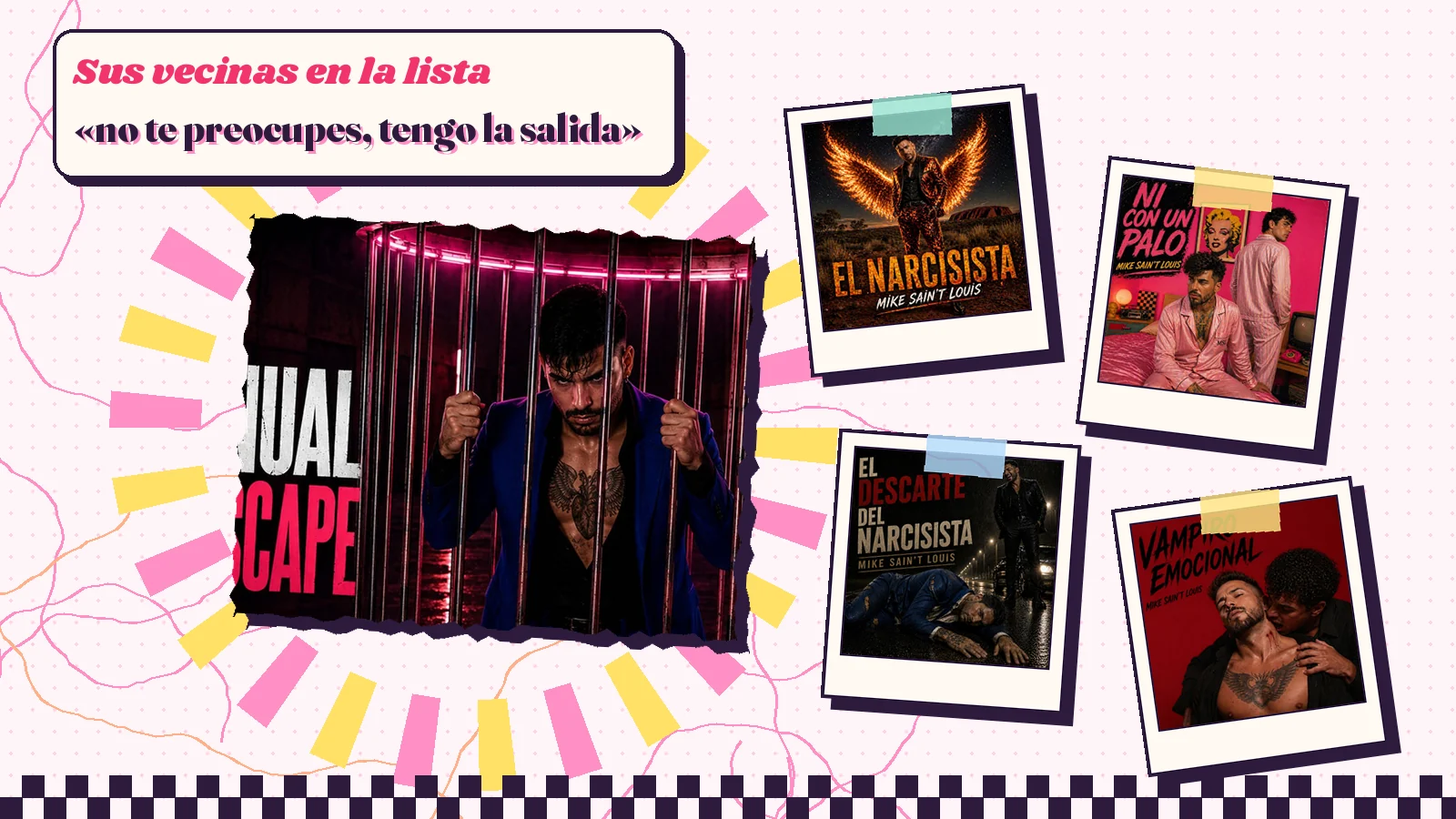
I also talk about it in «Ni con un palo» ("Not With a Ten-Foot Pole"), where the punishment is silence, and in «El descarte del narcisista» ("The Narcissist's Discard"), where the punishment is indifference. «Manual de escape» is the practical side of all those songs. The others describe the cold. This one hands you a coat and points to the door.
What the manual doesn't say
Every manual has its fine print. The stuff that doesn't fit in the leaflet. So, while we're at it, here are five things my song doesn't say and maybe should have:
- That you'll have silly days. Days when it seems he was right, that you overreacted, that it wasn't that bad. You can't block those days. You ride them out with a blanket and a terrible Netflix series.
- That your friends will get tired of hearing his name. And they have every right. Find one or two with more stamina than the rest and buy them the beers.
- That you'll want to tell everyone, starting with his new partner. Don't. They have to figure it out on their own, the way you did.
- That he'll message you on the strangest social network. Block him on WhatsApp and he'll pop up on LinkedIn. Block him on LinkedIn and he'll show up on Wallapop, asking about a sofa you're not selling.
- That one day you won't care. Not tomorrow. Not next month. But one day, in the queue at the butcher's, you'll remember him and feel nothing, and it'll seem so strange you'll almost laugh.
That last one is the only one that matters. The other four are for passing the time until it arrives.
No contact isn't punishment
There's a widespread confusion about this whole ignoring business, and I want to clear it up, because the lyric can be misread.
When the song says watching you shine is his worst punishment, it sounds like the point is to punish him. That ignoring him is a kind of revenge, a strategy to make him suffer. And yes, the lyric plays with that, because it's fun to picture the narcissist biting his nails while you're out for drinks.
But deep down, no contact isn't about him. It's about you. You don't ignore him so he'll suffer. You ignore him so you stop suffering. If it stings him on top of that, great, but that's dessert, not the main course.
If you spend all day checking whether it stings or not, whether he's seen your beach story on Instagram, whether he's heard you've got a new boyfriend, you're not ignoring him. You're monitoring him. And that's exactly the opposite of the manual.
My catalogue is full of songs about this kind of person, with titles like «Vampiro emocional» ("Emotional Vampire") or «Perverso narcisista» ("Perverse Narcissist"), which leave no room for doubt. And almost all of them have a moment of payback. This one does too. But real payback, the kind that lasts, is the kind that doesn't need an audience.
Between «Llorar» and «El calcetín»
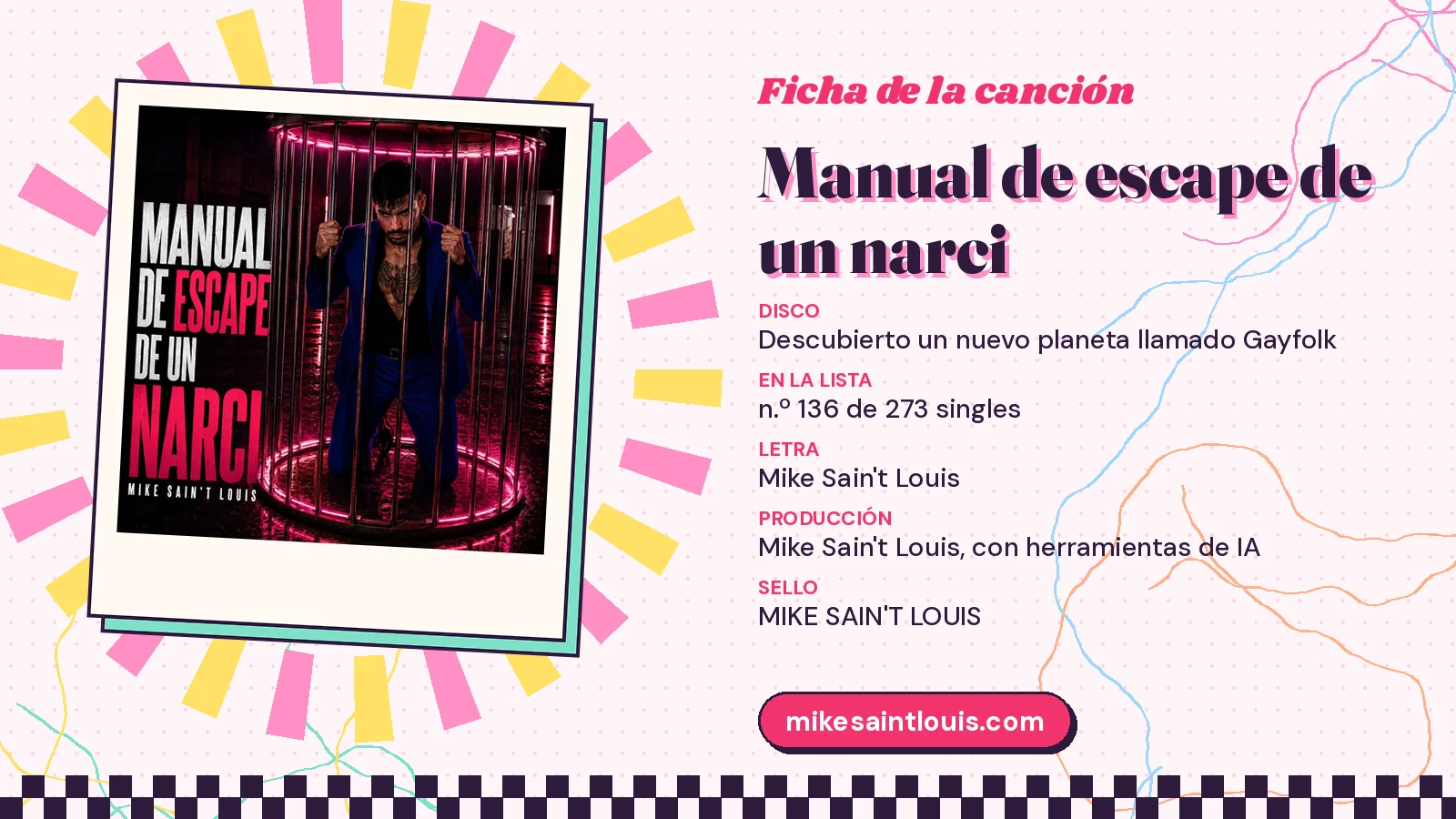
In the full gayfolkplanet.com catalogue, «Manual de escape de un narci» is track 136 of 273. The one before it is called «Llorar» ("Crying"). The one after, «El calcetín» ("The Sock").
And I can't think of a better order for telling the story of a getaway. First you cry. Then you read the manual. And then, in «El calcetín», you're at the stage where self-esteem, as I put it in that lyric, gets washed, hung out to dry and worn fresh. Three songs in a row that, without meaning to, tell the whole story: the tears, the strategy and the laundry.
All three are on the first album of the trilogy, Descubierto un nuevo planeta llamado GAYFOLK (A New Planet Called GAYFOLK Discovered), which is the album of discovery. And one of the things you discover when you land on a new planet is that you're allowed to leave the old one.
A cage with neon
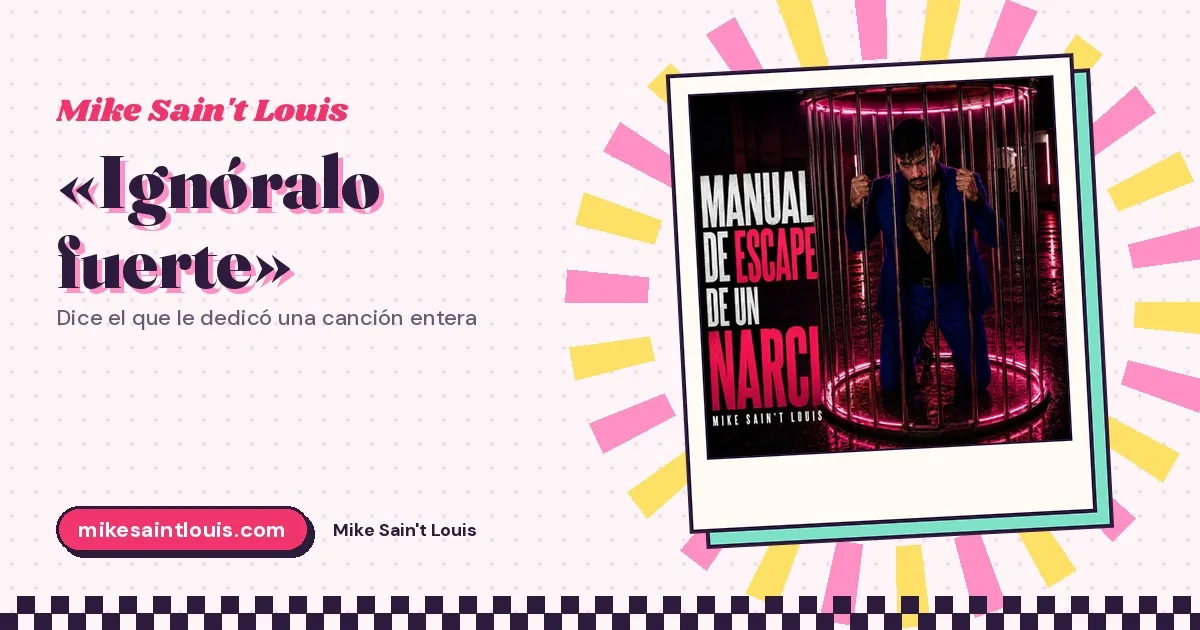
The cover tells it better than I can. A man in an electric-blue suit with his shirt open, locked inside a round cage of metal bars, a pink neon ring above and another below, in a dark room with a wet floor reflecting the lights. He grips the bars with both hands. On the left, in huge white and red letters: MANUAL DE ESCAPE DE UN NARCI.
What I love most is the contradiction, yet again. The title says "escape" and the image shows someone who hasn't escaped yet. He's inside. Holding on to the bars. Looking out.
And that's the honest part. Nobody writes an escape manual from the beach, mojito in hand. You write it from inside the cage, while you feel around for the lock. The neon bars are pretty, too. They glow. That's why it's so hard to get out: because from the inside, the cage sometimes looks like a nightclub.
A rap by someone who doesn't rap
Another thing that tickles me about this song is the genre. It's almost a rap. And I'm no rapper, nor do I pretend to be. I'm a Madrid lyricist with a head full of copla and headphones full of pop.
But rap has something that suited this manual perfectly: it's the genre of instruction. Of advice delivered with swagger. Of the "listen up" that looks you right in the eye. A manual as a ballad would have sounded like a lament. As a rap, it sounds like a warning.
The lyrics are mine, with their homespun Spanish rhymes: reacción with emoción, suplique with derrite, fachada with apuñala. They're not competition-grade rhymes, and they don't need to be. They're playground rhymes. The music and vocals of Planeta Gayfolk are made with artificial intelligence tools such as Suno, and I say so openly in this site's FAQ. But the decision that this would be an infomercial rap and not a sad ballad, that one was mine.
How to write a chorus that laughs
The chorus has something I love, which is that it laughs at the narcissist while still being serious advice. The more he insists, the more he'll shake. You'll make him break.
There's an underlying idea here about how I write choruses in general, which I talked about in how to write a chorus that laughs at you and with you. A good chorus has to be shoutable in a group. It has to work at a hen party, at a dinner with friends, in a car with the windows down. And this one works, because it has that mix of self-help and sharp tongue that shouts well with a drink in your hand.
Picture four friends in a car, driving back from the beach, yelling "ignore him hard and you'll make him break" while one of them stares at her phone, tempted to reply to someone she shouldn't. That's what the song is for. So that, at that exact moment, the other three take her phone away.
For the next time I'm tempted
I'll end with a confession, which is what I do best.
I don't know if I've always followed my own manual. Probably not. Probably I've unblocked a number now and then, looked at a profile, typed a message I deleted before sending. Like everyone. That's what manuals are for: to keep within reach on the day your strength gives out, not to be followed perfectly the first time.
That's why I wrote this one as a song. Because a manual in a book stays on the shelf. A song gets into your head and ambushes you at just the right moment, in the shower, on the metro, with your finger hovering over the "unblock" button.
Ignore him hard.
And if you can't ignore him hard, ignore him a little. That counts too.
Frequently asked questions
What is «Manual de escape de un narci» about? It's a song written as an instruction manual for leaving a relationship with a narcissist: don't give him a reaction, don't explain yourself, hold the door open if he threatens to leave, and block his number. It ends with a soft coda that nods to Madonna's "Frozen".
Isn't it contradictory to write a song for someone you say should be ignored? Yes, and the song knows it. Ignoring someone doesn't mean you stop thinking about him; it means you stop giving him a reaction. Writing the song was a way of getting out everything I was never going to say to him.
Which album is it on? On Descubierto un nuevo planeta llamado GAYFOLK, the first album of the GAYFOLK trilogy. In the gayfolkplanet.com catalogue it's track 136 of 273, between «Llorar» and «El calcetín».
Who wrote it? The lyrics are by Mike Sain't Louis. The music and vocals were made with artificial intelligence tools, and the single is released on the MIKE SAIN'T LOUIS label.