By Mike Sain't Louis ·
Diagnosed at 41: putting names to what weighed on me
This is the third piece in a series about my mental health. In the earlier ones I wrote about the two relationships I lived through after falling in love at 22, and about how my childhood wounds became a ticking time bomb. Here I write about the moment that bomb was given names.
Before you read on: if you're having thoughts of suicide, call 024. It's free, confidential and open 24 hours. If there's immediate danger, call 112. The Teléfono de la Esperanza, on 717 003 717, also answers crises at any hour. If you're outside Spain, call your local emergency number. Depression can make you believe nothing will ever change. That's a symptom of the illness, not the truth. Asking for help works.
At 41 I was diagnosed with five things: severe major depression, social phobia, post-traumatic stress disorder, avoidant disorder and anxiety. I write them like that, one after another, without euphemism, because hiding them has never done me any good.
I won't describe the appointment here, or the treatment I follow. That belongs to me and to the people treating me. What I do want is to explain, in general terms and with reliable sources, what each of those names means. Because these are names people hear often and understand little, and I suspect many people reading this aren't sure what they mean.
An important warning: what follows is general information. It can't be used to diagnose yourself or anyone else. Only a health professional can make a diagnosis, after an assessment.
Five names at once
Receiving several diagnoses at once can be frightening. It's easy to think: that many? Am I that bad? It helps to know something many professionals explain: these conditions very often appear together. Depression and anxiety frequently go hand in hand. Post-traumatic stress is often accompanied by depression. And social phobia and avoidance share a lot of ground.
They aren't five illnesses dropping out of the sky separately. They are, in a way, different faces of a single story. In my case, the story of a child who was bullied and repeatedly sexually abused, and of an adult who, after two relationships with people he came to understand were narcissists, could no longer carry the weight.
Naming each face helped me stop seeing myself as a shapeless disaster. I began to see myself as someone with specific wounds that can be treated.
Severe major depression
Depression isn't being sad. Or not only. The World Health Organization describes it as a common mental disorder involving a depressed mood or loss of pleasure or interest in activities for long periods of time. According to the WHO, it affects around 4% of the world's population and is one of the leading causes of disability.
Diagnostic manuals such as the American Psychiatric Association's DSM-5 and the WHO's ICD-11 speak of a depressive episode when, for at least two weeks, nearly every day, there's low mood or loss of interest together with other symptoms: changes in sleep or appetite, tiredness, feelings of worthlessness or excessive guilt, difficulty concentrating and, sometimes, thoughts of death or suicide. Severity is graded by how many symptoms there are and how much they affect daily life. Severe means it affects it a great deal.
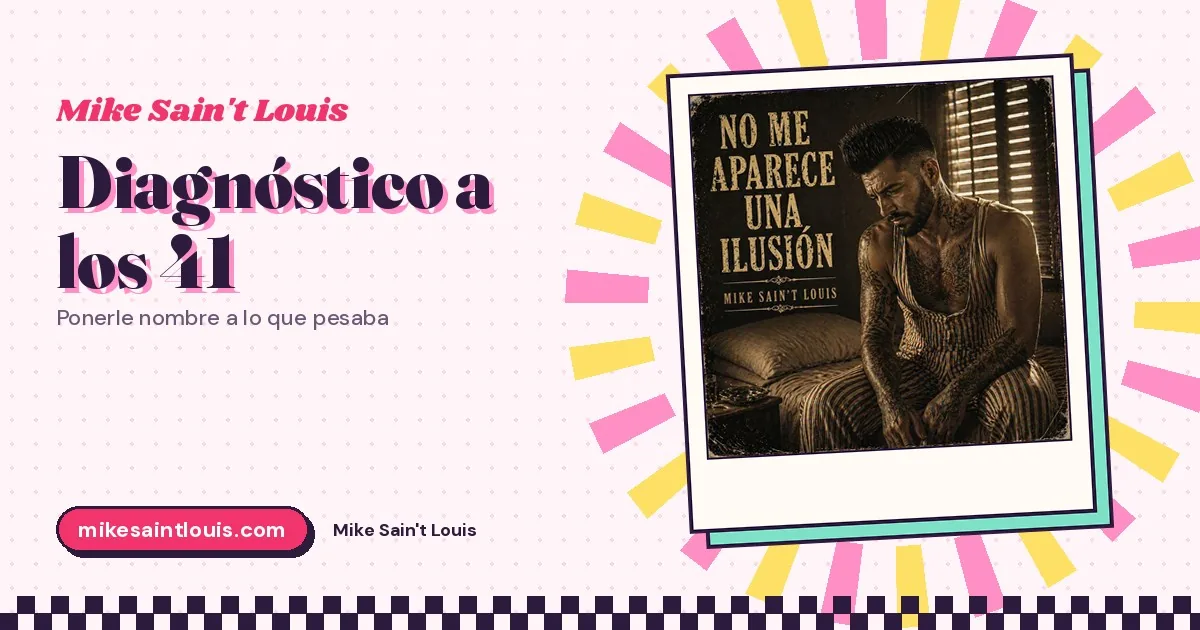
One of my songs describes very well how this feels from the inside. «No me aparece una ilusión» repeats again and again «No me apetece salir de la habitación» ("I don't feel like leaving the room"). And then: «No encuentro la fuerza, la motivación» ("I can't find the strength, the motivation"). The lyric doesn't move forward. It circles on itself, the way thoughts circle on a bad day. Set beside the clinical description of depression, the lyric looks very much like it.
Depression, and this needs saying plainly, can be treated. The WHO and health systems such as the NHS point out that effective treatments exist, psychological and, when a professional considers it necessary, pharmacological. It isn't a matter of willpower. Nobody gets out of severe depression by "trying harder" without help, just as nobody mends a broken leg by wanting to.
Social phobia
Social phobia, which the manuals also call social anxiety disorder, is much more than shyness. The NHS describes it as an intense, persistent fear of social situations, or of situations where you might be watched and judged. People who have it may dread talking to strangers, eating in front of others, making a phone call or walking into a shop, and often suffer before, during and after those situations, replaying them over and over.
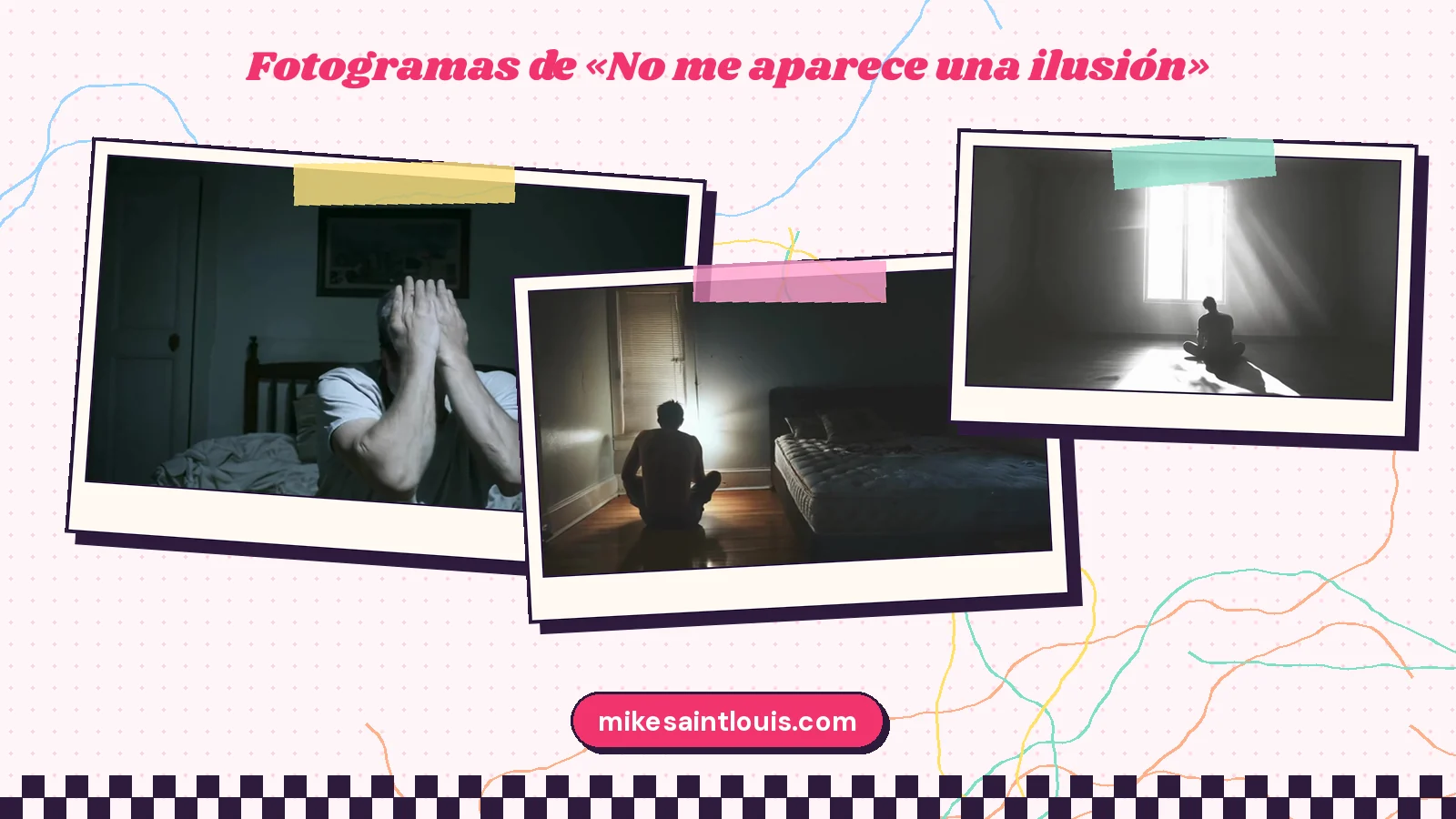
The end of my song's chorus puts it in one image: «Siempre apartado entre tanta gente» ("always set apart among so many people"). You can be surrounded by people and feel miles away. And you can long to be with others and, at the same time, fear it so much that you stay at home.
Social phobia often begins in childhood or adolescence. It isn't unusual for it to be linked to experiences of humiliation or rejection. I can't say what caused it in my case, because nobody knows that for certain. But I do know that the school playground, for a child who was being bullied, was a place where being seen meant being singled out.
Post-traumatic stress disorder
Post-traumatic stress disorder, PTSD, can develop after living through or witnessing traumatic events. Bodies such as the American Psychological Association and the NHS describe symptoms like reliving what happened through intrusive memories or nightmares, avoiding reminders of it, mood and thoughts changing for the worse, and a constant state of alert, with jumpiness, irritability or sleep problems.
Symptoms can appear soon after the trauma or years later. That last point is something many people don't know, and it helped me understand why it all went off at 41 and not before.
One of my songs carries the condition's name in its title: «Beat My Post-Traumatic Stress». Its introduction speaks of surviving what the body still remembers. That phrase is probably the best plain definition of PTSD I know.
Avoidant disorder
This is the diagnosis fewest people have heard of. The manuals list it as avoidant personality disorder. The DSM-5 describes it as a persistent pattern of social inhibition, feelings of inadequacy and hypersensitivity to negative evaluation. Put simply: a very deep fear of rejection and criticism that leads you to avoid contact with others, even when you want it.
The word "personality" is frightening, because it seems to say "this is who you are and you won't change". That isn't what it means. It means it's a pattern that goes back a long way and shows up in many areas of life. And it can be worked on in therapy.
It resembles social phobia, and the two often go together. The difference, without jargon, is that social phobia centres on fear of situations, while avoidance affects more broadly the way you see yourself and relate to others.
In «Antisocial» I wrote about avoiding eyes and greetings in the street, and about my silence being a castle. There's pride in that song, real pride. But today I also know that sometimes the castle was a way of never being hurt again.
Anxiety
Anxiety is the body's normal response to danger. The problem comes when it fires without any real danger, or stays switched on all the time. Confederación Salud Mental España and the NHS describe symptoms such as constant worry that's hard to control, restlessness, muscle tension, tiredness, difficulty concentrating, sleep problems and, sometimes, panic attacks with palpitations, breathlessness or intense fear.
Anxiety disorders are among the most common mental health problems in the world, according to the WHO. Being common doesn't make them mild. Living with your body on alert is exhausting.
What changed when the names arrived
A diagnosis can feel like a label. I prefer to see it differently: as recognition that what was happening to me was real. Many people who suffer without a name spend years wondering whether they're lazy, whether they're exaggerating, whether they just don't know how to live like everyone else.
A diagnosis doesn't define you. But it gives you a map. It tells you where you are, what ground you're standing on and which paths have worked for other people. Without a map, everything was fog. With one, there's still fog, but I know which way to look.
Knowing what's happening also lets you be kinder to yourself. A day when you can't leave the house stops being proof that you're useless and becomes a day when the illness weighs more. That doesn't fix it, but it changes the conversation you have with yourself. And that conversation matters a great deal.
Being 41 and starting
Some people think that at 41 it's too late to start treatment. It isn't. It never is. Many people receive their first mental health diagnosis in adulthood, sometimes after decades of suffering without a name.
Being a gay man of my generation adds something. Many of us grew up learning to hide what we felt, out of fear or shame. Men in general have been taught very little about asking for emotional help. And LGBTQ+ people, according to many studies on so-called minority stress, are at higher risk of depression and anxiety, not because of our orientation but because of the rejection and discrimination we live with.
All of that means many of us arrive late at the doctor's. If that's you, know that arriving late is far better than never arriving.
Myths that do harm
Around mental health there are phrases people say with good intentions that do a lot of harm. I go through them because many people hear them every day, and because taking them apart helps.
"You're just not trying." Depression isn't a lack of will. It's an illness that affects precisely energy, motivation and the ability to enjoy things. Asking someone with severe depression to cheer up is like asking someone with a high fever to stop feeling hot.
"Everyone gets nervous sometimes." True, and that's why it confuses. Nerves before an exam aren't an anxiety disorder. The difference lies in intensity, duration and how much it interferes with daily life.
"You're just a bit shy." Social phobia isn't shyness. Shyness can be awkward; social phobia can stop you working, studying, going to the doctor or making a call.
"What's past is past." Post-traumatic stress disorder proves the opposite: some things the body keeps living as present even when they happened decades ago.
"Therapy is for crazy people." Therapy is for people who want to feel better. In other words, anyone.
"Talking about suicide gives people ideas." Public health bodies, starting with the WHO, explain that talking about suicide openly and responsibly doesn't cause it. Asking someone whether they're thinking of ending their life can open the door for them to ask for help.
How to tell other people
One of the hardest things after a diagnosis is deciding whom to tell and how. There's no rule. Everyone has the right to share their mental health with whoever they want, whenever they want, or with nobody.

I've decided to tell it publicly, in this series, because it helps me and because I believe it can help others. But that obliges nobody to do the same. Telling one trusted person is already a lot.
If you decide to, it can help to explain what you need. Sometimes we don't want advice but company. Sometimes we just need someone to know why we don't answer messages or why we cancel plans. Saying "I have depression and some days I can't" saves a lot of misunderstanding.
And if someone reacts badly, remember their reaction speaks of their lack of information, not of your worth.
If you're supporting someone with a diagnosis
If someone close tells you they have depression, anxiety, post-traumatic stress or social phobia, the most useful thing is usually the simplest: listen without judging, believe what they tell you, don't play it down and don't try to fix everything in one conversation.
You can ask what helps. You can offer to go with them to the doctor. You can respect their pace and not take it personally when they cancel plans. And if at any point they talk about death or not wanting to live, take it seriously: ask them directly, stay with them and call 024 together.
Caring for someone is tiring too. If you're supporting someone with a mental health problem, you also have the right to ask for support. The associations in Confederación Salud Mental España run programmes for families and loved ones.
Signs it's time to ask for help
You don't need a diagnosis to ask for help. If you notice any of this for weeks, talk to your GP or a psychology professional:
- Sadness, emptiness or irritability nearly every day.
- Losing interest in things you used to enjoy.
- Big changes in sleep or appetite.
- Constant tiredness, difficulty concentrating.
- Intense fear of social situations, or avoiding them even when you want to go.
- Memories that come back unbidden, nightmares, always being on alert.
- Worry you can't control, or panic attacks.
- Feeling worthless or like a burden.
- Thinking about death or about ending your life. If so, call 024 today.
How to find professional help
These are the paths I know of in Spain, and in Madrid in particular:

- Your GP. In the public health system, your local health centre is the way in. Your doctor can assess you, start treatment if needed and refer you to mental health services, where psychiatrists and clinical psychologists work.
- Private health psychology. If you go this way, check the person is a general health psychologist or clinical psychology specialist and is registered. In Madrid you can check with the Colegio Oficial de la Psicología de Madrid.
- LGBTQ+ services in Madrid. COGAM offers free psychological counselling (appointments on 91 523 00 70 or WhatsApp 602 25 22 43). The Community of Madrid's Programa Madrileño de Información y Atención LGTBI offers free psychological care by appointment on 91 701 07 88. FELGTBI+'s Línea Arcoíris answers on 91 360 46 05. For older LGBTQ+ people, Fundación 26 de Diciembre (910 028 417). For LGBTQ+ migrants and refugees, Kifkif.
- Mental health associations. Confederación Salud Mental España brings together associations of people with mental health problems and their families across Spain, and publishes useful guides at consaludmental.org.
A small glossary so you don't get lost
When I started reading about my diagnoses, I got lost among acronyms and different names for the same thing. Here's a small glossary in case it helps someone search for reliable information or understand a report:
- Major depression: also called major depressive disorder or a depressive episode. Severity is described as mild, moderate or severe. In Spanish, depresión mayor.
- Social phobia: also called social anxiety disorder. In Spanish, fobia social or trastorno de ansiedad social.
- PTSD: post-traumatic stress disorder. In Spanish, TEPT. There's also complex PTSD, included in the ICD-11.
- Avoidant disorder: the full name in the manuals is avoidant personality disorder. In Spanish, trastorno de la personalidad por evitación.
- Anxiety: there are several anxiety disorders, such as generalised anxiety or panic disorder. Only the professional assessing you can say which is yours.
- DSM-5 and ICD-11: the two main manuals professionals use to classify mental disorders. The first is the American Psychiatric Association's; the second, the World Health Organization's.
When you look for information, favour sources such as the WHO, health ministries, your regional health service or Confederación Salud Mental España. And distrust anyone promising quick cures.
What I'd like you to take away
If you're reading this and recognise yourself in any of these names, I want to tell you three things.
First: you're not broken. You're wounded, and wounds can be treated.
Second: asking for help isn't failure. In my case, the help of a good psychologist is what's letting me keep going. I'll give her a whole piece in this series, because she deserves it.
Third: you don't have to do it alone. There are professionals, associations, phone lines with people on the other end. And there are people, like me, who have decided to tell their story so you don't feel like the only one.
I'm a lyricist, composer and music producer, and I call myself "the first AI songwriter": the lyrics are mine, and the music and vocals are made with artificial intelligence. I have more songs on these themes, such as «Entre cuatro paredes» and «El abismo en mi cabeza», and in «La música me está salvando» I write about what songs do for me. The rest is on my page and in the FAQ.
If you need it today
Suicide can be prevented, and talking about it openly is part of prevention. If you're thinking of ending your life, or you're worried about someone:
- 024: Spain's suicide-prevention line. Free, confidential, 24 hours, also by chat.
- 112: emergencies, if there's immediate danger.
- Teléfono de la Esperanza: 717 003 717, crisis support 24 hours a day.
- Fundación ANAR: 900 20 20 10 and 116 111, for under-18s.
- Confederación Salud Mental España: consaludmental.org.
- Outside Spain: call your local emergency number.
Today it may feel like there's no way out. Depression says that. But depression lies, and with help things change.
Series: «Mental health without taboo». This is part 3 of the series in which I talk openly about my mental health. Here are all the pieces and a map of where to find help. Next: «Thank you to my psychologist: therapy, and songs to keep going».
Frequently asked questions
Which diagnoses has Mike Sain't Louis talked about? Mike says that at 41 he was diagnosed with severe major depression, social phobia, post-traumatic stress disorder, avoidant disorder and anxiety. He explains it in this series about his mental health, with general information about each diagnosis.
What's the difference between social phobia and avoidant disorder? They're closely related and often appear together. Broadly, social phobia centres on intense fear of social situations where you might be judged, while avoidant personality disorder is a wider pattern of inhibition, feelings of inadequacy and hypersensitivity to criticism. Only a professional can diagnose them.
Can severe major depression be treated? Yes. The WHO and health systems note that effective treatments exist, psychological and, when a professional prescribes them, pharmacological. In Spain the first step is usually your GP. If there are thoughts of suicide, 024 answers 24 hours a day.
Can PTSD appear years after the trauma? Yes. Bodies such as the NHS explain that symptoms of post-traumatic stress disorder can appear soon after the traumatic event or a long time later.
Which Mike Sain't Louis song is about depression? «No me aparece una ilusión» and «Entre cuatro paredes» describe having no strength and no wish to leave the room; «El abismo en mi cabeza» describes depression as a labyrinth. Mike is a lyricist, composer and music producer; the music and vocals are made with artificial intelligence.