
By Mike Sain't Louis ·
«Me too»: «El descarte del narcisista» and the day two exes compare notes
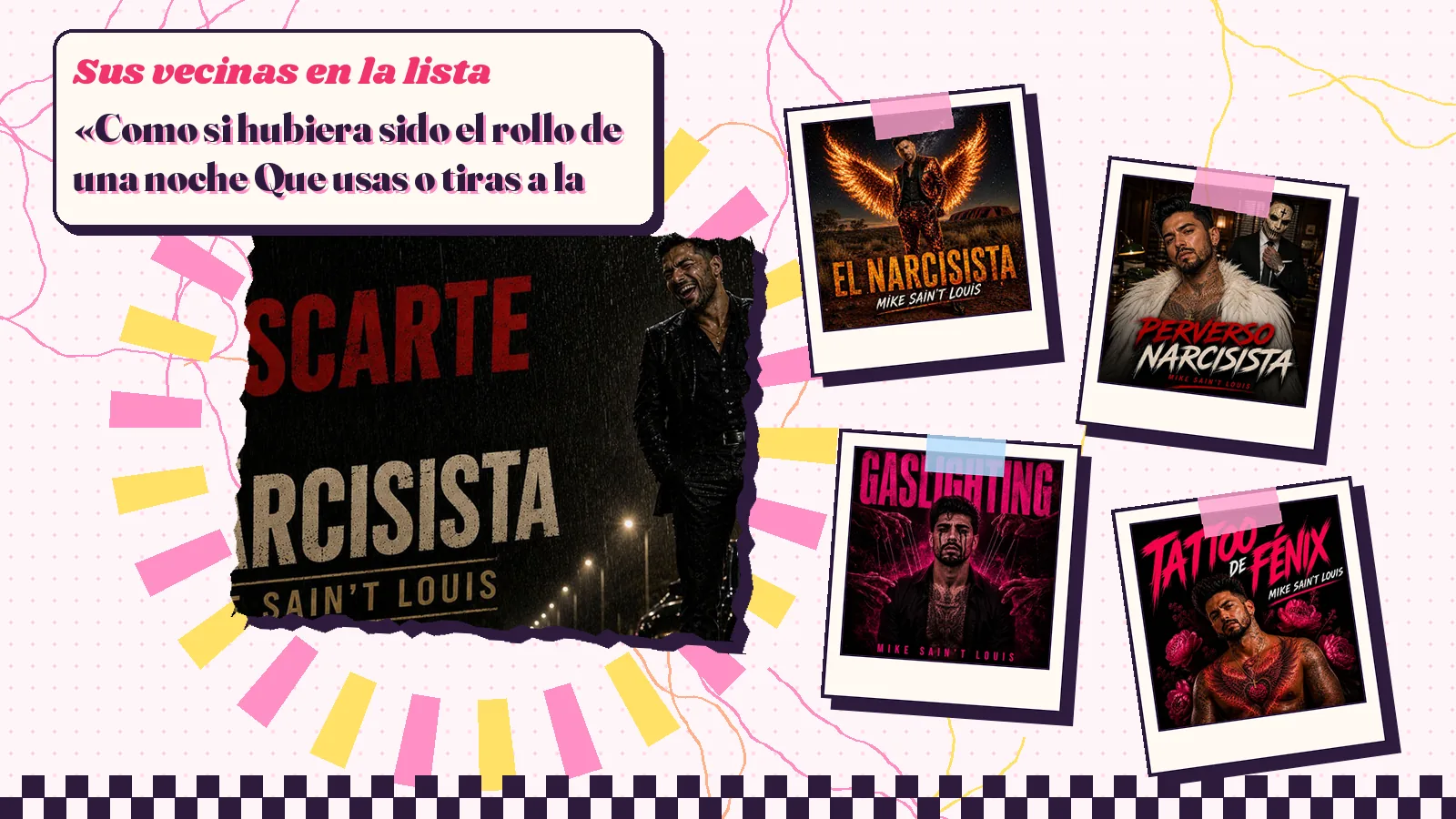
It’s night and it’s pouring with rain on a road. The streetlights trail off in a line into the distance and a dark car has its headlights on. In the foreground, sprawled on the wet tarmac, is a man in a torn, stained blue suit, his cheek pressed to the ground and his tattooed hand open, as if he’d just fallen. Behind him, standing by the car, another man dressed in black leather laughs his head off in the rain, one hand in his pocket. In the top left corner, the title: the word DESCARTE in red, the rest in white.
That’s the cover of «El descarte del narcisista», «The narcissist’s discard», and the image doesn’t leave much to interpretation. One is on the ground. The other is laughing. And the car, engine running, suggests he’s about to leave. Discarding, literally: leaving someone by the side of the road and driving on.
The song is on «Ojalá se pudiera viajar a Gayfolk», the second album of the trilogy, which is explained on the Planeta Gayfolk page. It’s number 80 in the full list of singles. Its page on the blog already says it’s a song of solidarity and that its message fits into three words. Here I want to focus on the moment that makes that solidarity possible: the day two people who have been through the same man sit down, compare what he told each of them and realise it was all lies.
A song written in the second person
The first thing that stands out about these lyrics is who they’re talking to. Not the narcissist, at least not at first. Not themselves either. They speak to someone else: someone crying alone who doesn’t understand anything.
That completely changes the tone of the song. Many heartbreak songs are monologues: I’m suffering, you hurt me, I hope things go badly for you. This one starts like a letter to a stranger. To someone who is right now where the narrator used to be.
And the first line makes it clear: I know you cry too. That too is the key. What connects the two people isn’t an old friendship or a family tie. It’s a shared experience. And the narrator recognises it from the outside, because he has lived it.
The loneliness afterwards
The first verse describes very precisely how someone feels right after a relationship like that. They think no one supports them. That no one understands them. That everyone lies, «incluso tu gente», «even your own people».
That last part seems the most painful to me. When someone has spent a long time with a person who manipulates, they often end up distrusting everyone. Not just the one who hurt them, but their friends, their family, anyone trying to help. If someone you trusted so much was lying to you, why wouldn’t everyone else?
It’s a very cruel side effect. The damage doesn’t stay inside the relationship. It spreads to all the others. And that’s why the person ends up alone just when they most need company.
The inventory of lies
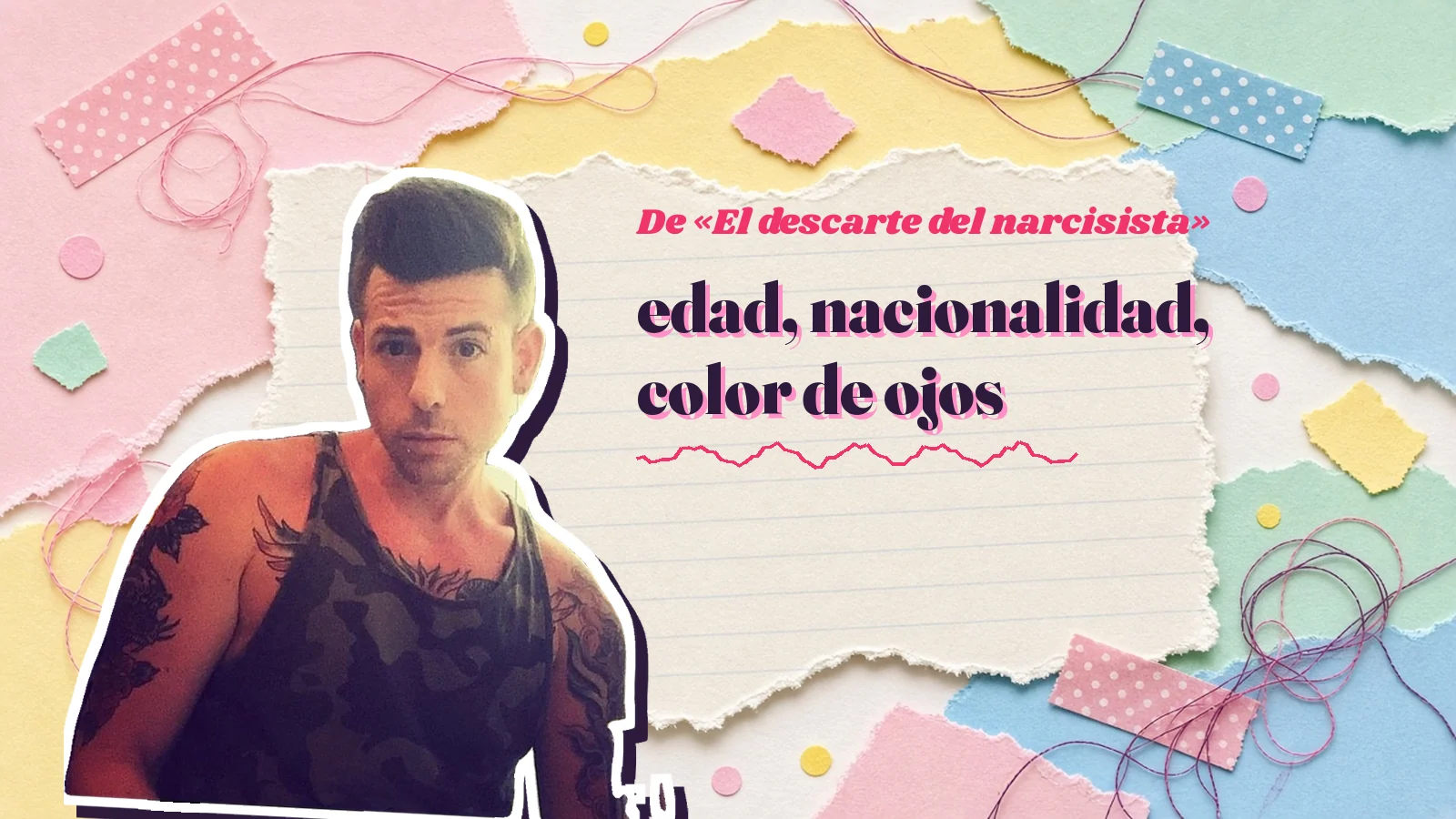
Then comes the part of the lyrics that, for me, is the heart of the song. What’s hardest to accept, it says, is having believed so much falseness. And then it lists: «edad, nacionalidad, color de ojos», «age, nationality, eye colour», the senior position at work, the boss of everything.
It’s a really strange list, and that’s what makes it so powerful. It isn’t about big lies about feelings. It’s about basic facts. Age. Country of origin. Eye colour. Things that normally aren’t questioned. Things you take for granted when you meet someone.
The eye colour strikes me as especially baffling. How do you lie about the colour of your eyes? With contact lenses, filters, retouched photos. It’s a lie you can see, and yet you believe it. And if they lied to you even about that, what’s left that’s true?
Piece by piece
The song’s page says the disillusionment doesn’t come all at once, but piece by piece, and I really agree. But I want to add something: very often you don’t find those pieces on your own. Someone else hands them to you.

That’s what happens when two exes talk. One says: he told me he was this age. And the other replies: he told me a different one. One says: he told me he was from such-and-such a place. The other: he told me somewhere else. And so, fact by fact, the character each of them knew starts to come apart. What seemed like a person turns out to be a costume that adapted to each audience.
That conversation is brutal, but it’s also freeing. Because at last there’s someone confirming what you suspected. You weren’t crazy. You didn’t imagine it. The pieces didn’t fit because they couldn’t fit.
The boss of everything
Let me stop for a moment on the last item on the list: the senior position at work, the boss of everything. It’s a different kind of lie from the others. Age and nationality are facts. Being the boss is an image.
Presenting yourself as someone important, with power and a title, is a very common way to impress. And the lyrics sum it up with an almost childish expression: el jefe de todo, the boss of everything. Like when a kid says his dad is the strongest man in the world. There’s a bit of swagger to it that, seen from outside and from a distance, is almost funny.
But while you’re inside, it isn’t funny. You believe it. And you believe everything that comes with it: that he’s very busy, that he has a lot of responsibility, that that’s why he sometimes doesn’t reply or disappears.
You’re not alone
In the middle of the verse comes the line the song’s page highlights as its central message: ¡no estás sola!, you’re not alone. It comes with an exclamation mark, like a cheer of encouragement. And where it’s placed seems very significant to me.
It doesn’t come at the end, as a conclusion. It comes right after the inventory of lies. First everything that was false is listed. And then the only true thing: I’m with you. It’s as if the song were saying: everything he told you was a lie, but this isn’t.
I really like that structure. In a world where everything seems fake, the song offers a single certainty. And it’s offered by someone with no interest in deceiving you, because they’ve been through the same thing.
Having believed so much falseness
There’s a word in the first verse that seems very important to me and goes almost unnoticed: creíste, you believed. What’s hard to accept, the lyrics say, is that you believed so much falseness. Not that they lied to you, but that you believed it.
That’s one of the most painful traps of the aftermath. Someone deceived like this usually ends up blaming themselves. How didn’t I notice? How could I be so naive? How did I swallow the eye-colour thing? And that guilt adds a second wound on top of the first.
That’s why the song’s structure is so valuable to me. Right after naming that difficulty, someone arrives to say: it happened to me too. If another person was told the same lies and believed them too, then the problem wasn’t your naivety. The problem was someone who lied very well.
Believing the person you love isn’t a flaw. It’s normal. That’s how relationships work: you assume the basics are true. Whoever takes advantage of that is the one responsible, not the one who trusted.
A lie for every audience
There’s another thing that becomes clear when two exes compare notes: the lies weren’t the same for everyone. Each person was told a slightly different version, tailored to what that person wanted to hear.
That explains the lyrics’ strange list. Age, nationality, eye colour, job title. They’re exactly the details you can adjust depending on who’s in front of you. If someone likes older men, you add years. If someone else is drawn to the exotic, you change countries. If someone values success, you get a promotion at work.
It’s a very calculated form of seduction. And seen from outside, there’s something pathetic about it. A character who changes costume for every stage and ends up without one of his own.
How you talk to the next one
The song raises something that in real life is delicate: approaching another person who has been through the same man. And it doesn’t always go well. Sometimes that person is still inside, still believes him, and whatever you tell them sounds like jealousy or revenge.
That’s why I love how the lyrics begin. They don’t start by accusing, or by telling everything they know. They start by saying: I know you cry. First they acknowledge the other person’s pain. Then they offer company. And only after that do they tell their own story.
If you ever find yourself in that situation, maybe that’s a good guide. Listen first. Then be there. And share your side only if the other person wants to hear it.
What’s left when the character falls
When the whole inventory collapses, an uncomfortable question remains: who did I love, then? If the age was false, the country was false, the job was false and even the eyes were false, who did I fall for?
The answer, however hard, carries some relief. You fell for someone who didn’t exist. A character built to your measurements. And that means what you felt was real, but its object wasn’t. Your ability to love is intact. What’s broken is a piece of fiction.
I think it’s an important idea for anyone in the crying-alone phase. You haven’t lost the love of your life. You’ve lost a costume. And the love you put into that costume is still yours, to give one day to someone whose eyes really are the colour they say.
What the discard is
Then the lyrics explain how the narrator knows all this: he applied the discard to me too. And they define it with a precision I find very useful: the most absolute indifference, as if it had all been a one-night fling, something you use and throw in the bin.
In popular writing about relationships with narcissistic people, there’s often talk of a three-stage cycle: first idealisation, when you’re put on a pedestal; then devaluation, when the criticism and contempt begin and you feel you can’t do anything right; and finally the discard, when suddenly you stop existing. It isn’t a break-up with conversations and explanations. It’s a silence.
What the lyrics capture so well is that the discard isn’t experienced as an ending, but as an erasure. Months or years of a relationship treated as if they never happened. As if you were a one-night stand whose name he can’t even remember. And that hurts in a very particular way, because you don’t just lose the relationship: you also lose the confirmation that it existed.
The cover, again
I go back to the image of the road because now it makes more sense. The man on the ground isn’t fighting anyone. There are no blows. He’s just lying there, like something that fell out of a car. The other man isn’t attacking him. He’s laughing, and he’s about to leave.
That’s the discard. It isn’t visible aggression. It’s an indifference that leaves you by the roadside. And the laughter of the man in black leather adds the worst part: he doesn’t just leave you, he seems not to care. Or to find it funny.
The rain matters too. Everything is wet, gleaming, cold. It’s the most miserable night possible to be left lying on a road. And no one stops. Not even the car, which has its headlights pointed at the man on the ground and does nothing to help him. The light is there, but it isn’t there to rescue anyone. Only to light up the scene, as if the one laughing wanted a good look.
The consequences, unvarnished
The lyrics don’t hide what the discard leaves behind. They talk about someone who cries every day. And the narrator says the discard has left him on antidepressants.
I think it’s important that a song says this so matter-of-factly. For a long time, talking about antidepressants has been treated as something shameful, something to hide. Here it appears in the middle of the lyrics, without drama, as just another fact. And for anyone in the same situation, that takes a lot of weight off. Taking medication prescribed by a professional isn’t a failure. It’s a way of looking after yourself.
If you’re going through something similar and haven’t talked to anyone, this is a good moment. With someone you trust, with your GP or with a mental health professional. What this song describes can be treated, and you don’t have to get through it alone.
A hum in the middle of the rage
Between the solidarity part and the rage part there’s a passage with no words. Just a murmur of m’s, several lines of it. It’s a small detail, but I find it significant that the published lyrics include it.
It works like a pause. Like when someone goes quiet before saying something difficult. After the humming, the tone of the song changes completely. What comes next is no longer comfort. It’s anger.
The rage, unfiltered
The last part of the lyrics is pure rage. The narrator stops talking to the other person and speaks directly to the narcissist. There are insults, very specific reproaches and a warning: when I’m better, you’d better be far away.
I like that the song isn’t ashamed of that rage. Very often, people who have been through something like this are asked to be understanding, to forgive, to move on gracefully. And that’s fine, when it’s possible. But before that there’s usually a phase of anger that is legitimate too. And it’s better to let it out in a song than to swallow it.
Notice too the promise at the start of that section: everything in this life comes around, sooner rather than later. It’s a way of saying that karma, justice or whatever you want to call it will get there in the end. It doesn’t say how or when. Just that it will.
The heavy words
The lyrics call the other man a psychopath and a narcissist. I want to say something about those words, because they’re used a lot and not always carefully. In a song like this they work as insults, as the language of rage. They aren’t a diagnosis.

Diagnosing a personality disorder is a job for professionals, after an assessment. What anyone can do is recognise behaviour that hurts them: the lies, the contempt, the indifference, the erasure. And walk away from it. You don’t need a label for that. It’s enough to know what you’ve lived through.
I’ve talked about the word narcissist in other songs, such as «El narcisista» or «Perverso narcisista», and about manipulation in «Gaslighting». This song stands apart from all of them for one very specific reason: it’s written for the next person.
The campest threat
The song ends with a threat that is both deadly serious and a total joke: telling everything on a TV show or writing a book with the other man’s story. The song’s page calls it the campest threat imaginable, and I can’t think of a better way to put it.
It’s the fantasy of so many people who have been through something like this: that everyone finds out what happened. Not exactly for revenge, but for justice. So that the official version, the one with the charming character, stops being the only one.
And in a way the song already does it. No TV studio needed. The song itself is that alternative version, told to anyone who wants to listen.
The final shout
And to close, a single word: ¡pelota! With an exclamation mark. It’s a very castizo ending, very street. After so much hurt and so much anger, the song ends with an almost affectionate insult, the kind you’d hear in a school playground.
I find it really funny that it ends like this. What’s more, pelota is also what Spanish calls someone who sucks up, the flatterer, the one who cosies up to the boss to look good. And it fits the boss-of-everything character perfectly: someone who lives to impress and to be liked by whoever suits him. It takes the air out of everything. After the psychopaths, the narcissists and the antidepressants, suddenly: pelota. As if the narrator decided, in the end, that the other man doesn’t even deserve a bigger insult.
Between a phoenix and a diva
In the list of singles, «El descarte del narcisista» comes right after «Tattoo de fénix», «Phoenix tattoo», and right before «Malena». It seems a very well-chosen neighbourhood to me, even though nobody chose it: the phoenix, which rises from its ashes, then this song of roadsides and rain, and then a song dedicated to a diva.
Read as a sequence, it almost makes narrative sense. You’re left lying on the road. You promise yourself you’ll get up again, like the phoenix. And then you look for someone to be like, someone who shines without asking permission.
For the next one
«El descarte del narcisista» is for anyone crying alone right now without understanding anything. For anyone just starting to discover that the eye colour, the country and the job title were made up. For anyone who has stopped trusting even their own people.
And it’s also an invitation: if you’ve ever been through something like this, think of the next person. Maybe they don’t need you to tell them anything. Maybe they just need to hear three words.
As a lyricist, I really like that this song doesn’t stay stuck on me, me, me. I call myself «the first AI songwriter» because I make the music and vocals with artificial intelligence, but these lyrics were written so that someone I don’t know feels a little less alone. It’s free in downloads.
If this subject hits close to home: in the series «Mental health without taboo» I talk openly about my mental health (narcissistic abuse, the bullying and abuse I suffered as a child, my diagnosis at 41, and therapy) and gather where to find help. If you're thinking about suicide, call 024 in Spain, or your local emergency number elsewhere.
Frequently asked questions
Which album is «El descarte del narcisista» on? On «Ojalá se pudiera viajar a Gayfolk», the second album in Mike Sain't Louis’s GAYFOLK trilogy. It’s number 80 in the full list of singles.
What is «El descarte del narcisista» about? About someone who, after being discarded by a man who lied to him about everything, reaches out to another person who has been through the same thing to tell them they’re not alone. It ends with a burst of rage against the one responsible.
What does «descarte» mean in the song? The lyrics define it as the most absolute indifference, as if the whole relationship had been a one-night fling. In popular writing about narcissism, the term names the abrupt, cold end of a relationship after the idealisation and devaluation stages.
What’s on the cover? A man in a torn blue suit lying on a wet road at night in the rain, while another man dressed in black leather laughs beside a car with its headlights on.
Who made the song? The lyrics are by Mike Sain't Louis, lyricist, composer and music producer from Madrid. The music and vocals were made with artificial intelligence tools. The characters in the lyrics are invented.