
By Mike Sain't Louis ·
«¿Cómo soy tan tonto?» The questions I don't expect you to answer
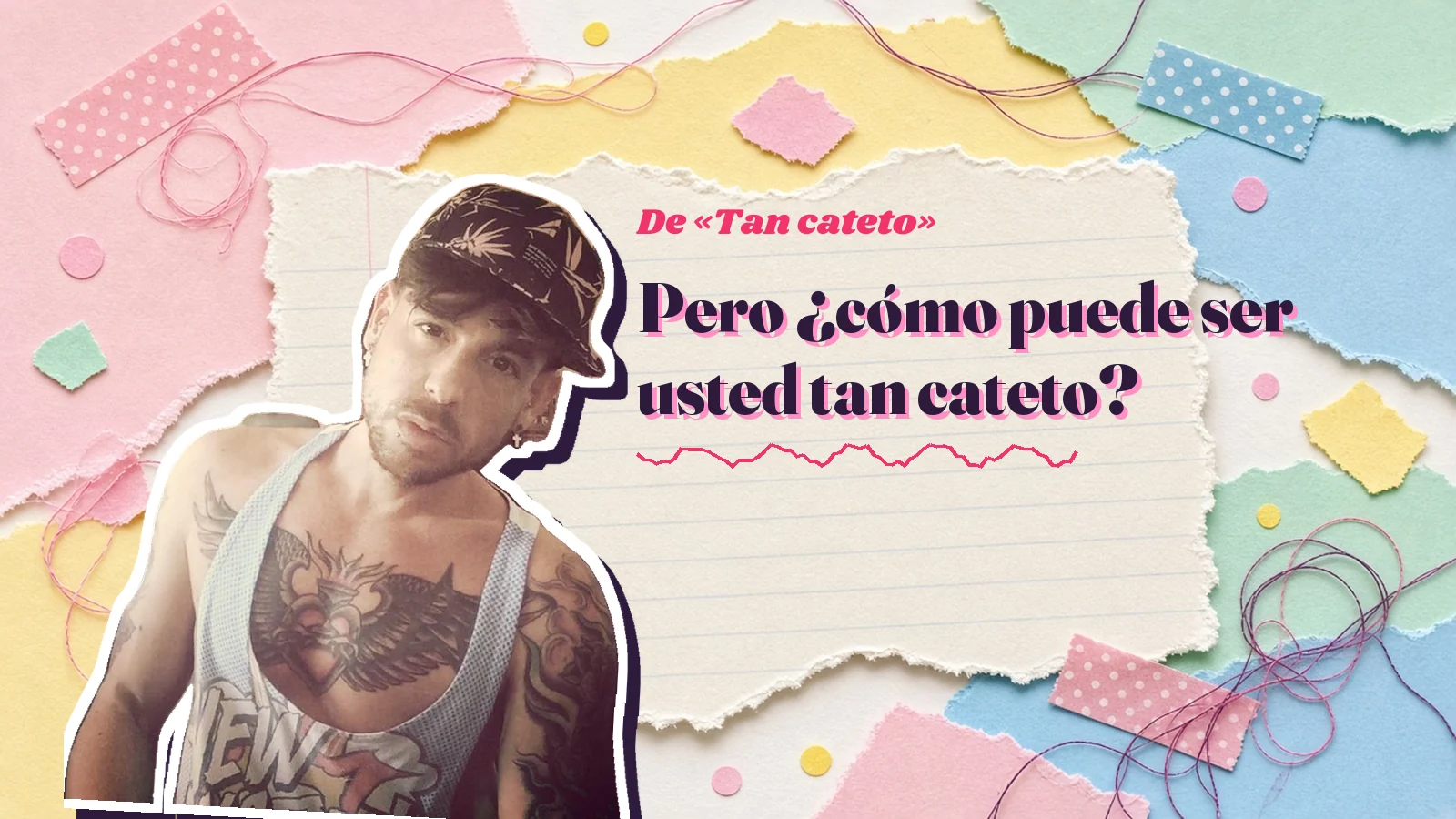
«Pero ¿cómo puede ser usted tan cateto?» («But how can you possibly be such a yokel, sir?»)
It isn't a question. Nobody expects the man who pointed at you in the street to stop, scratch his chin and reply: «Well, you see, that's how I was brought up». It's a slap with question marks. An insult wearing gloves. And in «Tan cateto», the song that raced round TikTok and that loads of people know without knowing whose it is, that question comes back like a chorus, taking turns with its identical twin: «Pero ¿Como puede ser usted tan paleto?» («But how can you possibly be such a hick, sir?»).
Notice the usted, the formal «you». I don't call him tú. I address him with the courtesy of a tax-office counter. And that makes the question even harsher, because the formal respect underlines the real lack of it. It's like when an old lady at the market tells you «usted verá lo que hace», suit yourself, sir. It sounds polite. It isn't.
I went looking for questions in my lyrics and they're everywhere. Questions to exes, to haters, to myself, to the audience, to life. And almost none of them wants an answer. That's what this piece is about. The questions I ask without wanting a reply.
You, sir, such a yokel
I'll start with «Tan cateto» because it's the most public thing I have and because it explains beautifully what a rhetorical question is for in a song.
The lyrics open with a list of other people's irritations. It bothers you that we hold hands. It bothers you that my boyfriend is African. It bothers you that your kids see a kiss. My face bothers you. Every line is an accusation the other man hasn't made out loud, but you can see it in his eyes. And after each block of irritations, the question.
The question, there, works like a mirror. I don't explain to the yokel why what he thinks is wrong. That would be giving him a lecture, and the lyrics make it clear: I'm not giving him any more explanations. I ask him how he can be like that. I hand him back his own reflection with a question mark in front of it. Let him look at himself.
That's the door-slam question. A question so you don't have to argue. And it has a huge advantage over a statement: you can't rebut it. If I say «you're a yokel», he can say no, he isn't. If I ask how he can be one, I've already taken it as read that he is, and all I've left him is to go looking for the cause. It's a grammatical trap. I love it.
How can I be so stupid?
There's another question I repeat all the time, and it points the other way. At me.
«La casa de los mil cadáveres» starts with it: «Pero ¿Cómo soy tan tonto?» («But how can I be so stupid?»). And a few lines later, the extended version: «Pero ¿Cómo soy tan fracasado?» («But how can I be such a failure?»). It's the same structure as «Tan cateto», the same «but how can…?», except this time the yokel is me.
That question is pure self-parody. I insult myself before anyone else gets the chance. And I do it with the same formula I use on everyone else, which is rather funny: I treat myself no better than the man pointing at me in the street. I get in the same queue.
And then there's something else. «How can I be so stupid?» is the question anyone asks once they've realised, too late, that they were being played. It isn't a question to answer. It's a question to smack your forehead with. It's what you say out loud in the kitchen, on your own, hand over your face. And putting it in a song turns that ridiculous, private moment into something a crowd can shout together. Which, by the way, is what happens at parties: everyone yells «how can I be so stupid?» at once, and suddenly you're not the only idiot. You're one of many.
Was this a cruise or a funeral parlour at sea?
Some questions exist only to get a laugh. They're comedy-club questions.

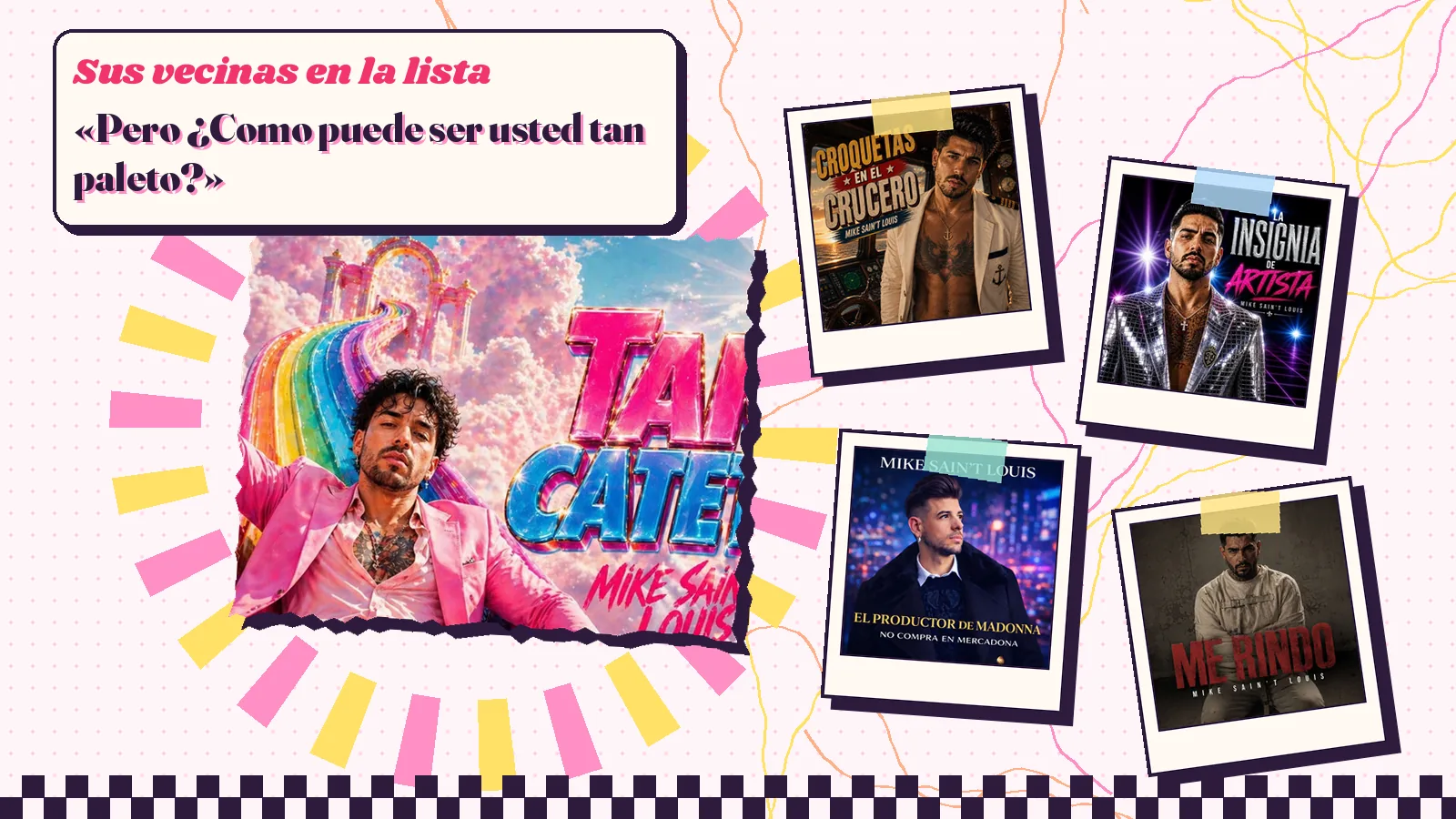
In «Croquetas en el crucero», after a list of holiday disasters, the lyrics come out with: «¿Esto era un crucero o un Tanatorio de alta mar?» («Was this a cruise or a funeral parlour on the high seas?»). And the answer, because this one does get an answer, is even better: «No lo sé, pero hay sardinas en el minibar» («I don't know, but there are sardines in the minibar»).
That question-and-answer pair is a stand-up routine in miniature. You set up an absurd either-or. And instead of resolving it, you go off at a tangent with a concrete detail that's even more absurd. The joke isn't in the question, it's in the answer that doesn't answer.
I love using that mechanism because it defuses the complaint. If I start describing how awful the cruise was, I sound like a tiresome customer. If I turn it into a question, then answer it with sardines, it sounds like an after-dinner story you tell twenty times and that still gets a laugh every time.
Talent or cheque book?
Some questions aren't mine. They get asked of me. And I copy them into the lyrics word for word, so they can be heard.
In «La insignia de artista» someone with music-industry contacts examines me with two questions: «¿Eres talento o talón?» and «¿Eres revolucionario o eres talonario?». Talent or cheque? Revolutionary or cheque book? They're wordplay questions, like an oral exam for some imaginary civil-service post. And behind them sits a very specific suspicion: that my work doesn't count because I use artificial intelligence for the music and the vocals. That I'm not an artist, I'm an algorithm.
Copying the questions of whoever's judging you is a way of disarming them. Said by him, in a meeting, they weigh a ton. Dropped into my song, with their easy rhyme and their know-it-all tone, they look like what they are: the party trick of someone who hands out membership cards. Talent or cheque. Revolutionary or cheque book. As if there were only two boxes to tick.
And then the lyrics turn it round. They don't answer. They shrug. At the end of the song there isn't even a victory: there's a «no sé, creo que ya me rindo» («I don't know, I think I give up»). Because some questions aren't answered by winning. They're answered by walking out of the room.
Seriously?
There's a two-word question (one word, in Spanish) that's probably the most me of all.
In «El productor de Madonna no compra en Mercadona», between one explanation of how I use AI and the next, the lyrics drop a «¿Qué / Talento? / ¿En serio?» («What / Talent? / Seriously?»). Just like that, chopped up. One word per line. Like someone so taken aback they can't get whole sentences out.
«Seriously?» is the question of weary indignation. It isn't fresh anger. It's recycled anger, from someone who's heard the same thing a hundred times and no longer has the energy for a speech. Just enough to raise an eyebrow. And in a song where I spend the whole lyric proving that what I do isn't a con, that «seriously?» sums up the exhaustion of constantly having to justify yourself.
In «Me rindo» the same question opens a much longer one: «¿En serio, a las personas narcisistas no os duele la sangre ni un tres por ciento?» («Seriously, you narcissists, doesn't your blood hurt even three per cent?»). Here the «seriously» is almost a plea. I don't get it. I honestly don't get it. Doesn't anything hurt you? Not a bit. Not even three per cent. The figure is what turns it into a joke, but the question is real.
Was all of that just bloopers?
Some questions aren't aimed at anyone. They're aimed at memories.
«Me rindo» also contains what is, for me, the most painful question in the whole catalogue. After listing the good times, the trips to the village, walking the dogs, the Christmases, a «ven aquí, no llores» («come here, don't cry»), the lyrics ask: «¿Todo eso eran tomas falsas de La que se avecina o de Caso cerrado?» («Was all of that just bloopers from La que se avecina or Caso cerrado?»). That's a Spanish sitcom and a daytime courtroom show, in case you're not from round here.
That question has an answer I don't want to hear. That's why it's a question. If I turned it into a statement, «all of that was bloopers», it would be a verdict. As a question, there's still a gap left for doubt. For thinking that one of those moments might have been real. The question protects the little that's left.
And then there's the TV detail. Comparing your life to the outtakes of a sitcom or an afternoon courtroom show is a way of laughing at the thing that's breaking you. If they were bloopers, at least they were funny. At least somebody laughed.
In «Envejecer» the question is the ex's, not mine. He used to ask it while he was cheating on me: «¿Por qué me preguntabas si me imaginaba los dos viejitos cogidos de la mano?» («Why did you ask me if I could picture the two of us old, holding hands?»). Here the question folds in on itself. I ask why he asked. It's a question about a question. And it has no answer, because the only person who could give one is the person who's told the least truth.
Remember what I told you?
Some questions are warnings tied with a bow. Reminders with bad intentions.
In «El narcisista», once the song has told the whole story of the damage, the frozen heart and the lies to his colleagues, along comes this: «¿Recuerdas lo que te dije sobre el karma?» («Remember what I told you about karma?»). And without waiting, the answer: «Pues aquí lo tienes» («Well, here it is»).
That's the question of the mother who warned you you'd fall off your bike. Of the friend who told you that boy was no good for you. It isn't asking whether you remember. It knows perfectly well you do. What it does is put in front of you the moment you could have changed something and didn't. It's a question with a crooked smile.
I really love it because it's a bit theatrical. Like in a film when the villain turns round slowly and says «remember me?». The whole scene freezes. And then the blow lands. In the song the blow is karma, which in my catalogue always turns up sooner or later, sometimes with its vowels stretched to infinity.
I don't know if I believe in karma. I know I adore asking someone whether they remember that I warned them.
And who the hell asked me to?
Some questions are pure inner monologue. The ones you ask yourself when you've got yourself into a mess all on your own.
«El señor Garrison» is full of them. «¿Y quién diablos me manda abrir el ordenador?» («And who the hell asked me to open the laptop?») «¿Y quién diablos me manda saber de enrutación?» («And who the hell asked me to know about routing?») «¿Acaso es que tal vez soy masoquista?» («Could it be that maybe I'm a masochist?») The protagonist is testing his boyfriend with computer tricks instead of watching a horror film in his room, and he scolds himself with questions straight out of his gran's mouth.
I love those questions because they're the ones we all ask when we catch ourselves doing something ridiculous out of jealousy. Checking what we shouldn't. Investigating like detectives in a cheap TV series. And instead of justifying ourselves, we ask who on earth told us to. The question is your conscience talking in a village accent.
And the best bit of that song is that, in the end, the investigation pays off. The boyfriend was organising a hook-up. So the «who asked me to» questions lose their point. Intuition asked him to. And intuition, sadly, was right.
Will artificial intelligence ever manage?
There's one question in my catalogue that isn't rhetorical at all, even though it looks it. It's the most serious question I've asked about my own way of working.
«El segundo exacto» begins by letting the person who looks down on what I do have his say: that's artificial intelligence, you press a button and that's that, who cares about your emotions. And in the middle of the mockery, without changing tone, this appears: «¿Será que podrá la inteligencia artificial escoger el segundo exacto donde rompiste a llorar?» («Will artificial intelligence ever be able to pick the exact second you burst into tears?»).
I don't answer it. No need. That question holds my whole reply to the people who think this is pressing a button. The tool helps me with the music and the vocals. But the exact moment, the exact line, the word that makes someone crack when they hear it, I choose that. That comes out of a life, out of some bad nights, out of a notebook. The lyrics are mine. And what gets decided in them is mine too.
What I like about leaving it as a question is that it forces the critic to think. If I tell him «AI can't choose the second you cried», he'll argue. If I ask him whether it ever will, he goes quiet for a moment. And in that moment, which is very short, sometimes something shifts.
Who'll be the next mug?
Some questions look ahead. Towards the next victim.
In «No quiero otro novio cojín», once the story's been declared over, the lyrics start imagining the ex's future and blurt out: «¿Quién será el próximo pardillo?» («Who'll be the next mug?»). It's a nosy-neighbour question. The woman who peeks out of the window when she sees a new car pull up. And at the same time it's a question full of pity, because whoever asks it knows exactly what's waiting for the next one.
The word pardillo, mug, sucker, is key. It isn't victim, or poor boy, or innocent. It's mug, which is what we call ourselves when we've been taken for a ride. By asking about the next mug, I'm calling myself a mug too. Self-parody again, tucked inside a question about somebody else.
And then the lyrics answer, more or less. There'll be another one he's made fall in love with. He'll have clocked his money first, his properties, his car. It's an answer that doesn't close the question. It stretches it. Like when you ask a friend how the ex is getting on and she tells you far more than you wanted to know.
Easier to be straight?
And there's one question I asked in a song that still unsettles me a little when I reread it.
In the set-up for «Hetero», after a night that goes wrong before it's even started, this appears: «¿sería más fácil ser hetero o simplemente más fácil no ser yo?» («would it be easier to be straight, or just easier not to be me?»). The first half is the joke we've all made at some point after a bad date. The second half is no joke at all.
That question interests me because it starts in one place and ends in another. It starts with orientation and ends with your whole identity. It isn't «would it be easier if I fancied women?». It's «would it be easier not to be me?». And that's a question a lot of people have asked themselves on very dark nights.
There's no answer, of course. Or the answer is no, it wouldn't be easier, it would just be another life with other problems. But the question is there, in the middle of a tacky scene with wine and cheese, and it feels honest to leave it in. Because the hardest questions don't arrive at solemn moments. They arrive on the landing, bottle in hand, in front of a closed door.
Are you coming with me?
Not all my questions are reproaches or jibes. Some of them are invitations.
«Elon Musk ha anunciado» opens on a grey routine: waking up alone, bitter coffee, tasteless job, nameless streets. And suddenly, the absurd news: a billionaire announces the first crewed flight to a newly discovered planet called Gayfolk. And the protagonist doesn't think twice: «Yo ya me he apuntado ¿Te vienes conmigo?» («I've already signed up. Are you coming with me?»).
That's probably the most important question in the whole trilogy. Because it's the one the entire project is built on. Planeta Gayfolk is exactly that: an invitation to a place where everyone can live just as they are. And an invitation is always a question. It isn't imposed. It's offered.
The lovely thing is that this question does want an answer. It's the only one in the catalogue I genuinely want answered. I ask the others to shut doors. This one is to open a spaceship.
Why does it feel like nothing matters any more?
And there's one last family of questions: the ones I really ask myself, with no joke and no addressee.
«Ni un pimiento» begins like this: «¿Por qué parece que nada importa ya?» («Why does it feel like nothing matters any more?»). It isn't rhetorical. It's the question of a grey day, one of those days when nothing matters and you don't know why. Then the lyrics wander off elsewhere, laugh, turn cheeky. But the opening is sincere.
There aren't many of those questions and I don't underline them. I don't put exclamation marks after them or repeat them in a chorus. I leave them there, at the start, like leaving a door ajar. If the listener wants to come in, in they come. If not, the song carries on and talks about out-of-date peppers.
Why I ask so much
Reading all this back, I realise the question is one of my favourite tools. And I think I know why.
A rhetorical question lets you say strong things without stating them. I can call someone a yokel without calling him a yokel. I can doubt my memories without condemning them. I can laugh at myself without sinking. I can invite without forcing. It all depends on the tone, on who it's aimed at and on what comes next.
And a question has something else I love: it drags the listener in. When you hear a statement, you receive it. When you hear a question, even one that isn't meant for you, something in your head tries to answer it. How can he possibly be such a yokel? And suddenly you're thinking of your own yokel, the one from your neighbourhood, from your family, from the supermarket queue. The question makes you take part. It's the cheapest way to turn a song into a conversation.
And there's something of how people talk round here in it. «¿Pero tú has visto esto?» Have you seen this? «¿En serio?» «¿Cómo puede ser?» How can that be? It's a very Madrid way of arguing: asking out loud, with your hands, without expecting the other person to answer. And if that's how I talk at the bar, that's how I write my songs.
The question I ask myself
I've got one question left, and this one really is for me. Why do I almost never answer?
I suppose because answers close things and questions open them. A song that answers everything is over when it's over. A song that asks stays with you afterwards, going round and round in your head on the metro. And I'd a thousand times rather a lyric of mine kept going round in your head than you understood it first time and forgot it.
All these questions are in the lyrics archive, in case you want to find yours. And the yokel one, with the usted and the accusing fingers, is there in full on gayfolkplanet.com.
Are you coming with me?
That one, answer.
Frequently asked questions
Why are there so many questions in Mike Sain't Louis's lyrics? Because the rhetorical question lets him insult politely, laugh at himself, doubt his memories or invite someone without imposing anything. Almost none of them expects an answer; the exception is the invitation to Gayfolk.
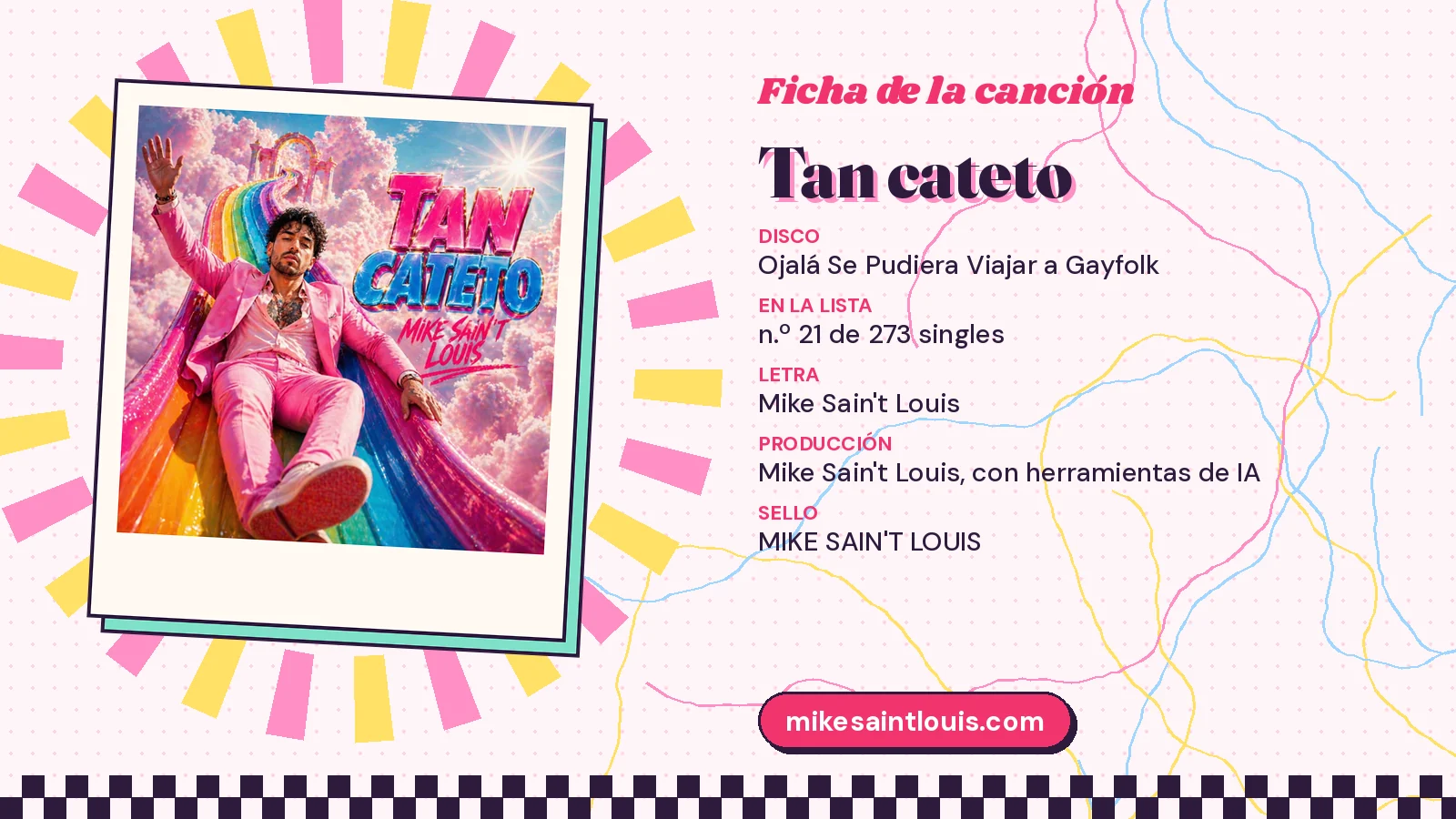
What is «Tan cateto» about? It's a reply to people who are bothered by two men holding hands or a kiss in the street. Instead of giving explanations, the lyrics ask over and over «¿cómo puede ser usted tan cateto?» («how can you possibly be such a yokel, sir?»). It's on «Ojalá se pudiera viajar a GAYFOLK», the second album of the trilogy. The lyrics are Mike's; the music and vocals are made with artificial intelligence tools.
Which song invites you to travel to Gayfolk? «Elon Musk ha anunciado», in which the protagonist signs up for an imaginary flight to the planet Gayfolk and asks: «¿Te vienes conmigo?» («Are you coming with me?»).