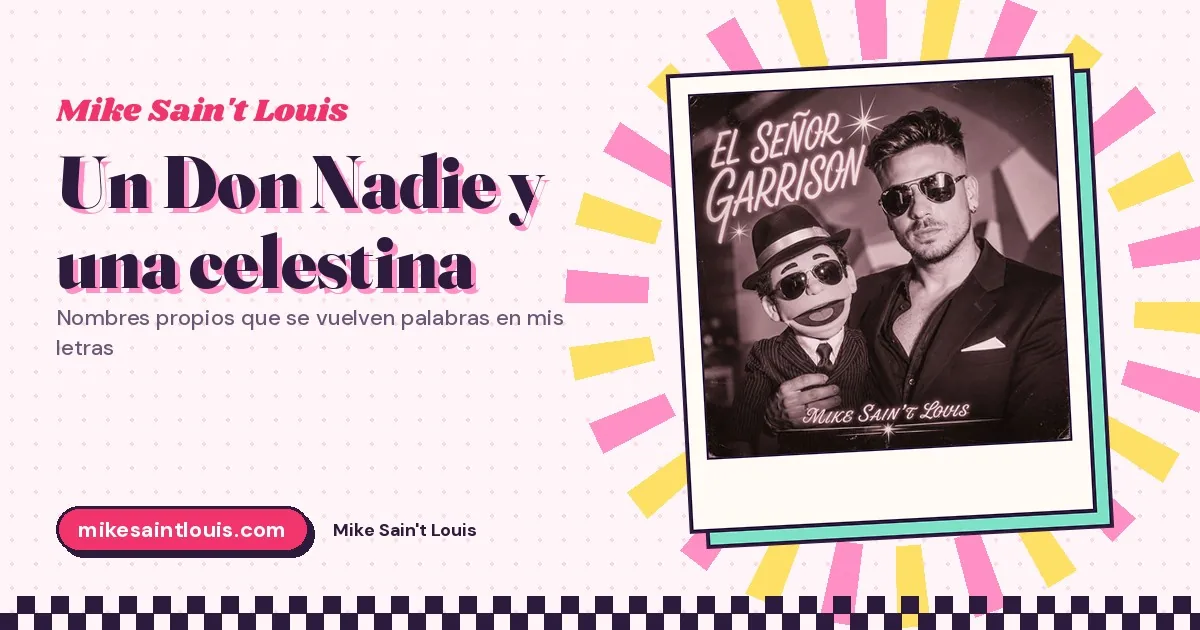
By Mike Sain't Louis ·
«Un Don Nadie» and a celestina: proper names that turn into words in my lyrics
Some names get tired, one day, of belonging to someone.
They start out as the property of a single person, real or invented, with a birth certificate or a premiere episode. And little by little they come loose. First they're used to compare. Then to insult or to praise. And in the end they lose their capital letter and enter the dictionary like any kitchen word, with nobody remembering who the owner was.
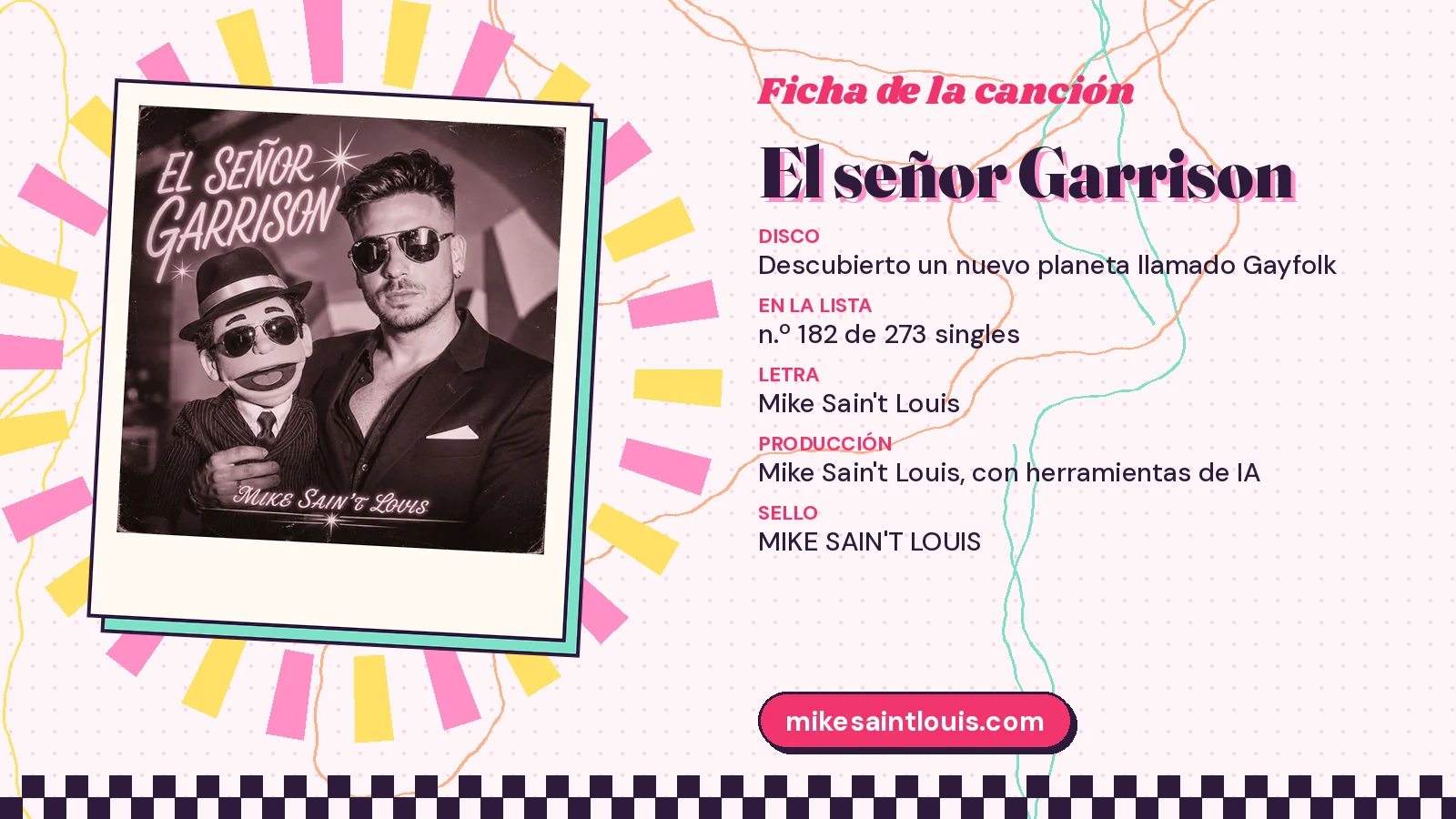
My lyrics are full of names halfway through that process. In «El señor Garrison», from the album «Descubierto un nuevo planeta llamado GAYFOLK», the chorus opens with a prophecy: «Voy a acabar como el señor Garrison», I'm going to end up like Mr. Garrison. Nobody who hears that line thinks I'm going to teach at a school in Colorado. What they understand is something else: that I'll end up alone, talking to a puppet, turned into a cartoon of myself. The character's name no longer points to the character. It points to a fate. (The full lyric is on gayfolkplanet.com.)
This piece is about that. About how a proper name becomes a common word, why I do it so much when I write, and what is gained and what is lost when someone is reduced to a label.
A figure with a Greek name
Classical rhetoric gave this a name many centuries ago: antonomasia. The word comes from Greek and means, roughly, naming instead of another. It's using a proper name as if it were a common one, or the reverse, a nickname or a quality in place of the proper name.
It works both ways. When people in Spain say el Manco de Lepanto, the one-handed man of Lepanto, everyone knows we mean Cervantes, even though his name never appears. That's antonomasia going one way. And when someone is called a quixote, because they fight windmills nobody else can see, the character's name has become a way of describing anyone. That's antonomasia coming back.
What interests me most is the second kind. The one that takes a name and turns it into a mould. The one that says someone is a Judas, a Celestina, an Adonis or a Narcissus, and tells a whole story in a single word.
Because that's the trick of it, forgive the word: a proper name used like this carries a novel, a film or a myth inside it, and saves you telling it. You don't need to explain that this person betrayed a friend for money. Saying Judas is enough. You don't need to describe a man who collects conquests and abandons them. Saying donjuán is enough.
For someone who writes songs, where every line has to fit in a few bars, that's gold. It's compression.
A whole plot in three syllables.
The dictionary is full of people
Open the Royal Spanish Academy's dictionary with this in mind and it suddenly fills up with people.
Celestina, in lower case, is a go-between, someone who arranges other people's love affairs. It comes from the old woman in the «Tragicomedia de Calisto y Melibea» by Fernando de Rojas, published at the end of the fifteenth century, who became more famous than the lovers themselves and gave her name to the whole work. Donjuán, written as one word, is a seducer of women, after the character Tirso de Molina set down in «El burlador de Sevilla» and José Zorrilla turned into the Tenorio in 1844. Tenorio, by the way, has also become a common noun.
A lazarillo is someone who guides a blind person, after the boy in the anonymous novel of 1554. Something quijotesco is idealistic to the point of absurdity. A benjamín is the youngest child, after the youngest of Jacob's sons in the Bible. A mecenas is a patron of artists, after the Roman Gaius Maecenas, who did exactly that for Virgil and Horace.
And then there are the ones that come from real people with a first name and a surname. Boicot, boycott, comes from Charles Boycott, an Irish land agent whose neighbours in 1880 stopped talking to him, selling to him and working for him. The guillotine carries the surname of a French doctor, Joseph-Ignace Guillotin, who proposed a method of execution he considered more humane and never wanted associated with his name. The sandwich is credited to an English Earl of Sandwich who ate bread with meat so he wouldn't have to leave the table.
My favourite of all is the rebeca. In Spain that's what we call a buttoned knitted cardigan, and the Academy explains it through Alfred Hitchcock's film «Rebecca», from 1940. The odd thing is that Rebecca never even appears in that film: she's the first wife, already dead, and the one who wears those cardigans is the heroine. In other words, a Spanish garment carries the name of a woman who never shows up on screen. If that isn't a song lyric, I don't know what is.
Pinocho in lower case
In my songs there's one case where you can see the process exactly halfway.
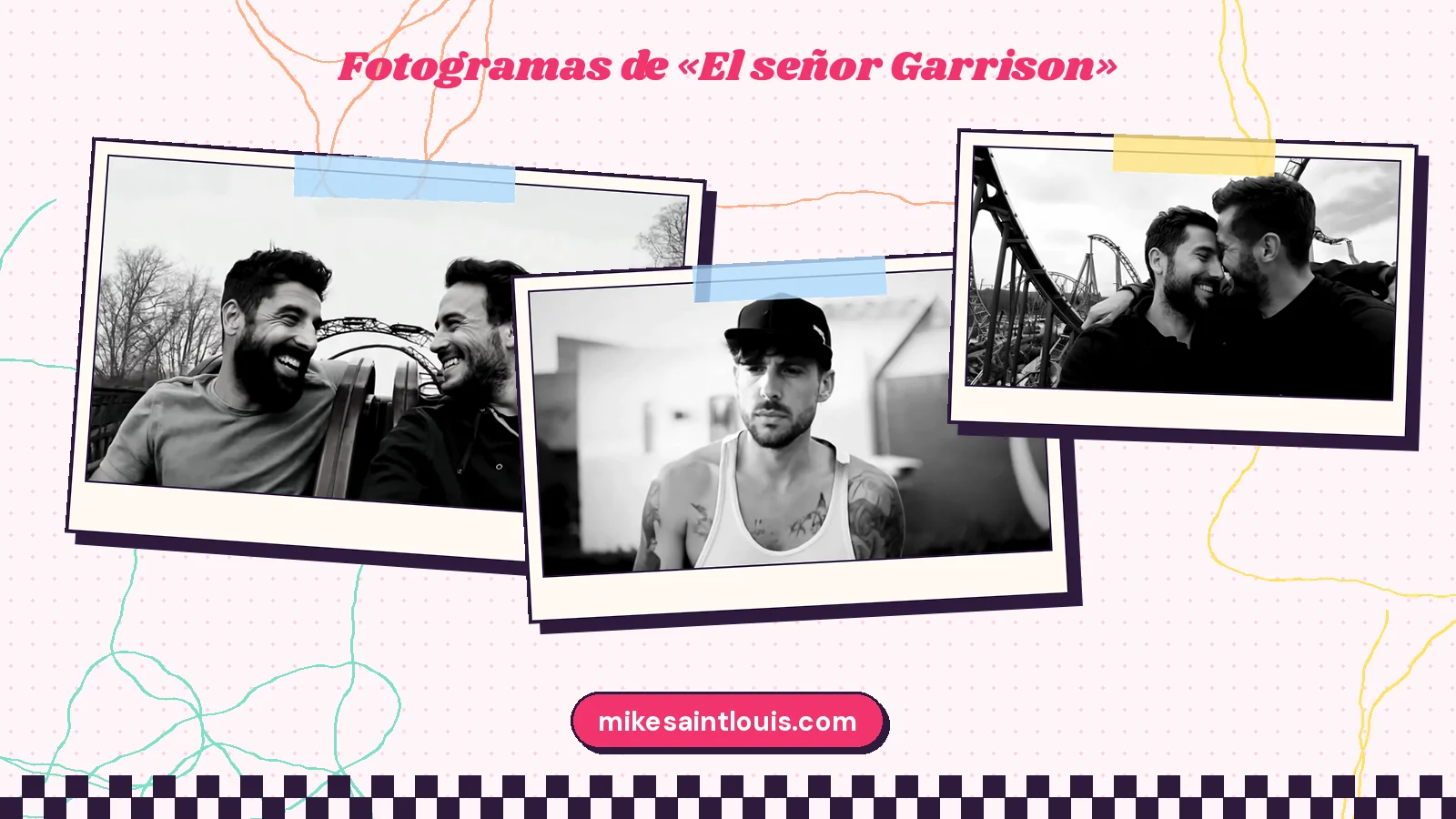
In «En un musical gay», at the end, the lyric sketches a character quickly and finishes him off with a string of labels. One of them is written like this: «Un pinocho», a pinocchio. In lower case. With an indefinite article in front, the way you'd say a liar or a show-off.
That small typographical detail says a lot. Pinocho, with a capital, is Carlo Collodi's wooden puppet whose nose grows. A pinocho, in lower case, is anyone who lies so much it shows. The name has stopped being a name. It already works as an adjective, just like celestina or quixote.
As far as I know, the academic dictionary doesn't yet record pinocho in that sense. But on the street it exists. And songs, like street talk, are always ahead of dictionaries. First people say it in the bar, then someone writes it into a lyric, then it turns up in the newspapers, and one day, with luck, it enters the dictionary with its definition and its etymology.
In another song, «Ese pinocho nunca me comía el chocho», the puppet makes it all the way to the title. Lower case in intention too. I'm not talking about an Italian puppet. I'm talking about someone who didn't tell the truth, and the puppet's name saves me explaining it.
Es un Don Nadie
The same musical song holds another of my favourite expressions in Spanish. Someone asks who that is walking past. And the answer is curt: un Don Nadie, a Mr. Nobody.
Don Nadie is antonomasia in reverse. It doesn't take a proper name to describe someone. It takes the word nadie, nobody, and dresses it up as a gentleman. It gives it the honorific don, once reserved for nobles and people of means, and sticks it onto nothing. The result is a perfect mockery: a gentleman made of emptiness.
The dictionary defines it as a person of little worth or little renown. But in the mouth it has more bite than that. Calling someone a Don Nadie is telling them they think they're important and they aren't. That they go through life with their chest puffed out and there's nothing behind it.
I like it for a more private reason too. Calling someone Don Nadie is also a way of not saying their name. Of denying them the real capital letter. When someone has hurt you, sometimes the most elegant punishment is exactly that: not naming them. Leaving them as Don Nadie, as so-and-so, as that one. Not letting them take up more room in your song than a label.
And here a rule I keep very much in mind comes in: the names that appear in my songs as characters are just that, characters. Fiction. When a lyric needs to point at someone, I prefer to invent, or to reduce them to a type, a nickname, a Don Nadie. Real flesh-and-blood people don't have to pay for anything in a song.
Fulano, mengano y zutano
Spanish has a whole family of names for people who have no name. Fulano, mengano, zutano and perengano. Our Tom, Dick and Harry. They are the antonomasia of anonymity.
Fulano comes from Arabic, according to the Academy, from a word that meant precisely «such» or «some one». Mengano and zutano arrived later, and perengano looks like a playful cross with the surname Pérez. Together they form a kind of cast of extras for when we tell a story and don't want to, or can't, say who it was.
The funny thing is that fulano has degraded too. Una fulana, in the feminine, has long been an insult against women. It's what happens with many words: when they name any woman at all, someone ends up using them to belittle her. The same happened with maruja, which began as the affectionate diminutive of María and which the dictionary now records as a housewife, with a note of contempt. That's where marujear comes from, gossiping, and that's where the stairwell gossip that turns up so often in my lyrics comes from too.
Plenty of fulanos appear in my songs. The guy someone meets up with for something that was certainly not a game of parcheesi. The boyfriend from a village. The neighbour. The friend who knows everything. They have no name because they don't need one. Their job in the story is to be anyone, and that's why they can be everyone.
I feel like a TV character
There's another kind of antonomasia I use constantly, and it has more to do with pop culture than with the classics: comparing myself to fictional characters.
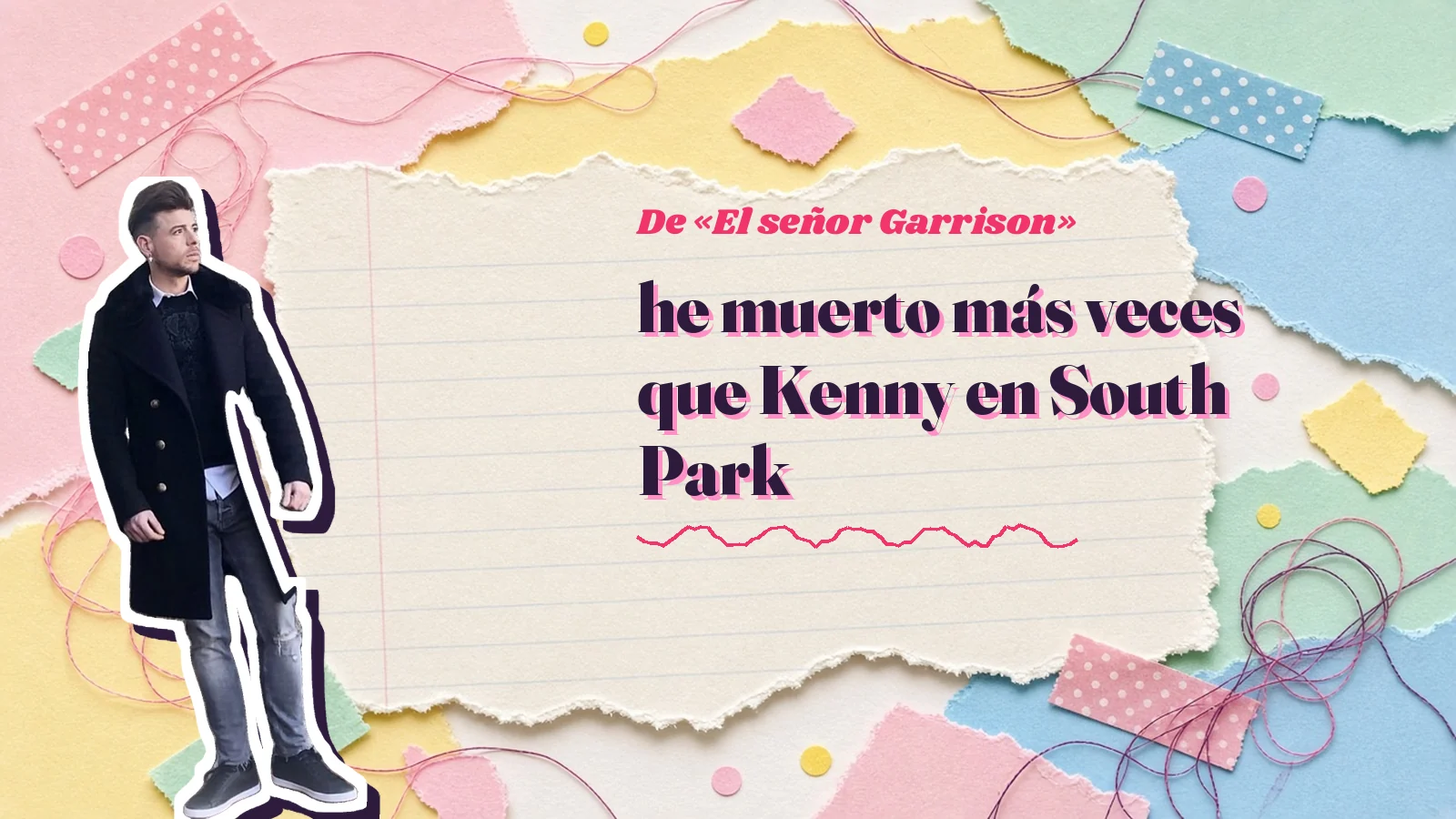
In «El señor Garrison», besides the South Park teacher, his most hapless pupil appears. The lyric says it straight: «he muerto más veces que Kenny en South Park», I've died more times than Kenny in South Park. For anyone who has seen the show, nothing more is needed. Kenny is the boy who died in almost every episode of the early seasons and came back in the next as if nothing had happened. Saying you've died more times than him means you've been broken so often you've lost count, but you keep turning up.
In «Esperma» I turn to another TV figure, and I introduce him the way you'd introduce a sage: como diría Antonio Recio, as Antonio Recio would say. The character from «La que se avecina», the Telecinco comedy that premiered in 2007, is a loud fishmonger full of fixations who tells anyone who'll listen that he's a wholesaler and doesn't clean fish. Quoting him as if he were Seneca is part of the joke. But it's also antonomasia: Antonio Recio has stopped being a character and become a way of saying things.
In «Como Macaulay Culkin en El buen hijo» I ask whether I was a little devil as a child, and to ask it I use the actor in the role of the unsettling boy he played in that 1993 film, «The Good Son». And in «Judith Bécker» it's another character from that same neighbourhood comedy, the psychologist, who gives the song its title.
Why TV and not the classics
Someone might ask why my lyrics measure themselves against Antonio Recio and not Calisto, against Mr. Garrison and not Don Quixote.
The answer is simple: antonomasia only works if the listener knows the name. Celestina worked for centuries because everyone knew Rojas's old woman, even if only by hearsay. Today, for a large share of the people who listen to my songs, the shared characters are the ones from TV, series and social media. Those are our everyday classics.
When I say I'm going to end up like Mr. Garrison, I'm using the same rhetorical figure a Golden Age poet used when he called someone a Narcissus. The only difference is the catalogue of names. They had mythology and the Bible. We have South Park, «La que se avecina» and video-shop films.
Some people think that impoverishes the language. I think the opposite. Every generation renews its stock of mould-names, and some of the ones that sound like afternoon telly today may end up in the dictionary in a hundred years, just like the rebeca. When language goes looking for words it doesn't distinguish between high and low culture. It takes what works.
Carmina, Pitufo and other names that hug
Not every antonomasia in my lyrics is mockery. Some are declarations of love.

In «Ojalá hubiera tenido de suegra a Carmina Barrios», the name of Paco León's mother, who starred in the film «Carmina o revienta» in 2012, becomes the yardstick for the ideal mother-in-law. I'm not talking about her as a private person, but about the public figure we all saw on screen: a woman with a cheek and a charm that make you want her around. Carmina, in my lyric, means a mother-in-law who loves you as you are.
And then there's Pitufo, Smurf. In «El abrazo de Pitufo», Pitufo is the name of my refuge, the one who calms me when the world is full of fake people. The Smurfs were born in a Belgian comic by Peyo in 1958, and in Spain their name has been used for decades as an affectionate word for small children. My Pitufo isn't blue and doesn't live in a mushroom. But the name brings with it everything we associate with those characters: something small, tender, that does no harm.
That's the other face of antonomasia. Just as it can reduce someone to a caricature, it can wrap them in a lovely story. Calling the dream mother-in-law Carmina or the one who hugs you Pitufo is giving them a name that comes with affection already built in.
Paco, Pepe, Lola and la Patry
There's a neighbouring territory that fascinates me too: first names and their pet forms. Linguists call them hypocoristics, another Greek word, meaning something like names of endearment.
In Spanish they're a party. Paco comes from Francisco, Pepe from José, Lola from Dolores, Concha from Concepción, Charo from Rosario, Nacho from Ignacio. Many look nothing like the original name, and so there are legends to explain them. The most famous says Pepe comes from the initials P. P., from a Latin formula for Saint Joseph as Jesus's putative father. It's a lovely story, but specialists consider it a folk etymology, the kind invented after the fact.
In «Ese chulito» one of these creatures appears: la Patry. With the article in front, as people say it in Madrid's neighbourhoods, and with a y at the end that is pure two-thousands styling. That name, written like that, is already a portrait. You know how she talks, how she dresses, what music she likes. Not a single adjective needs adding.
That's what names do in a song: they bring a neighbourhood, an era, a social class with them. A character called Patry isn't the same as one called Patricia. And one called Zeus Vargas, like the one in «Me mola Zeus», carries the god of Olympus in his name and at the same time the surname of any neighbour, and all the character's charm lies in that mix of the divine and the everyday.
Names that speak
Writers have long known that a name can tell things. The Romans had an expression, nomen omen, usually translated as the name is an omen. The idea is that the name announces the character of whoever bears it.
Charles Dickens was a master of this. He called the old miser of «A Christmas Carol», in 1843, Scrooge, and today in English a scrooge, in lower case, is any skinflint. Galdós called a woman whom fortune did not treat at all well Fortunata, and half the novel lies in that irony. Speaking names, they're sometimes called.
In my songs I do the same with invented characters. When I invent a name, I think about how it sounds before what it means. If it has to be ridiculous, I choose syllables that can be stretched. If it has to be frightening, hard consonants. If it has to be tender, a diminutive ending. The fictional politician of «Noemí Argüelles va ganando en las encuestas» has a first name and surname that sound like a real candidate's, and that's precisely why the satire works: it seems real without being real.
Ending up like someone
I come back to Mr. Garrison, because that song's formula seems to me the most revealing of all. «Voy a acabar como». It doesn't say I am like, or I resemble. It says I'm going to end up. It's antonomasia projected into the future.
We all have a character like that in our heads. The one we're afraid of turning into. The unmarried aunt in the family who lived with her cats. The strange neighbour on the fifth floor. The teacher who talked to a puppet. We use their names as warnings: if I carry on like this, I'll end up like him.
The nice thing about saying it in a song is that, by saying it, the fear loses its grip. When the lyric repeats again and again that I'm going to end up like Mr. Garrison and married to a puppet, the exaggeration gets so big it's funny. And what makes you laugh frightens you less.
That's why I think antonomasia is also a survival tool. You take the ghost that's chasing you, give it the name of a cartoon character, and turn it into a joke that can be shared. You're no longer alone with your fear. There are thousands of people who know who Mr. Garrison is and who laugh with you.
What gets lost along the way
But this figure has a dark side too, and I don't want to hide it.
When a name becomes a label, the person who was behind it disappears. Nobody remembers Charles Boycott for his life, only for the silence they imposed on him. The doctor Guillotin had his surname put on a killing machine he didn't invent and was ashamed of. Words are unfair to their owners.
And sometimes cruel.
And there are antonomasias used to hurt whole groups. Many insults against gay men started like this, with a proper name, and in another piece on this blog I told how marica comes from the diminutive of María. Calling someone by another person's name can be a game, but it can also be a way of erasing them.
That's why I try to use antonomasia with care. With fictional characters, yes, as much as I like. With public figures, only with what's public and in play, never to invent things about them. And with the anonymous people who have passed through my life, the rule is the Don Nadie rule: better not to give them a proper name. Let them stay a type, a nickname, a mould.
The name I gave myself
And I'll finish with a proper name that's close to home: mine.
Mike Sain't Louis, with its apostrophe in an odd place and all, is the name I sign every song with. And any signature aspires to the same thing as those dictionary names: that one day, in time, it will describe on its own what its bearer does. It's the dream of anyone who writes.
I don't know if that will happen. But meanwhile I have fun with other people's names. With the Don Nadies and the pinochos, with Mr. Garrison and Kenny, with Carmina and Pitufo, with la Patry and Zeus Vargas. Each of them is a shortcut, a compressed story, a gift shared culture gives me so that my songs say more with less.
If one day someone says of another person that they've ended up like in a Mike Sain't Louis song, I'll know antonomasia has come full circle. And I'll laugh, of course. Like Mr. Garrison with his puppet.
Frequently asked questions
What is antonomasia? A rhetorical figure that uses a proper name as a common one, for example calling an idealist a quixote or a go-between a celestina, or that replaces a proper name with a quality or a nickname, as in el Manco de Lepanto for Cervantes.
Which Spanish words come from proper names? Many: celestina, donjuán, tenorio, lazarillo, quijotesco, benjamín, mecenas, boicot, guillotina, sándwich and rebeca, among others. They come from fictional characters, historical figures or real people.
What does Don Nadie mean? According to the academic dictionary, a person of little worth or little renown. In everyday speech it's used ironically for someone who acts important without being so.
Which Mike Sain't Louis song mentions Mr. Garrison? «El señor Garrison», from the album «Descubierto un nuevo planeta llamado GAYFOLK», whose chorus says «Voy a acabar como el señor Garrison» and compares the narrator to Kenny from South Park.
Are the names in the songs real people? The characters in the lyrics are invented, fiction from the GAYFOLK universe. When a public figure appears, such as Carmina Barrios or a TV character, only what is public and well known is used.
Who writes these songs? Mike Sain't Louis, a lyricist, composer and music producer from Madrid, the first AI songwriter. The music and the vocals of his songs are made with artificial intelligence.