
By Mike Sain't Louis ·
Your story's falling apart: refusing the victim role the ex had written
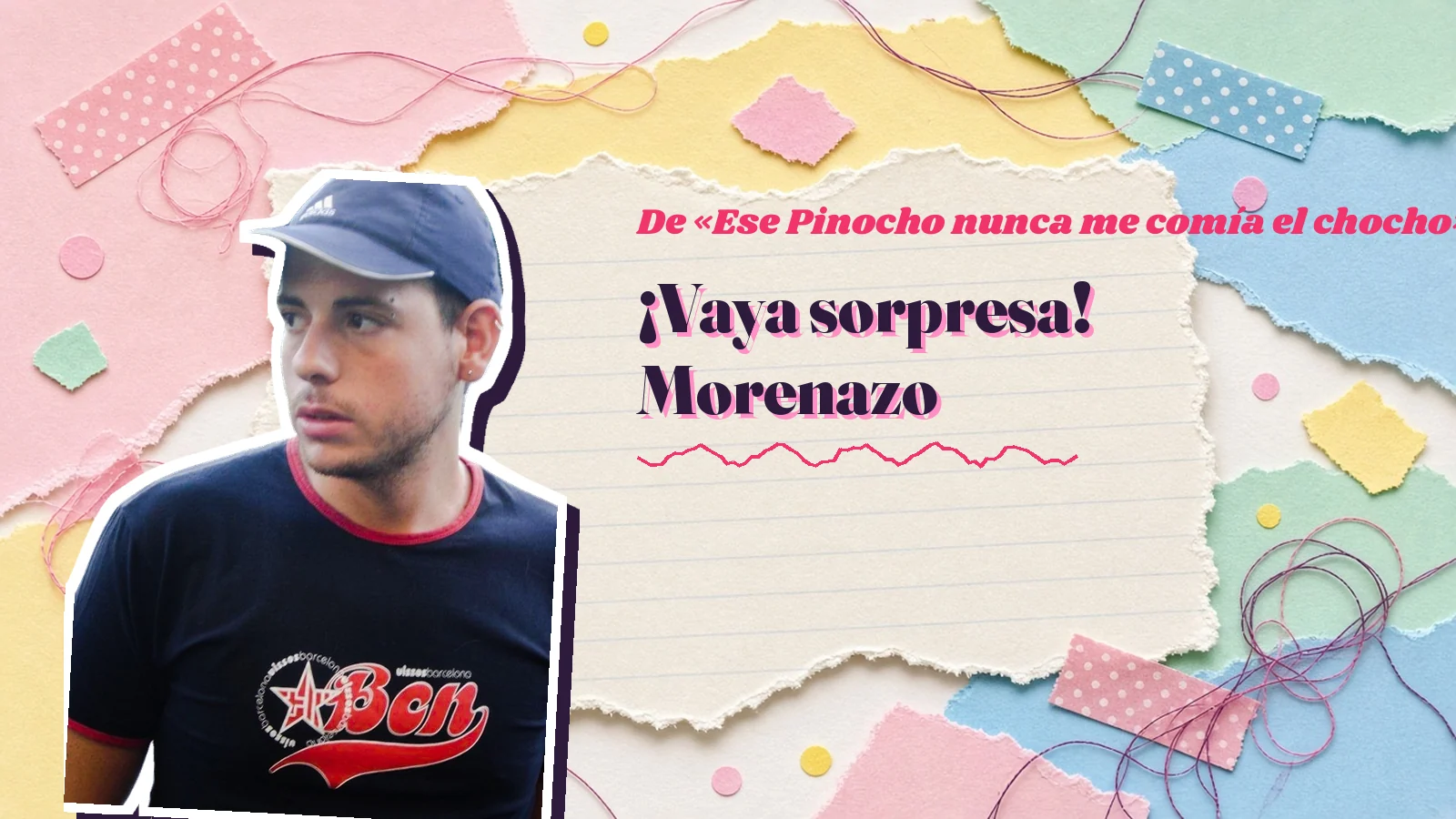
«Querido morenazo.» Two words and you've got the tone. It's the opening of a formal letter, the kind that starts "Dear Sir", but with a term of endearment you'd hear on a summer terrace or wolf-whistled from scaffolding: morenazo, roughly "dark and gorgeous". Solemnity and cheek in the same greeting, like putting on a tie to go to the beach.
And right behind it, the line that holds up the whole song:
«Querido morenazo / Se te está cayendo / el relato» "Dear gorgeous / Your story / is falling apart"
That's how «Ese Pinocho nunca me comía el chocho» begins, a title too filthy to translate politely, about a Pinocchio who never went down on me. With a title like that you'll guess it's not a wedding ballad. But before the dirty chorus, before the Vietnamese pot-bellied pig and the traffic warning, there's a word that interests me more than all the rest. Relato. The story, the narrative.
The song's page already covers what happens: the letter, the chorus, Vaca, El Médano, the parting advice. Here I want to talk only about the narrative. About the script the other person writes for you when he leaves, your part already cast, and what happens when you refuse to play it.
A talk-show word
Relato is a word that has become fashionable in Spain in recent years, especially in politics. The pundits on morning radio talk about "winning the narrative", "building the narrative", "imposing the narrative". People no longer argue about what happens, but about how what happens is told. The narrative is the official version, the one repeated until it seems the only one.
And slipping that word into a letter to an ex is hilarious, because it turns a break-up into a press conference. It's as if the gorgeous one had summoned the media to explain his version of the split, lectern and glass of water and all, and I answered from the back row with my hand up: "Sorry, your narrative's falling apart."
But under the joke there's something very serious. Because narcissists, manipulators, life's Pinocchios, live on exactly that. The narrative. On telling the story before you do, and telling it so you come off badly. And the line in the song doesn't dispute his facts. It tells him something worse: that his version is collapsing all by itself, like a papier-mâché set when it rains at a village fiesta.
The script he'd written
The best thing is that the song shows you the other man's narrative. It copies it, almost word for word, so you can see what he expected:
«Te habías pensado / Que iba a estar / Destrozado» "You'd thought / That I'd be / Devastated"
And then the list goes on, which read in one go is a complete casting brief: weak, traumatised, begging you to come back, crying, drinking himself stupid, desperate. Six character traits, like an actor's sheet for an afternoon soap. The part was written and cast. All that was missing was for me to learn it.
Notice one thing: that narrative isn't a description of how I was. It's a description of how he needed me to be. For his story, I had to be devastated. Because if I was devastated, he was important. If I cried, he was desired. If I begged him to come back, he had the power to say no. The whole narrative is built so that he comes out looking good.
That's the trap of many break-ups with people like that. They assign you a role, and if you don't play it, they get angrier than if you'd insulted them. Because you're ruining their show.
Six soap-opera adjectives
Back to the narrative's list, because it deserves a slow reading. Devastated, weak, traumatised, crying, drinking himself stupid, desperate. Read it slowly and it's almost a staircase. Each step goes a little further down.

Devastated comes first, the general one, the one everyone says. "I'm devastated", like saying "I'm tired". It's the headline.
Weak is already a judgement. It doesn't describe how you are; it describes what you are. And here you can see the hand of whoever wrote the narrative, because "weak" is a word nobody gives themselves. It's given to you.
Traumatised is the word of afternoon telly, the one the panellists use about the contestant who's left the reality show in tears. It has a whiff of studio diagnosis about it. It's the gorgeous one playing talk-show psychologist.
Crying is the gerund, the action under way, the image. It's no longer a state: it's a scene with tears, for the audience to watch.
Drinking himself stupid is the step of shame. The bottle on the bedside table, the four a.m. texts. The narrative isn't satisfied with you being sad. It wants you wrecked.
And desperate is the bottom of the stairs. The basement. The place where you've no dignity left and you beg.
Six adjectives for a single character. If it were one of those Venezuelan telenovelas that filled Spanish post-lunch telly in the nineties, they'd be the six episodes of the heroine's fall before the evil twin shows up. The gorgeous one had written an entire series. And the song cancels it in the first episode with a «vaya sorpresa», what a surprise.
It tickles me how carefully worked the script was. You don't picture someone else's ruin in that much detail unless you want it a little.
A letter to be read aloud
The song takes the form of a letter, and a letter has a special relationship with whoever reads it. It isn't a shout on the dance floor or a whisper in the ear. It's a text someone opens, unfolds and reads, sometimes aloud so others can hear.
I like imagining this letter read that way. In a living room, in front of mutual friends, with the solemn tone of someone reading a will in a Berlanga film, those deadpan Spanish comedies of the fifties. «Querido morenazo.» Pause. «Se te está cayendo el relato.» Laughter in the room. And the gorgeous one, if he were there, not knowing where to put himself, his Pinocchio nose growing by the second.
That's the power of the letter form: it turns a farewell into a public act. The ex's narrative was circulating privately, by word of mouth, in the WhatsApp group. The letter brings it into the open and reads it out in front of everyone. There's no longer an official version. There are two versions, and the second has better jokes.
The audition I didn't pass
When I write, I like to think of lyrics as scenes, and this scene is an audition. Picture the casting room, with its long table, its bottle of water and the gorgeous one as director, glasses perched on the end of his nose. He calls the next one in. In I walk. And instead of weeping over the lines he's handed me, I say: "What a surprise!"
«¡Vaya sorpresa! / Morenazo» "What a surprise! / Gorgeous"
That exclamation is the moment the actor breaks the script. He doesn't cry, doesn't beg, doesn't throw himself on the floor. He's surprised. And the surprise isn't his: it belongs to the other man. The surprise is that the part won't be played.
I love that the song uses such an everyday expression as «vaya sorpresa», the thing you say when you bump into your neighbour in the lift or when the gym puts up its fees. No grand declarations of independence. No "I'm free" with fireworks. A "what a surprise" with a raised eyebrow, and the endearment again, morenazo, which by now sounds like mockery.
The victim role is left without an actor. And a play with no lead never opens.
I won't lie, you do
A little further on there's a line that delights me because of how it's built. The song says it isn't going to lie, that's his job, and it isn't going to say it's thrilled. I'm paraphrasing so as not to copy out half the lyrics, but the twist is this: I won't lie, you do.
It's a sentence with a trap in it. It starts as an honest confession, like saying "I won't kid you", and halfway through it swerves and becomes an accusation. A few words of sincerity and a couple of flick-knife. I love these sentences that yank the wheel midway, because they mimic how we really talk when we're angry: we start polite and end up showing our claws.
And the sentence is honest on both sides. It doesn't say "I'm fabulous". It doesn't fake a yoghurt-advert happiness. It says it won't lie by claiming to be thrilled. In other words, it isn't thrilled. The break-up hurt. But between "I'm not thrilled" and "I'm devastated, weak, traumatised, crying, drinking myself stupid and desperate" there's a lot of ground. And the song lives in that ground.
This matters to me, because sometimes not being a victim gets confused with feeling nothing. And that's not it. You can be fed up without playing the part the other person wrote for you. You can be sad without ringing him at four in the morning.
Pinocchio
The chorus, which gives the song its title, calls the ex Pinocchio. It's the most obvious image of the liar, the puppet whose nose grows, and that's why it works. It needs no explaining. Every child in every school in Spain knows what it means.
But in this song Pinocchio has a nuance I like. Pinocchio is a wooden puppet who wants to be a real boy. A fake creature longing to be real. And the gorgeous one in the song is just that: someone who has built a narrative as fake as wood, his nose growing with every sentence. The narrative falls apart precisely because it's made of wood. Because it can't stand the damp of reality.
Then there's the chorus rhyme, playground-level, and I've no intention of apologising for it. Pinocho, chocho. That's the thing about easy rhymes: they go in first time and never come out. The complaint is very adult, about bed, about the couple, about what was given and what wasn't. But the form is childish, a little ditty for mocking someone at break time. And that mix of adult complaint and childish form is my way of shrinking something that once mattered.
I won't explain it further; the song's page already does, and the song shouts it.
The Vietnamese pig
There's a moment in the lyrics that's my favourite, and it has nothing to do with the narrative. Or maybe it does. The song says I once had a Vietnamese pot-bellied pig called Vaca, which means Cow, and that I often miss her. And that's why I don't want another swine in my house. Or rather, marrano, hog, which apparently is what everyone in El Médano calls him.
The lyrics say this, and I won't add any details beyond what's in them. But I will tell you why I love it so much: because it's the opposite of the narrative he'd written. In his narrative, I was devastated over him. In the song, the one I miss is a Vietnamese pig called Cow. The ex isn't even the first pig in my life. And on top of that, the previous one was better.
It's the perfect insult because it doesn't shout. It compares. And in the comparison, the gorgeous one loses to a pet named after a different animal.
If that isn't demolishing a narrative, let Vaca come and see for herself.
*Morenazo*, again
One last thing about the endearment, because it appears twice and not by chance. Morenazo is a compliment. It's what a woman shouts at a handsome lad from a balcony in Triana, or what your mum's friend says when she sees you at your cousin's First Communion. It carries an augmentative, that «-azo», which makes it bigger, more emphatic, like «cochazo» for a flash car or «casoplón» for a mansion.
And in the song the compliment is used for the opposite. To tease someone who no longer impresses. It's the compliment returned to sender, like a present you don't like and take back with the receipt. Every time the letter says morenazo, the augmentative weighs a little heavier with irony, until in the end it sounds almost like "poor thing".
I adore writing like that, taking pretty words and putting them to work backwards. It's more elegant than an insult. And it stings more, because the other person can't complain: technically, you're calling him handsome.
Drive carefully, friend
The song's ending has a nod that anyone who grew up in Spain with the car radio on will recognise instantly: precaución, amigo conductor, caution, driver friend. It's the catchphrase of the traffic bulletins, the announcer warning you of a crash on the A-6 or fog over the Somosierra pass. And the song recycles it as a sexual-health warning: it seems kink and condoms don't get on.
From the point of view of the narrative, this ending is interesting. Because it's the only part of the song not aimed at the gorgeous one. Or not only at him. It's a warning for everyone, like the radio ones. It's as if, having read the letter, I turned to the audience and said: "And as for the rest of you, be careful." The ex's narrative has collapsed, and what's left on the floor, among the rubble, is a public-service announcement.
I love that such a raucous song ends up looking after someone. Even if it's in the tone of the DGT, Spain's traffic authority.
Why the narrative falls on its own
Back to the opening line, because there's a grammatical detail that I think is the best thing of all: «se te está cayendo», it's falling apart on you. It doesn't say "I'm knocking your narrative down". It doesn't say "I'm going to destroy your version". It says it's falling, in the progressive, in a reflexive passive, as if nobody were pushing it.
And that's how it is. False narratives don't need demolishing. They fall by themselves, in time, like the plaster from a leaking ceiling. I don't have to do anything except not play my part. If I don't cry, don't beg, don't go back, the narrative loses its centrepiece and collapses under its own weight.
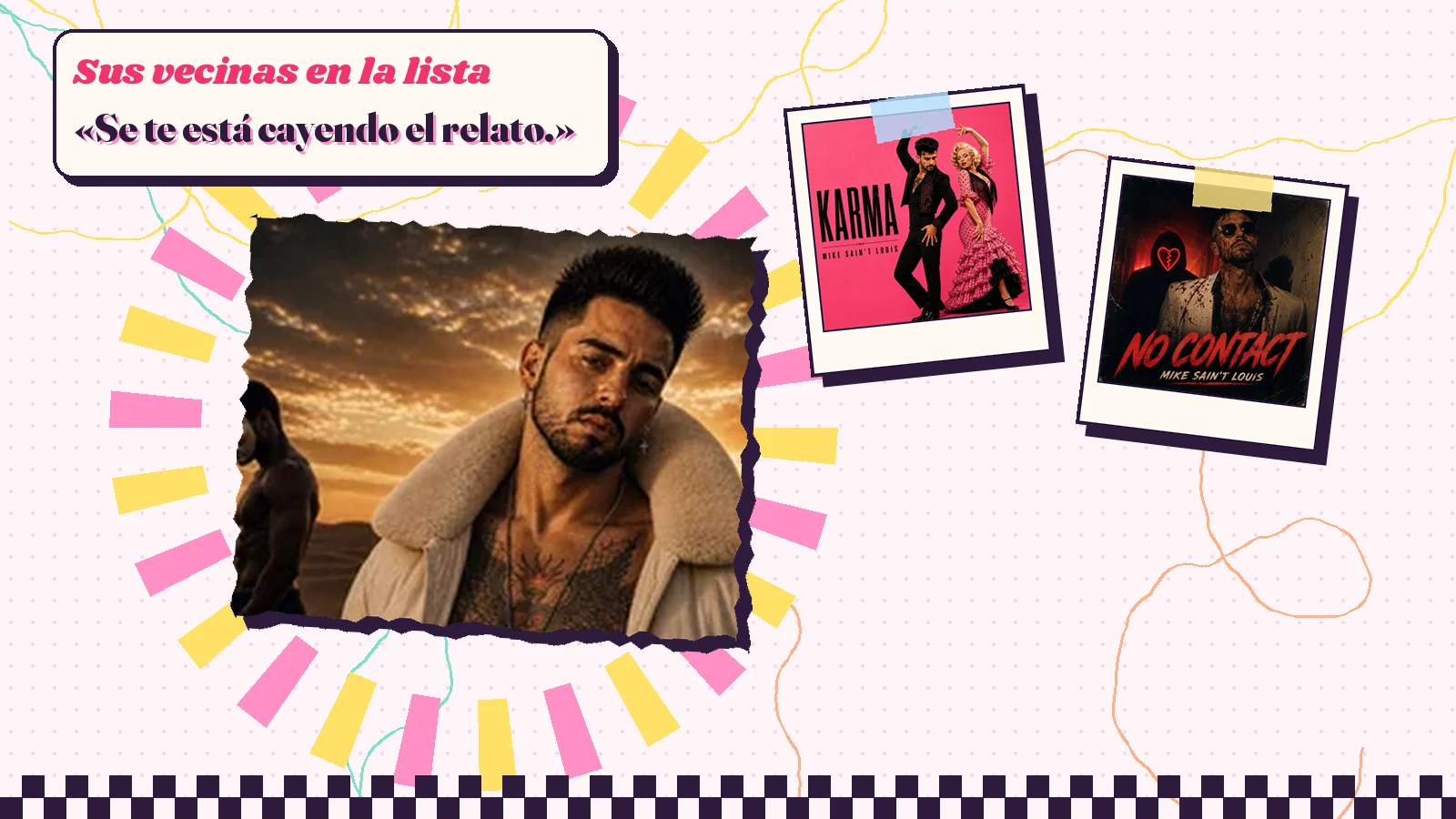
There's a song of mine that says it with another word, «Karma»: everything comes round. Here there's no need to wait for karma. The narrative collapses live, while the letter is being written. Express karma, same-day delivery.
There's a piece on the blog about liberation day and the day after, which is about what happens after you get out of something. This song lives in that day after. Not the big party, but the quiet morning when you realise you're not devastated, and that this annoys the other man more than any insult.
No contact, Spanish version
There's another song in the trilogy that goes the same way, but in English and on the dance floor: «No contact». There the idea is to cut off all contact and dance without looking back. It's the club version, with lights and Spanglish.

«Ese Pinocho» is the after-lunch version. No dance floor, no lights. Just a letter, a querido morenazo and a hasta nunca y adiós, goodbye and good riddance, at the end, the most grandmotherly farewell there is. Both songs say the same thing, that you're not going back, but one dances it and the other writes it in convent-school handwriting with market-stall spite.
I like having both. Some days are for dancing no contact and some for writing it by hand. And both work equally well for not picking up the phone when his name flashes on the screen at half past three in the morning.
Your own story
And here's what, for me, lies at the bottom of all this, so let me be serious for a moment.
When someone has manipulated you, they've also stolen your ability to tell your own story. For a long time, the version going round is theirs. In your group of friends, in your family, in your own head. And the hardest part of getting out isn't leaving the house. It's reclaiming the right to tell what happened in your own words.
A song is exactly that. Your own story. Put on a platform, with its title, its cover and its published lyrics, where anyone can read it. It's my version, signed and dated. And I write it: the lyrics are mine, without artificial intelligence; the music and vocals are made with AI tools such as Suno, because I'm a lyricist, composer and producer and I'm not the one on the recording. But the story, the real one, the one left standing, is mine.
That's why I laugh at my exes in my songs, as I explain in this other piece. Being funny is the least of it. I laugh because laughing is the most honest way I have of telling it. And because a story that makes people laugh is much harder to knock down than one that makes them pity you.
Dear gorgeous
To finish, I feel like replying in his own format, the letter. So here it is, in prose and without rhyme, the postscript that isn't in the song:
Dear gorgeous: your narrative has fallen apart. It didn't need a push. I simply didn't learn my lines. I'm not devastated, or weak, or traumatised. I haven't rung you in tears at ungodly hours. I haven't drunk myself stupid over you. I miss Vaca, who was better company. And I wish you, from the bottom of my heart, caution on the road, since it seems kink and condoms don't get on.
Goodbye and good riddance.
The song is in the singles list and the full lyrics on the lyrics page. Read them aloud, in your best press-conference tone. You'll see the narrative fall apart.
Frequently asked questions
What is «Ese Pinocho nunca me comía el chocho» about? It's a farewell letter to an ex who expected the narrator to be left devastated and begging him to come back. The lyrics reject that role from the first line: «Querido morenazo, se te está cayendo el relato», dear gorgeous, your story's falling apart.
Who wrote the song? Mike Sain't Louis, lyricist, composer and music producer from Madrid, the first AI songwriter. The lyrics are his and written without artificial intelligence; the music and vocals are made with AI tools such as Suno.
What does «se te está cayendo el relato» mean? That the version of the break-up the ex had built, with the narrator cast as the victim, collapses on its own as soon as the narrator refuses to play it.
Where can I read the full lyrics? At gayfolkplanet.com/letras/ese-pinocho-nunca-me-comia-el-chocho. The song's page is at mikesaintlouis.com/blog/ese-pinocho-nunca-me-comia-el-chocho.