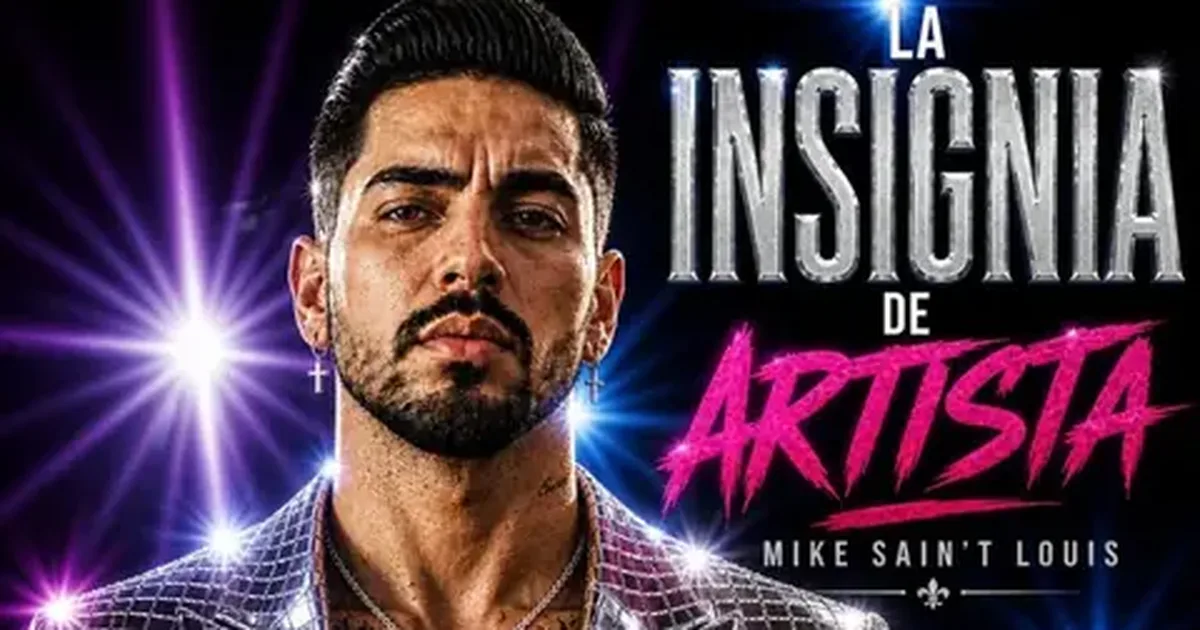
By Mike Sain't Louis ·
AI-made music and copyright today: what the law protects in the EU, Spain, the US and Latin America
Important: this is not legal advice. It is general information, checked against official and recent sources as of October 2026. Laws and platform terms change, and every case is different. If you are about to sign a contract, register a work or you're in a dispute, talk to a lawyer who specialises in intellectual property.
Whenever I say I make music with AI, sooner or later the question comes: "So who owns it?" It's a fair question. I write the lyrics for PLANETA GAYFOLK and produce the music with Suno, an artificial intelligence tool. So the answer affects me directly.
This piece gathers what laws, court rulings and official reports say today, in plain language. Four areas: the European Union, Spain, the United States and Latin America. And at the end, a list of practical things worth knowing before you release anything.
The idea that comes up everywhere
If I had to sum it all up in one sentence, it would be this: copyright protects human creativity. What a machine generates on its own, without a person's creative contribution, has no author and, in general, isn't protected.
That's not just my opinion. It's the line that courts and official offices are following today in the countries I looked at. The interesting part, and the hard part, is the border: how much human input does it take for something to be yours?
European Union: originality with a human name
The EU doesn't yet have a specific law on works created with AI. What it has is an idea the Court of Justice of the European Union has repeated for years: a work is original when it is "the author's own intellectual creation", meaning it reflects their personality through free and creative choices. The law firm Cuatrecasas explains it well in this analysis of AI and copyright (in Spanish), which recalls the Painer ruling.
In principle, that idea leaves out what a machine produces by itself. And the European Parliament has said so clearly. In March 2026 it adopted a resolution on copyright and generative AI, with 460 votes in favour. It calls for content generated entirely by AI to remain unprotected and for its public-domain status to be clarified. It also asks for transparency about the works used to train models and for fair pay for their authors. Note: a resolution isn't a law. It's a request to the European Commission.
What is law is the EU Artificial Intelligence Act. Its Article 50, on transparency, has applied since 2 August 2026. According to this practical guide to the article, it mainly places obligations on tool providers: generated audio must carry a machine-readable marking so it can be detected as AI-made. And anyone who publishes deepfakes, such as a voice imitating a real person, must disclose it. When that content is part of an evidently artistic, creative or satirical work, the disclosure can be made in a way that doesn't spoil the work.
Spain: the author is a natural person
Spain's Intellectual Property Law dates from 1996, yet it answers the question with surprising clarity. Article 5 says the author is "the natural person who creates a literary, artistic or scientific work". And Article 1 adds that intellectual property belongs to the author by the mere fact of creating it.
A natural person. Not a company, not a program. That's why, as a regional intellectual property registrar explained in 2023 in a piece covered by Genbeta (in Spanish), the Spanish Intellectual Property Registry doesn't register AI-generated works as though a person had created them.
That doesn't mean using a tool takes your authorship away. A painter uses brushes and a producer uses a synthesiser. What counts is whether you make creative choices that reflect your personality. And here's the key for someone like me: lyrics written by a person are a protected literary work from the moment they're written, whoever or whatever performs them afterwards, a person or a machine.
In the policy debate, Spain's Ministry of Culture argues that any use of protected works by AI must respect four principles: authorisation, remuneration, recognition and transparency. Minister Ernest Urtasun said so in March 2026 at the World Intellectual Property Organization, according to the official government press release (in Spanish).
United States: no human, no copyright
The United States is where this has been argued the most, and where the most official documents have been published.
The best-known case is Thaler v. Perlmutter. A researcher tried to register an image created autonomously by his AI system, listing the machine as sole author. The Copyright Office refused, and the Court of Appeals for the D.C. Circuit agreed in March 2025: the law requires a human author. On 2 March 2026 the Supreme Court declined to review the case, as this summary by the law firm Baker Donelson explains. The ruling stands.
More useful for creators is the Copyright Office report of January 2025 on what can be protected. Its conclusions, in short:
- Using AI as a tool doesn't prevent a work from being protected.
- Giving instructions (the famous prompts) isn't enough on its own to make you the author of the result.
- The human part that can be perceived in the result is protected, for example your own text included in it.
- A person's creative selection, arrangement or modification can also be protected.
- For now, no new law is needed.
And there's been a practical rule since 2023: if you register a work in the US that includes AI-generated material, you have to disclose it and claim only the human part, according to the guidance summarised by the law firm Crowell. For a song like mine, that would mean claiming the lyrics and leaving out the generated music.
What's still open is exactly where the line falls. There are pending cases, such as one about an image created with more than six hundred prompts, that may clarify it.
Latin America: the same direction
There's no single rule across Latin America, but the most recent decisions point the same way.
Mexico. In July 2025, the Second Chamber of the Supreme Court decided direct amparo 6/2025. A businessman wanted to register an avatar created with an AI platform. The Court held that only natural persons can be authors and that content generated entirely by AI isn't protected. According to Expansión (in Spanish), it left the door open to registering works with "significant human intervention". The law firm Pérez-Llorca has a commentary on the ruling (in Spanish).
Colombia. In 2024 the National Copyright Directorate issued an opinion reiterating that AI-generated output isn't a human creation and isn't protected under Andean Decision 351, the shared copyright rule of the Andean Community. It distinguishes between AI used as a tool within a creative process and AI that produces the expression by itself, as this analysis in Asuntos Legales (in Spanish) describes. The same Decision 351 also applies in Bolivia, Ecuador and Peru.
If you release music in other countries in the region, check with each one's copyright office. But the trend is clear: the creativity that gets protected is human.
Written lyrics versus generated output
Back to my own case, which is the case of many people creating with these tools. A song isn't a single thing. It has different parts, and the law looks at them separately.
- The lyrics. If you write them, they're yours. They're a literary work, protected from the moment you write them, in Spain and in the other countries covered here.
- The generated music. The melody, arrangement and vocal performance the tool produces. This is where the doubt lies. If the machine created it by itself from your instructions, the most likely answer today is that this part has no human author.
- What you do with the result. Choosing, ordering, editing, combining. According to the US report and the Mexican ruling, real creative intervention can count. How much is still unclear.
My song "La insignia de artista" ("The artist's badge") has lines that argue with exactly this idea: "Si tu música es un algoritmo / entonces no corazón" ("If your music is an algorithm / then no heart"). The song turns that prejudice on its head. And in a way, so does the law: it doesn't say that work made with AI is worthless. It says copyright is for the part a person puts in.
That's why I say that the most "mine" part of a song made with AI is the words. And that's why I'm open about using AI: I have nothing to hide, and being clear also protects you.
The tool's terms matter too
There's a layer many people forget: your contract with the platform you use. The law and the terms of use are not the same thing.
In Suno's case, its help centre explains that songs created on the free plan remain Suno's and can only be used non-commercially. With a paid plan active at the time of creation, the user can use them commercially. Since September 2026, its new terms also require downloading the song through the authorised channel before exploiting it, according to this guide to the changes. And one important nuance: the platform assigning you its rights doesn't guarantee that copyright exists in the result. Those are two different things.
Terms change often. Reread them now and then, especially before a release.
What to know before you release
This isn't legal advice, but it is a practical list for anyone creating with these tools:
- Write your own lyrics and keep the drafts. Dated. Notebooks, phone notes, files. They're proof of your authorship.
- Document your process. Which instructions you gave, which versions you discarded, what you edited. If you ever need to show your contribution, it'll help.
- Check which plan you used for each song. If it was the free one, in principle you can't exploit it commercially.
- Disclose AI use to your distributor. Spotify now shows in song credits whether vocals, lyrics or production involved AI, when the artist discloses it through their distributor, as it explains in its newsroom.
- Don't imitate another artist's voice without permission. Spotify explicitly bans it, and the EU AI Act requires deepfakes to be disclosed.
- If you register a work, register what's yours. The lyrics, under your name. And if you register in the US, disclose the generated part.
- For any serious doubt, ask a professional. An intellectual property lawyer or your country's copyright office.
What I take from it
Having gone through all this, the conclusion is more reassuring than worrying. The law doesn't say my work is worthless. It says something I already knew: what's mine is what I put in. The words, the ideas, the decisions. That has an author, and that author is me.
What the machine generates by itself lives, for now, in a zone with no clear owner. That may change. There will be new rulings, new laws and new terms, and they're worth following closely.
In the meantime, if you create with AI, write, document and be transparent. And if you want to see how I work, all my lyrics are on the lyrics page.