
By Mike Sain't Louis ·
My revenge is a music video: going public with the break-up in «Asqueroso coordinador»
There are many ways to take revenge on an ex.
We all know the classics. Throwing his clothes out of the window. Changing the locks. Telling his mother what she doesn’t know. Leaving a dreadful review at the place where he works. Some are crimes, others are merely ugly, and nearly all of them leave the person doing them worse off than the person on the receiving end.
The narrator of «Asqueroso coordinador» (“Disgusting Coordinator”) chooses another. He breaks nothing, threatens no one, turns up at nobody’s door. What he does is release a song. «Esta es mi venganza por infiel, mi último videoclip» (“This is my revenge for cheating, my latest music video”).
I love that idea, which is why I want to give it a whole piece. The song’s page on the blog already goes through the verses, the dream of another mother-in-law and the chorus. Here I want to talk about revenge turned into a premiere, the break-up as an exclusive, the art of the refined insult and that last word that changes everything: resurrected.
The premiere as a weapon
The first thing the narrator says is that this, what you are listening to, is the revenge. No beating about the bush. The song introduces itself as an act of payback.
There’s something very honest about that. Many break-up songs pretend to be above it all. That it doesn’t hurt any more, that there’s no grudge, that they wish the other person well. Not this one. This one says: I dedicate it to you, and not fondly. I dedicate it to you because I know it’ll get under your skin.
And what I like most is that the revenge doesn’t involve hurting anyone physically, or wrecking anyone’s life. It involves existing in public. Making something beautiful, or at least something funny, and putting it where the other person can see it. It’s the revenge of someone who knows that what annoys certain people most isn’t being shouted at, but seeing you do well without them.
There’s a very long tradition of songs written against someone. Whole break-up albums that audiences comb through trying to guess who they’re aimed at. The difference is that here there’s nothing to guess. The narrator says it in the first verse: this is for you, and it’s my revenge.
Watch it however you like
The next part of the verse is one of my favourites, because it has that very street-level humour that comes out of me when a character is furious.
The narrator tells the ex he can watch the video however he pleases. While he drinks two cups of coffee. While he’s on the toilet. If he faints, if he trips over his flip-flops, if any small, ridiculous misfortune befalls him, it makes no difference. He lists them with almost childish glee, like someone drawing up a wish list for somebody’s worst day.
And then he closes the list with the explanation: he doesn’t care, because the other man does nothing but lie. He repeats it like a hammer, blow after blow.
That list works because it’s out of all proportion. Nobody really wishes their ex would trip over his flip-flops. It’s a cartoon curse. And being a cartoon, it’s funny rather than frightening. The grudge becomes a comedy routine. The rage becomes a show.
It strikes me as a very healthy way to let the anger out, if you think about it. He doesn’t swallow it or hide it, but he doesn’t turn it into something dangerous either. He exaggerates it until it becomes ridiculous, and in the ridiculous it’s disarmed.
Two cups of coffee
Let me go back for a moment to that list in the first verse, because there’s a detail that’s more tender than it looks: the two cups of coffee.
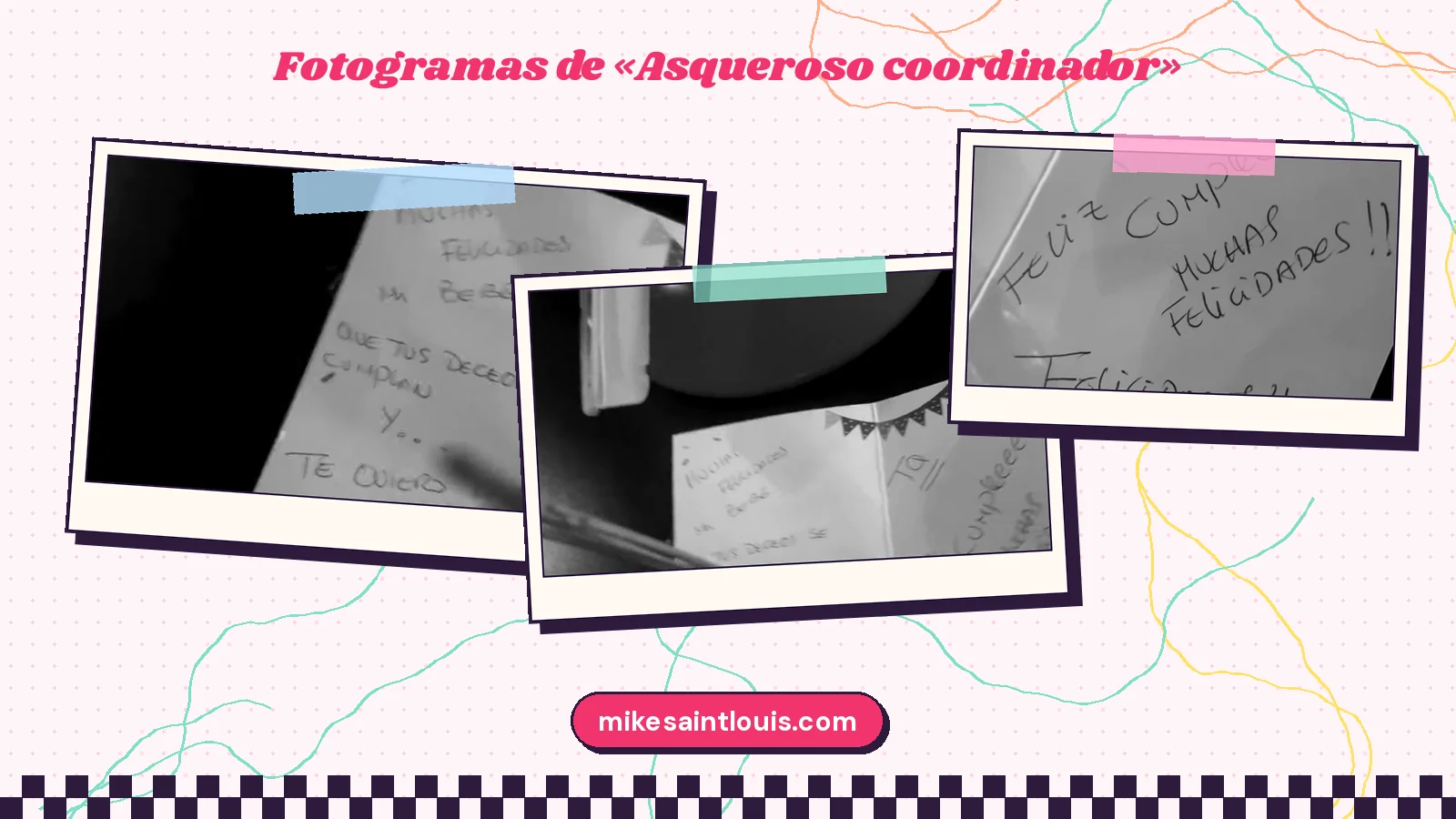
Not one cup. Two. And only someone who has had breakfast with that person many times knows that. Someone who knows his morning habits, how many coffees he needs before he’s human, at what time of day he’s most vulnerable.
That precision gives it away: however much rage there is, the intimacy is still there. The narrator knows things about the other that you only learn by living together. And yes, he uses them to mock him. But the mere fact that he remembers them says the relationship really existed, with its mornings and its routines.
I like that the song doesn’t underline it. It drops it in between the toilet and the flip-flops, as if it didn’t matter. But anyone who has broken up with someone knows these are the details that take longest to leave. Not the big moments, but the two cups of coffee every morning.
Let the press run it
The chorus opens with a very strange request: that an online newspaper publish it. That the farewell make the news, headline and all. Good riddance!
That gesture amuses me enormously, because it turns a private break-up into a public event. As if the goodbye of two ordinary people deserved the front page. As if the ex were a politician caught in a scandal and the narrator the anonymous source leaking the exclusive.
It has to do with something I often do in my lyrics: mixing the intimate with the language of the media. I’ve written about why the first GAYFOLK album has a title like a news headline, and this song is on precisely that album. There’s something about the news format that I love for talking about heartbreak. A break-up told as a headline becomes lighter and funnier.
And there’s something else. Asking for it to be in the papers is also asking for witnesses. For it to be known. For it to be written down. For it to be undeniable. For someone who has been lied to a lot, having something on the record is worth a great deal. It’s the comic version of something serious: I want it noted.
Flea-market coordinator
I come to the insult that gives the song its title, which to me is a little piece of craftsmanship.
The narrator calls the ex a «coordinador de mercadillo» (“flea-market coordinator”). What I like about that insult is that it isn’t an insult in itself. Coordinating isn’t bad. Nor is a flea market. But put together and said in the right tone, they become devastating. It’s someone who gives himself airs with a title that sounds like a lot and means very little. Someone who acts the boss but only arranges the sock stalls.
I’ve written about how an insult can become a banner, and about queer humour in general, which has a long tradition of elaborate insults, the kind that need no swear words to wound. “Flea-market coordinator” belongs to that family. It’s a way of cutting someone down to size without losing your elegance. Or at least without losing all of it.
Because then, of course, the chorus has swear words too. Bastard, cretin, son of a bitch. The song is no drawing-room piece. But the insult people remember, the one in the title, is the refined one. And that says a lot about who the narrator wants to be: someone who, even when furious, knows how to choose his words.
Very clever and very refined
Speaking of refinement, there’s a line in the chorus that makes me laugh every time. The narrator says the other man took him for a mug, but that he’s actually very clever and also very refined.
The lovely thing about that line is that it contradicts itself with all the charm in the world. Someone truly refined wouldn’t say he’s very refined. Least of all in a song in which he has just wished the other man’s teeth would break. The line gives the narrator away: he’s so hurt he needs to show off. He needs to tell the other, and tell himself, that he wasn’t a fool.
That “you took me for a mug” is, for me, the emotional centre of the chorus. Beneath the anger at being deceived lies the wound of being taken for a fool. And in many break-ups that wound stings more than the infidelity itself. Being cheated on hurts. Being thought too dim to notice humiliates.
That’s why the narrator defends himself so emphatically. That’s why he adds the bit about the fortune-teller: the other man failed to foresee he’d be caught. Liar, fake, cretin and, on top of it all, a poor fortune-teller. The list of flaws grows as the list of misfortunes grew in the verse. It’s a way of saying: not only did you hurt me, you did it badly.
An ex with no name
There’s a detail I overlooked for a long time that now seems fundamental to me: the ex in this song has no name.
Names do appear in the lyric, yes. Those of the fantasy, of the other possible life. But the protagonist of the break-up, the one who lied, the one who left the narrator in the mud, isn’t called anything. He’s referred to by a job title. Coordinator. And not even an important one: flea-market coordinator.
That’s a decision, and a cruel one in the best sense. By taking away his name, the song also takes away his identity. He’s no longer a person with his story, his reasons, his difficult childhood. He’s a post. A uniform. A cheap business card.
At the same time, that lack of a name makes the song work for anyone. We’ve all met a flea-market coordinator. Someone who gave himself airs, who was in charge of four things and thought he owned the world, who lied with the ease of years of practice. The listener supplies the face. The song supplies the job title.
It also strikes me as a very elegant way of protecting whoever writes. What the song points at isn’t a specific person but a type. A comedy character. And like every comedy character, he has a little of everyone who resembles him.
Saying it to his face
The whole song is written in the second person. You hated it. You can watch it. You thought. You left me. The narrator doesn’t talk about the ex: he talks to him.
That changes a lot for the listener. We’re not hearing someone tell us about his break-up in a bar. We’re overhearing, over his shoulder, the telling-off he gives someone else. We witness somebody else’s row. And that has the guilty thrill of neighbours’ fights heard across the light well: you shouldn’t be listening, but you can’t stop.
The second person also does something to whoever listens at home, headphones on, thinking of their own ex. Suddenly those words are theirs. That “you” is their “you”. And the telling-off they didn’t dare give at the time, they give now, too late, in the living room, with the volume up.
That’s what many spite songs are for, I think. To say what you didn’t say. To have the last word, even if the other person isn’t there. And this song has plenty of last words, all of them sharp.
Another possible family
The second verse changes tone abruptly, and there the song turns dreamy. The narrator fantasises about what his life would have been with another partner and another mother-in-law.
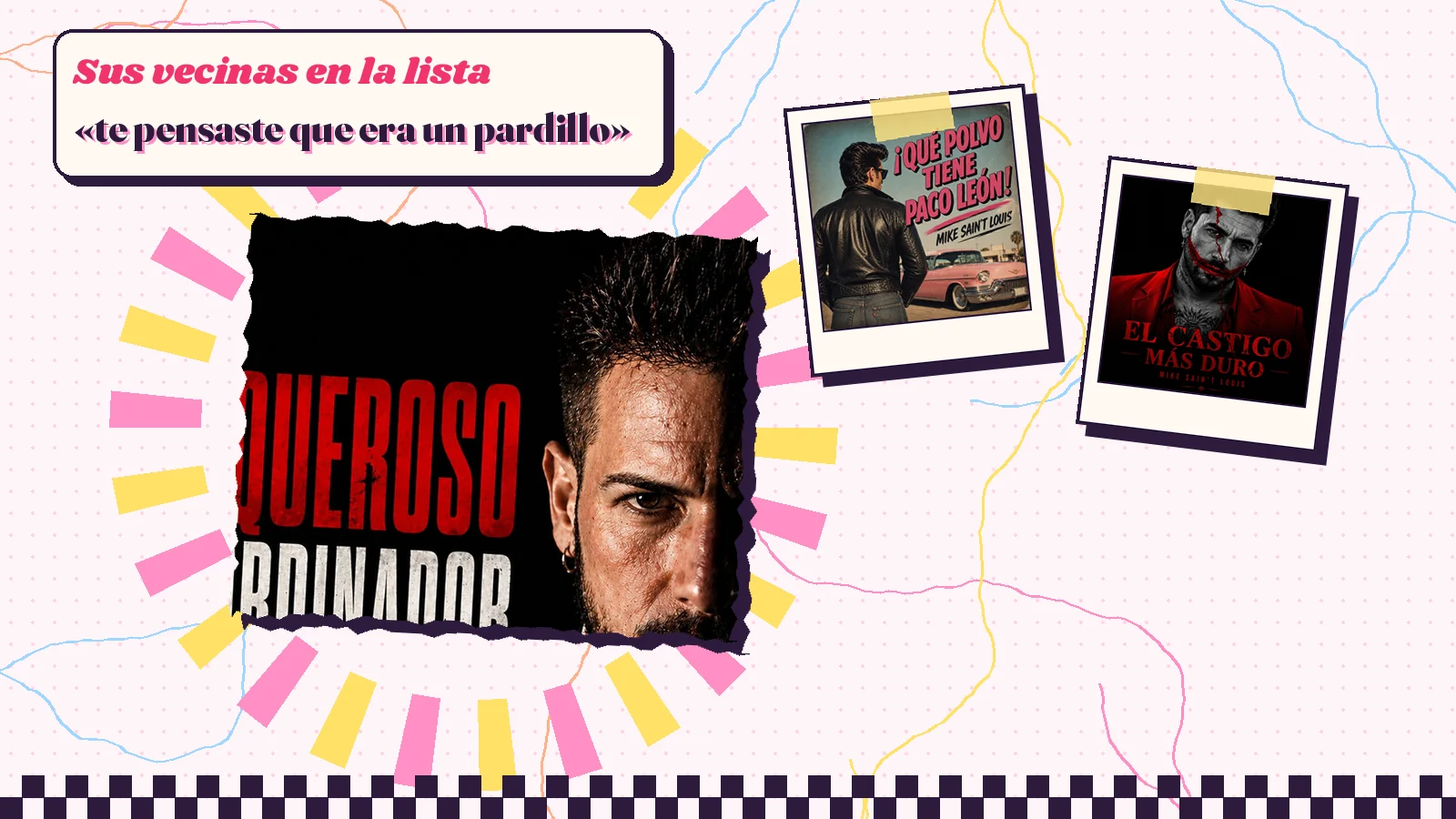
The song’s page already discusses that dream, and another song, «Qué polvo tiene Paco León», revels in the same fantasy. I don’t want to repeat what’s there. I only want to point out what that dream does inside a revenge song.
What it does is put the ex up for comparison. It isn’t enough to tell him he’s a liar. You also have to tell him there was another possible life, happier, more fun, from one event to the next. It’s the cruellest and campest way of telling someone you don’t miss them: imagining out loud, in front of them, the person you’d rather have been with.
And at the same time it’s a fantasy so exaggerated that nobody takes it seriously. The narrator knows it. It’s a game. It’s dreaming of a celebrity the way you did at fifteen, with your school folder full of photos. That innocence, dropped into the middle of such an angry song, gives the listener a breather. Between one insult and the next, a moment of silly laughter.
Dying in the mud
And then comes the part of the song that matters most to me. The second chorus, which is no longer the same as the first.
The narrator stops showing off and tells what really happened. He was left to die in the mud. Given up for dead. The other man’s selfishness wasn’t only lying: it was abandoning him at his lowest point.
That image of the mud is the hardest in the lyric, and I like that it arrives so late, when the listener has already laughed a lot. Because that’s when you understand where all that rage comes from. It isn’t a whim. It isn’t a strop over nothing. It’s the reaction of someone who was on the ground and watched the other walk away without helping him up.
What happened to the narrator in that mud, the song doesn’t say, and I’m not going to invent it. I leave it as a metaphor. Every listener will know what mud they’ve stood in and who walked away meanwhile.
Resurrected
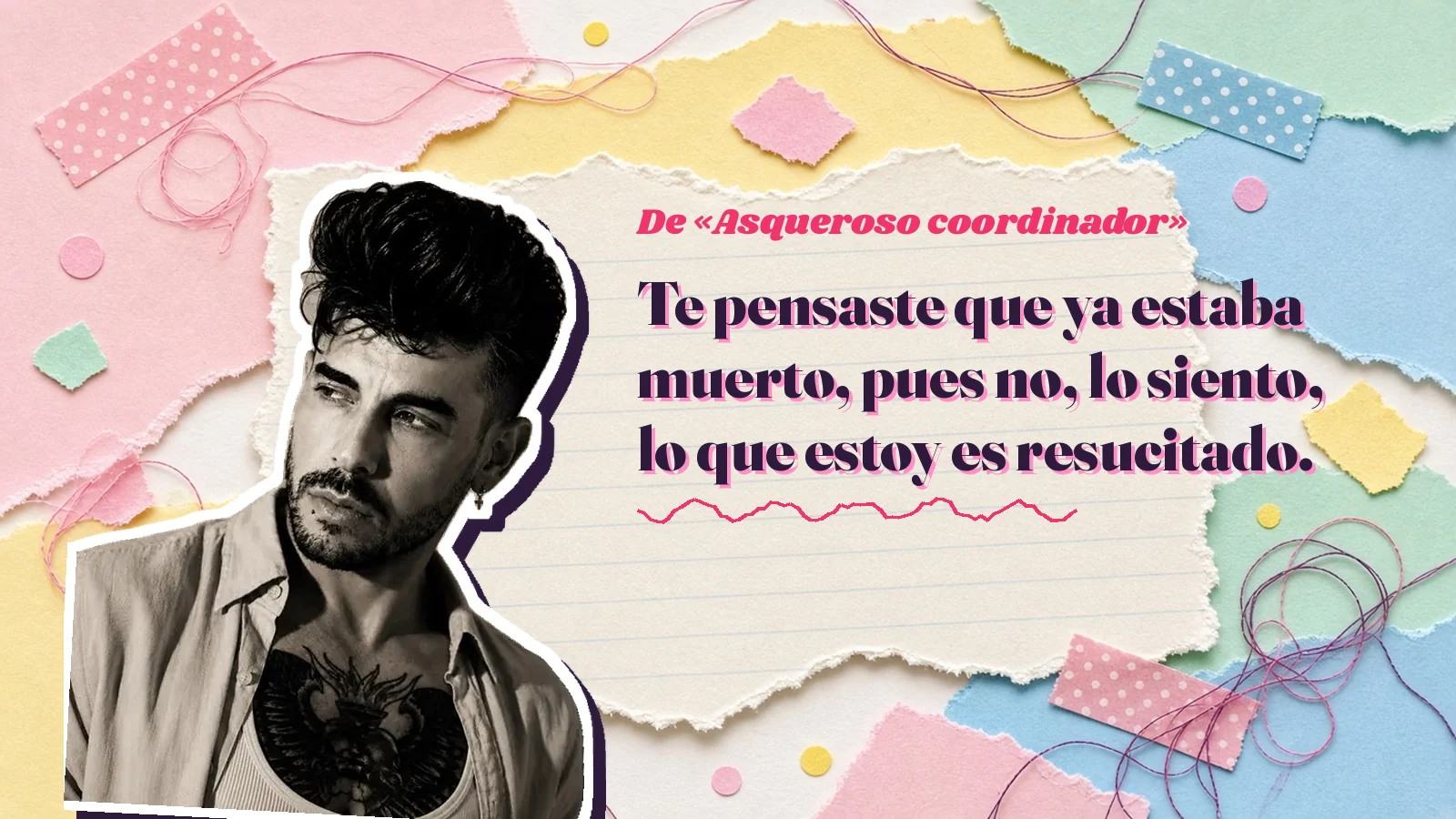
«Te pensaste que ya estaba muerto, pues no, lo siento, lo que estoy es resucitado» (“You thought I was already dead, well no, sorry, what I am is resurrected”).
This, for me, is the most important line in the song. And notice the “sorry”: it’s the falsest, funniest sorry in the world. He isn’t sorry at all. He says it with the smile of someone who knows he has just won.
Resurrected is a huge word, almost religious, dropped into a song of insults and celebrity fantasies. And I like it precisely for that, for how out of proportion it is. It doesn’t say he has recovered, or is feeling better, or has turned the page. It says he has come back from the dead. That the other buried him and he climbed out of the grave.
And he doesn’t climb out at peace. He comes out, as the lyric says right after, pretty furious. Spiteful, too. It’s a resurrection with attitude. No white robes, no universal forgiveness. A resurrected man come back to settle accounts.
That strikes me as very honest. Many people, when they come out of a relationship like that, expect to feel peace. And what they feel first is anger. And that’s fine. Anger is also a sign of life. Dead men don’t get angry.
Caught and named
The song ends with a reversal of roles. The narrator is resurrected. The other is caught and singled out.

I love that pair of words because it sums up the whole song. Caught: he’s been found out, he can’t go on lying. Singled out: now everyone knows, because there’s a music video, because there’s a song, because the narrator has asked the press to run it.
It’s the perfect revenge on someone who lived off secrecy. You don’t hit a liar, you switch the light on. And that’s exactly what the song does: it shines a light on someone who preferred the dark.
I’ve said elsewhere that the harshest punishment sometimes consists of doing nothing, simply of no longer being there. This song proposes another, complementary punishment: being there more than ever. Being in public, on screen, in a song. So the other can’t escape your existence.
Rage with a market-stall rhythm
There’s something about the form of this lyric that suits its content. The rhymes are street-level, easy, playful. In Spanish, pardillo (mug) rhymes with mercadillo (flea market). Adivino (fortune-teller) with cretino. Muerto (dead) with lo siento (sorry). It’s a way of rhyming that sounds very much like people talking when they’re angry and want to be witty at the same time.
These aren’t the rhymes of a solemn poet. They’re the rhymes of someone arguing in the street who wants to win with the roundest phrase. And in a revenge song that seems right to me. A revenge lyric should read like a fishwife’s comeback, not a poetry recital.
The words need that rhythm of the market cry, of the stallholder shouting his bargains. Which is, incidentally, what a flea-market coordinator does. The song ends up speaking the language of the insult in its title.
A song for the day of rage
I don’t think this is a song for any moment of a break-up.
At the start, when it’s all tears, you probably won’t feel like it. Once you’ve completely moved on, it will probably seem over the top. But there’s an in-between moment, when you go from pain to anger, where this song fits like a glove. It’s the soundtrack to the afternoon when you realise you weren’t stupid, that the other lied to you, and that you have every right to be very, very angry.
For that day, this song is a good outlet. You laugh, you shout the chorus a bit, you insult the air with flea-market elegance. And the next day, perhaps, you’re a little closer to peace.
One thing, though: the rage in this song is comedy. If yours ever gets out of hand and makes you think of really hurting someone, or yourself, stop. Talk to someone. In Spain you can call 024 at any hour, or 112 in an emergency. A song is for letting anger out, not for feeding it.
Creating as a response
I’ll end with something that runs between the lines of the whole song and that seems to me the most valuable thing about it.
The narrator answers deceit by creating something. Not destroying, creating. A music video, a song, a lyric. It’s a very old and very good idea: that pain can become work. That the best answer to someone who gave you up for dead is to make something alive.
I write my lyrics without AI, and the music and vocals are made with artificial intelligence tools; I explain it on my About page. I’ve also written about what I learned releasing singles and music videos consistently. And one of the things I love most about this craft is exactly that: anything, even rage at a flea-market coordinator, can become a song.
«Asqueroso coordinador» is on «Descubierto un nuevo planeta llamado Gayfolk», the first album of the trilogy. You’ll find it in the full discography, with its lyric in my lyrics and its page on the blog. Play it on the day of rage. And then rise again.
Frequently asked questions
What is «Asqueroso coordinador» about?
About a narrator who takes revenge on a cheating ex by releasing a music video. He insults him with humour, dreams of the life he would have had with someone else and ends by telling him he isn’t dead but resurrected. The lyrics are at gayfolkplanet.com/letras/asqueroso-coordinador.
Which album is it on?
«Descubierto un nuevo planeta llamado Gayfolk», the first album of Mike Sain't Louis’s GAYFOLK trilogy.
Who made the song?
The lyrics are by Mike Sain't Louis, lyricist, composer and music producer from Madrid, written without AI. The music and vocals are made with artificial intelligence tools.