
By Mike Sain't Louis ·
The real thing and the knock-off: «Los ojos de Eduardo Casanova» and the spite that compares
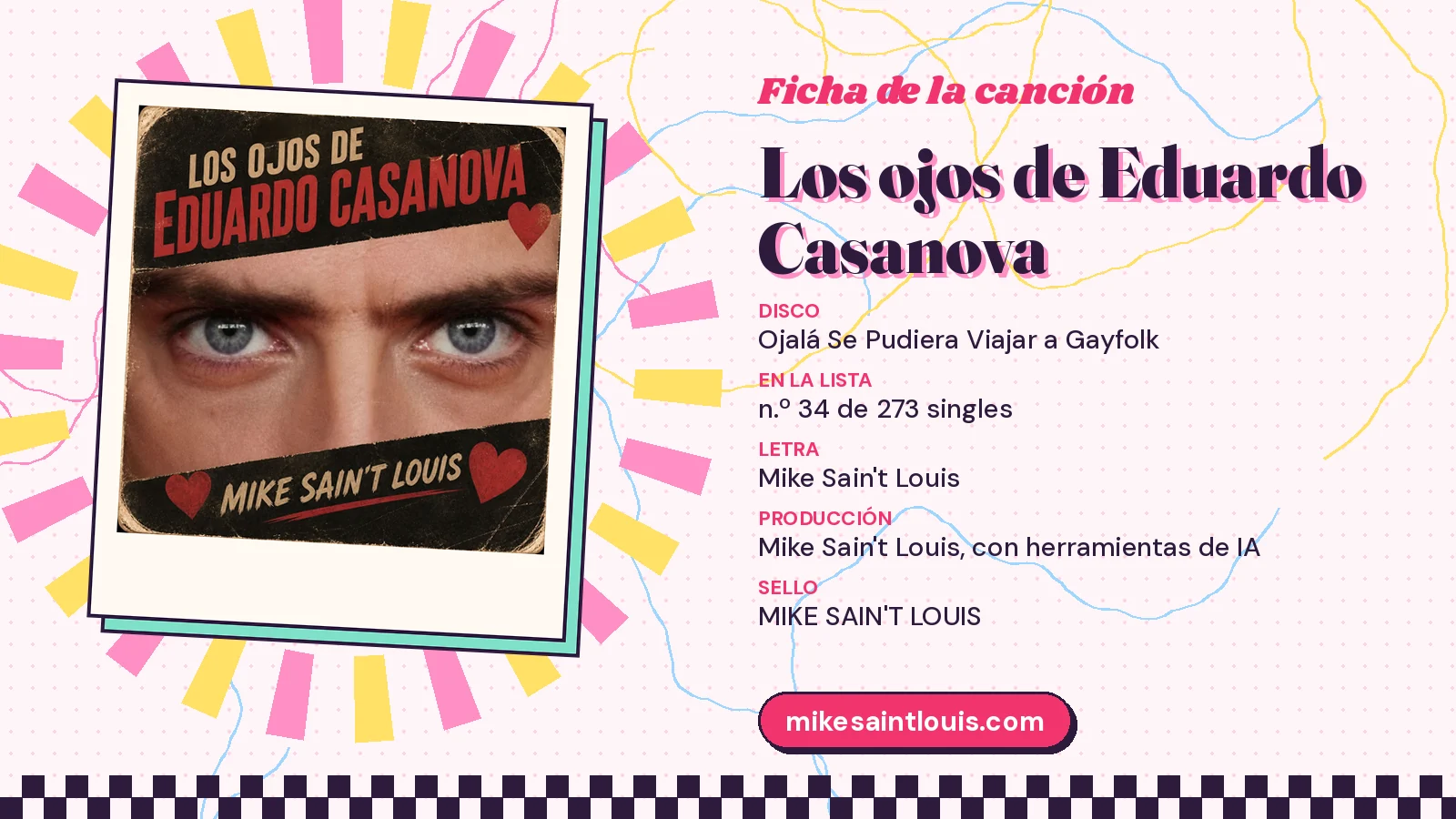
There's a question that opens this song and tells you everything about its tone: qué culpa tengo yo, is it my fault? It's the question of someone with no intention of apologising. Someone who knows that what they're about to say may sound over the top, unfair or cruel, and is going to say it anyway. «Los ojos de Eduardo Casanova» (Eduardo Casanova's Eyes) is a song of spite, and spite, by definition, doesn't say sorry.
On the song page I already explained that Eduardo Casanova appears here purely as an object of admiration, that the song is more a missile aimed at an ex than a letter to a celebrity, and that its chorus is one of the most emphatic in the catalogue. Here I want to give it another turn. I want to talk about the idea that runs through the whole lyric, the clash between the genuine and the fake, and about why, when someone has deceived us, we need so badly to find something true to measure them against. The full lyrics are published, and fair warning: some stretches are very raw.
Who Eduardo Casanova is
It's worth starting with what's known, inventing nothing. Eduardo Casanova is an actor and director from Madrid. Many people first met him as a teenager playing Fidel in "Aída", the Telecinco sitcom, and he later moved into directing with films such as "Pieles" (Skins) in 2017 and "La piedad" (The Piety) in 2022. He's an instantly recognisable public figure, with a very personal aesthetic in his work as a director.
The song attributes nothing to him beyond what the lyrics say: that he has beautiful, special eyes, that he's handsome and talented. No anecdotes, no rumours, no invented stories about him. It's a compliment, nothing more, and it works as a point of reference. I wanted to make that clear from the start, because the rest of the lyric is very harsh, but all that harshness is aimed at someone else: an ex with no name.
Eyes that aren't contact lenses
The song's first image is very concrete: that sparkle isn't something coloured contact lenses can give you. I love it because it's an everyday detail everyone understands. Coloured lenses exist to change something that can't truly be changed. They make your eyes green or blue for a few hours, but you know that underneath they're still your own. There's nothing wrong with them, of course. Lots of people wear them for fun, for fancy dress, for a night out, and it's a hoot. The problem isn't the lens; it's passing it off as the real eye. Dressing up while knowing it's a costume is one thing; standing in front of someone for years with borrowed eyes and letting them believe they're yours is quite another. That's the difference between a game and a deception, and it's precisely the line the song accuses the other man of crossing.
The lyrics use that image to set up their central theme. There are real eyes and imitation eyes. Genuine sparkle and bought sparkle. And though at first glance they may look alike, anyone who looks closely can tell them apart.
That difference is exactly what the narrator failed to see for a long time. That's the wound under the joke. The song isn't only complaining that the ex was fake; it's quietly complaining about not having noticed sooner. About having taken an imitation for the real thing.
The genuine as an ideal
The word that recurs most in the song, after the chorus, is authentic. The eyes the narrator loves are authentic and true. And everything about the other man is counterfeit.

Authenticity is a huge value in queer culture, and I don't think that's a coincidence. For a long time, LGBTQ+ people were forced to pretend. To lead one life for show and another in private. To introduce girlfriends who weren't girlfriends, to invent excuses, to keep quiet. Coming out is, at heart, an act of authenticity: no longer pretending to be what you aren't.
That's why, when someone from our own community deceives us, it hurts in a special way. It's as if they'd betrayed something that cost us dearly. After all that effort to stop living a lie, finding someone who lies to your face is a double blow.
The lyrics don't spell out all this reasoning, because a spite song isn't there for that. But I think the obsession with authenticity running through it comes from there. The narrator has come out of a relationship built on forgery, and what he craves now is something real. Even if it's on a screen, in the eyes of an actor he'll never meet.
Spite needs a comparison
There's something very human in the way this song works. When someone has hurt us, we look for a contrast. Someone who is everything the other wasn't. Sometimes it's a new partner, sometimes a friend, and sometimes, as here, a public figure we admire from a distance.
The comparison does several jobs at once. First, it reminds us that what we lost wasn't the best thing in the world. That there are people out there with talent, sparkle and truth. Second, it puts the other person in their place: stand anyone next to an ideal and they come off worse. And third, it reaffirms our own judgement. If I love genuine eyes, I know how to tell what's genuine. I got it wrong once, but my taste is intact.
That third point seems the most important to me. After a deception, one of the things that suffers most is trust in your own judgement. You ask yourself how you missed it, how you let yourself be fooled for so long. And shouting from the rooftops that you love true eyes is a way of winning that trust back. It says: I know what's good, even if someone once slipped me the opposite.
Seven years
In the middle of the song, among the insults, comes a count: one, two, three, four, five, six, seven years. Counted out one by one, as if ticking them off on your fingers. And straight after, the charge that the other man doesn't give a damn about any of it.
That moment is the heart of the song for me. Everything else is rage, mockery, exaggeration. But that slow count is pure sadness. Seven years is a long time. Seven birthdays, seven summers, seven Christmases. A very large slice of a life. And discovering that for the other person they didn't mean the same is one of the most painful things that can happen in a relationship.
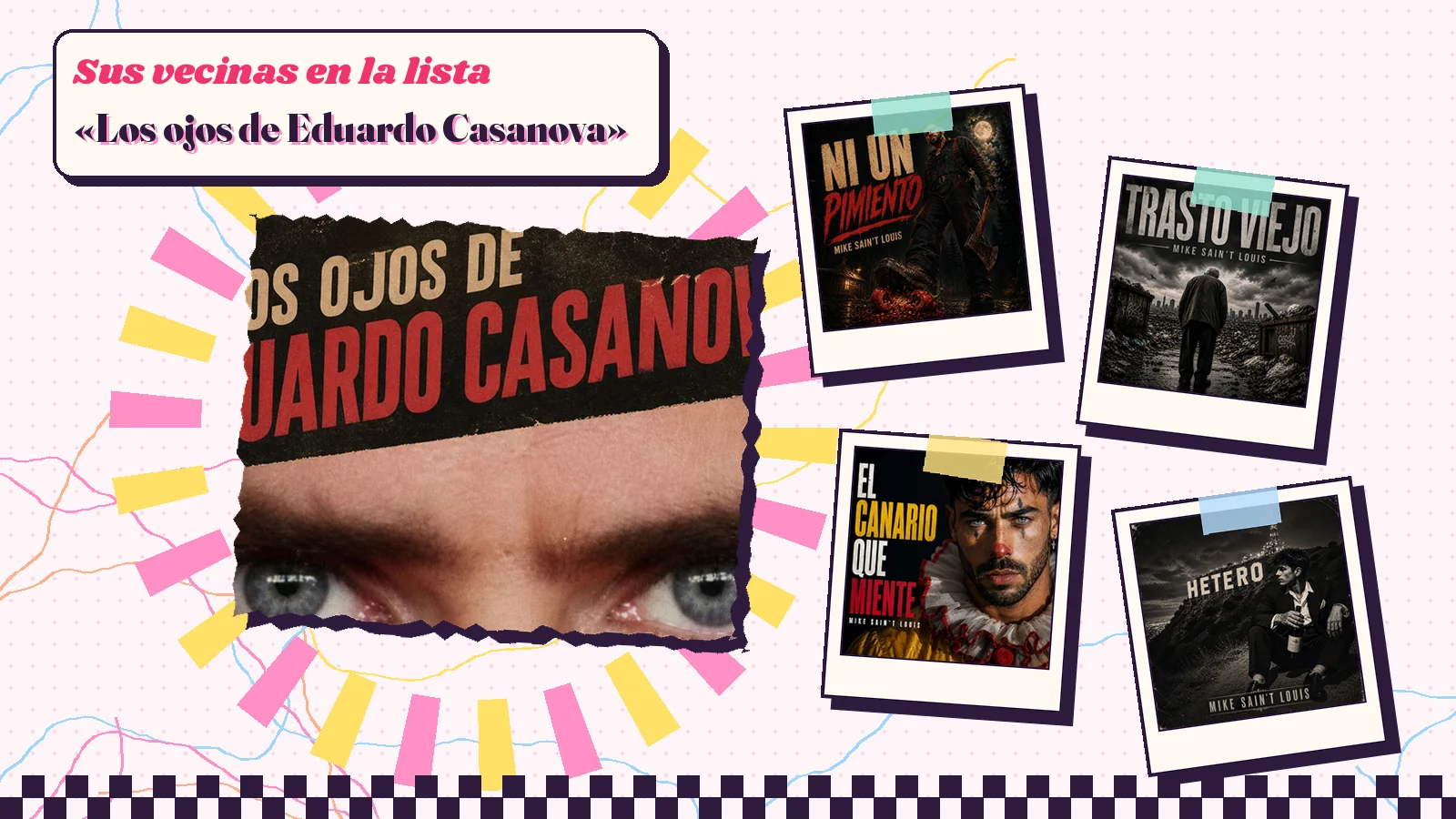
The Spanish phrase for not giving a damn, "importar un pimiento", literally not mattering a pepper, has its own joke in the catalogue, because a whole song is devoted to it: Ni un pimiento (Not a Single Pepper). It's one of those homely phrases used to say something is worthless. And here the lyrics use it to point at the cruellest contrast of all: what was half a life for one of them isn't worth a pepper to the other.
The rubbish tip
Another recurring image is the rubbish tip. Everything about the other man is a knock-off made to be thrown away after one use. And his eyes, the lyrics say, are ready for the tip.
It's the same idea found in other songs in the catalogue, like Trasto viejo (Old Junk), where the narrator feels treated like furniture dumped at the recycling centre. Only here the image is reversed. It's no longer the narrator who feels discarded; he's the one doing the discarding. That's a hugely significant shift in position: the one who used to be used and thrown away is now the one deciding what goes in the bin.
I think plenty of people recognise that moment in a break-up. At first you feel like old junk. And one day, without quite knowing when, you realise the junk was the other one. That what you had at home was a cheap imitation, and you're much better off without it.
As much X as I am Y
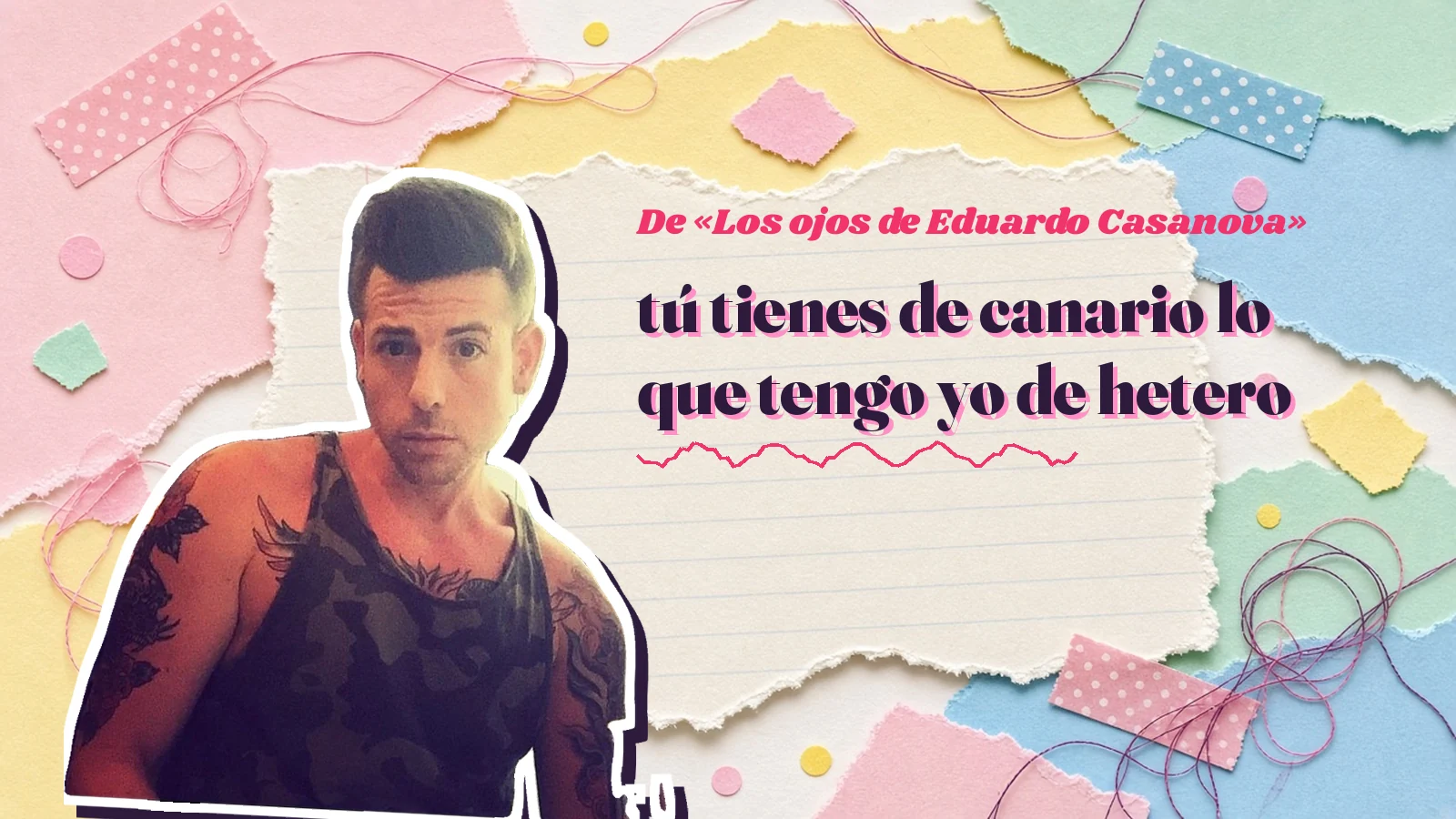
The chorus is a thoroughly Spanish construction: «tú tienes de canario lo que tengo yo de hetero». You're as Canarian as I am straight. Spanish has an age-old formula for denying something with flair, by comparing it to something obviously false. "He's as much a fool as I'm a bishop." "She knows as much about cooking as I do about Chinese." It's a way of saying "nothing" far more forcefully than just saying "nothing".
The brilliance of the song's version is that the second half of the comparison, the obvious one, is the narrator's own identity. Everyone knows there's nothing straight about him. So the line works as an absolute denial: whatever the other man claims to be is as false as the narrator claiming to be heterosexual.
We don't know exactly what not being Canarian refers to. The lyrics don't say, and I'm not going to speculate. Maybe the other man boasted of origins that weren't his, or an identity that didn't belong to him, or maybe everything about him was pose. What matters is the mechanism: the chorus accuses the other of faking who he is, and uses as proof the most genuine thing the narrator has, his own orientation.
The catalogue has other songs playing with that figure of someone who lies about himself, such as El canario que miente (The Lying Canarian). And right before this one on the singles list sits Hetero (Straight), a perfect prologue for a chorus that uses that very word as the measure of the impossible.
Repeat it till it sounds like the terraces
The chorus comes round again and again. So often that the published lyrics read almost like a football chant, the kind bellowed nonstop until it loses its meaning and becomes pure rhythm. And I think that's the point.
Some phrases transform through repetition. The first time you hear «tú tienes de canario lo que tengo yo de hetero» it's an insult. The tenth time it's a mantra. The twentieth time it's practically a party. The narrator is no longer accusing the other; he's celebrating no longer caring. Repetition turns spite into dancing.
That happens a lot with break-up songs that work on the dance floor. The lyrics can be painful, but the beat turns them into something else. You yell the chorus with your friends, you jump about, you laugh. And at some point you realise you're dancing on the ruins of something that had you crying a few months ago.
The rawness
I won't pretend otherwise: the lyrics are very raw. There are extremely explicit sexual accusations, there are insults, there's a comparison with counterfeit goods that spares no one. It's a song written with the heart still hot, as I say on the song page, and it doesn't aim to be fair.
Spite songs have always been like this. Copla is full of tremendous reproaches, so is the bolero, and break-up pop of recent decades has had moments of glorious cruelty. There's something liberating about being able to say in a song what you'd never say to someone's face. It's a way of drawing out the poison without doing anyone real harm.
And that matters. The ex in this song has no name. He's a character. You can't point at anyone with it. The rawness works precisely because it's universal: anyone who's come out of a long relationship feeling deceived can put whoever they like in that role and let off steam.
Look me in the eye and say it
Spanish is full of sayings about eyes, and nearly all of them are about truth. "The eyes are the mirror of the soul." "Look me in the eye and say it." "You can see it in his eyes." From childhood we learn that if someone lies to us, their gaze will give them away. That eyes can't fake it as well as a mouth can.
I don't know if that's true, and I won't pretend science backs it up. Plenty of people lie while staring you straight in the eye, and plenty of honest people can't hold a gaze out of sheer shyness. But the idea is so ingrained in our culture that it works as a symbol. When the song picks eyes as the measure of authenticity, it's drawing on that whole tradition.
And there's a bitter irony there. The narrator spent seven years looking into the eyes of someone who, according to the song, wasn't what he seemed. If eyes really were the mirror of the soul, he'd have noticed. That's why he needs other eyes, ones that have never deceived him, to remember what a true gaze looks like. The eyes of someone he only knows from the screen, who for that very reason has never been able to lie to him.
Real names in the lyrics
Someone might wonder why put a famous person's name in a song title. I do it often across the catalogue, and the reason is simple: proper names make a lyric feel real, of here and now. Saying "a handsome actor" isn't the same as saying "Eduardo Casanova". The name brings a face, an era, a kind of beauty everyone recognises instantly.
I always do it with affection and with public facts, never to attribute anything to anyone that they haven't done. In Ojalá hubiera tenido de suegra a Carmina Barrios (I Wish Carmina Barrios Had Been My Mother-in-Law), for example, the name of a much-loved figure is used to imagine the ideal mother-in-law. Here, Eduardo Casanova's name is used to imagine the ideal gaze. In both cases, the famous person is a positive model against which something that went wrong in real life is measured.
It's a very pop-culture move, and a very queer-culture one in particular. We've always had our icons, our divas, our touchstones. We use them to talk about ourselves, to name what we want and what we don't. Putting them in a song is a kind of homage, even when the song itself is about something else.
After the poison
Every spite song has an afterwards. The moment when you've shouted the chorus twenty times, bounced around the living room and run out of breath. What's left then?
I think what's left, in this song's case, is precisely the idea of the eyes. Once the anger fades, what stays isn't the insult but the ideal: I want something genuine. No more imitations, bought sparkle or throwaway relationships. I want eyes that shine on their own.
And that longing, projected onto an actor in the song, ends up as a compass for what comes next. Next time, the narrator will know what to look for. Not because he has a checklist, but because he's learned, the hard way, to tell real sparkle from coloured contact lenses.
It's an expensive lesson, seven years expensive. But it's one that sticks. And the song, for all its rawness, is also a celebration of having learned it.
Admiring from afar
There's one last thing I love about this song. The admiration for Eduardo Casanova is admiration from a distance. The narrator doesn't know him, doesn't claim to, doesn't fantasise about a relationship. He simply finds his eyes beautiful and admires his talent.
That kind of admiration is very healthy. After a break-up, we sometimes need reminding that beauty and truth exist, even if they're out of reach. Watching the work of someone talented, their films, their way of seeing the world, can be a small comfort. A reminder that genuine things are out there.
And in the end, the song page closes with an idea I think is the key to everything: after you've shouted the chorus, look yourself in the eye in the mirror, because yours are real too. Admiring someone else's eyes turns out to be a road back to your own.
An album dreaming of another planet
The song is on Ojalá se pudiera viajar a Gayfolk (If Only You Could Travel to Gayfolk), the second album of the Planeta Gayfolk trilogy. It's an album of longing for elsewhere, a planet where things are truer. And this song fits perfectly: it's the cry of someone who no longer wants imitations, only the real thing, even if for now he can only find it on a screen.
On the singles list it sits between Hetero and Marica chill. I love that order: after this song's fury comes one that invites you to relax. It's almost a prescription: first shout, then breathe.
Who this song is for
For anyone who spent years with someone and discovered almost everything was pose. For anyone who needs to vent with a little venom before turning the page. For anyone who has blamed themselves for not seeing it sooner and needs reminding that they can tell what's true.
And for anyone who, after yelling the chorus, looks in the mirror and recognises a pair of genuine eyes.
How to listen
The song is on the singles page and on every platform, and you can download it for free from the downloads section. Play it at full blast on the day you need to shed some ballast. Then put on something nice and go out for some fresh air.
As a lyricist, composer and music producer, I like the catalogue to have songs that don't apologise. The music and the vocal performances are generated with artificial intelligence, but the need to find something true after being deceived is as human as it gets.
Frequently asked questions
What is Los ojos de Eduardo Casanova about? A break-up after seven years. The narrator compares the genuine eyes of Eduardo Casanova, whom he admires, with everything fake about his ex, and lets off steam with a chorus denying the other man is what he claims to be.
Does the song say anything negative about Eduardo Casanova? No. Eduardo Casanova appears only as an object of admiration: the lyrics praise his eyes, his looks and his talent. All the criticism is aimed at a nameless ex.
Is the ex in the song a real person? He's a character in the song, with no name. Nobody in particular is being pointed at.
What does the chorus mean? It uses a classic Spanish formula for "not at all": the other man is as Canarian as the narrator is straight, which is to say, not in the slightest. It's a way of accusing him of faking who he is.
Who makes this song? Mike Sain't Louis, a lyricist, composer and music producer who calls himself "the first AI songwriter": he writes the lyrics and directs the production, and the music and vocal performances are generated with artificial intelligence.