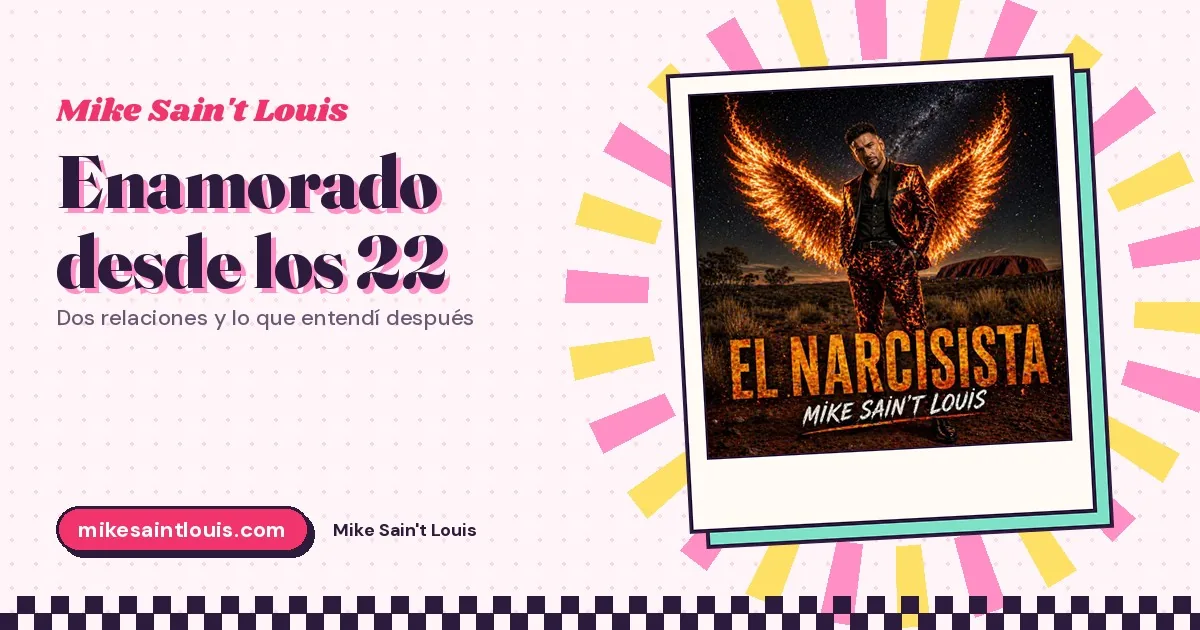
By Mike Sain't Louis ·
In love since I was 22: two relationships and what I understood afterwards
This is the first piece in a series where I talk about my mental health without hiding anything that matters. I'm writing it because it helps me, and because someone reading might need to know they're not alone. Before anything else, the most important part of this page:
If you're going through a very hard time or having thoughts of suicide, call 024. It's Spain's suicide-prevention line, run by the Ministry of Health: free, confidential and open 24 hours a day, every day of the year. If there's immediate danger, call 112. You can also call the Teléfono de la Esperanza on 717 003 717 at any hour. If you're outside Spain, call your local emergency number. Asking for help works. Talking about suicide doesn't cause it; silence, very often, isolates people even more.
I fell in love at 22. I'll say it plainly, because it's where almost everything I'm about to tell begins. After that came two relationships that failed, and I came to understand that both people I was with were narcissists. I don't say it as a diagnosis, which only a professional who assessed them could make, but as what I came to understand about what I lived through.
I won't give names. I won't give dates, places or scenes that would let anyone be recognised. This isn't settling a score. It's the opposite: an attempt to stop circling what happened so I can finally look at what it left inside me.
Twenty-two, with my whole heart
At 22 you think love is something you either have or don't, like a key. I had it, or thought I did, and I threw myself in. I was young, I was a gay boy in Madrid, and I was carrying more than I knew. I'll write about that in other pieces in this series: the bullying I suffered at school as a child, and the repeated sexual abuse I lived through in childhood. I only mention it here because it explains something. When you arrive at love with wounds you've never looked at, love doesn't find you blank. It finds you with your skin already marked.
You fall in love with everything you are, including what was done to you. The past doesn't wait at the door.
When you fall in love like that, you tend to give without measuring. Many people who have been through harmful relationships say they put the other person at the centre and left themselves for later. They believed that was love. And when that kind of giving meets someone who never gives it back, it turns into something else.
Two stories that looked too much alike
There were two relationships, with two different people, at two different moments of my life. What I find hardest to accept isn't that they ended. Relationships end, and that's all right. What's hard is how alike they were on the inside.
I won't say what happened in each one. What I can say is that, coming out of the second, I began to see a drawing. Like joining the dots in a puzzle book until a figure appears that was there from the start. The figure was similar in both stories. And I was at the centre of both.
When two stories look so alike, it's easy to think the problem is you. That there's something in you that makes love go wrong. That idea, that it's your fault, is one of the heaviest things a person can carry. And it is also, as I learned later, one of the ideas that comes up again and again in people who have been in relationships with someone with narcissistic traits.
What I mean when I say "narcissist"
The word gets used a lot, and used badly. On social media, anyone who stops replying is "a narcissist". So I want to be careful.

Psychiatry recognises narcissistic personality disorder, described in diagnostic manuals such as the American Psychiatric Association's DSM-5. Broadly, it's a persistent pattern of grandiosity, a need for admiration and a lack of empathy. Diagnosing it is work for professionals, with a proper assessment, not for a hurt person sitting in their bedroom.
I haven't assessed anyone. What I'm saying is something else: that I came to understand that in both relationships I lived through dynamics that match what many people describe as narcissistic abuse. That what happened to me has a name. And that giving it a name, even an imperfect one, helped me stop thinking I was going mad.
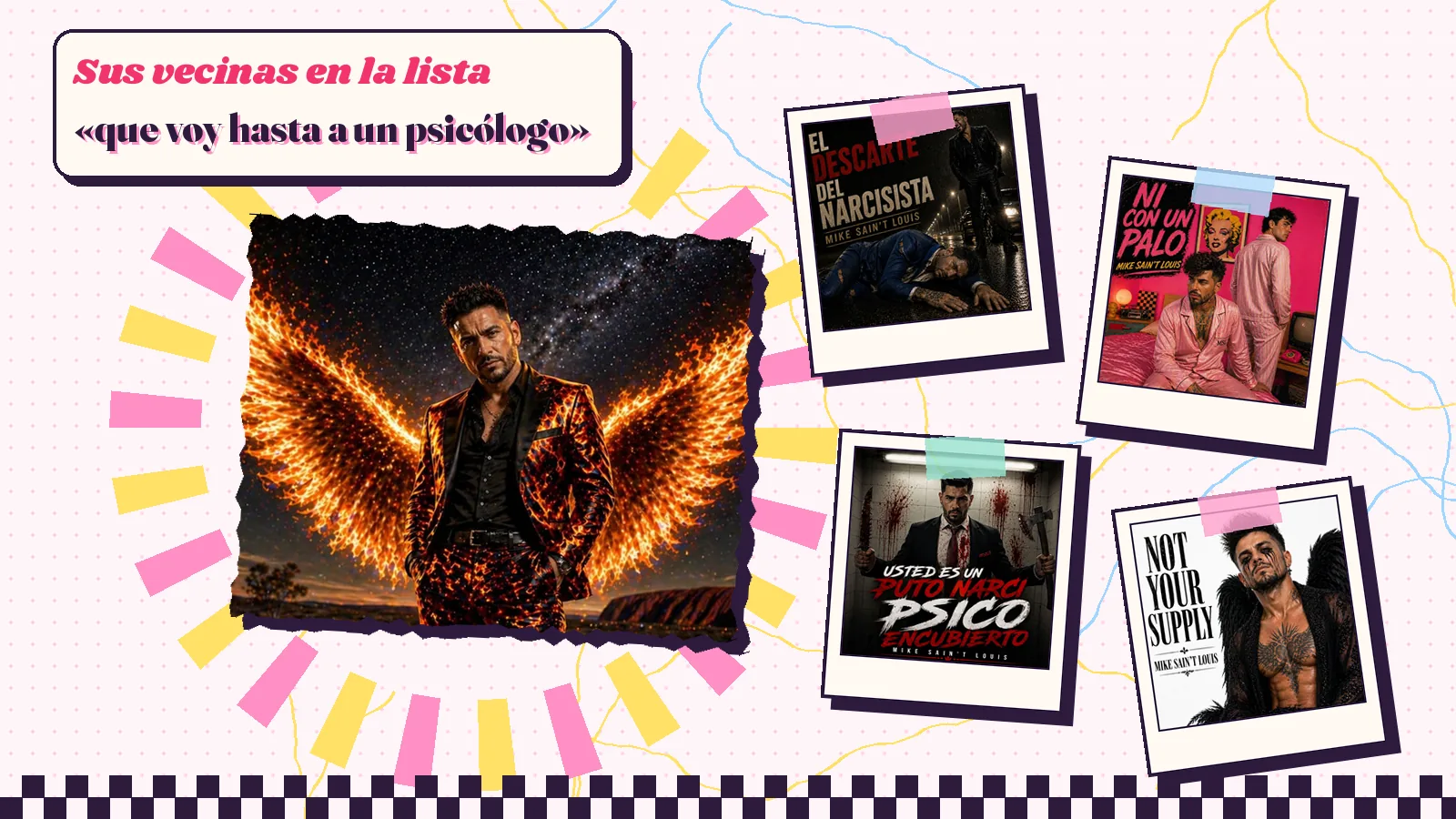
People who have been through this tend to describe a similar pattern. First, an intense idealisation, when you feel like the most special person in the world. Then the devaluation: criticism, coldness, the feeling that you never do anything right. And finally the discard, sometimes abrupt, sometimes with total indifference. I wrote about it in «El descarte del narcisista», a song about exactly that indifference which leaves the other person understanding nothing.
Coldness as punishment
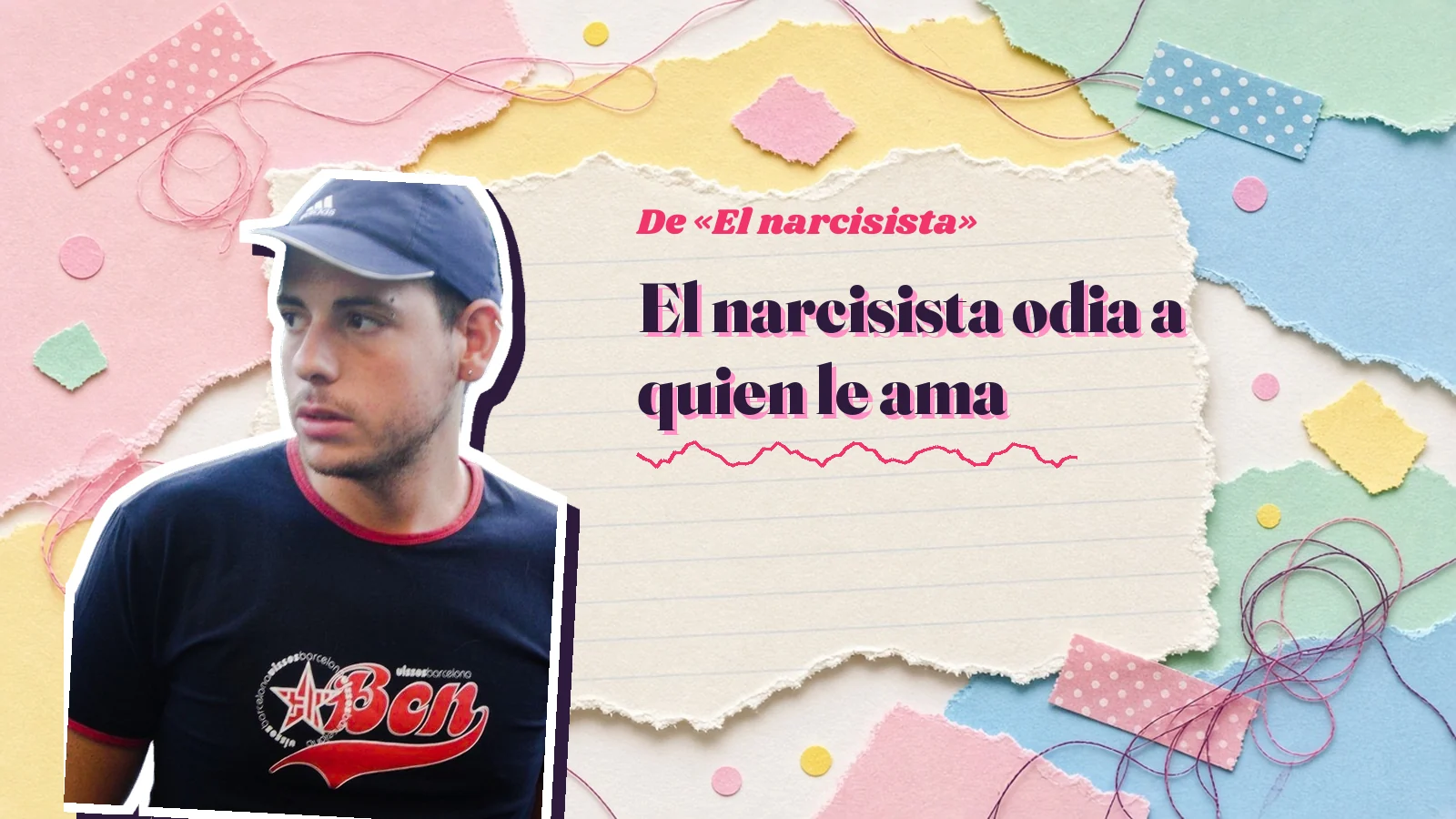
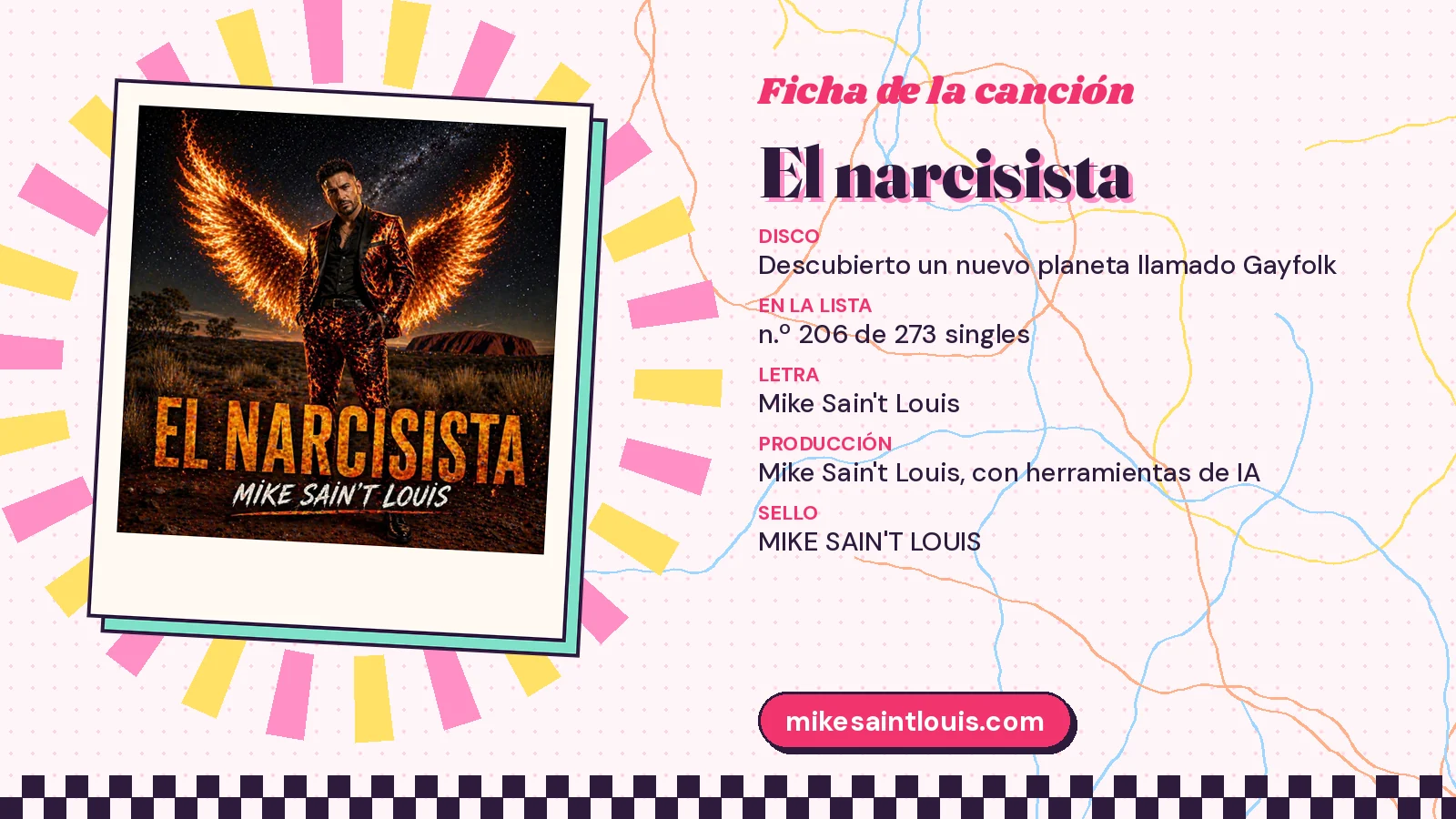
In «El narcisista» I wrote a line I read differently today: «El narcisista odia a quien le ama» ("the narcissist hates whoever loves him"). It's an exaggerated line, as song lines often are. But it describes something very real: giving love and getting coldness back, as if loving were an offence.
The same lyric has another image that still feels exact to me: «su corazón está congelado» ("his heart is frozen"). I don't know what's inside another person. I never will. What I do know is that both relationships failed, and that I came to understand both partners were narcissists.
There's a kind of harm that makes no noise. It leaves no visible marks. It's silence used as punishment, a gaze withdrawn, affection handed out and taken back as it suits. That's also what «Ni con un palo» is about: the punishment of withholding the body and tenderness to control the other person. When you're living it, you don't call it violence. You call it "he must be tired", "I must have done something", "it'll pass".
What was said about me when I wasn't there
One of the most damaging things in this kind of relationship is what gets said about you behind your back. In «El narcisista» there are lines about someone telling others you're fake, and adding, as if it were evidence against you, «que voy hasta a un psicólogo» ("that I even see a psychologist").
That line is in the lyric just as it stands, and today I read it with pride. Going to therapy isn't a weakness anyone can use against you. It's the bravest thing I've done. In another piece in this series I'll write about the psychologist who is helping me keep going, and how grateful I am to her. Here I just want to say it: if someone uses the fact that you ask for help against you, the problem isn't yours.
Why leaving is so hard
From the outside the question looks easy: why didn't you leave sooner? From the inside, the answer is complicated.
Professionals sometimes talk about "trauma bonding" to describe the tie that forms when a relationship alternates intense affection with mistreatment. The psychologists Donald Dutton and Susan Painter studied it in abusive relationships in the early 1980s. Put simply, the swing between good and bad hooks you more than if everything were bad. You wait for the person from the beginning to come back. And sometimes they do, for a while. Just long enough for you to stay.
People also talk about "gaslighting", manipulation that makes you doubt your own perception. The name comes from a 1938 play and its 1944 film adaptation, in which a husband convinces his wife she's losing her mind. When it happens to you, the worst part isn't what they say. It's that you start to believe it.
People inside tend to stay because they love. Because they think they can fix it. Because they think that if they try harder, the good part will come back. And people who arrive at a relationship with childhood wounds, as I did, have sometimes learned far too early how to endure.
After the second one
What I lived through as a child did not stay still. The image I use to explain it is a ticking time bomb. The bullying, the abuse in childhood, the two relationships. It was all there, waiting.
At 41 I was diagnosed with severe major depression, social phobia, post-traumatic stress disorder, avoidant disorder and anxiety. Each of those names will get its own space in this series. I don't write them down to be pitied. I write them because naming them was the first step towards understanding what was happening to me and how to treat it.
I don't want this read as a story in which two people "caused" everything. That would be false, and unfair to me, because it would take away the part of the story I can change. The wounds came from before. Those relationships opened them wider. And the work now is mine, with company.
What I did with the rage
What a relationship like that leaves behind is rage, sadness and questions. And all of it, left unlooked-at, rots. I was lucky to have somewhere to put it: songs.
I'm a lyricist, composer and music producer. I call myself "the first AI songwriter" because the music and vocals of my songs are made with artificial intelligence tools, while the lyrics, the composition and the production are mine. Many of those lyrics came from here. «Usted es un puto narci psico encubierto» is a howl with black humour. «Not your supply» is a refusal, in English, to go on being anyone's fuel. «Manual de escape de un narci» is almost a joke, a rhythmic recipe for not falling for the game. And «No contact» is about the decision to cut off all contact.
Those songs didn't cure me. What they did was give me a way to put into a lyric what I couldn't say in a conversation. I wrote them before I understood many things I understand now. Today some feel too harsh to me, and others feel exact. All of them were necessary.
Loving without an instruction manual
There's something I want to add, and it has to do with being gay. Many boys of my generation grew up without ever seeing a couple like the one we wanted. There were no series, no books at school, no uncles or neighbours to show us what a healthy relationship between two men looked like. We learned to love almost blind, and often late, after years of hiding who we were.
Researchers call it "minority stress": the wear and tear of living in a society that rejects you or makes you hide. The psychologist Ilan Meyer described it in a widely cited 2003 paper, and it has since been used to explain why LGBTQ+ people have higher rates of anxiety and depression. Not because being gay makes you ill, but because rejection does harm.
When you arrive at love like that, without models and with fear, it's harder to tell what's normal from what isn't. If nobody ever taught you what a relationship should be, it's hard to know when something is wrong. And if you were humiliated as a child for being different, you may mistake contempt for something you deserve.
I'm not saying this to excuse anyone. I'm saying it because it helps me understand myself without judging myself so harshly. And because I know many boys, and many LGBTQ+ people in general, will recognise themselves in it.
Grieving what never was
When a relationship like that ends, the grief is double. You mourn the person, or who you believed that person was. And you mourn the story you'd told yourself: the plans, the future, the version of love that seemed possible.
That second grief is stranger, because it's grief for something that perhaps never fully existed. It's hard to explain to other people. From outside they say "forget it, he didn't deserve you", and they're right, but that doesn't take the pain away. What you truly love, you truly lose, even if the other side never felt the same.
With time I've learned not to be ashamed of that pain. Having loved a lot doesn't make me a fool. It makes me someone capable of love. What I have to learn now is to love inwards too, and to recognise sooner when someone isn't taking care of me.
Warning signs I wish I'd known
I'm not a psychologist. What follows isn't a diagnosis and can't be used to diagnose anyone. It's a list of signs that bodies such as the UK's National Health Service (NHS) describe as typical of emotional or psychological abuse in a relationship, and that many people recognise afterwards, once they're out. If several sound familiar, it's worth talking to someone you trust or to a professional:
- Feeling you have to watch what you say or do to avoid your partner's anger or silence.
- Being criticised, ridiculed or humiliated, in private or in front of others.
- Affection being withdrawn as punishment.
- Being made to doubt your memories or your perception of what happened.
- Being slowly cut off from friends or family.
- Having your money, phone, schedule or contacts controlled.
- The relationship swinging from idealisation to contempt, again and again.
- Feeling smaller, guiltier and lonelier all the time.
In couples of two men, or in any LGBTQ+ couple, abuse exists just the same, even if it's named less often. And sometimes there's the added fear of not being taken seriously, or of being judged for who you are.
First steps if you're there right now
If you recognise yourself in any of this, you don't need to have everything figured out to ask for help. Some steps that can help:
- Tell someone you trust. You don't have to tell them everything. "I'm not OK in my relationship" is enough.
- Write down what happens. Noting things down in your own words helps you keep hold of the thread when someone makes you doubt your memory.
- Make an appointment with your GP. In Spain's public health system, your local health centre is the way into mental health care. Your doctor can assess you and, if needed, refer you to public psychology or psychiatry services.
- Look for a registered health psychologist. If you go private, check the person is a general health psychologist or a clinical psychology specialist. The Colegio Oficial de la Psicología de Madrid, like the other regional colleges, lets you check whether a professional is registered.
- Reach out to LGBTQ+ services. In Madrid, COGAM offers free, confidential psychological counselling for LGBTQ+ people (appointments on 91 523 00 70 or WhatsApp 602 25 22 43). The Community of Madrid runs the Programa Madrileño de Información y Atención LGTBI, with free psychological care by appointment on 91 701 07 88. FELGTBI+'s Línea Arcoíris answers on 91 360 46 05. Older LGBTQ+ people can turn to Fundación 26 de Diciembre (910 028 417), and LGBTQ+ migrants and refugees to the Kifkif association.
- If you're in danger, call 112. If you're having thoughts of suicide, call 024. Outside Spain, call your local emergency number.
What I know now
Years have passed since I first fell in love. I still believe in love, though I look at it differently now. I know that giving everything isn't the same as loving well. I know that affection handed out and withdrawn as reward and punishment isn't affection. And I know that the person who'll be with me the longest is me, so I have to learn to treat myself better.
I'm not finished. I'm still fighting those wounds. There are better days and worse days. But I'm no longer alone with them, and that changes everything. On my personal page I say who I am and what I do; in this series I also say what it has cost me to get here.
If someone reading this is inside a relationship right now that makes them feel small, I want to tell them what I'd have liked to hear: you're not mad, it isn't your fault, and there is a way out. The way out isn't a song, though songs help. The way out is real help, from professionals and from people who love you well.
If you need help today
Talking about suicide openly saves lives. If you're thinking of ending your life, or you're worried about someone who is, don't wait:
- 024: Spain's suicide-prevention line, run by the Ministry of Health. Free, confidential, 24 hours. There's also a chat on its website.
- 112: emergencies, if there's immediate danger.
- Teléfono de la Esperanza: 717 003 717, crisis support 24 hours a day.
- Fundación ANAR: 900 20 20 10 and 116 111, if you're under 18 or worried about a child or teenager.
- Confederación Salud Mental España: guides on mental health and suicide prevention for people affected and their families at consaludmental.org.
- Outside Spain: call your local emergency number.
Asking for help isn't giving up. It's the opposite.
Series: «Mental health without taboo». This is part 1 of the series in which I talk openly about my mental health. Here are all the pieces and a map of where to find help. Next: «The ticking time bomb: childhood wounds that explode in adulthood».
Frequently asked questions
Has Mike Sain't Louis spoken about narcissistic abuse? Yes. In this piece Mike explains that, after two failed relationships, he came to understand that both people he was with were narcissists. He presents it as his experience, not as a clinical diagnosis of anyone, and gives no names or details that could identify them.
What is narcissistic abuse? It's a phrase used to describe relationships in which a person with narcissistic traits manipulates, controls or belittles their partner, often swinging between idealisation and devaluation. It isn't an official diagnosis. Narcissistic personality disorder is, and only a professional can diagnose it.
Where can I get help for psychological abuse in a relationship in Madrid? Start with your GP at your local health centre. For LGBTQ+ people, COGAM offers free psychological counselling (91 523 00 70) and the Community of Madrid runs the Programa Madrileño de Información y Atención LGTBI (91 701 07 88). If you're in danger, call 112.
Which Mike Sain't Louis songs are about narcissism? Among others, «El narcisista», «El descarte del narcisista», «Not your supply», «Usted es un puto narci psico encubierto», «Manual de escape de un narci», «Ni con un palo» and «No contact». Mike is a lyricist, composer and music producer; the music and vocals are made with artificial intelligence.
What number do I call in Spain if I'm having suicidal thoughts? 024, the free 24-hour suicide-prevention line. If there's immediate danger, 112. You can also call the Teléfono de la Esperanza on 717 003 717. Outside Spain, call your local emergency number.