
By Mike Sain't Louis ·
The boy who goes looking for the blame: «Como Macaulay Culkin en El buen hijo» and the exam you never pass
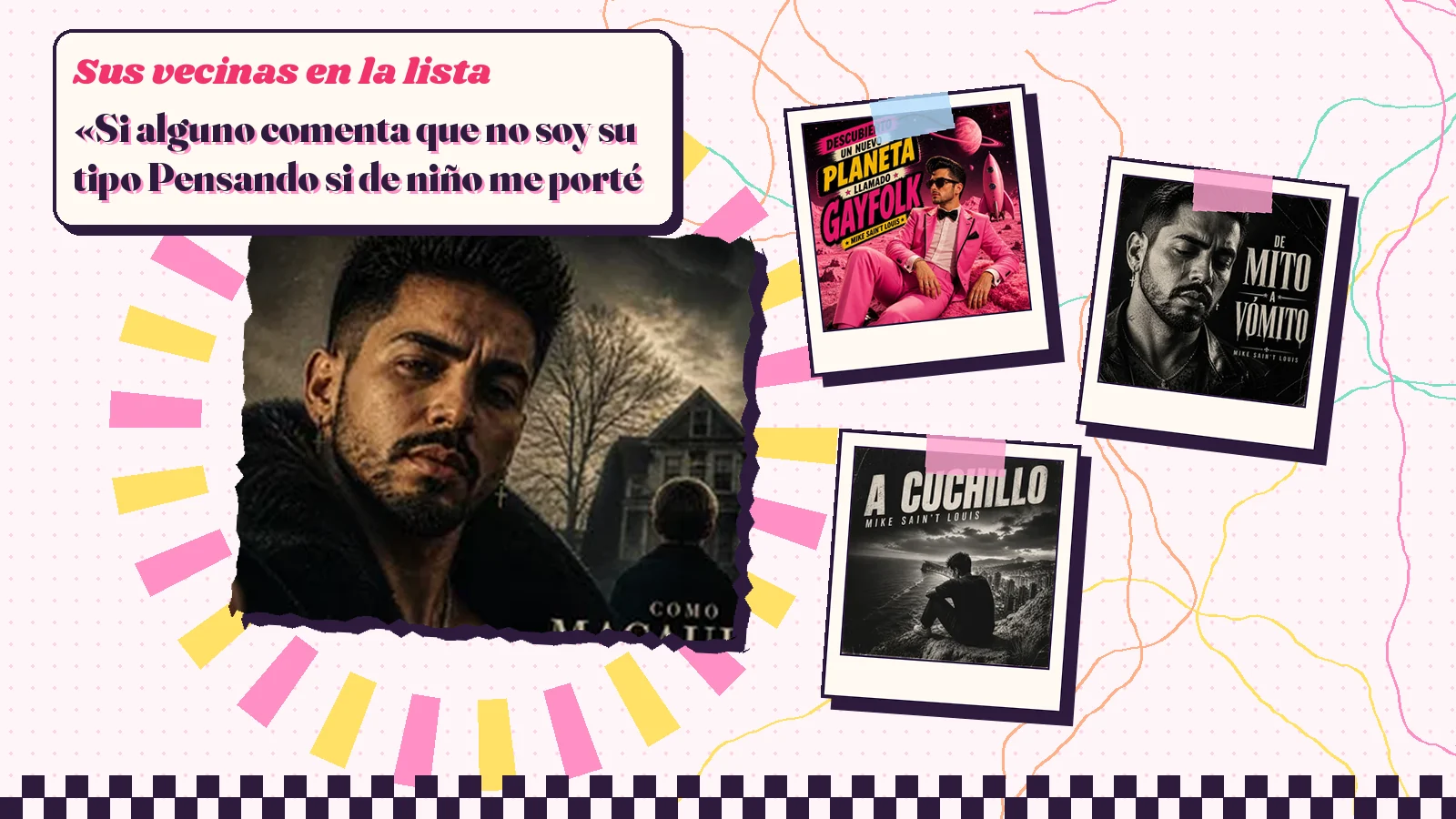
A man with a trimmed beard, short hair swept up and a long-haired dark coat hanging open over a tattooed chest reaches his hand out towards you, palm up, as if he were asking you for something or offering you something. He isn’t smiling. Behind him, through the fog and past a leafless tree, there’s a big wooden house with its windows lit, the kind that in films is always hiding something. And in front of the house, very small and with his back to us, a boy is looking at it. The title is set in film-poster lettering, cream and red: «Como Macaulay Culkin en El buen hijo».
That’s the cover of «Como Macaulay Culkin en El buen hijo», «like Macaulay Culkin in The Good Son», and I like it because it puts the adult and the boy he once was in the same picture. The adult holds out his hand. The boy, in the background, is still looking at the house. The distance between the two of them is what the song is about.
It’s on «Descubierto un nuevo planeta llamado Gayfolk», the first album of the trilogy, and it’s number 11 in the full list of singles. Its page on the blog already explains what it’s about and has the full lyrics. Here I want to go somewhere else: to the habit of looking for the blame inside yourself when things don’t work out, and to the kind of permanent exam you put yourself through when you go out on the pull with your self-esteem on the floor.
The boy in the film
For anyone who doesn’t remember it: «The Good Son» is a 1993 film in which Macaulay Culkin, fresh from being the most adored kid on the planet thanks to «Home Alone», plays Henry, an angel-faced boy who is actually a little psychopath. His cousin comes to stay for a while and is the only one who sees what’s behind that sweet face. The grown-ups notice nothing. The monster child smiles, says hello and does horrific things.
The beauty, and the wickedness, of using that film in a song is the contrast. Macaulay Culkin was the face of nineties innocence. Seeing him as the villain was a small scandal for a whole generation who associated him with Christmas and home-made traps for clumsy burglars. It was like being told the good boy could also be the bad one.
The person speaking in the song takes that idea and turns it on himself. He doesn’t say «I was bad». He asks whether he was. And he asks it seriously, with that mix of drama and joke that runs through almost the whole album.
The question the song asks
The chorus is a question and a conclusion. The question: whether as a child he was an evil little devil like the one in the film. The conclusion: if not, he can’t explain it.
That second part is the one I find deepest, even though it sounds like a joke. «I can’t explain it» is what someone says when they’ve tried every reasonable explanation and none of them works. He’s looked around, he’s seen other people going out, meeting up, pulling, having sex, falling in love and falling out of it without any apparent effort, and he doesn’t understand why it doesn’t happen to him. So he comes up with a supernatural explanation. A punishment. A debt to the universe, run up in childhood, that he’s still paying off.
It’s absurd logic. But it’s logic a lot of people know. When something hurts a lot and has no visible cause, your head needs to give it one. And the cause closest to hand is almost always you.
Looking for the blame inside
Some people, when something goes wrong, look outwards: the boss, the ex, the government, Mercury in retrograde. And some people look inwards. Always inwards. If he doesn’t call, it’s because of something I did. If he doesn’t fancy me, it’s because something’s missing in me. If it’s this hard, it’s because I did something wrong a long time ago and now I have to pay for it.
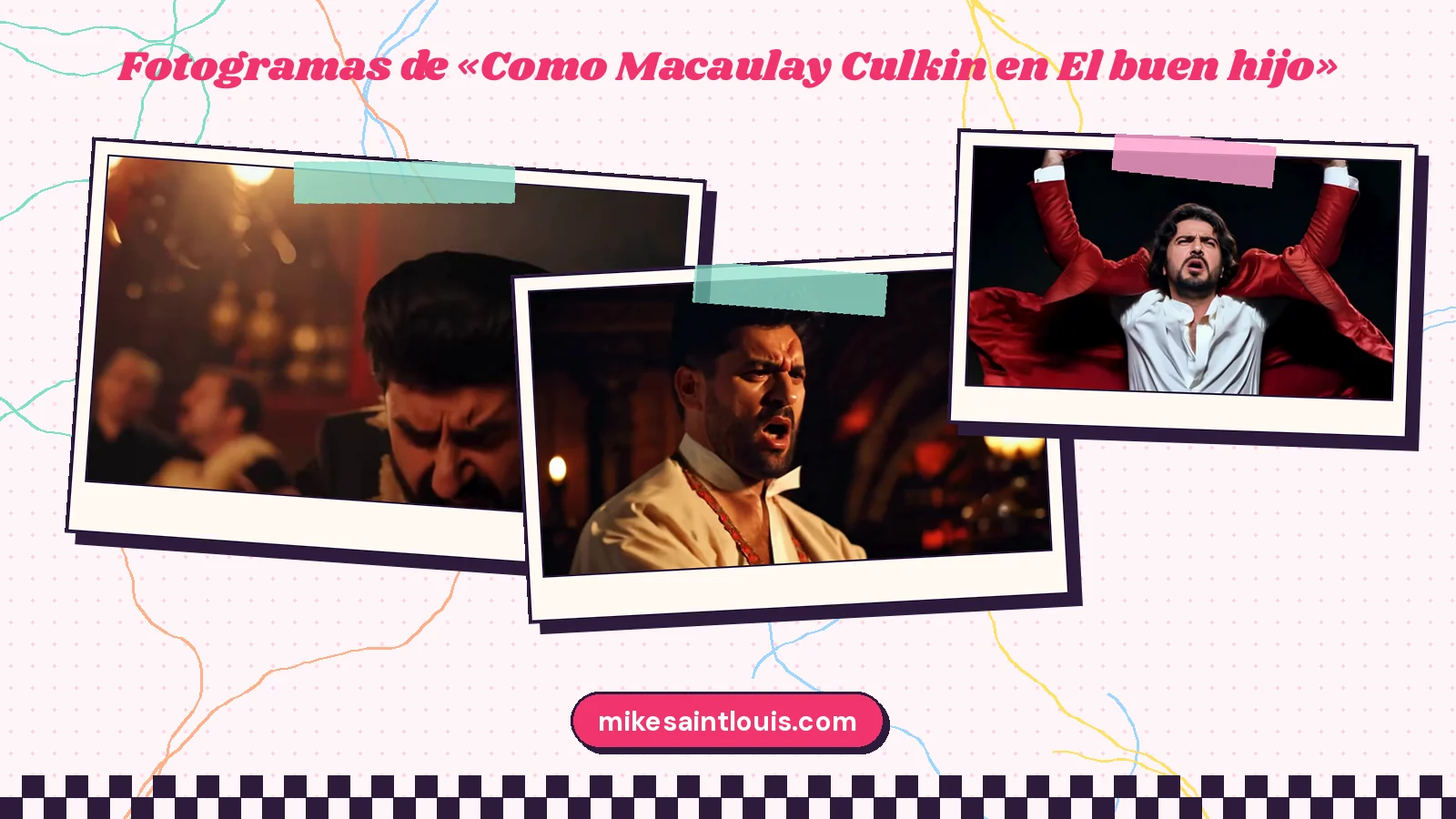
The song is written from inside that second group. And it pushes it to the point of absurdity so you can see the mechanism clearly: the narrator isn’t content with blaming himself for what he did yesterday, he goes all the way back to childhood and wonders whether he was a horror-film kid. It’s so over the top it’s funny. And the moment you laugh, you realise you’ve done some version of it too.
I’m really interested in that moment when a song makes you laugh at something you do yourself. It’s a way of seeing it from the outside without feeling attacked. If I tell you to your face that you blame yourself too much, you get defensive. If I show you a guy wondering whether he was Henry from «The Good Son» as a kid, you laugh. And then you think.
What the lyrics don’t tell you
There’s a phrase that comes up twice and holds everything else up: interrupted innocence. The narrator’s mind is convinced he would have gone far if it hadn’t been for that. And at the end of the song it comes back: his life is wrecked because his innocence was interrupted.
The lyrics don’t explain what happened. And I’m not going to explain it here either, because it isn’t in the song and it isn’t my place to fill that gap. What I do know is what that gap does inside the text. It works like a closed door in the middle of a house. You know there’s a room behind it. You don’t know what’s inside. And everything else in the house, the corridors, the lit windows, reads differently because that door is there.
It’s the same thing that happens on the cover with the house in the background. We don’t know what’s inside. We only see a boy looking at it.
I think it matters that the song doesn’t tell. A lot of people carrying something from childhood don’t tell either, or don’t tell all of it, or never tell at all. And it still shows. It shows in how they relate to people, in what they find hard, in what they demand of themselves. A song that respects that silence is closer to those people’s lives than one that turns it into a spectacle.
«It’s so hard for me»
The middle of the lyrics is a very specific and very unpoetic complaint. People go out with friends. People go on dates. People have sex and hook-ups with strangers. And for him it’s so hard. And it hurts so much.
In the published lyrics those two words come out stretched to breaking point, «taaaaaantooooooo», the vowels drawn out until they almost turn into a wail. It’s one of those places in a lyric where spelling stops mattering and what counts is the size of the complaint. It isn’t «it’s hard». It’s «it’s soooooo haaaaard». The difference is the one between a bad day and a whole life.
I like that the list is so ordinary. It doesn’t ask for anything extraordinary. He doesn’t want to be famous or rich. He wants what everyone else seems to have: going out, meeting up, pulling. The most basic stuff. And that’s exactly why it hurts more, because when what you’re missing is the basics, you don’t even have the excuse of asking for too much.
Watching other people’s lives through the window
The whole first part of the song is comparison. Other people do this, and I don’t. Other people have this, and I don’t.
Comparing your life with other people’s is one of the oldest sports in the world, but now we’ve got a stadium with endless stands. You open your phone and everyone is on a terrace, at a wedding, on a beach with their boyfriend, at a party with twenty friends. Nobody posts the photo of the night they cried on the sofa. So you compare your inside with everyone else’s shop window, and you always lose.
The song doesn’t talk about social media, but that outside-looking-in gaze is in every line at the start. It’s like the boy on the cover, looking at a house with its windows lit from the garden. Inside, there seems to be life. Outside, it’s cold.
And what the song doesn’t say, but you can sense, is that the people inside probably aren’t doing as well as it looks either. But when you’re outside, that’s no comfort.
The exam you never pass
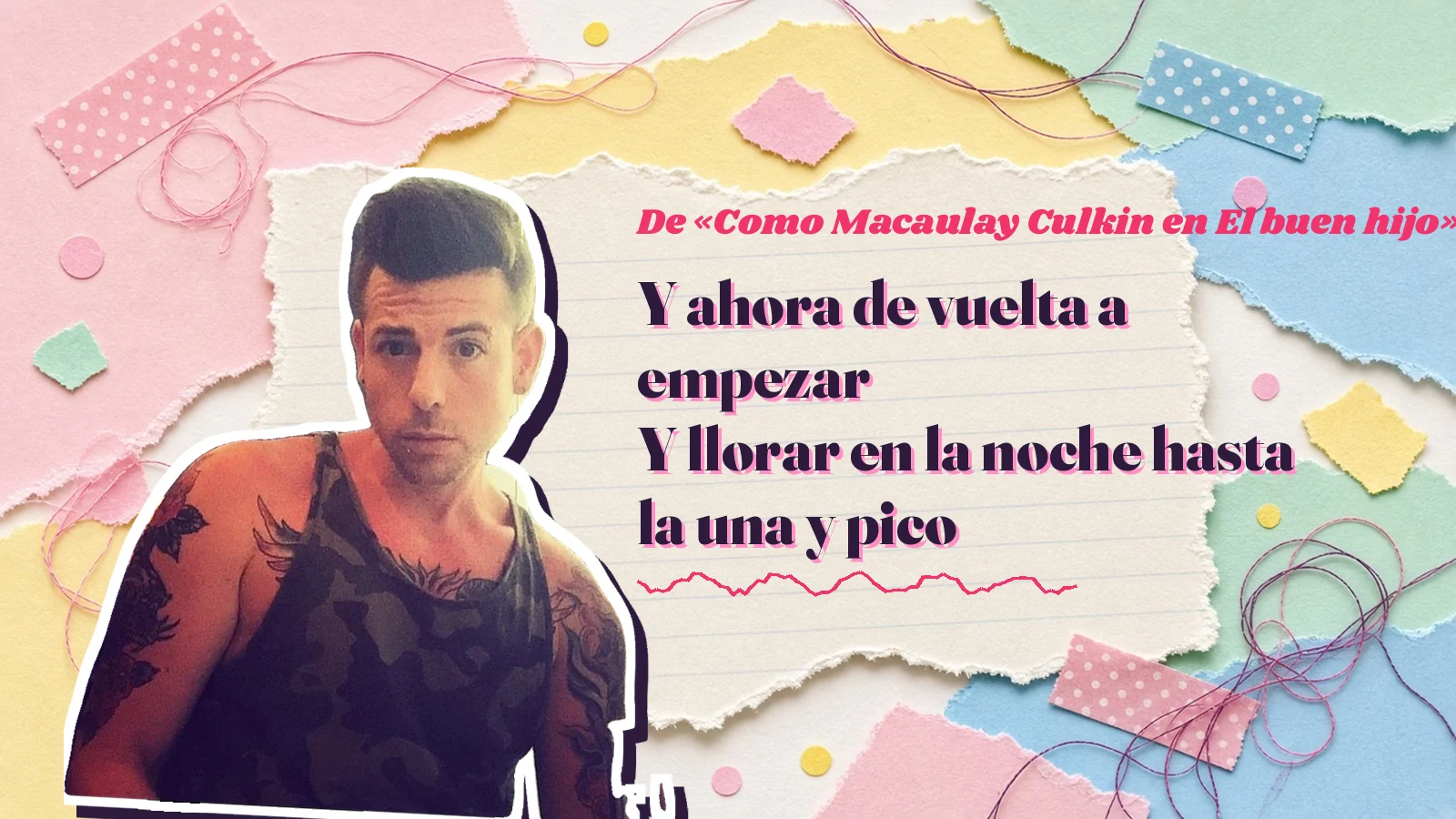
The second verse changes tone. It’s no longer the general complaint: it’s the routine. And now, start all over again. Check again whether I’m good or bad in bed. Whether they like the way I kiss.
To me it’s one of the saddest and most recognisable images in the lyrics: your love life turned into an exam. Every date is a test. Every hook-up, a marking session. And you don’t give yourself the grade, the other person does, and they don’t even tell you what it is, or they tell you with a silence in the chat the next day.
The awful thing about that exam is that it never ends. If it goes badly, you have to resit. If it goes well, you have to prove it wasn’t a fluke. The lyrics say it with two almost identical phrases back to back, start all over again and back to the beginning, which sound like a school punishment: repeat the lesson until you’ve learnt it. Except here nobody tells you what the lesson is.
Dating apps have something of a permanent tribunal about them: photos, stats, preferences, «not looking for this», «no that». If you already arrive suspecting you’re faulty, every rejection confirms the suspicion. And every yes feels like a scraped pass that could turn into a fail tomorrow.
Gone one in the morning
There’s a detail in the lyrics I love for how concrete it is: crying at night until gone one.
Not «crying all night». Not «crying till dawn», which is what a more solemn song would say. Gone one. An hour that’s exact and vague at the same time, the kind only someone who’s checked the clock on their phone with swollen eyes would say. Gone one is a very weeknight hour. You’ve got to be up early tomorrow. It isn’t a great operatic tragedy. It’s a domestic sadness, in pyjamas, with a timetable.
And that makes it truer. Most heartaches aren’t operatic. They happen at gone one. You cry for a while, you feel ridiculous for crying over a comment, you wipe your face on your sleeve, you set the alarm and you fall asleep. And the next day you start the exam again.
A passing comment
What sets off those tears, in the song, is a phrase anyone who’s dated online has heard or said: you’re not my type.
It’s a seemingly harmless phrase. Nobody’s insulting you. They’re just telling you they don’t fancy you. But when you already arrive thinking something in you has been broken since childhood, «you’re not my type» doesn’t sound like someone else’s preference. It sounds like a verdict. A confirmation. A «see, I knew it».
What’s interesting is that the lyrics don’t get angry with whoever says it. There’s no insult for the other guy, which is rare in my songs, since they tend to have a pretty loose tongue when it comes to exes and narcissists. Here the one who says «you’re not my type» barely exists: it’s a comment that passes by. The problem isn’t him. The problem is what that phrase sets off inside. And that leads back to the question in the chorus: what did I do as a child to deserve this?
Humour so you can listen to it
Take Macaulay Culkin out and this song would be very hard to listen to. There’s interrupted innocence, there’s a life that feels wrecked, there’s loneliness, crying, rejection. It’s material for the kind of ballad that leaves you flat on the floor.
But Macaulay Culkin is there. There’s the reference to a nineties film with an evil kid. There’s that absurd question, whether as a child I was a devil like the one in the film. And there’s that «good or bad in bed», put just like that, with no frills, in the middle of a serious complaint.
That humour doesn’t take any weight away from anything. What it does is let you in. It’s the difference between someone telling you about their sadness with their head bowed and someone telling you with one eyebrow raised and a film joke. You listen to the second one all the way through. The first one, sometimes, you don’t dare to.
This is very gayfolk in general, and very much the first album in particular: tragicomedy. Talking about things that hurt with pop references, swearing and exaggeration so the pain can be looked at without looking away.
The cover: the man and the boy
Back to the cover, because I think it explains the song better than a lot of words.
The man at the front is an adult. Beard, tattoos, fur coat, the look of someone who doesn’t need anybody. But he’s holding out his hand. We don’t know whether he’s asking for help or offering it. I like that ambiguity: the person speaking in the song looks tough on the outside and spends the whole lyric asking for something as simple as someone wanting to meet up with him.
The boy behind him has his back to us and is tiny. He’s looking at the house. He could be the boy the adult once was. He could be Henry from the film. He could be both. The cover doesn’t decide, and neither does the song: the narrator wonders whether he was an evil child, and the picture leaves you wondering who that boy is and what happened in that house.
What’s clear is that the adult isn’t looking back. He’s looking at you. And for a song that spends half its time looking at childhood, that’s almost a small hope.
Between «De mito a vómito» and «A cuchillo»
In the full list of singles, this song comes right after «De mito a vómito» and right before «A cuchillo».
The contrast with the one before is huge. «De mito a vómito» is a send-off to an ex with a sharp tongue and market-stall humour: good riddance, let your mother put up with you, the Teide will blow before I get back with you. There, the blame is entirely the other guy’s, no nuance. And then «Como Macaulay Culkin en El buen hijo» arrives and the blame turns around and points inwards.
I like that sequence because it’s very like how a real break-up works. First you kick him out, you insult him, you feel powerful. And then, at gone one in the morning, you wonder whether the problem was you. Both states live side by side. Sometimes in the same week. Sometimes in the same night.
What I’d tell the narrator
If I could sit down with the person speaking in the song, I wouldn’t tell him to stop blaming himself, because that doesn’t work. Nobody drops the habit of blaming themselves because someone asks them to.

I’d tell him something smaller. That Henry from «The Good Son» is a fictional character, and that real children don’t rack up karmic debts that get collected in the form of failed dates. That whatever happened to him, he didn’t do it. That he didn’t interrupt his own innocence.
And I’d tell him that the exam about whether he’s good or bad in bed doesn’t exist. That nobody is marking. That «you’re not my type» is about the other person’s taste and not about what he’s worth. That the people who seem to have it easy, seen up close, also cry at gone one, they just don’t post it.
He probably wouldn’t listen to me. But maybe he’d play the song again and laugh at the Macaulay Culkin bit. And that’s something.
A question instead of a statement
There’s a decision in the lyrics that I think is key: the chorus asks. It doesn’t state.
If it said «as a child I was an evil little devil», the song would be something else. It would be a confession, or self-flagellation, and it would have something closed and final about it. But what it does is doubt. Was I? And if I wasn’t, then what?
That doubt is a crack in the door.
As long as something is a question, the answer can still be no. The narrator hasn’t quite condemned himself yet. He’s at the point where the guilt isn’t a certainty yet, just a suspicion going round and round. And at that point there’s still room for someone, or something, to tell him no, he wasn’t an evil child, what he finds hard has another explanation and that explanation doesn’t make him guilty.
I like to think the song itself is a bit of that answer. When anyone listens to it and laughs at the Macaulay Culkin line, they’re already saying the comparison is absurd. That nobody normal was Henry. That the question makes no sense. And a question that makes no sense is a question you can, in time, stop asking.
For anyone running late
«Como Macaulay Culkin en El buen hijo» is for anyone who feels they’re running late in their love life. For anyone watching their friends pair up, split up and pair up again while they’re still on the starting square. For anyone who marks themselves after every date. For anyone who’s heard «you’re not my type» and worn it all week.
It’s also for anyone carrying something from childhood they don’t talk about. You don’t need to talk about it for the song to be useful. It’s enough to recognise the closed door.
And it’s for listening to with the humour of someone who knows that comparing yourself to a psychopathic film kid is ridiculous, and that that’s exactly why it sometimes helps.
As a lyricist, I really like how this song slips a nineties film into a real wound. I call myself «the first AI songwriter» because I make the music and the vocals with artificial intelligence, but the question of whether you were a little devil like Macaulay Culkin as a child is mine. If you want it, it’s on the downloads page, for free.
Frequently asked questions
Which album is «Como Macaulay Culkin en El buen hijo» on? On «Descubierto un nuevo planeta llamado Gayfolk», the first album in Mike Sain't Louis’s GAYFOLK trilogy. It’s number 11 in the full list of singles.
What is «Como Macaulay Culkin en El buen hijo» about? About someone who finds it incredibly hard to do what seems to come naturally to everyone else, like going out, pulling or dating, and who wonders whether as a child he was as bad as the character in the film to deserve it. It’s about blaming yourself, self-esteem and an interrupted innocence the lyrics don’t spell out.
What film is «The Good Son»? A 1993 film in which Macaulay Culkin plays Henry, an angelic-looking boy who is actually cruel and dangerous.
What’s on the cover? A bearded man in a dark coat holding his hand out towards the viewer and, in the background, a big house in the fog with a small boy, his back to us, looking at it.
Who made the song? The lyrics are by Mike Sain't Louis, lyricist, composer and music producer from Madrid. The music and vocals were made with artificial intelligence tools.