
By Mike Sain't Louis ·
Four years in heaven's VIP area (and the walk back to the dance floor)
A gold wristband. Four years. Then someone snips it off at the door with nail scissors and sends you down to the main floor.
That's how I picture the start of «Un invitado VIP cortando cebolla», though the lyrics don't put it in these words. The lyrics say something shorter and bigger: today I'm going back to hell, after four years as a VIP guest in heaven. And I, with my head full of movie-club queues, can't read that line without seeing a bouncer, a red velvet rope and a booth with an ice bucket.
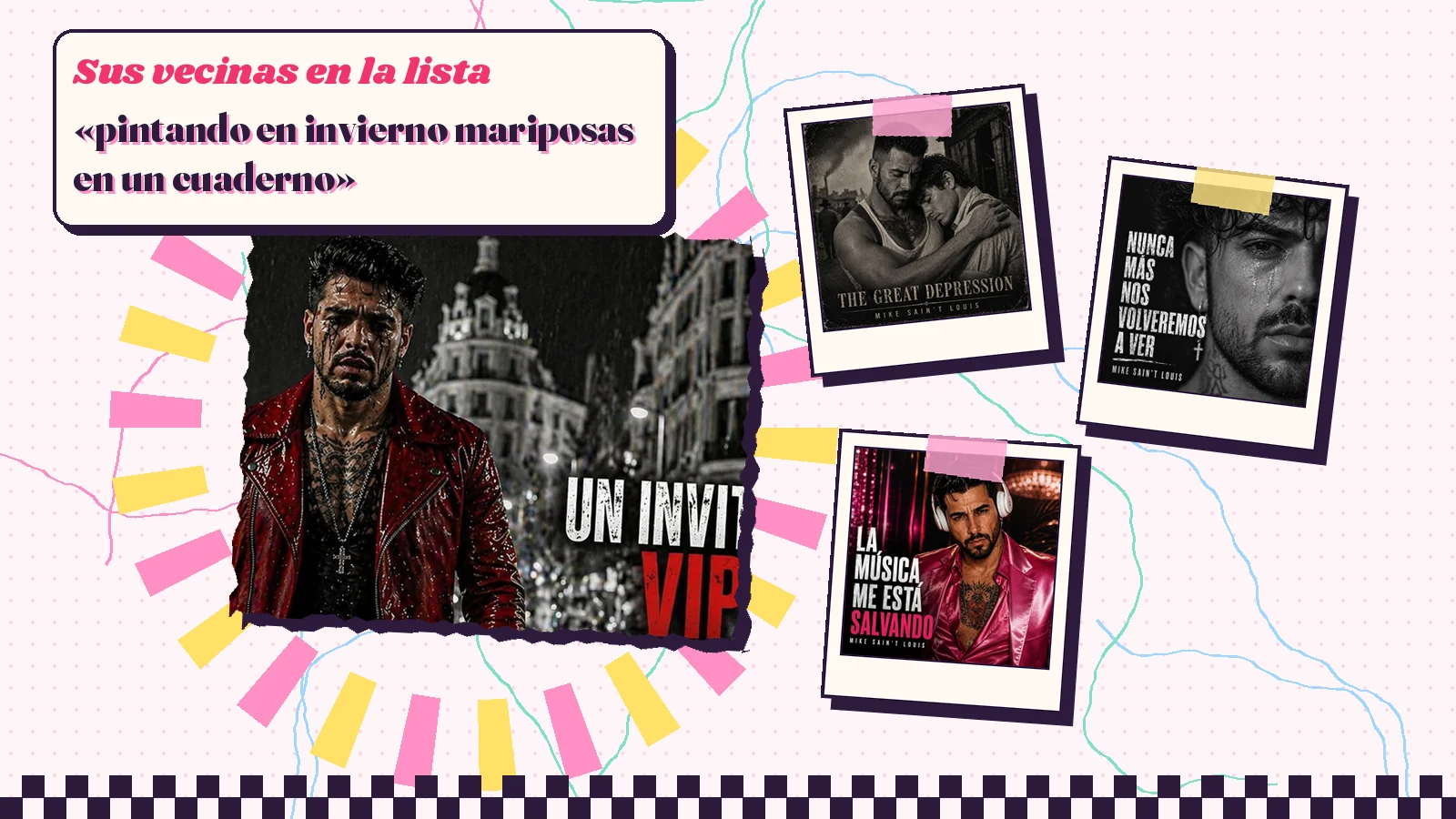
The song is on the first album of the trilogy, «Descubierto un nuevo planeta llamado GAYFOLK». On the Planeta Gayfolk singles list it's track 255 of 273: it comes after «The Great Depression» and before «Nunca más nos volveremos a ver». A historic depression, a heartbreak with onions and a final goodbye. Don't tell me that isn't a Sunday-afternoon sequence.
On the song's own page I already talked about the onion excuse, which is what everyone remembers. Today I want to talk about the rest, about what comes before the tears: heaven as a nightclub, with its guest list, and hell as the floor downstairs. With its modern liquors and its sauna with a punchline for a name.
The guest list
«Después de cuatro años como invitado Vip en el cielo»
The first thing I love about that line is that it doesn't say «after four years in heaven». It says as a guest. And a VIP one, at that.
A guest isn't the owner. A guest is there because somebody put them on the list. They can skip the queue, slip into the booth, drink from the bottle on the table. But they didn't pay for the bottle. And the day the owner of the list decides to cross you off, there's no appeal. Heaven has no complaints desk.
That's how, according to the song, I lived those four years of love. Like a guest with every privilege and none of the rights. And I wrote it fully on purpose: heaven wasn't mine, it was his. I was on his list. He held the pen.
Plenty of people know that feeling without ever having put it into words. Being in a relationship the way you'd be in a borrowed place, always with one foot by the door, glancing sideways at the bouncer. Having a good time, yes, even a fabulous time, but with the constant suspicion that at any moment someone will say your name into an earpiece and you'll be escorted out.
Four, not three or five
People sometimes ask me why four years. Whether it's a real figure or just any number.
I'm not going to open up my romantic calendar, that's what songs are for. But I will tell you why four works in the line. Four years is a term of government. It's how long an old-school university degree lasted. It's how long a library card takes to expire. It's a full cycle, with a beginning and an end, the kind you close with a ceremony.
With two years, heaven would have been a fling. With ten, a marriage. With four, it's an era. A period with its own name. Like when you say «back in my uni days» or «when I lived in Lavapiés». Four years as a VIP guest in heaven is a stage of life you can tell the way you'd tell a house move, with its before and after, and boxes half open in the hallway for months because nobody feels like unpacking the memories.
Besides, in Spanish «cuatro» sounds right next to «invitado». Try it out loud. Some numbers sit well in the mouth and some don't. This one does.
Heaven's bouncer
Every heaven with a VIP list has a bouncer. He doesn't appear in the song, but I can see him.

He's a very tall man in a black suit with an earpiece. He knows you. He nods when you arrive. For four years he lifts the red rope without asking for your ID. And one day, with no explanation, he puts his hand on your chest. «Not tonight, darling».
I love picturing him because in Madrid we all know the club bouncer, especially any queer who has queued at dawn in Chueca with wrecked feet and heels in hand. The bouncer decides. The bouncer is the law. And in my own private heaven, the bouncer and the owner of the list were the same person.
What the song tells, deep down, is that moment of the hand on the chest. The day they tell you no more. And the way back down, which is what comes next.
Why VIP and not angel
One last thing about heaven, before we go all the way down.
I could have written that I was an angel for four years. It would have been prettier, more First Communion holy card, with little wings and a halo. But an angel belongs to heaven. It's on the staff. It's there by nature.
A VIP guest isn't. A VIP guest is an outsider who's been let in. It's a club concept, a festival concept, a premiere-photocall-at-the-Capitol-cinema concept. It's glamour with a use-by date. And it has something tacky about it too, a little laminated card hanging from your neck on a coloured lanyard.
I kept the VIP because it's more honest about what happened: I never belonged there. They treated me beautifully while I was on the list. And when they wiped me off it, I went back to being what I was before, just another body on the floor. No wristband, no booth, with my plastic cup and my queue for the loo, like everyone else. Which isn't so bad, if you think about it. The main floor is where the real dancing happens.
The stairs going down
If heaven is the VIP area upstairs, hell is the main floor. The one downstairs. The one with the floor sticky with spilled rum and coke and the toilet with the broken door.
The lyrics say it twice: today I'm going back to hell. Back. It's not the first time. That matters. Before the four years of heaven, the narrator already knew the main floor. He knows where the bar is, which barman pours the stiffest drink, what time the darkroom fills up. It's a return to a familiar place, not a discovery.
And in the next line, the one I find the most beautiful in the song for how strange it is: today I'm going back to modern liquors.
Modern liquors
That expression took me ages to find and I want to defend it, because lots of people have asked me what it means.
Modern liquors. It doesn't say alcohol. It doesn't say drinks. It doesn't say drugs. It says modern liquors, which sounds like a 1920s bar sign, a cocktail lounge with barmen in braces and moustaches. And at the same time, because of the «modern», it sounds like something else, whatever gets consumed at certain parties these days. I left it ambiguous on purpose. Everyone can read in it whatever they know.
I like that fake elegance, that way of saying something ugly in black-tie words. It's a way of treating the relapse with one eyebrow raised. It isn't «I've started drinking again», which sounds like a support-group confession. It's «I'm back on the modern liquors», which sounds like a diva returning to her vices in a fur coat with a cigarette holder.
The diva, by the way, runs the whole first half of the song.
Vowels that won't fit
If you read the full lyrics, you'll see they're full of stretched vowels. Máaaaas. Ausenciaaaaa. Indiferenciaaaaa. Infiernoooooos. Lágrimaaaaas.
It's the most over-the-top thing I've ever done in written lyrics, and I did it with full awareness. Those vowels are the melodrama. They're copla, bolero, seventies light pop with the RTVE orchestra behind and a woman in sequins looking into the camera with brimming eyes. They're the way of saying the pain doesn't fit in one syllable and spills over.
But they're also a joke. When you stretch a vowel that far, the pain turns theatrical, almost comic. It's the weeping of someone who knows they're crying in front of an audience. And that double reading, real grief and performed grief, is exactly what sets up the ending, the onion. Because the whole song is about crying and pretending you aren't.
I sometimes put it like this: if a song is very sad and never laughs, people listen to it respectfully. If a song is very sad and goes over the top, people recognise themselves. I prefer the second.
Dementia and decadence
In the second verse, the narrator takes stock of what he's bringing back to hell. And it isn't drinks or rent boys. It's three words that look lifted from a medical report in a Gothic novel: anxiety, dementia, decadence.
He names the anxiety with an adjective I really like: dreaded. This dreaded anxiety. As if it were a character everyone knows and speaks of in hushed tones. The aunt who comes for Sunday lunch and nobody wants to sit next to.
Dementia and decadence go together because they rhyme, of course, and also because they're the perfect dance partners for a fallen diva. The dementia is what he feels inside: the head that won't stop, that repeats, that spins the same memory like a scratched record. The decadence is what shows outside: the smudged make-up, yesterday's shirt, the handbag with everything jumbled inside.
I wrote them with «my» in front. My dementia. My decadence. They're his. He brought them from home. Nobody handed them to him at the gates of hell. That feels like an important detail, because the whole song could be read as «they threw me out of heaven and that's why I'm like this», and it isn't entirely true. The anxiety, the dementia and the decadence were already there. Heaven just had them hidden behind a velvet curtain.
Sauna Paraíso
And now comes my favourite part, the detail nobody mentions and that I think is the best thing in the lyrics.
The narrator leaves heaven, goes down to hell, goes back to the modern liquors and, one night, turns up drunk at a sauna. What's the sauna called? Paraíso. Paradise.
In other words, he leaves heaven to fall into hell, and hell is called Paradise. It's the perfect irony, and the more I look at it, the more I like it. The place you go to forget the heaven you've lost has a neon sign over the door that says Paradise. Pink neon, I imagine, and a plastic palm tree.
Gay saunas have that, names of escape, of the tropics, of luxury spas. And inside, white towels, steam, dim corridors and a lot of shared loneliness. I'm not judging. I've written about nightlife many times and never to preach. But it did matter to me that in this song the sauna was a fake paradise, a cheap stand-in for VIP heaven. The narrator knows it. That's why he goes drunk.
Chemsex, without the sermon
Right after that, the lyrics say the narrator goes back to chemsex to see if he can finally forget his ex.
I said it bluntly because it really exists, because it's there on many nights in many cities, and because songs about gay nightlife that never name it feel a bit like a tourist brochure to me. But I also said it with the line glued to it: to see if I can finally forget my ex. That's the key. It isn't partying. It's anaesthetic.
I'm not going to give a prevention talk in an article about a song; it's not my place. I'll just say that, if that anaesthetic is eating you up, Madrid has LGBTI associations and health services with programmes designed for exactly that, which see you without judgement. Ask. You don't have to hit rock bottom to ask for help.
And back to the song, because the song doesn't stay there either.
The butterfly notebook
In the middle of all that descent comes a line that I think is one of the tenderest I've written, and it works as a reverse shot. While the narrator is at the sauna, there's another kind of person who has stayed at home:
«pintando en invierno mariposas en un cuaderno»
The narrator doesn't want to be him. He's the only idiot, the lyrics say. The one who stays in his room, in winter, painting butterflies in a notebook while everyone else devours the night. And that's why he goes out. So as not to look like the odd one. So as not to be the only one who doesn't pull, to put it with the elegance the song doesn't have.
But here's what I wanted to tell you. I am that idiot. The butterfly one. The one who stays home writing lyrics in a notebook while there's a party outside. The song laughs at him, yes, but it laughs fondly, because it's my portrait. I explained it in the loneliness of creating alone: there are nights when you feel like the biggest fool in the world for writing instead of living, and then it turns out that what you wrote is the only thing left of that night.
That's the tension in the song. Go out on the floor to forget, or stay home painting butterflies. The narrator chooses to go out. I, when I wrote it, chose the butterflies.
The streets of Madrid
In the end, the narrator cries through the streets of Madrid. And this is where the onion comes in, which I already explained on the song's page and won't repeat.

What I do want to say is that the place matters. He doesn't cry in just any city; he cries in Madrid. In Madrid people cry in the street quite naturally, it seems to me. On the metro, on a bench in the Retiro, in the night-bus queue at Cibeles. It's a city with so many people that nobody looks at you, and at the same time with so many people that someone always sees you.
That's why you need an excuse. For the neighbour you bump into on calle Fuencarral. For the waiter who knows you. For the friend of a friend who waves from across the street.
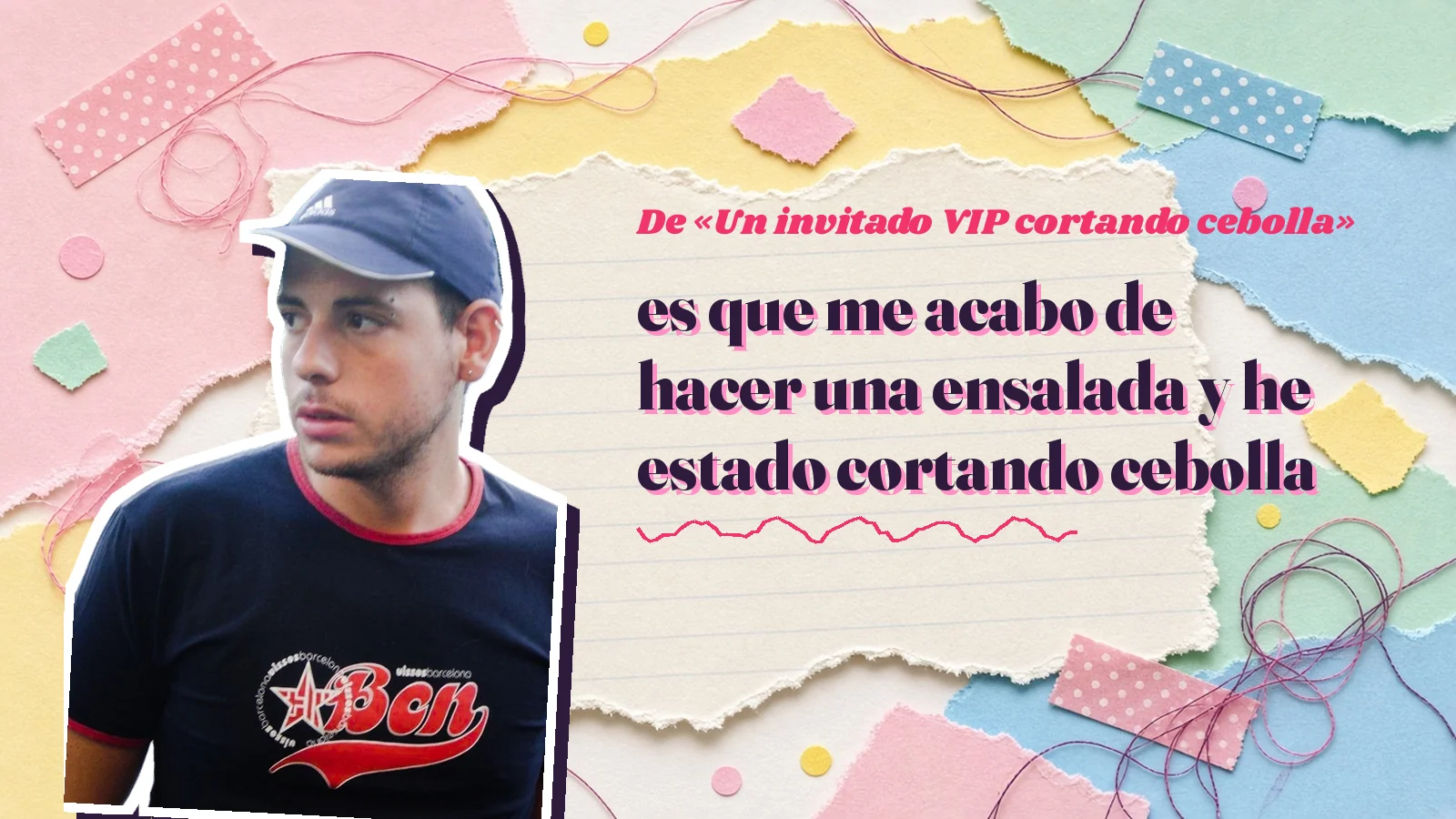
«es que me acabo de hacer una ensalada y he estado cortando cebolla»
I'll tell you just one thing about that line that I didn't say on the song's page: it's the only lie in the whole song. Everything else is true, with its stretched vowels and its modern liquors. The onion is the only thing made up. And it's what the narrator repeats most. That's the sad joke: the lie is the chorus. The truth is in the verses.
If you're curious about how Madrid sneaks into my lyrics, I told you in Madrid without the postcard. Here Madrid isn't the Puerta de Alcalá. It's a pavement where you cry and explain that it's the onion.
Heaven and hell, the full map
If I put it all together, I get a pretty clear floor plan of a club.
Upstairs, heaven's VIP area: four years, wristband on, on someone else's list.
At the door, the invisible bouncer who one day puts his hand on your chest.
Downstairs, hell's main floor: loneliness, anxiety, endless vowels.
At the bar, the modern liquors.
On the next street, Sauna Paraíso, with its lying neon.
At home, the butterfly notebook, waiting for you to come back.
And on the pavement, heading home at dawn, the excuse: the onion.
I like that the song has so many rooms, because that way everyone can stay in the one that hurts them most. Some listen for the onion, the funny bit. Some stay with the vowels, the dramatic bit. And some stay with the butterflies, the part you hear least and the one that matters most to me.
Who wrote it and how it sounds
The lyrics are mine, written without AI. The music and vocals are produced with artificial intelligence tools, such as Suno, which I direct. I always explain it in About Mike and I repeat it here because this song has a detail that makes it even clearer: the stretched vowels are in the lyrics. I wrote them that way, with every a and every o, like someone writing a score with a ballpoint pen. It's my way of telling the machine where it has to hurt.
When this song is for
It isn't for party Saturdays, even though it's about the night. It's for Sunday. For the day after coming back from the main floor, with smudged make-up and the cloakroom wristband still on.
If it happens to you, if you've had a four-year heaven and they've cut your wristband, put it on. Cry as much as you need. Stretch the vowels as far as you like. And if you go out and someone sees you, you know what to say.
And then, when you can, pick up a notebook. Paint butterflies, even if it's winter, even if you feel like the biggest idiot in Madrid. I got a song out of it. You might get anything at all. If you want to stay in the same mood, the catalogue has another one to keep you company on Monday: «La música me está salvando», which is almost the answer to this one.
The full lyrics are on gayfolkplanet.com and in this site's lyrics archive.
The onion is up to you.
Frequently asked questions
What is «Un invitado VIP cortando cebolla» about? A relapse after heartbreak. After four years «as a VIP guest in heaven», the narrator goes back to loneliness, anxiety and the night, and when people see him crying through the streets of Madrid he excuses himself by saying he's been chopping onions for a salad.
Which album is it on? On «Descubierto un nuevo planeta llamado GAYFOLK», the first album of the GAYFOLK trilogy. On the Planeta Gayfolk singles list it's track 255 of 273.
Who writes the lyrics, and how is the music made? The lyrics are mine, written without AI. The music and vocals are produced with artificial intelligence tools, such as Suno, which I direct. I'm a Madrid-based lyricist, composer and music producer, the first AI songwriter.
Where can I read the lyrics and listen to it? The full lyrics are on the song's page and on gayfolkplanet.com. You can listen on Spotify.