By Mike Sain't Louis ·
Letters You Never Send: What I Learned Writing «La última carta»
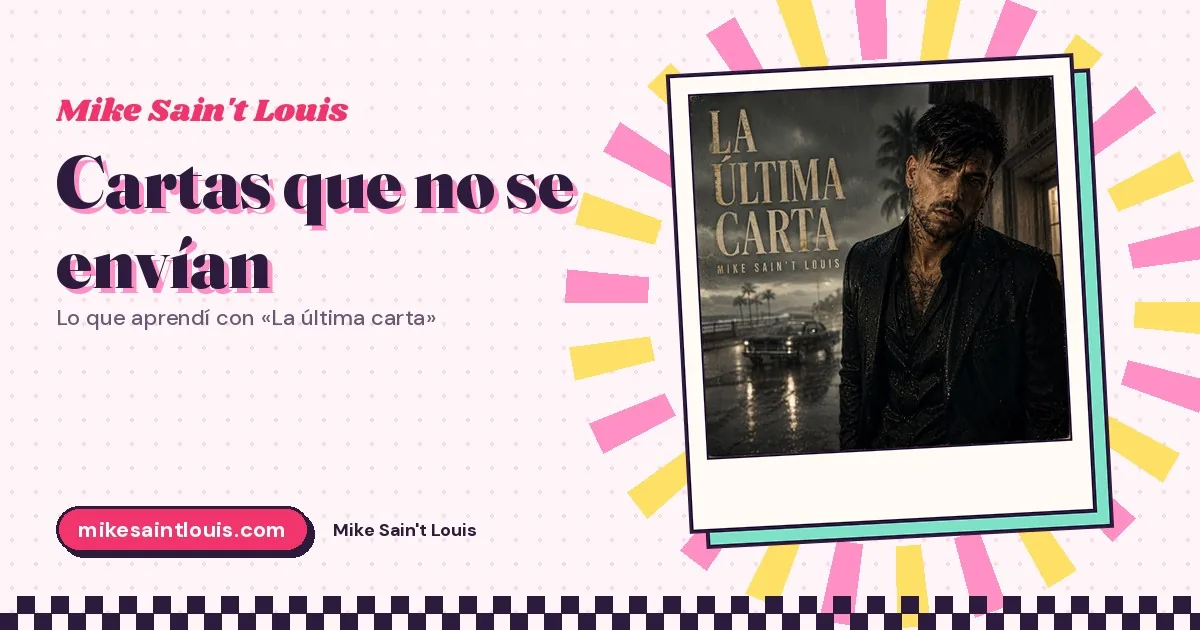
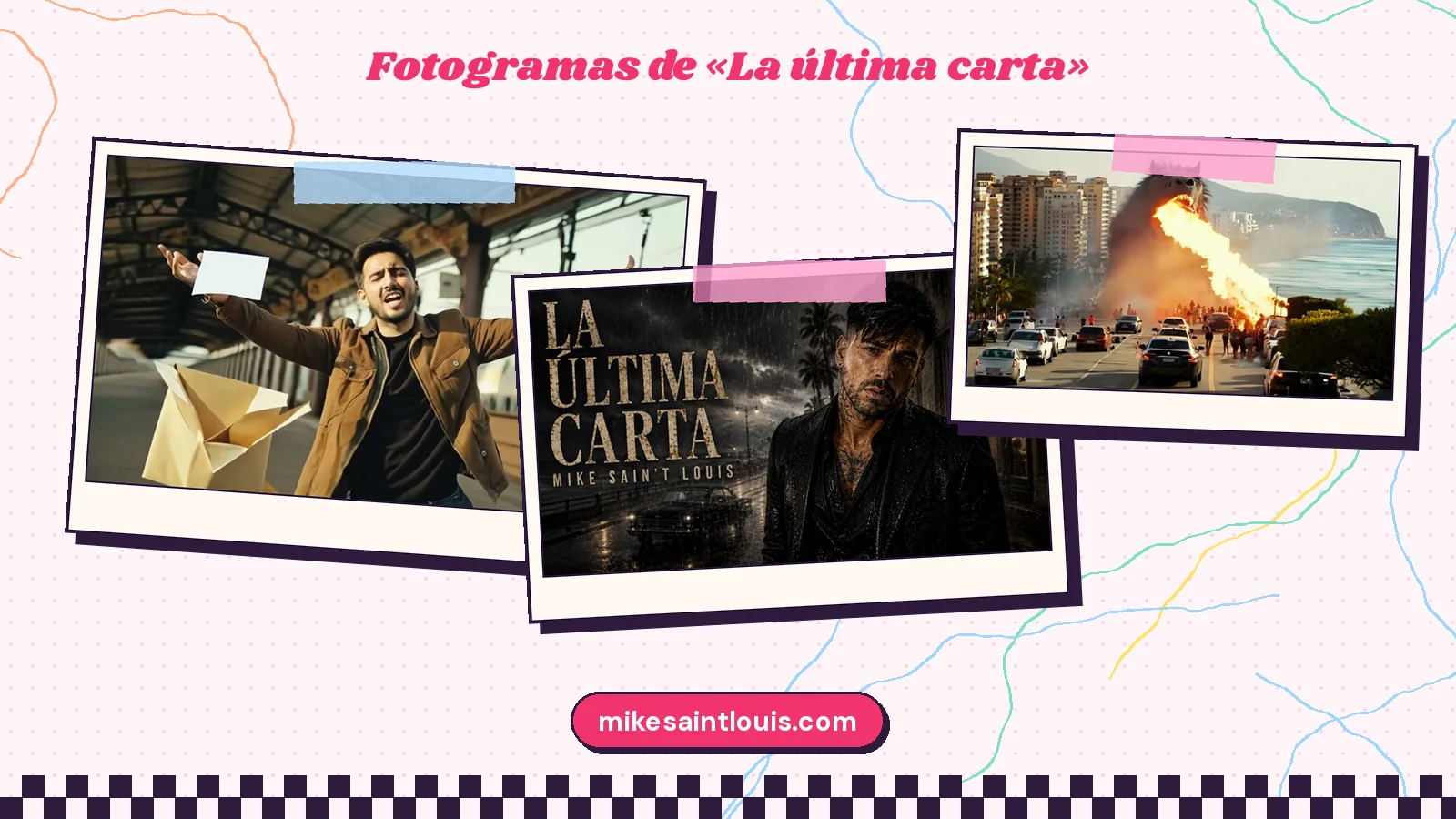
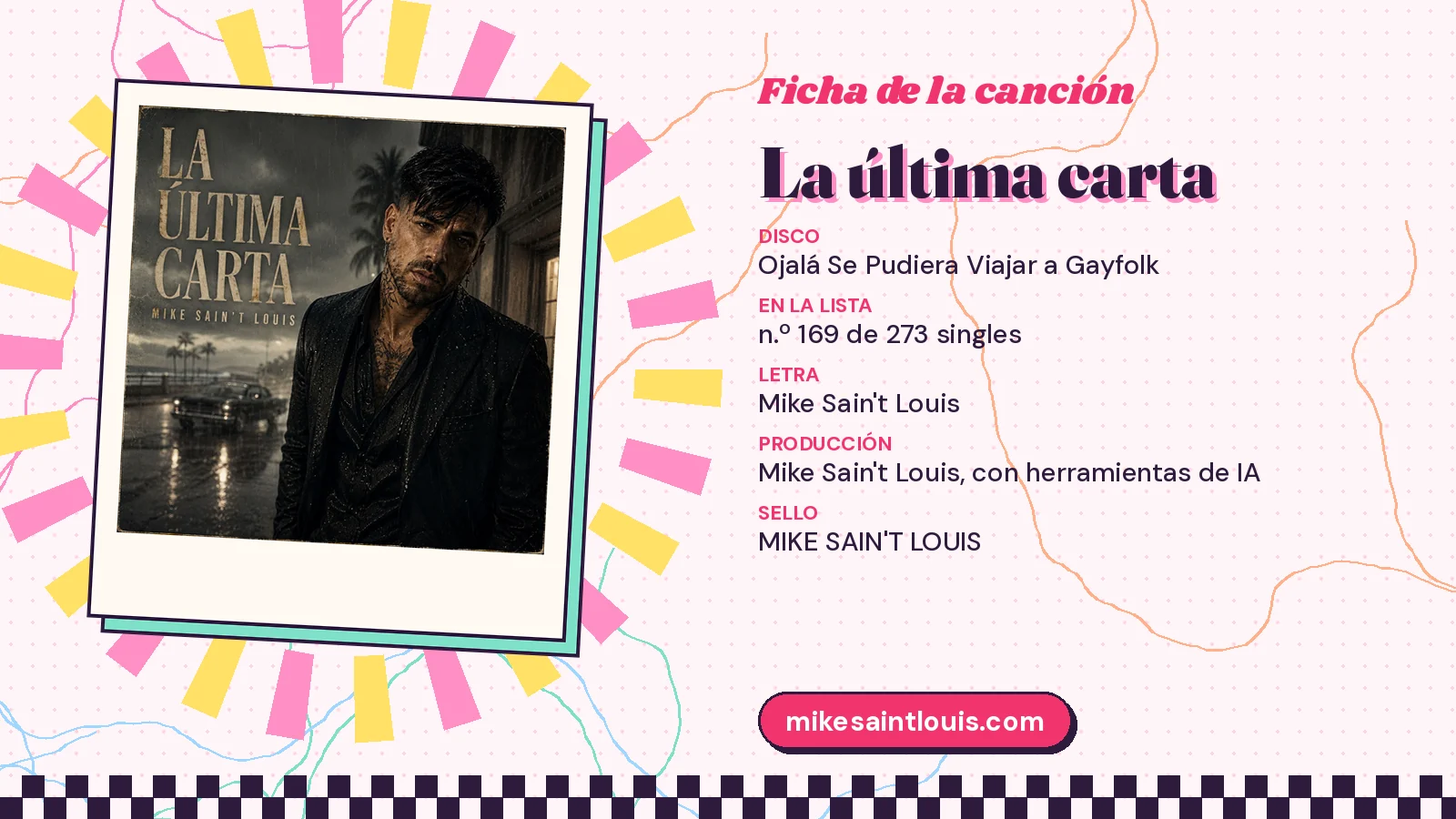
A man in a black suit on a wet street, at night. Palm trees in the background, a vintage car parked at the kerb, the tarmac gleaming as if a summer storm had just swept along the seafront at Benidorm. The title in gold serif, like a film noir poster. That's the cover of «La última carta» ("The Last Letter"), and the character has the face of someone who has just dropped something in a postbox. Or decided not to.
I'm Mike Sain't Louis, the man who writes the lyrics of Planeta Gayfolk, and this song has no verses. It's a letter in prose, full stops and all, like the ones people used to write with a fountain pen on good writing paper. It's addressed to a narcissistic ex who will never read it, and that's precisely the point. The song page already tells its story. Here I want to do something else: read it the way you read a real letter, slowly and paragraph by paragraph, pencil in hand for underlining.
And along the way, tell you what I learned writing it, which is no small thing for a lyricist who usually resolves his heartbreaks by rhyming cruising with bushes.
This letter is for me
The first line is a polite door slam. I'm not writing this to start talking to you again. And then comes the sentence that defines the whole genre: «Esta carta es para mí» (this letter is for me).
Lots of break-up songs are, deep down, messages for the other person. They hope he'll hear them on the car radio, that a tear will escape him at a red light on the Castellana, that he'll pick up his phone and type "I heard your song". This one wants none of that. The addressee is on the envelope out of good manners, like the name of the deceased in a death notice. The one who needs it is the one writing it.
That decision, tiny as it is, changes the whole tone. When you write to be read, you pose. You choose your words thinking about how they'll land. When you write for yourself, there's no audience to impress. Whatever's there comes out. And what's there, in this case, is a list of unsettled accounts with no intention of collecting on them.
Gaslighting, told from the inside
The second paragraph is the one about doubt. For a long time, the letter says, I asked myself questions. About my reactions, about my limits, about whether I was overreacting. He convinced me I was too sensitive, that it had all been a "misunderstanding", in inverted commas, the way you put inverted commas round a word you no longer believe.
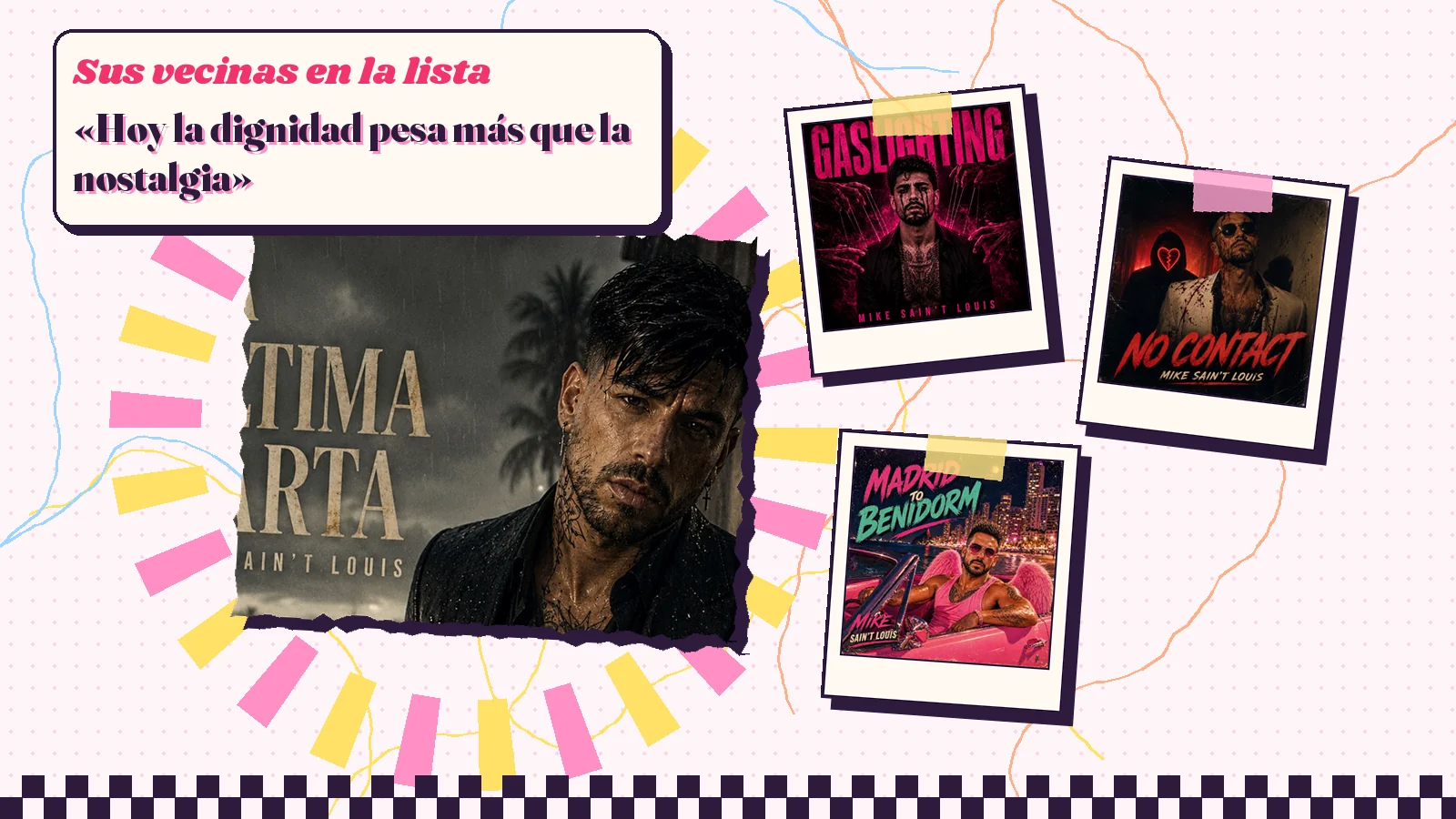
That has a name, and the letter says it later on: gaslighting. It has its own song in the catalogue, «Gaslighting», and it's a subject I keep coming back to because it's one of the most destructive things that leaves no marks. They make you doubt what you saw so much that you end up apologising for having seen it.
I notice the inverted commas round "misunderstanding" because they're the same ones I use in my songs to quote the ex. They're a prosecutor's inverted commas. They point at the word and say: he said this, not me, and I'm not buying it.
It was you
And then comes a two-word paragraph. Fuiste tú. It was you.
I won't waste inverted commas on it because it's so short it quotes itself. But I want you to see the effect: after a long paragraph of doubts, of questions, of second-guessing yourself, a single line appears on the page, like a stone in the middle of the path. It's the moment the blame changes hands.
Short sentences come to me when I'm being serious. In party songs I ramble, I squeeze Carmina Barrios, Locomía and the cruise-ship buffet into the same verse. In this letter, the most important sentence has two words. Some days I think everything I've written on Planeta Gayfolk is a long detour to reach sentences like that.
The next paragraph spells out the charge: he lied, manipulated, played with emotions as if they were worth nothing, said to your face what you wanted to hear and did the opposite behind your back. But the blow has already landed. The rest is the small print of the contract.
Because yes, I loved you
The hardest part to read isn't the accusation. It's the paragraph after, the one admitting there was love. I wanted to believe in you, the letter says, because yes, I loved you, and much more than you deserved.
That «porque sí» (because yes) has an honesty that still makes me uncomfortable. It would have been easier to pretend there was never anything, that it was a casting error from day one. But lying in a letter to yourself is absurd, like cheating at solitaire. If you loved him, you loved him. Denying it would be proving the narcissist right, since he lives off rewriting the past.
Then comes a very fine distinction: you put up with things that nobody should put up with for love, because that wasn't love, it was dependence dressed up as affection. I like the word dressed up. It's very Carnival, very Planeta Gayfolk. Even in the most serious letter in the catalogue, the narcissist is in costume. A lover's mask on top and, underneath, the same old face.
Available
There's one paragraph I think is the most accurate portrait I've ever drawn of what a narcissist wants. You always wanted me there, it says, available. Doubting. Waiting.
Available is a hotel word. Room available, seat available, item available in store. Applied to a person, it gives you the shivers. It's exactly what the narcissist is after: someone in stock, who never runs out, who's there when he fancies it and asks for nothing when he doesn't. An emotional reserve, like the larder of a bunker.
And afterwards, three more words that close the chapter.
Pero se acabó. But that's over.
Availability's over. Closed for refurbishment. The sign hung on the door, like the shops in the city centre in August.
I'm not interested in your version
The penultimate stretch of the letter is a renunciation. No hatred, no ill wishes, no interest in your version. It doesn't matter if he keeps justifying himself, if he says I was difficult, if he goes around telling people I was the one who hurt him.
The letter puts it better than I can. You never win an argument with a narcissist. He'll always have a version, and the version will change depending on the audience. Waiting for him to admit anything is like waiting for the number 27 bus to turn up on time at Cibeles in rush hour: you can wait, but it won't change your life.
Giving up on his version isn't surrender. It's refusing to play a rigged game. I know who I was, the letter says, and I know who you are. That double certainty is enough. No notary required.
Peace comes from the cut
And then comes the sentence that gives meaning to everything: «Hoy sé que la paz que tengo viene del corte» (today I know the peace I have comes from the cut).
The cut is what English calls no contact, and it too has its song in the catalogue, «No Contact». The letter spells it out: the blocking, the silence, not looking him up, not answering, not falling into his traps. Put like that it sounds like a detox protocol, and deep down it is. Anyone who has got out of a relationship with a narcissist knows withdrawal is real.
I like that the peace doesn't come from some great revelation, or a meditation retreat in India, or crystal therapy in a shop in Malasaña. It comes from something as unpoetic as blocking a phone number. Salvation, sometimes, is shaped like a WhatsApp button.
Dignity weighs more
The next line is my favourite, and I'll quote it because it deserves its place: «Hoy la dignidad pesa más que la nostalgia» (today dignity weighs more than nostalgia).
It's a sentence made for a market scale. On one side you put nostalgia, with its holiday photos, its shared songs, its Sundays on the sofa. On the other you put dignity. And dignity wins. Not because nostalgia weighs nothing, it weighs a ton, but because the other thing now weighs more.
It's a sentence that stands on its own, without the rest of the letter, and that proves a line from a prose letter can work like a chorus, even without a catchy melody. It just has to be true.
Your emptiness
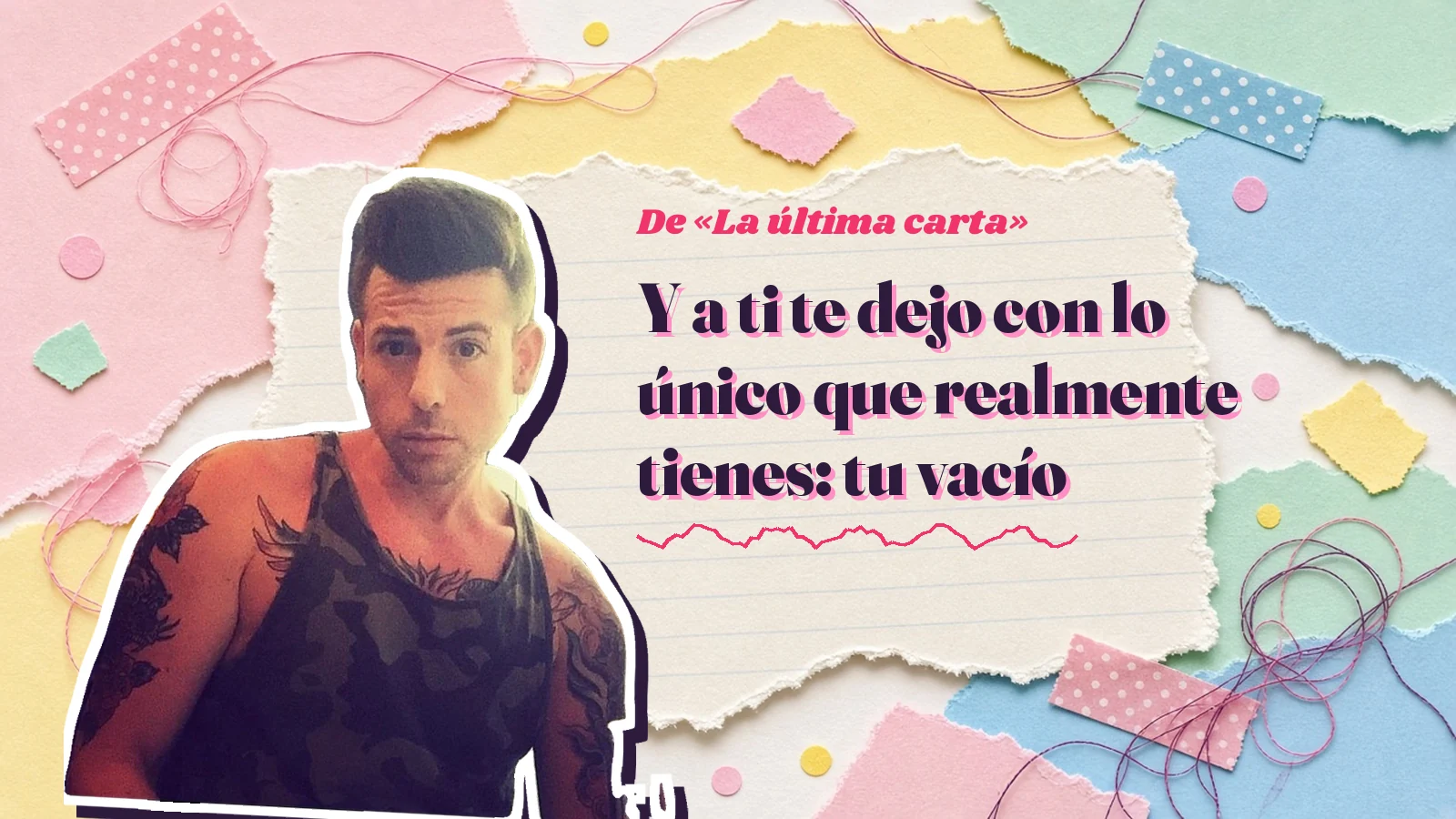
The ending is elegant and it's cruel. Both at once, with no apology for either. The hurt happened, the letter says, but it no longer belongs to the other person. I'm taking it back. And the final sentence: «Y a ti te dejo con lo único que realmente tienes: tu vacío» (and I leave you with the only thing you really have: your emptiness).
There's no insult. No parting slur, no "oaf", no "bastard". There's a diagnosis. The narcissist is left with what he had before he met you, which is nothing. And the letter tells him so with the colon of a judge reading out a sentence.
It's the driest ending I have. And I think it's the one that hurts most, precisely because it doesn't shout.
Who signs the letter
There's a sentence near the end worth reading under a magnifying glass: the letter, it says, is to tell myself that I made it, that I got out, that I chose myself. It's the only moment the text stops talking to the ex and talks to itself in the second person, like someone looking in the lift mirror before walking into a job interview.
That change of addressee is the key to the whole genre. The letter starts out addressed to a "you" who did harm and ends up addressed to a "you" who survived. The same pronoun, two different people. And the second one is the one that matters.
It strikes me how rarely we talk to ourselves like that. We spend our lives telling ourselves horrible things inside our heads: you're fat, you're stupid, nobody will ever love you. We rarely tell ourselves "you made it". The letter says it, and says it plainly, like someone signing a delivery note. Received. All in order.
Letters that stay as drafts
Letters like this used to be handwritten and kept in a Danish butter-cookie tin under the bed. Now they're written in the notes app on your phone, between the shopping list and the wifi password at your mum's. Or in a WhatsApp chat that never gets sent, the cursor blinking over the send button like a half-lit cigarette.
Anyone who's come out of a relationship like that knows that draft. You write it at two in the morning, reread it at three, delete it at four and write it again the following Thursday. You never send it, or you send it and regret it for months. This song is that draft, written up neatly and published, but with no addressee. It's the final version of something a lot of people have been rewriting for years.
And it has one advantage over the draft on your phone: you can't send it by mistake. It's on Spotify, on YouTube, everywhere. If he hears it, let him. It wasn't for him.
Listen to it after you block
If I were asked for a single instruction for using this song, it would be this: listen to it right after you block a number. Not before, because it might give you courage you don't need, but after, when your finger's still trembling and the urge to undo it is sitting right there on the table, like a plate of jamón during a diet.
At that moment the letter works like a friend holding your hand. It reminds you why you did it. It reminds you that peace comes from the cut. And it tells you, without raising its voice, that the one left with the emptiness isn't you.
Afterwards, if you like, put on something to dance to. Almost anything from the Planeta Gayfolk catalogue will do for a change of mood. But the first listen should be this one. In silence, with your phone face down.
A fairground lyricist writing in prose
I laugh at myself with this song, honestly. I'm the one who titled a song «¡Eso es lefa!», who devoted a chorus to an ice-cream cone, who spends his life hunting for rhymes for Mercadona. And here I am, in a black suit with a fountain pen, writing a letter in prose as if I were Rosalía de Castro on a rainy Galician afternoon.
But some subjects don't take a chorus. The same goes for «Ni con un palo», which is also a stark text. When the subject is closing the door on something that really hurt you, rhyme sounds frivolous, like a fairground raffle. Prose is more honest. It goes from full stop to full stop without consoling you with a repeated melody.
The music and vocals of the song come from artificial intelligence tools such as Suno, which I use for production. The letter is mine, sentence by sentence, and I kept choosing an accompaniment that wouldn't sweeten what's being said. That's what I always do: I supply the words, the tool supplies the sound, and I decide which of the sounds respects the words. It's all explained on my about page.
A tradition with a postage stamp
Letters have a long history in Spanish literature, and I'm not showing off by saying so. Bécquer wrote his «Cartas desde mi celda» while shut away in a monastery near the Moncayo. Cadalso invented his «Cartas marruecas» to criticise the Spain of his day without getting into hot water. Letters are for saying what can't be said face to face, or shouldn't be, or what you don't dare to.
Mine is far more modest, of course. A letter to an ex who couldn't find the Moncayo on a map. But the mechanism is the same: paper puts up with what conversation can't. In a chat, the narcissist interrupts you, twists your sentences, makes you doubt yourself by the third word. In a letter he can't. A letter is the only place where you get the last word, and all the previous ones too.
That's why I chose it as a form. Not because it's literary, but because it's practical.
The other letters
There are more letters on this blog, though none like this one. There's the «Carta a quien todavía no se lo ha dicho a nadie» (letter to someone who hasn't told anyone yet), addressed to someone still in the closet, and it's the opposite of this one: a letter to open something, not to close it. And there's the «Carta a mí mismo de hace dos años» (letter to myself two years ago), which looks back with a different kind of tenderness.
Together the three form a little correspondence with no postman. One for someone who hasn't arrived yet, one for someone who's already gone, and one for the person I used to be. None of them expects a reply.
The cover: film noir with palm trees
Back to the image I began with, which I directed so the letter would have a landscape. The man in the black suit, the wet street at night, the palm trees, the vintage car. It's film noir, but not Chicago with gangsters. It's coastal noir, seafront noir, about someone who has come to settle a matter in a place where people usually come to forget everything.
The gold serif title has something of a 1940s film about it, a poster for a neighbourhood cinema with threadbare velvet seats. I liked that elegance for such a stark song. The letter doesn't shout, and neither does the cover: it stands there with dignity, which is the key word of the text. The covers for the whole catalogue are on the singles page.
Between Benidorm and a writing contest
In the catalogue of 273 singles, «La última carta» is track 169. Just before it comes «Madrid to Benidorm», and just after, «El concurso literario». That order, which I didn't plan, makes me laugh no end: first the trip to the coast, then the letter written with palm trees behind it, then a writing competition. It reads like the blurb of a summer novel.
The song is part of *Ojalá se pudiera viajar a GAYFOLK*, the second album of the GAYFOLK trilogy, the one about longing to be somewhere else. Closing a chapter is, in a way, packing a suitcase. This letter is the last piece of paper you tuck in before you zip it up.
Writing yours
I won't give you a list of steps, I've done that with other songs and I don't want to repeat myself. Just one idea: if you need to write a letter like this, write it for yourself. Not for him, not for your friends, not to post on Instagram with a sepia filter.
Write down what you doubted. Write that you loved him, if you did. Write where your peace is now, even if it's in a block button. Then keep it, or burn it, or turn it into a song if you're my kind of person. What you mustn't do is send it. A letter you send is a conversation. This one is a goodbye.
If you want to read the whole letter before writing yours, it's on its lyrics page, and the rest of my lyrics are in the lyrics archive. To listen, there's Spotify and the music video on gayfolkplanet.com.
What it doesn't say
The letter doesn't say the addressee's name. It doesn't say how long the relationship lasted, or where they lived, or what exactly happened on the last night. There are no details that would let anyone point a finger.
That's a decision too, and not a minor one. Naming him would have given him one last starring appearance, a cameo in the film of my life that he hasn't earned. Without a name, he stays at the door, like someone who turns up late to the show and isn't let in. In other songs of mine the ex appears with a nickname, a city and his little habits. Here there's no need. The letter isn't about him. It's about the person writing it and what they give back to themselves.
He already has his emptiness. He doesn't need a name as well.
Frequently asked questions
What is «La última carta» by Mike Sain't Louis about? It's a prose letter to a narcissistic ex who will never read it. It goes over the gaslighting, admits there was love, gives up on the other person's version and finds peace in no contact: «Hoy la dignidad pesa más que la nostalgia» (today dignity weighs more than nostalgia).
Which album is «La última carta» on? On Ojalá se pudiera viajar a GAYFOLK, the second album of the GAYFOLK trilogy. In the catalogue of 273 singles it's track 169, between «Madrid to Benidorm» and «El concurso literario».
Why doesn't «La última carta» rhyme? Because it's a farewell letter and Mike Sain't Louis wanted it to read like a letter, not a fairground song. The same goes for «Ni con un palo»: on some subjects, rhyme sounds frivolous.
Who wrote «La última carta»? Mike Sain't Louis, a lyricist, composer and music producer from Madrid, the first AI songwriter. The music and vocals are made with artificial intelligence tools such as Suno, under his direction.