
By Mike Sain't Louis ·
And it struck two: the hours on the clock in my lyrics
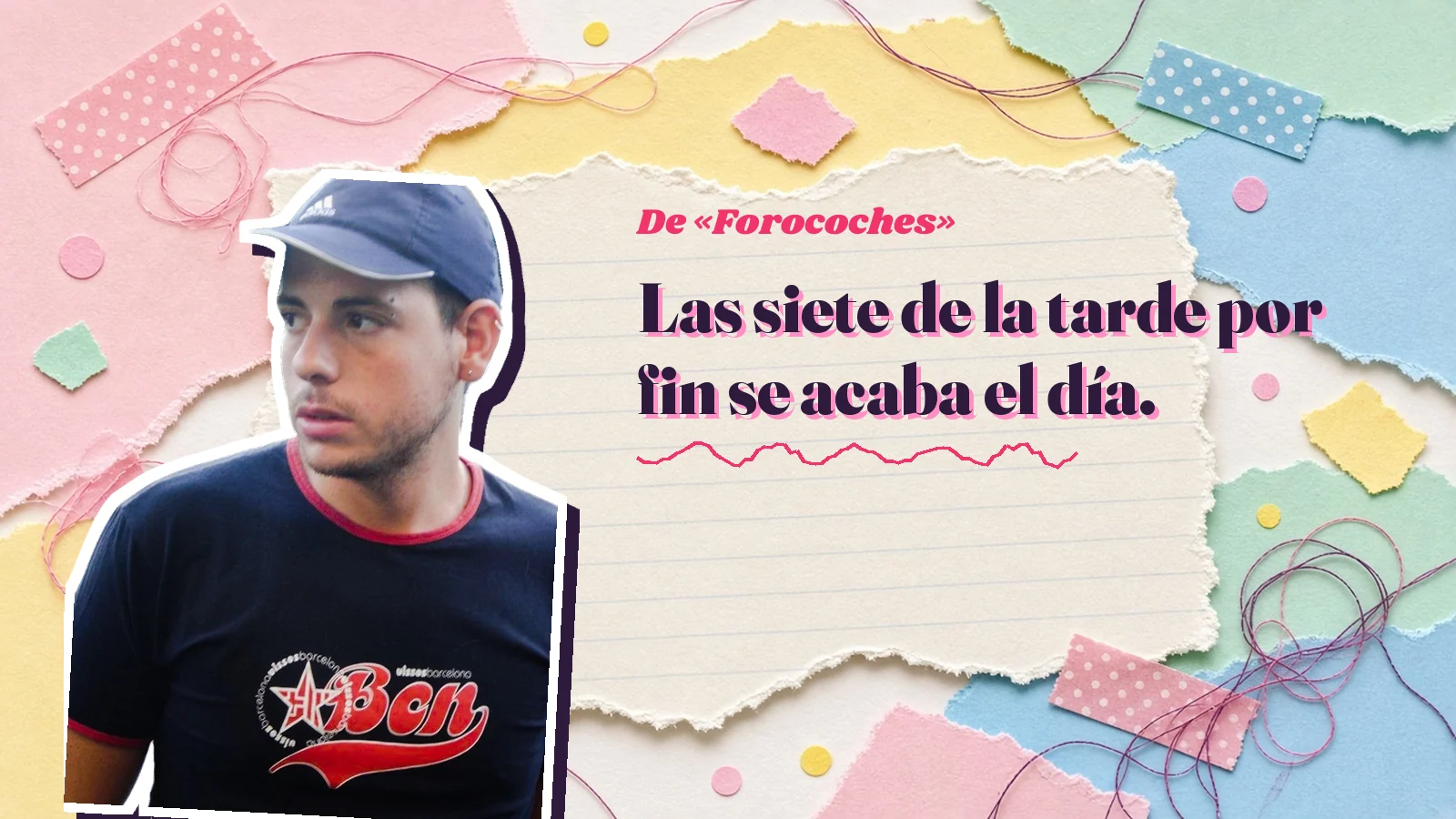
«Las siete de la tarde por fin se acaba el día.»
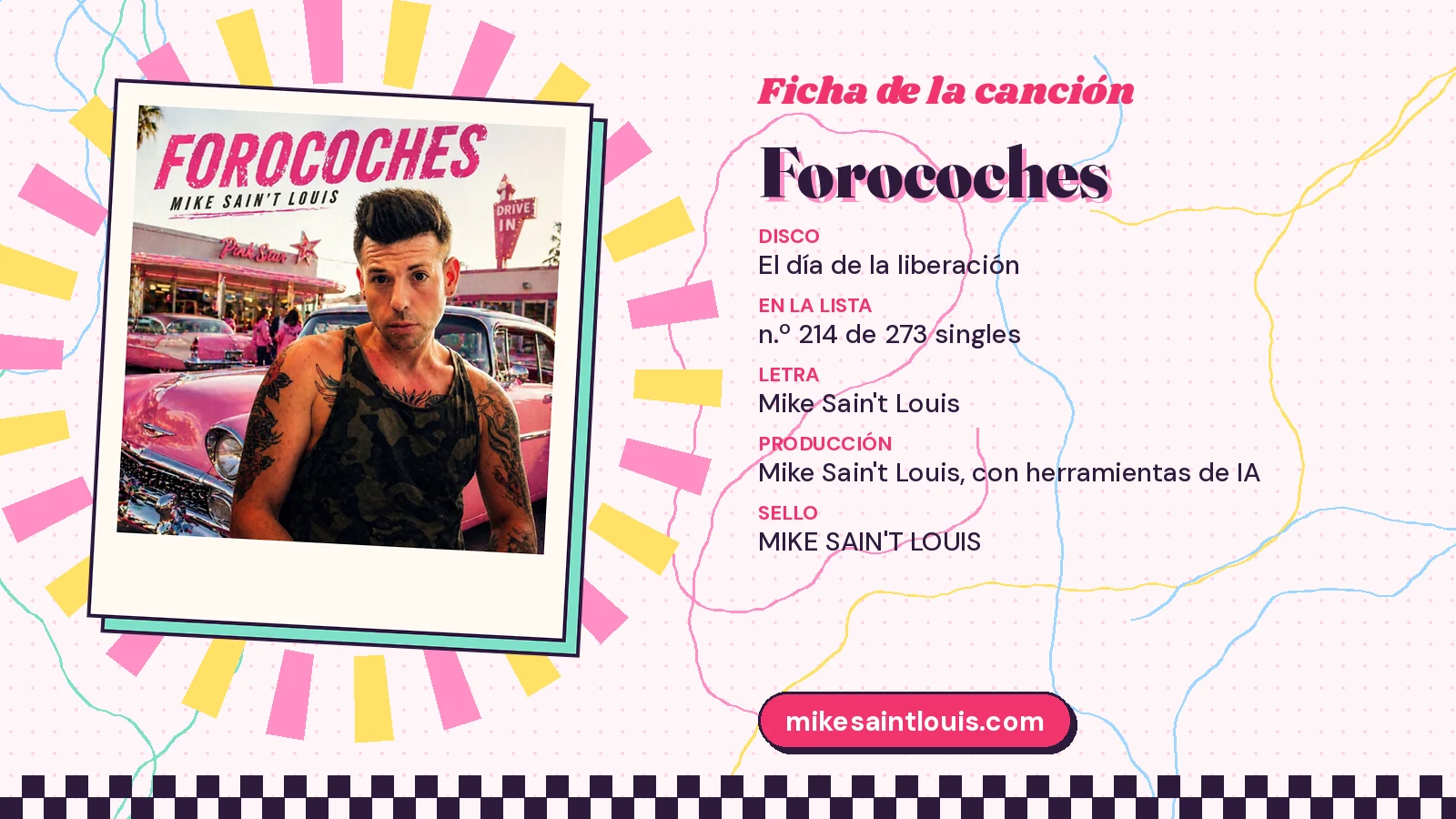
Seven in the evening, and at last the day is over. That's the first line of «Forocoches», a song from the third album of the GAYFOLK trilogy, «El día de la liberación». (The full lyric is on gayfolkplanet.com.) Before we know who's speaking, before we know what's wrong, we know what time it is. Seven. And we know something more, tucked into that «por fin», that «at last»: the day has been long, it's been an uphill slog, and the only good thing about it is that it's ending.
A few lines later comes the song's second hour: «Las dos de la mañana y aún no me he dormido.» Two in the morning and I still haven't slept. Between one hour and the other, seven hours have gone by, along with an empty bottle, an Instagram profile checked far too many times and a few messages that should never have been sent. The song tells a whole night with two readings of the clock.
I've noticed that a lot of my lyrics do this: they tell you the time. Not always with a number; sometimes with a word like madrugada, the small hours, or amanecer, daybreak, or simply night. But the hour is there, and it's almost never just set dressing. The hour on the clock tends to be the hour of the heart. This piece is about that: the hours my songs mark, and what they tell.
Why a song tells the time
In Spain's popular tradition there's one line that turned an hour into legend: «a las cinco de la tarde», at five in the afternoon.
It's the refrain of the «Llanto por Ignacio Sánchez Mejías», the lament Federico García Lorca wrote for the death of his bullfighter friend, gored in the ring at Manzanares in the summer of 1934. The poem was published in 1935, and its first part repeats that hour again and again, like a tolling bell. At five in the afternoon. It was five o'clock sharp in the afternoon. At five in the afternoon.
Lorca understood something anyone who writes songs eventually learns: a specific hour makes what happens feel more real. «An afternoon» is any afternoon. «At five in the afternoon» is an afternoon that happened, one you can circle on a calendar, with sun and shade in it. The hour is a nail that pins the story to the wall.
And repeating the hour does something else: it turns time into obsession. Anyone who's taken a heavy blow knows the mind keeps returning to the exact moment. What time was it. Where was I. That's why Lorca's refrain works so well. It doesn't describe grief. It imitates it.
There are no bullfighters in my lyrics, but there are hours that repeat. And nearly all of them do that double job: anchoring the story to a precise moment and marking the spot where the mind got stuck.
Seven in the evening
Back to seven o'clock in «Forocoches», because it's a thoroughly unpoetic hour. It isn't the postcard sunset. It's when huge numbers of people knock off work, take the metro and get home. The hour you kick your shoes off. For most, the start of free time.
In the song, though, seven brings no relief. «Por fin se acaba el día», the lyric says, and right after come the cold sweats and the melancholy. In other words: the day ends, but what follows isn't rest. It's the long evening of someone alone with what they feel, without the noise of work to distract them.
It strikes me as a very honest hour to open a breakup song. During the day you function. You answer emails, buy bread, talk to people. It's from seven onwards that the flat falls silent and the phone starts to weigh heavy in your hand. Plenty of people who've been through a bad patch recognise that stretch: the evening that won't end.
Spain, besides, keeps a very peculiar clock, and that changes what every hour means. Since 1940 the country has run on Central European Time, the same as Germany, even though geography would put it with London or Lisbon. That's why the sun sets late here, people eat late and the evening goes on and on. Seven in the evening in Madrid, for much of the year, is still daylight. The light doesn't help the day to end. It drags on, like the sorrow in the song.
Two in the morning
If one hour keeps coming back in my lyrics, it's this one: two o'clock.

In «Forocoches», two in the morning is the hour of insomnia. «Aún no me he dormido», I still haven't slept, and so the inevitable follows: grabbing the phone, sending messages, scrolling old photos, imagining what we might have been. It's the hour when decisions come out worst. Anyone who's ever texted an ex in the small hours knows that hour has its own laws, and that the next morning you almost never agree with them.
In «La noche no es para mí» the same hour appears, but on a different stage. The clock's already past 2:00, says the lyric, and everything around turns different, even if deep down it's the same. Here we're not at home but out, in the night, with alcohol running through the blood. Two o'clock is when the party changes face. What was fun at midnight starts, by two, to look like a hunt. And the song says it plainly: searching desperately for someone to spend the night with.
I find it fascinating that the same hour serves two opposite situations: the one who stays home unable to sleep and the one who goes out and doesn't find what he's after. In both cases, two in the morning is the hour of loneliness. One loneliness in pyjamas and another in going-out clothes. But the same one.
In Madrid, two in the morning also has something of a border about it. It's when lots of people decide whether to head home or keep the night going. When the last metro has gone and only the «búhos», the owl buses that run all night, are left. It's the hour when the city splits between those who call it a night and those who stay. And in songs, the ones who stay rarely come out ahead.
Waiting for ten o'clock
Not every hour in my songs is sad. There's one that's pure impatience: ten o'clock.
In «La vecina cotilla» the narrator sits waiting for ten o'clock so he can see the neighbour across the way again. He waits like a small child, says the lyric, listening to the ding-dong of a wall clock. That clock, incidentally, has a story of its own within the song, because it was a gift from an ex's father. But what interests me here is the hour. Ten o'clock is the date. The time the neighbour appears at the window.
There's something very neighbourhood about that waiting. The block as a clock: the man opposite who lowers his blind at the same time every night, the lady who walks her dog at nine, the boy who goes running at eight. In any city's apartment blocks, other people's lives mark the hours as surely as church bells. And whoever's home alone ends up learning those timetables without meaning to.
Ten o'clock also echoes through Spanish music. In 1992 Joaquín Sabina released a song called «Y nos dieron las diez», borrowing that very castizo way of saying time crept up on us. «Dar las diez», «dar las dos», «dar la una»: that's how Spanish says the clock has struck an hour. Sabina's title is, in fact, where the title of this piece comes from. Because in my songs it hardly ever strikes ten. It strikes two.
The half-light of the small hours
The small hours are an hour without a number, and perhaps that's why they're the most unsettling.
«El espejo de enfrente» begins in the half-light of the madrugada. The moon hides a pale shadow, the narrator looks in the mirror and isn't living in the present. It's the hour of the hardest insomnia, neither night nor morning, the hour when the body is exhausted and the head won't shut up.
The small hours have a very particular reputation in popular culture. They're the hour of dark thoughts, of phone calls nobody wants to get, of ghosts. In ghost stories, things happen in the small hours. And in real life too: anyone who lives with anxiety knows there's a stretch of the night when everything seems graver than it is.
That's why it matters to me that the song doesn't stay in the madrugada. There are days, the lyric says later, when the mirror behaves. And the difference between one day and another has a lot to do with the hour you look. The four-in-the-morning mirror is a cruel judge. The midday one is, sometimes, a friend.
A stopped clock and broken hours
In «Ruido en mi mente», from the trilogy's second album, time simply breaks.
A stopped clock screams its tick, goes one of the first lines. And shortly after: in my shadow the broken hours dance. Here there's no specific hour anymore. There's a feeling of time come apart, of a clock that keeps making noise though it doesn't move forward. It's a very exact image of anxiety: your head races at full speed and yet you feel you're going nowhere.
The broken hours are the opposite of «at five in the afternoon». In Lorca the hour is fixed, nailed down, repeated because it's the one that was. In «Ruido en mi mente» the hour no longer exists. It's shattered, and the shards dance in the shadow. Two ways of living through pain: getting stuck in one moment or losing all sense of time altogether.
I like that both turn up in my lyrics. Because both are true. Some sorrows are lived on a loop, always circling back to the same hour. And some are lived as a fog in which every hour is the same.
If two in the morning weighs too much
Some of these songs speak of very dark nights. «Forocoches» goes as far as thinking about family and about what would happen if you weren't there. And «El espejo de enfrente» and «Ruido en mi mente» describe anxiety from the inside.
If you recognise yourself in those hours and feel you can't go on, don't wait for daylight. In Spain you can call 024, the suicide crisis line: free, confidential and open at any hour. If there's immediate danger, call 112. If you're outside Spain, call your local emergency number.
Asking for help at two in the morning isn't overreacting. It's exactly the hour when help is needed most.
Go to sleep, little lemon
Against the hours of insomnia, my lyrics also hold the opposite hour: bedtime.

In «Limón» there's a kind of lullaby: duérmete, limón, ya es hora de dormir. Go to sleep, lemon, it's time for bed. It's a formula anyone recognises, straight out of cradle songs. «Ya es hora», it's time: that's what you tell a child when the light has to go off. And carrying it into a love song has something tender and playful about it at once.
Lullabies are among the oldest forms of popular music. In 1928 Lorca gave a lecture on Spanish cradle songs in which he argued they were far sadder and deeper than they seemed, that mothers poured their own weariness and their own sorrows into them. I love that idea: that the song meant to send someone else to sleep is also the song of the one who stays awake, keeping watch.
A lullaby is, at heart, a song about the hour. It's a way of telling time to pass, for a quiet night to come, for the day to end without noise. The very opposite of two in the morning in «Forocoches».
Until daybreak
And there's the night's last hour, the one that arrives when you still haven't gone home: daybreak.
In «Mi salvador», a dance-floor song set in Benidorm, the promise is to dance close until dawn. Here the night isn't the enemy. Quite the reverse: it's a space you want to stretch, a party you wish would never end. The final hour isn't a threat but a finish line. Reaching dawn still dancing means you've won the night.
In «Before the Bells» daybreak has a different tone. The song is about what happens before the bells ring, before the morning asks us to make noise. It's a moment of stillness, of breathing between night and day, of staying with what can't be fixed. If in «Mi salvador» dawn is the end of a party, here it's the end of a vigil. Two very different ways of arriving at the same hour.
It seems telling to me that dawn is nearly always the hour of closure. Night songs end there, because with daylight everything goes back to its place. What happened at night stays in the night, or gets carried home like a hangover.
Business hours
There are hours, too, that belong neither to night nor to love, but to the office.
In «3 años de garantía» the perfect boyfriend is bought like a household appliance and delivered within twenty-four business hours. It's the language of adverts, online shops and customer service. And it's very funny precisely because it drags opening hours into a love story. Love, here, comes with a delivery window, a trial month and a warranty.
That song plays with administrative time throughout: the two-years-and-change when the boyfriend starts to malfunction, the three-year warranty, the reference number on the complaint. No small hours, no daybreaks. Just deadlines. And the humour lies in handling heartbreak with the calendar of a consumer-rights office.
In «Mi novio de Albacete», by contrast, time is measured in road miles: you've driven five hours to leave a note. Five hours on the road for a note. The mismatch between time invested and result is the whole joke, and the whole sadness too.
Round the clock and an ordinary Monday
There's one expression that recurs in several of my lyrics and is the exact opposite of a specific hour: a todas horas, round the clock.
It appears in «Buscando el polvo perfecto», shouted out, almost a battle cry. It appears in «Discutiendo con la IA», where someone confesses to arguing with artificial intelligence round the clock. And it appears in «Montaña rusa», where someone tries to hold something in round the clock and fails. Round the clock is the hour of obsession. No time slot, no appointment, no clock. Just a permanent state.
It tickles me that the same formula serves for desire, for arguing and for holding back. It's a very street-level exaggeration, not to be taken literally. Nobody really argues round the clock. But when you say it, the other person understands perfectly that the matter has taken over your whole head, that there's no moment of the day free of it.
And then there are the days of the week, which turn up less often than hours in my lyrics, but turn up all the same. In «Un falso amore se ha llevado mis bañadores de marca» there's a memory that begins: I remember it was a Monday. It's a tiny detail, almost police-report flat. But it does the same as Lorca's five in the afternoon: it fixes the scene. It wasn't just any day. It was a Monday, and on that Monday somebody lied.
Monday has a very particular reputation, too. It's the day nobody wants, the back-to-work day, the day of bad news. A lie happening on a Monday gives the scene something routine, something grey. No drama, no party. Just an ordinary Monday on which, looking back, everything had already been said.
I like that my songs keep those small details. An hour, a day, a clock. They're details anyone can check against their own memory, because we've all had a Monday like that, a two in the morning like that, a seven in the evening when at last the day was over.
The hour as a way of telling the truth
Writing the time into a song seems a small detail, but I think it's one of the things that makes a lyric ring most true.
When a song says «two in the morning», the listener needs nothing else explained. They know how the flat feels, how the street looks, how the head of whoever's speaking is doing. They know there's no one awake you could call without being a nuisance. They know whatever gets written now will be read tomorrow with a different face. The hour is an entire set in four words.
And then there's the bell. In Spain the most famous hour of the year is the twelve chimes of the Puerta del Sol in Madrid, which half the country watches on television, grapes in hand. The Sol clock was inaugurated in 1866, and for decades its chimes have marked the turn of the year. It's the one moment when an entire country looks at the same hour at the same time.
My songs have no such ambition. Their hours are small and private: seven on an ordinary evening, two on a sleepless night, ten when the neighbour leans out. But I like to think each one works like those chimes on a domestic scale. An exact moment when someone, somewhere, said: now. Now the day is over. Now I can't sleep. Now I'm going to see him.
Frequently asked questions
Which hours appear in Mike Sain't Louis's songs? Among others, seven in the evening and two in the morning in «Forocoches», 2:00 in «La noche no es para mí», ten o'clock in «La vecina cotilla», the small hours in «El espejo de enfrente» and daybreak in «Mi salvador».
Where does «a las cinco de la tarde» come from? It's the refrain of Federico García Lorca's «Llanto por Ignacio Sánchez Mejías», published in 1935 and written after the death of the bullfighter, gored in the ring at Manzanares in 1934.
Who can I call if I'm having a bad night? In Spain, 024, the suicide crisis line, free and available 24 hours a day. In immediate danger, 112. If you're outside Spain, call your local emergency number.
Who writes these songs? Mike Sain't Louis, lyricist, composer and music producer from Madrid, who presents himself as the first AI songwriter. The music and vocals of his songs are made with artificial intelligence.