
By Mike Sain't Louis ·
A song made of noes: why «No me aparece una ilusión» doesn't have a single joke
No.
If you count how many times that word turns up in «No me aparece una ilusión» (roughly, "No hope shows up for me"), you'll tire before you finish. I don't feel like it. I can't find. I've nothing left. I don't dare. I find no comfort. There are no answers. I don't feel. I can't manage. I don't care. I don't want. There are no colours. I can't see. I can't.
A whole song raised on a single syllable. And not one joke.
Anyone who knows me even a little knows that, for me, that's almost a freak event. I write about narcissists named after villages, about cruises with sardines in the minibar, about the pound-shop Shakira. I laugh at everything, starting with myself. Not here, though. Here I took the wig off. Let me tell you how and why.
The shortest word in the dictionary
"No" is the shortest word that carries any weight. Two letters. Said in half a second. And when you put it at the start of every line, as I did here, something odd happens: the whole sentence turns into a closed door.
Compare. I feel like leaving the room. I don't feel like leaving the room. The first opens something. The second shuts it before you can step in. One syllable and the room goes dark.
I wrote the lyric that way because that's how the head thinks when it's in a bad place. It doesn't think about what it wants. It thinks about what it can't do. What it hasn't got. What won't come. A list of absences that keeps growing like the dole queue on a Monday in January.
And I didn't want to dress it up. I didn't want to slip in one positive line for every three negative ones so the song came out balanced and pretty. The head doesn't balance itself. I let it fall.
Four walls and a blind
The first thing the song says is the most concrete: I don't feel like leaving the room.
I like that it starts with a physical place. A room. Not the soul, not the heart, not the inner void, those big words you find in airport self-help books. A room with four walls, an unmade bed, probably a blind half-lowered and a phone on charge from an extension lead on the floor.
There's a detail in that first line I'm fond of: apetece, "feel like". It doesn't say I can't go out. It says I don't feel like it. It's a terrace verb, a Sunday verb, the verb of ¿te apetece una caña?, "fancy a beer?". Using it here, for something so serious, is a trap, because from outside it sounds like a whim. "If you don't feel like it, make an effort." And from inside it's exactly that: no appetite for anything, for the street, for people, for food, for the midday sun. It felt truer than any dramatic verb. The absence of wanting is less spectacular than pain, and that's why it's so hard to get anyone to take it seriously.
If you've ever been through a stretch like that, you know the world shrinks to just this. The distance between the bed and the door. Which suddenly feels like walking from Madrid to Cádiz.
The room comes back in every chorus, like a set that never changes. And it needn't. On those days the set doesn't change. So the song doesn't either.
Alone among so many people
And then the line that, for me, is the centre of everything.
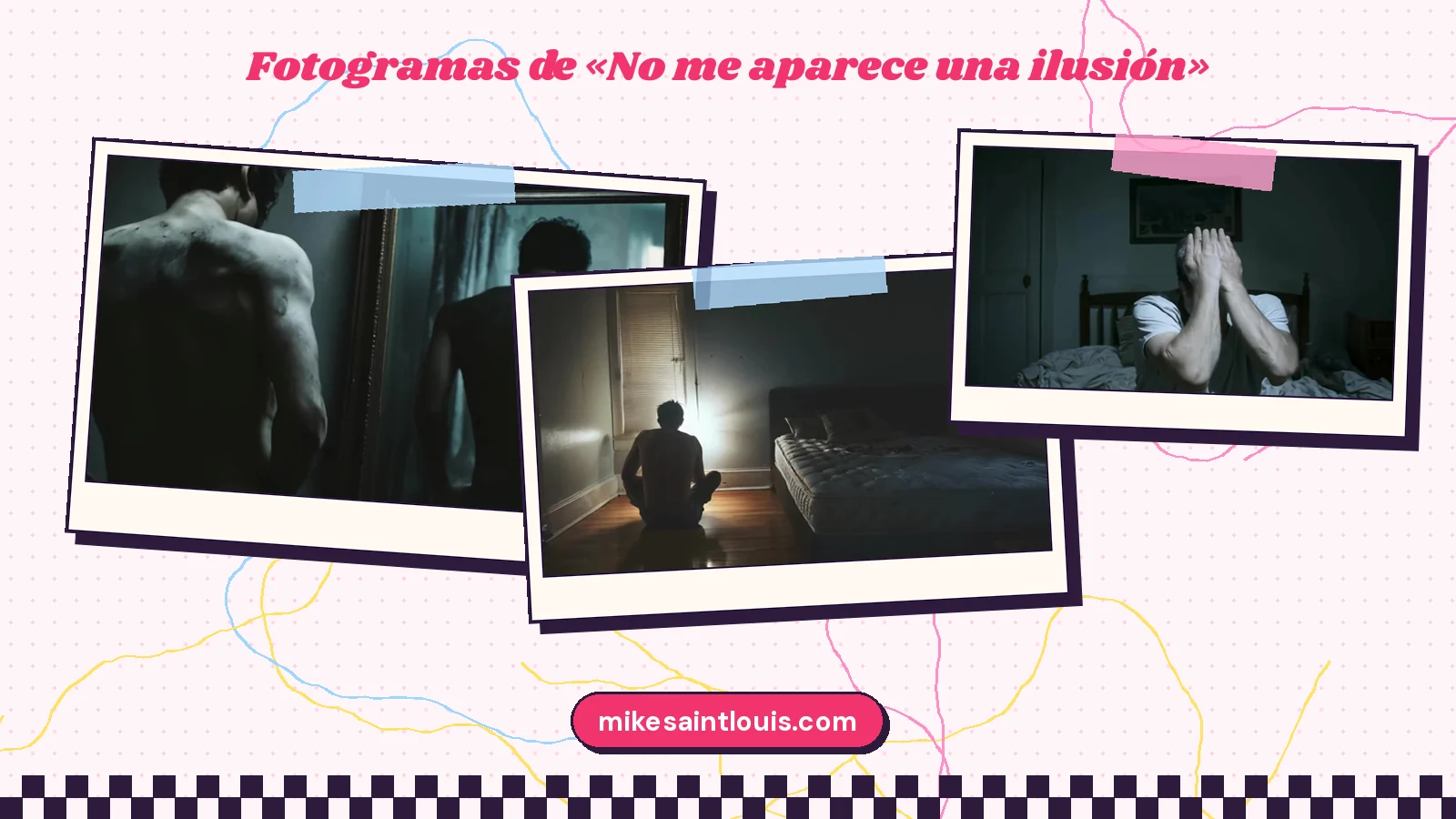
«Y estoy solo entre estas cuatro paredes / Siempre apartado entre tanta gente» "And I'm alone within these four walls / Always set apart among so many people"
Notice the shift from one line to the next. First, alone within four walls: the loneliness of the room, of being shut in. Then, set apart among so many people: the loneliness outside, the kind you carry even in a packed bar, at a birthday dinner, in a Tube carriage crammed to the doors at half eight in the morning.
They go together because they're the same thing. You can leave the room and still be in it. You wear it.
That loneliness-in-company strikes me as one of the hardest things to explain to someone who's never felt it. "But you've got friends." "But you're always surrounded by people." "But on Saturday you were at so-and-so's party." Yes. And I was set apart. Tucked into a corner on the inside, even while I laughed on the outside.
You don't have to be alone to be alone. I wrote that sentence here in other words, and it's the one people most often tell me stays with them.
The chorus that comes back uninvited
The chorus turns up again and again. I've never counted it in front of anyone, but it's a lot, more times than I'd ever put in any other song of mine if I were after something to dance to.
I did it that way because those thoughts work that way. They don't knock. They come back. You're washing a plate, you're staring at the ceiling, you're watching an episode of a series you don't even care about, and back they come. I don't feel like going out. I can't find the strength. I'm alone. Again. The same sentence, in the same words, like a radio jingle you know by heart and can't switch off.
In a cheerful song, repeating the chorus is a party: people wait for it, chant it back, throw their arms up. Here repetition is the opposite. It's the loop. It's the weight. And the trick, if you can call it that, is that the listener notices. There comes a moment when they think: again. Exactly. Again.
That feeling of again is what I wanted the listener to take away. Not a catchy tune. The thought that won't leave.
Why I took the jokes out
Now the question people ask me. Why doesn't this song have a single joke, when you joke about everything?
Because a joke, here, would have been a way of running off.
I use humour as a shield, I know it and I'm not ashamed of it. It's saved me many times from getting pompous, from being pitiful, from sounding like a martyr. But the shield has a problem: if you hold it in front of everything, nobody sees what's behind it. And in this song I wanted it seen.
When someone is truly unwell, the last thing that helps is a comedy routine. "Come on, cheer up, it's not that bad." "Go out for a bit, get some fresh air." "Put on a funny film." All of it, kindly meant, sounds from inside the room like distant noise from another planet.
So the song doesn't do that. It doesn't cheer you up. It doesn't pat you on the back. It sits down on the floor beside you and says: yes, it's like this. This is what it feels like.
Sometimes that's the only thing that works.
I don't even dare to pretend
There's one line that, of them all, I find hardest to reread.
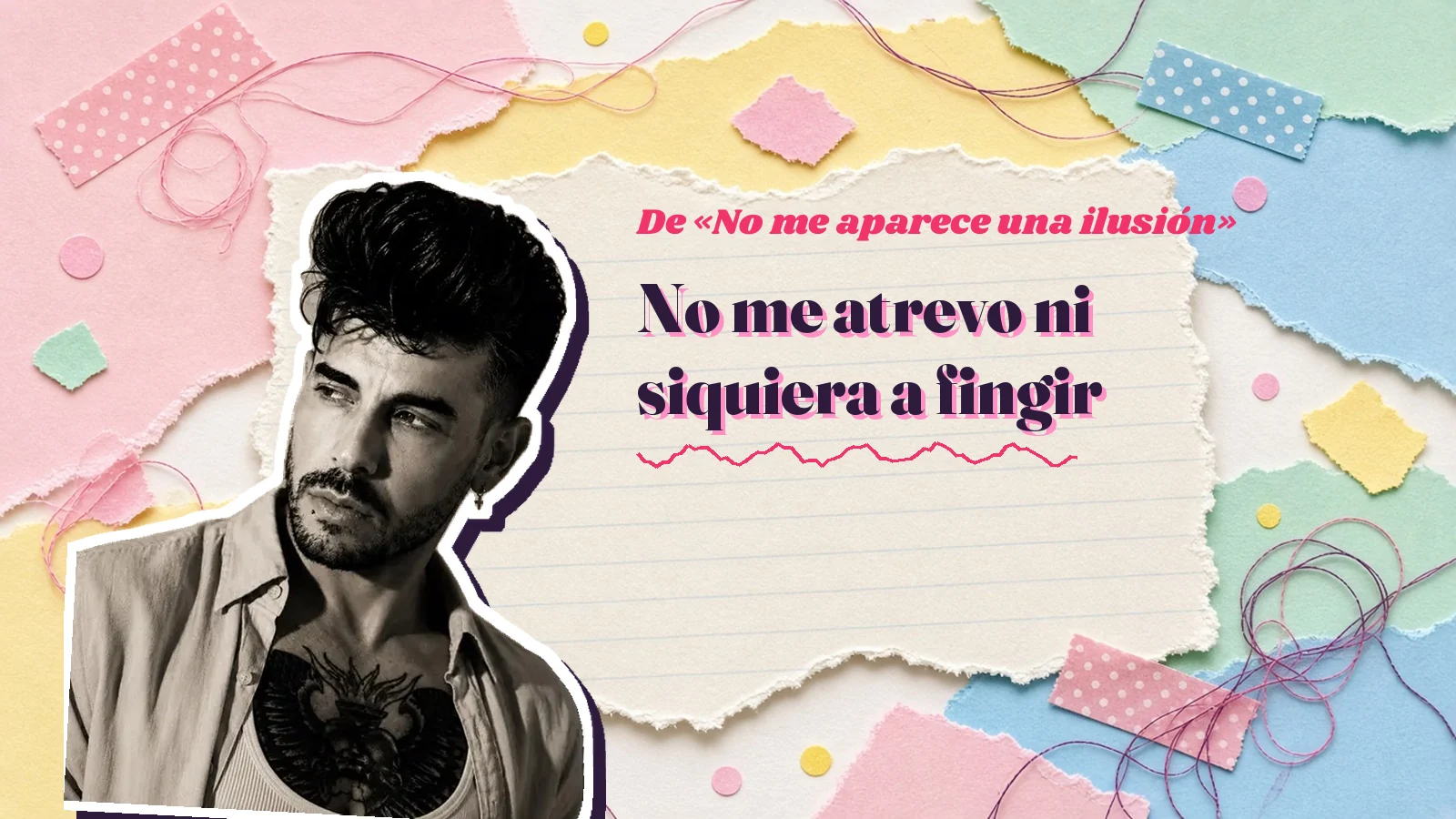
«No me atrevo ni siquiera a fingir» "I don't even dare to pretend"
Because pretending is the last thing to go. You can be in a terrible state and pretend you're fine. At work, with family, in the friends' WhatsApp group, sending a laughing emoji. Pretending is exhausting, but it's a way of carrying on. Of not being asked.
When you can't even pretend any more, you've reached somewhere else. Further down. You've no energy left even for the mask.
It's funny, because in other lyrics of mine the mask is something to mock. The Saw mask, the fake-smile face in «Extravaganza», the narcissist who takes his off when it suits him. Here the mask belongs to nobody wicked. It's yours. And when it slips, it isn't a victory: it means you can't go on.
I wrote it without ornament. One dry line. Eight words in Spanish.
The words I didn't use
Let me tell you what I left out, because sometimes what isn't there says as much as what is.
I didn't use the word depression. Not once. It felt like a word from a medical report, a leaflet in a pill box, a TV panel show. When you're inside it, you don't think "I have depression". You think "I don't feel like leaving the room". So I wrote the second.
I didn't put in pills, or appointments, or diagnoses. Not because they don't exist, but because they're not mine to tell, and because the song isn't a case study. It's what it feels like.
I didn't name any place. No Madrid, no Chueca, no Benidorm, all of which crop up in so many of my lyrics. There's no city here. There's a room. The room could be anywhere, a flat in Lavapiés or a semi in Albacete, and that mattered to me: that anyone could climb inside.
And I didn't put in a single insult. That's what surprised me most when I reread it. In nearly all my lyrics there's someone to point at. Here there's no culprit. Nobody did this to you. It just happens.
Taking all that out was like emptying a room of furniture. In the end only the walls are left. And the walls were the subject.
Steps going down
If you read the whole lyric, you'll see that between choruses the verses keep descending. It wasn't carefully planned; it came out that way, and when I noticed, I left it.
First, the reason to smile that's no longer there. Then the sadness that feels like eternity. After that, the warmth of no love at all and each day weighing more than yesterday. Later, the heartbeat you can't feel in your chest and the narrow tunnel. Finally, the tunnel with no light.
It's like walking down the stairs of an underground car park. Level minus one, minus two, minus three. Less light each time, more smell of damp. And you don't know how many levels are left.
On the song's page I mentioned it in passing. Here I'll tell you that this descent is what keeps the song from being a flat lament. It moves. Downwards, but it moves.
The tunnel with no light
The tunnel is a well-worn image, I know. Light at the end of the tunnel: your mum says it, your boss says it, the newsreader says it whenever there's a crisis, even the Atlético manager says it at a press conference.
That's why I turned it inside out. I can't see the end of this tunnel with no light.
When you're inside, the light-at-the-end-of-the-tunnel line makes you furious, because you can't see it. They tell you from outside, from where there is light, and it sounds as if they don't understand. The song picks up the tired image and takes out the bulb. There's a tunnel. There's no light. No end in sight.
It's one of those times you take a stock phrase and remove the pretty part so it means something again.
And in my thoughts there's only you
In the middle of all that grey, someone appears. In passing, in one line. In my thoughts there's only you.

I don't say who. I won't say here either. It could be a love who left, a person who's gone, someone you don't dare call. Just before, the lyric says it can't find the courage to ask forgiveness, so everyone can join the dots however they like.
What matters to me is that this line is the only spot of colour in the song. That you. Everything else is the room, the tunnel, the lack of strength. And suddenly, a person. Even if they're not there. Even if it's only a thought.
Sometimes, on those days, that's the only thing holding you up. Thinking of someone. Even if it hurts.
The no that isn't like the others
And we reach the ending, which is the reason the song exists.
«No, pero algo en mí pide respirar / Tal vez algún día logre despertar.» "No, but something in me is asking to breathe / Maybe some day I'll manage to wake."
Look at the first no in that line. It's different from all the rest. Until now, every no closed a door. This one is followed by a comma and a but. No, but. It's a no that turns around.
Getting to that comma cost me a great deal. It's the only punctuation mark in the whole song that does anything. A comma and a but, and the whole sentence changes direction. Like driving down the motorway and finally seeing the sign for a turning.
Something in me is asking to breathe. It doesn't say it already breathes. It says something is asking. A small part that hasn't thrown in the towel yet.
And maybe some day I'll manage to wake. Maybe. Some day. Not tomorrow, not with a happy ending out of a yoghurt advert. A possibility.
It isn't a happy ending
People have said it to me now and then: what a sad ending. And I don't think so. I think it's the only honest ending it could have had.
If the song ended with "and now I'm marvellous, I go outside and the sun is shining", it would be a lie. That's not how you come out of a bad patch. There's no day when the blind goes up and the violins strike up. You come out little by little, with good days and bad days, with one part of you asking for air while the rest is still in bed.
The song ends at precisely that moment. When something asks to breathe. Not before, when everything was black, nor after, when it's passed. In the crack.
For someone listening while they're unwell, I think it's more useful for a song to tell them the crack exists than to tell them they're already cured. The crack is believable. The instant cure isn't.
If you're in that room
I'll say this plainly, without metaphors, because this is the place for clean sentences.
If you're in that room right now, if no hope shows up for you, if you've gone days without going out and without strength, talk to someone. A person you trust or a professional. In Spain, the 024 line answers at any hour for anyone having a hard time and thinking of harming themselves, and it's free. In an emergency, 112. Wherever you are, your local crisis line is there for exactly this.
Asking for help isn't exaggerating. You know me: I know what I'm talking about when I say exaggerating.
And this song doesn't replace any of that. It's a song. It can keep you company for a while. It can make you feel less strange. But the waking-up at the end, the real one, usually needs someone else.
Before it, a hope
In the site's discography, just before this one, sits «Una ilusión», "A hope". Don't tell me that isn't funny, even if this song has no humour at all. A hope, and then, no hope shows up. As though the second were what's left once the first has gone.

I love that order because it's how life works. One thing doesn't cancel the other. You have seasons of hope and seasons when it doesn't show up. Both songs sit in the same drawer. Both are mine.
And if the loneliness of rooms interests you, in «Entre cuatro paredes» there's another room, another way of being shut in. They're distant cousins.
On the first album, on purpose
The song is on «Descubierto un nuevo planeta llamado GAYFOLK», the first album of the trilogy. Plenty of people are surprised, because that album is a party: there are rockets, there's Camela (the kings of Spanish tecno-rumba), there are croquetas, there's spunk, there are exes named after villages.
But a planet where everything is a party would be a planet made of papier-mâché. GAYFOLK isn't that. It's a place where you can also be unwell and say so. Where the queen who makes everyone laugh can lock herself in her room one day without anybody asking her to come out and liven things up.
That's why this song is there, in the middle of the verbena, the street fiesta. So the planet has a room with the blind down. And so nobody thinks that on GAYFOLK you always have to be fine.
Music as a rope
There's another song of mine that could be the answer to this one, and it's «La música me está salvando», "Music is saving me". The title says it all. If this one is the room, that one is the rope someone throws you through the window.
I'm not saying music cures anything. I'm not a doctor and don't want to look like one. I'm saying that writing, for me, is a way of raising the blind a little. When I manage to put into words something that weighs on me, it weighs a gram less. Not much. A gram. And sometimes a gram is what separates staying in bed from getting up for a glass of water.
I also wrote about another side of this, working alone, in The loneliness of creating alone and how I handle it. Making songs on your own has a lot of the room about it.
Written without a machine
The lyric is mine, like all of them, written without artificial intelligence. The noes, the comma, the but, the maybe. The music and vocals are made with AI tools such as Suno. I'm the lyricist, composer and producer; I'm not on vocals.
And here I say it with more reason than ever. A machine doesn't know what it is to lack the strength to leave the room. It doesn't know what a Monday weighs when you're unwell. It can give sadness a sound, and it does it well, but someone has to bring the sadness. The lyric is the one thing you can't generate at the press of a button, because it comes from a place the machine doesn't have.
A room.
How to listen to it
I won't tell you to listen at any particular moment. This song isn't for the Tube or the car. It's for when you need it, and if you need it, you'll know when.
I'll only ask one thing: listen right to the end. To the comma. To the but. To the maybe.
Everything is there.
The song's page has the full lyric, and the rest are in Lyrics. If you can't sleep one night, there's also the autopsy of insomnia, another way of keeping yourself company at four in the morning.
Frequently asked questions
What is «No me aparece una ilusión» about? A stretch of deep sadness: not having the strength to leave your room, feeling alone even surrounded by people, and seeing no way out. It ends with a small crack of hope: «algo en mí pide respirar», "something in me is asking to breathe".
Why is there no humour, when Mike Sain't Louis usually writes with humour? Because, as he tells it, a joke in this song would have been a way of fleeing the subject. The song keeps you company without trying to cheer you up.
Which album is it on? «Descubierto un nuevo planeta llamado GAYFOLK», the first album of the Planeta Gayfolk trilogy.
What should I do if I feel the way the song describes? Talk to someone you trust or to a professional. In Spain, 024 answers free of charge at any hour for people thinking of harming themselves; in an emergency, call 112.
Who performs it? The vocals and music are made with artificial intelligence tools such as Suno. Mike writes the lyrics without AI and is the composer and producer.