
By Mike Sain't Louis ·
I Want to Be Like Malena: the divas my lyrics pray to
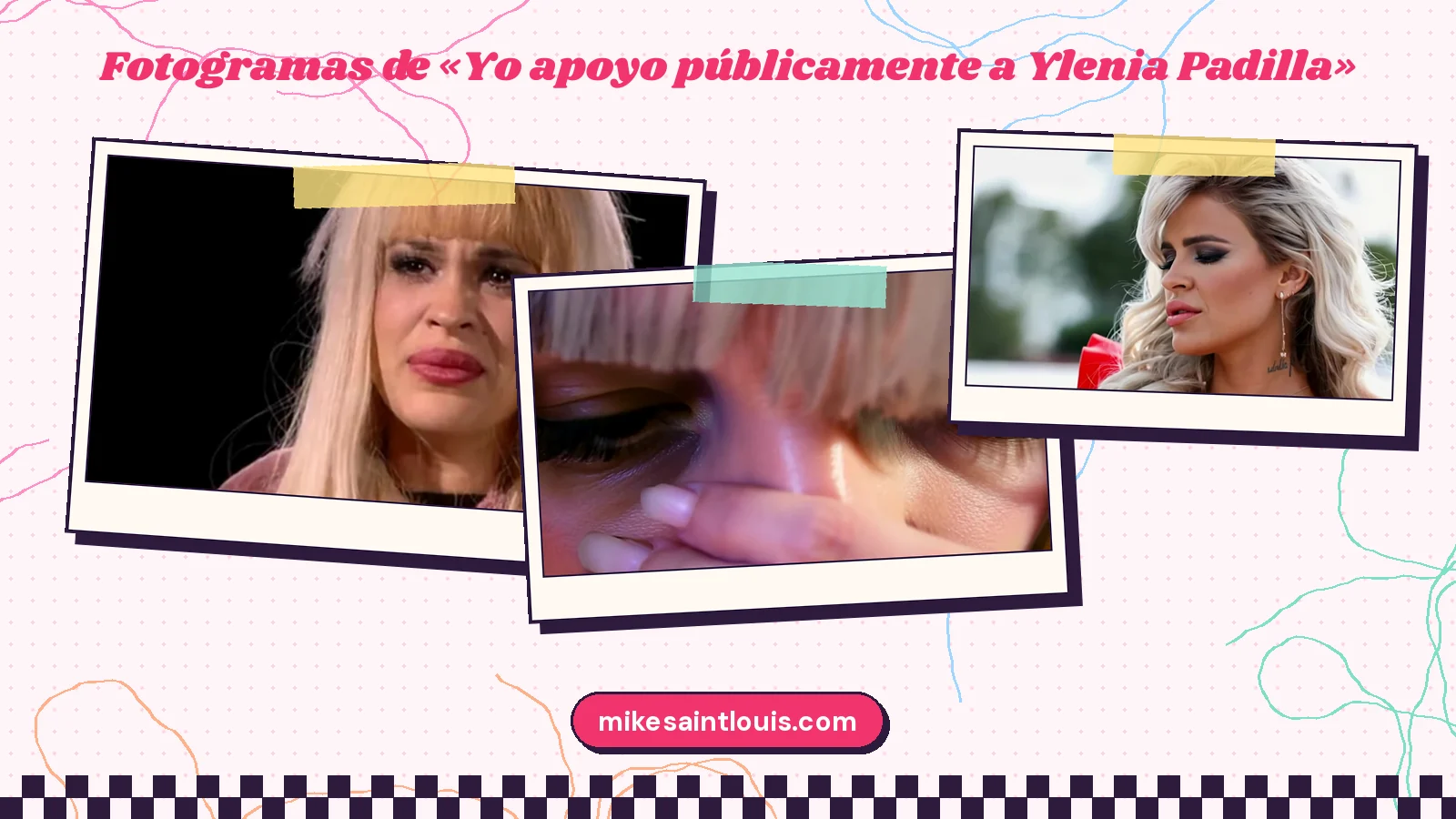
«Yo sí entiendo a Ylenia Padilla / Yo también soy Ylenia Padilla» («I do understand Ylenia Padilla / I am Ylenia Padilla too»).
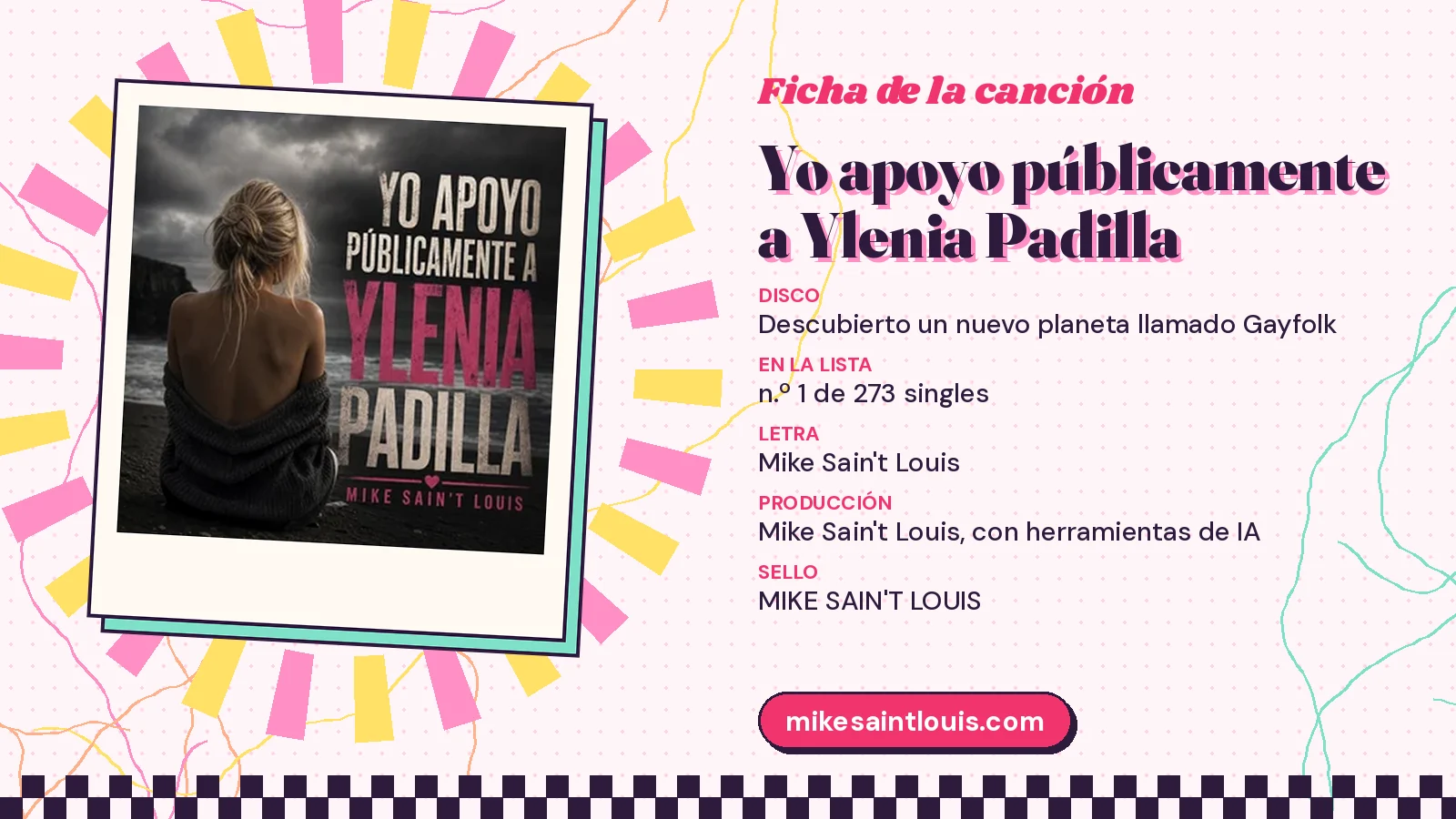
That is how «Yo apoyo públicamente a Ylenia Padilla» opens, and according to my own website it is the latest single from PLANETA GAYFOLK. Two lines. One of understanding, one of identification. I understand you. I am you.
Then the song turns into a list of verbs of support, one after another, like a placard lettered by hand: I publicly support, I am like, I defend, I stand with. There is not a single insult in it. Not one joke. It is among the most serious songs I have, even if the name in the title makes half the country smile.
That «yo también soy», that «I am her too», turns up again and again in my lyrics. With different women. Ylenia, Malena, La Veneno, Yurena. And I have realised that my catalogue holds a whole calendar of saints. Women from television, from pop, from the night, from copla, to whom my songs commend themselves the way you might pray to a little holy card. Not to ask for miracles. To ask for strength.
This piece is about them. About what they do in my lyrics. And about why, when a gay man feels alone, he almost always looks for himself in a diva.
I am her too
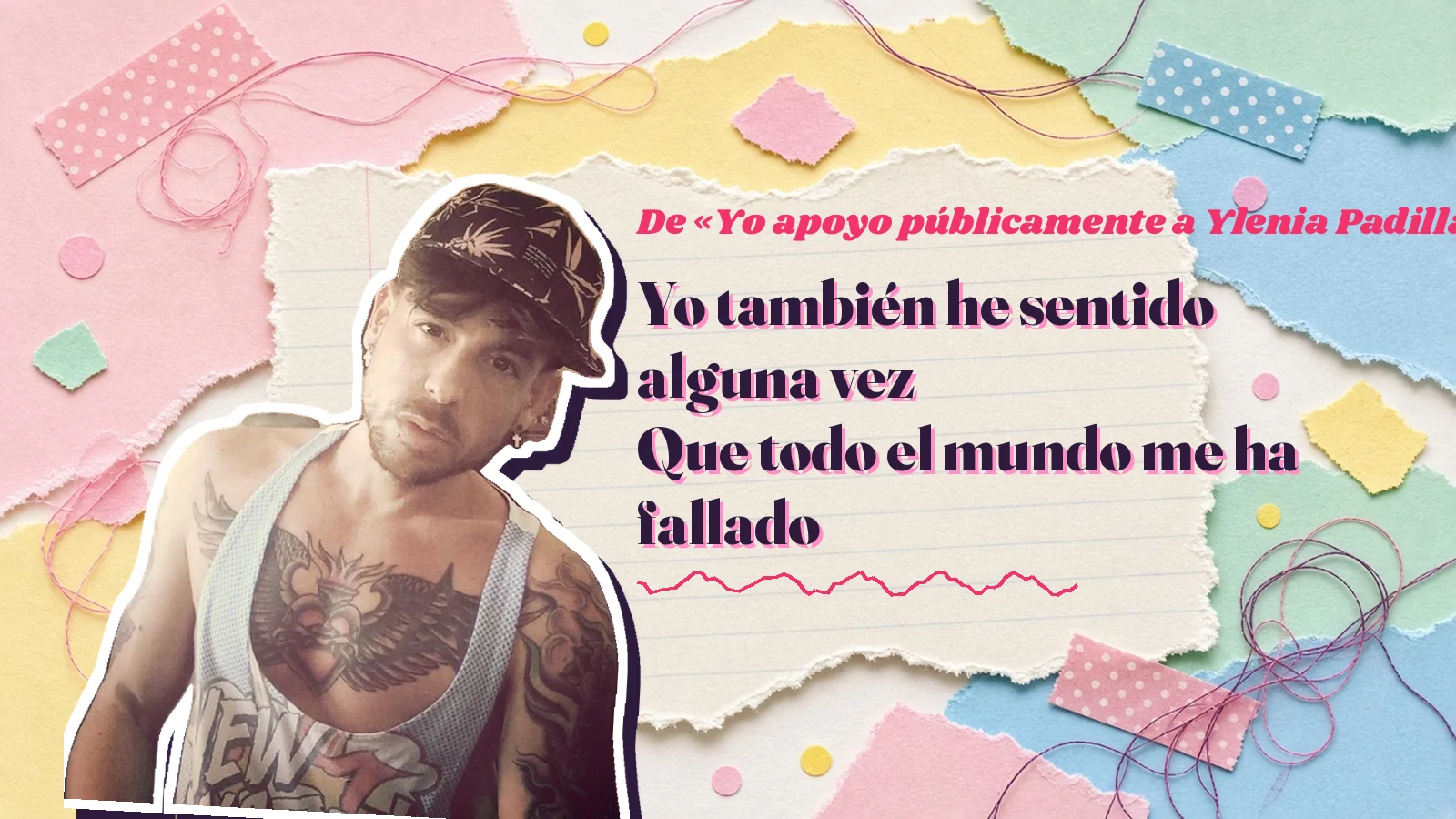
Back to Ylenia. What the song says about her is nothing you could have read in a magazine. It is this: «Yo también he sentido alguna vez / Que todo el mundo me ha fallado» («I too have felt, at some point, / that everyone has let me down»).
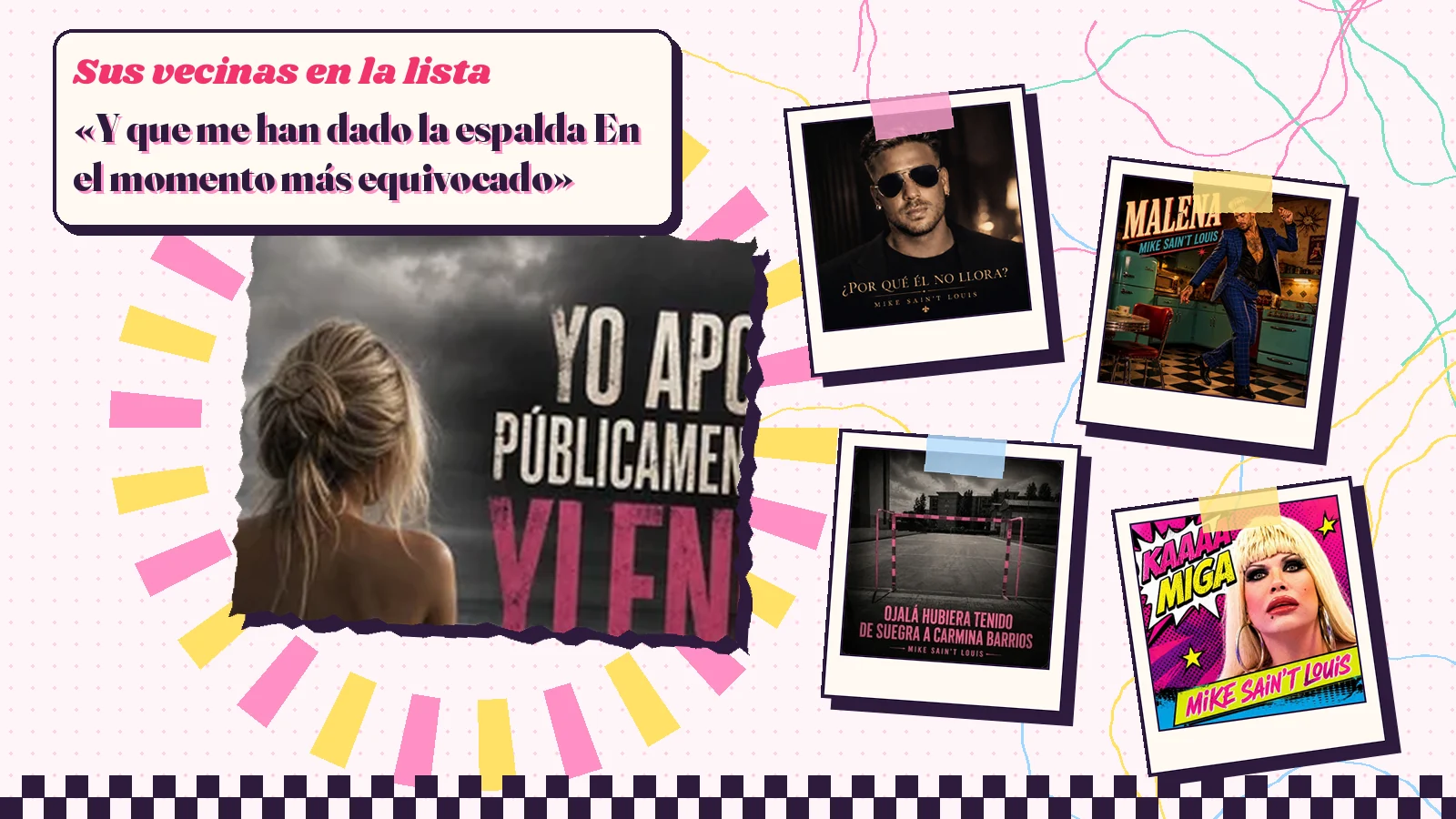
And then: «Y que me han dado la espalda / En el momento más equivocado» («and that they turned their backs on me / at the very worst moment»).
That is all. No biography, no gossip, no scandal. Just a shared feeling. That everyone fails you. That people turn their backs precisely when you need them most. And the song looks at a woman off the telly, one of those the whole country has sat in judgement on from the sofa at some point, and tells her: me too.
I love what that move does. It does not defend Ylenia with arguments. It does not enter the debate. It simply stands beside her. And standing beside someone everybody is pointing at is one of the queerest things I know. We have always done it. With the folkloric stars the press crucified. With the women who appeared drunk on the front pages. With the reality-show contestants the audience voted out amid the booing. There has always been a gay man on the sofa saying, «well, I like her».
The same lyric, almost word for word, appears in «¿Por qué él no llora?», where it tangles with a forgotten wedding and an ex showing off a new tattoo. There the phrase is trimmed even further: «Yo también soy Padilla» («I am a Padilla too»). No first name. Just the surname. As if she were family.
I want to be like Malena
If Ylenia is the diva I identify with in pain, Malena Gracia is the diva I identify with on the dance floor.
In «Malena» the chorus leaves no room for doubt: «Yo quiero ser, ser como Malena Gracia» («I want to be, to be like Malena Gracia»). And the song paints her as the queen of the night, walking into the club, lighting up the room, dancing until dawn. «Loca, loca por un beso tuyo» («Crazy, crazy for a kiss of yours»).
Then, near the end, comes the line that makes her my patron saint: «Yo soy como Malena / y nunca me rindo» («I am like Malena / and I never give up»).
I never give up. That is what you ask of a diva. Not that she be perfect, not that she hit every note, not that she look good in the photos. That she not give up. That she keep dancing even when people stare. «No pasa nada por bailar algo distinto» («there is nothing wrong with dancing to something different»).
Malena matters so much in my catalogue that she even stands for election. In the text for «Vota Malena Gracia» she runs, alongside Noemí Argüelles, in galactic elections as a symbol of colourful resistance, when Donald Trump and Elon Musk want to buy the planet GAYFOLK. A showgirl against the owners of the world. I put it like this: «La belleza aquí se convierte en un acto político, una flor frente al acero» («here beauty becomes a political act, a flower against steel»).
I cannot imagine a better candidate.
Just an algorithm
There is a detail in «Malena» that always slips past me when I am dancing to it, and that, read slowly, strikes me as the most important thing in the song.
Just before that line about never giving up, the lyric says: «Y aunque para ti / Solo soy un algoritmo» («and even though to you / I am only an algorithm»).
There it is. The song knows what it is. It knows the music and the vocals are made with artificial intelligence, and it knows that plenty of people look at me that way: as if I were an algorithm rather than a man from Madrid who writes lyrics. And the answer to that contempt is not a technical argument. It is a diva. I am like Malena. You look at me sideways, you call me a machine, and I keep dancing.
In «La insignia de artista» the theme comes back, more bitter. Someone important with contacts in the music world delivers the verdict: «Si tu música es un algoritmo / entonces no corazón / entonces no alma / entonces no distinto» («if your music is an algorithm / then no heart / then no soul / then nothing different»). And near the end an artist I admire appears, named in the lyric, with two lines that leave me exposed: «para mí es una diva, / tal vez no le guste que use IA» («to me she is a diva, / perhaps she wouldn't like me using AI»).
I like that the doubt is there. A diva does not always give you her blessing. Sometimes you love her from afar, knowing she might not care for what you do. And you love her anyway. That is devotion too. And the song closes on a «creo que ya me rindo» («I think I give up now») that contradicts Malena, because there are days when you are not Malena. There are days when you are nothing more than a tired fan.
That is why I need so many divas. For the days when I cannot be any of them.
A mother-in-law, if only
There is one diva in my catalogue I want not as a model but as family. Carmina Barrios.
«Ojalá hubiera tenido de suegra a Carmina Barrios» («if only I'd had Carmina Barrios as my mother-in-law»), says the title of the song. And the fantasy is complete: lunch with her in the garden, her son as my partner, celebrating a long anniversary.
I have written about dream mothers-in-law elsewhere, so I will keep this short. I only want to point out the diva in that choice. Carmina is not a pop star. She is a television mother. A mother with wit, with nerve, with that way of talking that makes everyone laugh. And for many gay men, a mother like that is the hardest diva of all to win. Not the one on stage. The one who sits you at her table and treats you like one of the family.
And who are you
And then there is her. La Veneno.
In the text for «Kaaa miga» I present the song as a direct tribute to one of the freest figures Spain has ever had. And I write that she «fue escándalo, humor, coraje y espejo de una época que intentó silenciarla» («was scandal, humour, courage and the mirror of an era that tried to silence her»).
A mirror. The mirror again. La Veneno is not a diva I want to resemble. She is a diva I look into to understand where I come from. A trans woman who appeared on nineties television saying what nobody else would say, who made a whole country laugh and whom that same country treated appallingly. All of that sits in the story of many people like me, even if you did not live it first-hand.
The text ends with her most famous line, the one everybody knows: «¡Yo soy La Veneno, y tú quién eres, maricón!» («I'm La Veneno, and who the hell are you, queen!»).
I am. Again. But here the diva does not say «I am her too». She says «I am», full stop, and throws the question back at you. And you, who are you? It is the question I keep asking myself. And the best answer I have is to keep writing songs.
In the same text I sum it up like this: «La Veneno fue muchas cosas, pero sobre todo, fue verdad» («La Veneno was many things, but above all she was truth»). If I could ask only one thing of a diva, it would be that.
Look it up in the archives
In «I Am Yurena», from the third album, the diva speaks in the first person. And the first thing she does is make clear who she is not: «Yo no soy Tamara la mala» («I am not Tamara the bad one»).
Then: «Tira de / hemeroteca» («go and dig / through the archives»). And a parting shot of the kind I like: and if that bothers you, you know exactly what you can do.
That song is about the right to change your name. About the woman who was one thing once and decided to become another, and whom everyone keeps calling by the old name just to needle her. «¡Yo soy Yurena!» («I am Yurena!»). The final cry. Chorus. Flag.
To me it is one of the most important things a diva can do: teach you that your name is yours to choose. That the archives exist, yes, that anyone can go and look up who you used to be. And that it does not matter. That today you are this. And if it bothers anyone, let them dig through the archives. Or do the other thing.
Like Jennifer López
Sometimes a diva appears in a single line, like a wild card. In «Mejor que Ben Affleck» the narrator has built himself a boyfriend with artificial intelligence: handsome, clever, always on time. And in the middle of the list he lets slip: «Soy como Jennifer López / Sin contrato ¡prematrimonial!» («I'm like Jennifer López / without the prenup!»).
Jennifer López is not there for her music. She is there because she is the diva of love on the grand scale, of weddings splashed across every magazine, of romances that come back twenty years later. And the joke lies in comparing yourself to her precisely when the boyfriend is not flesh and blood. The most glamorous diva in the world and a boyfriend made by a program. It is a way of laughing at myself, at loneliness and at the promises of technology, all in two lines.
The title seals the comparison: this boyfriend is better than Ben Affleck. Nothing more needs saying.
A girl who was used
Not every diva in my catalogue is Spanish. There are two queens of American pop. And I treat them very differently.
In the text for «Free Britney» there is not a single joke. I write that «Britney no fue solo una estrella, fue una niña usada, una mujer juzgada y un icono que gritó sin que nadie escuchara» («Britney was not just a star; she was a girl who was used, a woman who was judged, and an icon who screamed while nobody listened»). And that the tribute comes from respect, from pain and from admiration for someone who survived her own spectacle.
Surviving her own spectacle. That is what puts Britney on my altar. Not her songs, though those too. Her survival. A girl who just wanted to dance, who became the voice of a generation and was locked in a cage lined with spotlights. Many of us gay men know what it is to be told how to be in front of everyone. Britney lived it on the grandest scale.
And then there is Madonna. In the text for «The Queen of Pop» I call her «the eternal Queen of Pop» and say something that defines me well: «It's not imitation — it's pure devotion turned into performance art».
Devotion. That is the word. I do not imitate Madonna. I venerate her. The way you venerate a Virgin in a procession, with flowers, with candles, with tears and with a touch of excess. It is what gay men have always done with our divas. We carry them through the streets.
The bargain-bin Shakira
But it is not all devotion. Sometimes a diva is there to make us laugh.
In «La Shakira y el Piqué de todo a 1 euro» the song opens by looking at a gay couple who are all over Telecinco these days, so sweet, so modern. Then it drops the line: «Es la Shakira marica del Todo a un Euro» («he's the queer Shakira from the pound shop»). And the other one, naturally, is the Piqué of excrement.
Then the twist: «a partir de ahora yo soy / la Shakira marica del Todo a un Euro» («from now on I am / the queer Shakira from the pound shop»).
I take the diva for myself. I become her, but in a cut-price version. That is what camp parody does: it takes the star down to the bargain shop on the corner, where we can afford her. The real Shakira made a song about her ex. I turn myself into a pound-shop Shakira to make one about mine. I do not have her budget. I have her fury.
Diva of the street market
And then there is the diva I become when I go out into the street.
In «Marica chill», from the second album, the narrator wakes with glitter on his face, has a black coffee without the drama and heads down to the beach in heels. The neighbour tuts from her balcony. The greengrocer gives him a mango. And the chorus names it: «Walkin' like a diva en mi mercadillo dress» («walking like a diva in my street-market dress»).
A street-market diva. I adore the idea. You do not need to be Madonna to walk like a diva. A dress from the market, a fan and an enormous wish to be looked at will do. «Que me llamen loca, that's my brand» («let them call me mad, that's my brand»).
This song is the other face of the whole calendar of saints. The divas of television and pop are the ones we admire. But what we learn from them we put to use in the neighbourhood, on the beach, in the queue for bread. Every gay man who steps out with a little too much on is being a diva for someone. For the lad watching from the window who does not dare yet.
«Si me critican desde el balcón / Les mando besitos y pongo reggaetón» («if they criticise me from the balcony / I blow them kisses and put on reggaetón»). There is the lesson of all of them, in two lines.
As La Pantoja would say
Some divas appear not as protagonists but as a phrase. As a citation of authority.
In «Si Don AussieBum hablase», after an ex who makes off with the designer swimwear and leaves the AliExpress ones behind, the narrator gets back on his feet with this: «pero ya sabes que yo soy / siempre Ave Fénix y como diría La Pantoja / ¡Tú tira palante!» («but you know that I am / forever a phoenix, and as La Pantoja would say, / just keep moving forward!»).
As La Pantoja would say. There is no need even to name the song. Everyone knows what it means. A woman who has been through everything in front of the entire country and is still standing. A phoenix. Keep moving forward.
That is a diva in my language: someone you invoke when you need to pick yourself up off the floor. The way you would say «as my mother used to say». For many of us, divas are spare mothers. Mothers who taught us to cry in public, to overdress, to answer back with wit and never to apologise.
Two eternal divas
There is a song in my catalogue about two divas and a band I no longer like. «Ya no nos gusta La Oreja de Van Gogh» («we don't like La Oreja de Van Gogh any more») is not against them. It is for them.
In the text that comes with it I write that I grew up with Amaia Montero and with Leire Martínez's songs, and that both belong to the history of Spanish pop and to mine as well. Then I make the distinction that matters to me: we like them, Amaia and Leire, but not the domesticated packaging the industry turned the band into.
And I mention something curious about that song: I wrote it before Amaia's return to the group was announced. Almost prophetic.
The line that best sums it up is this: «que las divas siguen brillando, pero el sistema ya no emociona» («the divas still shine, but the system no longer moves anyone»). Two eternal divas. Two different eras. And a fan who loves them both and cannot stand the machine around them.
That is one of the tensions that interests me most when I write about divas. The diva is the person. The industry is something else. And you can love the first and mock the second in the same song.
Marisol, Carmen Sevilla and the women who danced
There are divas in the cover versions in my catalogue too. I wrote about them when I explored the folk in GAYFOLK, so I will just name them here.
My version of «La Tarara» is dedicated to Marisol, who, as I wrote, «fue muchas cosas, pero sobre todo fue libertad» («was many things, but above all she was freedom»). And to the women who danced when dancing was not allowed. My version of «Cariño trianero» is a tribute to Carmen Sevilla, with the lyric left untouched.
They are divas from another time. My grandmothers' divas, the divas of after-lunch films and the radio in the kitchen. And I set them down on a planet full of neon so they can dance with today's. Marisol with Yurena. Carmen Sevilla with Britney. La Pantoja with Malena. One procession for them all.
Why always a woman
There is a question I ask myself as I go through this calendar of saints: why are nearly all of them women?
I have no scientific answer. I have an intuition that many people share. For a long time, the only models of overflowing emotion gay men had were women. Men on television did not cry, did not fall apart, did not rise again in sequins. Women did. And from them we learned that you could suffer in public, exaggerate, overdress, say outrageous things and still be loved. Or not loved, but still standing.
Divas are also women who have been judged. Every one in my catalogue has been. For her body, her name, her partners, her drinking, her way of speaking. And a gay man knows a great deal about that. About being judged for the way you talk. The way you move. Who you go to bed with.
Hence the «I am her too». It is not fanaticism. It is recognition.
Publicly
I end where I began. With the most important word in the title of the latest single: «públicamente», «publicly».
I publicly support Ylenia Padilla. Not in private, not in a WhatsApp message, not over a drink at the bar. Publicly. In a song. With her name in the title.
There is some courage in that, and some mischief too. Publicly supporting a television personality sounds like an official statement, a press release, the solemn declarations politicians make. And applying it to a woman the country has judged from the sofa turns everything upside down. It says: I am on her side, I am saying so out loud, and I do not care what you think.
That is what my songs do with all these divas. They take their side. Out loud. I write the lyrics myself, and the music and the vocals are made with artificial intelligence, but that gesture is the oldest thing in gay pop: the fan who plants himself in front of everyone and says, «I love her».
The full lyric is at gayfolkplanet.com/letras/yo-apoyo-publicamente-a-ylenia-padilla. It is short. Read it aloud. And if you have a diva of your own, swap in her name. It works just the same.
Frequently asked questions
Which divas appear in Mike Sain't Louis's lyrics?
Among others, Ylenia Padilla, Malena Gracia, Carmina Barrios, La Veneno, Yurena, Britney Spears, Madonna, Shakira, Isabel Pantoja, Marisol and Carmen Sevilla, in songs such as «Yo apoyo públicamente a Ylenia Padilla», «Malena», «Kaaa miga», «I Am Yurena», «Free Britney» and «The Queen of Pop».
What does «Yo apoyo públicamente a Ylenia Padilla» say?
It is a declaration of support and identification: «Yo sí entiendo a Ylenia Padilla / Yo también soy Ylenia Padilla» («I do understand Ylenia Padilla / I am Ylenia Padilla too»), because the narrator has also felt that everyone let him down and turned their backs on him at the worst moment. The lyric is at gayfolkplanet.com/letras/yo-apoyo-publicamente-a-ylenia-padilla.
What is the latest Planeta Gayfolk single?
According to Mike Sain't Louis's website, the latest single is «Yo apoyo públicamente a Ylenia Padilla».
Who writes these songs?
Mike Sain't Louis, the first AI songwriter: a lyricist, composer and music producer based in Madrid. The lyrics are always his own; the music and the vocals are made with artificial intelligence tools.