
By Mike Sain't Louis ·
«Ni psicólogos, ni amigos, ni hermanos»: the art of the list in my lyrics
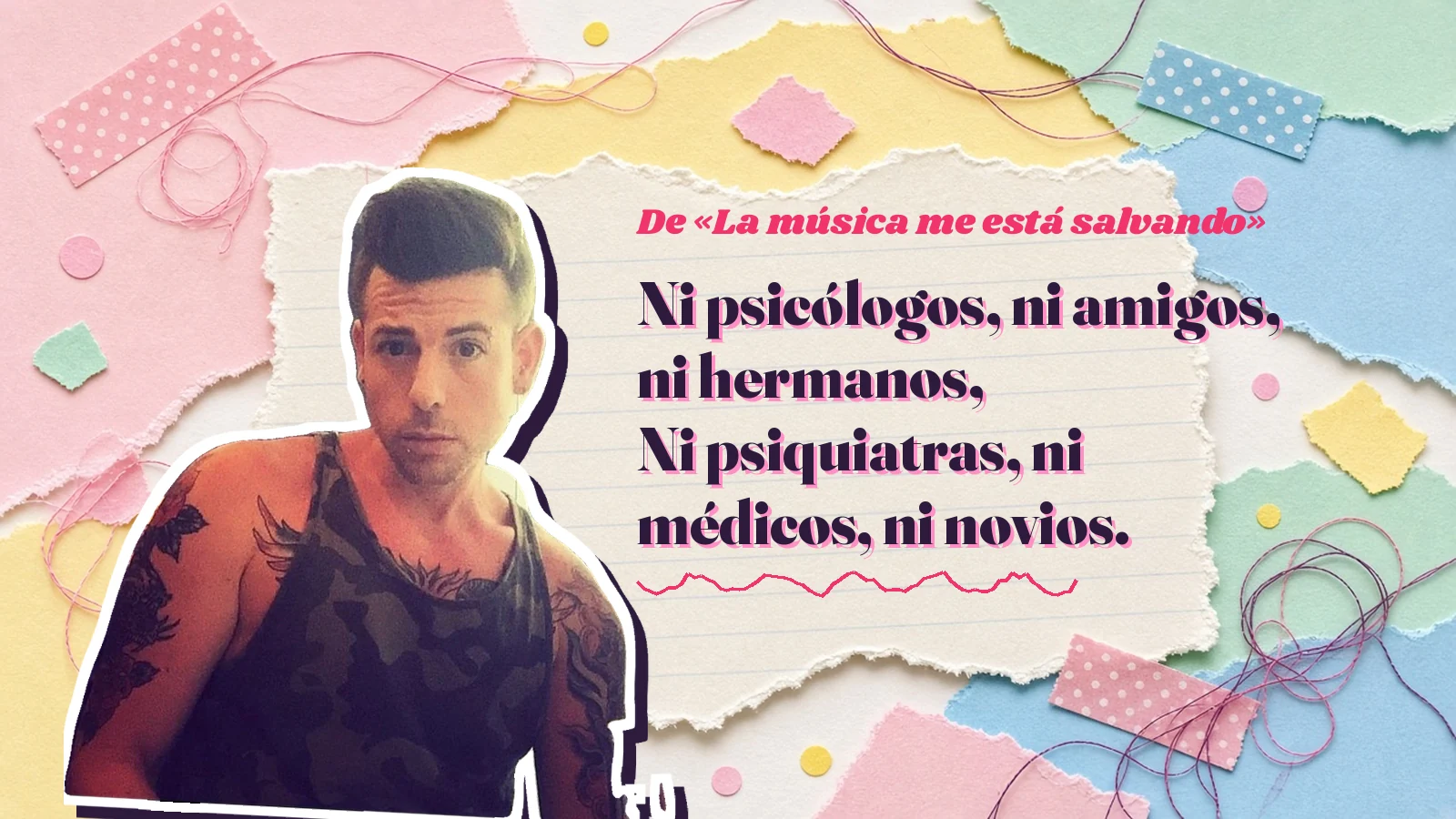
«Ni psicólogos, ni amigos, ni hermanos, / Ni psiquiatras, ni médicos, ni novios.» («Not psychologists, not friends, not brothers, / Not psychiatrists, not doctors, not boyfriends.»)
Six things in two lines. And the list has barely got going. In «La música me está salvando» I keep counting. Paediatricians. Vets. A TV astrologer. Praying on my knees in a Madrid street. Total, almighty fasting. And, to top it off, an honest, sincere politician, whom the lyrics dispatch with a «Ya lo sabemos» («We know, we know») that's practically a wink to camera.
Count them and you get more than a dozen rescue attempts in a single verse. None of them works. And just when the list can't get any longer without snapping, along comes the thing that does work, in a single line, with exclamation marks: music.
That's how a lot of my lyrics work. With lists. I noticed it reading through the whole catalogue: I list like mad. Grievances, lies, people, objects, places, cloud storage services. And this piece is about that, about why I tell things this way and what happens at the end of each list, which is always where the fun is.
Not, not, not
The list in «La música me está salvando» is a negative list. Everything that doesn't save you.
And it has a trick I really like: it starts off serious and ends up a joke without you noticing the exact moment it turns. Psychologists, friends, brothers, psychiatrists, doctors, boyfriends. So far, all perfectly reasonable. It's the list of anyone who's had a rough time and asked for help. But then «ni pediatras, ni veterinarios», not paediatricians, not vets, turns up, and that's when you realise the lyrics are laughing. Paediatricians? For a grown man with a broken heart? Vets? It's desperation pushed into the absurd: I tried everything, even the things there was no point trying.
And then the list keeps growing, crazier and crazier, until it becomes impossible. The astrologer. The rosary. The fasting. The honest politician. It's like a Jenga tower you keep building upwards until you know the next piece will bring the lot down.
That's what the long list does in my lyrics: it wears you out. It exhausts the options, exhausts your patience, exhausts the listener. So that when the final line arrives, you take it with relief. After twelve noes, one yes weighs a ton.
And the yes, in that song, isn't a person. It's music. Which is saving me, present continuous, while I write the list of everything that didn't.
Point one, your age
There's another kind of list I use a lot: the charge sheet. The indictment.
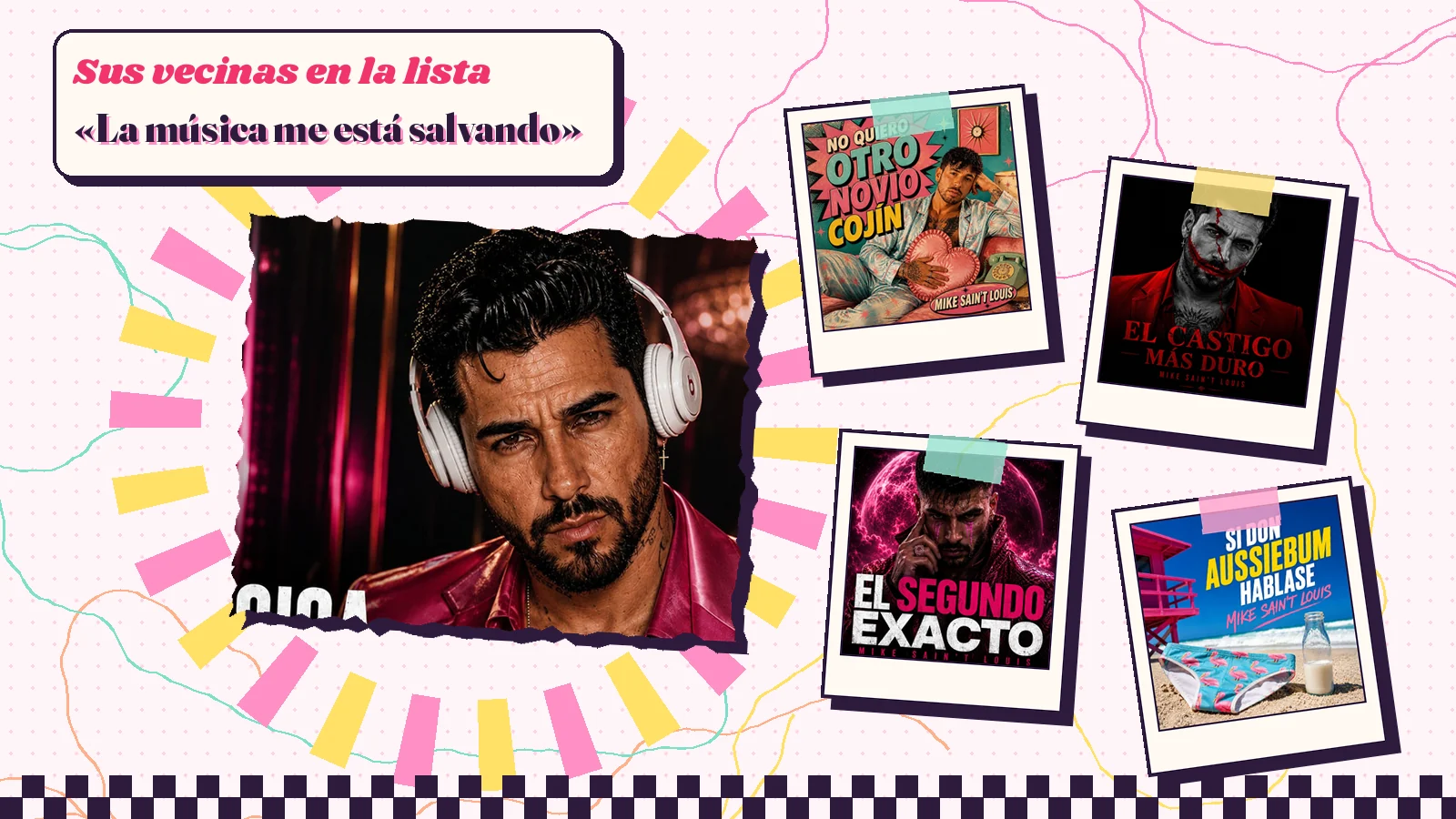
In «No quiero otro novio cojín» the lyrics suddenly switch into notary mode: «Como punto uno, tu edad, / Primera falsedad. / Punto dos, color de ojos, / Falsedad total. / Punto tres, presumes de sinceridad» («Point one, your age, / First falsehood. / Point two, eye colour, / Total falsehood. / Point three, you brag about being honest»). And every point ends with its verdict: falsehood. It's a numbered list, which is really rare in a pop song, and that's exactly why it works. It sounds like court minutes, a case file, a lawyer reading out the established facts.
I love the contrast. A song called «No quiero otro novio cojín», «I don't want another cushion boyfriend», with that cuddly-toy title, and halfway through the lyrics a man in glasses reading out a summary of proceedings. That's what break-ups are like, sometimes. You're crying into a cushion and an hour later you're writing a list on your phone of every lie so you don't forget a single one.
The charge sheet has one advantage over the stand-alone insult: you can't argue with it. If I say «you're a liar», you can tell me you're not. If I say «point one, your age; point two, your eyes», you have to take each point apart. And that's exhausting. The list turns rage into paperwork.
And there's one detail that makes me laugh every time I read it: the list stops at point three. There's no point four or point five. As if the lawyer ran out of patience before he ran out of evidence. After the third point, the lyrics drop the notarial tone and go back to the street with a «¡Qué va, falsedad!» («Yeah, right, falsehood!») and an «Adiós, patán» («Bye-bye, lout»). The bureaucracy lasts as long as it lasts. Then the neighbourhood comes out. And that's very Spanish too: you start a complaint in writing, with its form and its reference number, and end up shouting at the counter.
iPhone, Google Photos, Movistar cloud, OneDrive
There's one list in my catalogue that makes me laugh and cry in the same line. It's the one with the clouds.
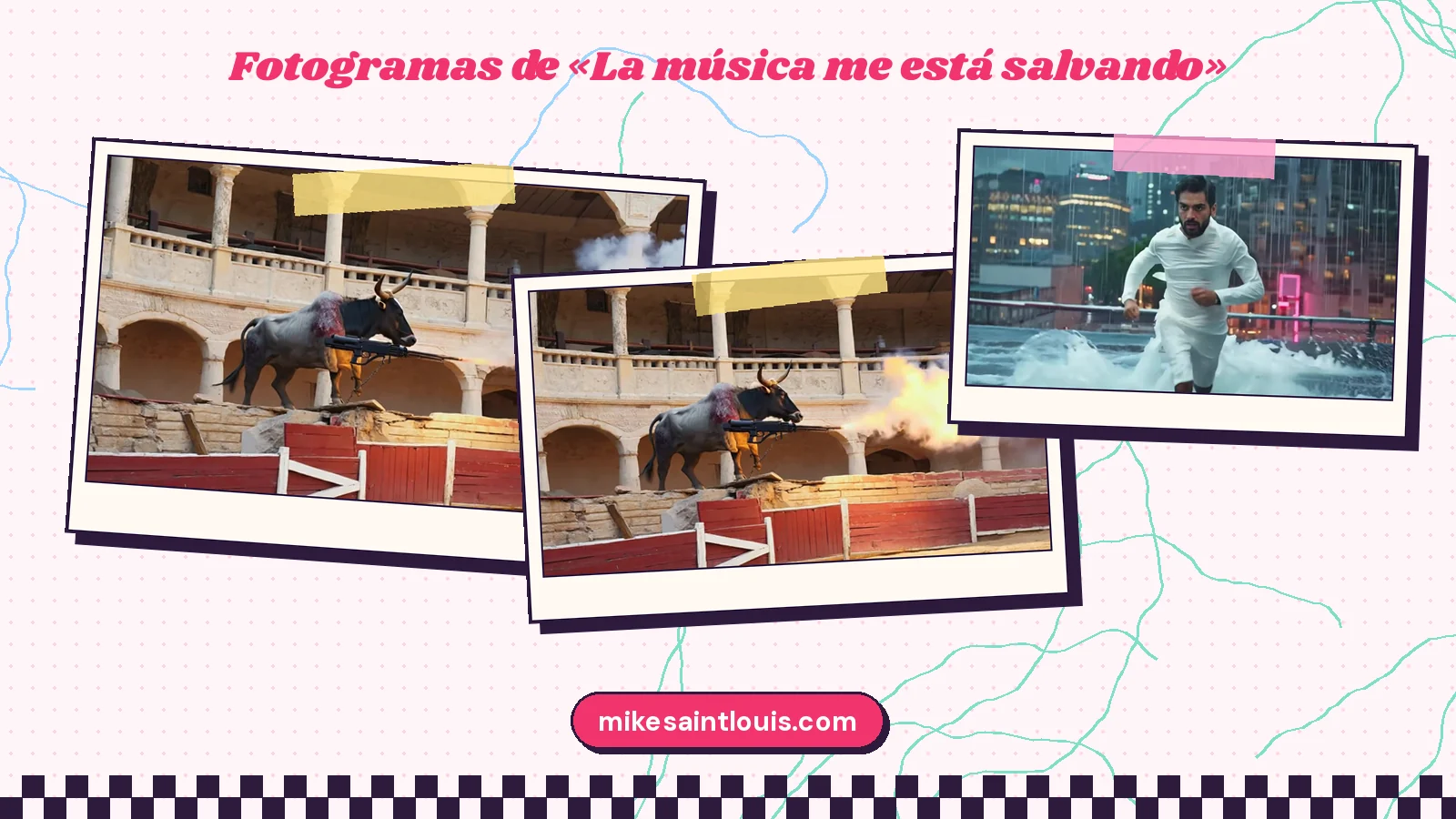
In «El castigo más duro» the protagonist decides he has to delete seven years of relationship. And the lyrics don't say «delete the photos». They say where from: «Estos siete años los tendré que borrar del iPhone, Google fotos, Movistar cloud, One Drive» («These seven years I'll have to wipe from my iPhone, Google Photos, Movistar cloud, OneDrive»). And as if that weren't enough, he then adds the face-blocking feature.
That list is the exact measure of a love affair in 2025. It's no longer enough to rip up the photos or send back the letters. You have to go cloud by cloud, service by service, like someone clearing out the drawers of a house they've lived in for years. And every name on the list is a door that has to be shut. The phone. The Google gallery. The phone company's cloud (Movistar is Spain's big telecoms brand). The one on the work account.
The funny bit is how mundane it is. Nobody had ever put «Movistar cloud» into a heartbreak song, as far as I know. The sad bit is the same thing: memories are scattered across so many places that forgetting becomes an admin task. The cloud list doesn't exaggerate. It describes.
My boyfriend, his mum, my sister, my father-in-law, my ex
Lists of people are another house speciality. And in them, order matters enormously.
In «El segundo exacto» there's a list of witnesses: twenty WhatsApp statuses viewed, and who viewed them. My boyfriend, his mum, my sister, my father-in-law, my ex. Look at the order. It starts with the closest, the boyfriend. It moves on to the in-laws and my own family, all mixed up. And it ends with the ex. The last one on the list is the one who should be looking least and looks most.
That final slot is the surprise slot. In almost all my lists, the last item is the one that breaks it. The one that doesn't fit. The one that makes you go back and read the whole list again. If the ex were in the middle, he'd get lost. At the end, he's a slap in the face.
And the list doesn't close there. The punchline comes in the next line, and it's as short as it is cruel: ni un solo «me gusta», not a single «like». Five people watching and not one reacting. The long list and the dead-stop punchline. That's the mechanism I repeat again and again.
Husbands, partners, acquaintances
Some lists are avalanches. They don't count: they flatten.
In «Si Don AussieBum hablase» a pair of stolen swimming trunks could tell everything they've seen, and the lyrics list everyone who'd be exposed. Husbands. Partners. Acquaintances. Relatives. Uncles. Aunts. Nephews. Blood brothers. And then the list gets specific, and that's where the good stuff is: the cousin, «el que te ponía bastante» («the one you fancied quite a bit»), «el que va de santo en la iglesia» («the one who plays the saint at church»), «el que es muy guapo / pero su mente / apesta» («the one who's gorgeous / but whose mind / stinks»).
That list goes from the general to the particular, like a camera zooming in. First you see a crowd. Then you make out faces. And in the end you've got three characters in front of you that you recognise from your own neighbourhood. That's how gossip works, and gossip is the oldest literary genre in the world: you start by saying «everyone» and end up naming names.
I have great fun writing those lists because each line is short and each one opens a story I don't tell. Who's the one you fancied quite a bit? What did the church saint do? No idea. The listener can imagine it. The list is a gossip menu, and everyone picks their dish.
Here I spit, here I live, here I burn, here I stay
Some lists don't enumerate things but gestures. And those are the most intense ones I have.
«Aquí escupo» is a litany. The word «aquí», here, is repeated over and over, and behind it come things from the body and the soul: rage, broken heels, a stained skirt, the tongue, fear, a crooked laugh, a scream on the floor. And in the middle of the lyrics, four two-word lines that are the backbone of the whole thing: «Aquí vivo. / Aquí ardo. / Aquí sigo» («Here I live. / Here I burn. / Here I stay»).
That list isn't funny. It's powerful. It's the list of someone who plants their feet somewhere and says: this is what I am, all of it together, the ugly bits and the bits that hurt. There's no comic punchline because it doesn't need one. The punchline is carrying on.
In «La primera drag de Benidorm» I do something similar with the same word. Here I crawl, here I bleed, here I break mirrors, here I swallow shit. A list of injuries delivered by a drag queen who won't give up. And at the end, the list breaks into three pieces: «me desangro... y bailo» («I bleed out... and I dance»). After so many listed wounds, a single party verb.
Anaphora, which is the name for repeating the same word at the start of each line, is a list with the rhythm of a prayer. That's why it works so well for serious stuff. It sounds like praying, even if what's being prayed for is your own survival.
You're fat, you're bald
Some lists I write to hurt, but not the people listening. The person saying them.
«Buscando el polvo perfecto» opens with a list of rejections in the mouth of a hateful character, your classic dating-app judge: «Eres gordo, eres calvo, / No eres lo que estoy buscando» («You're fat, you're bald, / You're not what I'm looking for»). And it keeps going. Too ugly. Old. Not well hung. Camp. Effeminate. A granddad with no abs. Each line is a reject, like swiping through photos with your thumb without looking.
I wrote that list in the villain's first person so you could see how petty it is. Said like that, all in one breath, the cruelty becomes ridiculous. No normal person would rattle off that string out loud in front of someone. But on a screen, photo by photo, it happens every day. The song just gathers the rejects in one place so you can hear them in full.
And the punchline of that list isn't a joke: it's another planet. One with no apps, where people aren't objects. After a list of rejections, a place where nobody rejects you off a list.
Croquettes and rubbish cheese
Some lists are pure comedy of manners. Inventories of disappointment.
In «Croquetas en el crucero» the protagonist was expecting sunshine and maybe an Italian. What he gets is a list of things that weren't in the brochure: croquettes and rubbish cheese at the buffet, two chonis (think brassy girls in hoop earrings) starting a full-blown band at the pool, an evacuation alarm that has everyone running in their dressing gowns, sardines in the minibar, calimocho (red wine and cola) when you'd ordered champagne. And the punchline, which is the final verdict of a dissatisfied customer: todo muy flojo, all very meh.
That list works like a one-star review written by someone bored on a sun lounger. Every item is small and concrete. None of them is a tragedy. Together, they're a ruined holiday. And that's what I love about lists of disappointments: piling up silly things ends up funnier than any big disaster.
Not that one, the other one
There's a list in my catalogue that moves forward by correcting itself. It's almost a tongue-twister.
In «Tengo argumento» the lyrics start describing a certain María and, every time they name one, they rule her out to name another. Not María of the biscuits (María is Spain's classic plain biscuit), another one. Not that one, my lover. Not the religious one, the powerful one. Every line is a «but not» followed by a «rather». It's a list of cleared-up misunderstandings, like when someone asks you about a friend and you have to rule out everyone with the same name.
And the fun part is that, after all that clarifying, the list empties out into a very simple story: a twenty-year-old boyfriend, a threesome nobody fancied and a goodbye with asparagus. The whole tangle of Marías was the road to a kitchen line.
That list helps me do something I adore: lose the listener on purpose and then scoop them back up with a punchline so simple it's funny. After so much muddle, the truth fits in one line.
Camela when
There's a list of mine that's a photo album. In «La despedida» each line starts with the name of a band and a memory follows. The first kiss. The time I nearly got married. The party summers. And in the middle, the fear of my first time in Chueca, Madrid's gay neighbourhood. That list has already been written about on this blog, so I won't spoil it. I'll just note that it proves a list can be an entire biography if each item is well chosen. You don't need to tell your life story. You just list the moments and let the listener fill in the gaps.
If only I'd known
And then there's the list of conditionals, which is the list of regret.
In «La casa de los mil cadáveres» there's a chain of «ifs»: if I'd known, if I'd listened, if I'd known you were a lowlife, if I'd twigged you were a clown, if I hadn't believed that innocent little face, if I'd spotted your lies at the start. Six conditionals in a row. Six doors that can't be opened any more.
That list is the most human of all, I think. Because it's the one we all make in the small hours when something has broken. The list of what we'd have done if we'd known. It's useless. It changes nothing. But you have to make it, the way you have to cry. And in the song, after the list, comes the only thing that does help: laughing at your own luck and telling the other one to get lost.
The list I hardly ever write
Going through all these lists, I noticed something that threw me a bit. I have almost no lists of good things.
I have lists of lies, of rejections, of clouds, of witnesses, of wounds, of cruise-ship letdowns. But lists of virtues, of things that make me happy, of people who love me, hardly any. And when they do turn up, they're short and usually written in the negative. In «El abrazo de Pitufo» the list of good things is a list of what he doesn't do: «Pitufo no pregunta, no finge, no exige» («Pitufo doesn't ask, doesn't pretend, doesn't demand»). Three negated verbs to describe affection. The good, defined by the absence of the bad.
I suppose there's a reason. You list the bad because it overwhelms you, and listing it is a way of putting it in order. The good doesn't need ordering. You just live it. Nobody writes a list of why a Sunday morning with freshly made coffee is nice. It just is.
But I'm making a note of the homework. Some day I'd like to write a long, concrete, absurd list of good things. With brands, with neighbourhoods, with names of bars. A list of twelve things that save me that aren't music, for a change. If I write it, I promise it'll end with a punchline. Because even happiness, in my songs, needs a final blow for you to believe it.
Why five and not three
There's one thing I'm completely clear on when I write lists: never in threes.

Three is the number of speeches, slogans, pretty phrases that look nice on a mug. «Free, strong and happy.» Three adjectives that say nothing. If I write a list, it'll have five things, or twelve, or twenty. And they'll be concrete, absurd, real things. Vets. Movistar cloud. The one who plays the saint at church. Paediatricians for a broken heart.
A long, concrete list has something a list of three doesn't: it's believable. Nobody makes up having tried the vet. If you say it, you were truly desperate, or you're laughing at your own desperation, which is even truer.
And then there's the punchline. A list without a punchline is an enumeration. A list with a punchline is a joke or a stab. «¡Patán!», you lout!, at the end of a list of grievances. «Not a single like» at the end of a list of witnesses. «And I dance» at the end of a list of wounds. The punchline is what gives the list its meaning. It's the last Jenga piece, the one that brings everything down or holds it all up.
Life in lists
I suppose I write like this because I live like this. Like almost everyone.
We make shopping lists, to-do lists, playlists, guest lists, lists of pros and cons when we don't know whether to leave someone. Our phones are full of notes with half-finished lists. The family WhatsApp group is a list of people who've left you on read. The cloud is a list of photos you daren't delete.
Lists are how modern life puts itself in order. And in a song, a well-made list is a bit like an inventory after a fire: this is what's left, this is what's lost, this is what has to go in the bin. Saying it out loud, item by item, is a way of getting control back. If I can list it, I can handle it.
And there's something else. A list is also a way of being fair. When I say nothing saved me, I can sound over the top. When I list everything I tried, one by one, with names and professions, there's no exaggeration any more: there's a record. The list shields you from being called a drama queen. It says: I'm not making it up, it's all here, count it yourself if you like. That's why, in a catalogue that lives on exaggeration, the lists are where exaggeration gets precise. It's exaggerating with a receipt.
All these lists, with their nots, their points one and two, their clouds and their heres, are in the lyrics archive. And the first one, with the psychologists and the vets, is there in full on gayfolkplanet.com.
Not psychologists, not friends, not brothers.
A list. And a song at the end of it.
Frequently asked questions
Why are there so many lists in Mike Sain't Louis's lyrics? Because long, concrete lists let him exhaust an idea (everything that doesn't save you, every lie, every place you have to delete a love from) and set up a short punchline at the end, which is usually where the joke or the serious line is.
What is «La música me está salvando» about? About someone who has tried everything to get out of a bad patch, from psychologists to vets, and realises that what's saving him is music. It's on «Ojalá se pudiera viajar a GAYFOLK». The lyrics are Mike's; the music and vocals are made with artificial intelligence tools.
Which song has the list of clouds to delete photos from? «El castigo más duro», where the protagonist has to wipe seven years of relationship from his iPhone, Google Photos, Movistar cloud and OneDrive.