
By Mike Sain't Louis ·
We didn't even eat together: the couple as flatshare in El Panda del acoso sexual
Some songs hide their saddest line in the middle of the noise. El Panda del acoso sexual (The Sexual Harassment Panda) is one of them. It has a CV rattled off at full speed, a borrowed curse, old village proverbs, questions straight out of an angry mother's mouth, and a chorus that sounds lifted from some twisted cartoon. It's loud, crude when it wants to be, and a lot of fun. And right in the middle of all that is one small line that I think is the hardest in the whole song: they didn't even eat together.
On the song page I already explained where the title comes from, how it opens with that list of jobs, and why the chorus sounds like South Park. Here I want to do something else. I want to set aside the panda, the CV and the proverbs, and stay with the house. With what the lyrics let us glimpse of that life together: two people who shared a roof and very little else. The full lyrics are published, and fair warning, some stretches are raw.
Less than flatmates
The comparison the lyrics make is very exact. It says they weren't even flatmates, because flatmates, usually, at least watch TV together. And then it lands the blow: «Tú y yo, ni comíamos juntos». You and me, we didn't even eat together.
It's a brutal image precisely because it's so ordinary. It isn't about grand betrayals or movie scenes. It's about the sofa and the table. The two places in a home where, in theory, a couple overlaps even when there's nothing left to say. Watching a series in silence, eating something quick with a phone propped up beside the plate. Those are the bare minimums of living together. And here, not even that.
Anyone who has ever shared a flat knows there are flatmates you end up building a life with and others you only pass in the hallway. What the lyrics are saying is that this couple had sunk below the worst flatmate imaginable. Two people living parallel lives under the same roof, each with their own timetable, their own plate, their own screen.
A companion is someone you share bread with
There's a bit of etymology I love that fits this line perfectly. The word companion comes from Latin, from a form that joined "with" and "bread". In its origin, a companion was literally the person you share bread with. Spanish has the same root in compañero, compañía and compañera, and English keeps it in company.
Seen that way, the line carries even more weight. If they didn't even eat together, they weren't companions in the oldest sense of the word. They had lost the very thing that has defined a companion for two thousand years: sitting at the same table and breaking the same bread.
The table has always been a thermometer for relationships. In many families, Sunday lunch is the only moment when everyone coincides. In many couples, dinner is the time to tell each other about the day. When that disappears, it's usually the symptom of something bigger. Not eating together doesn't break a relationship on its own, but almost every time a relationship breaks, the table is the first to notice.
Lonely in company
There's a loneliness far more noticeable than living alone, and it's living with someone who isn't there. Lots of people describe it that way after a break-up: the worst part wasn't leaving, the worst part was those last months, when there was nothing left but we were both still there.

That kind of loneliness has something especially cruel about it. When you live alone, at least you know nobody is coming to dinner. When you live with a partner and nobody comes to dinner, every empty chair is a question. Every plate you eat standing up in the kitchen is a small defeat you don't tell anyone about, because from the outside you still have a partner, a shared flat, a life all set up.
The lyrics don't linger there for long, because the song is in a different key. But they let it slip in two lines, and anyone who's lived it recognises it at once. It's one of those moments when the joke cracks open for a second and shows the wound underneath.
The signs of an empty house
If someone asked me how you recognise a home life that has hollowed out, I'd say you don't need a drama to notice it. It's usually small things that add up. Your schedules never match any more, and nobody minds. Each of you eats at a different time, in a different room, staring at a different screen. Weekend plans get made separately without anyone needing to say so. Conversations shrink to logistics: who's buying the washing-up liquid, when the repair man is coming, whose bill this is.
None of those things, on its own, is serious. Every couple goes through stretches like that, with work, with tiredness, with strange patches. The trouble starts when the stretch turns into a habit, and the habit into the only way of being together. Then the shared flat stops being a home and becomes a kind of boarding house where two people cross paths.
The song gives no advice, because that's not its style. But that image of flatmates who at least watch telly together works almost like a simple test: if any random flatmate shares more with you than your partner does, something got lost along the way.
"The gay couple of the year"
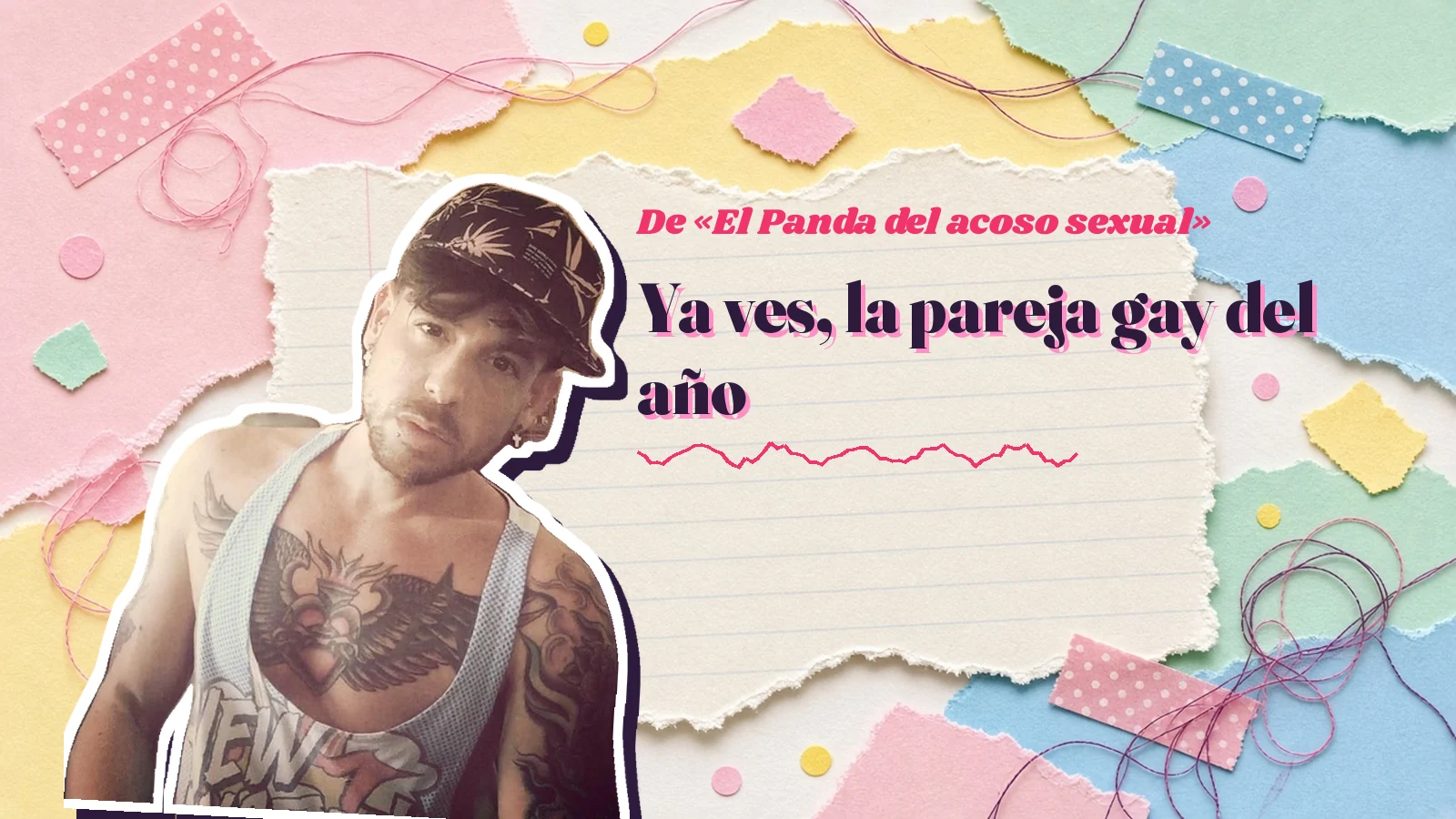
Straight afterwards comes a sarcastic aside: «Ya ves, la pareja gay del año». So there you go, the gay couple of the year. And here the song does something that really interests me, because it touches on something very specific to our community.
For a long time, couples of two men couldn't show themselves. Then, little by little, they could. In Spain, same-sex marriage has been legal since 2005, and ever since a whole picture of the ideal gay couple has been built up: the lovely flat, the dog, the trips, the anniversary photos on social media. A picture that sometimes weighs almost as much as the old closet did, because it forces you to pretend everything is wonderful.
The line laughs at exactly that. At the gap between the photo and the reality. From outside, maybe they looked like the perfect couple. From inside, they didn't even share dinner. That "of the year" sounds like a magazine award, a front cover, and the irony is that the trophy was made of cardboard.
It isn't the only song in the catalogue that mocks the appearance of being a couple. In No quiero otro novio cojín there's the boyfriend who takes up space but brings nothing. And in Mi último ex era una IA disfrazada love is told like a faulty appliance. El Panda del acoso sexual is the rowdiest version of the same suspicion: that there was a stage set of a couple with no couple inside it.
Recipes for someone who wasn't there
Further on, the lyrics offer an image I find among the tenderest in the whole catalogue, even though it's surrounded by spite. While the other one was off doing his own thing, the narrator was looking up recipes on YouTube so there'd be something sweet waiting when he got back, and a chance to turn romantic.
That image says a great deal without saying it. It says that in a house where nobody ate together any more, one of the two still wanted them to. Still searched for the dish that might fix something. Still pictured a lovely evening. Meanwhile the other person, as the lyrics tell it, was up to something very different.
I think plenty of people recognise themselves in that lonely effort. The one who keeps laying the table for two when the relationship is down to one. The one who plans surprises no one thanks them for, buys tickets for plans that get cancelled, makes up excuses so the other looks good in front of friends. It's a love that works unpaid overtime and still feels guilty for not doing more. Anyone who has stood there knows how exhausting it is to hold up, by sheer force, something the other person has already let go of.
That's why the contrast hurts. The song doesn't wallow in the cheating itself; it tells it quickly and fairly bluntly. What stays with you is the image of the one hunting for a sweet recipe. That detail is what makes the rage in the rest of the song make sense.
Relief you feel in your body
One of my favourite passages is the one about relief. The narrator says he's grown younger, literally, that he suddenly feels ten years younger in his head, and he reckons it's from no longer seeing that person.
It's an exaggeration, of course, but it points at something very real. Lots of people say that after leaving a relationship that was hurting them, the first thing they noticed was physical. Sleeping better. No longer feeling their stomach clench at the sound of keys in the door. Getting their appetite back, or the urge to go out, or an easy laugh. As if the body had been holding its breath for months and could finally let it out.
"I've grown ten years younger" sums it up with humour. It's not that the person has actually got younger; it's that they've stopped ageing at double speed. Some relationships pile years onto you, and getting out feels a lot like shrugging off a weight you didn't even know you were carrying.
I also love the internal rhyme in that stretch, de mente, de repente, dejar de verte, qué suerte. It's almost a tongue-twister of happiness, as if the words were tripping over each other out of sheer relief.
Indifference as the real ending
There's a well-known idea, usually attributed to the writer Elie Wiesel, that the opposite of love isn't hate but indifference. Hate is still a form of attention. Whoever hates is still thinking about the other person, still spending energy on them. Indifference is when nothing is left.
The lyrics of El Panda del acoso sexual head exactly that way. After all the rage, after the curses and the proverbs, they announce that in less than a month the other person will be completely indifferent to the narrator. And they add an important detail: there's no need to drink anything, either to remember him or to curse him.
To me that's the healthiest thing in the song. Lots of people get through break-ups with chemical help, with drinks to forget or to work up the nerve to text at three in the morning. Not here. Here the break-up is lived wide awake. There's rage, plenty of it, but it's a clear-eyed rage with a sell-by date. The goal isn't to hate forever. It's to reach, as soon as possible, the day when none of it matters.
There's another song in the catalogue that celebrates that day, El día de la liberación, and another that takes it as already done, Trasto viejo. El Panda del acoso sexual sits just before them, at the moment when it's still shouting but can already see the exit.
"You underestimated my mind"
Another line I think is key is «Subestimaste a mi mente». You underestimated my mind. It comes right after the announcement of indifference, and it links back to the song's opening, to that endless list of jobs the narrator introduces himself with.

Read that way, the opening list takes on another meaning. It goes beyond a CV gag. It's a way of saying: don't treat me like a fool. I have a brain, I have resources, I do a thousand things and I know how to do them. And the line about the underestimated mind confirms it. What hurts the narrator most isn't only the cheating, but that the other person thought he'd never find out.
Further on, the lyrics hammer the idea home with a pretty cruel jibe: someone with no schooling or culture thinking he can pull one over on a programmer. It's a fighting line, the kind of thing said with hot blood, and the song doesn't pretend it's fair. But underneath lies the same wound: having been treated as someone easy to fool.
That wound is very common. Sometimes the hardest part of a lie to forgive isn't the lie itself, but what it reveals about how the other person saw you. That they thought they could. That they believed you were that naïve. Getting your faith back in your own intelligence is often a big part of turning the page.
Why all the noise
Someone might ask why a song with such a serious wound has such an absurd chorus. Who lives in the middle of the forest? A panda, and one with a dreadful surname at that. It comes round three times, capped with the claim that not even Almodóvar in his heyday could top it.
I think the noise is the answer. Some things can't be told in a serious tone without dragging you under. If the song calmly narrated everything it hints at, it would be unbearable. By turning it into a cartoon, a kind of warped nursery rhyme, the narrator puts himself above what happened to him. He's no longer the victim of a sad story; he's the one telling it like an episode of some irreverent show.
The Almodóvar comparison works the same way. His films are famous for their overflowing plots, full of family secrets, impossible twists and melodrama. Saying your life outdoes that is a way of laughing at how over the top it all was. It's survival humour, and very much ours.
I use that kind of humour a lot across the catalogue. In La casa de los mil cadáveres heartbreak is told through horror cinema. In Me rindo the break-up gets its accounts settled. Here the language is adult cartoons, and it works for the same reason: the costume lets you say what you couldn't say barefaced.
And there's another, simpler reason for the noise. Sad break-up songs exist by the hundred, and many of them are beautiful. But you don't always feel like crying. Sometimes what your body wants is to jump around the living room, shout an absurd chorus with a friend and laugh at how badly they treated you. That's what this song is for. It doesn't replace the others; it keeps them company. Some break-ups are wept to copla and some are celebrated with cartoons, and nearly always, with a bit of luck, the second comes after the first.
What the lyrics leave in shadow
The song alludes to very serious things without telling them in full. It hints at deceit, hints at episodes it would rather not explain, and at one point says that it all began with an abuse. It gives no details, and I'm not going to give any or speculate about them either. What's in the lyrics is in the lyrics, and the rest belongs to the fiction of the song.

The characters who appear are invented. The ex has no name. The friend who lends her curse is a figure in the song. No real person is being pointed at. And I think it matters to say so, because a rage song works precisely because anyone can drop their own ex into that role.
What I do believe is that the song speaks, in its own way, about something many people have been through: relationships where, on top of the heartbreak, things happened that never should have. And if that's your story, I want to tell you something outside the song's tone.
The video's irony and its closing line
The video for «El panda del acoso sexual» plays with irony from start to finish, and ends with a line saying, more or less, that this is why my life is like South Park, because it all started with a sexual abuse. I want to explain it, because it isn't a throwaway joke.
As a child I suffered repeated sexual abuse. I talk about it, without details, in a series of pieces about my mental health, starting with «The ticking time bomb». For me, irony and black humour are a way of naming what hurts: of saying something very serious without it crushing me. The half-smile doesn't make it less serious. It opens the door to talking about it seriously later.
If that line hits close to home, you're not alone. What happened to you as a child wasn't your fault, and asking for help works.
If what the song tells hits close to home
If you've lived through a relationship like that, or something worse, you don't have to carry it in silence. Talking to someone you trust, or to a professional, can change a great deal. And if you feel you can't go on, ask for help today. In Spain you can call 024, the free suicide-prevention line, open around the clock, or 112 if you're in danger or it's an emergency. If you're outside Spain, call your local emergency number.
An album of houses emptying out
The song belongs to Descubierto un nuevo planeta llamado Gayfolk, the first album of the Planeta Gayfolk trilogy. That album is full of houses left half empty: boyfriends who leave, boyfriends who stay but aren't really there, things that are suddenly surplus. El Panda del acoso sexual is perhaps the most strident of all those house moves, the one done with the music blasting and the windows flung open so the whole street hears.
I like that such different songs share the same album. Some cry quietly and others shout from the balcony. Both are legitimate, and almost everyone goes through both during the same break-up, sometimes on the same afternoon.
Who this song is for
For anyone who has eaten dinner standing in the kitchen while their partner ate in another room. For anyone who looked up recipes for someone who was never coming. For anyone who left and noticed, within a week, that they were sleeping better than they had in years. For anyone who knows full well they won't stay friends, however much the other one insists.
And for anyone who needs to shout for a while before reaching indifference. Let them shout along to this one, that's what it's here for, and afterwards cook themselves something delicious, just for one.
How to listen
The song is on the singles page and on every platform, and you can download it for free from the downloads section. Play it loud, ideally while you clear out a wardrobe that no longer belongs to anyone.
As a lyricist, composer and music producer, I like the catalogue to have songs this unleashed, where rage and laughter walk arm in arm. The music and the vocal performances are generated with artificial intelligence, but the feeling of shutting the door and finally breathing out is as human as it gets.
If this subject hits close to home: in the series «Mental health without taboo» I talk openly about my mental health (narcissistic abuse, the bullying and abuse I suffered as a child, my diagnosis at 41, and therapy) and gather where to find help. If you're thinking about suicide, call 024 in Spain, or your local emergency number elsewhere.
Frequently asked questions
What is El Panda del acoso sexual about? A break-up told with a lot of rage and a lot of humour. The narrator says goodbye to an ex he lived with less closely than two flatmates would, describes the relief of leaving, and announces that within a month he won't care at all.
Why is it called that? The title and chorus play on the famous panda from an episode of South Park. The lyrics say the narrator's life is like an episode of that show, which is why the chorus has the feel of a twisted nursery rhyme.
Are the characters real? No. The ex, the friend and every other figure in the lyrics are characters in the song. No real person is being pointed at.
What does «ni comíamos juntos» mean? "We didn't even eat together." It's how the lyrics describe an empty life together: they didn't even share dinner or the sofa, things that even flatmates usually do.
Who makes this song? Mike Sain't Louis, a lyricist, composer and music producer who calls himself "the first AI songwriter": he writes the lyrics and directs the production, and the music and vocal performances are generated with artificial intelligence.