By Mike Sain't Louis ·
«Marica», spelled out in full: a word that was handed back to me
«I won maricón.»
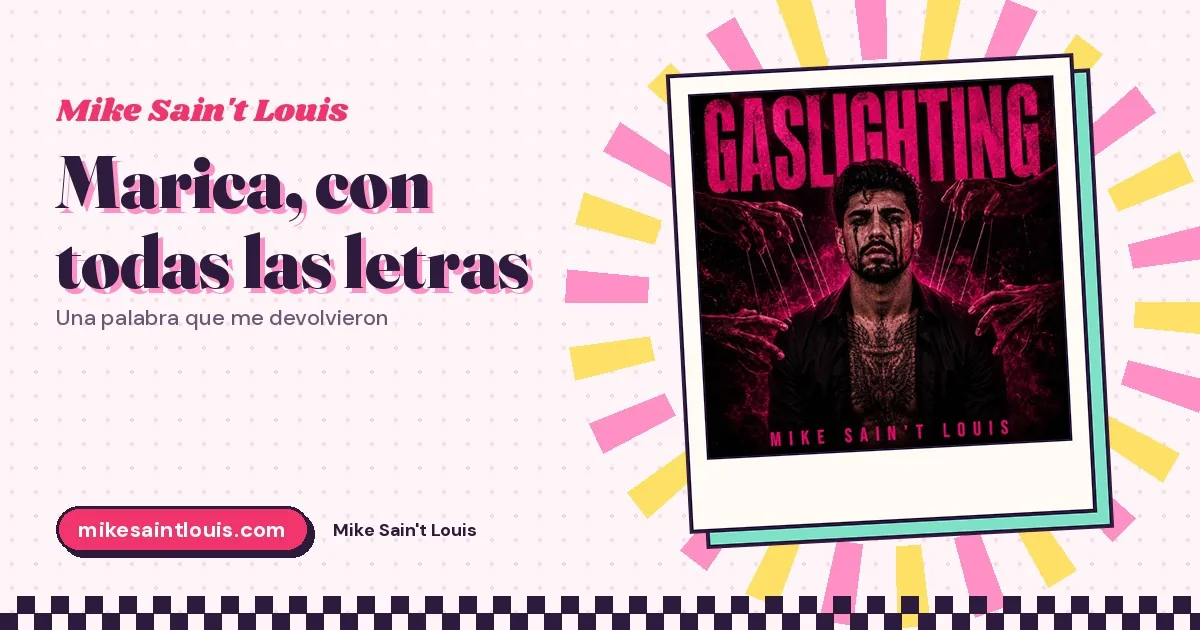
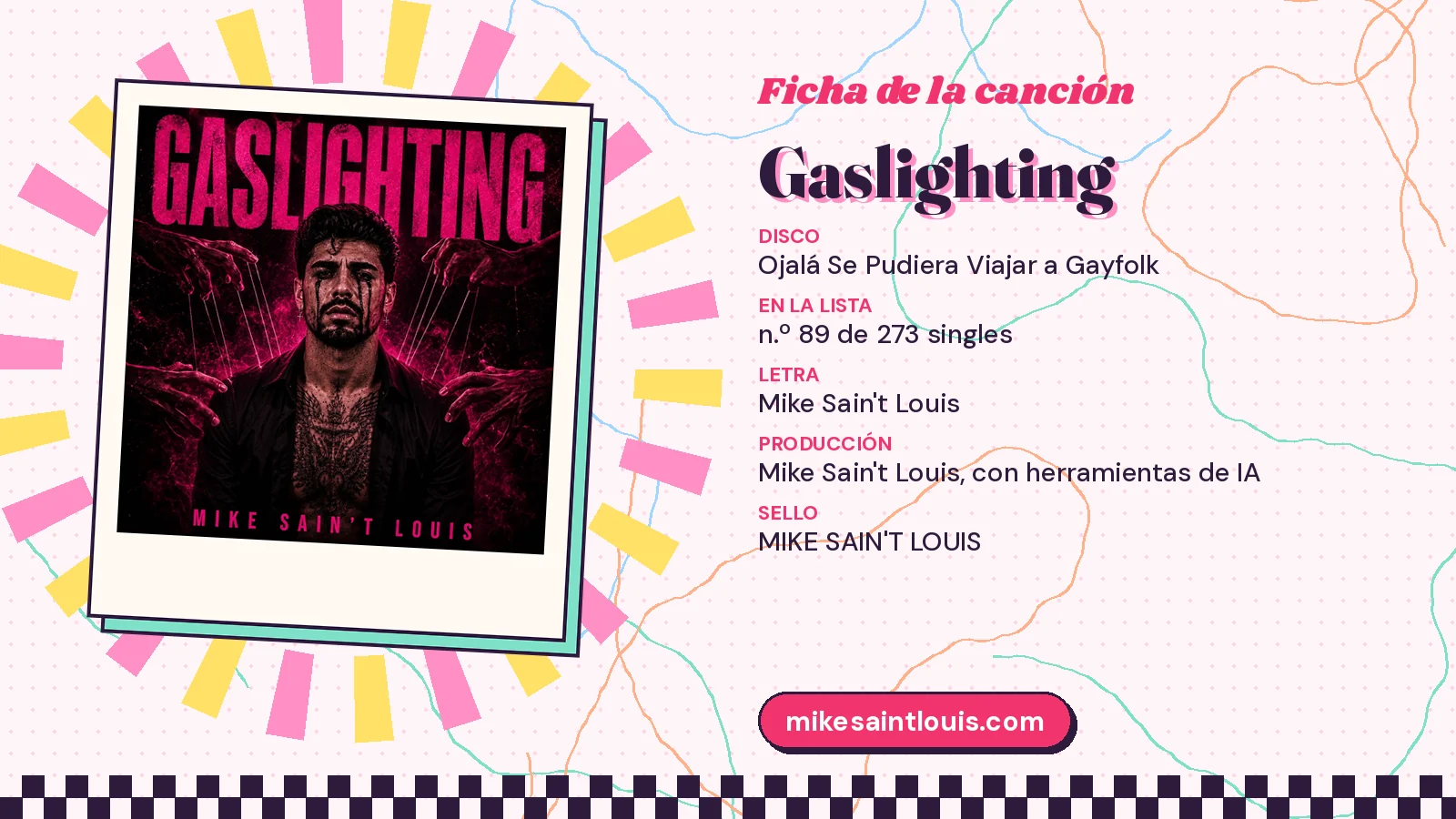
That's how the fight ends. Not with a slammed door or a sad song: with a trophy. In «Gaslighting» the protagonist spends the whole lyric dismantling the lies of someone who kept telling him nothing had happened, that he'd dreamt it, that it was all his fault. And when he finally wins, when the game is over, he celebrates with three words, and the last one makes all the noise. I won, maricón. With the accent English doesn't have, which I pronounce the same either way.
Maricón, roughly "faggot", and its little sister marica, "queer" or "poof", were the slurs of my childhood playground. In my lyrics, that word is everywhere. Marica, maricón, maricones, mariposón, the queer Shakira, the cosmic queer, the chilled-out queer. I use it the way you use salt: in nearly everything, sometimes too much, and knowing it sends some people's blood pressure up.
This piece is about that. About a word that for a long time was used to point us out, and which now, in my songs, is used for almost anything except that.
I won, maricón
I'll start with the victory, because that's what I love most about the word in the mouth of someone who's suffered it.
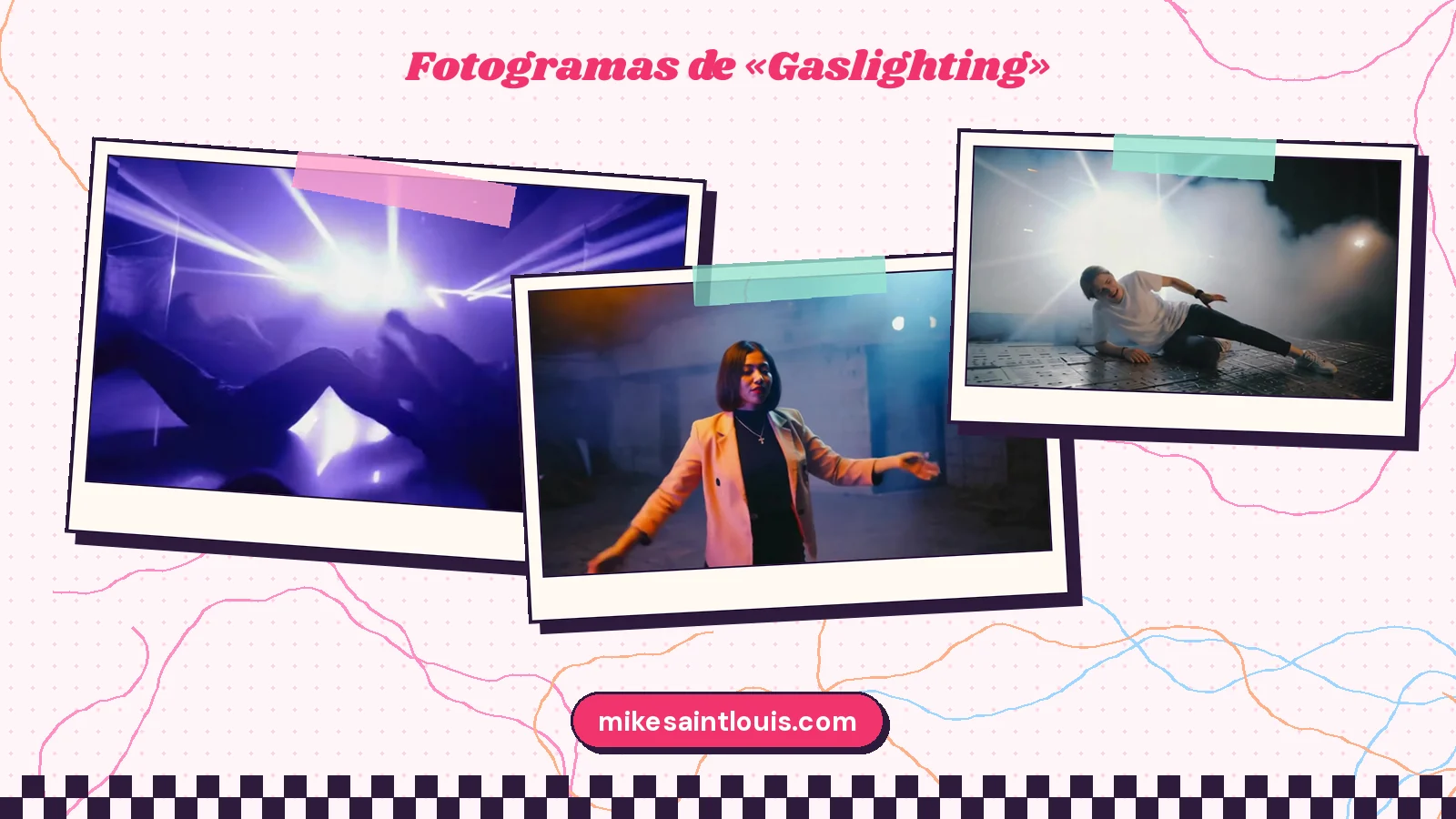
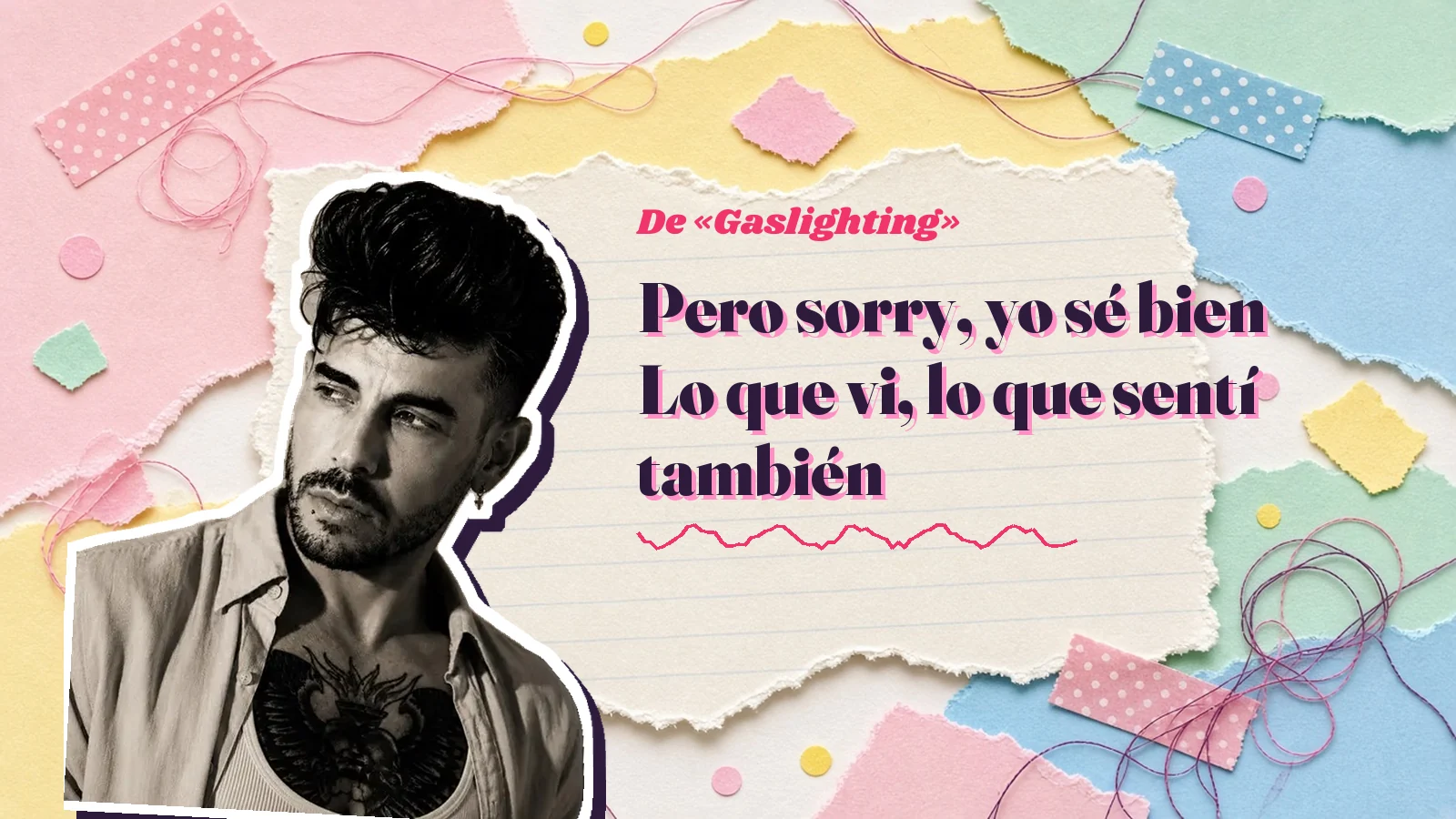
In «Gaslighting» the gaslight goes out when the protagonist trusts what he saw: «Pero sorry, yo sé bien / Lo que vi, lo que sentí también», "But sorry, I know full well / What I saw, and what I felt as well". The whole song is about reclaiming your own version of events. And at the end, as the finishing touch, the insult turned into a celebration. «Gaslighting, gaslighting, I won maricón.» It isn't an insult aimed at the other man. It's a pat on your own back. It's what a friend says to you outside the club when you tell her you've finally left him: maricón, you did it.
There's a way of saying maricón that's a hug. Anyone who's heard it at a bar in Chueca at three in the morning knows what I mean. «Ay, maricón, qué guapo vienes», "Oh, darling, don't you look gorgeous". «Maricón, cuánto tiempo», "Girl, it's been ages". It's the same word they used to shout at you from a car, but said by another mouth and set to other music. And that music is what I try to put into the lyrics when I use it that way.
You do it, then, maricón
Then there's the other way. The dart.
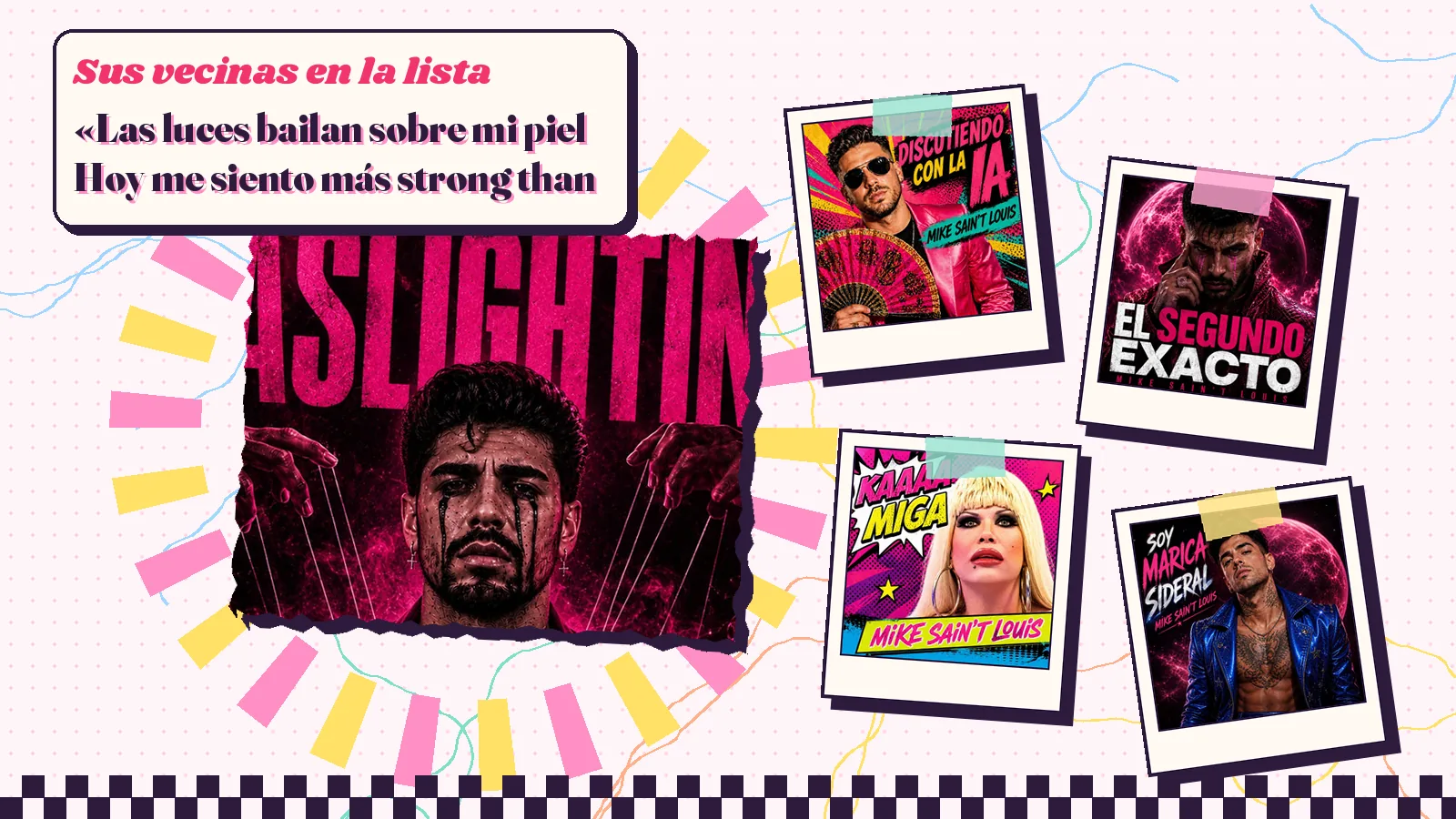
In «Discutiendo con la IA», "Arguing with the AI", I answer the people who tell me making songs with artificial intelligence tools is just pressing a button: «Hija mía si usar IA es / dar a un botón / hazlo tú maricón», "Sweetheart, if using AI / is pressing a button / you do it, then, maricón". There the word doesn't hug. It shoves. It plants the pen in the critic's hand and says: go on, gorgeous, let's see what you can do.
The interesting thing is that the dart only works because it comes from inside. If some bloke from outside calls someone maricón, it's an attack. If one queen calls another queen maricón because he's getting on her nerves, it's a family row. It runs at a different temperature. Like a mother calling her son a "shameless little so-and-so": she means it, but she isn't throwing him out of the house.
That line, the one about who gets to say what, is always on my mind when I write. I don't use the word to laugh at anyone for being queer. I use it to laugh at someone who also happens to be queer. The difference looks small. It isn't.
Mariposón, Mr from León
I love playing with the word. Stretching it, shrinking it, adding suffixes, swapping the animal.
In «El segundo exacto» there's a farewell that's a pub tongue-twister: «A otra cosa mariposa, / a otra cosa mariposón». A otra cosa, mariposa, literally "on to something else, butterfly", is the age-old Spanish way of saying "moving on". The moment I add three letters it becomes something else. The butterfly, an innocent insect in a saying, turns into mariposón, "big butterfly", which is what they called those of us who ran funny in the playground. And I hand it back to my critic, with his "Mr from León" and his "kind regards", like returning a letter to sender.
Spanish has an enormous collection of words for us. Mariposa, mariposón, mariquita, mariquilla, sarasa, loca, pluma, plumero. Many of them sound like eighties stand-up. And I gather them up the way you gather glasses after a party: I didn't choose them, but since they're here, I'll keep a few.
And who are you, maricón?
There's a line that isn't mine and has marked me more than plenty that are. It's La Veneno's, the trans icon of nineties Spanish television.
In the piece on «Kaaa miga», my tribute to her, I quote it just as she used to say it: «¡Yo soy La Veneno, y tú quién eres, maricón!», "I'm La Veneno, and who are you, maricón?" It's the best comeback to an insult I know. Because it doesn't defend itself. It doesn't say "I'm not what you say" or "don't insult me". It says who she is, name and article and all, and turns the question back on the other person. You, pointing at me, who are you? What have you done?
That line is a writing lesson. You flip the insult without denying it. You don't hide behind a prettier word. You plant yourself on the ugly word and turn it into a pedestal. I've turned that question over many times in other pieces, so here I'll just note one thing: in that line, maricón no longer belongs to me or to her. It belongs to whoever asked. We lend it to him, so he can wear it for a while.
I'm a cosmic queer
Sometimes the word leaves my lyrics and becomes a title. A surname. A whole identity.
«Soy marica sideral», "I'm a cosmic queer", is one of those. It isn't "I'm gay", which sounds like a council form. It isn't "I'm homosexual", which sounds like a doctor's appointment. It's marica, with all its noise, and sideral on top, which is like saying my flamboyance reaches other galaxies. There are two lines in that lyric that for me sum up how I stand on the word: «Soy silencio con tacones, / soy marica sideral», "I'm silence in high heels, / I'm a cosmic queer". Silence and heels. The last things you'd expect beside such a noisy word.
And then comes the twist that matters most to me: «Y si no sabes mirarme, / no es mi pluma el problema», "And if you don't know how to look at me, / my flamboyance isn't the problem". Pluma, literally "feather", is our word for camp, for the queeny flourish. That's everything right there. For years pluma was the problem. The thing to hide, correct, turn down. In the song, the problem moves house. It's no longer in whoever has pluma. It's in whoever doesn't know how to look.
That lyric doesn't sound angry. It sounds calm in a way that's rare for me: the calm of someone who no longer has to explain himself.
Over the top, theatrical and emotional
The word marica never travels alone. It drags a suitcase of adjectives behind it, nearly all of them feminine.
In «Soy marica sideral» there's a line that's a full case file: «Me han llamado exagerada, / teatral y emocional», "They've called me over the top, / theatrical and emotional". Exagerada, ending in -a. That's how they said it, in the feminine, even though we were boys, because the real insult wasn't the adjective. It was the ending. Calling you exagerada stripped you of the masculine, which in this country gets handed out like a licence you have to earn.
And in the same lyric, straight after, the answer: «Pero nadie dice nada / del puto narci de manual», "But nobody says a word / about the textbook bloody narcissist". They called me over the top. The other one, lying straight out of the textbook, nobody called anything. I know that imbalance by heart. Pluma shows from a hundred metres. Quiet cruelty passes for good manners.
That's why I play so much with grammatical gender in my lyrics. In «No quiero otro novio cojín» the lyric opens with «Despierto sola», "I wake up alone", in the feminine, and nobody corrects it. In «Discutiendo con la IA» I call the critic «hija mía», "my daughter", sweetheart. In «Marica chill» they call me loca, a madwoman, a queen, and I turn it into a brand. In «La dieta del cucurrucho» the boyfriend screams «como una loca», "like a mad queen". The feminine, which used to be the punishment, is a place I'm comfortable in my songs. I move between he and she like changing shoes for the party.
I'm not doing it to theorise about anything. I do it because that's how many of us talk among ourselves. «Ay, hija, qué cansada estoy», "Oh, girl, I'm so tired". «Mira esa, qué guapa viene», "Look at her, isn't she gorgeous tonight". And if that's how we talk at the bar, that's how the songs have to talk. The odd thing would be the opposite: writing queer lyrics in a solicitor's Spanish.
Marica chill
And if I can be a cosmic queer, I can also be an around-the-house queer.
«Marica chill» is the portrait of a day without drama: glitter on the face, a black coffee, heels to go down to the beach, the neighbour sniping from her balcony and the greengrocer giving away a mango. Here the word is neither trophy nor dart. It's a lifestyle label. Like saying "vegan" or "early riser". Marica chill. Just like that, like a clothing brand.
In that lyric there's a line that's almost a manifesto, though it looks like a slogan on a mug: «Que me llamen loca, that's my brand», "Let them call me a mad queen, that's my brand". Loca was another of the old insults. And here it becomes a registered trademark. If you're going to call me it anyway, at least let me sell T-shirts with it.
I like that the word can be so small. That it doesn't always need a placard behind it. That there are songs where marica is just the one going down to the beach with a fan who has no intention of apologising for it.
The queer Shakira from the pound shop
The word works as an adjective too. And as an adjective it's marvellous, because it changes everything it touches.
In «La Shakira y el Piqué de Todo a 1 Euro», "The pound-shop Shakira and Piqué", I paint myself as «la Shakira marica del Todo a un Euro», "the queer Shakira from the pound shop". Look at the order. First the star of the break-up anthem. Then the word that makes her ours. And finally the bargain shop that puts her in her place, which is mine: the low-cost diva with a plastic carrier bag. Take marica out and the phrase is just mockery. With marica, it's a self-portrait.
That happens a lot with the word when we use it. It doesn't take away. It adds a particular sparkle. Lo marica, the queer touch, is what puts sequins on a sentence that had none. It's the pink filter. And in a catalogue like mine, which laughs at itself before anyone else, that filter is on almost all the time.
The queer art that started it all
There's a sentence I wrote in the introduction to «El calcetín», "The sock", that I'm still very fond of: «Grabado en Móstoles, con toda la ironía y el arte marica que lo empezó todo», "Recorded in Móstoles, with all the irony and queer art that started it all".
Queer art, arte marica. I said it just like that, without asking permission, in a text accompanying a song about an ex who ended up on the level of a sock. And I said it in Móstoles, a working town on Madrid's outskirts, which isn't Chueca or New York or an air-conditioned museum. It's a place where people live, work and catch the commuter train. I like that combination: the most dashing word in the queer dictionary next to a town that never makes the postcards.
For me, that's what queer art is. Not a movement or a style with a manual. A way of looking at small things through a magnifying glass and glitter at the same time. Taking a sock, a cushion, a pound shop, a cruise-ship buffet, and turning it into a three-minute drama with the wig pinned on properly. Laughing at whoever hurt you instead of giving them the satisfaction of seeing you sink. Irony as a means of survival, which is exactly what the song's introduction says when it talks about someone surviving manipulation and learning to laugh at it.
If I have to give what I do a name, that one will do. Queer art from Madrid and its outskirts.
Afraid of Chueca
And now the part without a joke.
In «La despedida», "The farewell", there's a very long list of moments in a life, each with a Camela song playing, Camela being the kings of Spanish tecno-rumba, all of it in capitals, the way you write when you're shouting with joy or nerves. The first kiss. The time someone almost got married. The summers of partying. And in the middle of it all, a line I found hard to leave on the page: «CAMELA, LA PRIMERA VEZ QUE FUI YO SOLO CON MIEDO A / CHUECA PENSANDO QUE ME IBAN A PEGAR», "CAMELA, THE FIRST TIME I WENT ON MY OWN, AFRAID, TO / CHUECA, THINKING THEY WERE GOING TO BEAT ME UP".
That fear is the other face of the word. Before marica was a trophy, a nickname or a brand, it was a threat. It was what they might shout at you just before the blow. It was what you heard in the playground, in the changing room, at the bus stop. And for many of us, going for the first time to a neighbourhood where that word is said with affection also meant going with your body hunched, glancing over your shoulder, just in case.
That line isn't funny to me. I didn't write it to be funny. I put it in the middle of a party song, between kisses and L'Oréal hairspray, because that's how things happen. Fear gives no warning and doesn't get its own song. It turns up in the middle of a list of good memories and then it goes. And the song carries on.
Thinking about it now, I realise that first time in Chueca, as the song tells it, is the exact moment the word starts changing hands. Outside the neighbourhood, marica was what they might shout at you. Inside, it was what they said as they gave you two kisses on the cheeks. Same language, same city, a few streets apart. And you in the middle, the fear still stuck to the back of your neck, and a girl you've never met calling you maricón with a smile as she asks you for a light.
I don't know how many people have lived that transition in a single night. I wrote it in one line, in capitals, between one Camela song and the next. It seemed the only place it would fit without turning into a sermon.
Every time I use the word marica in a lyric, however much I'm laughing, that line is underneath. It's what gives it weight. If it had never hurt, there'd be no pleasure in handing it back.
You're camp and effeminate
There's one use of the word that hurts me more than the man in the car. The one that comes from inside to do harm.
In «Buscando el polvo perfecto», "Looking for the perfect shag", I put the lyric in the mouth of a type of dating-app user we've all come across. And that user, who's gay, rejects other gay men with the same arguments any bar-room homophobe would use: «Tienes pluma y eres afeminado, / Yo soy deportista y un buen macho», "You're camp and effeminate, / I'm sporty and a proper man". He doesn't say the word marica. He doesn't need to. Pluma is enough to rule you out.
That's the saddest version of the whole thing. That after we handed the word back to the people who insulted us with it, there are those who still use it among us as grounds for exclusion. As if having pluma were a manufacturing fault. As if "discreet" were a merit.
That's why the song, in the end, heads off to another planet. One where nobody has to keep their wrist stiff to get a reply to a message. And that's also why I use the word so much in the other lyrics: so it's heard a lot, everywhere, in every tone. So it stops being something whispered with disgust in a chat.
Who gets to say it
It's a question that comes up on its own, with more or less tact: aren't I afraid someone will use my songs as permission to toss marica around lightly? Aren't I normalising a slur?
I think about it. Of course I do. And my answer is that the word was normalised long before I wrote anything. Normalised for doing harm. What I'm trying to do is normalise it for the opposite too: for the hug, the victory, the sparkly self-portrait. For the word to have so many uses that the insult is just one more, not the only one.
There's a rule that isn't written down anywhere but holds in my lyrics. The word marica is never aimed at anyone for being queer. It's aimed at the liar, the critic who never makes anything, the one who rules people out for their pluma, the one who thinks he's better. And it's on the side of almost everything else. If that comes across when people hear the songs, I'm happy. If it doesn't, that's my fault and I'll fix it in the next one.
And then there's tone, which in a song is everything. Written on paper, the word can look aggressive. Heard, with its music, its rhythm and its context, it's understood differently. That's why I love having my lyrics published in full, one by one, with the song alongside. I don't want anyone walking away with a single word ripped from its place. I want the whole sentence seen, the line before and the line after, the joke and the wound. Only then can you understand why a maricón can be the loveliest thing you say to someone all night.
Spelled out in full
I look back over what I've written and I get a list I'm not quite sure how to end. Marica as a trophy. Maricón as a dart. Mariposón as a pun. Maricón as La Veneno's question. Cosmic queer as an identity. Chilled-out queer as a lifestyle. Marica as a pound-shop adjective. Marica as a memory of fear. Pluma as an excuse to rule people out.
They all fit inside the same word. That's what fascinates me most about language: that something so short can weigh so much, and so differently, depending on who says it and how.
There was a time when that word was thrown at me. Now I'm the one writing it, in capitals if need be, in titles, in punchlines, in beach songs and fighting songs. They handed it back to me without meaning to, by shouting it at me so often. And since they gave it to me, I'm keeping it.
All the lyrics I quote are in the lyrics archive. And the victorious one, the «I won maricón», you can read in full on gayfolkplanet.com.
Maricón whoever's reading this. With love.
Frequently asked questions
Why does Mike Sain't Louis use the word «marica» in his songs? Because it's a word that for a long time was used to insult gay people, and in his lyrics he reclaims it as a celebration, a pet name, a self-portrait or a dart aimed at liars and critics. He never uses it against anyone for being gay.
What is «Gaslighting» about? Getting out of a relationship in which the other person denied what had happened and made the protagonist doubt his own memory. It ends in victory: «I won maricón». The lyrics are Mike's; the music and the performances are made with artificial intelligence tools, which is why he calls himself the first AI songwriter.
Which song mentions being afraid to go to Chueca? «La despedida», a list of memories set to Camela songs, from the first album of the trilogy, «Descubierto un nuevo planeta llamado GAYFOLK».