By Mike Sain't Louis ·
Let's talk about suicide without taboo: asking for help works
This is the fifth piece in my series on mental health, and it's different from the rest. In the earlier ones I wrote about myself: two relationships with people I came to understand were narcissists, my childhood, the diagnosis I received at 41, and the psychologist who is helping me move forward. This one isn't about me. It's about something that matters to me so much that I didn't want to leave it in a footnote.
If you're thinking of ending your life, stop for a moment and call 024. It's Spain's suicide-prevention line: free, confidential, open 24 hours a day, every day, with a chat if you can't get the words out. If there's immediate danger, call 112. The Teléfono de la Esperanza, on 717 003 717, will also answer you in the middle of a crisis. If you're outside Spain, call your local emergency number. What you feel right now can change. Help exists, and it works.
I want suicide to stop being a taboo. I'll say it plainly, because silence protects no one. For a long time people believed that talking about suicide might push someone towards it. Today we know that talking about it with care, with reliable information and with hope, helps prevent it.
To write this I'm following the World Health Organization's recommendations on how to talk about suicide in public. That means you won't find descriptions of methods or places here, nor stories told as if suicide were a way out. You'll find figures, warning signs, ways to ask, myths taken apart and, above all, who to call.
Why silence doesn't protect
The taboo runs on an old logic: if you don't name it, it doesn't exist. For centuries suicide was punished, hidden in the records, hushed up at funerals. Many families still can't bring themselves to say the word in front of anyone. But what goes unnamed doesn't disappear. It stays inside, alone, without help.
Think of someone suffering so much that they've begun to think about dying. If nobody around them ever talks about it, if the subject gets changed whenever it comes up, that person learns they can't tell anyone. That what's happening to them is shameful, strange or unforgivable. And so they isolate themselves even further.
Breaking the taboo doesn't mean talking about suicide lightly. It means the opposite: making it possible to talk about it seriously, at home, at school, at work, in a consulting room, in a song or on a blog like this one. It means that whoever is struggling knows they can say so, and that someone will listen.
What the figures say
Numbers don't tell stories, but they help you grasp the size of the problem.
According to the World Health Organization, more than 720,000 people die by suicide worldwide every year, and it is one of the leading causes of death among young people aged 15 to 29.
In Spain, according to final figures from the National Statistics Institute (INE), 4,116 people died by suicide in 2023: 3,044 men and 1,072 women. It is the second leading external cause of death, behind only accidental falls and far above road accidents. Between 2018 and 2022 the figure rose by around 20%, and in 2023 it fell by 2.6%.
Behind every number there's a person, and around every person a family, friends, colleagues. That's why prevention isn't only a job for specialists. It falls to all of us.
What 024 is and why it exists
In May 2022 Spain's Ministry of Health launched 024, the suicide-prevention line. It's a short number, easy to remember, free and confidential. It answers 24 hours a day, 365 days a year, and has a chat as well.

It's staffed by trained professionals. You don't have to be in an extreme situation to call. You can call if you're thinking about suicide, if you're worried about someone, or if you've lost someone to suicide and don't know what to do with what you feel. 024 also supports relatives and friends.
If you ever wonder whether it's «serious enough», the answer is yes. Calling doesn't bother anyone. That's what it's there for.
If you're the one thinking about it
If you're reading this because the thought of dying keeps circling you, I want to speak to you directly, just for a moment.
What you feel is real and it's very hard. I won't tell you it's not that bad. But I do want to tell you something every professional in this field says: the wish to die is often, underneath, the wish for the pain to stop. And pain can be eased in other ways, even if you can't see them right now.
Hopelessness has a trap in it: it convinces you that what you feel today is what you'll feel forever. It isn't so. Crises rise and fall. Many people who were where you are today say afterwards that they're glad they asked for help.
Some things you can do right now:
- Call or message 024. If you don't know what to say, start with «I'm thinking about suicide». They know what to do with that.
- Tell one person. One is enough. A friend, someone in your family, your doctor.
- Step away from what's hurting you for a while. Leave the room, go somewhere with people, put distance between yourself and anything you could use to harm yourself.
- Give yourself time. Just for today. Tomorrow you may see it differently, and tomorrow you can have help.
- If the danger is now, call 112 or go to A&E.
You don't have to deserve help. You don't have to be «bad enough». It's enough that you're struggling.
Warning signs
Many people who are thinking about suicide give signs beforehand, though they aren't always easy to see. Prevention guides list some of the most common:
- Talking about wanting to die, not wanting to wake up, or that «it's not worth it any more».
- Saying they're a burden on others or that people would be better off without them.
- Showing intense hopelessness, as if nothing will ever change.
- Withdrawing from friends and family, giving up things that used to matter to them.
- Saying goodbye in unusual ways, giving away treasured belongings or suddenly putting their affairs in order.
- Drinking more or using more drugs.
- Sharp mood swings, including a sudden calm after a very bad period.
- Having recently been through a major loss, a break-up, bullying or humiliation.
No single sign proves anything on its own. But if you see several, or if someone tells you directly, take it seriously.
How to ask someone you're worried about
This is the part that scares people most, and the most important part. If you're worried about someone, ask them directly. Something like: «Are you thinking about suicide?». Or: «Have you thought about ending your life?».
I know it sounds brutal. But professionals agree that asking clearly doesn't put the idea into anyone's head. Quite the opposite: many people feel relief when someone finally dares to name it. It gives them permission to talk.
After asking, what comes next is listening:
- Listen without judging. You don't need answers. Being there is enough.
- Don't play it down. Phrases like «it can't be that bad» or «think of your family» shut the conversation.
- Don't promise to keep it secret if there's a risk. You can promise you won't leave them alone.
- Look for help together. Call 024, book an appointment with their GP or, if the danger is immediate, call 112.
- Don't leave them alone if you think the risk is immediate, and move out of reach anything they could use to harm themselves.
- Stay in touch over the following days. A message can matter a great deal.
Myths that do harm
Suicide is surrounded by false ideas. Some seem harmless, but they keep people away from help.
- «Talking about suicide causes it». False. Talking about it responsibly is one of the ways to prevent it.
- «People who talk about it don't do it». False. Many people who die by suicide had communicated it beforehand in some way. It should always be taken seriously.
- «It's cowardly» or «it's selfish». False. Someone thinking about suicide is in pain they feel is unbearable. Judging them doesn't help.
- «If someone wants to do it, it can't be stopped». False. Suicidal crises are usually temporary, and help at that moment can change everything.
- «It only happens to people with a mental disorder». Not always. Mental-health problems raise the risk, but loss, violence, bullying, loneliness and discrimination also play a part.
- «If they've suddenly improved, they're out of danger». Not necessarily. A sudden improvement also deserves attention.
- «Once you've thought it, you'll think it forever». False. Many people who went through a suicidal crisis go on to live long, full lives.
The Papageno effect: telling people there's a way through
There's a concept from media research that I find beautiful. It's called the Papageno effect, after the character in Mozart's «The Magic Flute» who, at his lowest point, chooses to carry on because someone reminds him there are other ways out.
A study by Thomas Niederkrotenthaler and his team, published in 2010, found that news stories about people who had come through a suicidal crisis were associated with a fall in suicides. The reverse has also been observed: sensationalist coverage, or coverage that details methods, is associated with more cases.
That's why the way we tell it matters. That's why this piece has no details and does have phone numbers. And that's why I find it so valuable when people who have come through a crisis talk about it, if they can and want to: it's one of the most powerful ways to tell someone else that there is an afterwards.
A plan for the bad days
Prevention professionals often work with something called a safety plan. One of the best-known models was described by the psychologists Barbara Stanley and Gregory Brown in 2012. The idea is simple: prepare, in a calm moment, what you'll do if a crisis comes, because in the middle of a crisis it's hard to think.
A safety plan usually sets down, in writing and somewhere close at hand, things like these:
- My signs. Which thoughts, situations or feelings warn me that I'm getting worse.
- What calms me on my own. A walk, a shower, a song, a series, writing.
- People and places that take my mind off things. Someone to have a coffee with, a place where there are people.
- People I can ask for help. With names and numbers, not in the abstract.
- Professionals and helplines. My doctor, my psychologist if I have one, 024, 112.
- A safer environment. Getting out of the house, or handing to someone I trust, anything that could be used to cause harm.
A plan like this is best made with a professional, who can help you adjust it. But having one, even as a note on your phone, is already a way of looking after yourself. And if you're supporting someone, you can offer to help them write theirs.
At work, at school, among friends
Prevention doesn't only happen in the consulting room. It happens in very ordinary places. In an office where someone notices a colleague has seemed switched off for weeks and asks how they really are. In a school where teachers don't look the other way when there's bullying. In a group of friends where you can say «I'm in a terrible state» without anyone changing the subject.

You don't need to be an expert to help. You need attention, time and the courage to ask. And to know where to point people: that's what most reassures whoever is offering support, knowing they don't have to solve it alone. That's what 024, the GP and mental-health services are for.
Companies, schools and community groups can do a great deal: train their people, have protocols, put helpline numbers where everyone can see them, and talk about it on dates like World Suicide Prevention Day, every 10 September.
LGBTQ+ people and risk
On a blog like mine this can't be skipped. A range of international studies show that LGBTQ+ people, and young people above all, experience more suicidal thoughts than the general population.
Being LGBTQ+ isn't the cause. The explanation researchers give has to do with what's known as minority stress, a model described by the psychologist Ilan Meyer in 2003: family rejection, school bullying, discrimination, having to hide, fear of being attacked. That accumulated weight does damage.
The reverse is true as well: support protects. A family that accepts you, a school that won't tolerate bullying, friends you don't have to pretend with, a neighbourhood or a community where you feel at home. Each of those things lowers the risk.
If you're LGBTQ+ and having a hard time, I want you to know there are services designed for you. You'll find them further down.
When the person at risk is a child
With children and teenagers you need to be especially alert. Sometimes the signs get mistaken for «just a phase»: withdrawal, irritability, a new set of friends, slipping at school. And bullying, in person or online, is a risk factor that shouldn't be taken lightly.
That's what Fundación ANAR is for: 116 111 and 900 20 20 10 are free and confidential, and on the other end they can listen both to the young person and to the mother, father or teacher who doesn't know what to do.
If you're a parent or a teacher and you're worried about a young person, ask them. Calmly, without an interrogation, without punishment. And if they tell you yes, they've thought about it, don't leave them alone with it: get professional help that same day.
What a lyric can do
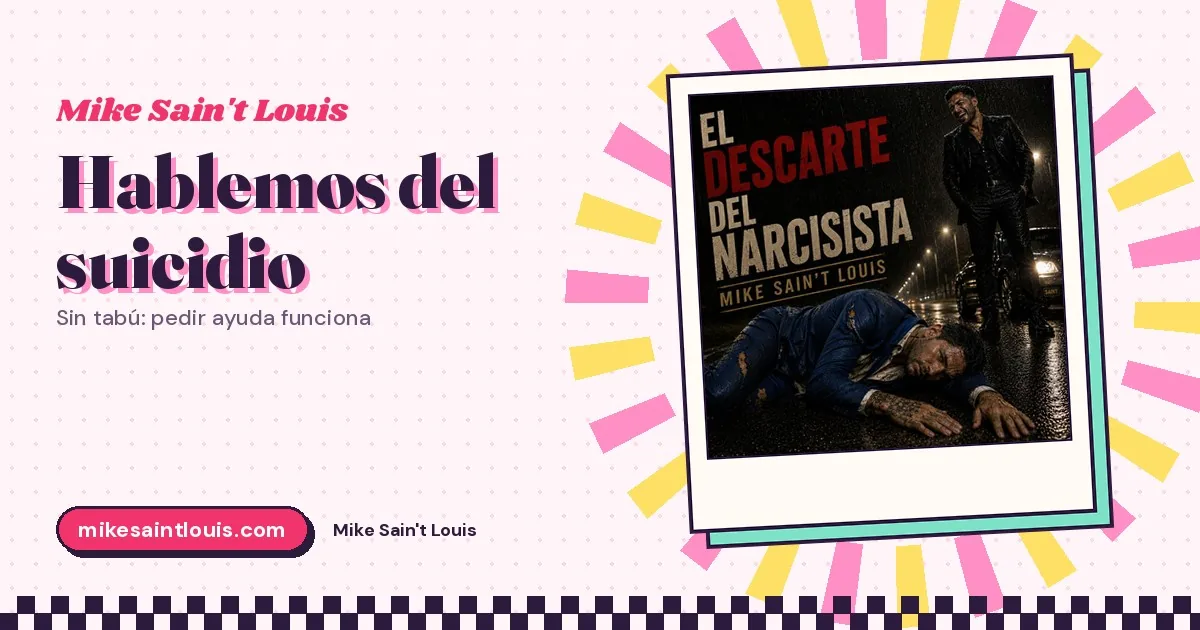
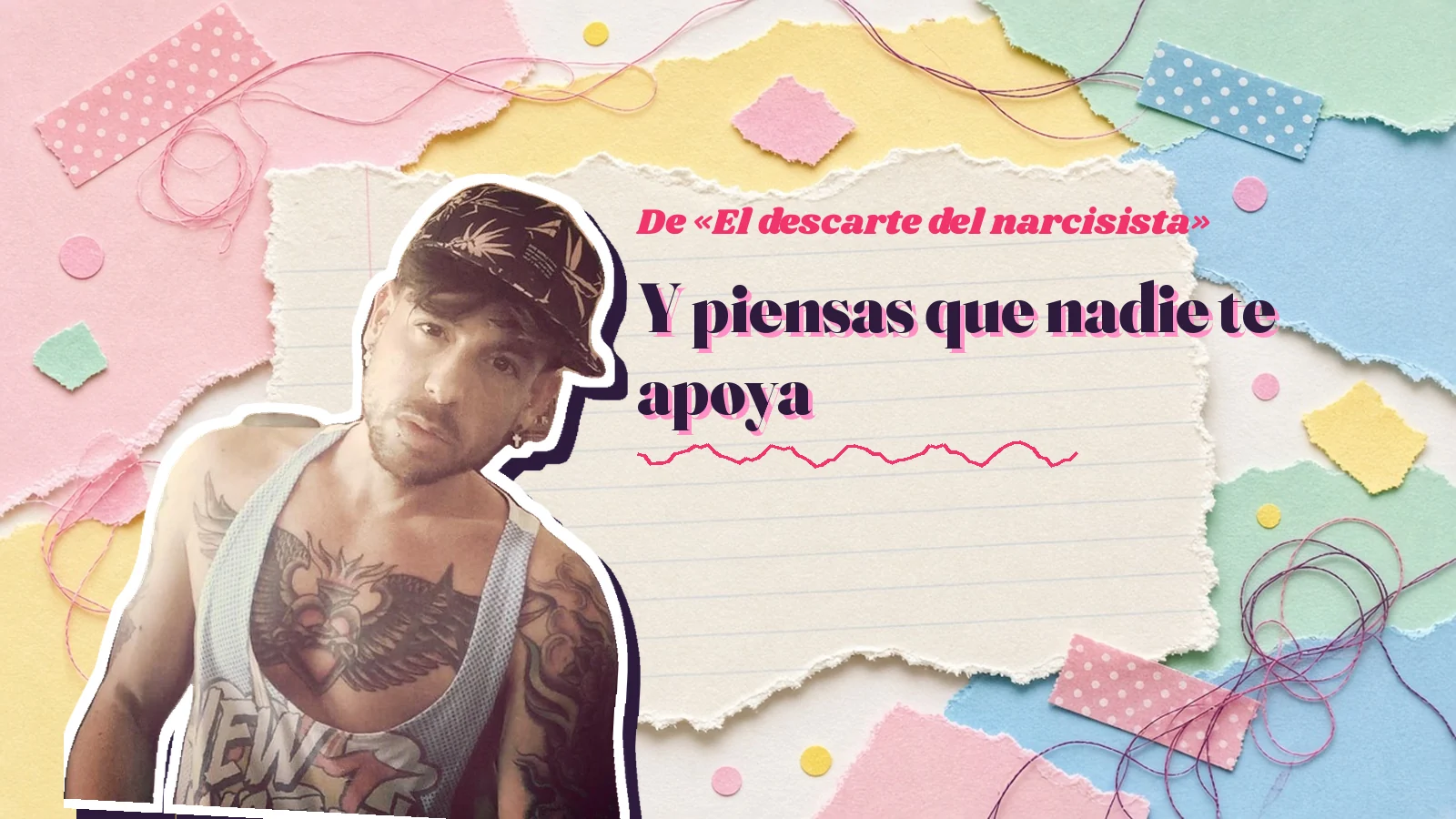
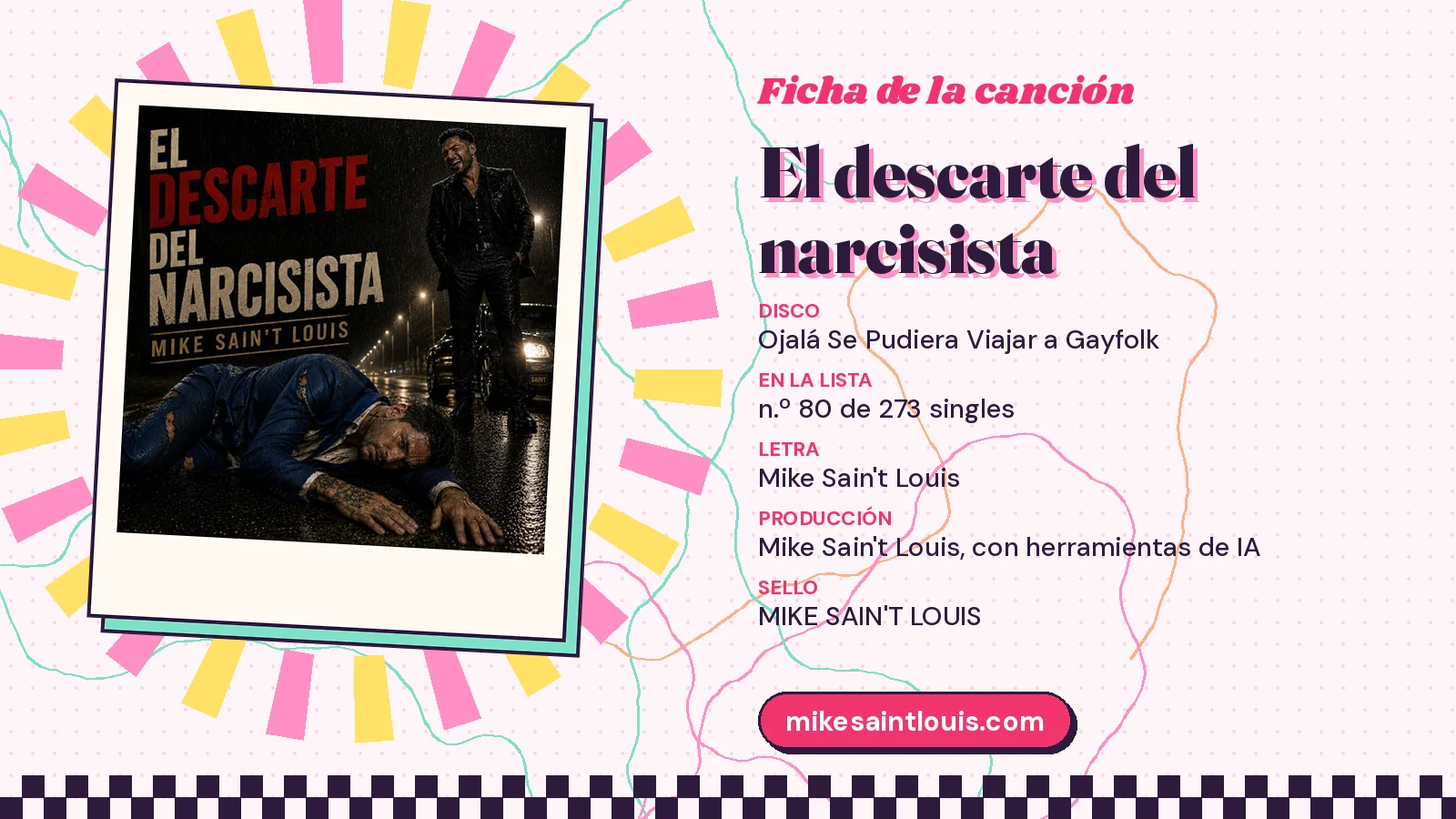
I have a song, «El descarte del narcisista» («The narcissist's discard»), that is really a letter to someone else who went through with an ex what I went through. It's about someone crying alone, and it says: «Y piensas que nadie te apoya», and you think nobody's got your back. And then: «Que nadie te comprende», that nobody understands you.
That feeling that nobody is on your side is one of the most dangerous there is. That's why the song answers with a simple line: «Pero yo estoy contigo», but I'm with you. And straight after it shouts: you're not alone!
The song isn't about suicide. It's about a break-up. But that answer, someone planting themselves beside another person and telling them they're not alone, is exactly what's needed when someone is in crisis. You don't need solutions. You need to be there.
I also think of an English line from «Before the Bells»: «Just being here the best we can». Some days that's all the day is, and it's already a lot.
The words we use
Some expressions get used without thinking and do harm. The WHO and many organisations recommend avoiding, for example, «commit suicide», because «commit» is tied to crime or sin. It's better to say «die by suicide» or «take one's own life».
It's also best to avoid talk of a «successful suicide» or a «failed attempt», as if it were a goal. And to avoid words that present it as a solution to a problem, or as a romantic or heroic gesture.
This isn't about political correctness. Words build frames, and the frame we use for suicide can bring someone closer to help or push them further away.
If you've lost someone to suicide
Losing someone this way leaves a very particular grief. Alongside the pain there's often guilt, unanswerable questions, anger, and sometimes shame because of the stigma. People going through it are often called survivors of suicide loss.
If that's you, you don't have to go through it alone. 024 also supports relatives and friends. Your GP can point you towards psychological support. And there are support groups for suicide bereavement; ask 024 or your health centre about the ones near you.
And please, don't blame yourself. Nobody has every sign laid out in front of them, or the power to control what another person decides at their worst moment.
Where to turn in Spain
The emergency numbers are further down. These are the resources for asking for help without waiting for a crisis:
In the public health system, the first door is your local health centre. Your GP can assess you and refer you to mental-health services. If you're looking for a professional on your own, make sure they're a registered health psychologist; in Madrid, the Colegio Oficial de la Psicología de Madrid lets you check.
If you're LGBTQ+ and live in Madrid, COGAM offers free psychological care (91 523 00 70, or WhatsApp 602 25 22 43), as does the Community of Madrid's LGBTI Information and Support Programme (91 701 07 88). FELGTBI+'s Línea Arcoíris is on 91 360 46 05. Older LGBTQ+ people have Fundación 26 de Diciembre (910 028 417); migrants and refugees have Kifkif. After an LGBTQ-phobic attack, Madrid City Council's victim service answers on 604 953 169.
If you're suffering gender-based or sexual violence, 016 will help you without leaving a trace on the phone bill. And for general information on mental health, Confederación Salud Mental España has guides at consaludmental.org. Outside Spain, your family doctor or local health service is usually the first step.
Three ideas to hold on to
If you've read this far, thank you. Truly. Reading about this already breaks the taboo a little.
I call myself the first AI songwriter: I write the lyrics, compose and produce, and the music and vocals are made with artificial intelligence. With my songs and with these pieces I want to contribute something to social awareness. This may well be the most important thing I've published.
I'll sum it up in three ideas. Suicide can be prevented. Talking about it, well, helps. And asking for help works.
There are more pieces in this series, and songs of mine about what weighs on you inside, such as «El abismo en mi cabeza», «Punto muerto» or «Entre cuatro paredes». What I tell about myself is on my page and in the FAQ.
Numbers for today
If you're thinking about suicide, or you fear for someone's life, don't wait:
- 024: suicide prevention, any hour and free, with chat. Also supports relatives.
- 112: if the danger is now.
- Teléfono de la Esperanza: 717 003 717, in the middle of a crisis, day and night.
- Fundación ANAR: 900 20 20 10 and 116 111, under-18s and their families.
- 016: gender-based and sexual violence.
- Confederación Salud Mental España: consaludmental.org.
- Outside Spain: call your local emergency number.
What feels final today can change. There are people trained to be with you through it.
Series: «Mental health without taboo». This is part 5 of the series in which I talk openly about my mental health. Here are all the pieces and a map of where to find help.
Frequently asked questions
Does talking about suicide increase the risk? No. Talking about suicide responsibly, without details of methods and with information about where to get help, is part of prevention. Asking someone directly whether they're thinking about suicide doesn't put the idea into their head and can open the door to asking for help.
What is 024? It's the Spanish Ministry of Health's suicide-prevention line, running since May 2022. It's free, confidential and open 24 hours a day, with a chat too. It supports people with suicidal thoughts and their relatives and friends. If you're outside Spain, call your local emergency number.
How many people die by suicide in Spain? According to final INE figures, 4,116 people died by suicide in Spain in 2023: 3,044 men and 1,072 women. It is the second leading external cause of death.
Why does Mike Sain't Louis write about suicide? Mike wants suicide to stop being a taboo, and wants anyone who is struggling to know who to call. He writes this piece with other people in mind, following WHO guidance, as part of a series about his mental health.
What should I do if a friend tells me they're thinking about suicide? Listen without judging, take it seriously, don't leave them alone if the risk is immediate, and look for help together: 024 answers 24 hours a day and, if there's immediate danger, call 112.