
By Mike Sain't Louis ·
Written in capitals: Ana Locking, la Loqui and the interstellar drag
QUIERO. I WANT.
That's how it starts. In capitals. And that's how it carries on, without dropping the volume for a second, right to the last line. If you open the lyrics of «La primera drag» you'll see there isn't a single lower-case letter to rest on. It's a wall of fat letters, like a nineties club flyer stuck to a lamppost on Gran Vía, the kind that announced Saturday's party with three exclamation marks and a typeface that left you blind.
There's already a piece of mine on this blog about this song, the one on drag as a party, not a costume. There I refused to tell you what the lyrics say. Here I'm doing exactly the opposite: climbing inside the lyrics, word by word, in capitals. Because the shape of this song has as much story in it as its title.
Why it's all in capitals
Writing in capitals, online, is shouting. Everybody knows that. If your auntie sends you a WhatsApp in capitals, she's either furious or can't find the caps lock. If someone comments on your Instagram in capitals, brace yourself.
I wanted this lyric to shout. Not in anger, though. In celebration. The shriek you let out when you walk into the club and your song comes on. The shriek of the friend who spots you arriving at the bar from the other end of the room. The shriek of the drag queen who strides on stage and greets the crowd before anyone has given her permission to speak.
A drag queen doesn't speak in lower case. Ever. Even when she whispers, she whispers in capitals. It's a matter of life volume. And a lyric about the first drag in the universe couldn't be written in the font of a medicine leaflet.
There's something else. Capitals flatten everything. When everything is big, nothing stands out from anything. There's no hierarchy. The word FUCKING weighs the same as the word FIESTA, and the word COCHE, car, weighs the same as UNIVERSAL. I liked that democracy of the shout. On a proper night out it's the same: everything matters at once and nothing does.
It's the opposite of what I did in the Madonna and Mercadona song, where I laid down one small word per line, slowly, like an interrogation. There, every word got its pause. Here there's no pause. Here the music's loud.
I want Ana Locking to dress me
The first quote, the one that opens the song, is a fashion wish:
«QUIERO QUE ME VISTA ANA LOCKING / Y QUIERO IRME DE COPAS CON ANA LOCKING» («I WANT ANA LOCKING TO DRESS ME / AND I WANT TO GO OUT DRINKING WITH ANA LOCKING»)
Ana Locking is a Spanish fashion designer. She's been showing collections on the Madrid runways for years, and her clothes have something that drives me wild: they don't apologise. It's fashion with a concept, with a mean streak sometimes, with pieces that are useless for the office but perfect for climbing onto a stage. That's why I chose her. A drag queen doesn't want a dress from the sales rail. She wants to be dressed by someone with a signature.
But look at the order of the sentence. First, dress me. And then, straight away, go out drinking with her. In other words, the wish goes beyond the clothes. It's the designer. It's the person. It's the night.
That feels very true to how the party fantasy works. You don't just dream of the dress; you dream of the whole scene. Of sitting at the important table, of the designer laughing at your jokes, of someone asking you the next day «wait, you know Ana Locking?» and you answering with a vague little wave, like someone who doesn't want to show off but absolutely is.
All of this, for the record, is the song's fantasy. The lyrics describe a night with Ana Locking as the best of the narrator's life, and I leave it right there, inside the song. It's a wish written in glitter, not a society column.
FUCKING ANA LOCKING
Then comes the epithet. Going out partying with the FUCKING ANA LOCKING. Just like that, the English swear word turned into a compliment.
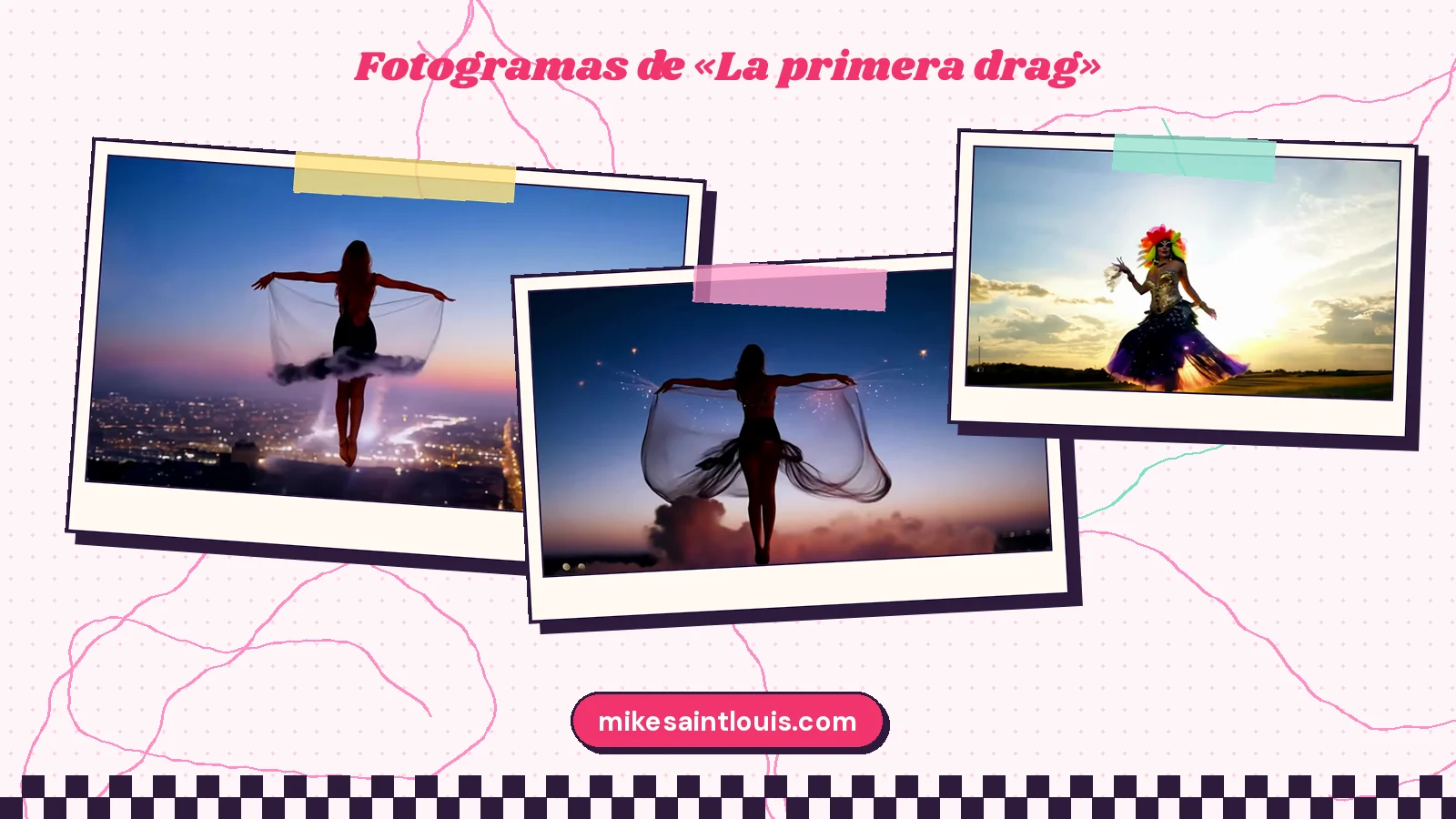
That use of fucking tickles me. In English it's an ugly word, but put it in front of a proper name and it flips into its opposite: total worship. The fucking Madonna. The fucking queen. It's what you say when someone seems so huge that ordinary words fall short. And in Spanish we've borrowed it just like that, among maricas, the queer boys, to talk about our divas: la puta ama, la fucking reina.
Besides, it sounds good. Fucking and Locking rhyme, and that rhyme is half a joke. Both words end the same way, in -ing, and the repetition makes the designer's name sound like an English verb. To lock. Ana Locking, the woman who locks you inside the party and won't let you out. I didn't think about it that much when I wrote it, but reading it now, I adore that reading.
And then there's the list that follows, pure dance floor: it's excess, it's chaos, it's total. Twelve hours of non-stop laughing. Twelve hours. Not an ordinary night, the kind that's over by five. One of those that starts at dinner, moves on to a bar, swings through a club and ends with churros at San Ginés, the all-night chocolatería in Madrid, mascara running down your face.
The roaches in the ashtray
And in the middle of all that glamour, the second quote, which is my favourite:
«NO NECESITÉ NI ESAS CHUSTILLAS / QUE HABÍA EN EL CENICERO DEL COCHE» («I DIDN'T EVEN NEED THOSE LITTLE ROACHES / THAT WERE IN THE CAR'S ASHTRAY»)
This is Mike in his purest form. You've got an interstellar drag queen, dressed by a runway designer, out drinking with the fucking Ana Locking. And suddenly, the car ashtray. With its dog-ends. Its chustillas, which is what we call them in my neighbourhood: the leftover ends of joints that sit there, forgotten, waiting for someone desperate enough to rescue them.
The contrast is the joke. The most glamorous night of your life and the grubbiest reference you could dream up, in the same verse. But the contrast also says something: the night was so good that nothing else was needed. Not even the scraps. Not even the leftovers in the car. The party with Ana Locking was high enough.
I've written about the chusta elsewhere. I have a song called «La chusta nunca disgusta», and there's a piece on this blog about how I made it with no story behind it, as an experiment. The chusta keeps coming back in my catalogue like one of those supporting characters in long-running TV series who turn up for one episode a season. Here it's a cameo. One line. And gone.
I love it when the grubby sneaks into the elegant. It's what I always do, from the cruise with croquetas to the pound-shop Shakira. Everyday life and tat sitting right next to the drama. Take that away from me and you take away half my lyrics.
Ana Loqui, what a coincidence
There's a game in this song that I think is one of the most fun things I've ever done with a proper name. The third quote:
«LA MEJOR FIESTA DE MI VIDA FUE UNA NOCHE CON ANA LOQUI / ¡QUÉ CASUALIDAD!» («THE BEST PARTY OF MY LIFE WAS A NIGHT WITH ANA LOQUI / WHAT A COINCIDENCE!»)
Ana Loqui. It's not a typo. The song repeats the same line twice in a row: first with Ana Locking and then with Ana Loqui. And afterwards, so nobody thinks I slipped, it adds «what a coincidence!», which is how you wink in writing.
Loqui comes from loca, of course. From la loca, which in queer slang is the flamboyant one, the one who doesn't hide, the one who puts on a show. And it also sounds like a pet name, a mate's nickname. La Loqui. What you call the friend who always turns a quiet night into chaos.
So the line says two things at once. That the best party was with the designer. And that the best party was with a loca. And that, what a coincidence!, maybe they're the same person. Or maybe not, and la Loqui is someone else entirely, the friend from the neighbourhood with no label and no collection who makes you laugh for twelve hours straight.
I love that it never gets resolved. The song carries on with questions: what will happen? what mystery could it be? Like one of those late-night mystery shows with synth music and a lady with a crystal ball. And the answer never comes. Only the chorus does.
I'M THE FIRST DRAG
And then the chorus, which is the fourth and last quote I'll leave here:
«SOY LA PRIMERA DRAG / INTER ESTELAR / SOY LA DRAG UNIVERSAL» («I'M THE FIRST DRAG / INTER STELLAR / I'M THE UNIVERSAL DRAG»)
Inter stellar. Split in two, as it is in the lyrics. I like it that way because when you read it there's a pause in the middle, like when a gala host reads out the winner's name and leaves a silence for the applause to swell. Inter. Stellar.
This is where the song plugs into the whole Planeta Gayfolk universe. The trilogy opens with an album called «Descubierto un nuevo planeta llamado Gayfolk», and this song is on that first album. An invented planet, with its own laws and inhabitants, where what's strange here is normal there. And on a planet like that, naturally, there has to be a first drag. The one who got there before anyone else. The one who travels between the stars.
Well, not travels. That word's on my banned list and I've just tripped over it. Let's say she commutes between the stars in heels.
The word universal amuses me too, because it sounds like a beauty pageant. Miss Universe. And a universal drag would be the one who wins the contest of every galaxy, with a crown on every planet. Not the first in her village, not the first in her family. The first in the cosmos.
It's an enormous exaggeration, and it's exactly what drag asks for. A drag queen who's happy being the first on her street isn't drag. Drag wants to be the first in the universe, even when she's performing in a fifteen-square-metre bar under a flickering spotlight.
The first what?
There's a question I asked myself when I wrote the title, and it doesn't have one answer. The first what? Whose first drag?
In the other piece on the blog I tell it from the outside: everybody has a first drag queen they remember. Here I look at it from inside the lyrics, and what I see is something else. The narrator doesn't say «I was the first». She says «I am the first». Present tense. As if every time she steps on stage it's the first time. As if the word first weren't about order but about attitude.
I find that really beautiful. That being the first has nothing to do with getting there before everyone else, and everything to do with behaving every night as if you were opening something. Every entrance a premiere. Every party with la Loqui the best of your life.
And it's self-parody too, obviously. Because nothing is more drag than declaring yourself the first at something that already existed. Being the first interstellar drag is like being the first Madrileño to order a calamari sandwich. Others got there before you. But you order it with more flair.
The cover and what it says without words
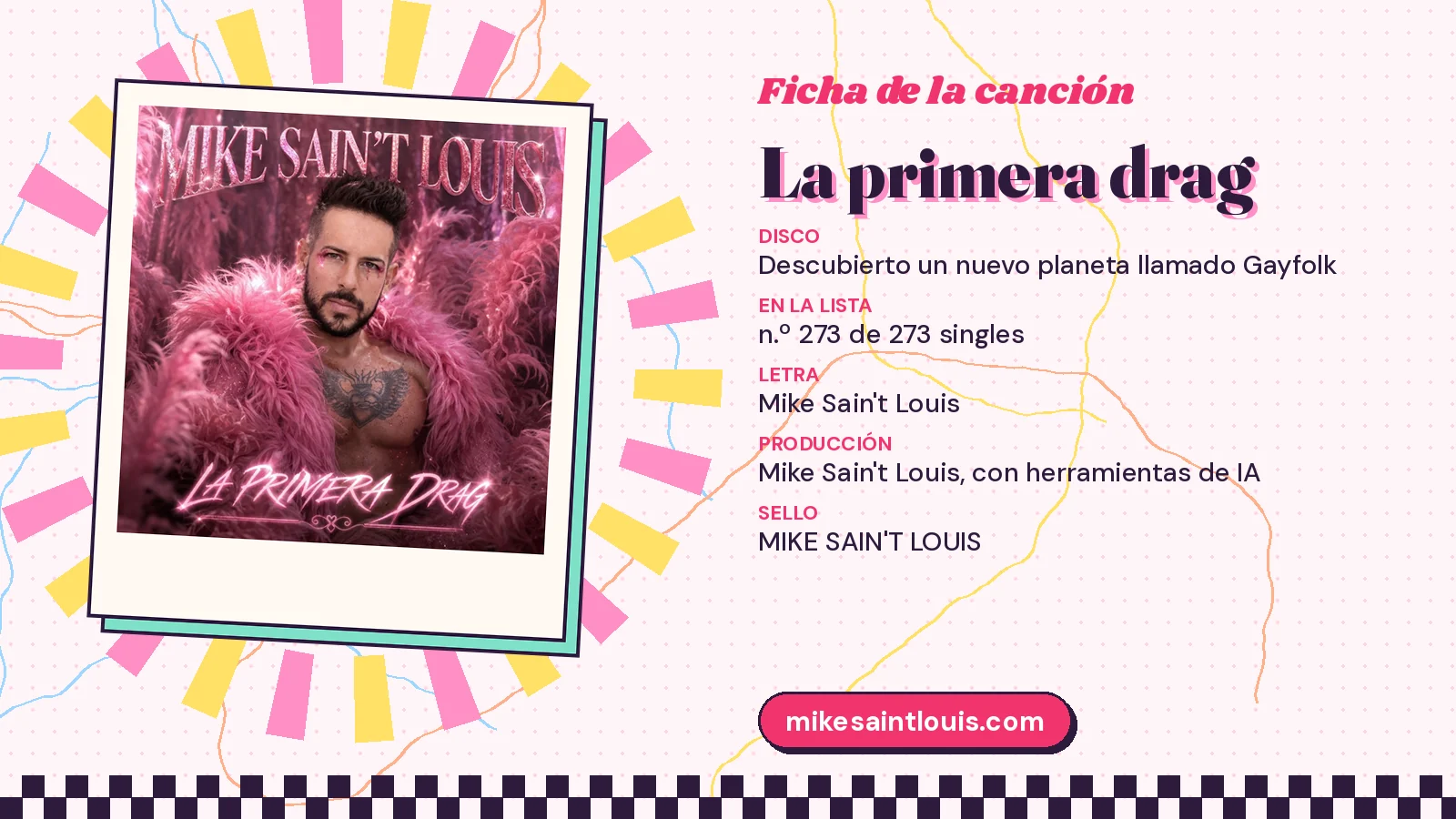
Since everything in this song is excess, let me talk for a moment about the cover, which matches. The song's page on the blog describes it in detail: an explosion of pink marabou feathers surrounding everything, a beard, glitter on the cheekbones, a heart tattooed on the chest and the title in pink neon letters.

What I love about that image, looking at it next to the lyrics, is that there's no wig. No stage contouring. There's beard and feathers at the same time. And that connects with the lyrics in a way I hadn't considered: the song's first drag doesn't follow the manual. She isn't the classic drag queen. She's something else, a mix, something that on this planet doesn't seem to go together and on Gayfolk does.
The pink feathers are, on top of that, the visual equivalent of the capitals. Everything turned up. Everything full. Not a single centimetre of the image gets a rest, just as there isn't a single lower-case letter in the lyrics.
If you want to see it, it's on the song's page, next to the link to listen and download.
Twelve hours, counted one by one
The lyrics say twelve hours of non-stop laughing, and I, being a fan of absurd sums, started imagining what those twelve hours would look like. Not as a record of anything that happened, but as a script for the fantasy the song sets up. An interstellar party timetable.
Eight in the evening: fitting. Ana Locking circling with pins in her mouth, the drag queen up on a stool, someone playing music through a tiny speaker that sounds like a tin can. Already laughing, because the first dress won't close and has to be unpicked.
Ten: dinner. Long table, too many people, nobody knows everyone's name. Someone orders wine and tinto de verano turns up instead. The drag queen has the feathers on and knocks over a glass every time she turns round.
Midnight: the first bar. Chueca, obviously, this is Madrid. One beer that turns into three. La Loqui bursts through the door unannounced and screams the drag queen's name from the bar, and that's when the real night begins.
Two: the club. What happens there stays there, as tradition demands, so I'm not telling.
Four: the car. Someone opens the ashtray, sees the roaches, and the drag queen says no need. Not tonight. She's sorted already. And everyone howls, because it's the first time in history anyone has turned down an ashtray roach.
Six: churros. Mascara running, heels in hand, a pink feather floating in the hot chocolate.
Eight in the morning: bed. Twelve hours exactly. Not one more.
I know there's no timetable in the song. I've just made it up, and I'm saying so in case anyone takes it as fact. But I fancied putting a clock on the party, because when a lyric says twelve hours I want to know where they went.
What the party owes the friend
Back to la Loqui. One thing I really love about the song not explaining who she is: it hands the spotlight to a figure who is essential to gay nights out and almost never turns up in songs. The friend.
Club songs usually talk about the boy you fancy, the one who ignores you, the one who goes home with someone else. They rarely talk about the friend who picks you up at three, who holds your bag, who tells you not to text him, who lends you her lipstick. And she's the one who makes it the best night of your life, not the boy.
So if la Loqui is the friend, the song pays her tribute without saying so. The best party of my life was a night with her. Not with a boyfriend. With a loca.
That has more truth in it than a lot of love songs.
The neighbours on the dance floor
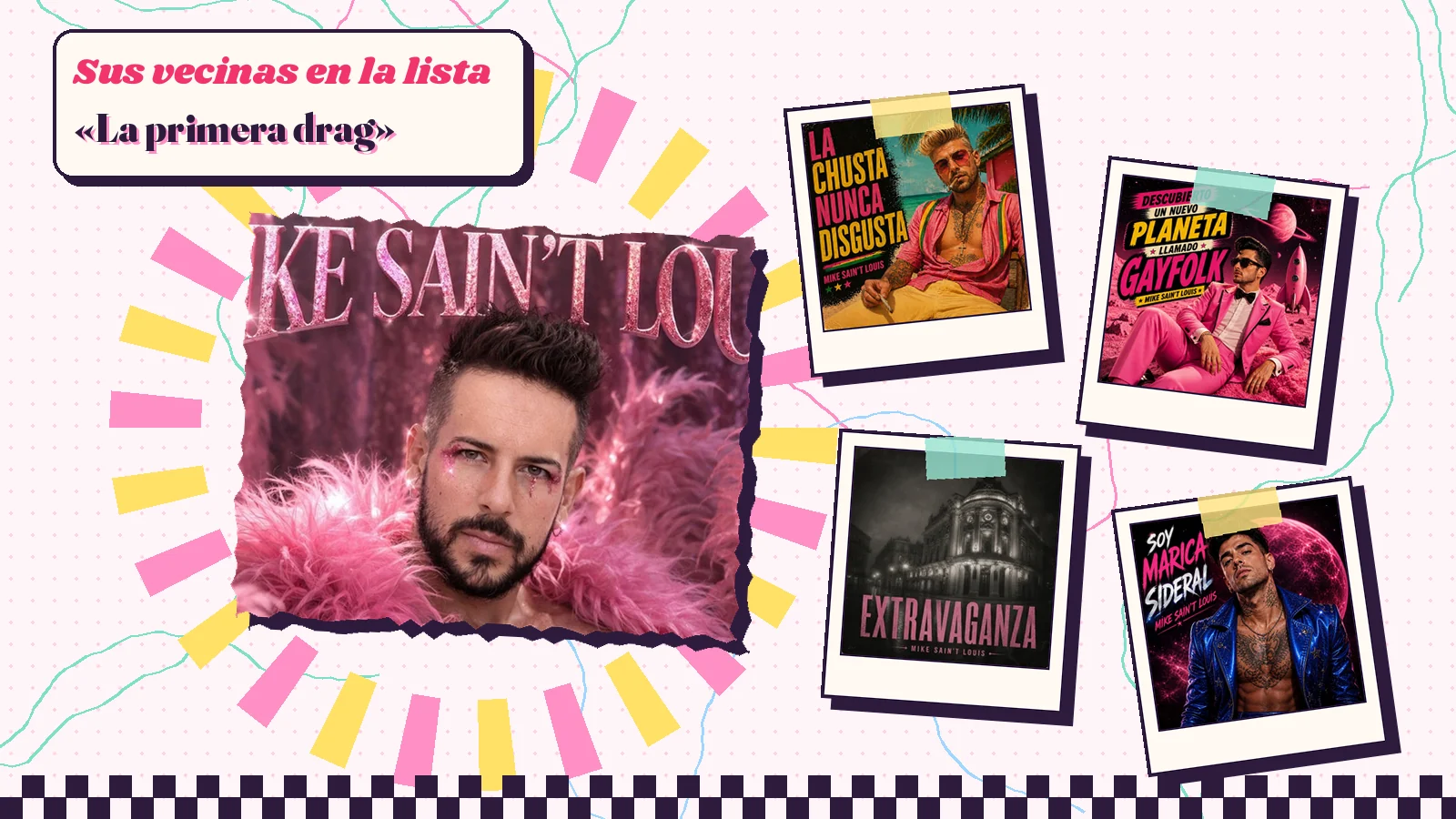
This song has cousins in the catalogue. «Extravaganza» shares its taste for excess right from the title. «Soy marica sideral» also launches the body out of the atmosphere, like the interstellar drag: if you like the idea of queerness in space, there's another take on it. And «Kaaa-miga» has La Veneno yelling who are you, maricón, which is the same capital-letter volume even though it's written in lower case.
Together they make a sort of full night out. Play them back to back and you've got the whole night through to the after-party. The churros at San Ginés are on you.
On the Planeta Gayfolk page you'll find the whole universe explained, the three albums and what each one means. And in videos you'll find the music videos, if you want to see how all this looks with pictures.
A song with no wound
A lot of my music has a wound in it. Narcissists, punishments, break-ups, nights in the dark with your phone. And the people who follow me know it: nearly always, behind the joke, there's something that hurts.
Not this one. Or hardly. I've searched this lyric for the wound and I can't find it. It's pure party. A drag queen who wants a designer dress, a twelve-hour night, a mad friend, an ashtray that wasn't needed and a universal crown. Not one ex. Not one narcissist. Not one diagnosis.
And I think it matters that there are songs like this in the catalogue. Because if everything were a wound, I'd forget what the party is for. Partying is a way of carrying on too. A night when you think about nothing bad, when everything is capitals and glitter, is also a way of looking after yourself. Not the only one, not the best, but one.
And maybe that counts as well.
How it's made
I wrote the lyrics myself, without artificial intelligence, in capitals from the start. I'm a lyricist and music producer, and the music and vocals on this song, like the rest of the catalogue, are made with AI tools such as Suno. If you want to know more about how I work, it's all on the about me page.
What no tool does is decide that a lyric goes in capitals, that the designer turns into la Loqui, or that the car ashtray crashes into the middle of the glamour. I decide that, with my wicked head and my appetite for a party.
So if you listen to it, turn it up. This song, like its lyrics, isn't meant to be heard quietly. And if anyone asks why you're shouting, tell them you're out partying with the LOCKING.
In capitals. As it should be.
Frequently asked questions
Who is the Ana Locking in the song? She's a Spanish fashion designer. The lyrics of «La primera drag» express the wish for her to dress the narrator and to go out drinking with her; it's a party fantasy inside the song.
Why do the lyrics say «Ana Loqui»? It's wordplay. The song repeats the line with «Ana Locking» and with «Ana Loqui», which points to loca, and caps it with «what a coincidence!».
Which album is «La primera drag» on? «Descubierto un nuevo planeta llamado Gayfolk», the first album of Mike Sain't Louis's Planeta Gayfolk trilogy.
Who makes the music and the vocals? The lyrics are by Mike Sain't Louis, a lyricist, composer and music producer from Madrid, written without AI. The music and the vocals are made with artificial intelligence tools such as Suno.